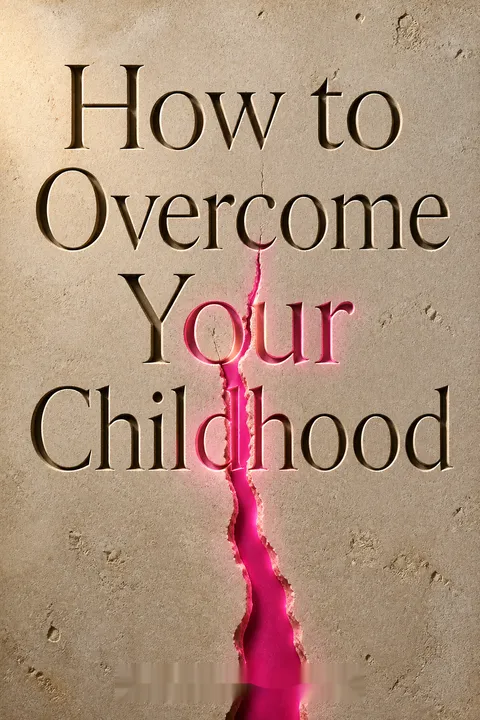


Key Takeaways
Trace childhood scripts before mistaking them for your adult nature.
Old rules can persist. The book’s central idea is that childhood does not simply disappear. A child may learn to appease an angry parent, hide needs from a fragile caregiver, or earn attention through achievement. These responses can become adult reflexes, even when today’s relationships and risks are different. The book traces this way of thinking from Goethe’s detailed account of his childhood, published in 1811, to psychoanalytic efforts to connect early experience with adult life.
Look gently for clues. Memory is incomplete, and family photographs often preserve happy moments while omitting tension. The book suggests drawing one’s childhood home and family as a prompt for reflection, not as a scientific test. The point is to notice possible feelings and ask questions, not to treat a drawing or memory as a verdict.
The useful shift is from self-blame to curiosity: a pattern that once protected a child may now be costly without being irrational or shameful. That makes change more practical than simply ordering oneself to behave differently. At the same time, childhood memories are partial and can be reshaped by later experience. A drawing or remembered scene is best treated as a hypothesis to explore, not evidence that settles what happened or why.
Measure privilege by emotional safety, not the size of the house.
Care is the deeper wealth. The book distinguishes financial comfort from emotional privilege. A child is privileged in the emotional sense when a caregiver tries to understand the child’s inner world, offers loyalty not dependent on achievement, and shields the child from adult burdens. Such a parent can tolerate disagreement, explain rather than simply impose rules, and accept that growing up means becoming independent.
Make care a shared priority. These forms of support can exist in modest homes and be missing in wealthy ones. The argument is not that material resources do not matter, but that they cannot substitute for being taken seriously, comforted, and accepted. The book imagines a fair society as one that values a dependable minimum of love and connection, not only the distribution of money.
This distinction improves the usual debate about privilege by naming a resource that cannot be read from income or possessions: a child’s experience of being understood and safe enough to develop. It also suggests that emotional care is not merely a private virtue. Institutions can either support caregivers or intensify the pressures that leave them unavailable. Still, emotional warmth should not be used to minimize material hardship. Children need both the practical conditions for security and relationships that help them feel valued.
Choose adult responses when attraction repeats an old painful pattern.
Familiarity can masquerade as chemistry. The book argues that early relationships can shape whom people find compelling. Someone who grew up around anger, neglect, or emotional fragility may feel drawn to partners who recreate those conditions. A kind, steady person may seem dull, not because kindness lacks value, but because it does not match the emotional pattern once associated with love.
Change the response, not the attraction. The book does not present attraction as a switch that can simply be flipped. Instead, it asks readers to notice when an old childlike reaction takes over. If a partner raises their voice, a person might automatically assume blame and shrink away. An adult response can recognize the partner’s anger without treating it as proof of personal failure. Understanding the pattern does not require tolerating harmful behavior.
This account usefully separates desire from conduct. People cannot always choose their first emotional reaction, but they can learn to pause, name the old expectation, and decide what boundary or conversation is needed now. That distinction protects against fatalism. It also needs a firm limit: interpreting a partner’s behavior through one’s childhood must not turn cruelty into a therapeutic assignment. Understanding why a dynamic feels familiar is not a reason to remain in a relationship that is unsafe or degrading.
Stop trying to earn love through achievement or someone else’s destiny.
Performance can answer an old need. The book describes parents who value status and excellence so intensely that children learn they must accomplish something to deserve affection. Their children may succeed at school and work while privately longing to matter apart from their results. A related pattern, called the Golden Child syndrome, occurs when parents cast a child as extraordinarily gifted or destined for greatness. The praise can feel as burdensome as blame when it leaves no room for an ordinary, imperfect self.
Ask what success is meant to repair. The book links relentless achievement to efforts to win recognition, compensate for family pain, or prove one’s worth. Success may expose the mismatch between the public goal and the emotional need beneath it. The proposed response is to examine the original wound and develop a sense of value that does not depend on constant performance.
The argument helps distinguish ambition that expresses interest from ambition driven by an endless demand for proof. That distinction matters in cultures that reward visible output and rarely ask what it costs. Yet high achievement is not itself evidence of childhood injury, and a difficult period after success can have many causes. The concept is most useful as a question, not a diagnosis: does the work serve a chosen purpose, or is it being asked to secure a kind of unconditional acceptance that no prize can guarantee?
Tell the truth kindly instead of trading honesty for safety.
People-pleasing began as protection. A child around an explosive parent may learn to hide disagreement and anticipate what others want. Another child may suppress needs to avoid adding strain to a depressed or vulnerable caregiver. In adulthood, the same behavior can look generous while concealing resentment, delaying necessary decisions, and leaving other people unsure of what is true.
Practice honest goodwill. The book offers three ways out: remember that most adults can tolerate polite disagreement; recognize that withholding doubts or staying in a relationship out of pity can harm others; and learn to deliver difficult messages with warmth. A person can say no without hostility, disagree without contempt, and end a relationship while acknowledging its importance. The goal is not bluntness. It is to stop confusing kindness with self-erasure.
People-pleasing is often treated as a harmless preference for harmony. This account shows its hidden cost: it deprives other people of accurate information and leaves the pleaser carrying an unspoken bill of resentment. Its alternative is neither aggression nor total disclosure. Tact makes honesty usable by considering timing, tone, and the other person’s dignity. The difficult test is whether kindness helps a truth land, or merely disguises another attempt to avoid someone’s disappointment.
Separate today’s criticism from the childhood verdict it revives.
A comment can feel like a sentence. The book argues that early experiences of being valued help shape how people interpret criticism. A person who felt deeply loved may hear that a piece of work needs improvement. Someone who lacked that security may hear a much larger accusation: that they are bad, worthless, or undeserving of existence. The same sensitivity can feed dread, shame, and suspicion, as ambiguous events are interpreted as proof that catastrophe is coming.
Shrink the verdict back to size. When criticism triggers panic, ask what was actually said and what older fear has attached itself to the message. The book recommends seeking a steadier perspective from a trusted friend or therapist, rather than accepting the harshest interpretation as fact. The aim is not to ignore useful feedback, but to keep a judgment about one action from becoming a judgment about one’s whole being.
This is a powerful way to understand why the emotional force of feedback can exceed its content. Separating the current event from the older meaning creates room to learn without collapsing into shame. The account is less persuasive if it treats self-hatred as the explanation for every fear. Some criticism is unfair, and some danger is real. A sound application checks both sides: identify the evidence in the present, then notice whether history is amplifying or distorting its meaning.
Make room for unruly feelings before demanding perfect compliance.
Authenticity needs a safe beginning. The psychoanalyst Donald Winnicott’s idea of the True and False Self helps explain why a child who must constantly adapt to adults can later feel unreal or disconnected. The True Self refers to spontaneous impulses and needs; the False Self is the capacity to adapt to other people and social demands. Winnicott’s account does not condemn adaptation. It suggests that adaptation is healthier when it follows a childhood in which a child’s feelings and needs were allowed to exist.
Rules need a relationship beneath them. A child who can express anger or resistance without losing love may learn that conflict can be survived and repaired. A child who appears perfectly obedient may instead be hiding feelings that seem too dangerous to show. The same concern applies to relentless cheerfulness: soothing a child is different from refusing to let the child be sad.
The distinction between spontaneous self-expression and social adaptation captures a real tension: people need both the freedom to have feelings and the ability to live with others. It makes apparent good behavior a less reliable measure of well-being. The idea should not be mistaken for permission to ignore boundaries or let children harm others. A useful environment can accept anger and disappointment while still setting limits on behavior. Safety comes from holding both truths, not choosing between expression and care.
Treat a breakdown as a signal, not a diagnosis or life plan.
Crisis may expose neglected needs. The book portrays a breakdown as a possible, inarticulate attempt to interrupt a life that has become emotionally unsustainable. It compares this to a population whose repeated requests for change go unheard until protest erupts. Depression, anxiety, withdrawal, or disruptive behavior may indicate that a person’s needs for connection or self-expression have been ignored for too long.
Listen without romanticizing illness. The book argues that simply suppressing a crisis and returning to the old routine can miss what needs to change. It encourages asking what the distress might be communicating: a need for honesty, rest, closeness, or a more fitting life. But the claim is not that every crisis has one hidden message or that illness should be left untreated. The experience may need both clinical care and careful reflection.
Treating distress as meaningful can restore agency to someone who feels reduced to symptoms. The best version of this idea asks what needs attention while also taking suffering seriously as suffering. Its danger is overinterpretation: a crisis can arise from many interacting causes, and the person in it may not be able to identify a coherent lesson. Medical and psychological support can stabilize someone while exploration proceeds. Meaning-making should accompany care, not become a test the distressed person must pass.
Therapy works by making hidden patterns felt and visible.
Insight alone may stay abstract. The book distinguishes intellectual understanding from emotional understanding. Knowing that a distant parent contributed to fear of authority is not the same as reconnecting with the feelings formed in specific childhood moments. Therapy offers a setting in which those feelings can be expressed, examined, and met with a more reliable response.
The relationship becomes part of the work. Transference is the reappearance in therapy of expectations and reactions shaped by earlier important relationships. A patient may assume the therapist finds them boring or try to keep the therapist cheerful. Noticing these responses can reveal patterns that also affect relationships outside therapy. The book presents medication, CBT, and psychotherapy as different forms of help, with psychotherapy requiring time and active participation and not being suitable for everyone.
The emphasis on emotional experience explains why a correct explanation may fail to change a persistent reaction. In a safe relationship, a person can test an old expectation rather than only describe it. This is a distinctive strength of relational therapy. It is not proof that one approach fits every problem: medication can be crucial in severe distress, and structured therapies can be effective for specific difficulties. The practical question is not which method is superior in general, but what kind of help matches the person’s needs and circumstances.
Learn self-soothing through care, then become a steadier voice to yourself.
Comfort is learned in relationship. The book describes a frightened infant who cannot understand what is wrong or calm down alone. A caregiver’s familiar voice, touch, and presence gradually help the child settle. Repeated experiences of being comforted can become an inner capacity to meet later fear with patience rather than self-attack.
Offer what was missing. The book suggests that self-soothing can be difficult for people who lacked reliable comfort, but not impossible to develop. Music, writing, rest, and supportive relationships can help. It also describes the education offered by loving caregivers: endurance during distress, patience with learning, forgiveness after mistakes, self-worth, and the possibility of repairing conflict. These are skills absorbed in everyday care, not just lessons delivered in words.
This account challenges the myth that emotional independence means needing nobody. Self-regulation often grows through experiences of being helped, then becomes something a person can increasingly do for themselves and offer to others. That makes asking for reassurance a potential act of skill, not weakness. The nuance is that comfort must be responsive rather than controlling. Reassurance can steady a person, but it should not erase a real problem or replace the practical support needed to address it.
Mature by holding love and disappointment in the same picture.
People are rarely all good or all bad. Melanie Klein’s term splitting describes the early tendency to divide a caregiver into a wholly good figure and a wholly bad one, depending on whether the child’s needs are met. Maturity involves recognizing that one person can be loving and frustrating, generous and limited. The book also describes childhood as a tragic mismatch: a parent may underestimate a child’s fear without intending harm, while a child may mistake a parent’s distress for rejection. Marcel Proust’s account of his father missing the importance of a nightly maternal kiss illustrates this gap.
Let memory stay mixed. Bittersweet recollections hold pleasure and regret together. Accepting that mixture can help people see their childhood and adult relationships more realistically, without denying pain or reducing everyone involved to a villain. Emotional adulthood also means expanding beyond the automatic roles learned as a child.
The invitation to integrate conflicting truths is valuable because idealization and condemnation both simplify relationships at the cost of accuracy. It also makes room for regret without pretending that the past can be repaired as if it never happened. The language of tragedy can encourage compassion for ordinary failures of understanding, but it must not excuse deliberate harm or demand forgiveness. A fuller account can recognize a caregiver’s limitations and still name the damage, set boundaries, and seek support.
Analysis
The book’s strongest contribution is a change in the question asked about adult behavior. Instead of treating anxiety, ambition, compliance, or attraction as isolated defects, it asks what earlier situation taught the person to rely on that response. This is a humane model of adaptation: the behavior may have been useful when a child had little power, even if it becomes restrictive in adult life. The book’s recurring movement is from automatic reenactment toward interpretation, then toward a more deliberate response.
Its organizing ideas are psychoanalytic, especially Winnicott’s account of spontaneous and adaptive selves, Klein’s splitting, and the therapeutic use of transference. These concepts give readers memorable ways to notice patterns. They should be used as lenses rather than diagnostic instruments. A childhood history can help explain a person, but a symptom does not prove a particular family story. Memory is incomplete, and retrospective interpretations can become too neat when a complex life is reduced to one parental cause.
The book also makes a provocative case for understanding crises as expressions of needs that have gone unheard. This can counter the shame of feeling broken and encourage useful questions about neglected connection or self-expression. Yet distress does not always arrive with a single interpretable message. A breakdown can require immediate clinical attention, and finding meaning should never become a condition for receiving care. The book’s own discussion of medication and other treatments helps balance its emphasis on psychotherapy.
The most practical lesson is modest but consequential: when a reaction feels larger than the present event, distinguish what is happening now from what the event resembles. That distinction does not erase the past or guarantee a new response. It creates a little space in which an adult can assess the facts, seek help, set a boundary, and choose whether an old defense still serves. Overcoming childhood, in this sense, means neither denying it nor living forever inside its rules.
Review Summary
How to Overcome Your Childhood receives mostly positive reviews, with readers praising its insightful approach to understanding childhood's impact on adult behavior. Many find it thought-provoking and emotionally resonant, appreciating its concise yet profound exploration of personal growth. Readers value the book's emphasis on self-reflection and emotional intelligence. Some critics note its focus on parenting, potentially overlooking other childhood influences. Overall, reviewers recommend it as a quick, impactful read for those seeking to understand themselves better and improve their relationships.
People Also Read



Glossary
Emotional inheritance
Inherited relationship patternsEmotional inheritance is the collection of expectations, defensive habits, and ways of relating that a person develops in childhood and carries into adult life. These patterns may once have helped a child manage a difficult family situation, yet continue automatically in circumstances where they no longer fit. Understanding the inheritance can help interrupt its repetition in relationships and parenting.
True and False Self
Spontaneity and adaptationIn Donald Winnicott’s account, the True Self refers to a person’s spontaneous needs and impulses, while the False Self is the capacity to adapt to external expectations. Adaptation is a normal part of life, not inherently unhealthy. The concern is that a child may have to adapt so early and completely that genuine feelings and desires remain hidden, leaving an adult feeling unreal or disconnected.
Golden Child syndrome
Burdened by exceptional expectationsGolden Child syndrome describes a child who is praised as unusually gifted or destined for greatness in ways that reflect a caregiver’s hopes more than the child’s actual experience. The child may feel pressure to fulfill an imagined future and fear being exposed as inadequate. Beneath the praise, the child may long to be accepted in ordinary, imperfect reality rather than valued for a promised achievement.
Splitting
Dividing people into extremesSplitting is a psychological pattern in which a person experiences someone as wholly good or wholly bad rather than as a mixture of qualities. The book associates its early form with a baby’s inability to reconcile a comforting caregiver with the same caregiver’s frustrating absence or limits. Greater integration means recognizing that one person can be caring and disappointing without becoming entirely one or the other.
Transference
Past expectations replayedTransference occurs when a person responds to someone in the present through expectations shaped by important earlier relationships. In therapy, a patient might assume the therapist is critical, or feel responsible for keeping the therapist cheerful. Because these reactions become visible within the therapeutic relationship, they can be explored and connected to patterns that also affect relationships outside therapy.
Emotional understanding
Felt knowledge of experienceEmotional understanding is more than knowing an explanation for a present difficulty. It involves reconnecting with the feelings and specific experiences through which a pattern developed. The book contrasts an abstract conclusion, such as recognizing a distant relationship with a parent, with a fuller experience of the fear, sadness, or loneliness involved. Therapy may help bring those feelings into awareness and make them easier to address.
Drive to emotional growth
Push toward connection and expressionThe drive to emotional growth is the book’s name for a continuing human movement toward deeper connection with others and fuller expression of one’s ideas, values, and abilities. The book argues that frustration of either need can contribute to unhappiness and, in some cases, crisis. Emotional development is presented as a lifelong process rather than something completed at a particular age.
FAQ
What is "How to Overcome Your Childhood" by The School of Life about?
- Explores childhood’s impact: The book examines how our early experiences shape our adult personalities, behaviors, and emotional challenges.
- Emotional inheritance focus: It introduces the concept of “emotional inheritance,” showing how patterns from childhood unconsciously influence our adult lives.
- Offers practical guidance: The book provides tools and frameworks for understanding, interpreting, and ultimately overcoming the negative effects of childhood experiences.
- Blends psychology and philosophy: Drawing on psychoanalytic thinkers like Freud and Winnicott, it combines psychological insights with philosophical reflection to foster self-understanding.
Why should I read "How to Overcome Your Childhood" by The School of Life?
- Gain self-understanding: The book helps readers uncover the hidden roots of their anxieties, relationship patterns, and self-esteem issues.
- Practical self-improvement: It offers actionable advice for breaking free from unhelpful childhood-derived behaviors and emotional responses.
- Empathy and compassion: By understanding the universality of childhood wounds, readers can develop greater compassion for themselves and others.
- Emotional intelligence: The book is designed to foster emotional maturity, resilience, and healthier relationships.
What are the key takeaways from "How to Overcome Your Childhood" by The School of Life?
- Childhood shapes adulthood: Our early experiences, both positive and negative, have a profound and lasting impact on our adult selves.
- Emotional privilege matters: True privilege is emotional, not material, and involves being loved, understood, and accepted for who we are.
- Patterns can be changed: While we inherit emotional patterns, we can learn to recognize, reinterpret, and outgrow them through self-reflection and therapy.
- Growth is ongoing: Emotional development is a lifelong process, and setbacks or breakdowns can be opportunities for growth and healing.
How does "How to Overcome Your Childhood" by The School of Life define "emotional inheritance"?
- Unconscious transmission: Emotional inheritance refers to the unconscious transmission of attitudes, fears, and coping mechanisms from our caregivers.
- Childhood defenses persist: Many adult behaviors are rooted in defenses we developed as children to cope with difficult environments.
- Negative and positive legacies: The book details how both negative (shame, criticism) and positive (love, patience) emotional legacies shape us.
- Awareness is key: Recognizing our emotional inheritance is the first step toward breaking unhelpful cycles and fostering healthier relationships.
What is "true privilege" according to "How to Overcome Your Childhood" by The School of Life?
- Emotional, not material: True privilege is defined as receiving consistent love, attention, and understanding, regardless of material wealth.
- Parental attunement: Privilege involves parents who are emotionally available, attuned, and supportive of a child’s authentic self.
- Unconditional acceptance: It means being valued simply for existing, not for achievements or compliance.
- Rarity and importance: The book argues that emotional privilege is rare but more crucial than financial privilege for lifelong well-being.
What are the main childhood-derived challenges discussed in "How to Overcome Your Childhood" by The School of Life?
- Attraction to difficult partners: Many adults are drawn to partners who replicate the emotional dynamics of their childhood, even if unhealthy.
- People-pleasing and false self: The book explores how children who had to suppress their needs become adults who struggle with authenticity and assertiveness.
- Over-achievement and shame: It discusses how some compensate for a lack of unconditional love by striving for external success, often at the cost of inner peace.
- Sensitivity to criticism: Adults with critical or withholding caregivers may experience criticism as catastrophic, not just unpleasant.
How does "How to Overcome Your Childhood" by The School of Life explain the concepts of the "True Self" and "False Self"?
- Winnicott’s theory: The book draws on Donald Winnicott’s idea that healthy development requires a period where a child can be their “True Self”—spontaneous, authentic, and unfiltered.
- False Self as adaptation: When caregivers are unavailable or demanding, children develop a “False Self” to gain approval, suppressing their real feelings and desires.
- Adult consequences: Adults who lived too long in the False Self may feel unanchored, inauthentic, or emotionally dead.
- Therapy as a remedy: Psychotherapy can offer a “second chance” to rediscover and express the True Self in a safe environment.
What practical methods or exercises does "How to Overcome Your Childhood" by The School of Life recommend for self-understanding and healing?
- Family drawing exercise: The book suggests drawing your childhood family and home to uncover unconscious feelings about relationships and emotional distance.
- Reflective questioning: It encourages asking oblique questions about your past to access hidden memories and emotions.
- Therapy and transference: Engaging in psychotherapy is recommended to bring unconscious patterns to light and experience corrective emotional relationships.
- Emotional, not just intellectual, insight: The book stresses the importance of emotionally re-experiencing childhood events, not just understanding them intellectually.
How does "How to Overcome Your Childhood" by The School of Life view breakdowns and crises?
- Not just malfunctions: Breakdowns are seen as inarticulate bids for health—a desperate attempt by the psyche to force growth and change.
- Opportunity for learning: Rather than being purely negative, crises can be opportunities to address long-ignored emotional needs.
- Signals for change: A breakdown signals that “business as usual” is no longer sustainable and that deeper self-examination is required.
- Growth through pain: The book encourages interpreting breakdowns as a call to rebuild life on a more authentic and emotionally honest basis.
What role does psychotherapy play in "How to Overcome Your Childhood" by The School of Life?
- Making the unconscious conscious: Psychotherapy helps bring hidden feelings and patterns from childhood into conscious awareness.
- Transference as a tool: The therapeutic relationship allows patients to reenact and resolve old emotional dynamics in a safe setting.
- Experiencing a “good relationship”: Therapy can provide the first experience of a truly supportive, reliable relationship, which becomes a model for future connections.
- Emotional, not just rational, healing: The book emphasizes that emotional understanding and re-experiencing are necessary for real change, beyond intellectual insight.
What is the difference between knowing something intellectually and knowing it emotionally, according to "How to Overcome Your Childhood" by The School of Life?
- Intellectual vs. emotional insight: Intellectual knowledge is abstract and detached, while emotional knowledge involves reliving and feeling past experiences in detail.
- Emotional understanding heals: True healing requires emotionally reconnecting with childhood pain, not just analyzing it logically.
- Therapy’s focus: Psychotherapy aims to help clients re-experience and process feelings, not just discuss them.
- Intellectuals’ challenge: The book notes that highly intellectual people may struggle in therapy because they avoid emotional engagement with their past.
What are the best quotes from "How to Overcome Your Childhood" by The School of Life and what do they mean?
- “True privilege is an emotional phenomenon.” — Emphasizes that emotional support and love are more important than material wealth for well-being.
- “We have no option but to try to interpret – and then in time overcome – the trickiest aspects of our past.” — Suggests that self-understanding and healing are necessary, not optional, for a fulfilling life.
- “A breakdown is not merely a random piece of madness or malfunction; it is a very real – albeit very inarticulate – bid for health.” — Reframes mental health crises as opportunities for growth and self-discovery.
- “We need to strive for an emotional understanding of the past.” — Highlights the importance of feeling, not just thinking, our way through childhood wounds for true healing.
About the Author
Other books by The School of Life







Download PDF
Download EPUB
.epub digital book format is ideal for reading ebooks on phones, tablets, and e-readers.








