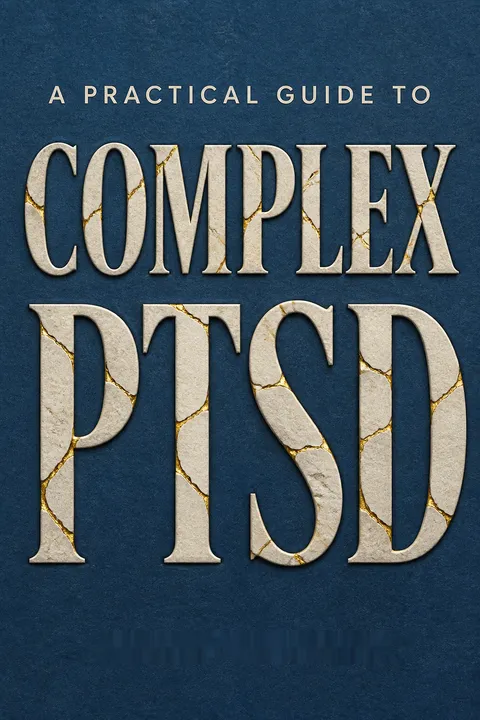


Key Takeaways
Read survival symptoms as adaptations, not proof that you are broken
A pattern with a history. Complex post-traumatic stress disorder, or C-PTSD, can develop after repeated or ongoing trauma, especially when it happens during childhood and affects emotional development. Alongside familiar PTSD symptoms such as intrusive memories, avoidance, and feeling threatened, C-PTSD can involve difficulty regulating emotions, a damaged sense of self-worth, and relationship problems. These are not evidence of a defective character. They are ways a child learned to survive conditions they could not control.
The past can intrude. Isabella drank after a fight with her husband, then felt numb and feared he would leave. Connecting that fear to childhood abandonment helped her understand her reaction and reconnect with her husband. The book's client stories are composites. Symptoms can overlap with other conditions, so this framework can inform a conversation with a qualified clinician, not replace diagnosis.
What's useful here is the distinction between a person and an adaptation. In learning theory, a response can persist because it once reduced danger, even after the context changes. That perspective makes behavior intelligible without pretending its costs are small. It also counters the moralizing habit of calling people difficult or broken. The caution is equally important: a trauma-informed explanation is a hypothesis, not a diagnosis. Anxiety, low mood, dissociation, and relationship strain can have several causes, so compassionate curiosity should accompany careful assessment.
Build safety and choice before turning toward traumatic memories
Recovery has stages. Schwartz describes healing as beginning with safety and stabilization, moving toward carefully paced work with painful memories, and then integrating parts of the self that had to remain separate for survival. There is no prize for moving quickly. A person who becomes overwhelmed can return to grounding and stabilization for as long as needed.
Choice is a tool. The practice called “Reclaim Choice” means deciding when and where to engage with distressing memories. Someone might remind themselves that the present is not the time, then set aside a supported time with a therapist. If thoughts persist, the book suggests writing for 10 to 15 minutes and then closing the journal. Exposure-based work should be collaborative, not forced. The goal is enough contact with the past to process it without being flooded.
The emphasis on pace and consent aligns with a broader principle in trauma care: a treatment can be technically sound and still be unhelpful if the person feels overpowered by it. Choice itself can challenge the old condition of having no control. The staged approach also resists a common cultural preference for dramatic breakthroughs over gradual capacity-building. Its limit is that “feeling safe” is not always a simple internal state, especially when danger is current. Stabilization must include practical safety and support, not only calming exercises.
Use the present to interrupt a flashback's claim that danger is happening now
A reminder can feel current. A flashback may be a rush of images, emotions, or body sensations that makes an old threat feel present. A voice, smell, conflict, or even an ordinary mistake can set it off. Schwartz calls the link between a current emotional state and memories of similar states “state-dependent memory”: feeling frightened can make other frightening memories easier to access.
Orient before interpreting. Sierra's car accident revived fear associated with her mother's childhood outbursts. Grounding practices include looking around for details that signal present safety, noticing the body, and breathing out for longer than breathing in. A trigger list can help someone anticipate difficult situations. But first assess whether there is a real current threat. A safety reminder is useful only when the person is actually safe.
The distinction between a present cue and a past association gives people a practical question: what is happening now, and what does this sensation resemble? That resembles context-based approaches to memory, where surroundings help locate an experience in time. Sensory grounding can make the distinction concrete rather than purely intellectual. Still, no breathing pattern or reassuring phrase works for everyone. For some people, attention to breath or bodily sensations increases distress. The book's invitation to experiment and switch strategies is more sound than treating any one technique as universal.
Replace avoidance gradually, without shaming the strategy that once protected you
Avoidance once made sense. A child who cannot escape a frightening home may hide, become perfect, stay busy, or stop expressing needs. In adulthood, the same strategy can shrink a life by keeping a person away from safe people and situations. Xavier, for instance, hid at home after a breakup, echoing how he hid under his bed during his parents' fights.
Notice, then choose. The book recommends identifying avoidance behaviors and the feelings or situations that precede them. Emotional eating, substance use, isolation, overwork, and dissociation can all be attempts to push distress away. A short-term distraction, such as a walk, music, or a simple task, may help prevent a harmful response. Distraction is not the same as processing the past, and the book does not ask readers to abandon every coping strategy at once.
Avoidance often persists through negative reinforcement: escaping a distressing feeling brings immediate relief, which makes escape more likely next time. That helps explain why a behavior can be costly over months yet feel compelling in the moment. The book's nonjudgmental approach creates room to ask what the behavior is doing before trying to change it. A useful nuance is that avoiding a person or place can also be a healthy boundary. The goal is not maximum exposure to discomfort. It is greater freedom to choose, based on present conditions rather than automatic fear.
Notice when stress pushes you outside your window of tolerance
A range for coping. The “window of tolerance” is the range of stress a person can manage while remaining able to think, feel, and respond. Outside it, someone may become highly activated, with panic, anger, or restlessness, or shut down into numbness, fatigue, or helplessness. Schwartz describes five common defensive patterns: fight, flight, fawn, freeze, and faint. They are ways of responding to perceived threat, not fixed personality types.
Create room to respond. Christine's husband's work trip triggered fear of abandonment and an outburst rooted in earlier experiences. Recognizing that her reaction carried an old history helped her use “wise mind,” a DBT term for bringing emotional experience and reflective thought together. Naming sensations, pausing, and using gentle movement can help someone regain enough steadiness to choose a response rather than act on the first impulse.
The window metaphor is memorable because it makes regulation a question of capacity, not virtue. It also clarifies why the same stressor can be manageable one day and overwhelming another. This is compatible with broader models of stress, which treat attention and decision-making as vulnerable under high arousal. The five responses can help people notice patterns, but they should not become rigid labels or a substitute for assessing a situation. Anger, withdrawal, or appeasement may reflect several influences, including immediate context, not trauma alone.
Return blame to the adult who harmed you, not the child who endured it
Self-blame can preserve attachment. A dependent child may conclude that abuse happened because they were bad or difficult. That belief can feel less frightening than recognizing that the caregiver they rely on is unsafe. Sebastian defended his father's violence by telling himself he deserved it. In therapy, he began to see that self-criticism was carrying anger and shame that had no safe outlet in childhood.
Validate what you feel. The book suggests naming an emotion, noticing self-invalidating thoughts, and asking what circumstances gave rise to the feeling. A person can also write about what they wish they could have said to an abuser and remind themselves that responsibility for abuse belongs to the person who chose it. Reclaiming that responsibility does not erase grief or anger; it makes room to experience them without treating them as proof of personal failure.
This reframing separates responsibility for harm from the child's understandable attempts to survive it. It can loosen shame, which often keeps people isolated and silent. The distinction also matters beyond trauma work: explanation is not endorsement, and compassion for a younger self does not require minimizing what happened. A necessary nuance is that present-day behavior still has consequences. A survivor is not to blame for past abuse, while an adult remains responsible for seeking help and repairing harm they cause now. Those truths can coexist.
Practice boundaries and repair in relationships that can earn your trust
Old expectations travel. Childhood relationships can shape whether a person expects rejection, feels compelled to please, or avoids closeness altogether. Jennifer focused on what her boyfriend wanted and withdrew when afraid to ask for anything. With support, she learned to notice her needs, state them, and tolerate the possibility that someone might say no. “Earned secure attachment” is the book's term for developing greater security in adult relationships despite insecure early care.
Trust needs evidence. Useful relationship practices include taking a pause before lashing out, naming feelings, asking questions, making requests, and setting limits. If a conversation becomes heated, it can be paused with an agreement to return when calmer. Repair matters too: acknowledging hurtful behavior and making a sincere effort to reconnect. Boundaries may also mean leaving a relationship that remains harmful, rather than working endlessly to make it safe.
The relational focus is central: when early harm came through dependence on other people, healing may require experiences of being heard and treated consistently. Attachment theory offers a useful lens for understanding why closeness can feel both desired and dangerous. Yet trust should not be confused with a demand to forgive, reconcile, or disclose. It can be built gradually by observing whether another person respects limits and follows through. The strongest application here is not indiscriminate openness, but careful connection that preserves the right to say no.
Treat dissociation as a signal to ground, not a memory to force open
Disconnection exists on a range. Dissociation can mean feeling foggy, numb, distracted, or detached from the body. It can also involve losing time or having gaps in memory. The book presents it as a protective response to overwhelming or inescapable stress. Lena avoided speaking about childhood sexual abuse for decades; therapy helped her notice disconnection and gradually approach her feelings with support.
Stay connected to now. “Dual awareness” means attending both to present-day safety cues and to a difficult memory, shifting attention between them. The book recommends building this skill with less distressing experiences first and stopping if the exercise becomes overwhelming. It also stresses that healing does not depend on recovering every detail. Because memory may be fragmentary, especially for early experiences, bodily sensations alone should not be treated as proof of a specific event.
This is one of the book's most important safeguards. It respects dissociation as protection rather than a failure of effort, while encouraging a gradual return to present awareness. The point about incomplete memory deserves particular care: memory is reconstructive, and sensations can be meaningful without establishing exactly what happened. That caution reduces the risk of turning therapeutic exploration into certainty about unverified details. For severe lost time, disorientation, or safety concerns, grounding exercises in a book are not a substitute for assessment by a qualified professional.
Rebuild hope by practicing small doses of safety, pleasure, and agency
Hope depends on agency. Prolonged childhood helplessness can make adult choices feel pointless. Darryl, who had grown up with absent, drug-addicted parents, felt that life had become a flat sequence of tasks. Therapy helped him recognize how childhood neglect shaped his disconnection from his needs. Adam, who had learned not to want things because they could be taken away, began to make room for positive feelings and eventually adopted a dog.
Progress is not a straight line. Schwartz recommends noticing strengths, savoring positive moments, and setting goals at a manageable pace. A small experience of enjoyment can be difficult to tolerate when life has trained someone to expect loss, so it may help to stay with that feeling briefly rather than dismiss it. Setbacks do not cancel growth. Meaning can emerge through relationships, creativity, or chosen commitments, but it does not have to be extracted from the trauma itself.
The emphasis on small positive experiences avoids the trap of demanding optimism from someone whose history gives them reasons to distrust it. It also echoes behavioral activation: manageable actions can create contact with rewarding parts of life before motivation feels available. The image of adopting a dog conveys agency through ordinary responsibility, not a grand conversion. At the same time, growth after trauma should never be presented as an obligation or as compensation for harm. A person can build a meaningful life without claiming that suffering was necessary or beneficial.
Analysis
Schwartz's guide is organized around a compassionate reversal: many painful adult patterns are not defects but survival responses learned in relationships where a child had little power. That framing gives the book its coherence. Avoidance, hypervigilance, emotional extremes, dissociation, self-blame, and difficulty trusting are treated as connected consequences of repeated early threat or neglect, rather than as isolated failures of will. Composite client stories make the framework concrete, while the practical exercises translate it into sensory grounding, emotion awareness, boundary setting, and paced reflection.
The strongest contribution is the insistence on choice and timing. The book does not equate healing with recounting every detail or enduring maximum distress. It prioritizes stabilization, then carefully supported memory work, then integration. This is especially important for readers who may otherwise mistake overwhelm for progress. Its relational premise is also persuasive: when injury occurs in relationships, safe and respectful connection can be part of repair, not merely a source of support outside therapy.
The guide's accessible nervous-system explanations and body-based exercises are useful maps, but maps are not complete accounts of an individual's symptoms. Terms such as fight, flight, fawn, freeze, and faint can aid self-observation, yet should not become fixed identities. Symptoms can have multiple causes, and a bodily sensation cannot by itself verify a particular memory. The book is clearest when it encourages curiosity and professional support, rather than certainty or self-diagnosis.
Its larger message is practical rather than sentimental: recovery means gaining more choice in the present, not erasing the past or proving that it made someone stronger. Readers can use the exercises as a menu, not a prescription, and seek trauma-informed clinical care when distress, dissociation, or risk exceeds what a self-help book can safely address.
Review Summary
A Practical Guide to Complex PTSD receives mixed reviews, with an average rating of 4.22/5. Many find it helpful as an introductory guide for understanding C-PTSD, particularly for those dealing with parental abuse or neglect. Readers appreciate the practical exercises and healing strategies provided. However, some critics note its limited scope, focusing primarily on family-related trauma. Advanced readers may find the content basic, while beginners consider it a valuable resource. The book is praised for its compassionate approach but criticized for repetition and lack of depth in certain areas.
People Also Read




Glossary
C-PTSD
Effects of repeated traumaComplex post-traumatic stress disorder is described here as a response to repeated or ongoing traumatic events, with particular attention to childhood trauma. It includes PTSD symptoms such as intrusive memories, avoidance, and persistent threat, alongside difficulties regulating emotions, impaired self-worth, and relationship problems. The book presents this as a framework for understanding symptoms, not a substitute for clinical assessment.
earned secure attachment
Security developed in adulthoodEarned secure attachment refers to developing a more secure way of relating in adulthood despite not having had consistently safe and responsive care as a child. In the book, this involves understanding how early relationships shaped expectations, practicing reaching out for support, tolerating genuine connection, and repairing misunderstandings with others.
window of tolerance
Manageable range of stressThe window of tolerance is the range of emotional and physical stress a person can handle while remaining able to think, feel, and respond effectively. Above or below that range, someone may become highly activated, such as anxious or angry, or shut down into numbness, fatigue, or helplessness. Trauma recovery aims first to support regulation, then gradually expand this capacity.
state-dependent memory
Memory linked to present stateState-dependent memory describes how an emotional or bodily state can make memories associated with a similar state easier to access. The book uses this idea to explain why a present feeling of panic may bring connected frightening memories to mind, creating a sense of being pulled into the past. Recognizing the link can help distinguish a current trigger from an immediate threat.
wise mind
Balanced feeling and thoughtWise mind is a dialectical behavior therapy concept for a balanced perspective that considers both emotional experience and reflective thought. It is not about dismissing strong feelings or obeying them automatically. In the book's example, someone can recognize that a partner's temporary absence is not abandonment while still honoring the fear that the separation evokes.
dual awareness
Past memory plus present safetyDual awareness is the ability to attend to a difficult memory while also noticing present-day surroundings and cues of safety. Used in EMDR and somatic approaches as described in the book, it involves shifting attention between the memory and the here and now. The practice should be paced carefully, and people who become overwhelmed should stop and reorient.
trauma bond
Attachment formed under threatA trauma bond describes an attachment that can develop between a child and an abusive caregiver under conditions of fear and dependence. The child may protect or idealize the caregiver while directing blame toward themselves, because attachment remains necessary for survival. The book also discusses how unresolved dynamics can echo in adult relationships, including difficulty recognizing or responding to harmful behavior.
differentiation
Separating self from othersDifferentiation is the ability to distinguish one's own thoughts, feelings, needs, and responsibilities from those of other people. In the book, it is especially important for survivors who feel responsible for a parent's behavior or remain organized around an abuser's expectations. Developing boundaries and clarifying personal values can strengthen this separation without requiring denial of attachment or grief.
FAQ
1. What is "A Practical Guide to Complex PTSD" by Arielle Schwartz about?
- Comprehensive C-PTSD Resource: The book is a compassionate, practical guide for understanding and healing from complex post-traumatic stress disorder (C-PTSD), especially as it relates to childhood trauma.
- Therapeutic Strategies: It offers research-based therapeutic strategies, including mindfulness, somatic psychology, cognitive behavioral therapy (CBT), and more, to help readers manage symptoms and reclaim their lives.
- Personal Stories and Exercises: The book includes composite client stories and step-by-step healing exercises to make the material relatable and actionable.
- Focus on Empowerment: Arielle Schwartz emphasizes that healing is possible and aims to empower readers to move from surviving to thriving.
2. Why should I read "A Practical Guide to Complex PTSD" by Arielle Schwartz?
- Expert Guidance: Arielle Schwartz is a clinical psychologist specializing in trauma, offering evidence-based, accessible advice for those with C-PTSD or supporting someone with it.
- Holistic Healing Approach: The book addresses mental, emotional, and physical aspects of trauma, providing a well-rounded path to recovery.
- Practical Tools: Readers gain actionable strategies for managing symptoms, improving relationships, and building self-compassion.
- Hope and Validation: The book validates the reader’s experiences and offers hope, showing that recovery is a gradual but achievable process.
3. What are the key takeaways from "A Practical Guide to Complex PTSD" by Arielle Schwartz?
- C-PTSD Is Treatable: With the right support and strategies, the effects of complex trauma can be managed and healed over time.
- Symptoms Are Adaptive: Many C-PTSD symptoms are learned survival mechanisms that can be unlearned and replaced with healthier coping skills.
- Healing Is Nonlinear: Recovery is a long-term, layered process that requires patience, self-compassion, and often professional support.
- Relationships Matter: Healing often happens in the context of safe, supportive relationships, whether with therapists, friends, or loved ones.
4. How does Arielle Schwartz define Complex PTSD (C-PTSD) in "A Practical Guide to Complex PTSD"?
- Result of Repeated Trauma: C-PTSD is described as a response to ongoing or repeated traumatic events, often beginning in childhood.
- Beyond Standard PTSD: It includes the core symptoms of PTSD (re-experiencing, avoidance, hypervigilance) plus additional symptoms like emotional dysregulation, impaired self-worth, and interpersonal difficulties.
- Attachment and Development: The book highlights how early relational trauma disrupts emotional development and attachment, leading to long-term effects.
- Learned Survival Strategies: Symptoms are seen as adaptive responses to unsafe environments, which can persist into adulthood.
5. What are the main symptoms and challenges of C-PTSD according to "A Practical Guide to Complex PTSD"?
- Emotional Dysregulation: Difficulty managing emotions, frequent mood swings, and intense feelings of anger, sadness, or numbness.
- Intrusive Symptoms: Flashbacks, nightmares, and persistent feelings of danger or hypervigilance.
- Avoidance and Dissociation: Withdrawing from people or situations, emotional numbing, and feeling disconnected from oneself or reality.
- Self-Perception and Relationships: Chronic shame, low self-worth, self-blame, and challenges in forming or maintaining healthy relationships.
6. What therapeutic approaches and healing strategies does Arielle Schwartz recommend in "A Practical Guide to Complex PTSD"?
- Cognitive Behavioral Therapy (CBT): Helps identify and change negative thought patterns and behaviors related to trauma.
- Dialectical Behavior Therapy (DBT): Focuses on mindfulness, distress tolerance, and emotional regulation skills.
- Parts-Work Therapies: Such as Internal Family Systems, to address internal conflicts and nurture the “adult self.”
- Somatic Psychology and EMDR: Emphasizes body-based awareness and trauma processing, including techniques like dual awareness and restorative breath.
- Complementary Approaches: Incorporates yoga, meditation, nutrition, and other mind-body practices for holistic healing.
7. How does "A Practical Guide to Complex PTSD" by Arielle Schwartz address avoidance and dissociation?
- Understanding Avoidance: The book explains avoidance as a survival strategy to escape emotional pain, which can manifest as isolation, substance use, or perfectionism.
- Dissociation Spectrum: Dissociation is presented as a continuum, from mild daydreaming to severe memory loss or identity confusion, all rooted in coping with overwhelming stress.
- Mindfulness and Grounding: Healing strategies include mindfulness of the present moment, peaceful place visualization, and sensory engagement to counteract avoidance and dissociation.
- Self-Awareness Practices: The book encourages compassionate self-observation to recognize and gradually reduce avoidance and dissociative behaviors.
8. What does Arielle Schwartz suggest for managing emotional dysregulation and depressive symptoms in C-PTSD?
- Distress Tolerance Skills: DBT-inspired practices help increase the ability to sit with difficult emotions without acting impulsively.
- Mindful Self-Compassion: Cultivating a compassionate inner witness to counteract the inner critic and negative self-talk.
- Embracing Emotions: Encourages feeling and expressing emotions like anger, fear, and sadness in healthy ways, rather than suppressing them.
- Movement and Somatic Release: Gentle physical activity, stretching, and somatic awareness are recommended to release emotional tension and uplift mood.
9. How does "A Practical Guide to Complex PTSD" by Arielle Schwartz help readers improve relationships and interpersonal skills?
- Attachment Theory Insights: The book explains how early attachment wounds affect adult relationships and offers hope for “earned secure attachment.”
- Parts-Work for Relationships: Strategies like anchoring the adult self and imagining reparative experiences help heal relational wounds.
- Healthy Boundaries and Assertiveness: Practical exercises teach readers to set boundaries, communicate needs, and assert themselves in relationships.
- Repair and Connection: Emphasizes the importance of repairing ruptures, practicing healthy relationship skills, and seeking supportive connections.
10. What does Arielle Schwartz say about self-perception, shame, and over-identification with abusers in C-PTSD?
- Origins of Shame: The book details how abuse and neglect foster toxic shame, self-blame, and a distorted sense of responsibility for the trauma.
- Healing Self-Perception: Strategies include validating emotions, somatic release practices, and recalling loving moments to rebuild self-worth.
- Differentiation from Abusers: Encourages readers to develop boundaries, assert their separateness, and “reset the responsibility” for abuse onto the abuser.
- Addressing Trauma Bonds: Explains concepts like Stockholm syndrome and trauma bonding, and offers tools to break free from unhealthy identification with abusers.
11. How does "A Practical Guide to Complex PTSD" by Arielle Schwartz address feelings of hopelessness and the search for meaning?
- Understanding Despair: The book explores how trauma can erode hope, meaning, and a sense of purpose, leading to existential loneliness.
- Building Positive Emotions: Readers are guided to enhance positive experiences, savor good moments, and gradually increase their tolerance for joy.
- Strengths-Based Reflection: Exercises help identify personal strengths, resilience, and growth achieved through the healing journey.
- Grit and Growth Mindset: Emphasizes perseverance, self-compassion, and the importance of viewing healing as a long-term, layered process.
12. What are the most powerful quotes from "A Practical Guide to Complex PTSD" by Arielle Schwartz, and what do they mean?
- "Healing is possible." – This core message is repeated throughout the book, affirming that recovery from C-PTSD is achievable with time, support, and the right strategies.
- "Your symptoms are the result of traumatic injuries that occurred over an extended period. It is important to be realistic about the timeline for healing." – Reminds readers to be patient and compassionate with themselves, recognizing that deep wounds require long-term care.
- "You can let go of the pain; you can learn to stand with unshakable confidence in the basic goodness of who you are." – Encourages reclaiming self-worth and moving beyond the shame and burdens of the past.
- "Courage is not the absence of despair; it is, rather, the capacity to move ahead in spite of despair." – Quoting Rollo May, the book highlights the importance of perseverance and courage in the healing journey.
About the Author
Download PDF
Download EPUB
.epub digital book format is ideal for reading ebooks on phones, tablets, and e-readers.








