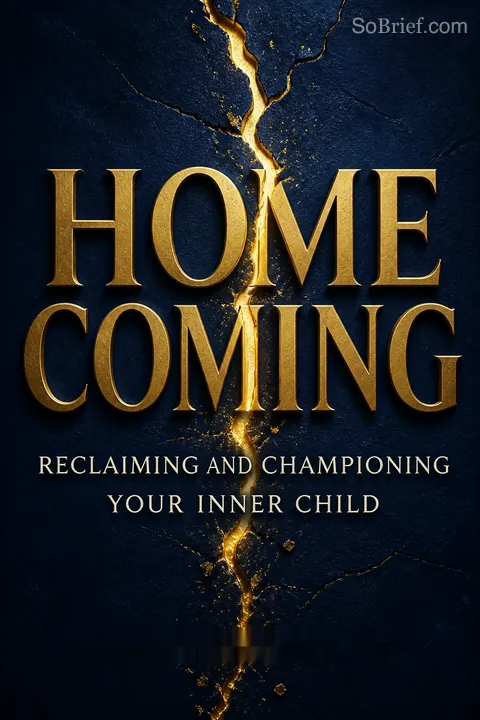


Key Takeaways
Treat adult overreactions as clues to old adaptations, not proof you are broken
The past can intrude. Bradshaw opens with his own vacation blowup: he raged at his family, fled to a motel, then remembered hiding from his drunk father as a boy. He recognized the adult withdrawal as an old way of expressing anger that had felt unsafe in childhood. He calls the wounded inner child the emotional patterns and unmet needs from childhood that continue to influence adult behavior. The term is a psychological metaphor, not a literal child living inside the adult.
Look beneath the reaction. Bradshaw’s workshop participants wrote to parents about childhood loneliness and neglect. Their tears and the care they received from one another suggested that naming old hurt could change how they understood themselves. He links unresolved childhood distress to overreactions, relationship conflict, compulsions, and self-sabotage.
What's striking is the shift from moral judgment to inquiry: instead of asking why someone is so childish, ask what old threat the present situation resembles. Contemporary models of emotional learning likewise recognize that past experience can shape present threat responses. The metaphor can create compassion and curiosity, especially when shame makes behavior seem inexplicable. Its limits matter, though. An inner-child explanation is not a diagnosis, and a strong reaction does not prove a particular childhood event occurred. The pattern is a starting hypothesis to examine alongside current stress, health, relationships, and other explanations.
Unfelt childhood emotion can replay as present-day control, rage, numbing, or craving
Adaptations can persist. Bradshaw argues that when children cannot safely express fear, anger, or sadness, those feelings may resurface through behavior. He calls reenacting old patterns on others acting out, and turning old hurt against oneself acting in. Maggie, who witnessed violence at home and comforted her mother as a child, later entered abusive relationships while counseling abused women. Bradshaw interprets this as a repetition of familiar roles, not a conscious choice.
Substitutes offer relief. He describes addiction broadly as reliance on a behavior or substance to alter mood, including work, food, sex, gambling, and even rage. In his own account, stopping alcohol did not end compulsive behavior; work and other habits took its place. He sees these substitutions as attempts to manage distress, not simply failures of willpower.
This lens helps explain why removing one harmful behavior may not resolve the need it served. In behavioral terms, a habit can be reinforced because it briefly reduces distress, even when its longer-term costs are severe. That makes treatment of the underlying conditions and building safer ways to regulate emotion important complements to behavior change. Bradshaw sometimes presents childhood injury as the central explanation for addiction and aggression. Those problems also involve biology, social conditions, access to support, and individual circumstances, so childhood history is one possible contributor, not a complete account.
Ask what each developmental stage needed before blaming yourself for its survival strategy
Needs change with age. Bradshaw organizes childhood into infancy, toddlerhood, preschool, and school age, drawing largely on Erik Erikson’s developmental model. In his account, infants need reliable care that supports trust; toddlers need safe exploration and room to separate; preschoolers need help developing identity and initiative; school-age children need support for learning, friendship, and competence. Adolescence then brings the task of forming an adult identity from earlier experience.
Adaptation can look like a flaw. A child who learns that saying no brings rejection may become overly compliant. A child whose curiosity is punished may become fearful of trying new things. Bradshaw proposes that revisiting each stage helps adults connect present difficulties with needs that may have gone unmet, and consider what support or skill is needed now.
A developmental map offers a more precise question than the vague instruction to grow up: what capacity was a person trying to build, and what got in the way? This resembles scaffolded learning, where support is matched to the learner’s current task. The stages can organize reflection, but they should not be treated as a rigid timetable or a test of whether a person is damaged. Children develop within different families and cultures, and a single adult difficulty may have several causes. The map works best as a guide for questions rather than a verdict about the past.
Grieve what was missing without confusing emotional release with recovered historical fact
Feelings need recognition. Bradshaw calls his approach original pain work: deliberately contacting grief associated with childhood loss, neglect, abuse, or unmet needs, with the aim of reducing the hold of old distress. He describes grief as involving shock, anger, sadness, remorse, shame, and loneliness, and stresses that the feelings may return in cycles rather than in a neat sequence. The work begins by naming what happened and having a supportive person listen without dismissing or fixing the speaker.
Move carefully. Bradshaw warns that intense exercises can overwhelm some people. He advises stopping if emotions become too strong, seeking qualified help when needed, and avoiding this work during active addiction. He recommends professional support for people with severe trauma or mental-health histories. His central practical message is to proceed gradually, with safety and support.
Emotional processing can help people put distressing experiences into a more coherent personal narrative, while being heard can counter isolation. The essential distinction is between validating a person’s pain and claiming certainty about why it arose. Guided imagery, age regression, and intense group exercises can make feelings vivid, but vividness alone does not establish that a remembered scene is historically accurate. Trauma-informed practice therefore prioritizes consent, grounding, and choice, and avoids leading questions. Bradshaw’s cautions are valuable; the exercises are not a substitute for individualized clinical care when someone is vulnerable or destabilized.
Become the dependable adult who listens, protects, and sets limits for the child within
Care needs both warmth and structure. Bradshaw describes the adult’s role as offering the inner child three forms of support: potency, or the capacity to act; permission to feel and want; and protection from harm. He suggests building trust through simple, repeated attention, such as asking what the younger self feels or needs, then responding honestly. The point is not to indulge every impulse. It is to notice the need and meet it in a responsible way.
Teach kinder rules. His proposed self-parenting principles include accepting feelings without treating them as commands, telling the truth, tolerating mistakes, delaying gratification, respecting others, and taking responsibility for one’s own actions. For instance, anger can be acknowledged while violence remains off limits. The adult becomes a reliable guide rather than another shaming authority.
This is a useful synthesis of self-compassion and self-regulation: kindness reduces shame, while limits preserve responsibility. A person who can name a feeling without immediately acting on it gains a pause in which to choose a response. The idea also avoids making healing dependent on finding a perfect substitute parent. Still, self-parenting should not become a demand for total self-sufficiency. Human beings need reciprocal care, skilled therapists, friends, and communities. The adult’s task is not to erase dependence, but to seek support without expecting any one person to repair every old deprivation.
Retire family roles that buy belonging by sacrificing your actual preferences
Roles can preserve a family’s balance. Bradshaw describes family-system roles as repeated patterns, such as the caretaker, achiever, rebel, scapegoat, or lost child, that help a troubled family manage tension. A child may become the helper, the star, or the quiet one to feel valued or keep conflict at bay. Bradshaw’s own story includes becoming a high-achieving caretaker after his father’s absence. He later recognized that performing those roles did not resolve his loneliness.
Keep the strength, loosen the script. Bradshaw asks readers to identify what their roles demanded and what feelings they suppressed. A caretaker might practice declining requests; an achiever might allow a task to be merely adequate. The aim is not to reject generosity or ambition, but to choose them freely instead of depending on them to earn a place in the family.
The family-systems perspective adds an important social dimension: a person’s pattern can be reinforced by the needs of a whole group, not just by private beliefs. Changing one role may unsettle relationships that depended on it, which helps explain why boundaries can provoke pushback. At the same time, role labels are simplifications. A person may be helpful in one setting and resentful in another, and families rarely fit a tidy cast of characters. The practical test is not which label applies, but whether a behavior is freely chosen, sustainable, and consistent with the person’s values.
Build intimacy from clear boundaries, direct requests, and responsibility for your own needs
Closeness requires a self. Bradshaw argues that when children are valued mainly for pleasing, caring for, or reassuring adults, they may develop a false self shaped around other people’s expectations. As adults, they can struggle to state preferences or distinguish their feelings from a partner’s. He describes people alternating between fearing abandonment and fearing engulfment, becoming clingy in one moment and withdrawn in another.
Make the invisible explicit. Boundaries, in Bradshaw’s account, clarify physical, emotional, sexual, and intellectual limits. He recommends direct communication that distinguishes observation, interpretation, feeling, and desire. For example, a partner can describe what they noticed, name the fear it triggered, and make a request, rather than assuming the other person can read their mind. Each adult must care for their own vulnerable needs instead of assigning a partner the job of replacing a parent.
The framework connects well with attachment theory, which describes how people seek security through patterns of closeness and distance. Naming a feeling and making a specific request can interrupt the cycle of accusation, withdrawal, and anxious pursuit. It also clarifies that a boundary is not a tool for controlling another person; it states what one will accept and what action one will take. The book’s broad claims about false selves can sound all-or-nothing. People routinely adapt to context without losing authenticity. The aim is flexibility and honest choice, not an impossible demand to have no social roles.
Practice missing skills now instead of treating old adaptations as permanent defects
Survival habits can be revised. Bradshaw argues that some adult struggles reflect skills never learned in childhood, rather than permanent character flaws. He recommends concrete practice: noticing wants, saying no, clarifying what someone means, expressing anger without aggression, negotiating, and learning practical or social skills. Small experiments make change more manageable than simply condemning an old pattern.
Images can rehearse alternatives. Bradshaw also describes change history, an NLP technique in which a person recalls a distressing scene while imagining responding with adult resources unavailable at the time. He pairs this with an anchor, a sensory cue associated with a chosen emotional state, such as calm or confidence. The exercise is meant to make future responses feel less rigid. It does not alter the historical event, and Bradshaw advises support when the memory is highly distressing.
The learning-deficit frame can replace global self-condemnation with a workable question: what behavior needs to be practiced? That shift supports agency without denying the real effects of early experience. Rehearsal and sensory cues can help people prepare for stressful situations, but the proposed anchoring method should not be mistaken for a proven way to rewrite neural imprints. Imagining a different response changes the rehearsal, not the past. Skill-building is strongest when paired with observable practice, feedback, and attention to real-world constraints, rather than relying on visualization alone.
Protect wonder and play, but let adult judgment guide their expression
Healing makes room for curiosity. Bradshaw calls the natural capacity for play, spontaneity, wonder, and creativity the wonder child. He argues that these qualities can be buried beneath shame, compulsive roles, and the effort to survive. Norman, a lawyer in Bradshaw’s account, experienced persistent sadness after a dream about lost animals, remembered wanting to become a veterinarian, and eventually changed careers to work with animals. Bradshaw presents the episode as a creative impulse worth listening to.
Integrate rather than regress. The book does not ultimately propose that adults should live only in the present or follow every impulse. Mature life requires memory, responsibility, judgment, and future planning alongside openness and play. Bradshaw gives the wonder child a spiritual meaning, describing it as a route toward personal purpose and connection with the divine, while recognizing that readers may understand that language differently.
Creativity often depends on exploration, play, and tolerating uncertainty, so the book’s defense of these qualities is more than sentimental nostalgia. The Norman story illustrates how a neglected interest can reveal a meaningful alternative, especially when a person has the resources to act on it. But an intense feeling or dream is a prompt for reflection, not an instruction or proof of destiny. Economic obligations, caregiving, and health can constrain choices. Wonder is most useful when it expands the options considered, while adult judgment evaluates which option is viable and humane.
Analysis
Homecoming is part memoir, part developmental map, part workbook, and part spiritual argument. Its most durable move is to reinterpret troubling adult behavior as an adaptation with a history. Bradshaw’s vacation rage makes that idea tangible: a grown man can respond to a present conflict with a strategy learned by a child who had few safe ways to express anger. The framework can reduce shame and invite useful questions about unmet needs, family roles, and learned skills.
The book also distinguishes reclaiming from championing. Emotional recognition alone is not enough; the adult must offer consistency, boundaries, practice, and protection. That combination keeps the project from becoming simple indulgence of the younger self. Its developmental sequence gives readers a way to organize memories and consider what capacities, such as autonomy or trust, may need support now.
The framework has limits. It sometimes treats the wounded child as the root cause of addiction, violence, depression, and relationship dysfunction, although the book itself acknowledges genetic vulnerability and family context. Contemporary clinical understanding is more plural: behavior can arise from interacting biological, psychological, relational, and social factors. The book’s brain-based explanations, including a three-part brain model, should be read as historical explanatory language rather than settled neuroscience. Its guided imagery and age-regression exercises also require care, since emotional intensity cannot verify memory accuracy.
The best use of Bradshaw’s ideas is therefore neither literal belief nor dismissal. The inner child is a metaphor that can help people approach neglected feelings with compassion, while the stages and roles serve as hypotheses rather than diagnoses. The practical test is whether the reflection increases present-day choice: clearer boundaries, safer relationships, better self-care, and renewed capacity for play. The spiritual conclusion offers a language of worth and creative possibility, but readers need not share its theology to use the book’s central invitation: understand the adaptations, mourn what was lost, and practice a more responsible way of caring for oneself and others.
Review Summary
Homecoming receives mixed reviews, with an average rating of 4.02/5. Many readers find it life-changing and insightful for dealing with childhood trauma and inner child work. The book's exercises and concepts are praised for their therapeutic value. However, some critics note outdated psychological theories and gender stereotypes. Readers appreciate Bradshaw's personal experiences and normalizing approach to difficult topics. While some find the writing style challenging or the exercises too unconventional, others credit the book with profound personal growth and healing.
People Also Read







Glossary
Wounded inner child
Childhood patterns still activeBradshaw’s term for the feelings, beliefs, unmet needs, and survival adaptations formed in childhood that continue to influence adult reactions. It is a therapeutic metaphor, not a literal child or a diagnosis. The idea helps connect present patterns, such as withdrawal or people-pleasing, with earlier experiences and needs.
Wonder child
Natural creativity and curiosityThe book’s name for the spontaneous, playful, curious, and creative capacities associated with a person’s authentic self. Bradshaw contrasts these qualities with adaptations organized around shame and survival. He also gives the wonder child a spiritual meaning, as a source of purpose and connection with something larger than oneself.
Original pain work
Grieving unresolved childhood distressBradshaw’s approach to revisiting and expressing feelings connected with childhood losses, neglect, abuse, or unmet developmental needs. It emphasizes naming the harm, allowing emotions such as anger and sadness, and receiving support from a safe person. The book presents it as a gradual process and warns that intense exercises can overwhelm some people.
Toxic shame
Shame experienced as defectivenessBradshaw uses this term for a pervasive sense that the self is fundamentally flawed, rather than a feeling of having done something wrong. He links it to criticism, neglect, abuse, and perfectionistic family rules. In his model, it can lead people to hide their needs, adopt false roles, or seek relief through compulsive behavior.
Core material
Early beliefs shaping experienceA specialized term Bradshaw draws from Haikomi therapy for the feelings, beliefs, and memories that organize a person’s internal experience. He argues that this early-formed material becomes a filter for interpreting new events, helping explain why people may repeat familiar relationship patterns or react strongly to situations that resemble earlier distress.
Family-system roles
Patterns that stabilize family dynamicsBradshaw’s term for recurring positions family members adopt, such as caretaker, achiever, rebel, scapegoat, or lost child. These patterns can help a distressed family maintain its balance while giving a child a way to feel valued or avoid conflict. They may persist into adulthood, even when they no longer serve the person.
Change history
Imagined rehearsal with adult resourcesA technique Bradshaw attributes to Neuro-Linguistic Programming. A person recalls a difficult childhood scene and imagines responding with strengths or support available in adulthood. The exercise aims to loosen the emotional hold of the old response and rehearse alternatives. It does not change the historical event or establish that an imagined memory is accurate.
Anchor
Cue linked to an emotional stateBradshaw uses this NLP term for a sensory cue associated with a particular experience or feeling. A song, gesture, or touch can bring an earlier emotional state to mind. His exercises pair a chosen cue with a resource such as safety or confidence, then use the cue during imagined rehearsal.
Interpersonal bridge
Foundation for trusting relationshipsBradshaw’s term for the early bond between an infant and a nurturing caregiver. He sees consistent care and emotional responsiveness as creating a basis for later trust and connection. When that bond is unreliable or shaming, he argues, a person may struggle to depend on others or trust personal feelings and needs.
I AMness
Sense of inherent personal beingBradshaw’s spiritual and psychological term for the felt sense of existing as a distinct, valuable, and unique person. He argues that a child develops this sense through being recognized and accepted by caregivers. In the book, the loss of I AMness describes a rupture in self-worth and authenticity, not a clinical measure.
FAQ
What's Homecoming: Reclaiming and Championing Your Inner Child about?
- Inner Child Focus: The book delves into the concept of the "inner child," highlighting its significance in understanding and healing emotional wounds from childhood.
- Healing Process: John Bradshaw provides a structured approach to reclaiming the wounded inner child through various developmental stages, such as infancy and school-age.
- Therapeutic Techniques: It includes practical exercises and meditations to help readers reconnect with their inner child and foster emotional well-being.
Why should I read Homecoming: Reclaiming and Championing Your Inner Child?
- Personal Growth: The book is crucial for those looking to understand their emotional struggles and improve relationships by addressing childhood traumas.
- Unique Approach: Bradshaw combines psychological insights with practical exercises, making it accessible for readers at different healing stages.
- Empowerment: Reclaiming the inner child can lead to profound personal transformation, healthier relationships, and a more fulfilling life.
What are the key takeaways of Homecoming: Reclaiming and Championing Your Inner Child?
- Wounded Inner Child: Unresolved childhood issues manifest in adulthood as emotional difficulties and relationship problems.
- Stages of Development: Addressing unmet needs at each developmental stage is crucial for healing the inner child.
- Grief Work: Grieving past losses is essential to reclaim the inner child and restore emotional health.
How does John Bradshaw define the "wounded inner child"?
- Emotional Contamination: The wounded inner child carries unresolved pain and unmet needs from childhood, affecting adult life.
- Behavioral Manifestations: It can lead to co-dependence, trust issues, and maladaptive behaviors as adults cope with unresolved feelings.
- Healing Potential: Recognizing and nurturing the wounded inner child is vital for emotional healing and personal growth.
What methods does John Bradshaw suggest for reclaiming the inner child?
- Grief Work: Emphasizes grieving unresolved childhood issues to heal the wounded inner child effectively.
- Meditation and Affirmations: Includes guided meditations and affirmations tailored to each developmental stage.
- Support Systems: Encourages engaging with supportive friends or groups to validate feelings during the healing process.
What are the developmental stages discussed in Homecoming: Reclaiming and Championing Your Inner Child?
- Infancy: Focuses on bonding and unconditional love, laying the foundation for trust and self-worth.
- Toddlerhood: Emphasizes autonomy and willpower, where children learn to assert themselves.
- Preschool and School Age: Discusses identity development, social skills, and the impact of educational systems on self-esteem.
How does Homecoming: Reclaiming and Championing Your Inner Child address the impact of family dynamics on emotional health?
- Dysfunctional Family Systems: Explains how toxic family dynamics can lead to emotional neglect and maladaptive coping mechanisms.
- Role Assignments: Discusses how children take on specific roles to navigate family dysfunction, hindering emotional development.
- Healing Relationships: Understanding these dynamics helps readers work towards healthier relationships and break the cycle of dysfunction.
What is the significance of grief work in Homecoming: Reclaiming and Championing Your Inner Child?
- Emotional Release: Grief work is essential for processing unresolved emotions and reclaiming the inner child.
- Healing Journey: Confronting past experiences leads to emotional healing and personal transformation.
- Empowerment: Grieving allows individuals to reclaim their sense of self and move towards a fulfilling life.
How can I apply the concepts from Homecoming: Reclaiming and Championing Your Inner Child in my daily life?
- Daily Affirmations: Use affirmations to nurture your inner child, reinforcing self-love and acceptance.
- Journaling: Keep a journal to explore feelings related to your inner child, aiding in emotional processing.
- Support Networks: Engage with supportive friends or groups to share experiences and validate feelings.
What specific methods does John Bradshaw recommend for healing the inner child?
- Personal History Writing: Write about significant childhood events to identify patterns and emotional wounds.
- Meditation and Visualization: Use guided meditations to connect with your inner child and visualize healing.
- Affirmations: Employ affirmations tailored to your inner child’s needs to reinforce self-love and acceptance.
How does Homecoming: Reclaiming and Championing Your Inner Child address the importance of playfulness and curiosity?
- Playfulness as Healing: Engaging in playful activities helps reconnect with the inner child and fosters joy.
- Curiosity in Learning: Encourages a sense of wonder, leading to incidental learning and creativity.
- Reclaiming Joy: Embracing playfulness and curiosity can lead to a more fulfilling and vibrant life.
What role does spirituality play in Homecoming: Reclaiming and Championing Your Inner Child?
- Connection to Higher Power: Recognizing a higher power provides comfort and guidance in the healing process.
- Spirituality and the Inner Child: The wonder child embodies our spiritual essence, representing our innate connection to the divine.
- Transformative Power of Spirituality: Engaging with spiritual practices enhances healing and promotes personal growth.
About the Author



Download PDF
Download EPUB
.epub digital book format is ideal for reading ebooks on phones, tablets, and e-readers.








