

Key Takeaways
Read your family as a system, not a backdrop to one person's behavior.
Patterns shape people. Bradshaw asks readers to look beyond an individual’s behavior and notice the relationships around it. In a family, one person’s response affects others, whose reactions then reinforce the original pattern. For example, if a parent’s drinking leads a spouse to cover missed work and children to hide the problem, the family may unintentionally help the drinking continue. The point is not that one person is to blame, but that the whole pattern matters.
Systems have limits. The book treats families as influential environments, not as the sole cause of every condition. In its revised edition, Bradshaw distinguishes emotional distress shaped by relationships from conditions such as schizophrenia and autism, which he describes as biochemically rooted. A family’s interactions can matter without explaining everything.
What's useful here is the shift from asking only, “What is wrong with this person?” to asking, “What keeps happening between these people?” That is the central move of systems thinking: feedback can stabilize a harmful pattern even when nobody intends harm. The approach can reduce scapegoating and reveal practical points for change. Its caution is equally important. A relational explanation should not erase individual agency, biological factors, or the reality that one person can cause serious harm. A system is a lens for understanding interaction, not a verdict that responsibility is evenly shared.
Shame can turn unmet childhood needs into an adult's false identity.
Shame attacks being. Bradshaw distinguishes guilt, which concerns a harmful action, from shame, which makes a person feel fundamentally defective. When a child depends on parents who cannot offer reliable attention, protection, or emotional acceptance, the child may conclude that the problem lies within the self. The book’s parable of Hugh makes this vivid: caregivers see a child through their own expectations, and the child grows up with an inaccurate picture of who he is.
A mask can protect. Bradshaw calls the defensive identity a false self. A child may become the achiever, the easy one, or the caretaker in order to preserve connection. The role can help the child cope, but it can also obscure the child’s own feelings, needs, and preferences. Later, praise for the role may not resolve the underlying sense of emptiness.
The distinction between shame and guilt is valuable because it separates repair from self-condemnation. A person who feels guilty can ask what action needs correcting; a person who feels inherently bad may hide, attack, or give up. This also connects with identity development: children learn what they are partly through how important adults respond to them. Yet a protective role is not automatically evidence of pathology. Achievement, caretaking, or reserve can be freely chosen strengths. The key question is whether a person can move among roles, or feels compelled to perform one to remain acceptable.
Find the family role a symptom serves before labeling the person.
Roles stabilize systems. In Bradshaw’s account, children in a troubled family may take on rigid roles that help the household manage tension. One child may become the high-achieving Hero, another the comic Mascot, and another the Scapegoat who draws attention through disruptive behavior. These roles are adaptations to the family’s needs, not fixed personality types.
The symptom can signal strain. Bradshaw describes a teenager’s drug use as a possible way a family’s attention shifts away from conflict between parents. In the play The Glass Menagerie, he reads Laura’s quietness as helping hold together the strained relationship between her mother and brother. Such interpretations suggest questions for families and therapists: what changes when the symptom appears, and what conflict does it interrupt? They do not prove that a family caused the behavior or that the person needs no individual help.
This lens makes the so-called problem child legible as a participant in a larger pattern, rather than a defective part to be removed. It resembles ecological approaches in which behavior is understood in context, including the responses it reliably elicits from others. That can open up useful interventions: changing the surrounding interactions may reduce pressure on the identified child. The idea becomes risky when every symptom is assigned a hidden family function. A teenager’s drug use, for example, still requires direct attention to safety, substance use, and personal circumstances. Context can deepen care, but should not substitute for it.
Build intimacy from differentiated selves, not mutual incompleteness.
Connection needs boundaries. Bradshaw uses self-differentiation to describe the ability to stay connected to family while maintaining a distinct identity. A differentiated person can notice feelings without being ruled by them, make choices without reflexive guilt, and remain close without surrendering independence. In the book’s example, a healthy family may miss an adult child who spends a holiday elsewhere while still supporting the choice.
Conflict can be contact. Functional families make room for different preferences and negotiate practical compromises. Bradshaw contrasts couples who discuss their separate holiday customs with couples who respond to difference through blame, guilt, or withdrawal. He also highlights a set of capacities Virginia Satir called the Five Freedoms: perceiving, thinking, feeling, asking for what one wants, and taking reasonable risks. These are not licenses to ignore others. They help people speak clearly and make room for others to do the same.
The chapter’s strongest relationship insight is that closeness does not require sameness. In psychological terms, boundaries support both autonomy and connection: a person can recognize another’s feelings without automatically treating them as their own. This makes disagreement less threatening and gives compromise somewhere to begin. Bradshaw gives the marital partnership a central role in family health, which fits many households but is not a universal template. Families differ in structure, and children can receive stability from several committed caregivers. The broader principle is that dependable, respectful relationships matter, not that every healthy family must follow one arrangement.
Replace unquestioned obedience with boundaries, voice, and accountable care.
Discipline is not domination. Bradshaw borrows Alice Miller’s term poisonous pedagogy for child-rearing that prizes obedience, suppresses emotion, and treats adults as unquestionable authorities. Rules such as “children should be seen, not heard” can teach a child to distrust personal feelings and avoid challenging adult behavior. Bradshaw argues that this style can be passed down by parents who were raised the same way, often without intending to harm their children.
Authority still has a job. The alternative is not permissiveness. Parents provide structure, model responsibility, and set age-appropriate limits while respecting a child’s developing perspective. The book invokes Nazi obedience as a warning about what unquestioned authority can enable, not as a complete explanation of how Nazism arose. Its practical emphasis is on accountability without humiliation: correct behavior while preserving the child’s dignity and capacity to speak.
The important distinction is between authority that protects and authority that demands submission. Children need adults to make decisions they cannot yet make for themselves, but treating obedience as proof of goodness can suppress the judgment that responsible citizenship requires. This connects family practice to democratic habits: listening, giving reasons, and allowing disagreement within safe limits. The historical analogy to authoritarian politics is morally forceful, but should not be mistaken for a direct causal account of political atrocity. The more modest and defensible claim is that habits of unquestioning compliance can weaken independent judgment in both private and public life.
Treat trauma adaptations as survival responses, not proof of a defective self.
The body can protect by disconnecting. Bradshaw describes dissociation as a response in which overwhelming experience becomes separated from conscious awareness or feeling. A person may feel numb, detached, or unable to connect present reactions with earlier harm. He also discusses learned helplessness: after repeated experiences of being unable to stop harm, a person may stop expecting that action will help. These reactions can make sense as survival strategies, even when they cause difficulties in adulthood.
Symptoms are not a diagnosis. The book lists possible responses to abuse, including anxiety, boundary difficulties, depression, and compulsive behavior. It also warns that no single symptom proves sexual abuse, and cautions readers against rushing to conclusions about memories they do not have. Bradshaw recommends qualified support and careful assessment rather than impulsive confrontation. The useful lesson is to take distress seriously without treating a checklist as proof of a particular history.
Reframing a response as an adaptation can reduce self-blame and make room for compassion. It also encourages attention to safety, bodily reactions, and the environments in which a person learned to cope. The book’s restraint around abuse checklists and memory claims is essential: symptoms can have many explanations, and confidence alone does not establish that a recalled event occurred as remembered. A careful approach does not dismiss survivors. It avoids replacing one harmful certainty with another, and supports the person while evidence, context, and professional judgment are considered.
Notice when caring for others erases your own signals.
Survival can become self-neglect. Bradshaw calls co-dependence a loss of ease with oneself, in which a person becomes organized around another person’s needs or a family crisis. A child who learns to monitor a parent’s moods may grow into an adult who struggles to identify personal needs, asks for approval, or feels guilty when setting limits. The pattern can look like devoted caretaking, but it may leave little room for choice.
A role is not a whole self. In Bradshaw’s account, these behaviors began as ways to cope with chronic anxiety and preserve connection. They become costly when they persist automatically, even after the original danger has passed. He uses otheration for living in constant reaction to outside demands rather than attending to one’s own inner experience. Practical questions include: What do I feel? What do I want? Am I helping by choice, or to prevent someone’s anger or departure?
This is a useful distinction between care and compulsive responsibility. The same outward behavior can be generous in one context and self-erasing in another; the difference often lies in whether the person can say no without losing a sense of worth. The concept also invites caution. Co-dependence has been used so broadly that it can become a label for ordinary interdependence or for nearly any relationship difficulty. A more precise application focuses on observable patterns, such as chronic boundary violations, fear-driven caretaking, or inability to attend to one’s own needs, rather than treating the label as a diagnosis.
Use recovery in stages: stabilize, grieve, then orient toward service.
Recovery needs a sequence. Bradshaw presents three stages. First, a person stops an active addiction or destructive pattern, accepts limits, and finds support in a recovery group or other reliable community. He describes this as surrendering the attempt to control what has become unmanageable. Second, the person examines family roles and defenses, grieves unmet childhood needs, and builds more workable boundaries. Therapy or a group can offer feedback that is difficult to generate alone.
Growth moves outward. In the third stage, Bradshaw turns to spiritual practice, reflection, and compassionate action. Service is not meant to replace emotional work; it expresses a life no longer organized entirely around self-protection. The stages are a map rather than a guaranteed timetable. He stresses that recovery takes time and that changing one behavior does not necessarily resolve the underlying patterns that supported it.
The staged model has a practical strength: it distinguishes immediate stabilization from deeper reflection and broader purpose. Support groups can make honesty and accountability social experiences rather than private intentions, while therapy can help people notice patterns they cannot see alone. Bradshaw’s spiritual account is meaningful as a framework for some readers, but his claims about expanded consciousness and unusual psychic abilities are not established by the book’s cited material. Those claims are not necessary to the recovery sequence. Community, emotional awareness, and purposeful service remain valuable without requiring a supernatural explanation.
Make family values democratic: share power without surrendering parental responsibility.
Virtue is learned by experience. In the epilogue, Bradshaw argues that values take root when children repeatedly see trustworthy adults act on them, not when adults demand obedience alone. He draws on a seven-part values process involving choosing among alternatives, considering consequences, cherishing a belief, and acting on it consistently. The aim is for a child to understand and own values, rather than merely perform compliance to avoid punishment.
Power can be shared. Bradshaw’s deep democracy means treating each person’s perspective as worthy of attention while recognizing differences in age, responsibility, and need. Parents still provide limits and consequences, but discipline should teach responsibility without shaming or violence. The same idea expands beyond the home: care for vulnerable people, respect for difference, and service to the wider community are signs that family life is preparing people to participate in a shared society.
The distinction between teaching a value and enforcing a rule is crucial. Repeated practice, explanation, and reflection give children a chance to internalize reasons for behavior, while fear-based compliance may disappear when authority is absent. This is compatible with broader approaches to moral learning that emphasize modeling and habit. Shared power does not mean identical power: children need protection and guidance, and adults remain accountable for decisions. The democratic ideal is strongest when it combines voice with responsibility, rather than confusing respect for a child with the abandonment of parental care.
Analysis
Bradshaw’s central contribution is a change in scale. Rather than treating distress as an isolated defect inside one person, he asks how family rules, relationships, and repeated adaptations shape identity. That shift can expose the hidden work performed by a child labeled difficult, or by an adult praised for endless competence. It also makes change more practical: patterns can be observed and revised, even when no family member set out to create them.
The book’s emotional argument is strongest where it distinguishes shame from guilt and treats rigid roles as survival strategies that can outlast the conditions that produced them. Its three-stage recovery map turns that account into a process: stabilize harmful behavior, examine inherited patterns and grief, then build a life oriented toward meaning and other people. The insistence on support and careful pacing is more persuasive than any promise of a sudden cure.
The framework also needs boundaries of its own. Systems thinking can reveal reciprocal influence, but it should not flatten differences in power or responsibility. A parent abusing a child and a child adapting to that abuse are not equivalent participants. Nor can relational explanations replace assessment of medical, developmental, or social causes. The revised edition itself makes an important correction by distinguishing biochemical mental illness from family-pattern analysis.
Bradshaw’s historical argument about authoritarian parenting and political obedience is evocative, but analogy is not proof of direct causation. His spiritual and consciousness claims are also broader than the evidence presented. Readers can retain the book’s grounded insights without accepting every explanatory leap: children need emotional recognition, family patterns can repeat, boundaries support connection, and authority is healthier when it accepts scrutiny. The deepest value lies not in diagnosing a family as good or bad, but in helping people notice what they learned to hide and choose what they want to pass on.
Review Summary
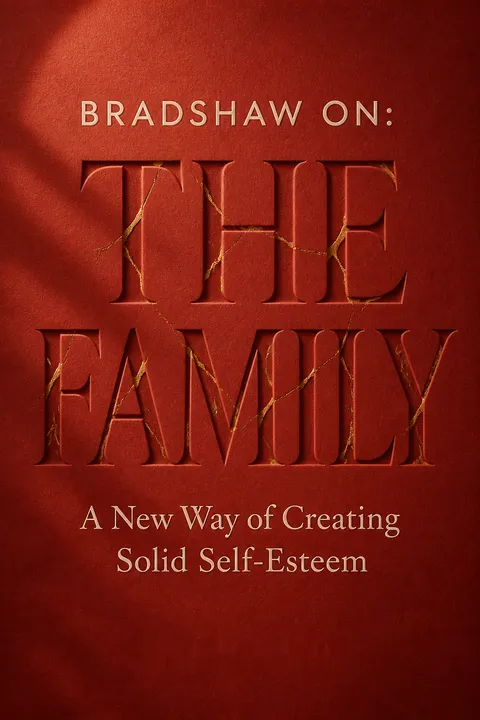
Bradshaw On: The Family receives mixed reviews, with many praising its insights into family dynamics and personal growth. Readers find it helpful for understanding dysfunctional relationships and breaking negative cycles. Some criticize the writing style and outdated concepts. The book is seen as particularly valuable for those from troubled backgrounds or dealing with addiction. While some find it life-changing, others consider it pop psychology. Many appreciate Bradshaw's emphasis on healing childhood wounds and improving family relationships.
People Also Read





Glossary
false self
Protective identity or roleBradshaw uses false self for a defensive identity formed when a child suppresses feelings, needs, or preferences to preserve connection or reduce conflict. It may take the form of a rigid family role, such as the achiever or caretaker. The role can help a child adapt, but it may obscure a more spontaneous sense of self.
fantasy bond
Illusion of secure connectionA fantasy bond is an imagined sense of connection and protection developed when a child’s emotional needs are not adequately met. In Bradshaw’s account, idealizing caregivers can help a dependent child feel safer than recognizing their limitations. The bond may persist into adulthood, shaping relationships and making familiar but painful patterns seem normal.
poisonous pedagogy
Authoritarian, shaming child-rearingBorrowing Alice Miller’s term, Bradshaw uses poisonous pedagogy for child-rearing practices that elevate obedience, suppress emotion, and place adult authority beyond challenge. He argues that children raised this way may learn to distrust their own perceptions and repeat the same methods as parents. His alternative emphasizes limits and accountability without humiliation.
Source People’s Emotional Language Legacy (SPELL)
Inherited family emotional rulesSPELL is Bradshaw’s name for the emotional language and rules a person learns from early caregivers. It includes which feelings can be expressed, which must be hidden, and how family members respond to one another. Bradshaw uses the term to describe how early patterns can feel natural and continue to shape adult relationships.
self-differentiation
Connection with personal boundariesSelf-differentiation is the capacity to remain emotionally connected to others while retaining a distinct sense of identity. Bradshaw associates it with recognizing one’s own thoughts and feelings, considering them rather than reacting automatically, and making choices without being absorbed by guilt or another person’s demands.
co-dependence
Self-neglect under relational stressBradshaw describes co-dependence as a disruption in the developing self, marked by difficulty recognizing one’s own feelings, needs, and wants. It can develop when a person repeatedly adapts to family distress by caretaking, controlling, or performing a rigid role. Behaviors that once helped maintain connection may become costly when they persist automatically.
otheration
Life organized around outside demandsBradshaw uses otheration to describe a state in which attention is directed outward toward other people’s behavior and needs, with little awareness of one’s own internal experience. In his account, people adapting to chronic family stress may become vigilant and reactive. The term highlights the loss of self-attunement that can accompany compulsive caretaking.
identified patient
Person carrying visible family distressIn family-systems language, the identified patient is the family member whose behavior or distress brings the household into view, or prompts others to seek help. Bradshaw argues that this person may express pressures affecting the wider family. The term does not establish that the family caused the problem or that the individual needs no direct care.
deep democracy
Shared respect for every perspectiveBradshaw uses deep democracy for an internalized commitment to compassion, shared power, and the value of each person’s experience. In family life, it means allowing members a voice while maintaining appropriate responsibility and boundaries. He extends the idea to social life, where differences are treated as contributions rather than automatic threats.
original pain grief work
Grieving unmet childhood needsOriginal pain grief work is Bradshaw’s term for facing and mourning the feelings associated with childhood abandonment or unmet developmental needs. The aim is to connect present reactions with past experiences and acknowledge what could not be changed at the time. It is presented as reflective work that may require appropriate support, not as proof that a particular unremembered event occurred.
FAQ
What's Bradshaw on the Family about?
- Focus on Family Dynamics: The book examines how family systems impact individual self-esteem and emotional health. John Bradshaw highlights the role of family rules in shaping identities and behaviors.
- Impact of Dysfunction: It discusses the effects of growing up in dysfunctional families, such as shame and the development of a false self, and how these issues perpetuate cycles of dysfunction.
- Path to Recovery: Bradshaw provides a roadmap for healing, emphasizing the importance of understanding family history to break free from harmful patterns.
Why should I read Bradshaw on the Family?
- Insightful Understanding: The book offers a deep understanding of how family dynamics affect personal development and self-esteem, especially for those from dysfunctional backgrounds.
- Practical Guidance: Bradshaw provides practical advice and strategies for recovering from emotional wounds inflicted by family dysfunction, helping readers improve their emotional well-being.
- Cultural Relevance: The themes are relevant to contemporary societal issues, making it a timely read for anyone interested in personal growth and family dynamics.
What are the key takeaways of Bradshaw on the Family?
- Family as a System: Families operate as rule-bound systems that significantly influence individual behavior and self-perception, crucial for personal development.
- Shame and Self-Esteem: The book highlights how shame, often rooted in childhood experiences, can damage self-esteem and lead to compulsive behaviors.
- Roadmap for Recovery: Bradshaw outlines a three-stage process for recovery, providing a clear path for readers seeking transformation.
What are the best quotes from Bradshaw on the Family and what do they mean?
- “If we do not know our familial history, we may be doomed to repeat it.”: Emphasizes the importance of understanding family background to avoid repeating negative patterns.
- “Shame is a sickness of the soul.”: Defines shame as a profound internal wound that can lead to various emotional issues, highlighting the need to address it for healing.
- “The family is the matrix of character—the most likely place for us to develop the foundation for true virtues.”: Underscores the family’s role in shaping moral values and character.
How does Bradshaw on the Family define co-dependency?
- Definition of Co-dependency: Described as a "dis-ease of the developing self," where individuals sacrifice their own needs to meet others', leading to a loss of self.
- Symptoms of Co-dependency: Includes abandonment fears, denial, and lack of boundaries, impacting relationships and overall emotional health.
- Path to Recovery: Recognizing co-dependency is the first step toward recovery, encouraging self-reflection and support to break free from these patterns.
What is the concept of "poisonous pedagogy" in Bradshaw on the Family?
- Definition of Poisonous Pedagogy: Harmful parenting practices that prioritize obedience and control over emotional health, leading to shame and dysfunction in children.
- Impact on Children: Children may internalize feelings of worthlessness and develop a false self, resulting in long-term emotional issues.
- Need for Change: Advocates for revising traditional parenting values to foster healthier emotional development, emphasizing nurturing self-esteem and emotional expression.
How does Bradshaw on the Family address emotional abuse?
- Understanding Emotional Abuse: Defined as psychological battering that often goes unrecognized but profoundly affects self-esteem and emotional health.
- Checklist for Symptoms: Provides a checklist to identify signs of emotional abuse, aiding readers in assessing their own experiences.
- Healing from Emotional Abuse: Emphasizes acknowledging and processing the pain caused by emotional abuse, advocating for therapy and support.
What are the stages of recovery outlined in Bradshaw on the Family?
- Stage I: Finding a New Family of Affiliation: Involves seeking supportive relationships outside the original family system, building a network of understanding individuals.
- Stage II: Breaking the Original Spell: Focuses on breaking free from negative patterns and beliefs instilled by the family of origin, confronting past traumas.
- Stage III: Discovering Your True Self: Encourages spiritual awakening and compassionate social action, embracing one's authentic self and contributing positively to society.
How does Bradshaw on the Family define self-esteem?
- Core Definition: Self-esteem is the perception of one’s worth and value, significantly shaped by early family experiences and caregiver mirroring.
- Influence of Family Dynamics: Dysfunctional family systems can severely damage self-esteem, leading to feelings of shame and inadequacy.
- Path to Recovery: Emphasizes reconnecting with one’s true self and addressing past wounds to rebuild self-esteem and achieve emotional health.
How does Bradshaw on the Family suggest we change traditional parenting methods?
- Revising Parenting Values: Advocates moving away from authoritarian styles, encouraging nurturing emotional intelligence and self-esteem in children.
- Promoting Open Communication: Emphasizes open dialogue about feelings and experiences within the family, fostering emotional connection and understanding.
- Encouraging Individuality: Suggests supporting children’s individuality and self-expression, helping them develop a strong sense of self-worth.
What role does shame play in Bradshaw on the Family?
- Shame as a Core Issue: Identified as a central theme affecting self-esteem and emotional health, often rooted in childhood experiences.
- Consequences of Shame: Can result in compulsive behaviors, emotional numbness, and relationship difficulties, highlighting the need for healing.
- Healing from Shame: Provides strategies for overcoming shame, including self-reflection, seeking support, and developing self-compassion.
What methods does Bradshaw on the Family suggest for healing?
- Therapeutic Approaches: Advocates for therapy to process emotional wounds and develop healthier coping mechanisms, emphasizing understanding co-dependency and family dynamics.
- Support Groups: Highlights the value of support groups, such as 12-Step programs, in providing community and accountability.
- Inner Child Work: Encourages engaging in inner child work to address unmet childhood needs and foster healing.
About the Author


Download PDF
Download EPUB
.epub digital book format is ideal for reading ebooks on phones, tablets, and e-readers.








