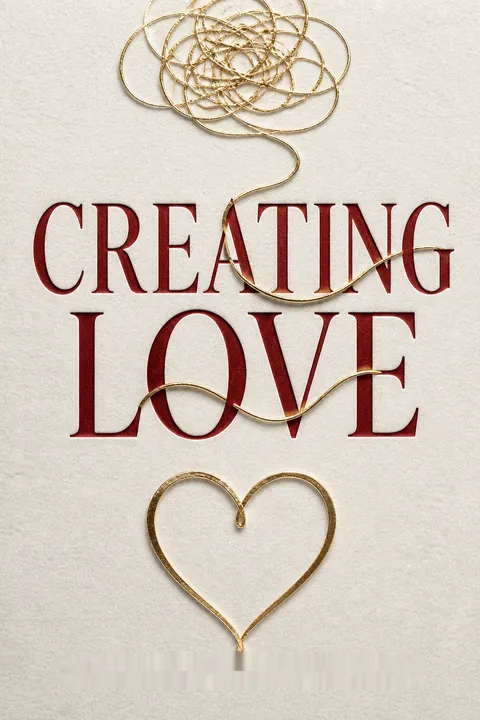


Key Takeaways
Stop calling inherited survival patterns love; create relationships through conscious choice.
Love begins with a question. Bradshaw opens with a theater audience weeping at Miss Saigon. The story awakens his memories of childhood loss and his own painful romantic relationships. He realizes that recovering from childhood wounds has not taught him how to love other people. Love is not simply a feeling that arrives, or a duty automatically owed to family. It requires conscious commitment, courage, and effort.
A false lesson repeats. Bradshaw calls inherited patterns of control, self-erasure, and emotional confusion mystification. In his account, a child may learn that being authentic threatens a caregiver’s acceptance, then build a false self to stay attached. As an adult, that person may repeat familiar family dynamics and mistake them for love.
The opening is powerful because the theater story shows how art can make private history newly visible. The concept also shifts attention from romantic chemistry to the conditions that allow people to meet one another honestly. Attachment research similarly emphasizes that early relationships shape expectations of closeness, though those expectations are not destiny. Bradshaw’s language is best treated as an interpretive lens, not a diagnosis: family influence is real, but people can develop in many ways, and not every painful relationship is a reenactment.
Before reacting, ask which family rule is speaking through you.
Old rules travel. Bradshaw argues that children absorb cultural beliefs through family life. He particularly criticizes patriarchal rules that prize obedience, suppress emotion, discourage independent thought, and define love as duty or sacrifice. Family roles can travel too: a child who learns to please an unavailable parent may later seek approval from a boss or partner in similar ways.
Look for repetition. Bradshaw describes adults choosing partners with familiar traits, sabotaging success to remain loyal to unhappy relatives, or recreating family roles at work. His 25-item mystification quiz asks about beliefs such as whether love means giving yourself up. He explicitly says the quiz is not scientific. Its useful purpose is reflection, not diagnosis or a score that proves someone is damaged.
The strongest move here is connecting private relationship habits to cultural instruction. It prevents the simplistic conclusion that every problem is an individual character flaw. Family-systems thinking adds that a role can help stabilize a household even while limiting the person who performs it. The caution is that the book sometimes treats patriarchy as an explanation broad enough to cover almost everything. Readers can use the framework to generate questions, then test those questions against concrete experience rather than assuming a hidden family script explains every choice.
Notice when an old defense is distorting the person in front of you.
Protection can outlast danger. Bradshaw borrows the term deep trance phenomena for automatic defenses formed in response to distress. These include forgetting painful events, scanning constantly for danger, mentally returning to a younger age, or failing to notice what is happening now. A child who watches an unpredictable parent for warning signs may become intensely alert to details, as his client Larmark did. That vigilance once helped him feel safer, but later drove away friends and partners.
The past colors the present. Bradshaw describes people hearing criticism that was not spoken, missing a partner’s sadness, or reacting to an ordinary disagreement with childlike intensity. He sees these reactions as clues that memory and feeling have overtaken attention to current facts.
This account usefully links behavior to its original protective function. Contemporary trauma-informed approaches also recognize that threat learning can make neutral cues feel dangerous and narrow attention toward risk. The distinction between an old alarm and a present threat can therefore create room for choice. At the same time, trance language can sound more certain than the evidence warrants, and unusual reactions have many possible causes. The practical question is not whether every response comes from childhood, but what the person can observe, verify, and respond to now.
Build love from wonder and human limits, not perfect fantasies.
Keep the wonder. Bradshaw calls healthy love soulful: it draws on curiosity, joy, imagination, courage, and resilience, qualities often dismissed as childish. It also requires healthy shame, his term for awareness that people are limited, make mistakes, and need one another. That differs from toxic shame, which makes a person feel defective for existing.
Imagine realistically. The realistic imagination builds possibilities from actual human experience. The fantastic imagination expects perfection, rescue, or a life without pain. Bradshaw recalls expecting family life to resemble idealized television families, then realizing that this image had little connection to real family experience. Soulful love, by contrast, includes ordinary care, disappointment, conflict, repair, and surprise. It is a process, not a permanent honeymoon.
The contrast between wonder and perfectionism is especially useful: imagination can open options, or it can impose an impossible script on real people. Developmental research on play and curiosity supports the broader idea that exploration helps people learn, while emotion-regulation skills help them tolerate frustration without shutting down. The book’s language of soul is a philosophical and spiritual claim, not a measurable psychological mechanism. Its practical value does not depend on accepting that claim: people can preserve curiosity while making room for limits and mixed motives.
Grieve what happened before asking current relationships to make it right.
Make the hurt real. Bradshaw argues that unexpressed sadness and anger can spill into present relationships as overreaction, withdrawal, or resentment. His separation-grief process has three broad movements: acknowledge one’s own hurt, understand source figures as wounded and human, then practice forgiveness and self-parenting. Forgiveness here means releasing the past’s hold, not approving abuse or restoring contact.
Work with support. Bradshaw recommends doing this work with a trusted person or qualified therapist, especially where there has been sexual or physical abuse. He discourages confronting parents as part of the process and warns readers to stop if the work becomes overwhelming. The aim is to distinguish the internalized image of a parent from the living person and to make choices about present-day boundaries.
The emphasis on validation before explanation is sound: people often need their experience acknowledged before they can reflect on it without self-blame. Modern trauma care also prioritizes pacing, consent, and stabilization. A significant caution is that guided imagery and recovered memories can be suggestible, especially when a person is encouraged to picture scenes and imagine another person’s answers. Such exercises should not be treated as proof that an event occurred. A careful clinician can help separate emotional meaning from claims about historical fact.
Let honest connection teach you that your needs and feelings count.
Self-trust grows relationally. Bradshaw resists the idea that self-love can be installed by repeating affirmations alone. He says that acceptance from trustworthy people can help restore a person’s capacity to accept themselves. Recovery groups, therapy, and supportive friendships offer a place to speak honestly and receive feedback without being shamed.
Claim your five freedoms. Family therapist Virginia Satir’s framework, as Bradshaw presents it, means being free to perceive, think, feel, want, and imagine for oneself. Bradshaw connects these freedoms to recovery from the false self. He describes a rough movement from recovery of choice, through uncovering the truth of one’s history, toward deeper self-discovery. He also warns against turning a group, therapist, or method into a new authority that dictates one correct way to live.
The relational account of self-worth counters the myth that independence means needing nobody. Social support can provide both emotional safety and reality checks, making it easier to test assumptions rather than obey them. The five freedoms are memorable because they cover perception as well as action: a person cannot choose well if they cannot trust what they notice. Still, supportive groups vary in quality. Belonging is not automatically healing, so effective support needs boundaries, room for disagreement, and respect for each member’s agency.
Validate children's feelings while setting boundaries that protect their growth.
Meet the child’s experience. Bradshaw’s parenting ideal is not permissiveness. Children need affection, attention, emotional recognition, and limits that let them explore safely. A parent can acknowledge that a child is angry about a doctor’s visit while still taking the child to the appointment. The feeling is real; the boundary remains.
Change the underlying pattern. Bradshaw distinguishes surface-level change, such as following a parenting manual rigidly, from a deeper change in the parent’s assumptions and reactions. He describes learning to pause before responding to his children and apologizing when his anger was about his own distress. He also stresses that children need room to separate, make age-appropriate choices, and develop their own identities rather than becoming caretakers for a parent’s unmet needs.
The combination of emotional validation and firm limits fits current approaches that support autonomy without abandoning structure. Naming a child’s feeling does not require giving the child everything requested; it helps the child learn that emotion can be tolerated and communicated. Bradshaw’s self-disclosure about yelling and repair makes the principle more credible than a portrait of flawless parenting. His model can still overstate the danger of ordinary mistakes. A single imperfect response is not a pattern of harm; consistency, repair, and the broader relationship matter.
Invest in friendship with time, tenderness, and repair after conflict.
Friendship takes practice. Bradshaw describes friendship as growing from acquaintance to cooperation, companionship, and then affection for the person beyond the shared activity. His childhood memory of four boys standing together captures the safety and belonging that friendship can provide. Adult friendship, he says, requires time, listening, honest disclosure, and expressions of appreciation.
Disagreement is part of closeness. Avoiding conflict can create a polite but false bond, while unspoken resentment may later erupt as withdrawal or anger. Bradshaw describes learning to tell friends when he was upset and to hear difficult feedback in return. He also distinguishes a friendship from a relationship organized around status, shared addiction, or the expectation that two people must always agree.
Friendship is presented as a chosen relationship that supports identity without demanding fusion. That insight connects with social research linking close, reliable ties to well-being, while also explaining why time and reciprocity matter more than mere contact. The book’s examples make tenderness between men visible in a culture that can discourage it. One useful nuance is that not every friendship needs deep disclosure or constant maintenance. The right form depends on the people involved, but honest expectations help prevent a casual bond from being mistaken for an intimate one.
Let couples move from romantic fusion through negotiated difference toward shared creation.
Use stages as a map. Bradshaw describes four possible movements in committed love: initial in-love fusion, a counterdependent power struggle, greater independence and self-definition, and interdependence in which partners create together. The conflict stage often exposes family rules about money, chores, sex, and roles. In Bradshaw’s own marriage, an empty sugar bowl stirred resentment because he had silently expected his wife to fulfill an inherited idea of a wife’s duties.
Negotiate real differences. Soulful partnership does not mean permanent harmony. It requires accountability, privacy, self-disclosure, conflict skills, and willingness to revise expectations. Partners must take responsibility for their own wounds rather than demanding that the other person repair childhood. The stages are a guide to common challenges, not a guarantee that every couple follows the same timetable or stays together.
The stages help explain why early chemistry cannot settle practical questions or prove long-term compatibility. Relationship science likewise treats commitment as a process shaped by communication, shared expectations, and responses to conflict. Bradshaw’s emphasis on each person taking responsibility avoids the trap of turning a partner into a therapist or substitute parent. A limitation is that a tidy four-stage sequence may imply that every couple should progress toward one ideal endpoint. In reality, healthy relationships can take varied forms, and persistent conflict may signal incompatibility or unsafe behavior, not a stage to endure.
Measure faith by compassion, not obedience or certainty.
Faith can serve the self. Bradshaw contrasts extrinsic religion, used for status, security, or moral superiority, with intrinsic faith that shapes daily conduct and remains open to other people and to evidence. He draws on Gordon Allport’s research on religious orientation and Stanley Milgram’s obedience experiments to question the assumption that obedience is automatically virtuous. In his account, surrendering personal conscience can make harmful actions seem righteous.
Keep mystery humane. Bradshaw describes soulful faith as a search that tolerates doubt and leads toward compassion, humility, and service. He remembers his own seminary vows as a sincere but self-erasing attempt to become perfectly pure. His alternative is faith expressed through concrete care for people, including those who are lonely or excluded, rather than certainty about who is saved or correct.
The central ethical point is compelling: institutions and convictions should be judged partly by what they lead people to do to others. Milgram’s work is a useful warning about authority, although it does not establish that religious belief itself causes obedience or cruelty. The distinction between intrinsic and extrinsic faith also resists easy labels. People may find community, ritual, or certainty meaningful without becoming intolerant. The more reliable question is whether a practice strengthens conscience, compassion, and accountability, or suppresses them.
Make work a source of growth, contribution, and shared dignity.
Work can enlarge life. Drawing on Buddhist economics, Bradshaw says work should develop human abilities, connect people through shared effort, and provide useful goods or services. Work loses this soulful potential when output matters more than workers, when a harmful product is treated as acceptable because it earns money, or when a person’s identity shrinks to a job title.
Watch the inherited script. Bradshaw describes Jeremiah, who worked up to 120 hours a week while fearing criticism from partners. He sees the overwork as a repetition of a cruel father’s demands and a way to avoid fear of failure. The book also links work and money to environmental responsibility: a meaningful livelihood should support life rather than treat people and the earth as expendable resources.
This section widens the book’s focus from private healing to institutional design. Research on job quality similarly emphasizes autonomy, learning, social connection, and fair treatment as important features of sustainable work. The ecological argument adds a necessary question: useful to whom, and at what cost? Yet individual employees often have little power to redesign an exploitative workplace. Personal reflection can identify a harmful pattern, but organizations and public policy also shape whether people have meaningful choices.
Analysis
Creating Love is part memoir, part psychological model, and part social critique. Its narrative engine is Bradshaw’s admission that recovery and self-understanding did not automatically make him capable of intimacy. Stories from his counseling work, family life, seminary years, and friendships make the central claim concrete: people can confuse familiar survival strategies with love, then repeat them across relationships, religion, parenting, and work.
The book’s most useful contribution is its insistence that love is learned in relationships and practiced through choice. It connects intimate habits to family roles and cultural rules without reducing love to chemistry or technique. Its strongest practical themes are attention to present facts, emotional validation, realistic expectations, boundaries, repair, and the value of supportive relationships. The shift from perfect formulas toward imagination and human limits also gives the book a distinctive voice.
Its psychological vocabulary is less secure than its ethical insight. Mystification and trance language can organize experience, but they are not established diagnostic categories. Some causal claims about trauma, addiction, family patterns, and later behavior are sweeping, and the quiz is explicitly non-scientific. The guided imagery exercises also require care: imagined scenes can illuminate feelings, but they cannot independently verify memories. Bradshaw himself recommends support and cautions against doing intense work alone.
Read the model as a set of questions, not a verdict: What did this behavior protect? What facts are present now? What boundary or repair is possible? The answer may involve childhood history, but it may also involve present incompatibility, structural pressure, temperament, or safety. The book is most valuable when its humane demand for responsibility is separated from any claim that one theory explains every wound.
Review Summary
Creating Love receives mixed reviews, with an average rating of 3.98 out of 5. Many readers find the book insightful and perspective-changing, praising Bradshaw's approach to understanding relationships and self-love. Some appreciate his exploration of childhood wounds and their impact on adult relationships. However, critics find the book formulaic, chauvinistic, or outdated. Several readers mention discovering the book through bell hooks' recommendations. The audiobook quality is criticized, but the content is generally well-received. Overall, readers who resonate with Bradshaw's ideas find the book transformative.
People Also Read






Glossary
Mystification
False self formed for acceptanceBradshaw uses this term for a confused state in which a person comes to believe that their authentic feelings, needs, or identity are unacceptable. The person adapts to important caregivers by developing a false self, then may repeat familiar relationship patterns without recognizing their origin. The term is an interpretive framework, not a formal clinical diagnosis.
Soulful love
Love grounded in human wholenessBradshaw’s term for love rooted in curiosity, joy, imagination, courage, resilience, and respect for human limits. It is neither effortless nor permanently harmonious. It develops through attention, choice, conflict, accountability, and care, and treats each person as a distinct human being rather than as a role or a source of rescue.
Toxic shame
Belief that the self is defectiveBradshaw distinguishes toxic shame from ordinary guilt. Guilt concerns an action that may need repair; toxic shame makes a person feel fundamentally wrong or unworthy. In his model, repeated rejection, neglect, or control can teach a child to hide parts of the self in order to preserve connection with caregivers.
Deep trance phenomena
Automatic defenses against distressBorrowing from Stephen Wolinsky’s work, Bradshaw uses this phrase for automatic shifts in attention, memory, perception, or bodily awareness that can develop in response to overwhelming experiences. His examples include age regression, hypervigilance, amnesia, dissociation, and altered perception. The framework describes how defenses may persist, not proof that a person was literally hypnotized.
Governing scenes
Shame-linked memory clustersBradshaw’s name for clusters of emotionally charged memories that become linked by similar feelings of shame. A present-day cue resembling part of an earlier experience may activate the larger cluster and influence how a person interprets current events. The concept explains why a small interaction can provoke a response that feels much larger than the immediate situation.
Realistic imagination
Possibility grounded in real experienceBradshaw’s term for using imagination to create new possibilities while accepting the limits and mixed realities of human life. It contrasts with fantastic imagination, which depends on perfection, magical rescue, or impossible expectations. Realistic imagination makes change possible without demanding that people or relationships become flawless.
Five Freedoms
Freedom to perceive and chooseA framework Bradshaw attributes to family therapist Virginia Satir. It describes the freedom to perceive, think, feel, want, and imagine according to one’s own experience rather than according to what one is told to experience. Bradshaw presents these freedoms as essential to self-connection and to responding to present circumstances.
Second-order change
Change in underlying rulesA term Bradshaw uses for change that alters the assumptions and patterns organizing behavior, rather than merely replacing one visible behavior with another. A parent who switches from rigid punishment to rigid adherence to a new parenting manual has changed the method, but not necessarily the underlying rigidity. Deeper change allows flexibility and genuine choice.
Object constancy
Seeing people as whole through conflictA developmental concept Bradshaw draws from James Masterson. It is the capacity to experience oneself and other people as whole, continuous individuals, including both gratifying and frustrating qualities. Without it, a person may shift between idealizing and condemning someone when needs are or are not met.
Intrinsic and extrinsic religion
Faith lived or used instrumentallyBradshaw draws on Gordon Allport’s distinction between religious orientations. Extrinsic religion uses faith for benefits such as security, status, or social influence. Intrinsic religion is more deeply integrated into a person’s life and, in Bradshaw’s account, is more open to humility, evidence, and concern for others. These are orientations, not categories that classify every believer.
FAQ
What's Creating Love: The Next Great Stage of Growth about?
- Focus on Relationships: The book explores how past experiences influence our ability to love and form healthy relationships. It delves into the concept of "mystified love," where unresolved childhood issues hinder authentic connections.
- Healing the Inner Child: John Bradshaw emphasizes nurturing the "inner child" to improve relationships and achieve deeper intimacy. This process is crucial for emotional growth and fulfillment in love.
- Stages of Growth: The book outlines emotional growth stages, transitioning from mystified to soulful love, and offers insights into creating meaningful connections.
Why should I read Creating Love by John Bradshaw?
- Personal Growth: The book provides insights for improving relationships and emotional well-being by confronting past influences on present interactions.
- Practical Advice: Bradshaw offers exercises like the "separation-grief process" and "child-to-child dialogue" to help readers navigate their emotional landscapes.
- Understanding Love: It challenges conventional notions of love, promoting a deeper understanding of love as a process rather than a destination.
What are the key takeaways of Creating Love?
- Mystified vs. Soulful Love: Understanding the difference between mystified love, marked by confusion, and soulful love, rooted in authenticity, is crucial for personal growth.
- Healing Through Grief: Acknowledging and processing past hurts is essential for emotional recovery and moving forward.
- Role of the Inner Child: Nurturing the inner child can lead to healthier interactions and a more fulfilling love life.
What is "mystified love" as defined in Creating Love?
- Definition of Mystified Love: It refers to relationships filled with confusion and unmet needs due to unresolved childhood traumas.
- Impact of Family Dynamics: Early experiences shape our understanding of love, often leading to dysfunctional patterns in adult relationships.
- Need for Demystification: Confronting and understanding these patterns is essential for fostering authentic connections and moving towards soulful love.
How does John Bradshaw suggest we heal our inner child in Creating Love?
- Reclaiming the Inner Child: Recognizing and nurturing the inner child involves acknowledging past hurts and validating associated feelings.
- Child-to-Child Dialogue: Engaging in dialogue with the inner child helps understand needs and feelings, bridging past and present emotions.
- Grieving Process: Expressing and releasing emotions related to childhood experiences is crucial for healthier self-relationships and improved connections.
What is the "separation-grief process" mentioned in Creating Love?
- Purpose of the Process: It helps individuals separate from internalized source figures, like parents, and grieve associated emotional wounds.
- Three Steps: The process involves grieving personal grief, parents' grief, and becoming one's own parent, with exercises for validation and self-acceptance.
- Support System: Having a support person is essential for navigating emotional challenges during healing.
What are some practical exercises from Creating Love?
- Hurt and Sadness Exercise: Writing down instances of hurt helps connect with feelings and validate experiences, bringing unresolved emotions to the surface.
- Embracing Your Mystified Inner Child: Visualizing and dialoguing with the inner child fosters compassion and understanding towards oneself.
- Expressing Anger: Visualization techniques for safely expressing anger towards source figures are crucial for emotional release and healing.
What does John Bradshaw mean by "soulful love" in Creating Love?
- Definition of Soulful Love: It is characterized by authenticity, connection, and a deep understanding of oneself and others, contrasting with mystified love.
- Nurturing Relationships: Soulful love involves nurturing relationships that allow for vulnerability, empathy, and mutual growth.
- Process of Love: Love is described as an ongoing journey requiring effort, commitment, and courage, not a destination.
How can I demystify my relationships according to Creating Love?
- Awareness of Patterns: Recognizing patterns from unresolved childhood issues helps understand emotional responses better.
- Engaging in Dialogue: Dialogues with the inner child and significant others clarify feelings and needs, fostering understanding and connection.
- Seeking Support: Support groups or therapy provide an environment for demystification, helping break down barriers created by mystification.
What are the stages of love outlined in Creating Love?
- Stage One: Codependence: Characterized by an intense emotional bond where partners often lose individuality, marked by a desire for fusion.
- Stage Two: Counterdependence: Partners confront differences and engage in power struggles, often leading to disillusionment.
- Stage Three: Independence: Partners develop identities and negotiate needs, fostering self-connection and greater intimacy.
- Stage Four: Interdependence: A deep, soulful connection where partners support each other's growth, representing a mature, balanced relationship.
What role does shame play in Creating Love?
- Healthy vs. Toxic Shame: Healthy shame leads to self-awareness and growth, while toxic shame binds individuals in self-loathing and mystification.
- Path to Healing: Embracing and processing shame is necessary for healing and self-acceptance, transforming it into a source of strength.
- Impact on Relationships: Toxic shame hinders intimacy and connection; addressing it fosters more authentic and loving relationships.
What are the best quotes from Creating Love and what do they mean?
- “In the evening of life, we will be judged on love alone.”: Emphasizes the ultimate importance of love in our lives, suggesting relationships and love are what truly matter.
- “The reclaiming of my inner child was the beginning of learning to love, not the end.”: Highlights the ongoing journey of self-discovery and healing, underscoring the continuous process of nurturing the inner child.
- “Love is a process that requires hard work and courage.”: Reflects the idea that love is an active engagement demanding effort and bravery, encouraging readers to embrace relationship challenges.
About the Author

Download PDF
Download EPUB
.epub digital book format is ideal for reading ebooks on phones, tablets, and e-readers.








