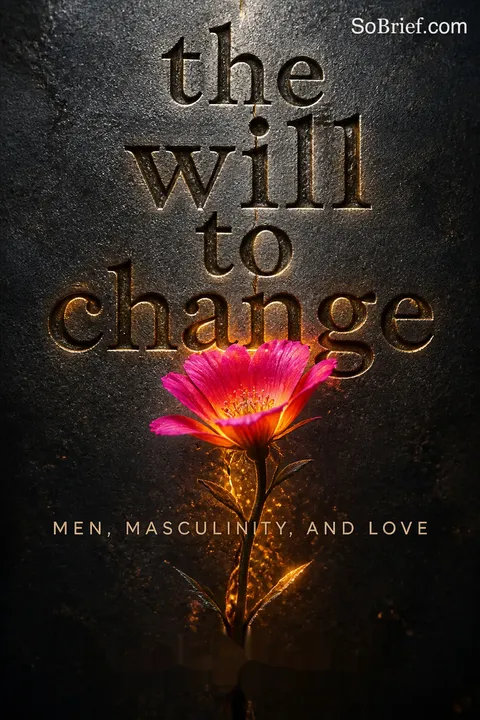


Key Takeaways
Men can learn love only by rejecting the domination patriarchy calls manhood.
Love requires change. bell hooks argues that men are not inherently incapable of love, but patriarchal culture trains them to equate manhood with control, emotional restraint, and authority over others. That training injures men as well as the people they dominate. In her childhood, hooks feared her father's violence and sometimes wished he would die. As an adult, she sought to speak honestly with him and rebuild a loving relationship. The change did not come from pretending the harm was harmless; it began by seeing both the violence and the human connection beneath it.
The book's central wager is that feminism can offer men a route toward wholeness, not just a critique of male power. Love, in this account, asks men to give up domination and women to stop treating men as beyond repair. It does not ask anyone to tolerate abuse.
The argument's force comes from holding two truths together: patriarchal power causes real harm, and men shaped by that system remain capable of change. That is more demanding than either demonizing men or excusing them as products of their upbringing. Attachment theory offers a useful parallel: early relationships shape expectations about closeness, but they do not fix a person's future. Still, reconciliation is not an obligation, especially for someone facing ongoing danger. Hope for change should never be used to overrule a victim's right to distance, safety, and accountability.
Treat boyhood shame as social training, not proof of boys' nature.
The script starts early. hooks defines patriarchy as a social system that grants men authority over those deemed weaker and justifies preserving that authority through coercion and violence. Children learn its rules at home, in schools, religious settings, and among peers. Her father stopped her from playing marbles with her brother and beat her when she defied the gender rule. Her brother, meanwhile, was punished for being gentle. Both children learned that their own inclinations mattered less than the gender script.
Peer enforcement continues the lesson. hooks describes a boy named Ruby teased for his name and nail polish, despite his family's efforts to affirm his choices. Girls and women can reinforce the same rules as men do. Loving boys means offering places where they can express feeling and experiment with identity without being shamed into conformity.
This account connects gender socialization to social learning: children absorb norms not only from instructions, but from rewards, ridicule, and the approval of peers. That helps explain why a caring household alone may not insulate a child from a wider culture. The Ruby story also shows that resistance can require more than telling a child to be brave; adults can change the immediate social environment. Yet not every boy who conforms has been emotionally destroyed, and not every unconventional choice is liberating. The crucial issue is whether choice remains possible without humiliation.
Hear anger as possible grief, but never mistake explanation for permission.
Anger can conceal pain. hooks argues that patriarchal culture permits men to show anger while teaching them to suppress fear, sadness, and vulnerability. That leaves some boys and men with few acceptable ways to express distress. A boy who cannot name grief may act it out, withdraw, or use anger to protect himself from feeling exposed. In her family, a father's rare eruptions of rage kept everyone afraid even when he was otherwise quiet. Fear and silence became part of the family's daily life.
Understanding the pattern helps identify how violence is learned and normalized, but it does not make violence acceptable. hooks insists that abuse cannot coexist with loving intimacy. People harmed by a man's behavior are not responsible for healing him, and explanation cannot replace a clear demand that he stop, take responsibility, and make amends.
The distinction between emotional cause and moral excuse is essential. Research on emotion regulation treats naming feelings as one way to reduce reliance on impulsive responses, but emotional literacy cannot substitute for boundaries or safety. hooks also challenges the habit of reading male anger as strength, a framing that can hide fear and preserve its social rewards. Her account is strongest when it opens space for understanding without reducing every act of violence to a single origin story. Harm has many causes, and responsibility belongs to the person who causes it.
Build intimacy through care, respect, trust, and accountability, not declarations.
Love is something practiced. Drawing on other writers about love, hooks describes it through care, commitment, knowledge, responsibility, respect, and trust. Saying I love you matters less than whether behavior makes those qualities real. In a relationship with her partner Anthony, declarations of love became difficult to connect to actions or even explain in conversation. Their conflict revealed a common gap: people may sincerely want love without having learned the skills that make closeness possible.
Abuse breaks the practice. hooks recalls a woman who wondered whether she should endure some mistreatment to keep a relationship. Her partner's friend told her that abuse was incompatible with love. That response helped her take responsibility for her safety rather than mistake endurance for devotion. Partners can support growth, but one person's care cannot do another person's emotional work for them.
This definition makes love observable. It shifts discussion from intention to patterns of conduct, much as relational ethics asks whether a bond respects the agency and dignity of everyone involved. The approach is useful precisely because declarations can be sincere and still mask neglect or coercion. One caution follows: a checklist of loving behaviors can become another demand placed unevenly on women, who are often expected to manage everyone's emotional life. Mutuality means that both people practice care and accountability, and neither is asked to earn safety by being patient.
Stop asking sex to supply the closeness patriarchal life forbids.
Sex carries too much weight. hooks argues that men are often taught to treat sex as proof of manhood and as a route to intimacy, while also being discouraged from emotional openness in ordinary life. Sex then becomes a substitute for connection, not a reliable source of it. When the encounter ends and the underlying loneliness remains, some men seek more sexual attention or turn to pornography as another outlet. The book links this pattern to a culture that presents male desire as uncontrollable and can excuse coercion with the claim that men simply need sex.
A different sexuality would make pleasure mutual rather than a contest for control. It would value each partner as a person, attend to consent, and allow tenderness and communication. hooks rejects the idea that sexual pressure or abuse is simply a natural feature of male desire.
The distinction between sex as pleasure and sex as a stand-in for belonging is psychologically illuminating. It also helps explain why satisfying desire does not necessarily resolve loneliness. The critique is most persuasive when aimed at entitlement and coercion, not at desire itself. Sexual behavior varies widely, and pornography use is not automatically evidence of emotional damage. The more useful question is whether a sexual script supports consent, reciprocity, and honest communication, or trains people to treat another person's body as a tool for managing their own unmet needs.
Separate a man's worth from the job that consumes his life.
Work cannot carry identity alone. hooks challenges the idea that men were once content to find fulfillment solely in providing. She points to accounts of worker dissatisfaction that predate feminist gains and argues that economic insecurity and dehumanizing jobs damage men independently of women's access to employment. Long hours can also drain the time and energy needed for family life, friendship, and emotional growth. Women who work often face a second shift of housework and caregiving, while men may still treat emotional labor at home as women's responsibility.
The alternative is not to push women back into dependence. It is to treat work as one part of life, share care responsibilities, and make room for self-development. hooks highlights recovery groups as places where men can speak about failure and feelings with others, rather than using work or substances to avoid distress.
The chapter links private intimacy to political economy: a culture that measures worth through paid labor leaves little time for relationships and makes unemployment feel like a threat to identity. This resonates with research traditions that distinguish job conditions from individual resilience. The analysis also resists blaming feminism for economic pressures produced by employers and insecure labor markets. Its challenge is to avoid making emotional fulfillment seem like a personal fix for structural exploitation. Better relationships matter, but they cannot by themselves provide secure work, fair pay, or time to rest.
Define strength as relational responsibility, not control over others.
Manhood needs a new model. hooks calls this alternative feminist masculinity: a way of being male grounded in integrity, self-respect, emotional awareness, assertiveness, and the ability to remain both independent and connected. It is not a demand that men become women, nor a softer version of a father who remains in charge. It replaces a dominator model, where power means control, with a partnership model based on mutuality and shared responsibility.
Practice changes identity. hooks argues that men who participate fully in parenting can develop relational skills often treated as women's natural gifts. She also describes the wisdom of a Maasai elder: a good warrior knows when a situation calls for fierceness and when it calls for tenderness. The point is not to abolish strength, but to free it from the expectation that men must dominate or use violence to prove themselves.
This framework avoids a common trap in debates about masculinity: defining liberation as a reversal of the old hierarchy or the erasure of male identity. It instead changes the measure of strength from command to judgment and care. That idea has echoes in leadership research, where authority is more durable when paired with accountability and the ability to listen. The framework also needs a material counterpart. Celebrating relational virtues is not enough if institutions still reward aggression, hoard care work among women, or deny people equal power and safety.
Challenge stories that make violent men heroic and tenderness a weakness.
Media teaches masculinity. hooks argues that films, television, music, and children's entertainment repeatedly show boys that violence is a normal response to crisis. In her example, the television hero The Incredible Hulk becomes a destructive creature when angry, then returns to ordinary life without remembering or taking responsibility for what he did. The story makes violence spectacular while separating it from accountability. War films and action narratives can likewise present killing as heroic and emotional disconnection as masculine.
Representation shapes possibility. hooks argues that audiences need images of men who connect, communicate, and change, not only stories of violent men who are hunted down or redeemed as benevolent patriarchs. She also reads racialized images of threatening masculinity as a way dominant culture can project violence onto a darker outsider and obscure its own use of domination.
Popular stories do not dictate behavior, but they supply scripts for what feels imaginable, admirable, or embarrassing. Media analysis therefore extends the book's family-level argument into public culture: norms are rehearsed through entertainment as well as parenting. The Hulk example is vivid because it joins aggression with amnesia, a fantasy of force without responsibility. Still, audiences interpret stories differently, and one violent film does not mechanically produce violent viewers. The stronger case is cumulative: repeated portrayals can make alternatives harder to recognize unless creators and communities offer compelling counterimages.
Make male recovery communal, grounded in truth, grief, and practice.
Wholeness takes work. hooks uses integrity to mean bringing the divided parts of a person back together instead of hiding them in separate compartments. Men trained to perform toughness may learn to lie about what they feel, avoid criticism, or bury grief. Recovery asks them to tell the truth, mourn what was lost, examine their choices, and take responsibility for harm. In Alice Walker's novel The Color Purple, the character Albert changes through listening, reflection, and renewed participation in community, offering hooks an imaginative picture of male transformation.
Healing needs witnesses. hooks points to therapy, support groups, education, and relationships where men can speak honestly and be challenged. But care from loved ones is not a cure, and women are not responsible for rescuing men. A community that supports recovery must also protect those harmed and expect changed behavior, not just emotional disclosure.
The emphasis on community counters the idea that self-transformation is a solitary act of will. Group settings can make shame speakable and give people feedback that private reflection cannot provide. The focus on mourning is especially important: anger often becomes easier to express when sadness is culturally forbidden. At the same time, support should not become a sanctuary from consequences. A credible recovery process includes repair, changed conduct, and boundaries set by those affected. Compassion is compatible with refusing access to people who remain unsafe.
Analysis
The Will to Change is a feminist political argument told partly through family memoir, psychological interpretation, and cultural criticism. Its distinctive move is to reject a false choice: men can benefit from patriarchal authority in some settings and still be emotionally damaged by the system that grants it. hooks treats patriarchy not as a synonym for individual men, but as a social order learned through family expectations, peer shame, institutions, work, sexuality, and media. That definition lets her criticize male domination without declaring maleness itself defective.
The memoir gives the argument its emotional force. The story of a child disciplined for playing marbles makes gender hierarchy concrete, while the adult narrator's return to a relationship with her father tests whether criticism can coexist with love. These are not decorative anecdotes. They demonstrate how the system enters private feeling and how a relationship may change when people speak more truthfully. Her account also refuses to absolve women: mothers, partners, and feminist communities can reinforce silence or patriarchal rules, even while having less structural power than men.
The book's strongest practical distinction is between understanding and excuse. Male pain deserves attention because emotional suppression can feed disconnection and anger, but suffering does not erase responsibility for violence. Its account of love as action, not merely feeling, makes that distinction usable. The demand for mutuality also clarifies why a benevolent patriarch is not a sufficient alternative: kindness under unilateral control still leaves one person subordinate.
The argument is more interpretive than systematic. hooks draws on personal testimony, published studies, therapy writing, literature, and popular media, but these forms of evidence do not establish every broad claim about men, sexuality, or violence. Some passages risk treating patriarchal socialization as nearly universal or implying a direct path from emotional injury to aggression. Readers should take the book as a forceful structural diagnosis, not a clinical explanation of every man's behavior. Its enduring question is practical: what would change if boys' emotional lives, men's accountability, and women's safety were treated as connected political concerns?
Review Summary
The Will to Change received mixed reviews. Many readers found it insightful and life-changing, praising hooks' compassionate approach to masculinity and patriarchy. They appreciated her argument that patriarchy harms both men and women, and her call for a more inclusive feminism. However, some critics found the book repetitive, lacking in evidence, and outdated in its gender binary perspective. Several reviewers noted the absence of discussion on transgender experiences. Despite these criticisms, many still recommended the book as an important contribution to feminist literature.
People Also Read









Glossary
Patriarchy
Gendered system of dominationhooks uses patriarchy to describe a political and social system that treats men as entitled to rule, especially over women and those deemed weak. It is sustained through gender roles, institutional authority, emotional conditioning, and coercion or violence. Women as well as men can learn and reproduce its beliefs, although men generally receive greater power from the system.
Psychological patriarchy
Internalized gender hierarchyA pattern of thought and relationship in which traits coded masculine are elevated and traits coded feminine are devalued. Both men and women can participate in it. In intimate life, it encourages dominance and submission in place of mutual connection, even when no explicit political argument about male authority is being made.
Feminist masculinity
Non-dominating male identityhooks's name for a model of manhood separated from domination, emotional suppression, and the need to prove male superiority. It values integrity, self-respect, emotional awareness, assertiveness, empathy, and relational skill. Its measure of strength is responsibility to oneself and others, within relationships committed to equality, mutuality, and nonviolence.
Dominator model
Power through controlA way of organizing relationships around hierarchy, control, and unequal authority. One person is positioned above another and may use submission, manipulation, shame, or violence to preserve that position. hooks contrasts this model with relationships in which people remain distinct individuals while sharing responsibility and respecting each other's agency.
Partnership model
Mutuality without dominationAn alternative to relationships organized by control. The partnership model treats people as interdependent, equally worthy, and capable of shared responsibility. It does not require identical roles or erase individual differences. Its central test is whether those differences are used to deepen cooperation or to justify one person ruling over another.
Normal traumatization
Everyday shaming of boysA phrase hooks cites from family therapist Terrence Real for ordinary moments when boys learn that certain feelings, interests, or behaviors violate masculine rules. A peer's disapproving look or a parent's ridicule can teach a boy to hide parts of himself. The word normal describes how common the process is, not whether it is harmless.
Relational recovery
Relearning emotional connectionThe process of rebuilding the capacity for emotional awareness, intimacy, trust, and community after learned disconnection. hooks presents it as active work that may involve therapy, support groups, education, honest relationships, and changed behavior. It cannot be completed by another person's love alone, nor can emotional disclosure replace accountability.
Interbeing
Selfhood through connectionA way of understanding personal life as connected to other people and the wider community rather than as isolated or defined by control. In hooks's argument, interbeing opposes the assumption that independence requires emotional separation. It supports a partnership ethic in which caring for others and developing the self are compatible.
FAQ
What's "The Will to Change: Men, Masculinity, and Love" about?
- Exploration of Masculinity: The book delves into the complexities of masculinity, examining how patriarchal culture shapes and often damages men's emotional lives.
- Patriarchy's Impact: It discusses how patriarchy demands men to suppress emotions, leading to a crisis in masculinity and affecting their ability to love.
- Call for Change: bell hooks advocates for a transformation in how society views and constructs masculinity, urging men to embrace feminist thinking for emotional well-being.
- Focus on Love: The book emphasizes the importance of love and emotional connection as a means to heal and transform men's lives.
Why should I read "The Will to Change: Men, Masculinity, and Love"?
- Insightful Analysis: The book provides a deep analysis of how patriarchal structures harm men and hinder their emotional development.
- Empathy and Understanding: It fosters empathy by highlighting the struggles men face under patriarchy, encouraging readers to understand and support men in their journey to emotional health.
- Practical Guidance: bell hooks offers practical advice on how men can reclaim their emotional lives and build healthier relationships.
- Broader Social Implications: Understanding these dynamics can contribute to broader societal change, promoting gender equality and reducing violence.
What are the key takeaways of "The Will to Change: Men, Masculinity, and Love"?
- Patriarchy Hurts Men: Patriarchal culture demands emotional suppression from men, leading to a crisis in masculinity.
- Need for Emotional Awareness: Men must reconnect with their emotions to heal and form meaningful relationships.
- Feminist Masculinity: Embracing feminist principles can help men develop a healthier, more fulfilling sense of masculinity.
- Role of Love: Love and emotional connection are crucial for men's transformation and the dismantling of patriarchal norms.
How does bell hooks define "patriarchy" in "The Will to Change"?
- Political-Social System: Patriarchy is described as a system that insists on male dominance and superiority over the weak, especially females.
- Psychological Impact: It demands emotional suppression from men, leading to a disconnection from their true selves.
- Cultural Reinforcement: Patriarchal values are reinforced through various institutions, including family, religion, and media.
- Need for Dismantling: hooks argues that dismantling patriarchy is essential for both men and women to achieve emotional well-being and equality.
What is "feminist masculinity" according to bell hooks?
- Redefinition of Strength: Feminist masculinity defines strength as the capacity to be responsible for oneself and others, rather than domination.
- Emotional Awareness: It encourages men to be emotionally aware and to express vulnerability and empathy.
- Partnership Model: Emphasizes mutuality and partnership in relationships, moving away from hierarchical structures.
- Path to Wholeness: It offers a path for men to reclaim their integrity and live authentically, free from patriarchal constraints.
How does "The Will to Change" address male violence?
- Cultural Conditioning: The book explains that male violence is often a result of patriarchal conditioning that equates masculinity with dominance.
- Emotional Disconnection: Violence is linked to men's disconnection from their emotions and the inability to express vulnerability.
- Need for Healing: hooks advocates for healing male spirits by encouraging emotional awareness and rejecting patriarchal norms.
- Role of Society: Society must create environments that support men in developing healthier, non-violent expressions of masculinity.
What role does love play in "The Will to Change"?
- Healing Force: Love is presented as a transformative force that can heal the wounds inflicted by patriarchal masculinity.
- Emotional Connection: It emphasizes the importance of emotional connection and intimacy in building healthy relationships.
- Foundation for Change: Love is seen as the foundation for creating a culture where men can thrive without adhering to patriarchal norms.
- Mutual Partnership: The book advocates for relationships based on mutual respect and partnership, rather than domination.
What are some of the best quotes from "The Will to Change" and what do they mean?
- "Patriarchy demands of men that they become and remain emotional cripples." This quote highlights how patriarchy forces men to suppress their emotions, leading to emotional disconnection.
- "Men cannot change if there are no blueprints for change." It underscores the need for guidance and models of healthy masculinity for men to transform.
- "To know love, men must be able to let go the will to dominate." This emphasizes that true love requires relinquishing control and embracing vulnerability.
- "Feminist thinking teaches us all, males especially, how to love justice and freedom in ways that foster and affirm life." It suggests that feminist principles can guide men toward a more fulfilling and just way of living.
How does bell hooks suggest men can reclaim their integrity?
- Embrace Vulnerability: Men should learn to express vulnerability and reconnect with their emotions.
- Practice Self-Critique: Engaging in self-reflection and being open to criticism can help men grow and change.
- Seek Emotional Awareness: Developing emotional awareness is crucial for men to understand and express their feelings.
- Commit to Change: Men must actively choose to reject patriarchal norms and embrace a more holistic sense of self.
What does "The Will to Change" say about the role of media in shaping masculinity?
- Reinforcement of Stereotypes: Media often perpetuates patriarchal stereotypes of masculinity, emphasizing dominance and emotional suppression.
- Lack of Positive Models: There is a scarcity of media representations that offer alternative, healthy models of masculinity.
- Influence on Boys: Boys are particularly influenced by media portrayals, which can shape their understanding of what it means to be a man.
- Need for Change: hooks calls for a shift in media narratives to promote a more inclusive and emotionally aware vision of masculinity.
How does "The Will to Change" address the relationship between men and work?
- Work as Identity: Patriarchal culture often ties a man's identity to his work, leading to emotional disconnection.
- Impact of Capitalism: The book discusses how capitalist values exacerbate the pressure on men to perform and succeed at work.
- Need for Balance: hooks advocates for a balance between work and emotional well-being, encouraging men to prioritize relationships.
- Redefining Success: Success should be redefined to include emotional fulfillment and relational skills, not just professional achievements.
What practical advice does bell hooks offer for men seeking change?
- Engage in Therapy: Men are encouraged to seek therapy to explore their emotions and heal from past traumas.
- Build Support Networks: Creating communities of support can help men navigate the challenges of rejecting patriarchal norms.
- Educate Themselves: Men should educate themselves about feminist principles and how they can apply them to their lives.
- Practice Love: Actively practicing love, empathy, and emotional connection can lead to personal transformation and healthier relationships.
About the Author
Other books by bell hooks





Download PDF
Download EPUB
.epub digital book format is ideal for reading ebooks on phones, tablets, and e-readers.








