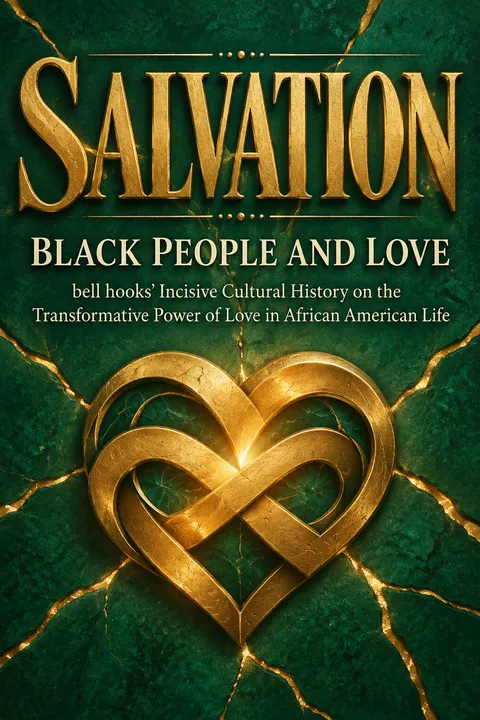


Key Takeaways
Treat love as the infrastructure of freedom, not a private luxury.
Love has public consequences. bell hooks begins with a troubling scene: children tell her that love does not exist, while once-vibrant Black neighborhoods appear emotionally emptied. She argues that poverty and violence matter, but material aid alone cannot mend this crisis of spirit. The book’s central idea, a love ethic, means putting care, knowledge, responsibility, respect, trust, and commitment into practice. Love is not a pleasant feeling that excuses injustice. It is a way of relating that strengthens people’s ability to resist domination and build communities where dignity is real.
Freedom needs an inner foundation. hooks contrasts movements focused on acquiring power or material status with struggles that also transform how people treat themselves and one another. Without that transformation, liberation risks changing who holds power while leaving its habits intact.
What's striking is the scale of the argument: love becomes a standard for evaluating institutions and movements, not simply a virtue between partners. This connects intimate ethics to political legitimacy. A movement that opposes domination while tolerating humiliation within its own ranks reproduces the very logic it resists. At the same time, love cannot stand in for housing, safety, education, or economic justice. The book is strongest when love is understood as the ethical direction of material struggle, rather than a substitute for changing material conditions.
Turn inherited survival habits into honest, sustaining relationships.
Survival can leave a mask behind. Under slavery, families were separated, and even deep attachments could be broken by force. Frederick Douglass remembered a mother who risked walking miles to see him, yet experienced her love as unreliable because separation defined his childhood. Harriet Jacobs, by contrast, recalled the lasting care of her grandmother. These histories show how forced loss can shape trust across generations.
A useful defense can become a wound. hooks calls masking the creation of a false self, built to navigate a hostile world by hiding genuine feelings or adjusting behavior for safety. Such strategies may help people survive oppression, but they can damage intimacy when carried into the home. Providing for a family is meaningful care, hooks says, but it cannot replace emotional attention, respect, and dependable affection.
This section treats emotional habits as historically shaped, not as personal defects that appear from nowhere. Trauma can teach vigilance, silence, or emotional distance, and those responses may remain even when the original danger is absent. That perspective helps explain why material provision and emotional care can be confused: tangible support is visible, while trust and attunement require sustained interaction. The nuance is that not every guarded person is simply repeating inherited trauma. Present conditions also matter, so healing needs both honest relationships and environments where vulnerability is not punished.
Love Blackness by challenging the images and hierarchies that teach shame.
Shame is socially taught. hooks uses white supremacy to describe not only overt racial violence but also everyday standards that rank Blackness as inferior, including standards Black people may absorb and repeat. The color caste system is one such hierarchy: it grants lighter skin greater status and devalues darker skin. hooks recalls her mother affirming the beauty of her children’s different complexions, while the world beyond the home sent conflicting messages.
Change the measure of worth. Decolonization, in this book, means learning to reject white supremacist judgments and to value Black people on terms not set by those judgments. hooks argues that media images can reinforce shame when Black characters are repeatedly shown as violent, unloving, or subordinate. Loving Blackness therefore includes questioning which images get repeated, praised, and treated as representative.
The argument makes representation a form of social instruction. Repeated images do not mechanically dictate what audiences believe, but they can shape what feels familiar, plausible, or worthy of attention. That is why positive images matter without needing to portray a single, idealized Black experience. The challenge is to resist replacing one narrow standard with another. A genuinely liberating representation makes room for differences of complexion, class, gender, sexuality, and temperament, rather than demanding that every image serve as proof of collective virtue.
Reject both female martyrdom and hard-edged self-interest as models of agency.
Neither extreme is self-love. hooks challenges two familiar images of Black womanhood: the woman who gives endlessly until her needs disappear, and the woman who treats others as tools for personal gain. In the film Imitation of Life, the devoted Black mother is celebrated for sacrificing herself, while her daughter’s attempt to escape racial constraints ends in rejection and grief. hooks argues that such stories can make self-erasure look like the only respectable form of care.
Care needs a self. Giving to others can express love, but it becomes destructive when it requires abandoning one’s health, judgment, or growth. Conversely, self-interest without responsibility leaves no room for genuine care. hooks calls for a form of agency that supports both personal development and the well-being of others, rather than forcing women to choose between submission and selfishness.
The distinction between care and self-erasure is valuable well beyond family roles. Care work becomes sustainable when the caregiver retains agency, receives recognition, and can set limits. The book also identifies how social narratives can reward women for disappearing into service, then blame them when that arrangement breeds resentment. One caution is that rejecting martyrdom should not become a way to devalue people whose caregiving choices are constrained by circumstance. The useful question is not whether someone gives a great deal, but whether that giving is freely chosen and compatible with their well-being.
Judge a family by its care, not whether a father lives there.
Structure is not the same as love. hooks contests the idea that a two-parent household is automatically healthier than a single-parent one. She describes Black single mothers, many working long hours in low-paid jobs, who devote scarce time and resources to their children while being stereotyped as neglectful or irresponsible. Their work often receives little notice unless a family is presented as a social problem.
Behavior matters more than appearances. A father’s presence does not guarantee affection, safety, or financial support. Nor does a mother’s single status explain every difficulty in a household. hooks argues that loving care is possible in families of different structures, while dysfunction can exist in any of them. She also stresses that single mothers often welcome caring fathers and other men in children’s lives, but not men who bring violence or disruption.
This is a useful correction to arguments that treat household form as a shortcut for measuring children’s well-being. The more relevant questions concern stability, attention, safety, and access to resources. It also redirects scrutiny toward absent or harmful fathers instead of making mothers carry all responsibility for family outcomes. Still, praising single mothers should not romanticize the labor they perform under pressure. Recognition must be paired with practical support, including economic security and reliable care, rather than used to celebrate their ability to manage without help.
Measure fatherhood by emotional presence, not authority or a paycheck.
Provision is important but incomplete. hooks contrasts her gentle, affectionate grandfather with her own father, who worked hard and protected the family but remained emotionally distant. Both men were part of her life, yet they offered very different experiences of masculinity. Her brother, a sensitive child who did not fit his father’s expectations of manhood, was wounded by withheld affection and approval.
Care is a masculine responsibility. The book challenges the belief that men prove themselves through control, toughness, or financial provision alone. A father’s emotional attention helps children develop trust and self-worth; a father who is physically present but cruel can cause harm. hooks also points to Black men who have learned tenderness and accountability, including a man in prison who still expressed love for his daughter despite a troubled history.
The distinction between presence and care is psychologically precise. Children need dependable attachment, not merely an adult who occupies the household or pays its bills. The book also identifies a social problem: boys may be taught that tenderness threatens masculinity, then judged for lacking the very skills they were discouraged from practicing. Changing that pattern requires more than individual resolve. Families, schools, and peer cultures must treat emotional literacy as a strength. At the same time, the critique of patriarchal norms should not obscure the varied ways men already provide care.
Build heterosexual intimacy through equality, truth, and shared conversation.
Power can imitate partnership. hooks traces how patriarchal expectations shaped Black heterosexual relationships, encouraging men to seek authority and women to prove their worth through obedience or service. She describes couples in which partners struggled to speak openly, even when they lived together for years. Economic hardship intensified conflict, while popular music and film increasingly portrayed women as objects and romance as a contest for control.
Mutuality must be practiced. hooks points to Black couples who sustained loving commitments, while insisting that longevity alone does not prove a relationship is healthy. Equality requires honest communication, respect for each person’s growth, and a willingness to address conflict rather than conceal it. She argues that representations of Black couples matter too: stories showing dialogue, tenderness, and shared decision-making can make forms of love visible that stereotypes erase.
The emphasis on conversation is not a cosmetic relationship tip. It shifts intimacy from role performance toward shared interpretation: partners must be able to say what hurts, what they need, and what they are willing to change. The book also links private relationships to public scripts, showing how repeated depictions of domination can make unequal behavior seem ordinary. Media influence, however, is only one part of the picture. Economic pressure, individual histories, and unequal power inside a relationship also shape whether honest conversation is safe or possible.
Make queer belonging a test of whether a community truly loves.
Love cannot have a heterosexual gate. hooks recalls gay people who were known and cared for in the Black community of her childhood, including a teacher whose place in the neighborhood rested partly on how he cared for his family. She does not present the past as free of prejudice. Instead, she argues that community ties and religious teachings sometimes encouraged acceptance even when people lacked modern language for sexuality.
Homophobia divides liberation. hooks describes how some Black nationalist leaders treated macho masculinity as proof of authentic Blackness and cast gay people as enemies. She counters that loving Blackness means respecting gay Black people as full participants in family and political life. Gay writers and activists, including Essex Hemphill, challenged sexism and offered forms of care that stereotypes about gay men often conceal.
This argument makes inclusion a practical measure of whether a community’s values extend beyond its most powerful members. When belonging depends on conformity, people learn to hide, and the community loses both trust and knowledge of its own members. The recollection of earlier local acceptance is evocative, but it should not become a claim that the past was uniformly safe. The durable insight is that acceptance must be made concrete through protection, respect, and care, not left at the level of private tolerance.
Pursue justice with love, resistance, and accountability together.
Justice asks for commitment. hooks remembers the 1964 murders of civil rights workers James Chaney, Andrew Goodman, and Michael Schwerner in Mississippi. Their interracial solidarity represents the sacrifices people made for a more just society. She also argues that love-based nonviolent resistance and militant demands for Black self-determination contain important insights, even though movements can lose direction when they replace liberation with a struggle merely to control power.
Forgiveness needs accountability. Love does not mean excusing domination or accepting harm without resistance. hooks argues that meaningful reconciliation requires those responsible for injustice to acknowledge and repair it. She also challenges the belief that money or individual success can heal collective wounds. Loving justice means confronting racism, sexism, violence, and material inequality while building communities capable of care and shared responsibility.
The section’s force comes from refusing a false choice between compassion and confrontation. Compassion without accountability can protect perpetrators; resistance without an ethical commitment to human dignity can reproduce domination. The pairing is demanding because it asks movements to evaluate both their goals and their methods. It also guards against reducing injustice to personal attitudes alone. Love may help sustain collective action, but institutions and policies determine how resources, safety, and opportunity are distributed. Political repair therefore needs moral transformation and concrete structural change.
Analysis
The book’s distinctive move is to treat love as both an intimate practice and a political criterion. Rather than describe Black suffering as a single consequence of poverty or racism, hooks traces how historical violence enters family life, gender expectations, media images, and community definitions of belonging. Her recurring question is not simply whether Black people have experienced love, but whether the conditions for practicing it have been protected or undermined. That shifts attention from allegedly deficient individuals to the social arrangements that reward domination and punish vulnerability.
The argument is especially powerful when it resists false binaries: material provision matters, but does not replace emotional care; fathers can be valuable, but their presence alone is no guarantee; self-sacrifice can be generous, but can also erase agency; justice can require forgiveness, but forgiveness without accountability leaves power untouched. These distinctions give the book practical reach across intimate and public life. Its recurring emphasis on representation adds another layer: stories do not simply reflect social assumptions, they help establish which relationships seem imaginable.
The book also has limits worth keeping in view. It is a work of cultural criticism and moral argument, built through personal memory, literary readings, interviews, and historical examples rather than systematic comparative evidence. Some broad claims about changing community values would benefit from more varied testimony and measurement. The recollection of earlier Black communities can also risk nostalgia, even though hooks acknowledges that those spaces contained sexism, homophobia, and coercion. These limitations do not erase the insight; they clarify its scope. The book offers an ethical framework and a set of interpretive questions, not a complete empirical account of every Black community.
Its most durable contribution is to insist that liberation must be visible in ordinary relations. A movement’s language of freedom is incomplete if people inside it cannot care, tell the truth, share power, or welcome difference. Love, in this sense, is neither a soft alternative to politics nor a guarantee of harmony. It is a demanding practice that helps make justice livable, while justice creates the conditions in which love can flourish.
Review Summary
Reviews of Salvation are largely positive, with readers praising bell hooks' accessible writing style and insightful exploration of love within the Black community. Many found the book eye-opening and transformative, appreciating its examination of self-love as political resistance against white supremacy and patriarchy. Common criticisms include overly anecdotal evidence, sweeping generalizations, dated perspectives, and insufficient attention to LGBTQ+ experiences. Some felt hooks romanticized the past and made unsupported historical claims. Despite these critiques, most readers consider it a valuable and thought-provoking read, particularly for those interested in race, love, and liberation.
People Also Read




Glossary
love ethic
Love practiced as responsibilityA standard for personal and collective life grounded in care, knowledge, responsibility, respect, trust, and commitment. In hooks’s argument, a love ethic is not mere affection or sentiment. It guides how people treat one another and how movements pursue freedom, requiring opposition to domination in both private relationships and public institutions.
decolonization
Rejecting imposed racial valuesThe process of identifying and resisting beliefs shaped by white supremacy, especially beliefs that treat Blackness as inferior or measure worth by standards created to preserve racial hierarchy. In this book, decolonization includes changing how Black people see themselves and one another, while challenging the images and institutions that teach shame.
white supremacy
A system privileging whitenessA system of beliefs and practices that elevates white people and whiteness while subordinating Black people and other people of color. hooks uses the term to include overt violence and less visible everyday judgments, as well as the ways people targeted by the system may internalize and reproduce its standards.
color caste system
Skin-tone-based status hierarchyA hierarchy that assigns greater social value to lighter skin and lesser value to darker skin. hooks traces its roots to racial violence and unequal treatment, arguing that its standards were later internalized within Black communities. It shapes ideas of beauty, desirability, opportunity, and children’s sense of worth.
masking
Hiding the self for survivalThe adoption of a false or guarded self to manage danger, discrimination, or conflicting social expectations. hooks recognizes that masking could help Black people navigate racist settings, but warns that habitual concealment can carry into intimate life, making honest communication, emotional trust, and personal integrity harder to sustain.
beloved community
A just, caring communityA vision of social life in which people pursue justice through nonviolence, mutual regard, and shared responsibility. In the book, the beloved community is not simply a peaceful ideal. It requires changes in people’s relationships and in the social conditions that sustain domination, so that dignity and care are possible in practice.
About the Author
Other books by bell hooks





Download PDF
Download EPUB
.epub digital book format is ideal for reading ebooks on phones, tablets, and e-readers.








