

Plot Summary
The Cliff's Verdict
Delora reaches the Veil's canyon bound and gagged, escorted by Major Jetson and his soldiers. She has killed her husband, Hadith, and Cindy, the young woman she found with him in their bed. Years of loneliness and Hadith's cruelty had left her depressed, but discovering his affair drove her to stab them both.
Jetson, whose daughter Cindy was, refuses the imprisonment Delora expects and chooses a public execution that also proves his toughness as a commander. His men shove her from the cliff. She does not want the painful fall, but she has stopped believing her life can improve, and no one in the village has offered her another way to live.
The opening makes Delora's guilt real without making her punishment just. She knows murder was wrong, yet her account also shows how isolation and humiliation narrowed her sense of possible action. Jetson converts grief into political theater, so his private loss becomes public power. Delora's numbness is not a simple wish to die; she fears the fall even while believing she has no future worth defending. That contradiction gives the story its first emotional tension: survival will require more than escaping the cliff. It will require her to imagine that life can still contain care, pleasure, and choice.
Falling Into His Cave
Far below, Nameless, a lonely Duskwalker struggling to dress and learn human ways, has been building a house for a companion he has never met. Delora falls directly onto him, breaking his body and leaving her badly injured but alive. When he wakes, small Demons gather outside his salt ward, drawn by her blood.
He carries her into his cave and experiments with healing magic. His spell works only when he takes her injuries into his own body, breaking his bones and damaging his spine until he can no longer move. He then risks crossing the Veil to steal fruit and water from Orpheus's garden. Delora's survival now depends on the creature she was taught to fear.
Magnar's first meaningful act is not a declaration of goodness but a costly choice made before Delora can reward him. The healing spell establishes care as physical labor: he cannot erase her pain without accepting it himself. That exchange also complicates the book's predator and prey categories. Nameless has eaten humans, and his hunger remains dangerous, yet he recognizes a particular life as something other than food. His clumsy efforts to dress, build, and understand companionship reveal that humanity here is not a fixed moral status. It is a capacity practiced through attention, risk, and the willingness to change.
A Soul Without Terms
When Delora wakes, she finds herself in a Duskwalker's cave, alive and healed, and learns that her rescuer is a Mavka, the creature humans call a Duskwalker. She is too numb to fear him, though she resists his awkward attempts to feed and examine her. When he asks how to heal the pain inside her, Delora admits she no longer wants to live but cannot bring herself to die.
Nameless offers to keep her soul safe, and she hands it over without asking what the bond means. He swallows it, ending his constant hunger and making Delora a Phantom, tied to him as her living anchor. Only afterward does she understand that the bond makes her his bride.
The soul exchange is a rescue and a failure of informed choice at once. Delora's willingness arises from despair, not from a clear desire for marriage, while Nameless mistakes the gift for a mutual promise because he has little experience interpreting human consent. The story does not erase that imbalance simply because their bond becomes loving. Instead, it makes the missed explanation a recurring question between them. Her new Phantom nature also gives literal form to her suspended state: she survives, but feels detached from ordinary life. Their relationship must slowly turn a desperate transaction into a chosen attachment.
Serpent in the Nest
While Magnar hunts for food, a Serpent Demon enters the cave and carries Delora into the forest, hoping to learn why a Mavka is keeping human prey alive. Magnar finds her bound in the Demon’s coils and attacks despite knowing the creature has defeated him before.
Delora's terror draws smaller Demons, but she escapes and kills one with a broken branch; Magnar finally tears the Serpent Demon apart and carries her home. He takes her injuries into his own body again. As he limps through the trees, Delora names him Magnar, meaning a strong protector. He rejoices at finally having a name, and the first bright fracture appears in her darkened soul.
The rescue changes the bond from abstract possession into mutual recognition. Magnar risks himself because Delora matters to him, while Delora acts under terror and still finds a way to survive when he cannot reach her immediately. Naming him gives him a self that is not assigned by hunger or by Orpheus's teasing. For Delora, the name marks a shift from seeing a monster who saved her to recognizing a person she can affect. The glowing crack in her soul makes that emotional movement visible, but it does not mean her depression has vanished. Trust begins as a small, consequential act.
Home Beneath the Ward
Magnar moves Delora from his exposed cave to a protected clearing where he has been building a log cabin for the human companion he hoped to find. There she meets Reia, a human bonded to Orpheus, the more experienced Duskwalker. Orpheus initially attacks Magnar for stealing from his garden, but Reia stops him when she learns Magnar took food for Delora.
The couple provide clothes, tools, tea, and practical advice, while Magnar begins furnishing the house. Their affection gives Delora a model for closeness, though her insecurity makes her jealous of Reia's ease with Magnar. Painting returns to Delora as she starts adding color to the home he built for her.
The cabin is an architecture of anticipated care. Magnar began building it before he knew Delora, so her arrival gives his private hope a concrete occupant. Reia and Orpheus supply a social world that the new pair lack, but their intimacy also exposes Delora's fear of being replaceable. Her jealousy is not evidence that Reia has done anything wrong; it is a survival strategy formed by Hadith's betrayal. The act of painting matters because Delora's creative self had been suppressed in marriage. She begins to inhabit the cabin not simply as a rescued guest but as someone whose preferences can shape a home.
Want Without a Map
As Delora becomes comfortable with Magnar's touch, his curiosity turns into desire, and she discovers that she wants him despite his inhuman body. Their first sexual encounter begins with her pleasure, but Magnar's newly awakened instincts overwhelm his control. He changes her body to accommodate him, then loses himself in the encounter and claws her badly.
His magic heals the wounds, yet Delora weeps from the force of realizing how deeply he has met needs Hadith ignored. Magnar reads her tears as proof he harmed her and flees. Delora is left with pleasure, shame, and fear that she has damaged their fragile trust, while Magnar hides from the desire he cannot yet govern.
Their first sexual encounter exposes the difference between wanting intimacy and knowing how to make it safe. Delora's pleasure is genuine, but Magnar's inexperience and strength produce harm neither intends. Her tears arise from old grief as much as from the immediate event, so Magnar's retreat compounds the injury by leaving her alone with its meaning. The scene refuses a neat equation between desire and emotional readiness. Both characters need language, boundaries, and practice, not merely attraction. Their subsequent distance is therefore not a romantic obstacle imposed from outside; it is the consequence of two people trying to interpret an experience through incompatible histories.
Pregnancy in the Veil
After Delora grows feverish, vomits black matter, and collapses at Reia and Orpheus's house, the Witch Owl identifies the cause: Magnar has made her pregnant with a Mavka child. The Witch Owl explains that the pregnancy will last about a month and that Delora's body is rejecting the unnatural conception for its first few days.
Delora is shocked but relieved to learn she can bear a child, after Hadith blamed her for their childlessness. Magnar carries her home through the rain, and she accepts the news with cautious joy. Once she recovers, he takes her to the Demon Village before the pregnancy makes it difficult for her to remain intangible.
Pregnancy revises Delora's account of her past: the infertility blamed on her was not her fault. That knowledge brings vindication, but it arrives through a dangerous, unprecedented conception that neither partner understands. The rapid gestation compresses ordinary expectations of parenthood and makes care urgent rather than theoretical. Magnar's response is practical and anxious, while Delora's happiness is tangled with the memory of being called defective. The episode also shifts their bond from two isolated survivors toward a family, without pretending they are prepared for that role. Their learning will have to happen while the child is already on the way.
Markets Full of Ghosts
In the Demon Village, Magnar trades for clothes, shoes, candles, tools, and paints so Delora can finish their home. The lively streets overturn her belief that every Demon is mindless: many build shops and families. But Delora can see the dead human spirits attached to stolen objects and the Ghosts haunting the meat market.
The Witch Owl gathers some into vials, while Delora recognizes the blood and cries as echoes of her own trauma. She collapses, and Magnar gets her to a room where she can recover. During the visit, she also learns that the Demon King Jabez is organizing a war and that Orpheus's former human companion, Katerina, once helped him target Orpheus.
The village replaces a simple opposition between human civilization and monstrous wilderness with a more troubling continuum. Demons can make homes and trade, yet their ordinary life rests on human deaths that remain visible to Delora. Her Phantom perception is both access and burden: she sees what other visitors can ignore. The market's Ghosts connect the world's violence to her private memories, turning an outing for supplies into a trauma trigger. Jabez's politics broaden the stakes beyond the couple, while Katerina's history warns that a bond can be exploited. Delora learns that understanding another culture does not require excusing its violence.
Hadith's Shadow Returns
Back at the cabin, Delora tells Magnar how her parents died, why she left her mining town, and how Hadith's neglect and affair preceded the killings that sent her to the cliff. Magnar reacts with fierce jealousy and possessiveness, but Delora makes clear she does not want to return to her husband.
As she resumes painting, Magnar's clumsy fall into a bowl of paint makes her laugh for the first time in a long while. Her laughter lets him see that her face can hold joy as well as grief. Their closeness grows, but pregnancy makes sex risky, and Magnar still fears harming her. They begin seeking forms of affection that do not require him to lose control.
Delora's confession is not simply disclosure of a tragic past; it tests whether Magnar can hear her history without treating her as property or as a problem to solve. His jealousy shows how easily protection can become possessive, especially when he knows she was betrayed before. Her laughter after his mishap offers a different kind of intimacy: shared play rather than rescue or crisis. Painting reconnects her with a self Hadith mocked, while Magnar learns to value her attention without demanding physical access. The passage makes healing relational but not magical. Trust grows through specific moments of being heard, accepted, and allowed to remain imperfect.
Fyodor's First Breath
Delora gives birth alone in the cabin, refusing Magnar's offer to summon help because she wants privacy. The newborn is a blind, black-skinned Mavka with no developed bones or organs, and its first instinct is to bite her when it smells her blood. Magnar pulls the child away and takes Delora's wounds into himself, then carries the infant outside, where it calms against his voice.
Delora initially fears the baby and withdraws, while Magnar protects it. When she learns that the newborn searches for her scent and heartbeat, she approaches, offers her wrist, and lets it climb onto her chest. Its purr and nuzzle break through her fear, and she names it Fyodor.
The birth turns motherhood into an encounter with something genuinely unfamiliar rather than an automatic fulfillment of longing. Delora's fear does not make her cruel; it reflects the shock of being bitten by a newborn she expected to love and protect. Magnar's instinct is to defend the child, but he cannot make Delora feel safe by insisting she should. The decisive change comes when she approaches at her own pace and discovers that Fyodor is seeking the same comfort she once needed. Naming the child and allowing contact make care reciprocal: Delora recognizes the baby as vulnerable, and the baby recognizes her heartbeat as home.
Arrows Above the Veil
To feed Fyodor, Magnar carries Delora and the infant to the human side of the Veil. A hare becomes Fyodor's first meal, and the child rapidly grows rabbit features, bones, and a skull. Demonslayers ambush the family with arrows and blades, blaming Delora for an earlier Mavka attack.
Magnar kills the attackers to protect her and Fyodor, then asks permission to consume their bodies so he can gain more humanity and better control himself. Delora agrees, though she fears he may change beyond recognition. After eating, Magnar's body becomes more developed and his speech more fluent. He admits he took Delora's soul without explaining the bond, and she tells him she is glad she survived to choose him now.
The attack makes the cost of Magnar's development visible: humans call him a monster, yet their hunters initiate the violence that forces him to kill. His request for permission to eat their bodies marks a meaningful change from the earlier soul exchange, where Delora acted from despair and lacked the facts. She consents while naming her fear that his growth could alter their relationship. His apology and her answer do not erase the original imbalance; they establish a more accountable pattern. The family becomes safer through knowledge and strength, but every gain in humanity is tied to violence the couple cannot simply regard as abstract progress.
Jabez at the Ward
A ram-horned Mavka, later calling himself Kitty, staggers into Magnar's ward with a crack running across his skull. He has escaped Jabez, who arrives with armed Demons and demands Kitty. Magnar refuses, knowing a broken Mavka skull cannot heal. Jabez then notices Fyodor and threatens the child to force a trade.
Delora sees that Jabez intends to kill Kitty even if Magnar gives him over. She pretends to despise Magnar and offers to train Fyodor as Jabez's weapon in exchange for a life away from the cabin. Jabez accepts, takes Delora and the child beyond the ward, and Magnar lets them go because he believes the bargain is the only way to save Fyodor.
The ward, once a refuge, becomes the boundary at which Magnar's commitments collide. He wants to protect Kitty, but Jabez converts the child's vulnerability into leverage. Delora's performance of betrayal exploits what Jabez believes about human self-interest, while also striking precisely at Magnar's deepest insecurity: that she never chose him. Magnar's surrender is not indifference; it is a painful decision under coercion. The scene demonstrates how protective love can be manipulated when an enemy controls access to someone vulnerable. Delora's strategy depends on Magnar trusting her actions even when her words are designed to wound him.
Delora's False Betrayal
Once outside the ward, Delora turns intangible and runs with Fyodor, but loses her way in the Veil. Jabez catches up and grabs the child's solid skull, so Delora becomes physical and bites his hand until he releases them. She calls for Magnar, who reaches them in his monstrous form. Delora throws Fyodor to him, then attacks Jabez to buy time for their escape.
Magnar carries their child toward safety while Demons surround him. Delora stays behind, distracting Jabez as he burns and breaks her body; he ultimately eats her alive. Magnar fights through the pursuing Demons, refusing Jabez's bait to abandon Fyodor. Delora's soul returns her to Magnar after death, and she finds him still guarding their child.
The climax reverses the original rescue: Delora now accepts bodily danger to protect Magnar and Fyodor, while Magnar must trust her plan instead of trying to control every outcome. Her false rejection is tactical, but it exposes the real wound left by his earlier assumption that her soul made her his by right. Jabez understands that fear and grief can be weapons, and he uses them deliberately. Magnar's refusal to take the bait matters as much as his violence; he protects Fyodor by resisting his own rage. Delora's return through the bond confirms that their connection survives death, but not the suffering that preceded it.
Kitty's Last Road
After Delora returns, she explains that her apparent betrayal was a ruse to rescue Fyodor and spare Magnar from surrendering Kitty. Kitty wakes, but the crack in his skull remains beyond the Witch Owl's healing magic. The Witch Owl arrives injured from helping other Mavka and reveals that she created them with the spirit of the Void, though she cannot protect all her offspring from Jabez's campaign.
Magnar chooses to keep his home in the Veil rather than risk Delora among humans. Kitty, unwilling to wait for Jabez to find him again, decides to travel to the surface to seek someone named Mayumi. Before leaving, he meets Fyodor and thanks the family for sheltering him.
Kitty's unhealable injury converts the abstract rule about Mavka skulls into an immediate limit: immortality has a point of failure. The Witch Owl's maternal role complicates the couple's understanding of the world, but her power does not make her omnipotent. She is a creator forced to choose where to intervene, and her exhaustion is part of the cost. Magnar's decision to remain in the Veil rejects an easy escape, because the human world is also dangerous to his family. Kitty's departure offers a different response to danger: he accepts uncertainty in pursuit of a person who matters to him.
Fyodor Leaves the Nest
Fyodor grows quickly by eating Demons and, later, an entire deer. Their body transforms into a towering, sighted Mavka with rabbit fur, a skull, antlers, and glowing eyes. Delora tries to keep the child close, but Fyodor increasingly wanders toward the forest and no longer responds to her as a dependent infant.
The Witch Owl waits nearby, ready to guide them toward the surface, where they can follow their own hunger and life. Delora fears losing the child to Jabez or to humans, yet Magnar helps her understand that Fyodor's restlessness is part of becoming a Mavka. She says goodbye, tells Fyodor she loves them, and watches them leave with the Witch Owl.
Fyodor's accelerated growth makes separation arrive without the gradual transitions that usually prepare a parent for a child's independence. Delora's grief is therefore not simply possessiveness; she is mourning all the ordinary milestones she never had time to witness. Magnar supports her by distinguishing danger from the child's natural drive to roam, though he shares her loss. The farewell lets Delora act as a mother without demanding that Fyodor remain a child for her comfort. Her words may not be understood or remembered, but speaking them still matters: she chooses to give love without requiring a response.
Music Box Waltz
After Fyodor leaves, Delora mourns in Magnar's arms while he plays the music box she repaired, makes her tea, and stays beside her. When she cannot sleep, she begins painting a picture of their family as Fyodor looked when small. Magnar joins her, then paints her face and shoulders with color, turning the shared task into renewed intimacy.
Delora chooses to ask for sex, and Magnar explains that he can use a spell to prevent another pregnancy. With her clear permission, he casts it before they make love. Later, as they rest together, Delora admits she loves him. Magnar tells her he has loved her for some time, and that her affection has made him feel worthy of more than hunger.
The ending resolves the opening's central emotional problem without pretending the world has become safe. Delora began convinced that life held no future; she now grieves a child who has left, paints the family they were, and chooses continued intimacy. Magnar's spell is important not as a magical convenience but as a response to the couple's earlier failures around consent and information. Their love is explicitly named only after they have practiced care, restraint, and repair. The story closes on a mutual choice rather than a bond imposed by magic alone: the soul connection remains, but affection becomes something they openly offer and receive.
Analysis
The novel makes care tangible. Magnar's first proof of attachment is the damage he accepts while healing Delora, and Delora's later acts of protection answer that gesture without turning their relationship into a simple exchange. Their most persistent difficulty is not whether they desire one another, but whether desire can coexist with information, consent, and self-control. The soul bond makes them inseparable in a supernatural sense, yet the story repeatedly shows that physical proximity cannot manufacture emotional security. They have to speak, ask, explain, and repair.
Delora's depression and trauma are presented as consequences of specific losses and humiliations, not as a flaw in her body or character. Her recovery does not proceed in a straight line: she avoids people, panics at the Ghosts in the market, struggles to accept Fyodor, and sometimes fears that Magnar's growth will make him leave her behind. Painting offers a concrete counterforce to that narrowing. It reconnects her with her mother, her childhood imagination, and the possibility of making beauty in a world organized around walls, mines, blood, and hunger.
The Mavka's changing bodies turn development into a material process. Magnar gains strength and fluency through consumption, while Fyodor's meals determine their form and accelerate them toward independence. This makes growth morally complicated: human deaths feed the very capacity Magnar hopes will let him care better. Jabez likewise turns injury into political justification, but his war treats individuals as disposable. The contrast is not between innocent beings and monsters. It is between competing ways of responding to harm: domination that perpetuates it, and the difficult work of restraint, mutual recognition, and chosen responsibility.
The final love confession does not solve the wider conflict or undo grief. It answers the more intimate question raised at the cliff: whether Delora can find a reason to remain alive. She does, not because pain disappears, but because she has a home, a creative self, and a partner who finally meets her as a person who can choose.
Review Summary
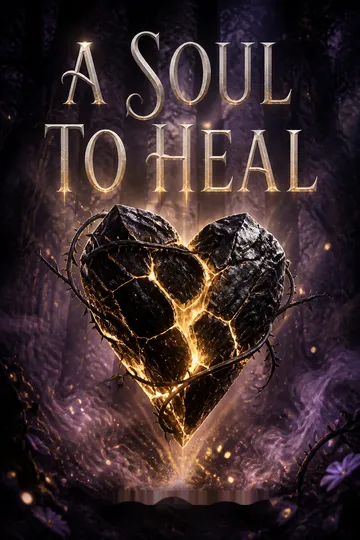
A Soul to Heal received mixed reviews, with some praising its exploration of mental health and body positivity, while others criticized the main character's lack of development and the unexpected pregnancy plot. Many readers found the male protagonist endearing but struggled with the female lead's personality. The book's length and pacing were contentious points. Despite divided opinions, fans of monster romance appreciated the unique world-building and character dynamics. Some felt it didn't live up to the first book in the series.
People Also Read




Characters
Delora
The wounded painterDelora is a plus-sized woman whose life has been shaped by bereavement, an unhappy arranged marriage, and the isolation of entering a tightly knit military town. She is not naturally bold; she often retreats into silence and mistrust after being hurt. Yet she has a sharp, irreverent streak, a strong creative impulse, and the capacity to act decisively when someone she loves is threatened. Her paintings preserve the color and imaginative play that her husband dismissed as childish. Delora's emotional development centers on learning that survival can include pleasure and attachment, while her history makes trust difficult rather than automatic. She is especially sensitive to whether affection comes with respect for her choices.
Magnar
The learning DuskwalkerMagnar begins as a solitary, underdeveloped Mavka who longs for human company but fears his own appetite. He has a fox skull, antlers, claws, feathers, and a body that changes as he gains humanity. His emotions are visible in the shifting colors of his eyes, while his questions reveal how little he understands about human customs. Magnar is tender and attentive, but his strength, possessiveness, and inexperience can make his care dangerous. He wants to protect Delora and become more capable, though he must learn that devotion does not replace explanation or consent. Building, listening, and asking for permission become as important to his growth as physical power.
Reia
The blunt human allyReia is a human Phantom bonded to Orpheus. Blunt, brave, and quick to challenge both Duskwalkers, she helps Magnar understand human needs and helps Delora adjust to life in the Veil. Her practical generosity includes food, clothes, a bath, and company, but she also probes Delora's guardedness too sharply at times. Reia knows what it is to be judged by other people and is protective of the Mavka who became her family. Her directness contrasts with Delora's caution, and their growing friendship gives Delora a human connection not defined by her past marriage.
Orpheus
Magnar's stern guideOrpheus is a more developed Duskwalker, recognizable by his wolf skull and antelope horns. He is disciplined, capable, and initially suspicious of Magnar, but he helps him build a home and learn how to care for a human. His relationship with Reia gives him deep protectiveness, sometimes bordering on overcaution. Orpheus carries painful experience from an earlier bond, which makes him attentive to the dangers of misunderstanding intimacy. He offers practical guidance without pretending to have all the answers, and his own history helps Magnar see how affection can be used either to nurture trust or to manipulate it.
Fyodor
The sightless younglingFyodor is Delora and Magnar's child, a Mavka who begins life blind, boneless, and driven by scent and hunger. They use they and them pronouns because Mavka acquire gender only after consuming a human. Fyodor seeks the voices and heartbeats they know, first clinging to Delora and Magnar for comfort. Eating determines their changing body, which takes on features from the creatures they consume. Their rapid growth makes them both vulnerable and dangerous, while their attachment to their parents becomes a source of tenderness and eventual grief.
The Witch Owl
The Mavka's creatorThe Witch Owl is an immortal, magic-using woman who can take the shape of a large white owl. She appears at crucial moments to help Mavka and Phantoms, but she is elusive and does not explain everything she knows. Her magic can heal, conceal scents, and help Ghosts, yet her reach is limited when several of her creations are in danger at once. She is both a powerful presence and an overwhelmed caretaker. Her actions suggest that creation brings obligations she cannot fulfill perfectly, and she must make difficult choices about whom she can protect.
Jabez
The Demon KingJabez is a half-Elf, half-Demon ruler who built the Demon Village and commands a growing army. His hatred of the Elves comes from being caged and experimented on, and he frames his campaign as a fight against oppression. That grievance has hardened into a willingness to threaten Mavka and use others as tools. Jabez is intelligent enough to exploit loyalty and uncertainty, and his charisma does not soften his cruelty. He represents the danger of a legitimate wound becoming permission to inflict harm on anyone judged expendable.
Kitty
The ram-horned wandererKitty is a feline-skulled Mavka with curled ram horns and lizard-like spines. He spends time among intelligent Demons because conversation is preferable to the loneliness of his cave. Curious and unusually articulate, he remains friendly even while facing danger. His interest in the world and in a woman named Mayumi suggests a private attachment he believes cannot be returned. Kitty's name and social ease make him a contrast to Magnar, while his knowledge of the Demon Village helps expose the danger gathering around the Mavka.
Hadith
Delora's cruel husbandHadith is Delora's arranged-marriage husband, once a respected soldier and initially a caring partner. Over time he becomes neglectful and cruel, measuring Delora by her appearance and ability to give him a child. His affair with Cindy is the immediate trigger for Delora's violent breaking point. He represents the intimacy of betrayal: the harm comes not from a stranger, but from someone Delora trusted to build a life with her.
Cindy
The affair partnerCindy is a nineteen-year-old woman who has an affair with Hadith despite knowing he is married to Delora. Her presence turns Delora's suspicions into a devastating discovery inside her own home. She is also Major Jetson's daughter, which makes Delora's crime carry immediate political consequences in the town.
Jetson
The grieving majorJetson commands Delora's military town and is Cindy's father. He is grieving and angry, but he also uses Delora's punishment to demonstrate that he remains ruthless to the soldiers and citizens watching him. His decision to send her to the Veil rather than imprison her makes his private loss an instrument of public authority.
Katerina
Orpheus's former brideKaterina is the human woman Orpheus once brought to live with him. Her history shapes the lessons Orpheus and Reia offer Magnar about attachment, trust, and the possibility that a human may not want the bond a Mavka believes they share. Her presence lingers as a cautionary contrast for Delora and Magnar.
Plot Devices
The soul bond
A tether between livesWhen a human gives a Mavka their soul, the Mavka can hold it and becomes the human's living anchor. The human becomes a Phantom, able to turn intangible and return to the anchor after death. This device makes Delora and Magnar difficult to separate, but it does not create trust by itself. The bond begins under unequal conditions, since Delora does not understand what she is agreeing to. Its emotional importance grows as they revisit choice, obligation, and what it means to stay together willingly.
Wound-taking magic
Pain traded for healingMagnar cannot heal Delora's injuries by simply erasing them. He must take the wounds into his own body, then rely on the Mavka's rapid recovery. The magic allows him to save her after the fall and the Serpent Demon's attack, and later lets him tend to her injuries in moments of danger. It also makes care visibly costly: Delora's safety can leave Magnar broken, and his strength does not make him immune to pain. The spell's limits reinforce the difference between wanting to protect someone and being able to prevent every harm.
Mavka transformation
Food reshapes the bodyMavka gain humanity by consuming humans, while eating animals and Demons can change their bodies in other ways. Fyodor develops rabbit traits after eating a hare, then grows rapidly after consuming Demons and a deer. Magnar's own body becomes more human in posture and form after he consumes human attackers. This device links appetite, identity, power, and danger. The characters do not simply become stronger; their bodies and capacities change in response to what they consume, while hunger remains an ongoing pressure for the young Mavka.
The protective ward
A home behind green lightMagnar creates a magic ward around a clearing and the cabin he builds for Delora. Unlike his weaker salt circle, the ward forms a dome that keeps Demons out and gives the family a place to live, build, paint, and recover. It does not keep out other Mavka, and its safety is not absolute protection from the wider conflict. When Jabez arrives, the ward becomes both shelter and boundary: it gives Magnar a defensible home, but danger gathers just beyond it and tests who can cross safely.
Fear and scent
Emotion attracts dangerDemons can detect fear and blood, and a frightened human's scent can draw them into a frenzy. Magnar tries to conceal Delora's human scent with feathers, his own blood, and other distractions, while Delora learns to steady herself when danger approaches. The rule makes emotional control a practical survival skill, not just an inward struggle. It also complicates trauma: Delora cannot simply decide not to be afraid when a monster has seized her. Her increasing ability to trust Magnar and later approach Fyodor changes what her body communicates to the creatures around her.
FAQ
Synopsis & Basic Details
What is A Soul to Heal about?
- Betrayal leads to banishment: Delora, a woman scorned after discovering her husband's infidelity, is banished from her village and thrown into the dangerous Veil, a realm inhabited by monstrous Demons, as punishment for murdering him and his lover.
- Saved by a monster: Instead of perishing, Delora is found and healed by Magnar, a powerful Duskwalker (Mavka) who is intrigued by her and chooses companionship over consumption, initiating a unique and unexpected bond.
- A new life and identity: Delora becomes a Phantom, eternally tied to Magnar through a soul bond, and navigates a new existence in the Veil, grappling with her past trauma, discovering hidden abilities, and forming complex relationships with Magnar and other inhabitants of this strange world.
Why should I read A Soul to Heal?
- Unique monster romance: Experience a deeply emotional and unconventional love story between a human woman grappling with trauma and a naive yet fiercely protective monster, exploring themes of acceptance, healing, and finding connection in unexpected places.
- Rich world-building: Delve into the mysterious and dangerous Veil, a realm vividly brought to life with its distinct environment, diverse monstrous inhabitants (Demons, Mavka), and complex social structures, including a hidden Demon Village and the enigmatic Witch Owl.
- Exploration of complex themes: The book tackles heavy topics like betrayal, depression, PTSD, self-worth, and the nature of humanity and monstrosity, offering a nuanced look at emotional healing and the power of love and acceptance to overcome deep-seated pain.
What is the background of A Soul to Heal?
- A world fractured by the Veil: The story is set in a world where human towns are fortified against the Veil, a realm created by the Demon King centuries ago to bring Demons from another dimension to Earth, leading to constant fear and conflict.
- Human society under threat: Human villages are often military-focused, relying on walls and soldiers for protection, and practice arranged marriages and resource trading (like coal or people) to survive in a dangerous environment where travel is perilous.
- Mavka and Demons: Mavka are creatures of the Veil who gain humanity by consuming humans, developing intelligence and physical form, while Demons, also from another realm, are often mindless but can gain strength and intelligence by consuming humans and other creatures, with some forming complex societies like the Demon Village.
What are the most memorable quotes in A Soul to Heal?
- "Sometimes we just need a big, bad monster to come along and remind us that life is worth living.": This line from the dedication encapsulates a core theme of the book, highlighting how an unconventional source of comfort and protection can help overcome despair and find a reason to live.
- "If you do not want to be responsible for your life, then give me your soul.": Magnar's blunt offer to Delora marks the pivotal moment of their soul bond, showcasing his unique perspective on life and ownership, and setting the stage for their intertwined destinies.
- "I am yours, my little raven bride. Forever and always, just yours.": Magnar's declaration to Delora at the end signifies the culmination of their emotional journey, cementing their bond and his unwavering devotion despite the trials they have faced.
What writing style, narrative choices, and literary techniques does Opal Reyne use?
- Dual Perspective & Deep Emotion: The narrative primarily follows Delora's first-person perspective, offering raw access to her internal struggles, trauma, and evolving emotions, occasionally shifting to Magnar's perspective to reveal his simple yet profound thoughts and burgeoning feelings.
- Sensory-Rich Descriptions: Reyne employs vivid sensory details, particularly focusing on scents (Delora's apple/frost scent, Demon decay, Magnar's vanilla/cream), textures (Magnar's fur/feathers, Delora's soft skin, Mavka bones), and sounds (hoof clicks, bone rattling, growls, whimpers, music box), immersing the reader in the unique environment of the Veil and the physical presence of the characters.
- Symbolism and Motif: Recurring symbols like the Veil itself (representing transition and the unknown), the soul bond (connection, fate, transformation), colors (glowing orbs reflecting emotion, paint bringing life), and physical touch (healing, intimacy, communication) are woven throughout the story to deepen thematic resonance and character development.
Hidden Details & Subtle Connections
What are some minor details that add significant meaning?
- Witch Owl's deliberate act: The seemingly random fall that brings Delora to Magnar is later revealed to be orchestrated by the Witch Owl, who "dropped her a wee bit too high," highlighting a hidden layer of manipulation and destiny guiding their meeting.
- Mavka physical changes: Subtle descriptions of Mavka bodies changing based on what they eat (Orpheus's wolf skull/Impala horns, Magnar's fox skull/deer antlers, Fyodor's rabbit form) reveal a complex and literal connection between consumption and form, adding depth to their nature beyond just gaining "humanity."
- Demon King's mixed heritage: Jabez being half-Elf and half-Demon explains his unique appearance (pointed ears, horns, human-like features) and provides a deeper motivation for his war against the Elves, stemming from personal trauma and imprisonment rather than just inherent evil.
What are some subtle foreshadowing and callbacks?
- Magnar's early desire for touch: Magnar's initial fascination with Delora's physical form and his simple statement "I just wanted a friend. A friend. Someone that he wouldn't eat" subtly foreshadows his later intense desire for physical intimacy and connection beyond mere consumption.
- Delora's nightmares: Delora's recurring nightmares about Hadith and Cindy, filled with blood and screams, are not just reflections of her past trauma but are echoed in the gruesome reality of the Demon Village meat market, creating a disturbing callback that triggers her panic.
- Orpheus's past pain: Orpheus's initial wariness and possessiveness over Reia, coupled with later mentions of Katerina and the Demon King's past actions against him, subtly foreshadow the depth of betrayal and suffering he endured, explaining his protective nature and empathy for Magnar's situation.
What are some unexpected character connections?
- The Witch Owl as Mavka Mother: The revelation that the Witch Owl is the biological mother of all Mavka, having mated with the spirit of the void, is a significant and unexpected connection that reframes the nature of Mavka existence and their relationship to the Veil.
- Orpheus and Magnar as Brothers: Learning that all Mavka are essentially siblings, born from the same parents, creates an unexpected brotherhood between Orpheus and Magnar, explaining Orpheus's willingness to mentor and help Magnar despite their initial awkwardness.
- Kitty's connection to the Demon Village: Kitty, the ram-horned Mavka, reveals he frequents the Demon Village to speak with Demons, particularly a bookstore owner whose mate adores Reia, showing a surprising level of interaction and even friendship between some Mavka and Demons.
Who are the most significant supporting characters?
- Reia: As the first human bonded to a Mavka encountered by Delora, Reia serves as a vital guide and confidante, offering insights into Phantom abilities, Mavka relationships, and the realities of living in the Veil, while also providing emotional support and practical help (clothing, supplies).
- Orpheus: Reia's Mavka partner acts as a mentor figure for Magnar, sharing knowledge about Mavka nature, magic, and the complexities of human relationships, and provides crucial assistance in building the house and navigating threats like the Demon King.
- The Witch Owl: The mysterious creator of the Mavka, she acts as a distant but powerful guardian, subtly influencing events (like Delora's fall), providing vital information (about pregnancy, Phantom abilities, Jabez), and ultimately taking responsibility for guiding Fyodor.
- Jabez, the Demon King: As the primary antagonist, Jabez represents the external threat to Delora and Magnar's peace, embodying cruelty and manipulation, and his actions drive significant plot points, forcing difficult choices and revealing the dangerous political landscape of the Veil.
Psychological, Emotional, & Relational Analysis
What are some unspoken motivations of the characters?
- Magnar's yearning for acceptance: Beyond just companionship, Magnar's deep-seated loneliness and feeling of inadequacy (calling himself "stupid," comparing himself to Orpheus) drive an unspoken motivation to be accepted and valued by Delora, seeking validation through his actions and her reactions.
- Delora's desire for control: Having felt powerless and betrayed in her past life, Delora's actions, even seemingly irrational ones like her sacrifice to Jabez, are subtly motivated by a deep need to regain control over her own fate and the safety of those she cares about, even if it means making painful choices.
- Fyodor's instinctual need for comfort: Fyodor's initial "attacks" on Delora and later clinging behavior are not malicious but driven by an unspoken, instinctual need for the comfort and familiarity of their mother's scent and heartbeat, a primal motivation common to newborns regardless of species.
What psychological complexities do the characters exhibit?
- Delora's trauma response: Delora exhibits complex psychological responses to her past trauma, including emotional numbness ("empty of emotions," "hollow"), difficulty trusting others, self-loathing ("I'm a terrible person"), and a tendency for irrational fear and panic when confronted with triggers or overwhelming situations.
- Magnar's emotional development: Magnar's journey showcases the psychological complexity of developing emotions and understanding. His initial naivete about human feelings contrasts with his rapid learning, leading to intense, sometimes overwhelming, emotions like possessiveness, jealousy, shame, and deep tenderness, which he struggles to control and interpret.
- Fyodor's developmental psychology: Fyodor's rapid physical and psychological development, from a sightless, instinct-driven newborn to a larger, more aware being, highlights the unique psychology of Mavka growth, where understanding and behavior are directly tied to physical changes and consumption, leading to moments of confusion and instinctual action.
What are the major emotional turning points?
- Delora's acceptance of her Phantom state: Moving from despair and wishing for death, Delora's realization that she survived and is a Phantom marks an emotional turning point where she begins to accept her new reality and the possibility of a different future, even if uncertain.
- Magnar's first experience of desire: Magnar's discovery of sexual desire, triggered by Delora's arousal scent and touch, is a major emotional turning point that introduces a powerful new drive and complexity to his character, fundamentally changing his relationship with Delora and himself.
- Delora's reconciliation with Fyodor: Overcoming her fear and embracing her maternal bond with Fyodor is a significant emotional turning point for Delora, allowing her to heal from her guilt and find a new source of love and purpose, transforming her perception of her child from monster to beloved baby.
- Delora's sacrifice for Magnar/Fyodor: Delora's decision to provoke Jabez and sacrifice herself to buy time for Magnar and Fyodor is a powerful emotional turning point, demonstrating her courage, selflessness, and the depth of her love for her new family, contrasting sharply with her earlier despair.
How do relationship dynamics evolve?
- Delora & Magnar: From Savior to Soulmates: Their dynamic evolves from a simple savior/saved scenario to a complex soul bond, navigating power imbalances, communication barriers, physical intimacy, and emotional vulnerability to build a foundation of trust, mutual care, and eventually, declared love.
- Delora & Fyodor: From Fear to Motherhood: Delora's relationship with her child transforms dramatically from initial fear and rejection due to Fyodor's monstrous appearance and instinctual behavior to deep maternal love and protectiveness as she understands their needs and embraces her role.
- Mavka Brotherhood: From Acquaintances to Family: The relationships between Magnar, Orpheus, and Kitty evolve from distant awareness and occasional interaction to a recognized brotherhood and mutual support system, highlighting the importance of family bonds even among creatures who initially seem solitary.
- Human & Mavka: Bridging the Divide: The interactions between Delora/Magnar and Reia/Orpheus showcase the possibility of connection and understanding between humans and Mavka, demonstrating how shared experiences and empathy can bridge the inherent differences and fears between their species.
Interpretation & Debate
Which parts of the story remain ambiguous or open-ended?
- The full extent of Phantom abilities: While Delora learns she can turn intangible and heal quickly, the narrative leaves ambiguous whether there are other latent Phantom abilities she might develop or if her connection to Magnar grants her unique powers beyond those of other Phantoms.
- The future threat of Jabez and the Demon War: Although Jabez is thwarted in this book, his vow of vengeance and the ongoing war against the Elves remain unresolved, leaving the future safety of Delora, Magnar, and other Mavka uncertain and hinting at potential future conflicts.
- Fyodor's future development and role: Fyodor leaves to find their own path, guided by the Witch Owl, but their ultimate destiny, how much humanity they will gain, and what role they might play in the larger world or future conflicts remain open-ended.
What are some debatable, controversial scenes or moments in A Soul to Heal?
- Delora's murder of Hadith and Cindy: Readers might debate the morality of Delora's actions. Was it a justified act of revenge and self-liberation after years of abuse and betrayal, or a disproportionate and immoral act of violence?
- Magnar's actions while Delora is unconscious: Magnar healing Delora by taking her wounds, changing her clothes, and later bringing Fyodor near her while she sleeps could be debated. Are these acts of care and protection from a naive being, or a violation of her bodily autonomy and trust, even if unintentional?
- The nature of Mavka reproduction and growth: The concept of Mavka being born without bones/organs and gaining form/gender by eating creatures, particularly humans, is inherently controversial and can be interpreted as disturbing or as a unique, non-human biological process.
A Soul to Heal Ending Explained: How It Ends & What It Means
- Emotional Reconciliation and Strengthened Bond: The story culminates with Delora and Magnar openly confessing their love and accepting each other's flaws and pasts. Delora understands Magnar's actions stemmed from naivete and care, while Magnar accepts Delora's trauma and complicated history. This signifies that their bond, forged in desperation and mutual need, has matured into genuine love and trust, providing a foundation for their future.
- Fyodor's Departure and Acceptance: Fyodor, having grown rapidly and instinctually drawn to the Veil, leaves to find their own path, guided by the Witch Owl. Delora, though heartbroken, accepts this as natural for a Mavka and finds peace in knowing Fyodor is safe and following their nature. This marks a bittersweet but necessary step in their family's journey, highlighting themes of letting go and finding strength in acceptance.
- Facing an Uncertain Future Together: While external threats like Jabez and the Demon war loom, and internal challenges like Magnar's need for more humanity and their unique relationship dynamics remain, the ending emphasizes that Delora and Magnar will face these challenges together. Their love and acceptance are presented as the primary tools for navigating the complexities and dangers of their world, signifying a hopeful, albeit precarious, new beginning.
Duskwalker Brides Series

About the Author
Other books by Opal Reyne


Download PDF
Download EPUB
.epub digital book format is ideal for reading ebooks on phones, tablets, and e-readers.








