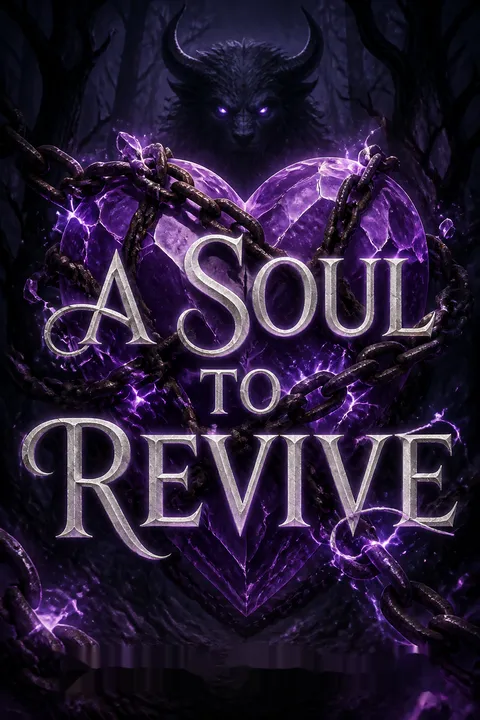


Plot Summary
A Twin Falls in the Veil
Ingram1 and Aleron,3 raven and bat-skulled Mavka bound as twins, flee an expanding Demon attack with the Witch Owl4 fighting beside them. When she raises a protective barrier around Ingram,1 the Demons overwhelm Aleron3 beyond its reach and crush his skull. Ingram1’s grief turns instantly to fury; he breaks through the barrier and attacks until the Witch Owl4 knocks him unconscious.
He wakes near Merikh’s17 cave, healed but alone, and refuses to accept that Aleron3 is gone. Convinced he can restore his twin3 and punish Jabez,5 the Demon King5 who sent the army, Ingram1 sets out to find help, unable to imagine a future that does not include Aleron.3
The opening makes grief a bodily rupture before Ingram has the language to understand it. His bond with Aleron is not merely affection but the structure through which he knows himself, so the death leaves him not only bereaved but without an independent sense of purpose. His vengeance is therefore both moral response and emergency substitute for identity. The Witch Owl’s rescue preserves his life while making him feel abandoned, establishing a tension between protection and betrayal that will recur when others make choices on his behalf.
Zagros Meets the Raven
At Zagros Fortress, Demonslayer Emerie2 is questioning her unsatisfying relationship with Bryce7 when an alarm sends the guild to battle. Head Elder Wren6 diverts Emerie2 from the wall to join a team ordered to capture a Duskwalker. Ingram1 has approached the gate hoping for allies against Jabez,5 but an arrow strikes him before he can explain.
As he fights, Emerie2 uses a whip, rope, and Bryce’s7 help to bind his limbs and tail. The assault pushes Ingram1 into a blood-fuelled frenzy, and the guild’s soldiers die in the clearing. Emerie’s2 team succeeds in taking him alive, but the capture turns an attempted request for help into the beginning of his imprisonment and torture.
The encounter is shaped by institutional fear: the guild sees a monstrous body and assumes hostile intent, while Ingram sees the gate as a possible refuge and expects a chance to communicate. Neither side can read the other before violence decides what each becomes. Emerie’s tactical skill saves her team, but the success places her inside a moral contradiction: she has obeyed her training while helping create the danger she believes she is meant to oppose. The scene also introduces the novel’s recurring question of whether self-defense can be judged fairly when one party holds nearly all the power.
The Dungeon's Living Specimen
Wren6 promotes Emerie2 and brings her to the dungeon, where a doctor cuts open Ingram1 while he is conscious because Duskwalkers cannot be killed by ordinary means. Emerie2 protests, then vomits when the doctor removes Ingram’s1 still-beating heart. Wren6 insists the torture is necessary to learn how to defeat the creatures, but Emerie2 recognizes the cruelty beneath the argument.
Ordered back to clean his cell, she hears Ingram1 speak and learns that he came seeking help to stop Jabez,5 not to destroy the fortress. When the next doctor threatens further examination, Ingram1 begs to be spared. Emerie2 decides she can no longer serve as a witness to his suffering and begins preparing his escape.
Emerie’s ethical break is not a sudden discovery that violence exists; she is a trained fighter who has killed to survive. What changes is the proximity of suffering and the clarity of Ingram’s helplessness. Wren’s claim of necessity echoes the guild’s larger logic, where safety authorizes almost any act against the designated enemy. Emerie’s refusal exposes the cost of obedience: once she recognizes the prisoner as a person with a purpose, neutrality becomes complicity. Her decision begins as conscience, but it also starts a relationship built on an uneven debt she will later struggle to acknowledge.
The Fortress Breaks Open
Emerie2 enters the dungeon with stolen tools and an escape plan, but Lindiwe,4 the Witch Owl,4 arrives to free Ingram1 first. Emerie2 insists she knows Zagros’s hidden passages, and Ingram1 chooses to trust her route. During the flight, Lindiwe4 kills a guard while Emerie2 tries to limit the bloodshed.
At the outer wall, Emerie2 shoots Wren6 with an arrow while trying to protect herself and Ingram;1 the Head Elder6 dies, making Emerie2 a fugitive. Once they reach the forest, Ingram’s1 bloodlust takes over and he attacks the woman who freed him.2 Emerie2 uses the enchanted rope and a tree to restrain him until he calms, then agrees to travel with him toward the Veil.
The escape converts Emerie’s private dissent into an irreversible public choice. Wren’s death is not a planned execution but a consequence of the violence the guild has organized, yet Emerie must live with the result as an act she performed. Ingram’s frenzy immediately complicates her belief that freeing him will make him safe or grateful. Their first bond is therefore neither simple rescue nor romance: it is a practical negotiation between a human who understands routes and restraints and a creature whose instincts can overwhelm intention.
A Journey Through Grief
As they travel west, Ingram1 asks Emerie2 about everything from plants to human customs, while she learns to read the emotional colours of his eyes. He accidentally hurts her with his claws and discovers he can retract them, a small change that lets him touch her more safely.
At a hilltop, Emerie2 explains that her parents and adopted brother Gideon8 died when a flying Demon carried her from home and dropped her into fire. Ingram1 tells her that Aleron3 was his twin3 and the centre of his existence. She comforts him with a long embrace, and he begins to accept her presence as a shelter from loneliness, even while insisting he will find a way to bring Aleron3 back.
Their education runs in both directions. Emerie gives Ingram names, social meanings, and tools for self-control; Ingram gives Emerie a form of attention that does not treat her scars as an inconvenience or her grief as a problem to solve. Their disclosures are not interchangeable, however. Emerie has spent years building a functional life around her loss, while Ingram is newly bereaved and uses resurrection as a way to avoid imagining permanence. The hilltop matters because comfort does not erase either loss. It gives each character a witness who can remain present without demanding that grief become tidy.
The Rabbit-Skulled Stranger
A female, rabbit-skulled Mavka carries Emerie2 into a hidden burrow, apparently trying to protect rather than eat her. Ingram1 finds them but restrains himself from attacking, following Emerie’s2 request to wait until the stranger releases her. The reunion leads them to Magnar’s11 home, where Emerie2 meets Delora,12 Reia,14 Mayumi,10 and their Duskwalker partners, including Faunus9 and Orpheus.13
She learns that the women are Phantoms bonded to Mavka through their souls, and that their household includes Duskwalker children. The group explains that Demons are hunting them in coordinated packs. Their refuge offers Emerie2 food and care, but also reveals a community whose close bonds make the coming fight far more personal.
The burrow scene reverses the familiar predator-and-prey arrangement: the strange Mavka holds Emerie, yet appears to be protecting her, while Ingram must control his own predatory response to recover her. This gives him a concrete test of the restraint Emerie has taught him. The household then enlarges the story’s social world. Ingram’s isolation is not the only form of Mavka life, and the women’s bonds reveal possibilities he has never considered. For Emerie, meeting these families makes belonging visible, but also sharpens her awareness of what she believes she cannot offer.
The Captor's Confession
Once Emerie2 and Ingram1 have built trust through travel, affection, and shared vulnerability, she confesses that she was the Demonslayer who tied his beak, tail, and limbs during the capture. She had delayed telling him because she feared losing him, but the guilt has become a wall between them.
Ingram1 reacts with rage and nearly crushes her; then he remembers that she freed him and has stayed beside him. He accepts that she did not know what Wren6 would do and chooses to forgive her. Using Mavka magic, he takes the bruises his grip caused on her body. The confession does not erase his torture, but it lets their bond proceed without a concealed history.
The confession tests whether intimacy can survive knowledge that changes its origin story. Emerie had framed her companionship partly as restitution, which risks turning care into a debt she can never repay. Ingram’s response is dangerous because his pain becomes physical aggression, but he also distinguishes intention from consequence without pretending the consequence did not happen. His forgiveness is not absolution imposed from outside; it is a choice grounded in the whole sequence of what Emerie has done since. Their relationship becomes more credible because trust includes a truth that could have ended it.
A Family's Cost of War
At Mayumi10 and Faunus’s9 home, Emerie2 learns how Mavka and Phantom partners share soul-bonds, and sees the care that holds their families together. Reia,14 Delora,12 and Mayumi10 argue that they should help fight Jabez5 because their Phantom nature lets them return after death, while their Mavka partners fear losing them.
Emerie2 also reveals to Mayumi10 that she chose a hysterectomy to advance in the guild, and now grieves her infertility while surrounded by children. Mayumi10 listens without asking her to hide the pain. Ingram1 grows more possessive and affectionate, but Emerie2 worries he may want a family she cannot give him. The group’s plan stalls until Lindiwe4 brings news of a possible weapon against Jabez.5
The household turns private longing into political stakes. The Mavka fear permanent loss, while the brides see their capacity to return as a responsibility they can use; neither position is simply cowardice or heroism. Emerie’s infertility makes this debate intimate. She is not only afraid of dying but of being judged as an incomplete partner. Her choice to disclose it to Mayumi is a small act of trust in a community where care does not erase grief. The section also reframes protection: loving someone can mean resisting their risk, but it can also mean respecting the dangerous choice they make for a shared future.
The Sunstone's Price
Lindiwe4 presents a sunstone found in Merikh’s17 cave, a volatile fragment that can release sunlight powerful enough to destroy Demons, including Jabez.5 She explains privately to Emerie2 that its blast may kill the person who uses it, while Phantom souls and their Mavka anchors could be destroyed together.
A human sacrifice avoids risking the bonded couples, so Lindiwe4 asks Emerie2 to carry the stone. Emerie2 agrees, knowing she may die, and hides the plan from Ingram.1 She spends her remaining time with him, asking whether he would choose her or Aleron.3 Ingram1 cannot choose, and says Aleron3 is indispensable. Emerie2 takes this as proof that she should leave him alive to pursue his twin.3
The sunstone turns the characters’ competing obligations into a brutally concrete calculation: one human life may preserve several bonded pairs. Lindiwe’s maternal motive does not make the request fair, and Emerie understands that she is being selected partly because she is outside the Phantom bonds. Her own decision is both altruistic and shaped by insecurity. Ingram’s inability to choose between Emerie and Aleron is emotionally honest, but she interprets it through her fear of being replaceable. The tragedy is not that either loves falsely; it is that they have not yet learned how to imagine love as capacious rather than competitive.
Two Hearts, One Departure
Emerie2 and the other women wait until Ingram,1 Orpheus,13 and Magnar11 leave to hunt, then enter a portal to Jabez’s5 castle with Lindiwe.4 Before departing, Emerie2 gives Ingram1 her family bracelet as a good-luck charm. On the hunt, Orpheus13 and Magnar11 explain that a Mavka can love a bride without diminishing a bond with a twin.
Ingram1 realizes he has mistaken one heart for one possible attachment, and that his feelings for Emerie2 have already become love. He turns back immediately, but the others insist they finish hunting first. By the time he reaches Faunus’s9 ward, the women are gone. The delayed realization leaves him to discover what their departure means without being able to stop it.
Ingram’s realization is psychologically precise because it arrives through a change in his model of attachment, not through a sudden increase in feeling. He already loves Emerie; he has lacked a framework that allows that love to coexist with his bond to Aleron. The bracelet makes their separation visible as an inheritance of her human family, while his new understanding comes too late to guide her choice. The delay is painful but not arbitrary: it grows from his limited knowledge and his habit of treating emotional categories as mutually exclusive. The resulting absence forces him to confront the cost of assumptions he never questioned.
The Castle's White Blast
At Jabez’s5 castle, the women face the Demon King5 and his guards while Lindiwe4 contains the room with a barrier. Jabez5 kills Reia,14 and a winged Demon decapitates Delora;12 both women’s souls return to their partners. Lindiwe4 escapes the shrinking barrier, leaving Emerie2 alone with Jabez5 as planned.
Emerie2 uses enchanted rope to knot Jabez’s5 hair, ensuring she will teleport wherever he goes, then keeps him close while waiting for the right moment. When he seizes her, she breaks the sunstone between them. Jabez5 shields himself with Emerie’s2 body as sunlight erupts through the chamber. The blast destroys the castle and kills Emerie’s2 physical body, but her soul survives and is taken into Tenebris.
The climax makes sacrifice neither clean nor triumphant. Emerie’s tactical ingenuity gives her a way to keep Jabez from escaping, but the final act still depends on her accepting that she may die. The deaths of Reia and Delora show the cost of the plan before its outcome is known, while their return to their partners demonstrates why the Mavka could not simply take Emerie’s place. Jabez’s use of her as a shield sharpens the moral asymmetry: she has chosen the risk, but the enemy still treats her body as disposable. Survival of her soul preserves possibility without undoing the loss.
The Afterlife's Missing Bride
Reia14 and Delora12 return to their partners, while Ingram1 sees the distant sunstone explosion and learns Emerie2 is dead. Unable to bear another loss, he attacks Faunus9 and then tries to crush his own skull so he can follow her and Aleron.3 The others restrain him, and Lindiwe4 explains that Emerie’s2 soul survived the blast and was swallowed into Weldir’s15 realm, Tenebris.
She can be restored only if Ingram1 reaches her and makes her his bride within a day. Lindiwe4 also warns him that Emerie2 cannot have children because of the hysterectomy she chose years earlier. Ingram1 accepts the condition without hesitation; recovering Emerie2 matters more to him than the family he once imagined.
Ingram’s despair differs from his first grief because he now recognizes the person he has lost and has a future he wanted with her. His attempt to break his skull is not merely a return to violence; it is a collapse of the purpose he had built around survival. Lindiwe’s revelation offers hope with a severe boundary, forcing desire to become informed consent rather than fantasy. Her warning about infertility also confronts Ingram with a test of love: whether Emerie matters as herself or as the mother of the children he once pictured.
Tenebris Holds Two Reunions
Ingram1 enters Tenebris, the spirit realm inside Weldir,15 and follows a soul-thread toward Emerie.2 On the way he finds Aleron,3 now a pink spectral being, and they reunite without being able to touch. Ingram1 chooses not to remain with his twin3 because he wants a life with Emerie,2 though Aleron3 hopes he may find his own bride.
At Emerie’s2 strongest memory, Ingram1 finds her with Gideon,8 her adopted brother, and asks her to return as his bride. He explains that he knows she is infertile and wants her regardless. Emerie2 admits she loves him but feared she was not enough. She accepts, then stays briefly with Gideon8 while Ingram1 waits for her answer to take effect.
Tenebris gives the novel’s two central losses separate forms of recognition. Ingram can see Aleron again, but cannot reclaim the physical twinship that shaped his life; Emerie can speak with Gideon, but cannot restore the years they lost. Their meetings therefore offer connection without pretending that death has been reversed. Ingram’s choice is not a rejection of Aleron. It is a movement from exclusive attachment toward a life capable of holding more than one bond. His acceptance of Emerie’s infertility makes that change practical, not merely sentimental.
A Bride Returns to Sunlight
After Emerie2 says goodbye to Gideon,8 Weldir15 retrieves her soul and binds it to Ingram’s,1 since no living Mavka can claim a dead human soul in the usual way. He warns that Jabez’s5 destruction is not fully confirmed, but the Demon King’s5 magic has vanished. Ingram1 returns to the Veil with Emerie’s2 soul and waits in a strip of sunlight.
She awakens as a Phantom, then regains her living body when she reaches for him. Ingram1 holds her, declares his love, and promises to cherish her scars rather than treat them as flaws. Their reunion restores the bond that death interrupted. Later, they evade Demonslayers in Greenshire and return to the meadow where Ingram1 first understood his love.
The resolution grants a happy ending without making the preceding sacrifice meaningless. Emerie returns changed by death and by the knowledge that Ingram crossed into an impossible realm for her. Their bond is not a cure for grief or trauma; it is a chosen relationship in which each can remain imperfect and still be wanted. The final return to the meadow gives the story a circular shape, but its meaning has shifted: the place once marked the beginning of tenderness, and now confirms that they can choose a future together. Jabez’s uncertain fate preserves the wider danger even as their personal crisis resolves.
Analysis
A Soul to Revive makes the difference between protection and possession its central psychological problem. Ingram1’s instinct is to keep loved ones close enough that separation becomes impossible; Emerie2’s is to make herself useful enough that nobody can accuse her of being a burden. Both strategies arise from loss. Ingram1’s twin bond has given him identity, while Emerie2’s trauma has taught her to mistrust the permanence of care. Their romance becomes meaningful when neither strategy is allowed to remain unquestioned: Ingram1 learns that loving Emerie2 need not diminish Aleron,3 and Emerie2 learns that being loved does not depend on fertility, unscarred skin, or sacrifice.
The novel also refuses a simple division between civilized humans and monstrous creatures. Zagros Fortress calls torture necessary, while Ingram1’s violence is partly governed by hunger and pain; neither fact makes harm disappear. The contrast asks who gets to define a monster, and which institutions can disguise cruelty as duty. Emerie2’s rebellion is therefore more than choosing a creature over her guild. She rejects a moral system that treats knowledge as worth any cost, even as she later accepts a different, voluntary cost to protect the Mavka families.11
Grief is not cured by romance or resurrection. Aleron3 and Gideon8 remain dead, and the afterlife offers contact rather than restoration. Ingram1’s journey through Tenebris changes his understanding of what he can carry forward. The final union is not a replacement for his twin3 but a new bond that coexists with the old one. Likewise, Emerie2’s restored life does not erase her infertility or scars. The ending’s tenderness depends on accepting those facts rather than magically correcting them. Love becomes credible when it is not a promise that nothing painful will remain, but a commitment to remain present with what cannot be undone.
Review Summary
A Soul to Revive receives overwhelmingly positive reviews, rated 4.48 out of 5 stars. Readers praise the emotional depth, world-building, and character development of Emerie and Ingram's story. Many found themselves crying over the portrayal of grief and loss. Ingram, a less-developed duskwalker, is described as an adorable "himbo" learning about humanity. Reviewers appreciate the spicy scenes, representation of infertility and body insecurities, and appearances from previous characters. The overarching plot progression excites fans, though some wished Ingram had more maturity. Overall, readers call it captivating and emotionally powerful.
People Also Read
Characters
Ingram
Grieving raven-skulled MavkaIngram is a powerful, raven-skulled Mavka whose emotional life is visible in the changing colours of his eyes. He begins with little human knowledge and a fierce dependence on Aleron3, his twin and lifelong companion. Curiosity makes him eager to learn, while grief and bloodlust can overwhelm his limited self-control. He is physically dangerous but increasingly attentive to the difference between wanting contact and being entitled to it. His bond with Emerie2 brings out tenderness, jealousy, humour, and a desire to understand himself. Ingram’s central struggle is not simply becoming more human; it is learning that love can deepen without erasing an existing bond.
Emerie
Scarred Demonslayer strategistEmerie is a clever, practical Demonslayer whose scarred face and body record losses she has spent years trying to contain. After a Demon kills her parents and adopted brother, she joins the guild seeking skill, purpose, and revenge. Her competence often hides insecurity, especially about intimacy and whether she can be loved without being physically perfect. Emerie is compassionate but not naïve: she weighs risk, sets boundaries, and uses invention to survive. Her relationship with Ingram1 challenges both her fear of being unworthy and her belief that self-sacrifice is the only way to make her life matter. She remains stubbornly capable of choosing for herself.
Aleron
Ingram's inseparable twinAleron is a bat-skulled Mavka with broad black wings and an unusually close bond with Ingram1. The twins have shared nearly every experience, developing together from instinct-driven creatures toward greater humanity. Aleron’s presence gives Ingram1 companionship, security, and a shared way of interpreting the world. He is playful and affectionate, but their closeness also leaves little room for either twin to imagine a separate identity. His importance to the story lies in the depth of that bond and in the question of how a relationship can endure when the two people within it are separated.
Lindiwe
Witch Owl and Mavka motherLindiwe is a Phantom who can shift between a human form, an owl, and an incorporeal state. She is the mother of the Mavka and tries to protect them while confronting limits no amount of devotion can remove. Her choices can appear cold because she often acts before explaining herself, and her children’s distrust weighs heavily on her. Lindiwe is neither an all-knowing guide nor a simple maternal protector; she is a grieving parent forced to distribute attention and risk across many vulnerable lives. Her relationship with Emerie2 becomes a test of whether a desperate purpose can justify asking someone else to bear its cost.
Jabez
The Demon King's cruel strategistJabez is the intelligent, powerful Demon King at the centre of the growing threat to Mavka and human settlements. His Elven features distinguish him from the Demons who serve him, while his magic allows him to teleport and manipulate the battlefield. He treats suffering as entertainment and understands how to provoke personal wounds in his opponents. Jabez is dangerous not just because he is strong but because he can plan, taunt, and adapt. His pursuit of the Mavka gives the conflict a political and existential shape: he seeks knowledge that could make their kind vulnerable.
Wren
Severe Head ElderWren leads the eastern Demonslayer sector from Zagros Fortress. Disciplined, politically minded, and scarred much like Emerie2, she sees harsh methods as the price of protecting humanity. She recognizes Emerie’s2 intelligence and leadership potential, but her mentorship is entangled with her wish to reproduce the training that shaped her own career. Wren’s certainty about the enemy leaves little room for uncertainty or mercy, making her a powerful example of how a protective institution can become cruel in the name of survival.
Bryce
Emerie's dismissive guild partnerBryce is a Demonslayer dating Emerie2 in secret. He is capable in a fight but insecure about her advancement and inattentive to her emotional needs. Their relationship exposes Emerie’s2 habit of accepting scraps of affection because she doubts she deserves more. Bryce is not the source of her deeper trauma, but his treatment helps reveal how little she has learned to demand in ordinary intimacy.
Gideon
Emerie's protective adopted brotherGideon is the boy Emerie’s2 parents adopted after his own parents died. He grows into her closest friend and protective older brother, even as Emerie2 once imagined a different future with him. His loyalty is instinctive and sometimes overbearing, but it comes from genuine care rather than a wish to control her. The memory of his final argument with Emerie2 remains tied to her guilt, while their deep affection explains why she continues to seek a life that could honour what he gave her.
Faunus
Feline-skulled family protectorFaunus is a muscular, feline-skulled Mavka with a gold crack marking a past encounter with death. He is bonded to Mayumi10 and helps care for their younglings. His manner can be relaxed and teasing, but his protectiveness is immediate when Mayumi10 or the children are threatened. Faunus understands more about Mavka magic and relationships than Ingram1 does, and his willingness to share that knowledge helps Ingram1 interpret his own feelings.
Mayumi
Blunt former DemonslayerMayumi is a former Demonslayer who is direct, tactical, and impatient with evasion. She is bonded to Faunus9 and raising Duskwalker younglings, while continuing to think like a soldier. Her history includes a deliberate choice about her fertility and a conflict with the guild that trained her. Mayumi recognizes Emerie’s2 emotional distress without confusing support with softness; she can challenge her bluntly, then stay beside her. Her practical advice helps turn the group’s fear into a workable plan.
Magnar
Fox-skulled builder and fatherMagnar is a large fox-skulled Mavka with imposing antlers, a gentle streak, and a protective devotion to Delora12. He helps build and maintain a home in the Veil, though he does not always feel confident in his skills. His relationship with Delora12 reveals a softer, domestic side of Mavka life that Ingram1 has never known. Magnar is affectionate and emotionally open, and he offers Ingram1 a crucial perspective on how family bonds can expand rather than compete.
Delora
Gentle archer and PhantomDelora is a kind, creative Phantom bonded to Magnar11. She paints, tends a garden, and is a skilled enough archer to contribute from a distance despite not being the group’s strongest fighter. Her gentleness does not mean passivity; she is willing to face dangers that frighten her when loved ones need help. Delora’s openness and hospitality give Emerie2 a sense of welcome, while her own history of loss makes her sympathetic without reducing her to a source of comfort.
Orpheus
Wolf-skulled guardianOrpheus is a wolf-skulled Mavka with curled horns, a strong protective instinct, and a guarded temperament. His bond with Reia14 is intense, shaped by fear of losing her and a reluctance to let her face danger. He can be stern and possessive, but his loyalty to the other Mavka is real, and he offers Ingram1 practical insight about love and attachment. His struggle is learning that protection cannot mean making every choice for someone he loves.
Reia
Fearless Phantom swordswomanReia is a Phantom with a sharp tongue, a sword, and little patience for waiting while Demons threaten her family. She is bonded to Orpheus13, whose protectiveness can conflict with her desire to fight beside him. Reia believes her ability to return after death makes her useful in a way ordinary humans cannot be. Her courage is not the absence of fear; it is a willingness to act while knowing how deeply her choices may hurt the people she loves.
Weldir
Spirit of the voidWeldir is a vast, fragmented spirit and soul eater whose body contains Tenebris, a realm where the dead can dwell. He can influence the living world only through strict limits, and every use of his power costs him strength. His answers are often indirect, not from simple evasiveness but because his existence follows rules unfamiliar to humans and Mavka alike. Weldir provides access to souls and portals, yet cannot make every reunion or resurrection easy.
Fyodor
Magnar and Delora's childFyodor is the grown child of Magnar11 and Delora12, a Duskwalker who has left home to live independently. Their absence weighs on Delora12, who worries about their safety and regrets not understanding how quickly they would grow. Fyodor represents the difficult truth that loving a child includes allowing them to leave.
Merikh
Reclusive bear-skulled MavkaMerikh is a solitary, bear-skulled Mavka who keeps a protected home near the Veil’s edge. He has named and sheltered Ingram1 and Aleron3, though his brusque manner makes him difficult to approach. His cave and its ward offer safety, while his unexplained absence leaves important questions around the Mavka family and the objects kept in his home.
Raewyn
Kind Elf the twins metRaewyn is an Elf with pale hair and pointed ears whom Ingram1 and Aleron3 encountered before the main events. She treated the twins kindly and helped them understand names and social customs. Her brief presence matters because it shows that the Mavka’s early encounters with the wider world were not uniformly hostile.
Plot Devices
Mavka Orb Colors
Visible emotional barometerMavka eyes change colour with emotion, giving other characters a partial way to read feelings that their skull faces cannot show. Ingram’s1 red, blue, yellow, and pink shifts signal anger, grief, curiosity, and love, though the meanings are not always obvious to Emerie2 at first. The device makes his developing humanity legible without making him fluent in human speech or self-understanding. It also creates painful misreadings: Emerie2 watches for the colour that signifies love, while Ingram1 takes much longer to recognize what his own changing eyes mean.
Bloodlust and Humanity
Instinct against intentionMavka hunger is drawn to blood, and pain or fear can push them into violent states in which their intentions become difficult to control. Eating humans increases their humanity, expanding knowledge and social awareness, but also intensifies the burden of memory and emotion. Ingram’s1 bloodlust explains his attack on the fortress, his danger to Emerie2, and his unreliability as a fighter in the final plan. It does not erase responsibility or make every harm harmless; instead, the characters must build strategies around the gap between what he means and what his instincts may make him do.
Wards and Enchanted Gear
Protection with limitsMavka wards create boundaries Demons struggle to cross, while enchanted rope can restrain even a powerful Duskwalker. Reia’s14 diadem offers Emerie2 limited protection from Demon attacks, and the rope later becomes a way to keep Jabez5 from escaping by teleportation. These devices turn knowledge and preparation into meaningful advantages against physically stronger enemies. They are never absolute solutions: wards can be pressured, protection varies by threat, and the rope only works when Emerie2 can get close enough to use it.
The Sunstone
A costly weapon against DemonsThe sunstone is a small, volatile object capable of releasing an immense burst of sunlight. Lindiwe4 believes it can destroy Jabez5, who is vulnerable to the sun, but using it may kill the person who breaks it and may devastate Phantom souls linked to Mavka. Its danger makes the tactical problem inseparable from the moral one: the group can reach the Demon King5 only by asking someone without a Phantom bond to carry the weapon. The stone’s power is introduced as a possible answer, but its effect on Jabez5 remains uncertain.
Soul Threads and Tenebris
A passage between livesMavka and their brides can become connected through soul-bonds, while Weldir’s15 Tenebris holds the dead within his immense spirit realm. Soul threads reveal relationships and guide Ingram1 toward Emerie2, but entering the afterlife threatens to consume his living body. A dead human soul cannot simply be handled like a living bride’s, so Weldir15 must attach the bond that allows Emerie2 to return. Tenebris gives the novel a route toward reunion, yet it preserves limits: Aleron3 remains there, Gideon8 remains there, and survival does not restore the lives they lost.
Duskwalker Brides Series

About the Author
Other books by Opal Reyne



Download PDF
Download EPUB
.epub digital book format is ideal for reading ebooks on phones, tablets, and e-readers.








