

Plot Summary
Three Months, Five Centuries
Aurora Raven wakes in color, kneeling on a floor in the Capital with a childhood book in her hand and no memory of the three months since her arrest. The Scales of Justice sentenced her to five hundred years in Vincula, but her sentence has somehow ended early. Guards Lauren and Sam hide her release and take her to a secluded safe house, where her father, Patrick, and lifelong friend Dume welcome her.
Her mother, Lenora, is absent: after Rory was imprisoned, the Sibyl tried to get herself arrested and was sent to Vincula. Rory blames herself, and Sam counters that Lenora’s old prophecy warned of another person’s darkness, not Rory’s. The welcome comforts Rory, but her blank memories leave her unsure what home means.
The opening makes freedom feel less like release than an abrupt amputation. Rory has regained color, but not the memories that would let her interpret it; her senses return before her relationships do. Her mother’s imprisonment turns the family reunion into a moral complication, as Rory reads Lenora’s choice as proof of her own destructiveness. Sam’s correction introduces a more difficult possibility: Rory’s self-condemnation may be sincere and still mistaken. The safe house protects her from public judgment, yet also places her under watch. Thus the novel begins by separating legal liberty from psychological agency: Rory is out of prison, but cannot yet know what she has lost or chosen.
A King Trades Places
In Vincula, the Umbra King Caius explains to Lenora why he sent Rory home: he could not bear her grief over missing her family. He took over her contract, so she could leave after three months while he inherited the remaining five hundred years. The exchange cost Rory the memories of Vincula, including her relationship with Caius.
He fears his identical twin, Lux King Gedeon, will discover that Rory matters to him and use her against him. Lenora confirms her prophecy foretold Gedeon finding Rory and harming her. Caius and Sam reveal their theory that Gedeon murdered Cora, Rory’s twin, because Cora was Gedeon’s Aeternum and a child with her could threaten his hold on the throne. Caius keeps this from Rory to prevent her seeking revenge.
Caius’s sacrifice is loving, but it also repeats the very injury it aims to prevent: he makes a life-changing decision for Rory without her consent. His reasoning is not simply protective instinct. It is an attempt to regulate her suffering by removing her from its source, even though doing so leaves her uninformed and exposed. The contract turns devotion into a legal mechanism, while the memory barrier makes the cost invisible to its beneficiary. Lenora’s presence complicates Caius’s certainty: Rory’s mother can offer the care he cannot provide across realms, but her prophecy says distance will not keep Rory safe. The act is therefore both rescue and betrayal, planting the conflict that love cannot substitute for choice.
The Man Called Bane
Rory’s first soulscape brings her face to face with the man she calls Bane, whom she believes killed Cora. He anticipates her attacks, insists he did not kill her sister, and leaves Rory unsettled by a familiarity her waking memory cannot explain.
Back in Erdikoa, she reconnects with Kordie and Keith, who have stayed loyal despite the notoriety of her murders. She learns that people she once saved have defended her publicly, while her friends try to make daily life feel ordinary again.
The hidden benefactor who funds her new identity and bank account remains unnamed. When Rory asks Lauren whether Bane lived in Vincula, Lauren admits there was a man Rory mistook for him, then refuses to explain. Rory starts looking for a way to recover what she cannot remember.
The dream establishes a split between Rory’s explicit belief and embodied recognition. Her conscious story identifies the man as her sister’s killer; her reflexes, attraction, and sense of familiarity resist that verdict. Rather than treating intuition as proof, the narrative makes it a pressure against a memory system built to erase. Her friends’ loyalty supplies a second counterweight to her self-image as a monster: they do not deny her crimes, but they refuse to reduce her to them. The secrecy surrounding the benefactor and the false name echoes the larger problem. Rory is surrounded by people acting on knowledge she does not possess, and her desire to investigate is a bid to reclaim authorship of her own past.
Spies in the Light Palace
Caius sends Sam into the Lux Palace to watch Gedeon, whose non-Aatxe guards have begun spying on the Royals and intimidating palace staff. During one covert visit, Sam protects a maid from a guard who threatens her job unless she submits to him, then brings the offender before Adila, the Scales of Justice.
Adila privately reveals that Gedeon has monitored her for years, including bugging her phone, and that she sentenced Caius while unable to explain the judgment imposed by her power. She did not know Rory had been released until it happened. Meanwhile, Gedeon learns from Fiona, an underground Alchemist, that Rory is back. He orders an investigation into Rory’s old associates, making the secrecy around her return a race against discovery.
The palace plot broadens the danger from one brother’s vendetta into an institutional problem. Gedeon’s power operates through surveillance, patronage, and fear, not only through light magic; his guards make ordinary staff members complicit or vulnerable. Adila’s account complicates the apparent moral clarity of Caius’s conviction. She is neither simply an ally nor a freely acting judge, because her title does not mean she controls the power that speaks through it. Sam’s intervention demonstrates his ethical reflexes, but it also creates the connection to the palace maid that will matter later. In this section, protection means more than guarding Rory’s body. It requires discovering who controls information and how authority has been quietly corrupted.
Names Under the Shelf
While visiting the treehouse she shared with Cora and Dume, Rory discovers the names Caius and Adila carved beneath a bookshelf. A second copy of Cora’s book, found in the hideout, matches one Rory carried home from Vincula; inside it, a note from Bellina confirms that her prison friendships were real. In the next soulscape, Rory confronts Caius about the names.
He tells her that they share a soulscape, the dreams where Royals and their eternal mates meet while asleep. Lauren explains that an Aeternum’s grayscale sight lifts on meeting their Royal partner. Caius admits they were lovers and that he sent her away. Rory recognizes the truth without recovering all her memories, and her search becomes personal as well as defensive.
Material evidence changes the status of Rory’s dreams. The carved names and the note are not interpretations she can dismiss as longing; they are objects that link her present life to experiences erased from her mind. The treehouse is especially effective because it belongs to overlapping childhoods: Rory and Cora’s refuge is also part of Caius and Adila’s history. Private memory becomes shared geography. Learning that she and Caius are Aeternums gives biological and cosmological shape to feelings she already trusts, but it does not resolve the ethical breach. She now knows he loves her and that he chose for her. Recognition restores intimacy while sharpening her anger.
A Potion and a Betrayal
Rory and her new friend Sera visit Fiona’s underground market for memory-restoring potions, but the mixtures do nothing. Fiona has learned that Rory remembers killing Nina, her daughter, who died in Vincula, and sells Rory ineffective bases while planning to report her.
Rory turns instead to Max Story, a Munin she knew in prison. With Lauren discreetly strengthening his ability, Max reaches through the Seraphim’s memory magic and restores Rory’s memories in a sudden flood.
She remembers her friends in Vincula, her love for Caius, and the choice he made to send her home. Her first response is grief and fury. In the soulscape, she confronts Caius, accuses him of stealing her decision, then chooses to forgive him without excusing what he did.
The failed potion is not merely a dead end: it exposes how readily Rory’s need for certainty can be exploited. Fiona turns grief for her daughter into a plan for vengeance, repeating the logic that has shaped Rory’s own life. Max’s intervention, by contrast, restores memory through relationship rather than coercion. Rory’s response to Caius is psychologically important because forgiveness does not erase the boundary she sets. She can love him and still insist that he had no right to choose her future. The section distinguishes reconciliation from absolution. Intimacy becomes possible again only after Rory names the injury and Caius accepts responsibility, rather than defending his intentions as sufficient proof of love.
The Golden Child
Rory cannot return to Vincula through Adila: the Scales of Justice can send someone there only through a trial, and its power decides the sentence. Seeking another clue, Rory and Sam visit Turney, a Sibyl whose walls are covered with visions.
He predicts that Rory will die if Caius is not found in time, and warns that a son and the disappearance of the day are involved. The mystery deepens when historians Meena and Kellin Cooper interpret an old creation tale as pointing toward Sam and Lauren: Sam may be the creators’ son, while Lauren is the knight sent to protect him.
The Coopers also connect Aeternum soulscapes to deliberate Seraphim magic. Rory relays the prophecy to Caius and recognizes that his anger-driven shadow training may be poisoning him.
The prophecy’s obscurity makes it less a convenient instruction than a problem of interpretation. Rory must distinguish literal language from symbolic structure, while acknowledging that a wrong reading could cost lives. Her practical discovery that Adila cannot simply return her to prison closes the obvious route and forces her to gather knowledge across social boundaries: a Sibyl, historians, Angels, and former inmates. The Coopers’ theory also unsettles Sam’s own identity, showing that the guardians may be implicated in the cosmology they protect. Rory’s most consequential insight is emotional rather than scholarly. She sees that Caius’s growing power is inseparable from his grief and anger, and begins to challenge the assumption that greater force is necessarily a safer path.
Love Outlasts the Dark
Caius’s attempts to create objects from the shadows leave black veins spreading over his body. Lenora warns that her visions show the darkness consuming him, while Sam refuses to help him destroy himself. Rory urges Caius to draw on happiness rather than rage. He tests her advice by remembering her laughter and shaping an enormous boulder; the veins recede as the boulder cools.
Their soulscape experiments also reveal that physical changes cross into waking life: Caius’s carved mark remains, and Rory later bears his bite. Caius asks Rory to marry him in their shared dream. They exchange vows and blood, forming an Aeternum mark on their palms and making Rory immortal, though Gedeon may sense that a new Royal has been created.
The magic system externalizes an emotional distinction the couple must learn to make. Caius can produce power through fury, but that power narrows his identity until the body itself appears contaminated. Joy does not make him weak; it allows him to shape the same force without being consumed by it. Rory’s counsel matters because she understands violence from the inside and recognizes when it becomes self-destruction. The soulscape then becomes more than a site of erotic reunion. Its bodily consequences give the couple a way to make binding choices across a prison barrier, but those choices carry political costs. Their marriage protects Rory through immortality while also announcing her new status to a ruler searching for leverage.
The Borrowed Face
Gedeon impersonates Sera, chains the real Sera in her home, and uses the borrowed face to win Rory’s trust before luring her toward a hidden entrance to the Capital. He reveals himself only after guards seize her. Rory’s new immortality heals the injuries she sustains while fighting, but it cannot prevent Gedeon from taking her to a torture room in the Lux Palace.
There he burns, cuts, and stabs her, prolonging the assault because she heals. Elsewhere, Sam learns that Gedeon keeps a glowing soul in a cabinet. The maid he once protected, Anastasia, identifies it as Cora’s and resolves to help retrieve it. She also helps Patrick and Keith approach the office, turning the palace’s mistreated staff into a source of resistance.
Gedeon’s impersonation attacks Rory at the level of trust before it attacks her body. Sera is not simply a disguise; she is a friend whose familiarity makes the trap plausible. Rory’s earlier choice to let people close is therefore converted into a tactical vulnerability. Immortality intensifies rather than cancels the violence: healing lets Gedeon repeat harm, so survival becomes a condition of continued pain. Against this private cruelty, Anastasia’s courage offers a quieter form of resistance. She acts not from a grand political program but from compassion for a soul held captive and gratitude toward Sam. The section sets two kinds of power against each other: Gedeon’s use of bodies as instruments and the staff’s willingness to protect one another at personal risk.
The Barrier Breaks
Rory’s cries for Caius pierce the void between realms. His bond gives him a vision of her torture, and the grief and fury overwhelm him until the shadows surge through his body. He breaks Vincula’s barrier and reaches the Lux Palace as darkness covers the suns. Caius binds Gedeon and frees Rory, but the king escapes while Caius tends to her.
Rory runs after him when Lauren arrives, refusing to be left behind again. In Gedeon’s office, Anastasia opens the cabinet and releases Cora’s trapped soul. Gedeon stabs Anastasia, then Caius and Rory overpower him. Rory wounds him for Cora and his victims; Caius drives the knife into his heart, ending his brother’s reign.
The climax pays off the novel’s competing theories of power. Caius does not escape through calculation alone; the Aeternum vision forces him into contact with Rory’s suffering, and love becomes the emotion that lets him survive the darkness he has cultivated. The blackout literalizes the danger of that power, since Caius’s rescue temporarily deprives both realms of light. Rory’s decision to follow him matters as much as his arrival: she is no longer the person whose choices are made for her, even when frightened and injured. The final killing is shared but not symmetrical. Rory claims the right to answer Gedeon’s violence, then allows Caius to end the threat to his family and realm.
A Soul Released
After Gedeon dies, the darkness lifts enough for Rory to see that Anastasia has been stabbed. Sam arrives, holding the wounded maid, and his true form emerges: he has three sets of wings and is a Seraph, while Lauren is the Angel Jophiel. When Anastasia dies, Sam returns her soul to her body and heals her, breaking the rule that forbids him from using his full power.
His father, Aemas, appears and says Sam must return to the Aether. Before leaving, Sam learns Anastasia is his Aeternum, but the Fates’ decree erases his existence from lesser mystics’ memories, including hers. Elsewhere, Keith survives his gunshot wound after Patrick operates on him. Gedeon’s death transfers the Lux power to Adila; Rory receives the Scales of Justice power.
This resolution turns rescue into another form of loss. Sam saves Anastasia by violating the limit that kept his immense power from endangering the realms, but the cost is not death; it is separation backed by forced forgetting. The contrast with Rory’s earlier memory loss is deliberate. Rory can recover because her loved ones help her, while Anastasia is made to forget the person she loves in order to spare her pain. Cora’s release offers a different model of grief: her soul is finally allowed to leave the possession of the man who killed her. Political power also changes hands, but the novel frames succession as a consequence of moral action, not merely inherited status.
Two Realms, One Home
Once Caius and Rory can cross between realms, they return to Vincula, where Lenora and Rory’s prison friends welcome them. Lauren prepares to leave the legion so she can watch over Anastasia, while Caius and Rory accept that Sam is gone from everyone’s memory except theirs.
Back in Erdikoa, Rory supports Caius as he begins repairing his relationship with Adila; she admits fear made her stop reaching out, and he offers a chance rather than instant forgiveness.
Adila discovers her Aeternum in Wyll, a man Rory once knew, and Rory later meets Asher, another friend from Vincula who cannot remember her. She introduces herself under her public identity and lets the friendship begin again. Their life now spans both realms, but some losses remain unrepairable.
The ending does not restore a single uncomplicated home. Rory’s life is now distributed across Erdikoa and Vincula, and each realm holds people who know different versions of her. Her willingness to approach Asher without demanding recognition shows a more mature relationship to memory: affection can be renewed even when its history cannot be shared. Caius’s partial reconciliation with Adila similarly rejects the fantasy that a single apology can erase five centuries of fear. Lauren’s departure gives care a concrete form, as she chooses to remain near Anastasia rather than preserve her old post. The couple’s victory is therefore not a return to the past but the capacity to build a future across broken histories.
Epilogue
At a later Plenilune gathering in Vincula, Caius and Rory exchange wedding rings, reaffirming the marriage they first made in their soulscape. Rory gives Caius a small red bowl, explaining that it is an object magic could not make her forget.
He recognizes it as the bowl she first saw when her grayscale sight lifted, the first color Caius gave her. The gift joins the story’s two kinds of memory: the body’s record of their bond and the mind’s recovered history. Their marriage now belongs to waking life, and Rory’s red bowl turns a private fragment of their past into a shared keepsake.
The bowl closes the novel with an object small enough to hold in two hands, a counterweight to the immense mechanisms that have governed Rory’s life: contracts, prophecies, realms, and royal powers. Its significance lies in being both ordinary and irreducible. It recalls the first color Rory saw with Caius, but it also proves that the past can be carried forward without controlling every choice in the present. The epilogue’s Plenilune setting echoes their earlier dream celebrations, now grounded in a public, waking commitment. Their union is no longer only a supernatural bond or a promise across a barrier. It has become a life they can inhabit together.
Analysis
Aeternum makes memory less a private possession than a contested form of power. The realms’ magic can erase experience, rulers can conceal history, and even a loving partner can decide that another person is better off not knowing. Rory’s return therefore creates a conflict between emotional continuity and conscious agency: her soul recognizes Caius before her mind can name him, but recognition alone cannot repair the fact that he chose her future for her. Their reconciliation depends on Rory articulating that distinction and Caius accepting it.
The novel’s supernatural systems give psychological states material consequences. Caius’s anger becomes visible as black veins and grants him dangerous strength; joy permits him to create without being consumed. This is not a simple moral opposition between darkness and light. Gedeon’s light serves tyranny, while Caius’s shadows can protect or destroy. The decisive question is not which element is pure, but what emotional and relational conditions govern its use. Rory’s knowledge of violence gives her unusual authority in this debate: she understands that force may stop harm while also feeding the self that inflicts it.
The story also distinguishes justice from institutional legitimacy. Adila holds the title of Scales of Justice, yet her power constrains her judgment, and Gedeon’s reign turns public authority into surveillance. Rory’s vigilantism is likewise morally complicated: some victims were dangerous, but the pleasure she takes in killing cannot be dismissed simply because her targets were wicked. The ending does not resolve these tensions by making Rory innocent or power harmless. Instead, it gives her greater responsibility, shared across the realms, and puts her in relationship with people who can challenge her.
Finally, the novel treats care as a repeated action rather than a sentimental guarantee. Patrick changes his work, Max restores memories, Anastasia releases Cora’s soul, and Rory’s friends remain present without pretending her crimes never happened. Love can fail when it becomes control, as Caius’s sacrifice demonstrates, but it can also make people answerable to one another. The story’s hopeful claim is not that loss can be undone. It is that memory, accountability, and chosen companionship can make a livable future from what remains.
Review Summary
Aeternum received mixed reviews, with some readers praising the emotional rollercoaster and character development, while others found it disappointing compared to the first book. Many enjoyed the romance between Rory and Caius, though some felt their separation for most of the book was frustrating. The pacing and plot were criticized by some as slow or rushed. Side characters, especially Sam, were highly praised. Readers appreciated the world-building and spicy scenes but wished for more action and a stronger ending. Overall, opinions varied widely on this conclusion to the duology.
People Also Read
Characters
Aurora Raven
The returning ButcherKnown as Rory to those close to her, Aurora is a Fey who was convicted of killing dangerous people and became notorious as the Butcher. She is quick to act, fiercely protective, and capable of finding exhilaration in violence, qualities that sit uneasily beside her guilt and devotion to family. Her sister Cora’s murder shaped her pursuit of vengeance, while her friends provide a life beyond that single loss. Rory resists being reduced either to a monster or to a victim. She needs to understand her own past, but she also insists that love does not give others the right to choose for her. Her blunt humor and stubbornness often conceal how deeply she fears causing further harm.
Caius
The shadow-bound kingCaius rules Vincula as the Umbra King and carries the realm’s shadow power. He is Rory’s Aeternum, her eternal Royal mate, and his long life has been marked by the conflict with his identical twin, Gedeon. A reader and careful strategist, Caius tries to anticipate danger before it reaches the people he loves. That instinct can become control: he makes consequential decisions for Rory under the belief that he is sparing her pain. His tenderness is genuine, but so is his capacity for anger and overwhelming force. His central psychological struggle is learning that protection without consent can reproduce the injury it intends to prevent.
Gedeon
The light-wielding tyrantGedeon is the Lux King and Caius’s identical twin. He inherited the power of light after the death of his sister Atarah and has spent centuries ruling Erdikoa. He is calculating, possessive, and skilled at using public authority to disguise private motives. His resentment toward Caius began with the unequal division of power between them, but grievance becomes, for Gedeon, a justification for domination. He treats loyalty as something to purchase or enforce and sees people as instruments in the preservation of his position. His polished status makes him more dangerous than a simple brute: he understands how fear can be built into institutions and how secrecy can keep abuse unseen.
Sam
The formidable legion commanderSamyaza commands Vincula’s legion and serves Caius as a trusted friend and protector. He is an Angel with great physical strength, an ability to shift into animals, and an unusually blunt manner that often hides his patience and compassion. Sam values duty, protects vulnerable people instinctively, and is wary of any choice that could endanger Rory or the realms. His austere routines and awkward social instincts make him seem emotionally inaccessible, yet he forms deep attachments and takes responsibility seriously. He is especially alert to the difference between authority and goodness, challenging Caius when loyalty would otherwise let his friend destroy himself.
Lauren
Rory’s sharp-eyed guardianLauren is an Angel who guards Rory in Erdikoa and serves the legion in Vincula. She can shift into animals, reads people quickly, and balances stern practical judgment with irreverent humor. Lauren’s loyalty is active rather than sentimental: she organizes protection, conceals sensitive information, and challenges Caius when his fear becomes overcontrol. She understands that Rory needs room to make choices, even when she worries those choices may be dangerous. Her closeness with Sam gives her a private emotional life beneath her capable command presence.
Lenora Raven
The clear-minded SibylLenora is Rory and Cora’s mother, a Sibyl whose prophetic abilities overwhelm her in Erdikoa. In Vincula, without those visions flooding her mind, she can think and remember with unusual clarity. She loves her daughters fiercely and has the formidable calm of someone accustomed to seeing futures she cannot fully control. Lenora speaks plainly, expects respect, and treats Caius with both skepticism and maternal warmth. Her presence reminds Rory that protection can mean staying emotionally available, not merely preventing danger.
Dume
Rory’s steadfast childhood friendDume is an Aatxe enforcer and Rory’s oldest friend, closely connected to both Rory and Cora from childhood. Large, loyal, and protective, he tends to take responsibility for the group and often assumes he should be the one to keep everyone safe. His faith in Rory survives the revelation of her crimes, though his loyalty does not erase his concern about the danger she attracts. Dume is emotionally perceptive beneath his practical manner and finds it difficult to stand aside when someone he loves is at risk.
Anastasia
The courageous palace maidAnastasia, usually called Stassi, works nights in the Lux Palace and has spent years navigating its strict rules and unequal power. She is kind to vulnerable creatures, loyal to her family, and more courageous than she initially believes. Her natural caution reflects experience rather than weakness: she understands what can happen when a worker challenges someone powerful. Stassi’s quiet compassion leads her to act even when there is no personal reward, while her dry humor and practical nature keep her grounded amid the palace’s supernatural dangers.
Adila
The burdened ScalesAdila is Caius and Gedeon’s sister and holds the title of Scales of Justice. Her power determines punishments, but the relationship between Adila herself and that power is complicated. She is thoughtful and observant, yet fear and isolation have shaped how she responds to danger. Adila once shared a close bond with Caius and carries the weight of choices made under Gedeon’s surveillance. Her story asks what responsibility looks like when a person has authority but not full control over how it operates.
Keith
The irrepressible ShifterKeith is Rory’s close friend, a Shifter whose animal form is a wolf. His jokes, easy affection, and belief in Rory help make their friendship feel continuous after her absence. He is generous and brave, sometimes to the point of charging into danger before considering the cost. Keith’s romantic relationship with Kordie grows from a long-standing friendship, and his warmth makes him a social anchor for Rory’s circle.
Kordie
The fiercely loyal AlchemistKordie is Rory’s close friend, an Alchemist, and a skilled salon owner. She is protective, outspoken, and emotionally direct, with little patience for self-destructive decisions. Her bright style and playful teasing can make her seem carefree, but she takes her friends’ safety seriously. Kordie’s relationship with Keith develops from years of mutual affection, and her concern for Rory reflects a strong instinct to keep the people she loves connected.
Sera
The fearless new friendSera is a small, forceful Visitant whom Rory once rescued from an attacker. She can affect other people’s moods through touch, but her defining quality is her refusal to be dismissed or protected into helplessness. Sera meets Rory’s uncertainty with curiosity instead of judgment and agrees to help investigate memory recovery. Her loyalty is energetic and practical, and she quickly becomes part of Rory’s circle. She is also Bruce’s daughter.
Patrick Raven
Rory’s devoted fatherPatrick is Rory and Cora’s father, a veterinarian whose affection is steady and undemanding. He rearranges his work and routines to care for Lenora and Rory, but does not use sacrifice as a debt to collect. Patrick gives Rory a stable point of connection when she returns to a life that feels unfamiliar. His medical skill and practical calm make him a dependable presence in crises, while his tenderness gives the family a language for love that is not conditional on innocence.
Cora Raven
Rory’s beloved twinCora is Rory’s twin sister, remembered through childhood books, family stories, and the treehouse the sisters shared with Dume. She was curious, imaginative, and more openly romantic about the world than Rory. Cora’s absence shapes her family’s grief and Rory’s pursuit of the people she believes are responsible. The details of Cora’s life remain vivid because her loved ones continue to preserve her habits and stories.
Max Story
The memory-restoring MuninMax is a Munin, a mystic who can manipulate memories, and a former Vincula inmate. He lives with his wife, Tammy, and is known for defending her when others mock her disability. Max is direct, self-possessed, and capable of kindness without sentimentality. His relationship with Rory is built on their shared time in prison, though the realm’s memory magic complicates what he can consciously recall. He treats unusual requests seriously and does not mistake a person’s criminal history for their entire character.
Kit Cooper
The determined librarianKit is a historian and librarian in Vincula who values books enough to risk danger retrieving them. She is precise, intelligent, and impatient with people who underestimate research. Her ability to locate old stories helps the group examine the origins of the realms and the nature of Royal power. Kit’s sharpness is balanced by loyalty to Rory and a willingness to act when knowledge becomes a matter of survival.
Bellina
The loyal seamstressBellina is one of Rory’s friends in Vincula and a talented seamstress. She is warm and spirited, with a direct affection for the people she trusts. Her note in Rory’s book becomes a tangible link to the friendships erased by the prison’s memory magic. Bellina’s humor and social confidence help make the inmate community feel like a home rather than a collection of prisoners.
Cat
The sharp-tongued researcherCat is an inmate in Vincula, a keen reader of old stories, and one of the first to notice that creation tales may preserve real history. She is excitable when an idea catches her attention and impatient when others interrupt her reasoning. Her willingness to search through the library helps the group connect Caius’s shadow power to the structure of the realms.
Fiona
The calculating AlchemistFiona is an Alchemist who operates in the underground market and supplies illegal potions. She is shrewd, profit-minded, and accustomed to gathering information from customers. Her connection to Nina complicates her dealings with Rory, whose return revives Fiona’s grief and resentment.
Asher
The friend from prisonAsher is a former Vincula inmate Rory recognizes after returning to Erdikoa. Like other former inmates, he has lost his conscious memories of their time together, but he remains open to meeting her again. His easy manner gives Rory the chance to begin a friendship without demanding that the past be restored first.
Plot Devices
Vincula’s memory barrier
Erases a prison lifeThe Seraphim’s magic removes inmates’ memories when they leave Vincula and strips visitors of their memories when they leave the Capital. The system explains why Rory returns without recognizing her former friends or Caius, and why ordinary communication between realms is so difficult. It also creates an asymmetry: Rory experiences her release as a continuation of the day before, while everyone around her has lived through months of absence. The barrier becomes a plot obstacle when Rory seeks to recover what was erased, and its failure to work fully on her as an Aeternum creates the possibility of restoration. Max’s Munin ability, strengthened by Lauren, finally breaks through it. Spoiler: true
The Aeternum bond
Joins two destined soulsAn Aeternum is a Royal’s eternal mate. The bond gives Rory and Caius grayscale sight before they meet, shared soulscapes when they sleep at the same time, and visions through one another’s eyes when either is in danger. Their skin-to-skin contact restores Rory’s color vision, and their intimacy lets physical marks carry from the soulscape into waking life. Marriage makes Rory immortal and places a shared mark on their palms, while also alerting the other Royals that a new Royal exists. The bond is both emotional intimacy and an active channel for plot information: Caius reaches Rory through the barrier because he sees her suffering. Spoiler: true
Lenora’s prophecy
Warns of a royal dangerLenora’s Sibyl abilities let her see many potential futures, though in Erdikoa the visions overwhelm her and leave her memories fragmented. Her prophecy links two identical twins, warns Rory against a dangerous darkness, and says a golden child can save her. Later visions show Rory dying if Caius cannot reach her, while Turney’s separate Sibyl warnings introduce the son, the darkened day, and the role of light. These predictions do not provide a simple map. Their cryptic wording requires Rory and the others to test interpretations against events, particularly when Caius’s increasing shadow power begins to harm him. Spoiler: true
The shadow barrier
Prisons Caius between realmsVincula is sealed from Erdikoa by Seraphim magic, and its inmates lose their abilities because their essence powers the light realm. Caius controls the shadows that helped create the realms, so stories about creation suggest he might reshape the barrier. His first attempts draw on anger and spread black veins across his body, making his power seem poisonous. Rory urges him to use joy instead, and the resulting strength lets him form solid objects. Ultimately, the emotional force of seeing Rory in danger drives him through the barrier, covering the suns and darkening both realms before he reaches her. Spoiler: true
Cora’s soul jar
Keeps a murder unresolvedMerrows can capture souls in jars, and a trapped soul remains visible rather than ascending to the Aether. Gedeon keeps Cora’s soul in a glowing jar after murdering her, concealing the evidence and preventing her release. Rory’s belief that Caius killed Cora sustains her vengeance until the truth emerges. Anastasia sees the jar in Gedeon’s office and later opens it, allowing Cora’s soul to rise toward the Aether. The jar makes Gedeon’s possessiveness concrete: he has not merely taken Cora’s life but has kept her soul as an object under his control. Spoiler: true
Vincula Realm Series
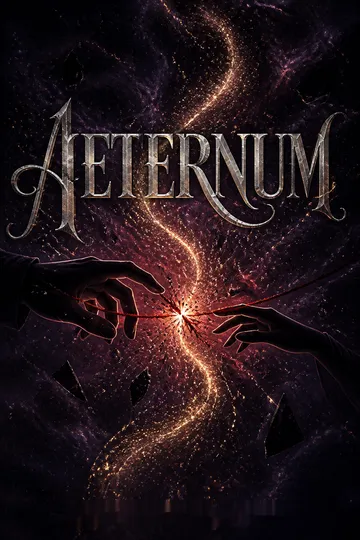
About the Author
Other books by Jamie Applegate Hunter
Download PDF
Download EPUB
.epub digital book format is ideal for reading ebooks on phones, tablets, and e-readers.








