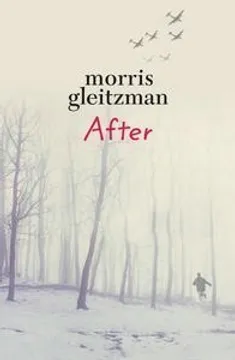


Plot Summary
The Birthday Trap
Thirteen-year-old Felix has spent two years hidden beneath a horse stall, sheltered by Gabriek, the Polish farmer who brings him food and lessons. On Felix’s birthday, armed strangers take Gabriek from the barn. Felix first mistakes them for Nazi collaborators, then recognizes that Gabriek is letting himself be led away to keep Felix’s hiding place secret.
Afraid his protector will be tortured for escaping forced labour, Felix climbs out of the hole for the first time in two years and follows the group across frozen fields. The open sky frightens him almost as much as the men ahead, but he keeps going because he cannot bear to let Gabriek face danger alone.
Felix’s first act of freedom is not a bid to escape danger, but an attempt to accept it on someone else’s behalf. His reasoning is childlike in its literalness, yet morally serious: Gabriek has protected him, so Felix must protect Gabriek. The hidden hole has preserved his life while narrowing his world; stepping out means confronting both physical weakness and the possibility that love requires action without certainty. His imagined stories serve as a private tool for organizing fear, but they cannot keep him safely inside. The birthday intensifies the moment by measuring how much of childhood has already been taken from him.
The Train Over the Gorge
In the forest, Felix finds Gabriek surrounded by armed partisans, his arms stretched across a railway track as a train approaches. Felix rushes down to surrender himself and invents a story that Gabriek has been hunting him, hoping the partisans will spare his protector.
Instead, the group pulls them clear before the train reaches a bombed bridge, then attacks the Nazi soldiers trapped in the wreckage. Felix learns that Gabriek secretly helps the resistance and that Pavel leads the partisans.
On their return, flames rise from the farm. Felix frees Dom from the burning barn and rescues his own books and keepsakes, while Gabriek searches the farmhouse for Genia’s belongings. A collapsing roof injures Gabriek, and Felix uses a well pulley to lift him onto Dom.
Felix’s improvised lie does not control events, but it reveals his instinct to use imagination as protection. The partisans’ violence forces him to revise his picture of Gabriek: the man who repairs machinery also takes part in killing Nazis. This is not presented as a simple moral reversal. Felix tries to understand how grief and resistance can make a gentle person use weapons, while remaining disturbed by what he sees. The fire then turns the secret shelter into a lost home. Felix’s practical rescue of Dom and Gabriek shows that education, observation, and care can matter as much as courage.
A Bazooka for a Bed
Gabriek’s head wound sends the pair toward the partisan camp, where a surgeon operates in a crowded bunker. Felix assists with rags, vodka, and a heated knife, then learns that Gabriek needs penicillin available only at another camp.
Pavel sends the wounded man north but keeps Felix behind as the surgeon’s assistant. To stay near Gabriek and Dom, Felix must earn acceptance by bringing a weapon. Yuli, a young partisan with a red headscarf, guides him toward town. There he sees hanged civilians and a forced march of Jewish prisoners.
He nearly attacks a uniformed figure, then discovers the figure is a Hitler Youth boy without a gun. Instead, Felix steals the boy’s bicycle, two anti-tank rockets, and oversized Nazi boots, winning admission to the camp.
The recruitment test makes belonging conditional on usefulness, reflecting the resistance’s need to survive rather than its capacity to offer a child refuge. Felix meets that demand through resourcefulness, but the town’s public executions and starving prisoners expose the cost of operating in a world where neutrality is dangerous. His decision not to stab the first uniformed boy he sees matters: he pauses when the target proves less threatening than his anger imagined. Stealing the bicycle and rockets is still an act of deception, yet it channels his survival skills toward collective resistance. The child is becoming capable without becoming uncomplicated.
The Surgeon’s Apprentice
Felix wakes beside Gabriek after the operation and soon learns that the wound is infected. Without penicillin, Doctor Zajak believes Gabriek will die, so Pavel orders him transferred to the main camp. Felix begs to go too, but Pavel keeps him as Zajak’s assistant, threatening him if he disobeys. Yuli helps Felix and Gabriek say goodbye; Gabriek leaves him Genia’s photograph and violin, promising to return after he recovers.
The parting gives Felix a reason to stay, though he privately plans to find the northern camp. Szulk, a hostile partisan who distrusts Jews, warns that the group may not let Felix leave if he becomes a security risk. Felix is now both a recruit and a child trapped by the rules that protect the camp.
The separation turns care into a source of conflict. Felix understands that medical treatment may save Gabriek, yet experiences the transfer as another abandonment, because the distinction between necessary departure and chosen departure is emotionally hard for him to hold. Pavel’s threat and Szulk’s prejudice make the camp’s protection feel conditional, not secure. Gabriek’s keepsakes offer continuity, while his promise gives Felix a future to organize around. That hope is useful, but also vulnerable: Felix has repeatedly lost people without being able to prevent it, so even a reasonable wait feels like a test of whether he can trust anyone to return.
Snow Tracks and Second Chances
Working for Zajak, Felix learns the rough routines of field medicine, including how easily a mistake can hurt someone. A snowstorm gives him a chance to flee with Dom, but he falls asleep outside and wakes with frostbitten feet. While helping treat another partisan, Felix realizes that Dom can drag pine branches to brush away their tracks.
He tries the device during his escape, but Pavel and Szulk catch them. Yuli pretends the snow brush is an invention she asked Felix to test, giving him a way to return without punishment. Pavel recognizes its military value and rewards Felix with food for himself and Dom. Yuli also gives him a warm coat and better glasses taken from Nazi supplies, helping him stay at the camp and work more effectively.
Felix’s failed escape exposes the difference between bravery and preparedness. He is determined to reach Gabriek, but cold, exhaustion, and the partisans’ security needs limit what determination can accomplish. His snow brush transforms an escape plan into a contribution to the group, a shift that lets him remain without pretending he no longer wants to leave. Yuli’s cover protects him while respecting his ingenuity, and the coat and glasses make care tangible rather than sentimental. Felix is learning that dependence need not erase agency: he can accept help and still offer something the community needs.
The Man Who Does Not Return
As the weeks pass, Felix waits for Gabriek and becomes increasingly sure that his promise will not be kept. Yuli returns wounded from a mission and tells Felix she saw Gabriek at the main camp. He has volunteered for a sabotage unit headed north to attack Nazi trains, delaying his return because the resistance needs him.
The news hurts more than Felix expects; he reads Gabriek’s absence as a decision to leave him behind. Yuli explains that Nazi forces are retreating and trying to move secret weapons, including rocket bombs, so sabotage matters urgently. Rather than dismiss Felix’s hurt, she invites him to join a mission. For the first time, Felix can fight beside someone he trusts instead of waiting helplessly for someone to come back.
Felix interprets Gabriek’s absence through the emotional history of separation, not through military priorities. His conclusion that he has been unwanted is understandable, but not reliable; the story lets readers feel the force of that belief without treating it as fact. Yuli’s response is significant because she does not correct him with easy reassurance. She offers action and companionship. Her own losses and injuries make her a fellow survivor, not a substitute parent who can erase what Felix misses. The mission gives his grief somewhere to go, while introducing the danger that resistance can demand even more separation from the people it is meant to protect.
Jewels in the Rubble
Yuli takes Felix to market at night in a cart, using jewellery looted from a Nazi transport to buy food for the resistance. They see retreating soldiers killing an old woman and looting her farm; Yuli kills the men before they can harm anyone else.
An Allied air raid then demolishes the town, and Felix discovers that the British and Americans have bombed it to hit Nazi transport and headquarters. Amid the wreckage, he finds Jewish girls hiding in an apartment and German children sheltering beside stolen tins.
Yuli reaches the Nazi headquarters disguised in a dead soldier’s uniform. She returns with urgent news: the Nazis know the partisan camp’s location and plan to attack that day. Felix leaves the food behind and hurries with Yuli toward the forest.
This mission complicates Felix’s emerging idea of who deserves help. The town’s destruction comes from the Allies, who are fighting the Nazis but still kill civilians; the German children, meanwhile, are vulnerable even as they wear the enemy’s uniform. Felix’s instinct to feed people and Yuli’s willingness to use lethal force work side by side without being made equivalent. The stolen jewellery carries the absent victims’ possessions into a present act of survival. Yet the immediate need to warn the camp overrides the food mission, showing how wartime care is repeatedly interrupted by threats that cannot be solved one person at a time.
The Swamp and the Dead
As gunfire reaches the forest, Yuli orders Felix to take Dom toward a swamp and wait while she returns to defend the camp. Felix obeys because bringing Dom into a battle would put the horse at risk, though he spends the night listening for signs that Yuli has survived. In the morning, he returns to the clearing and finds the partisans dead, the bunkers burned, and Pavel hanged.
Yuli is nowhere among the bodies, but a fragment of her red scarf in the ashes convinces Felix she is gone too. He buries the dead, including Doctor Zajak, and grieves beside Dom. Having lost so many people he has called parents, Felix decides he should stop needing parents at all.
The camp’s destruction takes away the fragile structure that had turned Felix’s survival into shared work. His obedience to Yuli protects him, but it leaves him with the guilt and uncertainty of a survivor who was absent when others died. The scarf makes absence feel conclusive, even though it cannot prove what happened to Yuli. Felix’s decision to stop needing parents is a defense against further loss, not a settled philosophy. Burying the partisans gives him a task when grief is too large to master; the work honors them, while also keeping him from collapsing into the belief that nothing he does can matter.
An Island of Enemies
When bombing resumes, Felix returns to town for food and finds the Jewish girls hiding beneath the wreckage of their apartment. He searches next door for tins, where he discovers two Hitler Youth boys and their little sister trapped under a table. The older boy is Axel, whose bicycle Felix once stole; the other is Helmut.
Felix opens the cans with diamond rings and divides food between the children, then leads them and the Jewish sisters to a hidden island in the swamp. Their shared shelter brings constant arguments over food, hygiene, and sleeping space. When Axel wakes crying for his dead family, the others stop treating him as only an enemy. With supplies dwindling, the children agree to help Felix sabotage a Nazi train for food.
The island turns survival into an experiment in living with people whom the war has trained to distrust one another. Felix cannot make the children’s histories disappear, and their quarrels show how little solidarity can be assumed. But shared hunger and Axel’s grief expose needs that enemy labels conceal. Felix’s choice to rescue the German children does not absolve the Nazi system or erase the danger they pose; it refuses to make a child’s uniform the whole truth about him. As the group begins to cooperate, Felix moves from being someone’s dependent to taking responsibility for others, even while he remains frightened and inexperienced.
The Broken Railway
Felix proposes derailing a supply train by having Dom pull up a section of track, and the children spend days preparing. On the night they set out, an explosion destroys the railway bridge before they can begin.
Nazi soldiers then demolish what remains, a sign Felix recognizes from Gabriek’s lessons as evidence that the retreating army expects to lose. Back at the swamp, Yuli appears alive. She survived the attack but was carried to another partisan camp, where Szulk took command.
Yuli also brings news that survivors from the camp where Felix’s parents were held have been moved into Germany. Felix insists on going to search for them. Yuli arranges for Russian soldiers to take him, while promising to find homes for Dom and the other children.
The ruined bridge gives Felix a way to read military events, but the human consequences remain uncertain. His education turns destruction into evidence that Nazi power is weakening; it does not restore the people the war has taken. Yuli’s return sharply revises the conclusion he drew from her scarf, demonstrating how grief can make an incomplete sign feel final. Her news about possible survivors offers hope with no guarantee attached. Felix chooses to pursue it anyway, carrying the same stubborn attachment that earlier made him leave his hideout. The children’s future remains unsettled, but Yuli’s promise to care for them shows that protection can be passed onward.
Across the German Border
Russian medical staff carry Felix toward Germany in an ambulance, passing ruined towns crowded with injured people. He resists stopping to help because every delay feels like a threat to his chance of finding his parents.
At a farmhouse, the Russian medics take guns inside, and Felix witnesses them killing German women. The war ends during the journey, but the celebration cannot erase what he has seen. At the destination camp, Felix finds heaps of dead prisoners and sheds full of starving survivors.
He searches from bunk to bunk until a former neighbor, Mr Rosenfeld, recognizes him. Mr Rosenfeld tells him that Felix’s father died, but his mother may still be alive. He leads Felix through the sheds, where Felix finally recognizes his mother beneath the signs of extreme starvation.
Felix’s journey tests whether his compassion can survive the urgency of personal hope. He knows people need help along the road, yet fears that stopping will cost him the chance to find his mother. His encounter with the Russian medics’ violence breaks the simple moral map of allies and enemies; victory does not guarantee humane conduct. The camp makes the scale of the Holocaust physically unavoidable, while Mr Rosenfeld’s recognition reconnects Felix to a life from before the hiding places and resistance. His mother’s survival brings relief, but her condition ensures that reunion cannot become an uncomplicated reward for endurance.
The Last Goodbyes
Felix embraces his mother and tells her about the people who protected him. A Russian doctor explains that starvation and disease have damaged her too badly for recovery, but Felix cannot accept the judgment until he sees how much pain she is in. He stays beside her, understands that keeping her alive would mean prolonging her suffering, and gives her a comforting story about Gabriek before she dies.
Felix carries her into the mass grave and carefully covers her before the bulldozer fills it. He then works as a nurse among the survivors, holding hands and helping where he can. After Mr Rosenfeld and another patient die, Felix reaches the edge of what he can manage alone. Gabriek appears at his side and helps him leave the camp.
The reunion gives Felix what he has wanted for years, but not the rescue he imagined. His mother’s decline forces him to distinguish loving someone from keeping them alive at any cost. The choice to comfort her with a partly imagined story echoes the stories that once helped Felix bear fear, now used as an act of tenderness rather than escape. Her burial refuses the anonymity of the mass grave through a small, personal gesture. Nursing the survivors shows that grief has not closed Felix off from others, though it also reveals his limits. Gabriek’s return offers companionship, not a reversal of what has been lost.
The Scalpel and the Choice
Before leaving, Felix and Gabriek visit the old partisan camp and recover the keepsakes stored in a hollow tree. Szulk, now in command of a different group, surprises them and aims his gun at Gabriek.
When Gabriek tackles him, Felix slashes Szulk with a scalpel and has the chance to kill him by striking the vulnerable place beneath his chin. Instead, remembering that Szulk has also lost his family, Felix cauterizes and stitches the wound. Gabriek holds Szulk still while Felix treats him, then they break his gun and leave him for the authorities.
As they walk toward town, Gabriek praises Felix’s growing medical skill and urges him to keep learning. Felix chooses repair over revenge, and the two set out to help rebuild what the war has broken.
The final confrontation gathers the book’s competing lessons into one physical decision. Felix has learned how to injure and how to heal, and Szulk’s vulnerability gives him the power to choose between them. Sparing Szulk does not mean excusing his antisemitism or trusting him; Felix disables the weapon and leaves him to face consequences. His act of treatment instead refuses to let hatred dictate every use of his skill. Gabriek’s presence makes the moment feel earned, but he does not decide for Felix. The ending points toward repair as demanding work, not a clean restoration: the survivors must carry their losses while choosing what kind of people they will become.
Analysis
After follows Felix through the final months of the war, but its central movement is not simply from hiding to freedom. It tracks how a child who has survived through dependence begins to take responsibility for other people, while repeatedly learning that protection cannot guarantee safety. Gabriek, Yuli, and the partisans offer care, but each is constrained by a war that turns absence into a routine possibility. Felix’s anxious readings of their choices show how trauma distorts time: a delay becomes rejection, a missing person becomes dead, and hope can feel like a danger in itself.
The novel’s most revealing moral pressure comes from its children. Felix shelters German boys in Hitler Youth uniforms beside Jewish girls whose families have been destroyed. Their shared refuge does not erase the historical imbalance between persecutors and victims, nor does it make the German children’s suffering equivalent to the Holocaust. Instead, the episode asks whether a child can be held wholly responsible for an identity imposed by adults. Felix’s choice to help them expresses compassion without requiring him to forget what the uniform represents.
Stories, lessons, and improvised tools repeatedly become forms of agency. Felix’s imagination can comfort him, but it can also tempt him to invent explanations that protect him from grief. His medical training offers a firmer kind of hope: imperfect and dangerous, yet grounded in specific acts of care. By the end, Felix cannot mend every loss, restore his parents, or undo the deaths around him. He can choose to treat an enemy’s wound, nurse survivors, and keep learning. The ending defines repair not as return to an unbroken past, but as work undertaken by people who know what has been broken.
Review Summary
After continues Felix's story during World War II, depicting his experiences with partisans and his growth into adolescence. Readers praise Gleitzman's unflinching portrayal of war's brutality while maintaining Felix's optimism and humanity. The book is noted for its emotional impact, character development, and educational value. Many consider it the strongest in the series, appreciating how it bridges the gap between earlier books. While some find it heartbreaking, most agree it's a fitting and necessary addition to Felix's journey.
People Also Read
Characters
Felix Salinger
The resourceful young survivorFelix is a thirteen-year-old Jewish boy who meets danger with observation, practical invention, and stories. Years of hiding have made him attentive to small details and unusually self-sufficient, but he still longs for family and protection. He often interprets events through the limited knowledge of a child, which can lead him to misunderstand adult choices; his guesses are sincere, not deceitful. Felix’s capacity to imagine helps him endure fear, and his growing medical skill gives that imagination a practical outlet. He wants to keep people safe, even when he cannot control what happens to them. His moral life is shaped by the tension between anger at Nazi cruelty and the impulse to care for vulnerable people.
Gabriek Borowski
The mender who sheltersGabriek is a Polish farm worker and gifted repairer who shelters Felix beneath his barn. Patient, resourceful, and deeply protective, he teaches Felix through practical work and encourages his curiosity. He dislikes weapons and prefers to mend what has been damaged, though life under Nazi occupation forces him into the partisan resistance. His care for Felix is steady but not always easy to interpret from a child’s perspective. Gabriek carries grief for his wife, Genia, and the family they hoped to build. He models a form of responsibility that combines tenderness with hard choices, and he treats education as a way to help Felix gain a future beyond mere survival.
Yuli
The fierce partisan protectorYuli is a young partisan whose red headscarf and shaved hair make her distinctive in the forest. She is disciplined, observant, and capable of swift violence, but her toughness does not prevent her from noticing when Felix needs warmth, encouragement, or a chance to contribute. The Nazis have taken her family and subjected her to forced labour, losses that inform her commitment to resistance. Yuli understands that protection often means giving orders someone will resent, especially when danger is close. Her relationship with Felix grows through shared missions and quiet acts of trust. She does not promise that the world will be fair; she helps him find ways to live and act within it.
Dom
Felix’s steadfast horseDom is a strong workhorse and Felix’s closest nonhuman companion. He helps Gabriek’s farm function, carries the wounded, and gives Felix warmth and steadiness when people are absent or frightening. Felix treats Dom as a trusted friend rather than property, watching his needs and involving him in plans. Dom’s strength is never just a convenient resource: his patience and dependence remind Felix that care must be mutual. The horse gives Felix a constant relationship in a world where families are repeatedly separated, and his quiet presence helps make the forest feel less lonely.
Pavel
The guarded partisan leaderPavel leads the partisan group that Gabriek assists. He is wary of outsiders and responsible for decisions that can endanger the whole camp, so his manner is blunt and controlled. He evaluates Felix by the practical value the boy can offer, while also enforcing rules that frustrate Felix’s desire to stay with Gabriek. Pavel represents the hard arithmetic of resistance: compassion matters, but secrecy and survival cannot be ignored.
Doctor Zajak
The forest surgeonZajak is the partisan camp’s surgeon, forced to work with scarce supplies, improvised instruments, and a steady flow of serious injuries. He is impatient and demanding, and his manner can make Felix feel incompetent. Yet he gives the boy real responsibility and teaches him through difficult experience. Zajak’s blunt standards reflect the stakes of medical work in the forest, where a mistake can cost a life and care cannot wait for perfect conditions.
Szulk
The antisemitic partisanSzulk is a tall, thin partisan who distrusts Felix because he is Jewish and sees the boy as a threat to the group’s secrecy. He speaks and acts with contempt, and his suspicion makes the camp feel less safe for Felix. Szulk is also a man shaped by wartime loss, though that suffering does not excuse his prejudice. His presence challenges any easy division between resistance fighters and morally admirable people.
Felix’s mother
The remembered bookshop motherFelix’s mother is a loving parent whose absence shapes his imagination and his longing to return to family life. Before the war tore their household apart, she shared stories with him and gave him a sense of safety. Felix carries those memories through years of danger, often using them to understand courage, love, and loss. Her importance to him is not only the hope of reunion, but the childhood connection she represents.
Felix’s father
The absent bookshop fatherFelix’s father is a bookseller and a loving parent remembered through the family life Felix hopes to recover. His presence in Felix’s thoughts gives shape to the boy’s wish to return to familiar work, books, and home. Felix’s memories of his parents are sometimes incomplete, but they remain an emotional measure of the care he has lost and hopes to find again.
Zelda
Felix’s brave young friendZelda is a young friend from Felix’s earlier years, remembered for her courage, affectionate nature, and sharp sense of what makes a person good. Felix carries her influence into the forest, where memories of her help him judge acts of protection and kindness. Her presence in his thoughts connects his life in hiding to the relationships that came before it.
Genia
Gabriek’s beloved wifeGenia is Gabriek’s wife, remembered through the keepsakes he preserves and the family they hoped to have. Though she is not present in Felix’s daily life, her importance to Gabriek is unmistakable. Felix gradually understands that Gabriek’s grief belongs to a life and love that existed before the boy arrived at the farm.
Barney
Felix’s former dental mentorBarney is a dentist Felix once assisted in the ghetto. Felix remembers him as an example of useful care and draws on that experience when he tries to help Doctor Zajak in the forest.
Hannah
The protective Jewish sisterHannah is the oldest of the three Jewish sisters Felix finds in the bombed town. She is protective, quick to challenge others, and determined not to let her younger sisters be threatened. Her wariness is understandable after the dangers she has faced, but she can also recognize when cooperation is necessary.
Axel
The grieving Hitler Youth boyAxel is a German boy in a Hitler Youth uniform whose family and home have been destroyed. He initially meets Felix with suspicion and hostility, but his grief reveals how little the uniform can explain about a child’s inner life. Axel is outspoken and proud, yet capable of reconsidering what he has been taught.
Helmut
The guarded German boyHelmut is a German boy and Hitler Youth member who shelters with his younger sister. He is defensive and quick to repeat the divisions around him, especially when he feels threatened. His attachment to his sister and his experience of loss complicate the identity he has been taught to perform.
Bug
Helmut’s little sisterBug is Helmut’s young sister, a child whose blunt observations and need for safety cut through the older children’s arguments. She depends on the group to shelter her and helps make their shared refuge feel like a family, however temporary.
Beryl
One of the Jewish sistersBeryl is one of the Jewish sisters hidden in the damaged town. She joins the children’s uneasy community and shows how quickly a frightened child can become part of a practical team when everyone depends on the same shelter.
Faiga
The youngest Jewish sisterFaiga is the youngest of the Jewish sisters Felix rescues. She is frightened, hungry, and candid about missing her parents. Her vulnerability reminds Felix that protecting the children means offering reassurance even when he cannot guarantee what will happen.
Mr Rosenfeld
The surviving former neighborMr Rosenfeld is a former neighbor of Felix’s family whom Felix recognizes in the camp. Though weakened by captivity, he remains gentle and helps Felix reconnect with his past. His memory and kindness give Felix a crucial human link between the life he remembers and the devastated present.
Plot Devices
The hidden stall
Shelter with a costFelix’s underground hiding place beneath Dom’s stall keeps him concealed while Gabriek brings food, removes waste, and teaches him. The hole is both a practical refuge and a world small enough for Felix to learn every object by touch. Its safety depends on strict obedience, which makes leaving it an act of risk and responsibility. The contrast between the cramped shelter and the exposed landscape helps measure Felix’s physical and emotional movement from isolation toward participation in the wider world.
The birthday compass
Direction through uncertaintyGabriek’s compass arrives as Felix’s birthday present, initially seeming strange for a boy who has lived hidden in a barn. Once the farm is destroyed, it gives Felix a practical way to navigate the forest and imagine a route to Gabriek. The compass also becomes a portable reminder of Gabriek’s care, especially when Felix worries that the man has chosen not to return. It does not tell Felix what other people feel or guarantee that he will reach them, but it helps him keep moving when certainty is impossible.
Felix’s stories
Imagination as survivalFelix makes up stories and borrows plots from books to manage fear, loneliness, and grief. He uses invention to understand danger when the facts are confusing, and sometimes his stories become practical plans, as when he tries to persuade the partisans to spare Gabriek. Storytelling can also mislead him: Felix invents reassuring explanations for Gabriek’s absence because he cannot bear a more painful possibility. The device reflects the difference between pretending that loss has not happened and using imagination to face it with greater courage.
Improvised medicine
Care under scarcityDoctor Zajak’s rough medical practice teaches Felix to use what the forest can provide: vodka, boiled cloth, heated blades, and close attention. Felix’s early mistakes show that the wish to help is not enough; medical care demands skill and humility. As he learns, the improvised routines become a way to contribute to the group and to preserve a future beyond violence. The device links Felix’s technical curiosity to a moral choice: knowledge can be used to injure, but it can also repair bodies and reduce suffering.
Recovered jewellery
Stolen wealth becomes foodJewellery taken from a Nazi transport of Jewish possessions becomes Felix and Yuli’s means of obtaining food. Felix also uses diamond rings to open tins when the children find themselves trapped among supplies with no tin opener. These objects retain the history of people whose lives and property were stolen, even as they serve immediate survival. Their changing use resists the Nazis’ attempt to reduce victims to confiscated possessions: the jewellery feeds children and helps them endure, while Felix remains aware that each item once belonged to someone with a life of their own.
Download PDF
Download EPUB
.epub digital book format is ideal for reading ebooks on phones, tablets, and e-readers.








