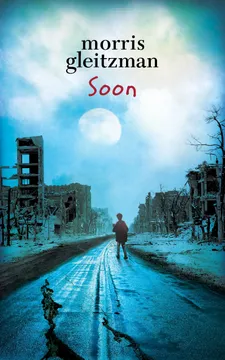


Plot Summary
Poland's Peaceful Killers
Thirteen-year-old Felix lives in a concealed refuge with Gabriek, the older mechanic who has kept him alive since the war. Their shelter has food, homegrown vegetables, and rules designed to keep strangers away. When Felix spots Polish nationalists stalking three fugitives on a nearby roof, he shouts a warning.
The gunmen kill the fugitives anyway, and Gabriek drags Felix from the window before their hiding place is exposed. Gabriek insists that survival depends on avoiding other people's trouble. Felix remembers the friends and adults who once risked themselves for him, and cannot accept safety as a reason to stop caring. The war has ended, but its habits of persecution have not.
The opening makes the supposed peace morally unstable: the shooting occurs after the war, but the logic of ethnic cleansing remains intact. Gabriek's caution is not cowardice; it is hard-won knowledge about how vulnerable people survive. Felix's impulse to intervene comes from a different kind of survival, one built from debts of care owed to people who protected him. Their disagreement establishes the novel's central pressure: whether compassion can remain practical when every visible act of kindness can endanger the person offering it.
Anya's Gun, Dimmi's Lock
At a chaotic food distribution, Felix tries to reset an elderly woman's broken finger. A teenage girl in a grubby pink coat, Anya, points a pistol at the woman, takes her bread, and warns Felix that kindness cannot feed anyone in a city this hungry. Soon after, a huge customer named Dimmi grabs Felix by the throat over a lock that Gabriek repaired.
Felix promises to fix it by the next day, or Dimmi will kill him and Gabriek. On the walk home, Felix finds a wounded boy in a bombed building and stops to treat him. That choice takes him directly into the reach of the armed nationalists he had been trying to avoid.
Felix's medical ambition is both admirable and dangerous: he treats the old woman's finger without the skill or authority to make her feel safe, then risks himself again for a wounded child. Anya's theft is not presented as simple cruelty. Her warning exposes the economic violence beneath the square's apparent charity, where food is so scarce that help can look like competition. Dimmi's threat adds a second kind of danger, one rooted in fragile postwar commerce. Felix is already caught between doing what feels right and preserving the small, precarious life he and Gabriek have built.
A Baby in the Rubble
Felix binds the wounded boy's leg, but a nationalist leader named Gogol arrives and shoots the child, calling him foreign despite his Polish speech. Gogol's men seize Felix and force him to operate on one of their own injured fighters. Felix saves the man's life, then rides with the group as Gogol describes his campaign against Jews, Ukrainians, and other supposed outsiders.
During a raid, a frightened woman presses a wrapped bundle into Felix's arms and runs back toward the gunfire. Gogol's men shoot her. Felix escapes into a ruined building, expecting to find an animal inside the bundle. Instead, he discovers a baby. The child turns his attempt to flee into a new obligation.
Gogol's language of national purification converts murder into administrative work, while Felix's medical training forces him to confront the gap between healing a body and enabling its owner to return to violence. His reluctant operation shows that survival can demand morally compromised action without erasing his compassion. The woman's last choice gives Felix a responsibility he did not seek and cannot safely accept. The baby is not a symbol placed at a distance from history; he is a living consequence of the adults' violence, entrusted to the one person who has just witnessed it.
The Welfare Office Says No
Gabriek objects when Felix brings the baby to their hidden rooms, where even a cry could reveal them. He agrees to keep the child only for the night and tells Felix to take him to the military welfare office. Felix carries the baby through the dangerous streets, narrowly avoiding an army convoy and spotting Anya siphoning fuel from its truck.
At the office, he sneaks past a guard and reaches an official, but the overwhelmed man cannot place another orphan and sends Felix away. Felix sits among the crowds of desperate families, looks at the sleeping child, and decides the baby will stay with him. He returns to Anya and joins her gang in exchange for supplies needed to care for the infant.
The welfare office is not a villainous institution so much as a system crushed by the scale of the crisis. Felix's clever entry earns him access, but no practical help; his decision follows from the failure of official care rather than a romantic belief that love alone will solve everything. By choosing the baby, he crosses a line from improvised kindness into sustained responsibility. Joining Anya's gang shows how quickly care becomes material: milk, soap, and clean cloth must be obtained in a city where ordinary goods have become prizes.
Gogol's Truck Explodes
Before Felix and Anya can settle into their new arrangement, Dimmi confronts Felix again about the lock. Anya holds Dimmi at gunpoint long enough for Felix to return the repaired mechanism, but Gogol's men seize both children and the baby. Gogol plans to make an example of Felix for interfering with his raids.
While the captives wait in a schoolyard, Anya secretly siphons fuel from the nationalists' truck and causes it to explode. The blast scatters Gogol's men, giving Felix a chance to escape with the baby through the city's broken sewers. Anya finds them underground and leads them to Lipzyk Orphanage, where the infant can get milk and Felix can meet the doctor who runs it.
Anya and Felix are not yet friends in any settled sense. They are two children who recognize that each other's skills matter, though each keeps secrets and tests the other. The explosion turns Anya's criminal expertise into direct protection, while Felix's escape depends on acting quickly rather than waiting for a safer plan. Their route through the sewers makes the city's infrastructure a literal refuge beneath its politics. Reaching the orphanage offers a brief possibility of organized care, but the children have learned not to confuse a safe-looking place with a trustworthy one.
Milk from the Orphanage
At the orphanage, Doctor Lipzyk examines the baby, supplies powdered milk and medicine, and welcomes Felix into a library full of medical books. Felix also notices that Anya and several residents belong to her street gang, and that she hides an illness she refuses to discuss. Back at the refuge, Gabriek initially expects Felix to find another home for the child.
But when Felix explains that Gogol's men called the baby an outsider, Gabriek recognizes that the child is Ukrainian and begins to soften. After a sleepless night, Gabriek names him Pavlo, after a partisan who once protected him, and agrees to raise him with Felix. Anya then warns Felix that Gogol has put a price on them.
The orphanage gives Felix the rare experience of being welcomed into a place built around learning and medical care. Its abundance contrasts sharply with the city's shortages, while Anya's evasions complicate Felix's tendency to treat kindness as proof of character. Gabriek's acceptance of Pavlo is an emotional reversal grounded in shared vulnerability: the baby is no longer an unwanted visitor but a child threatened by the same ethnic hatred that shaped Gabriek's own losses. Naming Pavlo turns temporary shelter into family commitment, which makes Gogol's bounty more than an external threat.
Paintings for Penicillin
Anya and Doctor Lipzyk propose trading stolen paintings for penicillin, which they hope will persuade Gogol to leave Felix and Pavlo alone. The paintings are in an apartment protected by Dimmi's lock, so Felix must decide whether to risk Gabriek's repair business. He eventually helps Anya's gang break in, opens the lock with tools Gabriek made, and sees the paintings' images of tenderness amid the wreckage.
At Lipzyk's house, Felix finds a hidden cupboard of disturbing photographs marked with the name of a nearby town, Dodoczne. He does not yet understand their meaning. He leaves with milk for Pavlo and a new unease about the doctor whose kindness gave him access to the library.
The heist forces Felix to violate one of Gabriek's clearest rules, and he does so for a reason that feels morally defensible: protecting a baby from a killer. The paintings offer a counterimage to the ruined city, but stealing them also exposes how easily beauty and ownership can be manipulated. Felix's discovery of the photographs marks a shift from practical suspicion to investigation. His medical curiosity, once a route toward helping people, now makes him attentive to evidence that others would rather keep hidden.
Gabriek's Shot and Promise
Felix tells Gabriek about the theft, the photographs, and Gogol's threat. Gabriek is furious and leaves with his rifle to confront the danger himself. Gogol shoots him in the leg, but Gabriek wounds Gogol before escaping with help from Anya's gang. Felix operates on Gabriek and tends the bleeding wound.
He then realizes their hiding place is no longer secure and decides Pavlo must be taken to a Ukrainian family. Gabriek cannot travel on his injured leg, yet trusts Felix to return and gives him his wedding ring to trade for train passage. Anya joins Felix, leaving her own safety uncertain as they set out with the child.
Gabriek's choice to confront Gogol reveals how deeply Pavlo has altered the household: the mechanic who once preached self-preservation now accepts danger for the child. Felix's medical work reverses their usual roles, making the boy responsible for the guardian who has protected him. The journey to Ukraine is an act of care shaped by limits, not a rejection of family. Felix believes Pavlo's safety may depend on finding people of his own community, even though sending him away will cost Felix and Gabriek the family they have begun to form.
Pavlo's Last Crossing
On the crowded train, Anya tells Felix that Lipzyk sent Gogol fake penicillin and struck her when she challenged him. She also reveals that Russian soldiers sexually assaulted her, and that she killed one afterward. The train stops short of Ukraine, so Felix and Anya carry Pavlo through a forest toward a village.
At a barn, locals discover Felix is Jewish and attack them. Anya shoots one man, and the children escape through a hole in the floor into a fast river. Felix is swept away from Anya and Pavlo. In the morning, Anya reaches him carrying Pavlo's body. They bury the baby together. Their attempt to give him a safer life has ended in another loss.
Anya's confession changes Felix's understanding of the hard, guarded girl: her violence follows an assault in which she was given no safe choice, and her shame reflects the way survivors often turn blame inward. The river then strips away the children's illusion that courage can guarantee protection. Pavlo's death is not a punishment for Felix's decision or a failure of affection; it is the devastating limit of what two children can control. Their shared burial makes grief an action they must perform together, even when neither can make the loss meaningful.
The Dodoczne Clue
After Pavlo's burial, Anya tells Felix she is pregnant from the assault and had moved into Lipzyk's orphanage to have a doctor nearby. Fearing that her child will be unsafe elsewhere, she asks Felix to help her return. Felix agrees, though he distrusts Lipzyk, and they board a train back toward Poland.
When they pass the station marked Dodoczne, Felix connects it to the label on the photographs. He learns that Nazis once operated a laboratory nearby, where prisoners were subjected to medical experiments. A badly bandaged patient at Lipzyk's house and the doctor's secret photographs now seem connected. Felix persuades Anya to investigate before she places her unborn child back in Lipzyk's care.
Anya's decision is not a simple retreat to safety. She is weighing the real danger of prejudice against the uncertain protection of an institution that has food, shelter, and a doctor. Felix's role is to make room for that calculation while still asking whether the doctor deserves her trust. The place-name Dodoczne converts a private unease into a historical question. Evidence does not immediately provide certainty, but it gives the children a reason to risk reopening the past before it can shape another child's life.
Doctor Lipzyk Unmasked
Felix searches Lipzyk's library and finds his own figure in the photographs from Dodoczne, standing beside prisoners undergoing brutal experiments. When he confronts the doctor with the images, Lipzyk prepares to inject Felix and Anya with an unknown substance. Dimmi bursts in, furious because Lipzyk's history links him to the murder of Dimmi's Jewish mother.
Lipzyk admits his former identity as Hermann Lederhaus. Dimmi begins choking him, but Felix holds up one of the stolen paintings, and its image of a mother and child interrupts Dimmi's revenge long enough to save Lederhaus's life. Anya, shaken by the doctor's contempt for her pregnancy, leaves the room in tears.
The revelation makes Lipzyk's charitable authority a disguise for an older form of violence: medicine used to classify some lives as disposable. The photographs function as evidence, but they do not settle the moral question of what should happen to him. Dimmi's rage is rooted in personal loss, while Felix's intervention refuses to let justice become another killing. The painting does not erase the crime or absolve its owner. It briefly restores attention to human tenderness, giving Dimmi a way to stop before grief becomes the same kind of violence he hates.
Gogol Falls at Home
As Felix and Anya try to decide what comes next, Gogol's men beat Vladek until he reveals the location of Felix and Gabriek's refuge. Felix races home and finds Gogol dead beneath the collapsed ladder. The loosened bolts and broken equipment strongly suggest that Gabriek engineered the fatal fall, then presents it as an accident.
Felix reunites with Gabriek, but when he tells him Pavlo died, both collapse into grief. Anya remains part of their uncertain future, carrying her child and the damage of what happened. Felix imagines the three of them living together, learning medicine from Lipzyk's books and making a family. He cannot know it will happen, but he chooses to hope.
Gogol's death removes the immediate threat through an act that resembles the violence the story has condemned, leaving Felix and Gabriek with no clean victory to celebrate. The focus shifts instead to the cost of survival: Pavlo is gone, Anya is carrying a child into an uncertain world, and Felix's promise to protect everyone cannot undo what has happened. His closing hope is deliberately imagined rather than guaranteed. It is a psychological act of repair, a way to picture care continuing without pretending that grief or danger has vanished.
Analysis
Soon places its story after the declared end of war, in a society where hunger, ethnic persecution, and damaged institutions continue to shape daily life. The timing matters: violence no longer arrives only in uniforms from an occupying army. It is carried out by local factions, hidden behind charitable authority, and reproduced in the choices people make when resources are scarce. Felix's optimism is therefore not ignorance of danger. He knows how badly helping can go, yet refuses to treat survival as a moral exemption from responsibility.
The novel gives care a material form. Felix must improvise splints, secure milk, clean Pavlo, and operate on Gabriek. These acts make compassion laborious and imperfect. His medical ambition offers a vocabulary for helping, but he repeatedly encounters situations no textbook can resolve: whether to save a violent patient, whether to steal from a customer, and whether evidence justifies risking Anya's fragile shelter. The story does not grant him the fantasy that good intentions ensure good outcomes. Pavlo's death is the brutal limit of his skill and devotion, not evidence that either was worthless.
Anya and Gabriek sharpen this argument from different directions. Gabriek's rules come from experience and protect the people he loves; Anya's criminal resourcefulness is also a survival practice, not a simple rejection of morality. Felix's growth lies in learning to see their defenses without surrendering his own commitments. He must also learn that protection cannot mean controlling another person's decision, especially when Anya weighs where her unborn child might be safest. The paintings and medical library offer competing inheritances. Art preserves images of tenderness; medicine carries both the possibility of healing and the history of organized abuse. Felix's refusal to let Dimmi kill Lederhaus does not erase the doctor's crimes. It marks a decision not to let vengeance dictate every next act. The ending offers hope as a chosen picture of a future, not a promise. In this world, hope is valuable precisely because Felix knows it may not be enough.
Review Summary
Soon is the fifth book in Morris Gleitzman's critically acclaimed "Once" series, set in post-WWII Poland. Readers praise Felix's unwavering kindness and hope amidst ongoing violence and chaos. The book explores themes of survival, friendship, and morality in a war-torn country. While some find it less emotionally impactful than previous installments, many appreciate its portrayal of life after war. Reviewers note the book's darker themes may be better suited for older children. Overall, the series is highly recommended for its powerful storytelling and historical significance.
Characters
Felix Salinger
The apprentice doctorFelix is a thirteen-year-old Jewish survivor with damaged legs, a sharp eye for practical problems, and a fierce wish to become a doctor. Years of hiding and loss have taught him to improvise with scraps, yet he resists the idea that staying alive requires ignoring other people's suffering. His medical knowledge is incomplete, and his attempts to help sometimes frighten or hurt the people he treats. Still, he keeps learning, asking questions, and accepting responsibility. Felix's humor helps him endure what he cannot control, while memories of those who protected him shape his stubborn belief that care must be repaid through action.
Gabriek
Felix's guarded protectorGabriek is a forty-two-year-old mechanic and widower who has protected Felix through years of danger. Skilled at repairing locks, inventing security devices, and finding uses for wreckage, he trusts rules because rules have helped them survive. He drinks heavily, especially when fear and grief press too close, but his generosity persists beneath his caution. Gabriek's bond with Felix is shaped by affection that often takes the form of practical protection: a secure hiding place, a repaired object, a homemade invention. He wants Felix safe, though he does not always understand that safety without compassion would betray the people who once saved them.
Anya
The armed orphanAnya is a teenage orphan who survives through theft, nerve, and careful control of what others know about her. She carries a gun and leads a small gang, but her toughness is not the same as indifference. Anya can be threatening and generous within the same encounter, making trust with her feel uncertain and earned. She knows how hunger changes people's choices and distrusts easy moral judgments from those who have not faced it. Felix's openness unsettles her, partly because it offers a form of belonging she does not know how to accept. Her guardedness protects her, while also keeping help at a distance.
Pavlo
The orphan Felix adoptsPavlo is the infant Felix rescues after his mother entrusts him to the boy during a nationalist raid. He cannot understand the violence around him, but his needs reshape the decisions of every person who tries to protect him. Feeding, washing, and keeping him quiet force Felix to turn compassion into daily work. Gabriek's choice to name him connects the baby to a partisan who once offered protection. Pavlo's presence makes an abstract future immediate: every risky journey and every argument about safety now concerns a child who cannot defend himself.
Gogol
The nationalist commanderGogol leads the armed Polish nationalists who hunt people he labels foreign, including Jews and Ukrainians. He treats violence as political housekeeping and uses threats, rewards, and public punishment to make resistance look futile. His authority depends on convincing his followers that cruelty is patriotic duty. Felix's medical usefulness briefly makes the boy valuable to him, but Gogol's practical interest never softens his hatred. He represents the danger of a leader who transforms personal prejudice into a system, giving murder the appearance of national purpose.
Doctor Lipzyk
The charitable physicianDoctor Lipzyk runs an orphanage in a damaged city and possesses a remarkable medical library. He provides Felix and Pavlo with supplies and shows a manner that seems patient and generous, making him a powerful model for Felix's hoped-for profession. Yet the people around him do not all experience his care in the same way, and his authority makes it difficult for a young person to question him. Lipzyk's role draws together the book's concerns with medicine, trust, and institutional power: expertise can preserve life, but it can also conceal the motives of the person who holds it.
Dimmi
The volatile customerDimmi is a physically imposing customer who treats a faulty lock as a matter worth settling through threats. His father is involved in the same repair dispute, and the pair become a recurring danger to Felix and Gabriek's fragile business. Dimmi's temper makes him easy to fear and hard to predict. He is also attached to the things he considers his own, whether a lock or an object carrying personal history. That attachment gives him a vulnerability beneath his aggression, though it does not make his intimidation harmless.
Vladek
Anya's young climberVladek is a slight, resourceful boy in Anya's gang, valued for his ability to climb and scout dangerous buildings. He helps the group assess how to reach the paintings and supports the children as they move through the city. His quickness is physical and practical, but he is also part of a network of young people who depend on one another in the absence of dependable adults.
Bolek
The orphanage helperBolek is a boy at Lipzyk's orphanage who performs chores such as polishing the large chandelier. He is also connected to Anya's gang and helps the children carry out their plans. His quiet competence reveals how the orphanage's apparent order depends on young residents doing work and taking risks adults may not see.
Doctor Zajak
Felix's partisan mentorDoctor Zajak is the partisan doctor who trained Felix during six months in the forest. Felix remembers his surgical methods and tries to apply them under pressure, even when he lacks proper tools or supervision. Zajak's influence gives Felix a genuine foundation for his medical ambitions, but also leaves him aware of how much he still has to learn.
Felix's parents
The lost booksellersFelix's Jewish parents owned a bookshop and taught him to value learning, decency, and the small courtesies that survive hardship. He remembers them through sensory details, especially the feel and smell of books, and uses their example to judge his own choices. Their absence is part of the reason he tries to make a home for others.
Genia
Gabriek's remembered wifeGenia was Gabriek's wife, and her memory remains part of the quiet family life he lost to the war. Felix knows that she and Gabriek once hoped for a daughter. Gabriek's wedding ring carries the weight of that bond and shows how private grief persists inside their improvised refuge.
Plot Devices
The hidden refuge
A fragile pocket of safetyFelix and Gabriek live in a concealed upper-floor refuge reached by a folding ladder and protected by improvised security measures. The hideout allows them to keep food, tools, and a semblance of routine while the city remains dangerous. Its secrecy also imposes costs: a crying baby, an unexpected visitor, or a careless customer could reveal their location. As Felix brings Pavlo into the household and others learn where he lives, the refuge shifts from a symbol of control to a vulnerable place that must be defended.
The repaired lock
Skill turned into leverageLocks and repairs provide Felix and Gabriek with a livelihood, a practical language of trust, and a recurring source of danger. Dimmi threatens them over a faulty lock, while Felix later uses the lockpicking skills Gabriek taught him to enter the apartment containing the paintings. The same knowledge that helps the pair secure their own refuge can be used to violate another person's security. The lock therefore makes Felix confront the moral difference between being capable of an act and having a good reason to perform it.
Pavlo's care
Compassion made practicalThe baby turns Felix's instinct to help into a continuing obligation. Pavlo needs milk, clean cloth, medicine, warmth, and protection from people who would kill him for his Ukrainian origins. Each ordinary need forces Felix to seek resources in a city where institutions are overwhelmed and supplies are scarce. Pavlo also changes Gabriek's understanding of the household, turning a refuge for two survivors into a possible family. His presence makes the question of whether to take risks concrete rather than theoretical.
Paintings and penicillin
A dangerous bargainAnya and Doctor Lipzyk propose using stolen paintings to obtain penicillin from Gogol and secure safety for Felix and Pavlo. Felix's knowledge of locks makes the theft possible, while the paintings connect the ruined present with images of human tenderness. The plan binds children, an orphanage, a violent militia, and a cache of valuable art in one exchange. Its apparent promise of protection is false, because the medicine Lipzyk supplies is not genuine. The bargain exposes how easily people can use a worthy goal to excuse deception that places others at risk.
The Dodoczne photographs
Evidence hidden in medicineFelix discovers photographs of people subjected to horrific medical experiments, each associated with the place name Dodoczne. At first he does not know what the images prove or why Lipzyk hid them. The clue later connects the doctor's library to a Nazi laboratory and gives Felix and Anya reason to investigate before returning to the orphanage. The photographs make medicine's double use unmistakable: anatomical knowledge can support healing, but under an abusive authority it can become a tool for turning patients into objects.
Download PDF
Download EPUB
.epub digital book format is ideal for reading ebooks on phones, tablets, and e-readers.








