

Plot Summary
Dancer and the Stetson
In 2003, eighteen-year-old Avelina Belo is still on her family’s California ranch, caring for her grief-stricken mother after her father’s death. Her brother plans to send their mother to Spain and Avelina to New York, but at a Northern California rodeo she meets Jake McCrea, a Montana cowboy competing in team roping.
Jake helps warm up her difficult horse, Dancer, and watches Avelina win her barrel race. His attention makes her feel newly visible. He invites Avelina and her mother to dinner, and within three months they are married. Avelina leaves school, sells most of her horses, keeps Dancer, and follows Jake to a Montana ranch, choosing a shared life over the education and future she once imagined.
Avelina’s first decisive choice grows from both attraction and displacement. Her father’s death has made her feel responsible for a mother she cannot restore, while her brother’s plan threatens to move her away from the only landscape where she feels competent. Jake offers not merely romance but a ready-made identity: wife, ranch hand, future mother. The speed of their marriage matters because Avelina has little practice separating what she wants from the security another person offers. Her skill with Dancer is an early counterpoint to that dependence. In the arena she already possesses judgment and mastery, even as she mistakes surrendering her plans for proof of love.
The Valley Turns White
At the Walker Ranch, Avelina and Jake build a young marriage around cattle work, horses, and hopes for children. On a spring cattle drive, a violent snowstorm catches them far from help. When a tent line snaps, their horse Elite rears over Avelina. Jake forces the frightened animal backward to keep it from striking her, and its weight crushes him.
He survives, but tells Avelina he cannot feel his legs. With the horses gone and no phone signal, Avelina leaves him sheltered in the tent and walks through the storm with their dog, Pistol, searching for help. Dancer appears in the snow, carries her toward the ranch, and collapses from exhaustion. Redman and Bea find Avelina and send rescuers for Jake.
The accident turns Avelina’s strongest belief, that love means protecting and being protected, into a source of lifelong guilt. Jake’s sacrifice is an act of care, but its consequence makes her feel that her survival has been purchased with his future. The landscape intensifies the helplessness: distance, snow, and the lost horses make ordinary assistance impossible. Dancer’s return gives Avelina a way home, yet it also complicates her sense of agency. She survives through endurance and animal attachment, not through the healing power her mother once imagined she possessed. The rescue is therefore both deliverance and the beginning of a burden she will mistake for responsibility.
A House Without Jake
At the hospital, Avelina learns that Jake’s neck is broken and he will never walk again. He regains use of his arms and learns to use a wheelchair, but rejects work, rehabilitation, and Avelina’s care. His pain medication and isolation deepen his despair; one winter night he attacks her after drinking, and Redman carries her to safety.
The next morning Jake silently returns her declaration of love, then shoots himself moments after she leaves to buy groceries. Avelina is nineteen. She keeps working at the ranch, but withdraws from people and blames herself for both the accident and Jake’s death. She also grows resentful of his final cruelty, unable to reconcile the man she loved with the husband who hurt her.
The story refuses to make Avelina’s grief emotionally tidy. She loved Jake, endured his violence, and resents him, all at once. His suicide leaves her with an impossible causal story: if she had been better, he might have lived. That belief gives a young widow the illusion of control over events that were never hers to command. The ranch community’s care is real, but its judgments and religious certainty sometimes reinforce her shame rather than relieve it. Avelina’s silence is not evidence that she has healed; it is a survival strategy that keeps her from having to choose among incompatible truths about Jake, herself, and the life they shared.
Lizzy’s Last Operation
Five years later, Nathanial Meyers is a brilliant young cardiothoracic surgeon at UCLA, trained under his influential father, Jeff. He has built his life around medicine and keeps intimacy at a distance, including with his former classmate Olivia Green.
During his first operation on fifteen-year-old Lizzy, Nate chooses a catheter procedure without recognizing evidence that she needs a transplant. When her condition collapses, he opens her chest but cannot stop the bleeding, and Lizzy dies.
Jeff tells Nate that the diagnosis was wrong and removes him from work for a month. Nate retreats into his bare apartment until his father sends him to the family’s old Montana ranch, where his uncle Dale needs help. Nate accepts, unable to imagine what else to do with the guilt.
Nate’s professional confidence has been built partly on inherited expectation. He wants to surpass his father, yet has rarely tested whether surgery is truly his own choice or simply the clearest route to approval. Lizzy’s death breaks the fantasy that mastery can eliminate uncertainty. His guilt is appropriate to his error, but it also threatens to become a total verdict on his identity. Jeff’s decision to send him away is both protective and corrective: Nate needs to encounter forms of care that cannot be reduced to technical competence. His departure creates the conditions for change, but he arrives at the ranch still treating pain as a problem to solve.
The Wrong Cowboy Boots
At the Walker Ranch, Nate recognizes Avelina as the quiet horsewoman his aunt Trish has described, but Redman warns him to keep his distance. Redman has unknowingly given Nate Jake’s old boots, and Avelina’s alarm at seeing them makes their first exchange awkward. She asks to be called Ava, not Lena, then leaves Nate to unload feed by himself.
At dinner she stays outside, eating with Pistol. Later she comes in to help wash dishes, and Nate’s teasing brings out a laugh she has not shared with the ranch family in years. When he finds her asleep on her porch, he checks that she is safe. The next morning, they agree to ride and fish together, with a rule against conversation.
The boots make grief tangible before either character is ready to discuss it. Nate’s mistake is unintentional, but it demonstrates how easily the living can intrude on a bereaved person’s private world. Ava’s insistence on her chosen name is a small act of boundary-setting, one of the few forms of self-definition she can safely claim. Nate’s response matters because he does not demand an explanation or treat her silence as a puzzle to crack. Their agreement to spend time together without talking gives Ava control over the terms of contact. Her laugh unsettles the ranch because everyone has mistaken her long withdrawal for a fixed identity.
A Foal, Then a Kiss
Ava guides Nate through horseback riding and stream fishing, and he finds himself thinking about hearts as more than organs. When Ava slips on the rocks, she tells him the pain is inside, grieving Jake, and Nate holds her until she falls asleep. Their connection grows through ranch work: Nate helps Dale deliver a foal, while Ava begins joining the shared meals again.
He also stands up to Caleb, whose hostility toward Ava began after she rejected his unwanted advance. Ava and Nate later prank Caleb by putting a raccoon in his cabin, then talk more honestly about her isolation and Nate’s failed operation. After the foal’s birth, Nate kisses Ava. She stops him, pointing to her wedding ring and the guilt that still binds her to Jake.
Their intimacy develops through practical cooperation rather than confession alone. Nate’s medical knowledge is useful, but the foal’s birth places him in a situation where he must follow another person’s expertise and tolerate uncertainty. Ava, meanwhile, can offer skill without being reduced to a patient. The kiss exposes a conflict she cannot resolve by simply deciding that she wants Nate: desire collides with her loyalty to a dead husband and with the belief that moving forward would condemn the past. Her wedding ring functions less as a promise to Jake than as a defense against a future that might hurt her again. Nate’s patience allows the contradiction to remain visible.
Dancer’s Final Ride
After Nate’s father arrives, Ava begins letting herself imagine a life beyond mourning, but Dancer’s sudden injury at a barrel track destroys her fragile calm. The horse’s leg is badly broken, and Ava refuses to leave her suffering while Dale drives back for medicine. She takes a rifle and euthanizes Dancer herself. Nate and the ranchers bury the horse on the property.
That night, he comforts Ava as she drinks, and they share an intimate night before Nate leaves for Los Angeles. The next day Ava rides Elite, the horse that crushed Jake, hard across the field. She finally tells Elite she does not blame her for the accident. The ride marks the first time Ava separates love from self-punishment.
Dancer’s death repeats Avelina’s earlier experience of being unable to save someone she loves, but this time she can make a painful decision that ends suffering. Her choice is not a cure for grief; it is an exercise of judgment under pressure. Nate’s role is to stay beside her without claiming that he can repair the loss. The later ride on Elite is a crucial shift because Ava approaches the horse not as a cursed object or a reminder of Jake, but as a living creature she had unfairly blamed. The burial gives grief a place in the landscape, while the ride allows Ava to reclaim movement without denying what happened.
Bozeman’s Bloody Bar
Back in Los Angeles, Nate calls Ava while having dinner with Olivia. Ava hears Olivia nearby, assumes Nate has returned to his old life, and ends the call. He quits UCLA and drives toward Montana, determined to find her. Meanwhile, Ava goes to the Bozeman rodeo, where Russell Coldwell, a roper who resembles Jake, invites her out.
At the bar she drinks heavily while Russell turns cruel and sexually aggressive. Nate arrives after tracing her through Redman, and Russell tries to strike him. Nate dodges the punch and knocks Russell down, but the sight of a bleeding man sends Ava into a flashback of finding Jake after his suicide. Nate carries her away. In the truck, she lets the rain soak her as he brings her back to the ranch.
Ava’s choice of Russell is less a romantic rival plot than an attempt to repeat a familiar danger. His resemblance to Jake lets her approach the past through a man who seems to contain it, while his cruelty risks confirming her belief that suffering is what she deserves. Nate’s intervention protects her physically, but his punch also recreates the image that triggers her trauma. The scene shows that rescue and healing are not identical: Nate can remove Ava from the bar, but he cannot control what the blood brings back. His sudden resignation reveals how emotionally invested he has become, while Ava’s mistaken reading of the phone call exposes how quickly abandonment can feel certain to her.
A New Life in Montana
At the ranch, Ava and Nate apologize for their misunderstandings and begin again without asking her to forget Jake. Nate takes a cardiothoracic position in Missoula and rents a home; Ava accepts dates, spends nights with him, and starts to feel at ease in his life. He takes her shopping and cooks for her, while she begins to consider a GED and nursing school rather than defining herself only through horses.
Their relationship grows through ordinary routines as well as physical attraction. Then, during dinner, a man collapses and Nate leaves with the ambulance, taking Ava’s truck toward the hospital. Ava follows him to Missoula, expecting to be part of his emergency, but waits outside while he concentrates on the transplant operation.
This phase gives Ava something she has lacked since adolescence: room to want a future that is not simply an extension of a man’s plans. Nate’s encouragement matters, but the first signs of educational ambition arise from Ava’s own curiosity. Their domestic life also tests whether intimacy can survive beyond the charged, exceptional moments of crisis. The restaurant emergency exposes a mismatch in how they understand partnership. Nate sees a patient who needs him; Ava experiences the silence that follows as evidence that she is once again peripheral to someone she loves. Neither interpretation is wholly false, which makes the coming rupture more than a simple misunderstanding.
Locked Outside the Hospital
Ava reaches the Missoula hospital with little money and no clear way to contact Nate. The main doors are locked, and she spends a cold night in his truck before finding the emergency entrance. Nate emerges after surgery, focused on the transplant recipient and surprised to learn Ava has been waiting.
He admits he never thought about where she was during the operation. Ava takes one of the bills he offers for her bus fare and leaves, ashamed by how dependent she feels.
The transplant later fails when the patient’s body rejects the donor heart. Ava asks Trish to help her reach Spain, then visits her brother Daniel during a New York layover. Daniel apologizes for leaving her alone with their mother’s grief and reminds Ava she can choose her own life.
The hospital episode forces a distinction between professional devotion and relational responsibility. Nate does not neglect the patient; his failure lies in assuming that Ava’s needs will wait outside the emergency. For Ava, who has spent years making herself useful to others, the cold truck turns that assumption into a familiar bodily memory of abandonment. Her departure is not punishment but an attempt to stop repeating a pattern in which she disappears inside someone else’s crisis. The failed transplant deepens Nate’s professional grief, yet it cannot excuse his lack of awareness. Daniel’s reunion offers a different model of care: he acknowledges harm without asking Ava to comfort him.
Barcelona, Before the Rain
In Spain, Ava finds her mother steadier and in love with Carlos, a kind club owner, though the change unsettles her. Carlos’s daughter, Sabina, draws Ava into Barcelona nightlife. When Sabina falls at a club and badly injures her ankle, Ava stays with her, treats the wound, and accompanies her to hospital.
Caring for Sabina clarifies that she wants to become a nurse. In Montana, Nate learns Ava is in Spain, struggles with another patient’s death, then performs a successful transplant for ten-year-old Noah.
The boy’s questions about love force Nate to recognize what he wants, and he flies to Barcelona. He finds Ava after Sabina’s accident. They confess their love, but Ava asks for a year apart to study and discover herself. Nate returns to Los Angeles, agreeing to wait.
Spain gives Ava a life beyond the ranch without offering a simple escape from grief. Her mother’s recovery shows that mourning can coexist with new love, while Sabina’s injury gives Ava a concrete route toward a vocation she had once imagined. The nursing decision is significant because it converts compassion from a private instinct into a future she can pursue independently. Nate’s parallel encounter with Noah reframes his work: saving a child matters, but it cannot substitute for building a life beyond the operating room. Their reunion might have solved the romantic plot immediately, yet Ava’s request for distance protects the possibility of a partnership between two people with separate aims.
The Letters Reach Home
Nate returns to Los Angeles, resumes work at UCLA, and builds a home overlooking the ocean, while Ava studies nursing in Spain. They have agreed to no calls or emails, but Nate writes her a letter every month. He describes patients, his changing relationship with work, ranch visits, and the house he hopes they will share.
The letters become a quiet record of his growth and a thread Ava carries through her studies. On June 14, 2011, Nate prepares dinner and waits, then writes a final letter believing Ava will not return. Her flight is delayed, but she arrives at the ocean house that night. Ava tells him the letters helped her finish the year and trust their future. They reunite, having each built a life they can now choose to share.
The year apart turns romantic certainty into a practice rather than a declaration. Nate’s letters cannot demand a response, and their monthly rhythm makes his devotion visible without overriding Ava’s boundary. Their contents also show that he is learning to notice the world beyond surgery, from family and friendship to the material work of making a home. Ava’s education gives the separation a purpose beyond testing Nate’s loyalty. The reunion succeeds because neither returns unchanged or asks the other to resume an old dependency. Their promise is not that loss will never happen again; it is that love can make room for independent growth without treating distance as abandonment.
Epilogue
Edith, Nate and Ava’s elderly neighbor, watches the couple together on their balcony and recognizes the attentiveness of people who have found one another after long difficulty. She has never moved on from her own lost love, so their closeness stirs both envy and tenderness.
When Ava later tells her she is nearing her nursing degree and plans to marry Nate, Edith sees that Avelina has chosen to keep living rather than remain fixed in grief. The storms of a life do not vanish, Edith understands, but a person can grow again afterward.
Edith’s perspective widens the ending beyond the lovers’ private happiness. Her own enduring grief prevents her from presenting recovery as universal or inevitable, and her envy acknowledges that choosing life again is not easy for everyone. Yet she recognizes Ava’s growth not by the absence of sorrow, but by the presence of work, plans, and reciprocal attachment. The epilogue’s emphasis on new life after a storm is earned through concrete changes: Ava studies nursing, Nate makes room for relationships, and both return to love with more independence. Edith becomes a witness who can honor both the wound and the future.
Analysis
After the Rain treats recovery not as forgetting, but as learning to live without making pain the sole authority over the future. Avelina’s grief is complicated by survivor guilt, by the violence she endured in her marriage, and by the genuine love she still feels for Jake. The novel allows these realities to coexist. Her healing becomes credible when it appears in decisions: forgiving Elite, leaving the ranch for Spain, choosing nursing, and asking Nate for time rather than letting romance become another identity she disappears into.
Nate’s arc runs beside hers. He begins by trusting competence and professional rank to secure his sense of worth. Lizzy’s death exposes the limits of that faith, while his failure to notice Ava waiting outside the hospital shows that care can be technically excellent and relationally absent. His growth is not a rejection of medicine. He learns to pursue it without allowing work to consume every other part of his life.
The novel’s central tension is between devotion and dependence. Jake’s story makes love feel dangerous to Ava because it has been joined to guilt, sacrifice, and the belief that she must keep suffering to prove she remembers him. Nate’s first impulse is sometimes to rescue her, but the year apart reveals why rescuing cannot be the same as loving. Their reunion works because each has pursued a purpose beyond the relationship. The heart imagery connects medical survival to emotional life, but the book does not confuse them: an organ can be repaired, while trust requires time, attention, and repeated choices. Its hopeful ending is earned not by the disappearance of grief, but by the characters’ willingness to make room for joy alongside it.
Review Summary
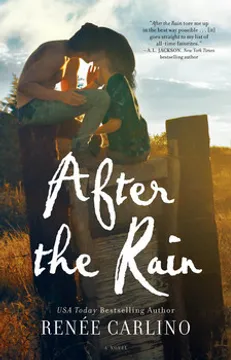
After the Rain is an emotional romance novel that received mixed reviews. Many readers praised its beautiful writing, complex characters, and powerful storytelling. They found the journey of Avelina and Nate's healing and love to be moving and impactful. However, some readers struggled to connect with the characters or felt frustrated by their actions. The book explores themes of grief, second chances, and finding oneself. While not universally loved, many readers found it to be a deeply emotional and memorable story.
People Also Read








Characters
Avelina Belo McCrea
Grief-struck horsewomanAvelina is a capable California ranch girl whose fluency with horses contrasts with her uncertainty around people. After losing her father, she feels responsible for a grieving mother, then builds her adult identity around her first marriage and ranch life. Her fierce loyalty can become self-erasure: she tends to treat another person’s needs as more legitimate than her own, and guilt makes her confuse suffering with love. Yet she is observant, funny, and practically brave, especially when animals or vulnerable people need help. Her central psychological task is not to erase her past but to discover desires and purposes that belong to her. The name Ava becomes one small way she claims the right to define herself.
Nathanial Meyers
Ambitious heart surgeonNate is a gifted young surgeon shaped by his father’s example and by a belief that relentless work is the surest proof of worth. He is disciplined, intelligent, and initially more comfortable with anatomy than emotional uncertainty. A medical failure forces him to confront the limits of expertise and the cost of making achievement his entire identity. Around Ava, his confidence becomes less polished: he is awkward, playful, and capable of listening, but he must learn that good intentions do not replace attention to another person’s needs. His growth depends on balancing professional responsibility with intimacy, rather than treating either as a distraction from the other.
Jake McCrea
Avelina’s first husbandJake is a young Montana cowboy who first meets Avelina at a rodeo. He is skilled with horses, charming, physically confident, and tender in the early years of their relationship. His pride is closely tied to physical ability and to a traditional idea of what it means to be a man, leaving him vulnerable when life challenges that identity. Avelina’s memories of him are therefore mixed: affection, shared adventure, and pain coexist. His history remains central to her understanding of marriage and responsibility, even as she tries to distinguish the loving parts of their life from the damage they endured.
Jeff Meyers
Nate’s surgeon fatherJeff is an eminent cardiothoracic surgeon whose success shaped Nate’s ambitions. His humor and practical warmth can be obscured by the authority he carries at work, and he recognizes that his influence helped narrow his son’s sense of possibility. Sending Nate to Montana is both a response to a professional crisis and an attempt to restore their relationship as father and son. Jeff’s own reflections on family help Nate see that a life’s value cannot be measured only by cases saved or status achieved.
Elaine Meyers
Nate’s grounding motherElaine is Nate’s affectionate, perceptive mother. She punctures the formality surrounding his graduation by reminding him that his worth exceeds his credentials. Her warmth and artistic independence differ from Jeff’s medical world, giving Nate an early example of a life not organized around professional achievement. Later, her reflections on partnership help underline the importance of making room for another person without losing oneself.
Daniel Belo
Avelina’s older brotherDaniel is Avelina’s older brother, a successful attorney who left California for a life in New York. He makes difficult family decisions from a distance, including arranging care for their mother, but recognizes that he was not present enough for Avelina. His reunion with her is marked by apology rather than defensiveness. He reminds her that she is not responsible for making their mother happy, helping Avelina imagine a future based on her own choices.
Dale
Veterinarian and steady uncleDale is Nate’s uncle, a large-animal veterinarian, and Trish’s husband. He is compassionate, skilled, and less forceful than Redman, though he shares the ranch’s practical instincts. He gives Nate useful work and a less insulated view of medicine, while also offering candid context about Avelina’s past. Dale wants her to heal but understands that there is no instant remedy for grief.
Trish
Ranch aunt and confidanteTrish is Dale’s wife, a former rodeo queen, and a lively presence on the Walker Ranch. Her humor and directness make her easier for Avelina to approach than the ranch’s more reserved elders. She helps Avelina dress for a date, listens without judgment, and encourages her to remember that affection for the past need not cancel a future. Trish’s own longing for children gives her particular tenderness toward the young people around her.
Redman Walker
Gruff ranch patriarchRedman runs the Walker Ranch with blunt authority and a short temper. He believes hardship teaches survival and initially treats Avelina’s grief as something she must endure rather than discuss. Beneath his roughness is genuine loyalty: he protects the people who belong to the ranch and helps them when a crisis demands action. His hard-edged view of sorrow is challenged by the possibility that love can take many forms.
Bea Walker
Ranch’s generous matriarchBea is Redman’s wife and the emotional center of the Walker household. She feeds and shelters the ranch hands, notices when someone has withdrawn, and offers care without requiring polished gratitude. Her own history of loss gives her sympathy for Avelina, though she sometimes pushes too hard when she believes the younger woman is hiding from life. Bea’s practical affection helps make the ranch feel like a family even when it cannot replace the family members who are gone.
Olivia Green
Candid surgeon colleagueOlivia is Nate’s former medical-school lab partner and later a surgeon at UCLA. Her literalness and sharp candor make her seem emotionally detached, but she is highly capable and honest about what she wants from life. Her history with Nate represents a relationship organized around convenience rather than vulnerability. In time, she recognizes that Nate’s priorities differ from hers and offers him a clear-eyed perspective on balancing love and work.
Caleb
Ranch hand with a chipCaleb is a large, proud ranch hand who initially resents Avelina’s distance and reacts badly when she rejects his advance. His hostility reflects wounded ego more than any real knowledge of her. Nate challenges him, and the two men gradually find a less antagonistic way to share ranch life. Caleb’s fear of raccoons also makes him the target of one of Ava and Nate’s first playful schemes.
Lizzy Green
Young heart patientLizzy is a perceptive fifteen-year-old patient who questions Nate’s age and bedside manner while facing a serious heart condition. Her quick wit makes her feel vividly present to him as a person rather than a chart. Her case becomes the professional failure that forces Nate to examine the assumptions behind his confidence.
Noah
Thoughtful young patientNoah is a candid ten-year-old with a serious heart condition. He asks Nate direct questions about love, illness, and growing up, bringing emotional concerns into a conversation Nate would otherwise keep clinical. Noah’s curiosity helps Nate recognize that his work matters most when it serves a whole person, not merely an organ.
Russell Coldwell
Rodeo cowboy lookalikeRussell is a team roper Avelina meets at the Bozeman rodeo. His resemblance to Jake makes him emotionally dangerous to her, though his manner quickly reveals a harsher and less tender personality. He represents the temptation to revisit familiar pain rather than face an uncertain future.
Sabina
Ava’s bold Spanish friendSabina is Carlos’s daughter, a confident young woman with tattoos, sharp humor, and an appetite for nightlife. She treats Ava like a friend rather than a fragile widow, drawing her into a wider social world. When Sabina is injured, Ava’s response helps her recognize that caring for people could become more than an instinct or a temporary duty.
Carlos
Avelina’s mother’s partnerCarlos is a courteous Spanish club owner who brings warmth and stability into Avelina’s mother’s life. He welcomes Avelina without demanding that she instantly feel at home and treats Sabina with clear affection. His presence shows Avelina that her mother can build a life beyond grief.
Edith
Elderly neighbor and witnessEdith is Nate’s elderly neighbor in Los Angeles, a quilt-maker who speaks plainly and keeps a close eye on the people around her. She carries her own history of enduring loss and understands that not everyone finds love again. Her perspective frames Nate and Avelina’s relationship as a hard-won choice to continue living, not a denial of grief.
Pistol
Avelina’s loyal cattle dogPistol is Avelina’s small, unfriendly Australian shepherd mix, devoted chiefly to herding cattle. During Avelina’s dangerous trek through the snow, he stays beside her and shares his warmth. His loyalty offers companionship without questions or judgment.
Dancer
Avelina’s lifelong horseDancer is Avelina’s spotted Appaloosa and her closest companion from childhood. Difficult for other riders to handle, she responds to Avelina’s cues and helps define the young woman’s confidence and independence. Their bond links Avelina’s California childhood to the life she builds in Montana.
Plot Devices
The heart
Organ and emotional measureNate initially understands the heart through anatomy, diagnosis, and surgery, while Avelina understands it through love, guilt, and loss. Their different definitions shape how they see one another: she doubts that a surgeon can understand grief, and he is unsettled when his professional knowledge cannot explain what he feels. Patient crises make the metaphor concrete, especially when Nate loses Lizzy and later helps Noah. The device also asks whether saving a physical heart is enough if a person neglects the relationships that make life meaningful. By the end, the medical and emotional meanings do not collapse into one another, but Nate has learned to hold both.
Horses and riding
Memory, agency, and returnThe horses connect Avelina to the California ranch where she grew up, to her marriage with Jake, and to her years of work in Montana. Dancer reflects the competence she possessed before marriage, while Elite becomes bound to the accident and the guilt that follows. Avelina’s decision to ride Elite again, and to stop blaming her, turns a repeated image of trauma into an act of release. Later, training Shine gives her the possibility of a future that does not depend on recovering the exact life she lost. Riding is not simply scenery or a symbol of freedom: it is a skill through which Avelina makes decisions and occupies her own body.
Nate’s monthly letters
Love without intrusionWhen Avelina asks for a year without calls or emails, Nate uses letters to remain emotionally present without demanding an immediate reply. Each one records an evolving life: work, patients, family, the Montana ranch, and the ocean house he is preparing. Their repeated structure shows time passing and makes Nate’s change legible through ordinary details rather than a single vow. For Ava, the letters offer a connection she can carry while studying and growing independently. The device matters because it tests whether devotion can respect a boundary. The letters do not make the separation painless, but they let each character develop without pretending that love requires constant access.
Montana and Spain
Distance for self-discoveryMontana gives Nate and Avelina a shared landscape of ranch work, horses, and close community, but it also contains the memories that keep Avelina fixed in her past. Spain reconnects her with her mother and offers a social world in which she can imagine a vocation of her own. The distances between California, Montana, and Spain are therefore emotional as well as geographic. Moving does not erase trauma, and returning does not automatically solve it. Instead, travel gives each character a chance to see familiar identities from a different position: Nate can question the career he inherited, and Avelina can distinguish her own ambitions from the life she chose as a teenager.
About the Author







Download PDF
Download EPUB
.epub digital book format is ideal for reading ebooks on phones, tablets, and e-readers.








