

Key Takeaways
Treat the body as a renewing process, not a machine on a countdown.
A different starting point. Chopra’s central claim is that aging is not merely a clock-driven decline: the body continually rebuilds itself, while experience, habits, and expectations influence how it functions. He calls this alternative to a fixed, mechanical view the “new paradigm.” The body is less like a statue and more like a river, stable in appearance because it is constantly changing beneath the surface. That image opens a useful question: which age-related changes are inevitable, and which are shaped by conditions we can influence?
A necessary distinction. Chopra uses quantum physics to support a spiritual account of awareness creating the body. That is his philosophical framework, not an established scientific conclusion. The practical claim is more modest and sturdy: behavior and mental states can affect bodily processes, even though nobody can choose aging away.
The river image earns its force from a genuine biological feature: living bodies maintain themselves through continual turnover, not by preserving every molecule unchanged. That makes renewal a helpful way to think about health and adaptation. The leap from this fact to consciousness controlling quantum reality is much less secure. Quantum physics describes interactions at very small scales; it does not establish that beliefs can command cells or suspend aging. Keeping metaphor distinct from mechanism preserves the book’s motivating insight without making unsupported promises.
Challenge age scripts that make withdrawal look like biology.
Expectations shape behavior. Chopra argues that ideas about old age are learned through family, culture, and repeated assumptions. If retirement is treated as the end of usefulness, or frailty as the normal price of a birthday, people may stop attempting activities that would help them stay capable. The belief does not magically rewrite biology. It can, however, influence whether someone moves, seeks connection, learns, and expects to contribute.
A striking experiment. The book describes psychologist Ellen Langer’s study of men aged 75 and older who spent a week in a setting arranged to evoke life twenty years earlier. Asked to act and converse as younger versions of themselves, they improved on some measures, including memory, dexterity, and posture. The reported results suggest that social context and self-perception can affect performance, not that a brief retreat reverses aging wholesale.
This is a compelling account of how identity and environment can either invite capability or quietly ration it. It connects with a broad finding in psychology: people often perform differently when a situation cues a particular role or expectation. Yet the study should be read as suggestive, not definitive proof that mindset reverses biological aging. A week of special attention, group activity, and challenging tasks could each contribute. The useful application is to make later life environments less infantilizing and more demanding in ways that preserve agency.
Reduce stress by changing your appraisal, then help the body recover.
Stress has a sequence. The book separates a stressful event from a person’s interpretation of it and the body’s response. The event may be unavoidable, but appraisal can shape whether it registers as threat, challenge, or something manageable. In a threat response, the body mobilizes energy for immediate action. If that state stays switched on, sleep, digestion, immunity, and other functions can suffer.
Recovery matters. Chopra notes that stress is not simply “too much pressure.” The body also needs a chance to return to balance after pressure. He recommends noticing interpretations, questioning whether they fit the present situation, and reducing unnecessary conflict. This does not mean that distress is imaginary, or that a person can prevent illness by thinking correctly. It means that repeated stress and the ways people cope with it are worth taking seriously.
The appraisal model helps explain why the same event can energize one person and overwhelm another. It also resembles the modern idea of allostatic load, the cumulative strain that can follow repeated activation of the body’s stress systems without sufficient recovery. That connection supports the book’s emphasis on interpretation and restoration. The limit is important: reframing cannot remove unsafe conditions, chronic poverty, discrimination, or every physiological response. Good stress management includes changing harmful circumstances where possible, not just changing the story told about them.
Process hurt while it is fresh instead of storing it as control.
Unprocessed pain travels. Chopra uses “emotional debt” for feelings left unresolved that continue to color new situations. Hurt may surface later as anger, anxiety, guilt, or withdrawal. These responses can make a present disagreement feel like a replay of an older injury, increasing distress and encouraging attempts to control other people or outcomes.
Make room for a response. The book’s practical sequence is to notice the feeling, stay with the bodily sensation instead of immediately blaming or suppressing it, communicate what happened when appropriate, and then work toward resolution. A story about an adult son’s recurring fights with his father changes when he notices that his aging father’s offer to carry a suitcase is an awkward expression of care. The fresh interpretation loosens a conflict shaped by an old family role.
The distinction between an event and its accumulated meaning is especially useful in relationships. It resembles therapeutic approaches that help people identify emotion before reacting, then test whether an old pattern is governing the current exchange. The suitcase moment shows how attention can reveal affection inside behavior once interpreted as dominance. Still, forgiveness and acceptance should not become duties imposed on someone who has been harmed. Processing pain can support boundaries and accountability, not merely reconciliation.
Keep strength and movement in your life at every age.
Use preserves capacity. Chopra challenges the assumption that older adults should simply take it easy. He describes research at Tufts in which adults aged 60 to 72 trained with weights three times weekly for three months. Their strength rose sharply, and their thigh muscles grew substantially. The book also reports gains among very old and frail participants. The point is not that every person should copy a laboratory regimen, but that age alone does not erase the ability to respond to training.
Balance effort with recovery. Chopra emphasizes regular activity, rest, moderation, and routine rather than exhaustion. He also lists ten measures that exercise can improve, including muscle mass, strength, blood pressure, aerobic capacity, and bone density. Movement can support mood and independence as well as physical function. Health conditions, disability, and personal capacity matter, so exercise should be adapted rather than treated as a test of willpower.
This section’s strongest practical argument is against disuse, not against aging. Strength training and everyday movement can help preserve function, making the goal more concrete than chasing a younger appearance. The emphasis on adaptation and rest also avoids confusing beneficial activity with punishing exertion. Contemporary exercise guidance broadly supports activity across the lifespan, while recognizing that medical conditions may require modification. The book’s historical figures should not substitute for individualized advice, but its challenge to age-based inactivity remains valuable.
Build a life with autonomy, connection, curiosity, and something to do.
Aging is social, too. Chopra’s portraits of people who age well emphasize adaptability, close relationships, meaningful activity, and a sense of independence. His example of Prem Uncle, a cheerful 75-year-old who plays tennis daily and follows a moderate routine, suggests that healthy aging need not come from an elaborate regimen. The person’s fit matters more than a universal formula.
Culture can help or hinder. The book describes the Abkhasians, whose older adults traditionally remained active in family and community life. Some spectacular age claims from the region could not be verified, a caveat Chopra recounts. The more credible lesson is cultural: older people were expected to keep participating. He also describes nursing-home residents who improved after being given choices and responsibilities, such as caring for a plant or helping shape their daily routine.
Autonomy and belonging are not decorative extras to health. They affect whether people have reasons to act, opportunities to contribute, and relationships that buffer hardship. This connects with self-determination theory, which treats autonomy, competence, and relatedness as basic supports for motivation. The book’s cultural example is strongest as a contrast in social expectations, not proof that one society has escaped aging. Nor should self-reliance be romanticized: care and support can increase independence rather than diminish it.
Separate birthdays from health, function, and psychological age.
Age has several dimensions. Chopra distinguishes chronological age, the number of years lived; biological age, the condition of the body; and psychological age, how a person feels and functions in life. These measures do not move in lockstep. A 50-year-old who is depressed, isolated, and physically unwell may face a very different future from a healthy, engaged peer of the same calendar age.
Look beyond labels. The book argues that some changes attributed to old age may instead reflect illness, medication effects, inactivity, dehydration, or depression. It gives the example of Perry, a retired man who calls himself old while drinking more, moving less, and disengaging from daily life. This framing encourages attention to treatable problems rather than writing off symptoms as inevitable. It is not a reason to dismiss genuine disease or delay professional assessment.
This framework is valuable because “old age” can hide several different questions: What is happening in the body? What abilities remain? What support or treatment is needed? Separating those questions discourages fatalism and can prompt a better medical evaluation. Psychological age is less precise than a laboratory measure, however, and should not become a scorecard that blames people for feeling unwell. A useful model makes room for both personal agency and biological limits.
Practice timeless attention, without mistaking spiritual freedom for biological immortality.
A present-centered practice. Chopra treats meditation as a way to quiet habitual thought and experience awareness apart from worry about the past or future. He calls this “timeless awareness.” The practical value is immediate: sitting quietly, attending to breathing, or noticing bodily sensations can create calm and make a person less ruled by time pressure. The book reports older studies in which long-term meditators had biological-age measures several years younger than their calendar ages.
A spiritual conclusion. Chopra goes further, proposing that awareness connects people to an eternal source beyond bodily change and death. That is a metaphysical belief, not a demonstrated medical fact. Meditation may support well-being, but it cannot guarantee a longer life or remove mortality. The book’s most grounded invitation is to use awareness to live more fully now, while caring for the body through ordinary means.
Meditation offers a practical way to interrupt rumination and observe thoughts without obeying each one. That can change a person’s experience of time, even if the clock and the body continue their ordinary work. The distinction matters because subjective timelessness and biological longevity are not interchangeable outcomes. The book’s spiritual language gives aging a larger horizon, but claims of immortality should remain philosophical rather than clinical. A contemplative practice can be meaningful without being sold as an anti-aging treatment.
Analysis
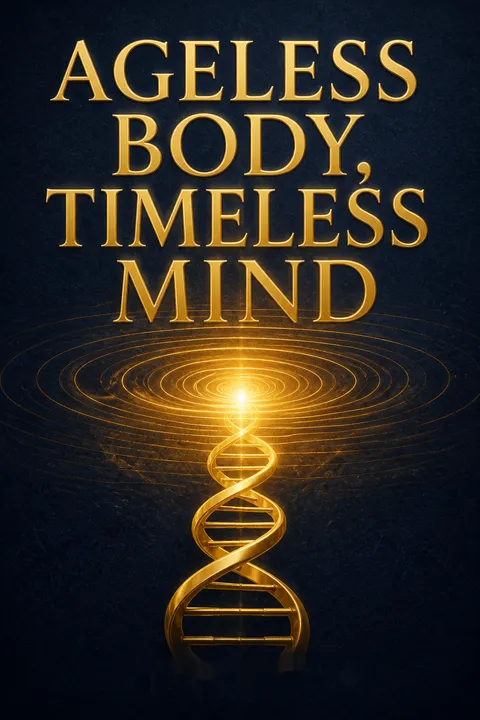
Ageless Body, Timeless Mind moves through five linked arguments: inherited beliefs shape how aging is understood; awareness and interpretation affect behavior and bodily responses; stress and inactivity can erode function; practical routines and social conditions can preserve capacity; and spiritual awareness offers a way to meet mortality. Its most useful contribution is not the claim that aging can be chosen away, but the insistence that age is not a complete explanation for every decline. The book repeatedly asks whether a symptom is caused by a treatable illness, a restrictive environment, inactivity, emotional distress, or some combination.
The narrative works by alternating expansive metaphysics with concrete people and exercises. Prem Uncle makes moderation and pleasure more memorable than a prescriptive diet. Perry shows how the identity of being old can accompany a cluster of changeable problems. Langer’s retreat dramatizes the role of context, while the Abkhasian account shows how social expectations can keep older people involved, even though extraordinary age claims there proved unreliable. These cases lend texture, but they do not all carry equal evidential weight.
The central scientific weakness is the book’s appeal to quantum physics as support for consciousness directing matter and controlling aging. The observations that stress, exercise, relationships, and expectations affect health do not establish that the observer creates the physical world or that cells follow a conscious intention not to age. Its 1993 descriptions of studies and interventions also need to be read as historical claims, not current medical guidance. The book can overstate both the power of mindset and the inadequacy of conventional medicine.
Read with those limits, its practical core is clear: preserve physical activity, cultivate connection and purpose, notice distress rather than letting it govern behavior, and investigate symptoms rather than automatically attributing them to age. Its spiritual conclusion is best understood as a proposal about meaning and identity, not a promise of physical immortality. The distinction keeps the book’s humane optimism while protecting readers from false certainty or self-blame.
Review Summary
Ageless Body, Timeless Mind received mixed reviews. Many readers found it thought-provoking and inspirational, praising Chopra's insights on aging, consciousness, and holistic health. They appreciated the practical advice for living a longer, healthier life. However, some critics found the book repetitive, overly complex, or lacking scientific rigor. They questioned Chopra's use of quantum physics concepts and felt his ideas were not well-substantiated. Despite the polarizing opinions, many readers found value in Chopra's perspective on mind-body connection and its potential impact on aging.
People Also Read






Glossary
new paradigm
A mind-body-spirit worldviewChopra’s alternative to a strictly material account of the body. It treats mind and body as inseparable expressions of awareness and presents the body as a changing process shaped by perception, experience, and intelligence. The term organizes the book’s spiritual argument, but its claims about quantum physics and awareness are philosophical interpretations, not settled scientific findings.
Three Ages of Man
Three measures of ageChopra’s distinction among chronological age, the years counted by the calendar; biological age, the condition of organs and bodily functions; and psychological age, a person’s sense of vitality, outlook, and engagement. The framework emphasizes that people of the same calendar age can differ substantially in health and functioning.
disuse syndrome
Decline associated with inactivityA term attributed in the book to physician Walter M. Boritz for the broad deterioration associated with physical inactivity. Chopra describes it as affecting cardiovascular health, muscles and bones, body fat, mood, and signs of premature aging. The concept underscores that inactivity can influence the whole person, not only the muscles that are left unused.
dynamic non-change
Change within a stable balanceChopra’s name for the living balance between processes that build, maintain, and break down the body. Life requires change, but it also depends on enough order and repair to keep bodily systems functioning. In this model, aging reflects a gradual loss of balance, while excessive disruption in either direction can also threaten health.
Prana
Vital energy in awarenessIn the book’s account of Indian spiritual tradition, Prana is the life force connecting awareness with mental and bodily activity. Chopra associates balanced Prana with vitality, alertness, sleep, and bodily rhythms, and suggests that breathing, movement, fresh food, and emotional openness help sustain it. It is a spiritual concept, not a measurable substance established by biomedical science.
Vata
Principle of movementIn Ayurveda, Vata is one of three doshas, or organizing principles, and is associated with movement and change. Chopra describes five functions of Vata related to the nervous system, cognition, digestion, circulation, and elimination. He links imbalance to symptoms such as anxiety, dryness, insomnia, and constipation, and recommends regularity, warmth, rest, and nourishment to restore balance.
active mastery
Creative agency over lifeChopra’s term for actively using physical, intellectual, and social capacities while exercising autonomy over one’s life. It is not control over other people. The book connects active mastery with purposeful activity, creativity, and a sense of making something meaningful from one’s circumstances, presenting it as an ideal for aging with continued engagement.
dharma
Order and sustaining purposeA Sanskrit term Chopra uses for the order that sustains life and guides development. Depending on context, it can refer to duty, right action, a person’s work, or a larger purpose. In the book’s spiritual framework, living in alignment with dharma means participating consciously in growth and order rather than being governed by fear and habit.
quantum mechanical body
Body understood as informationChopra’s spiritual model of the body as a flow of information, memories, intentions, and awareness, contrasted with the visible body of cells and organs. He uses it to explain how experience might shape physical life and identity. It is a metaphorical and philosophical construct in this book, not a recognized anatomical structure or established medical entity.
FAQ
What's Ageless Body, Timeless Mind about?
- Aging Control Focus: The book suggests that aging is influenced by our beliefs and self-awareness, proposing that we can master the aging process through increased self-awareness.
- Mind-Body Connection: Chopra emphasizes the link between mind and body, arguing that thoughts and emotions directly impact physical health and aging.
- Holistic Approach: It explores the interconnectedness of mind, body, and spirit, viewing aging as a complex interplay of psychological and spiritual factors.
- Practical Exercises: The book includes exercises to help readers reinterpret their bodies and use awareness to promote longevity and vitality.
Why should I read Ageless Body, Timeless Mind?
- Revolutionary Perspective: It challenges the conventional belief that aging is an inevitable decline, encouraging readers to take control of their health.
- Scientific and Spiritual Insights: Chopra integrates modern science with ancient wisdom, offering a holistic approach that appeals to both scientific and spiritual audiences.
- Empowerment Through Knowledge: The book provides tools and insights to change your mindset and lifestyle, potentially leading to a healthier, more vibrant life.
- Transformative Insights: It encourages viewing aging as an opportunity for personal evolution rather than a decline.
What are the key takeaways of Ageless Body, Timeless Mind?
- Aging is a Choice: Chopra asserts that aging is influenced by beliefs and perceptions, suggesting that changing our mindset can alter our aging experience.
- Mind-Body Connection: The book highlights the importance of this connection in shaping experiences and health, with thoughts and beliefs directly influencing the physical state.
- Acceptance of Change: Embracing change and uncertainty is crucial for personal growth, helping individuals navigate life's challenges with resilience.
- Living in the Present: Emphasizes the significance of living in the present moment for a deeper connection to oneself and the universe.
What are the best quotes from Ageless Body, Timeless Mind and what do they mean?
- “Aging is much more of a choice than people ever dream.”: This quote encapsulates the book's thesis that beliefs about aging significantly influence the physical experience.
- “You are the reason for life to exist, not the other way around.”: Emphasizes self-awareness and personal agency in shaping life experiences, including aging.
- “People don’t grow old. When they stop growing, they become old.”: Suggests that continuous personal growth is essential for maintaining vitality and youthfulness.
- “I am Spirit.”: Reminds readers that their true identity is spiritual, helping alleviate fears associated with aging and death.
How does Ageless Body, Timeless Mind define the mind-body connection?
- Inseparable Unity: Chopra posits that mind and body are not separate but two streams of experience meeting at a single creative source.
- Impact of Thoughts and Emotions: Discusses how thoughts and emotions affect every cell in the body, influencing aging and health.
- Awareness as a Tool: Cultivating awareness allows individuals to manage thoughts and emotions, influencing their physical state and potentially reversing aging processes.
What practical exercises does Ageless Body, Timeless Mind offer?
- Reinterpret Your Body: Exercises encourage readers to challenge limiting beliefs about aging, visualizing themselves as ageless.
- Mindfulness and Breath Work: Emphasizes mindfulness and breath control to enhance awareness and promote relaxation, reducing stress and improving health.
- Focused Intention Techniques: Guides readers through setting specific intentions for health and vitality, demonstrating how intention can influence physical and mental states.
What are the ten assumptions about aging that Chopra challenges in Ageless Body, Timeless Mind?
- Objective World Assumption: Challenges the belief in an objective world independent of the observer, suggesting perception shapes reality.
- Mind-Body Separation: Asserts the inseparability of mind and body, crucial for understanding how thoughts affect physical health.
- Materialism vs. Consciousness: Critiques the view that consciousness is secondary to physical processes, advocating for the primacy of consciousness in shaping experiences.
How does Ageless Body, Timeless Mind relate aging to awareness?
- Awareness as a Change Agent: Argues that awareness can change the aging process by influencing beliefs and perceptions about aging.
- Conditioning and Aging: Discusses how societal beliefs about aging condition awareness, leading to a self-fulfilling prophecy of decline.
- Mindfulness Practices: Emphasizes mindfulness practices in cultivating awareness, helping manage stress and promote a youthful experience of life.
What role does entropy play in aging according to Ageless Body, Timeless Mind?
- Entropy as a Natural Force: Describes entropy as the tendency for order to break down into disorder, affecting all living systems, including the human body.
- Intelligence vs. Entropy: Posits that intelligence acts as a counterforce to entropy, maintaining order and complexity in the body.
- Dynamic Non-Change: Introduces the concept of dynamic non-change, where the body maintains vitality through continuous renewal despite entropy.
How does Chopra define the concept of Prana in Ageless Body, Timeless Mind?
- Life Force Energy: Prana is described as the subtle life force flowing through every living being, essential for health and vitality.
- Balanced Prana: Balanced Prana leads to mental alertness, physical vitality, and spiritual realization, while depletion can lead to aging and disease.
- Prana and Breath: Emphasizes breath as a primary source of Prana, with techniques like meditation enhancing its flow in the body.
What role does meditation play in Ageless Body, Timeless Mind?
- Enhances Awareness: Meditation increases self-awareness and connects individuals with deeper aspects of themselves.
- Promotes Healing: Leads to physical and emotional healing by reducing stress and promoting relaxation, contributing to well-being and longevity.
- Facilitates Timelessness: Allows individuals to experience moments of timelessness, fostering peace and connection to the universe.
How can I apply the concepts from Ageless Body, Timeless Mind to my life?
- Challenge Limiting Beliefs: Identify and challenge limiting beliefs about aging, replacing them with empowering beliefs that promote vitality.
- Incorporate Mindfulness Practices: Engage in mindfulness practices like meditation and breath work to enhance awareness and reduce stress.
- Set Intentions for Health: Use intention to set specific health goals, regularly affirming them and noticing changes in physical and mental states.
About the Author
Other books by Deepak Chopra




Download PDF
Download EPUB
.epub digital book format is ideal for reading ebooks on phones, tablets, and e-readers.








