

Key Takeaways
Plan for old age as a chapter of growth, not a long decline
A lifetime in view. Vaillant draws on the Study of Adult Development, which followed 824 people across three cohorts from adolescence into later life. Its participants included Harvard graduates, working-class Boston men, and intellectually gifted women. Rather than treating old age as a medical problem, the study tracked relationships, work, coping, health, and satisfaction over decades. In this selected group, 70 percent of college-educated members alive at 60 reached 80, compared with about 30 percent of white American men born around 1920.
Joy remains possible. The book does not claim that aging is painless. It argues that people can keep loving, learning, contributing, and enjoying life amid illness and loss. The samples were not representative of everyone, so their rates should not be treated as universal forecasts.
Longitudinal evidence changes the question from whether old age is good or bad to what conditions make it livable. That shift is useful because it replaces stereotypes with trajectories. The study's decades-long follow-up is unusually powerful for separating youthful impressions from later outcomes. Its limits matter just as much: mostly white, historically specific cohorts cannot establish what aging looks like across all cultures or under present-day inequality. The book offers guideposts, not a universal timetable.
A rough childhood predicts risks, but relationships can change the plot
A past, not a sentence. Anthony Pirelli grew up in poverty amid family conflict, yet became a successful businessman and a contented older man. His older sister helped care for him, his brother encouraged him to study accounting, and his wife became his closest companion. In later life, he remembered his parents with more compassion without denying that his childhood had been hard.
What goes right matters. The study found that early warmth helped predict later mental health, play, and friendship, but a bleak childhood did not reliably condemn people to illness or unhappiness in old age. Pirelli's life illustrates the author's larger claim: supportive people can arrive at different stages, and the past influences a life without dictating its ending.
This account fits developmental research that treats relationships as sources of protection across the lifespan, not only in childhood. It also makes memory part of adaptation: a person can reinterpret family history as understanding grows. That reinterpretation should not be mistaken for proof that early harm was harmless, or that forgiveness is owed. The strongest reading is that new bonds can expand a person's options, while the original injuries and the social conditions surrounding them remain real.
Practice coping that transforms pain instead of exporting it
Coping can mature. Vaillant calls unconscious ways of managing distress defenses. Some short-term strategies, such as blaming others, acting impulsively, or retreating into fantasy, can damage relationships and leave problems untouched. More adaptive defenses include humor, altruism, suppression, and sublimation. Suppression means setting a painful concern aside temporarily without pretending it never existed. Sublimation channels difficult feelings into constructive activity, such as art or service.
Susan Wellcome's turn. As a child, Wellcome resisted a controlling mother by undermining her own talents. A caring teacher, a loving marriage, and greater willingness to acknowledge anger helped her redirect that energy. As an older woman, she played music, helped women in prison, and brought people together across religious communities. The shift was not simply age; it involved relationships and practice.
The idea resembles emotion-regulation models that distinguish avoiding a feeling from finding a workable response to it. Humor, for example, can create distance without denying pain, while helping others can turn personal experience into useful knowledge. These strategies are not magic techniques that can be switched on at will. Their availability depends on safety, health, and context. Treating coping as learnable is hopeful, but it should not turn suffering into a test of character.
Treat adulthood as an expanding social radius, not a fixed personality
A widening circle. Vaillant adapts Erik Erikson's developmental account into six broad adult tasks: forming an identity, building intimate bonds, consolidating a career, caring for the next generation, preserving shared meanings, and making peace with one's life. He calls the last two roles Generativity and Keeper of the Meaning. Generativity is active care for younger people. A Keeper of the Meaning protects and passes on cultural knowledge, institutions, and traditions.
A map, not a ladder. These tasks often appear in sequence, but lives do not follow a strict schedule. Some people meet several at once; others return to a task they once avoided. Their value is explanatory, not moral. Vaillant's image of expanding circles suggests that maturity can enlarge attention beyond the self, while still preserving earlier capacities for intimacy and identity.
This framework connects individual development to social ecology: a person's responsibilities and relationships change as family, work, and community change. Its strength is showing that aging can bring new social functions rather than merely subtracting abilities. Its stage-like language can still imply a single culturally approved path. The author partly guards against that by calling the tasks a flexible map. Readers can use the model to ask what kind of participation fits their lives, not to grade themselves against a timetable.
Guide younger people without turning care into control
Give, then loosen your grip. Generativity means helping younger people grow while respecting their independence. Bill Dimaggio, a Boston laborer with limited formal schooling, spent time with his children, mentored workers, and supported neighborhood activities. His contribution did not depend on wealth or credentials. Vaillant contrasts this with care that demands a young person's life in return, arguing that older generations should generally support younger ones rather than make them responsible for adult needs.
Preserve what matters. The older role of Keeper of the Meaning differs from direct mentoring: it carries traditions and shared knowledge forward. Both roles require making room for others, not simply insisting that the past be copied. The book's examples suggest that family, work, and community can all provide places to contribute.
The distinction between guidance and control is central to healthy mentoring: support is most useful when it increases another person's agency. The book also challenges the assumption that only elite careers produce a legacy; Dimaggio's neighborhood and workplace roles show otherwise. Its claim that care should flow from older to younger generations is deliberately provocative, but family obligations vary across cultures and circumstances. Reciprocity need not mean that every family member gives equally or in the same direction.
Protect future health with habits, not ancestry alone
Choices add up. By age 50, several factors in the study were associated with healthier aging: avoiding heavy smoking or stopping relatively young, avoiding alcohol abuse, maintaining a stable marriage, using more adaptive coping, keeping a healthy weight, and exercising regularly. Education also mattered in the less-educated cohorts, partly because it was associated with self-care and persistence. These are associations from selected samples, not guarantees for an individual.
The gap was striking. Among Harvard men who reached 50 without disability and had at least four of the identified protective factors, about half were later classified as Happy-Well. None of the comparable men with fewer than four factors reached that category. The author also found that ancestry, parental class, and childhood temperament did not independently predict the same late-life outcomes once other factors were considered.
The practical force of this finding is its emphasis on cumulative exposure: health is shaped not only by inherited risk but by patterns sustained over many years. This fits public-health thinking, where small differences in smoking, alcohol use, activity, and access to education can compound. The study cannot prove that changing any one factor produces the reported outcome, and stable marriage is not a universal health prescription. The useful lesson is to target modifiable risks without blaming people for constraints they cannot control.
Judge health by life lived, not diagnoses on a chart
Illness is not the whole story. Vaillant separates objective disease from subjective health: a person may have serious diagnoses yet still feel capable and engaged, while another may feel deeply unwell despite fewer measurable impairments. He contrasts Richard Lucky, who remained active despite several medical conditions, with Alfred Paine, whose illnesses coincided with isolation, poor self-care, and little enjoyment.
Look across domains. The study assessed physical disability, how people judged their own abilities, years spent disabled, mental health, social support, and satisfaction with life. Lucky's story shows why an isolated clinical measure can mislead; Paine's shows why low complaint levels are not proof of well-being. The goal is not to dismiss disease, but to understand how health interacts with relationships, daily function, and a person's sense of life.
This multidimensional view anticipates modern approaches to disability that distinguish a diagnosis from its lived impact. Function depends partly on a person's environment, supports, and adaptations, not only on organs or test results. The distinction also cautions against romanticizing stoicism: Paine minimized his distress, and that did not make him well. Subjective health deserves respect, but it should be considered alongside clinical evidence and the person's actual circumstances.
Make retirement work by replacing work with people, play, and learning
Retirement needs ingredients. In the study, retirement itself was not usually a major source of stress. Problems were more likely when retirement was involuntary, finances were precarious, home life was unhappy, or poor health had forced the change. The more useful question is what takes the place of work: social connections, play, creative activity, and continued learning.
Try a new role. Mary Elder built a retirement around classes, friends, community work, travel, and making jam, even while describing herself as lazy. Frank Wright kept writing, researching at the library, and tending a rooftop garden. Their examples suggest that retirement is not an empty calendar to fill with busyness. It can be a chance to pursue activities for enjoyment rather than status or income.
Retirement is a transition in identity and routine as much as a financial event. Replacing workplace contact with other relationships addresses the social structure of a job, not just its tasks. Play is especially valuable because it lets people participate without needing to be exceptional. Yet access to satisfying retirement depends on health, money, caregiving duties, and local opportunities. The advice is most useful when adapted to those constraints rather than framed as an individual failure to stay busy.
Keep creating after retirement, even when nobody applauds
Creativity has room to return. The book distinguishes play, pursued mainly for enjoyment, from creativity, which produces something a creator or audience experiences as meaningful. Both can make later life richer. The Terman women often found creative opportunities after retirement, when family demands and workplace restrictions eased. One woman who had once wanted to become a doctor began giving violin recitals in her later years.
Start where you are. John Boatwright, a mathematician who had once been dismissed as uncreative, began reviewing books and building a sailing boat with his son after retirement. His work did not need to become famous to matter. Vaillant argues that creativity can persist into old age, although speed and energy may change, and illness can interrupt what age alone does not.
This account usefully separates creativity from public achievement. A private project can strengthen identity, generate pleasure, and create connection even without publication or recognition. That distinction also corrects a common measurement bias: institutions tend to count products that reach a market or an audience, while overlooking late-life work made for family, community, or personal meaning. Still, opportunity is unevenly distributed. Time, health, income, and freedom from care work shape who gets a chance to create.
Treat wisdom as a practice, not a birthday gift
Age does not certify insight. Vaillant finds no firm evidence that wisdom automatically increases with age. Some studies he reviews show gains in reflective judgment through early adulthood, but not a clear upward trend across later decades. Older people may have more experience and a longer view, yet young people can show empathy, sound judgment, and perspective too.
Look at conduct. In Vaillant's account, wisdom involves tolerating uncertainty, considering another person's perspective, and balancing feeling with judgment. Written tests and self-descriptions did not reliably predict successful aging in his cohorts. That makes behavior a more useful guide than someone simply claiming to be wise. Experience can supply material for wisdom, but reflection and openness determine what is made of it.
This is a valuable correction to age-based authority. Expertise can deepen through practice, but accumulated years can also reinforce habits and prejudice. The book's emphasis on conduct aligns with virtue ethics, which evaluates character through repeated choices rather than self-image. A further caution is that wisdom is difficult to measure consistently, especially across cultures. The most defensible conclusion is modest: age creates opportunities for perspective, but it neither guarantees insight nor removes the need for humility.
Let spirituality support aging without making it a required milestone
Faith follows different paths. Vaillant distinguishes organized religion, with shared beliefs and practices, from spirituality, a more personal sense of connection to something larger. Some people deepen either in later life; others do not. In the study, religious involvement and reported spirituality did not reliably distinguish people who aged well from those who did not.
Support can still matter. For some participants, religious communities offered belonging, comfort, or help during grief and depression. Others found meaning through family, nature, ethical work, or a personal philosophy. The book's examples resist a single formula: spiritual belief may be a powerful resource for an individual without being a necessary condition for aging well.
The distinction between private meaning and institutional practice helps explain why religious attendance alone is a poor proxy for spiritual life. Communities can provide social support, shared rituals, and language for grief, while personal belief may persist without regular participation. The study's lack of a clear aging advantage should not be read as evidence that faith is useless; people often seek religious support precisely when distressed. Nor should spiritual growth be treated as a duty imposed on older adults.
Change your character without expecting your temperament to disappear
Continuity and change coexist. Vaillant distinguishes temperament, the relatively stable traits that shape how someone tends to respond, from character, the adaptive ways a person handles relationships and difficulty. The first may remain recognizable across decades while the second develops. Jim Hart, once judged rough and self-focused, became a devoted husband, friend, and mentor. His change came through sustained relationships and choices, not a sudden midlife transformation.
The past stays relevant. Some men in the study who were rated well-adjusted as young adults also aged well; others did not, often after serious depression or alcohol problems. The evidence therefore supports neither total reinvention nor fixed destiny. People can grow, but health, opportunity, habits, and relationships shape how much room that growth has.
This distinction echoes the difference between stable dispositions and flexible skills: a person can keep a familiar emotional style while becoming better at regulating it. That is a more credible account of change than the popular idea of a dramatic midlife overhaul. It also prevents excessive optimism. Growth is possible, but depression, addiction, illness, and social exclusion can narrow the available choices. Change is best understood as development within conditions, not as willpower unconstrained by them.
Analysis
The book's most important contribution is methodological as much as therapeutic. Following people from adolescence makes retrospective storytelling less convincing: a person may remember a childhood, marriage, or period of drinking differently decades later, while contemporaneous records preserve earlier evidence. This allows Vaillant to examine timing and sequence, especially when people attribute depression to alcohol or describe a difficult childhood as destiny. The result is a strong case for treating adulthood as developmental, not merely as the aftermath of childhood.
Its strongest practical insight is relational and behavioral. The narratives repeatedly show that health and satisfaction arise from the interaction of habits, coping, and social support. Pirelli's life, for instance, is not a simple triumph of grit. It includes helpful siblings, an encouraging brother, a committed marriage, and chances to study and work. This framing resists both genetic fatalism and the idea that personal attitude can overcome every barrier.
The evidence also calls for caution. The cohorts were selected, mostly white, and shaped by historical conditions such as the GI Bill and gender restrictions. They cannot establish that the same predictors operate equally across different populations or present-day economic contexts. The samples are also not randomized interventions, so associations between marriage, coping, health, and longevity do not prove that any one factor caused the outcomes. The author's own clinical interest in alcohol and personality may influence which patterns receive emphasis.
The book is most persuasive when it treats its developmental stages as interpretive tools rather than universal laws. Its stories make the data human, while the data correct the temptation to treat any single story as proof. The lasting lesson is not that everyone can secure a joyful old age, but that aging is partly shaped by repeated opportunities to connect, adapt, contribute, and accept limits. That is a hopeful claim, provided it is paired with attention to unequal access to those opportunities.
Review Summary
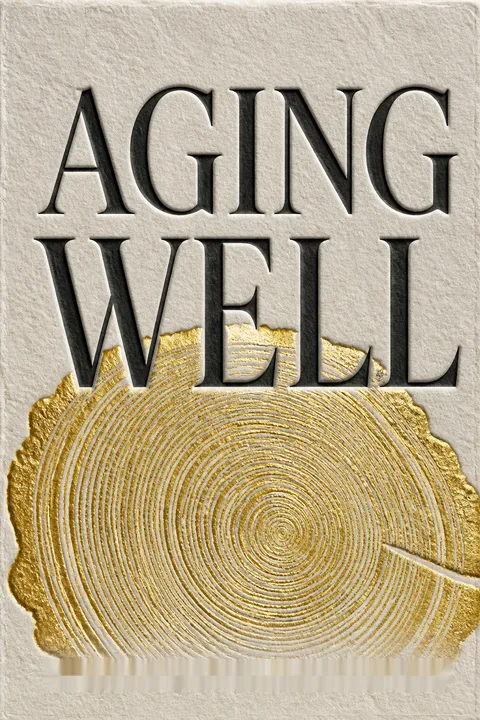
Aging Well explores factors contributing to successful aging based on longitudinal studies spanning decades. Readers appreciate Vaillant's insights on adult development, coping strategies, and the importance of social connections. Many found the anecdotes engaging, though some felt the focus on elite subjects limiting. Key takeaways include the significance of generativity, lifelong learning, and maintaining relationships. While some readers found the writing style dry or overly academic, others praised the book's wisdom and applicability to their own lives.
People Also Read





Glossary
Study of Adult Development
lifespan research projectA long-running set of studies that followed three cohorts from youth into adulthood and old age: Harvard graduates, working-class Boston men, and gifted women originally studied by Lewis Terman. Researchers gathered interviews, questionnaires, health records, and information from relatives over decades. Its prospective design records lives as they unfold, but its selected cohorts are not representative of the general population.
Generativity
care for younger generationsA developmental capacity to guide and support younger people while respecting their independence. It can appear in parenting, teaching, mentoring, leadership, or community service. In Vaillant's account, Generativity grows most fully when a person has developed a stable sense of self, intimate relationships, and a meaningful working role. It is care that helps others become capable, rather than care that keeps them dependent.
Keeper of the Meaning
preserver of shared traditionsA later-life social role focused on preserving and passing on cultural knowledge, institutions, history, and traditions. Unlike Generativity, which centers on directly guiding younger individuals, this role serves broader communities and collective memory. It can include stewardship, historical work, judging, or maintaining institutions. Its potential weakness is rigidity: preserving valuable inheritances requires openness to change as well as respect for the past.
Integrity
acceptance of one's lifeThe late-life developmental task of finding a sense of wholeness and peace with one's particular life, including its limits, losses, and approaching death. Integrity does not mean believing that every event was good or that all wishes were fulfilled. It means accepting that one's life cannot be exchanged for another and finding a way to regard it as meaningful despite imperfection.
Career Consolidation
meaningful role in workVaillant's addition to Erikson's adult-development model. It describes making work part of one's social identity by developing competence, commitment, contentment, and adequate compensation. A career is more than a job or solitary hobby because it involves service and recognition within a social world. The role need not be paid employment and can include family work such as parenting.
mature defenses
adaptive unconscious copingVaillant's term for largely involuntary ways of managing difficult feelings that reduce harm while allowing a person to stay engaged with reality. Examples include humor, altruism, suppression, and sublimation. Suppression postpones attention to a concern without erasing it; sublimation channels troubling impulses into constructive activity. These strategies can support relationships and adaptation, but they are not simply conscious techniques available on demand.
Happy-Well
active, satisfied older adultsA category used in the study for people who reached later life without prolonged physical disability and who showed comparatively strong mental health, social support, and life satisfaction. It combined physical and psychosocial measures rather than relying on diagnosis or longevity alone. The label refers to study classifications, not a clinical diagnosis or a universal standard for successful aging.
Sad-Sick
distressed, disabled older adultsA study category for people who experienced years of physical disability alongside difficulty in at least one psychosocial area, such as mental health, social support, or life satisfaction. It was designed to contrast with the Happy-Well group and did not mean that every person in it had the same illness or life story. The category illustrates the study's combined view of health and well-being.
social radius
widening circle of concernVaillant's image for the way adult development can extend a person's attention from the self toward partners, work, younger generations, and wider cultural or community life. Each larger circle includes earlier relationships rather than replacing them. The idea describes a possible pattern of social maturation, not a rule that every person must follow in the same order or to the same degree.
FAQ
What's Aging Well about?
- Focus on Aging: Aging Well by George E. Vaillant explores successful aging through the Harvard Study of Adult Development, which has tracked individuals for over 75 years.
- Longitudinal Study Insights: The book draws from three cohorts—Harvard graduates, inner-city men, and gifted women—offering a comprehensive view of aging across different backgrounds.
- Key Themes: It emphasizes generativity, integrity, and the impact of childhood experiences on later life, providing models for understanding and navigating aging.
Why should I read Aging Well?
- Valuable Insights: The book offers evidence-based insights into what contributes to a fulfilling life in old age, challenging stereotypes about aging.
- Real-Life Examples: Vaillant shares stories from study participants, illustrating resilience and adaptability in aging.
- Practical Guidance: Readers gain advice on fostering relationships, maintaining mental health, and embracing change, relevant for both older adults and those preparing for the future.
What are the key takeaways of Aging Well?
- Successful Aging Defined: Vaillant defines it as maintaining well-being despite aging's inevitable losses, emphasizing that most older people maintain modest well-being until their final months.
- Importance of Relationships: Strong social connections are crucial for happiness in old age, with good people facilitating enjoyable aging.
- Adaptability and Growth: The ability to adapt and reinvent oneself is key, with past experiences predicting but not determining old age.
What are the best quotes from Aging Well and what do they mean?
- “To know how to grow old is the master-work of wisdom.”: Emphasizes understanding the aging process and learning from those who have navigated it successfully.
- “Men's courses will foreshadow certain ends, to which, if persevered in, they must lead.”: Highlights that life choices shape outcomes in old age, urging mindfulness of decisions.
- “The heart speaks with so much more vitality than the head.”: Suggests emotional intelligence and connections are vital for a fulfilling life.
What is the Study of Adult Development?
- Long-Term Research: Initiated at Harvard in the late 1930s, it's one of the longest-running studies of aging, including diverse cohorts.
- Focus on Healthy Development: Unlike many studies, it emphasizes healthy adult development and factors contributing to successful aging.
- Data Collection: Participants have been followed through interviews, questionnaires, and medical evaluations, providing rich data on aging.
How does childhood affect aging according to Aging Well?
- Influence of Early Experiences: Childhood experiences significantly shape adult outcomes, particularly emotional health and resilience.
- Warm Childhoods Lead to Better Aging: Supportive childhoods correlate with successful aging, while bleak backgrounds may lead to later mental health struggles.
- Recovery of Lost Loves: Recovering childhood memories of love can provide comfort and meaning in old age.
What is generativity and why is it important in aging?
- Definition of Generativity: Concern for guiding the next generation, a key task in Erikson's psychosocial development theory.
- Connection to Successful Aging: Engaging in generative activities contributes to a sense of purpose and fulfillment in old age.
- Impact on Relationships: Generativity fosters stronger relationships and community connections, vital for emotional well-being.
How does the concept of integrity relate to aging well?
- Final Life Task: Integrity involves accepting one’s life and the inevitability of death, reflecting on experiences for peace.
- Reflection and Acceptance: Achieving integrity leads to a sense of peace, even if not all prior life tasks are mastered.
- Dignity in Aging: Maintaining dignity and purpose in old age is crucial for well-being, allowing individuals to embrace their life stories.
What role does spirituality play in aging according to Aging Well?
- Spirituality and Meaning: Provides comfort and purpose, helping individuals cope with aging challenges.
- Connection to Others: Spiritual practices foster community connections, vital for emotional health.
- Acceptance of Mortality: Spirituality aids in accepting mortality, essential for achieving integrity and successful aging.
How can I apply the lessons from Aging Well to my own life?
- Foster Relationships: Prioritize building strong social connections for emotional well-being and successful aging.
- Embrace Change: Be open to adapting and reinventing yourself, recognizing growth is possible at any life stage.
- Cultivate Generativity: Engage in activities that nurture others, investing in life and work that outlive the self.
How does Aging Well define healthy aging?
- Holistic Approach: Healthy aging involves maintaining physical, emotional, and social well-being.
- Subjective and Objective Measures: Combines personal health perceptions with clinical assessments for a comprehensive view.
- Complexity of Aging: Acknowledges that healthy aging varies by individual experiences and circumstances.
What advice does Aging Well offer for successful aging?
- Cultivate Relationships: Prioritize social connections, as they are crucial for emotional well-being.
- Embrace Change: Accept changes with a positive attitude, turning life's challenges into opportunities.
- Focus on Joy and Gratitude: Practice gratitude and find joy in everyday experiences to enhance life satisfaction.
About the Author
Other books by George E. Vaillant MD
Download PDF
Download EPUB
.epub digital book format is ideal for reading ebooks on phones, tablets, and e-readers.








