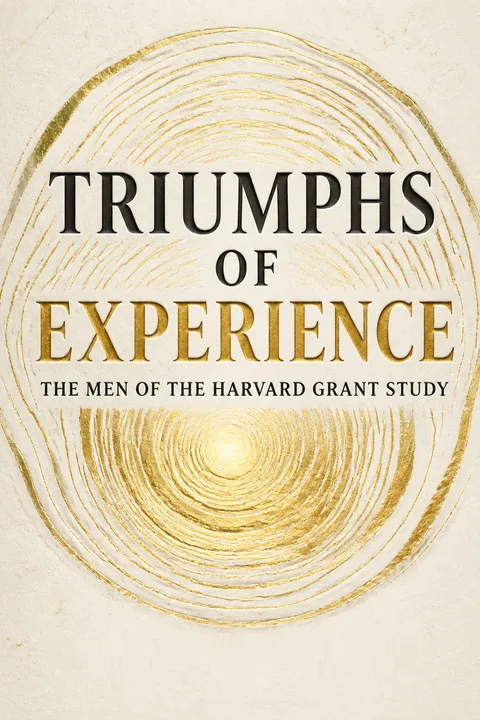


Key Takeaways
Trust and intimacy predicted flourishing better than physique, IQ, or family wealth.
Relationships outperformed status. The Grant Study compared early-life traits with ten measurable outcomes in later life, including health, work, marriage, and social support. Of the four available measures of relationship capacity, each predicted at least six outcomes, and together they predicted all ten. Physical build, intelligence, and parental status had far weaker, scattered links. Men with the warmest childhood relationships earned more on average and were more likely to have strong social support in old age.
A bounded conclusion. These results come from a selected group of 268 white Harvard men, not a representative sample of humanity. The study supports the importance of relationships within its measures and population; it cannot prove that love alone causes every form of success.
What's striking is the mismatch between what the early researchers thought would matter and what the decades of records showed. Physical stature and pedigree were easy to measure, while relational warmth was initially overlooked. That is a caution about research design: what a study chooses to count can shape what it learns. The findings also resist a purely sentimental reading. Relationship capacity may help people navigate work and social life, but income and marriage ratings are imperfect proxies for a good life, and the study's chosen definition of flourishing reflects its era.
Judge a life across decades, not from snapshots or remembered stories.
Memory edits the past. A prospective longitudinal study follows the same people over time, recording information as events unfold. That differs from asking people later to reconstruct their histories, when memory and self-understanding may reshape the story. Adam Newman, for example, described a painful childhood only years after initially portraying it as harmonious. Later, he could not recall some of his own earlier accounts.
The researchers needed the same correction. The author had remembered Newman as an aging idealist, overlooking his return to engineering work and his terminal illness. Checking the old records changed the interpretation. Long follow-up does not eliminate bias, but it makes changing memories and mistaken conclusions visible.
The study treats memory not as a transparent archive, but as part of the changing person. That distinction matters in therapy, biography, and everyday arguments about who someone used to be: a recollection can be sincere without being complete. Repeated records provide a useful check, not a perfect verdict. The Grant Study also shows that researchers are vulnerable to the same narrative smoothing as participants. A long record can expose that bias, although interpreting the record still requires judgment.
Let a loving childhood teach trust, without treating hardship as destiny.
Warmth offered a lasting advantage. Researchers rated childhoods using five factors, including the home atmosphere, relationships with each parent, and closeness to a sibling. Men in the warmest group were four times as likely as those in the bleakest group to have strong social support at seventy. The bleakest group was also far more likely to experience major depression.
But early pain did not write the ending. Godfrey Camille began as a lonely, distressed young man and later built a life rich in service, family, and friendship. His story contrasts with Sam Lovelace, whose early isolation made trust and closeness difficult for decades. The study found that a child's overall experience mattered more than any single event or relationship.
The useful distinction is between risk and fate. A warm home can give a child practice trusting others, while a harsh one can make connection feel unsafe. But Camille's life shows that later relationships and experiences can provide new routes to growth. This avoids two common errors: pretending childhood does not matter, and treating a difficult beginning as an unchangeable diagnosis. The study cannot cleanly separate upbringing from inherited traits, and its emphasis on family warmth should not become a way to blame caregivers for every adult struggle.
Keep developing through identity, intimacy, useful work, care, and acceptance.
Adulthood has more than one task. Vaillant adapted Erik Erikson's developmental model to track changes in adult life. The tasks include separating from one's family of origin, forming committed relationships, and building a career marked by competence and commitment. Generativity means guiding younger people toward independence; Guardianship means preserving shared cultural resources; Integrity means facing mortality while making peace with one's life. These are developmental achievements, not a rigid timetable.
The paths vary. George Bancroft moved from teaching to caring for a college community, then devoted retirement to writing history. Charles Boatwright found his lasting work in community service and care for others, despite a career that looked unconventional. Their lives challenge the idea that development ends once someone has a job or family.
This model is most persuasive when treated as a map of possible growth, not a checklist every person must complete. Its stages make visible forms of maturity that job titles and marital status miss, such as mentoring, stewardship, and accepting limits. The sequence also raises a question: whose life course is being treated as standard? The study followed men born around 1920, under particular social expectations. Its own examples suggest that meaningful development can take varied forms, even when the framework uses a common vocabulary.
Use coping that makes pain bearable without driving other people away.
Coping can be automatic. Vaillant uses the term defense mechanisms for unconscious ways people manage conflict, emotion, relationships, conscience, and difficult realities. They range from reality-distorting responses to more flexible ones. Mature defenses include humor, anticipation, altruism, sublimation, and suppression. Sublimation redirects emotional energy into useful or creative work; suppression keeps a difficult feeling in awareness while postponing action.
Patterns predicted outcomes. Researchers rated behavior drawn from decades of interviews and records. Mature defenses became more common from adolescence into adulthood, and early adult defensive style predicted later flourishing, with a reported correlation of .43 with Decathlon scores. Godfrey Camille's movement away from self-focused physical complaints and toward caring for patients illustrates how coping can become more relational.
This framework adds a valuable middle ground between blaming people for their reactions and treating every painful behavior as harmless. A coping style may protect someone in the short term while making relationships harder. The long record helps distinguish that pattern from a single bad day. Still, labeling defenses as mature or immature depends partly on observers' judgments about socially valued behavior. Suppression, for instance, may help in one setting and conceal a problem in another. The framework is most useful as a prompt for understanding, not as a moral ranking.
Treat persistent alcohol problems as illness, not merely a response to sadness.
Problems matter more than drink counts. The study classified alcohol misuse through repeated reports of consequences, concerns from others, attempts to stop, and medical or social problems. Alcohol abuse often preceded depression, marital trouble, and other difficulties that had been mistaken for its causes. A family history of alcoholism more than doubled the chance of alcohol problems, while an alcoholic stepparent did not show the same effect.
The costs accumulated. By eighty, 72 percent of College men who drank socially had survived, compared with 47 percent of alcohol abusers and 14 percent of alcohol-dependent men. The study found that sustained abstinence was more reliable than a return to controlled drinking. It treated five years without drinking as a more credible sign of lasting remission than a brief period.
The important contribution is temporal: a behavior that appears to be a response to distress can also generate the distress later used to explain it. Following people prospectively helps test that direction of influence. The study's problem-based definition also captures damage that a simple count of drinks may miss. Its conclusions should not be reduced to a universal claim about every person's drinking; the cohorts were male, historically specific, and assessed using diagnostic standards of their time. The evidence is strongest for persistent, harmful patterns, not for casual consumption.
Do not mistake divorce for incapacity to love; examine what damaged the relationship.
Marital history is not a verdict. Vaillant once treated divorce as a strong sign of poor adjustment. Longer follow-up changed that view: 23 of 27 surviving men who had divorced and remarried described their current marriages as happy, after an average of about 33 years together. The first marriage's end did not prevent a later, lasting bond.
Look for the causes beneath the label. Alcoholism was associated with 57 percent of the Grant Study divorces. The book also distinguishes committed interdependence from a deeper emotional closeness. Some couples wanted that closeness; others built durable, companionable marriages with more distance. John Adams found a happy fourth marriage after earlier failures, while Eben Frost was content in a long marriage that lacked much emotional intimacy.
This is a useful correction to moralized accounts of divorce. Ending a marriage can reflect harm, illness, or a poor match, and remaining married does not by itself prove that a relationship is healthy. The distinction between commitment and emotional closeness also makes room for couples with different needs. Yet the study's classifications cannot capture every private meaning of a marriage, and its sample reflects an era when divorce carried distinct social costs. The practical lesson is not to prescribe separation or endurance, but to look carefully at the relationship's actual pattern.
Protect long-term health by addressing smoking, alcohol, blood pressure, weight, and diabetes.
Risk factors gathered force. The study grouped five vascular risks: smoking, alcohol abuse, high blood pressure, obesity, and Type II diabetes. Men with none of these risks lived to an average estimated age of 86; those with three or more lived to about 68. These factors were linked to declining health before and after fifty-five, and remained important among men who reached their eighties.
Aging still has limits. Among the Grant Study men who reached ninety, roughly three quarters remained cognitively intact, but the cohort was unusually healthy and privileged. Education was associated with better health habits, especially among the Inner City men, though it cannot erase every risk. The study also found that predictors changed with age, so no single lifestyle factor explains a long, healthy life.
The striking point is the difference between a list of wellness tips and a risk profile tracked over a lifetime. Several hazards can cluster, and their combined burden can matter more than a single fashionable measure. The study also resists a simple claim that exercise or social support alone causes longevity: health can make exercise and relationships easier, while those relationships can support self-care. Because this is observational research, the reported contrasts do not prove that changing one factor produces a specific number of added years. They do, however, identify practical risks worth taking seriously.
Analysis
The book's central achievement is methodological as much as psychological: it makes time part of the evidence. A recollection at fifty is not treated as equivalent to a record made at nineteen, and a midlife prediction is not granted authority over a life that continues unfolding. This perspective exposes a common weakness in social science: snapshots can confuse predictors with consequences, especially when health, relationships, work, and habits influence one another.
The strongest claims are also bounded by the study's design. The Grant cohort was deliberately selected for health and academic promise, and consisted of white men from a narrow historical period. The Inner City cohort broadens the comparison but remains limited in race and gender. The Decathlon makes flourishing measurable, yet its mix of income, marriage, health, and social ties is a value-laden operational definition, not a neutral inventory of human worth. Its findings are most defensible as patterns within these cohorts, not universal laws.
The book is especially compelling when it resists single-cause explanations. Childhood warmth predicts later connection, but inheritance and later experience complicate the picture. Alcohol can contribute to the very marital and emotional troubles once assumed to cause drinking. Health can enable social participation, while social ties may encourage self-care. These reciprocal pathways make the author's own revisions a strength: changing a conclusion in response to longer evidence models scientific humility.
The lasting practical message is not that love guarantees success or that individuals can control every outcome. It is that the capacity to trust, connect, adapt, and care is built across a life, and that harmful habits can narrow the time and opportunities available for that growth. The book's stories keep those statistical claims human, while its errors and corrections remind readers to hold every life theory provisionally.
Review Summary
Triumphs of Experience is a compelling book based on the Harvard Grant Study, which followed 268 men for over 75 years. Readers found the longitudinal data fascinating, offering insights into factors contributing to happiness, health, and longevity. Key findings include the importance of love, relationships, and mature coping mechanisms. Some readers appreciated the individual stories, while others found the writing style dry. Despite its limitations, many considered it a valuable resource for understanding adult development and the potential for personal growth throughout life.
People Also Read






Glossary
Grant Study
lifelong study of adult livesThe informal name for a prospective study begun at Harvard in 1938 with 268 male students selected from six Harvard classes. Researchers repeatedly collected interviews, questionnaires, medical information, and other records over decades. The study later became part of the Harvard Study of Adult Development, which also followed a cohort of men from disadvantaged Boston neighborhoods.
Decathlon of Flourishing
ten late-life measuresVaillant's composite measure of flourishing from roughly ages sixty to eighty. It scores ten outcomes across work, psychological and physical health, and relationships, including income, enjoyment, health, marriage, and social support. A man received points for outcomes placing him in the top quarter of the Grant Study sample. The measure makes a broad idea testable, but reflects choices about what counts as success.
Career Consolidation
mature commitment to workA developmental task Vaillant separated from identity formation. It describes a stable, meaningful relation to work, assessed through commitment, compensation, contentment, and competence. The term does not refer only to prestigious occupations or high earnings. A person can consolidate a career in many kinds of work when the role is skilled, valued, and sustained.
Guardianship
preserving shared inheritanceA developmental task Vaillant distinguished from Generativity. Generativity involves directly guiding and caring for people who are still developing. Guardianship extends concern to cultural inheritance and institutions, preserving valuable knowledge or practices for future generations. It involves a wider social perspective and, in Vaillant's account, the judgment to preserve what is valuable rather than tradition for its own sake.
defense mechanisms
unconscious coping responsesVaillant uses this term for involuntary mental processes that reduce conflict or emotional overload involving feelings, relationships, conscience, or reality. The book groups defenses by relative maturity. Less mature forms can distort reality or push responsibility outward; mature forms include humor, altruism, anticipation, sublimation, and suppression. These responses may protect a person, but they can also affect relationships and long-term adjustment.
Problem Drinking Scale (PDS)
measure of alcohol-related problemsA sixteen-item scale used in the study to assess problem drinking across a range of severity. Instead of relying mainly on reported quantity or frequency, it considers consequences such as social, legal, medical, and work problems, as well as blackouts, withdrawal, attempts to stop, treatment, and loss of control. It complements the study's categorical diagnoses of alcohol abuse and dependence.
compression of morbidity
shorter period of late-life illnessA concept used in the book to describe a population pattern in which more people remain functional into old age, then experience a relatively brief period of disability before death. It distinguishes longer life expectancy from an indefinitely extended period of frailty. The Grant Study's unusually healthy survivors offer examples of vigorous old age, though they do not represent the general population.
FAQ
What is Triumphs of Experience: The Men of the Harvard Grant Study by George E. Vaillant about?
- Longitudinal study overview: The book chronicles the Harvard Grant Study, a 75-year prospective longitudinal study of 268 men from Harvard, tracking their lives from youth to old age.
- Focus on adult development: It explores how childhood experiences, personality, relationships, and coping mechanisms influence health, happiness, and success across the lifespan.
- Unique data and approach: Vaillant combines psychosocial and biomedical data, interviews, and life histories to provide a comprehensive view of human development.
- Themes of resilience and love: Central themes include the importance of relationships, resilience, and the lifelong potential for personal growth.
Why should I read Triumphs of Experience by George E. Vaillant?
- Rare lifetime perspective: The book offers insights from one of the world’s longest and most detailed studies of adult development, providing evidence unavailable from shorter or retrospective studies.
- Challenges common assumptions: It questions widely held beliefs about nature vs. nurture, the role of love, and the possibility of change in adulthood, all backed by decades of data.
- Practical wisdom for life: Readers gain actionable understanding of what predicts flourishing in old age, the impact of relationships, and how early life shapes—but does not determine—adult outcomes.
- Engaging real-life stories: The book is rich with case studies and personal narratives, making complex scientific findings relatable and memorable.
What are the key takeaways from Triumphs of Experience by George E. Vaillant?
- Lifelong development: Adult growth and maturation continue well beyond adolescence, with personality and coping styles evolving over decades.
- Centrality of relationships: Warm, intimate relationships are the strongest predictors of happiness, health, and success in old age.
- Nature and nurture interplay: While genetics play a role, nurturing childhood environments and mature coping mechanisms are more predictive of flourishing.
- Resilience and coping: Mature defense mechanisms like humor and altruism are linked to better mental health and life satisfaction.
What is the Harvard Grant Study and why is it significant in Triumphs of Experience?
- Study design: The Grant Study began in 1938, following 268 Harvard men for over 75 years, with repeated assessments of health, personality, relationships, and life outcomes.
- Scientific value: Its prospective, longitudinal design allows for real-time observation of adult development and the testing of hypotheses about health and success.
- Unique features: The study boasts high participant retention, extensive data collection, and integration of psychosocial and biomedical information.
- Influence on research: It has shaped understanding of adult development, mental health, and the factors that contribute to a fulfilling life.
How does Triumphs of Experience by George E. Vaillant address the nature vs. nurture debate?
- Nurture’s primacy: Warm, supportive childhood relationships are stronger predictors of flourishing in old age than physical constitution, intelligence, or social class.
- Genetic influences: Family history of alcoholism, depression, and longevity do affect health risks, showing a complex interplay between genes and environment.
- Body build myths dispelled: Early beliefs that masculine body build or athleticism predicted success were disproven by long-term data.
- Complex causality: The book demonstrates that both heredity and environment shape outcomes, but nurturing relationships have the most profound impact.
What is the "Decathlon of Flourishing" in Triumphs of Experience and how does it measure success?
- Definition and purpose: The Decathlon is a set of ten measurable late-life outcomes, including occupational success, mental and physical health, psychological well-being, and relationship quality.
- Objective assessment: It operationalizes "flourishing" in concrete, observable terms, avoiding vague concepts like happiness or virtue.
- Key findings: High Decathlon scores are strongly linked to warm childhoods and mature coping styles, rather than early physical or socioeconomic advantages.
- Implications for aging: The Decathlon provides a framework for understanding what it means to thrive in old age.
How does Triumphs of Experience by George E. Vaillant describe adult maturation and personality development?
- Lifelong growth: Adults continue to develop emotionally and psychologically well into old age, with significant changes in coping and relational capacities.
- Erikson’s stages expanded: Vaillant builds on Erik Erikson’s model, adding stages like Career Consolidation and Guardianship, and illustrating them with real-life stories.
- Personality stability and change: While core personality traits remain, people can evolve in their ability to handle emotions, relationships, and life’s challenges.
- Multiple models of maturity: The book discusses various frameworks for understanding adult development, including social-emotional intelligence and wisdom.
What does Triumphs of Experience by George E. Vaillant reveal about the role of relationships and love in adult development?
- Central importance: The capacity to form and maintain warm, intimate relationships is the strongest predictor of a successful and happy old age.
- Impact of early love: Childhood warmth and secure attachments foster adult intimacy, career success, and longevity, while lack of love predicts loneliness and mental health issues.
- Marriage and intimacy: Long-term loving relationships contribute significantly to mental health, and mutual dependence in marriage deepens satisfaction with age.
- Social supports: Adult relationships, including friendships and community ties, are crucial for well-being and resilience.
How does Triumphs of Experience by George E. Vaillant address alcoholism and its impact on adult lives?
- Alcoholism as a disease: The book presents alcoholism as a chronic, progressive disease, not merely a symptom of other disorders.
- Genetic and environmental factors: Family history is a strong predictor of alcoholism risk, while unhappy childhoods alone are less influential.
- Consequences for relationships: Alcoholism is a major cause of marital failure and family disruption, with recovery often requiring new relationships and support systems.
- Recovery and AA: Sustained abstinence is most reliably achieved through involvement in supportive groups like Alcoholics Anonymous.
What are mature defense mechanisms, and why are they important in Triumphs of Experience by George E. Vaillant?
- Definition of defenses: Defense mechanisms are unconscious psychological strategies that protect the ego from distress and anxiety.
- Hierarchy of maturity: Vaillant categorizes defenses from immature (denial, projection) to mature (altruism, humor, sublimation), with mature defenses linked to better outcomes.
- Predictors of flourishing: Use of mature defenses predicts mental health, career success, and stable relationships over decades.
- Assessment method: The Grant Study used multiple data sources to reliably identify and rate defensive styles, demonstrating their long-term predictive power.
How does Triumphs of Experience by George E. Vaillant define and measure wisdom in adult development?
- Wisdom as pinnacle: Wisdom is presented as the highest achievement of adult development, involving cognitive, reflective, and affective capacities.
- Empirical measurement: Sociologist Monika Ardelt’s work with the Grant Study men operationalizes wisdom, linking it to maturity of defenses and late-life adjustment.
- Integration of care and justice: Wisdom requires balancing empathy with dispassionate judgment, often emerging late in life.
- Association with well-being: Wise individuals tend to have better mental health, resilience, and life satisfaction.
What are the best quotes from Triumphs of Experience by George E. Vaillant and what do they mean?
- On maturation: “It is well for the world that in most of us, by the age of thirty, the character has set like plaster, and will never soften again.” —William James, challenged by Vaillant’s findings that people do grow beyond thirty.
- On love: “If you have someone who loves you, you’ve got it made.” —Charles Boatwright, emphasizing the centrality of loving relationships to a fulfilling life.
- On integrity: “God grant me the serenity to accept the things I cannot change; courage to change the things I can; and the wisdom to know the difference.” —Reflecting the final Eriksonian stage of Integrity, embracing life’s contradictions and mortality.
- On happiness: “Happiness is love. Full stop.” —Vaillant’s summary of the study’s most important lesson, underscoring the enduring human need for connection.
About the Author
Download PDF
Download EPUB
.epub digital book format is ideal for reading ebooks on phones, tablets, and e-readers.








