


Plot Summary
Signs Before School
Before classes begin, black signs appear along the country roads around Atwater, accusing someone at the girls’ boarding school of rape. New freshman Lauren Triplett spots one with her parents on the drive from upstate New York, then recognizes the school’s clock tower in its photograph.
At move-in, her mother presses senior proctor Olivia Anderson for answers, but Olivia can offer only the administration’s promise to investigate. Lauren is paired with legacy student Bryce Engel, whose ease with Atwater’s customs makes the place seem both welcoming and already claimed.
Her old best friend Grace has gone to another boarding school, and Lauren tells her by message that Atwater is perfect, though the accusation has already disturbed the polished welcome she hoped to find.
The signs make the novel’s central conflict visible before its young characters have the language to interpret it. Their anonymous author uses a public, local medium to challenge a private institution, while the school’s first response is to convert a charged accusation into a matter of process. Lauren’s arrival places the reader inside that contradiction: she wants to belong, and belonging immediately asks her to accept an incomplete account. Her insistence that the school is perfect is not simple dishonesty. It is a bid to make her chosen future feel secure before she knows what it will demand.
The Moonlit Initiation
Freshman runner Macy Grant responds to the secrecy around Initiation by researching hazing injuries and deaths until fear overtakes her appetite, schoolwork, and training. When roommate Jade Wright tries to reassure her, Macy lashes out by using Jade’s scholarship against her, putting their friendship at risk.
On the night of the ritual, Macy nearly stays in bed, but senior runner Tasha Lyons invites her to come along without forcing her. The freshmen race through the woods to a creek, strip, and plunge into the water while seniors watch and cheer.
Macy is frightened, cold, and exhilarated; Jade splashes her, and Macy laughs with the others. The ritual proves less dangerous than her spiraling scenarios, but the welcome does not erase the school’s deeper uncertainty.
Macy’s anxiety is not presented as a flaw that disappears once reality proves less frightening. Her mind tries to secure safety through exhaustive prediction, but the information she finds gives fear more possible forms. Jade’s patience offers companionship, yet Macy’s attack shows how shame can redirect fear toward the person nearest at hand. Tasha’s invitation matters because it preserves Macy’s agency: she can approach the group rather than be dragged into it. The creek ritual briefly turns shared vulnerability into belonging, even as the larger question of whose safety the institution protects remains unresolved.
The Heron Goes Quiet
The morning after Initiation, Macy reads that former student Karen Mirro alleges a faculty member raped her in 1995 and that the school expelled her after she reported it. The article says Karen was eighteen, making a criminal case unavailable, and that she is seeking damages from Atwater.
Macy joins the Daily Heron, where she and Bryce help survey students for an issue on sexual assault, consent, and support. Karen’s former friend Meg later writes that Karen had described an older married boyfriend and a night that felt wrong, but Meg had minimized it at the time.
Head of School Patricia Brodie blocks the Heron issue. Senior art director Mia Tavoletti secretly distributes the finished PDF, then accepts responsibility when the school investigates.
The newspaper’s conflict distinguishes factual inquiry from institutional permission. The students do not know exactly what happened to Karen, and Meg’s memory adds context without settling the allegation; the uncertainty is real, not a reason to silence the questions. Brodie’s veto protects Atwater’s public image while removing students’ attempt to examine their own education. Mia’s decision to release the issue converts a school publication into an act of dissent, while her willingness to take the consequences shows how solidarity can be practical rather than rhetorical. The Heron’s work becomes consequential precisely because the institution refuses to let it appear.
The Corn Maze
At Fall Fest, junior Chloe Eaton’s Ringing dare requires her to kiss a boy from visiting Westminster. She finds Aidan Beiers, whom she met the year before, and follows him into the corn maze, hoping a kiss will satisfy the dare and her fear of falling behind her peers.
Aidan ignores her attempts to slow or stop him, pushes past her hesitation, and has sex with her without her freely agreeing. Chloe leaves shaken and later tells friends she chickened out, burying the event beneath a safer story.
Around the same time, someone hacks Atwater’s Instagram and posts an old comment by Brodie blaming a student, at least partly, for failing to avoid danger. The post makes Chloe’s experience collide with the school’s public language about responsibility.
Chloe’s harm is intensified by the script she has absorbed: that sexual experience is proof of maturity, and that a dare can make intimacy feel like an obligation. Her attempts to manage Aidan’s expectations show how resistance can become less legible to a person who has already decided what the encounter should mean. The story she tells afterward protects her from immediate scrutiny, but it also deprives her of language for what happened. The hacked post links private injury to institutional rhetoric, exposing how advice about avoiding danger can shift responsibility from the person who causes harm to the person who survives it.
Vespers’ Hidden Audience
Sophomore Celeste Li feels isolated at Atwater, even from her one close friend, Josie Chen, and privately studies the intimacy she sees between English teacher Ms. Ryan and her husband, Owen. Josie sends Celeste an online bracket asking students which faculty members are most likely to sleep with a student.
As votes narrow the field to art teacher Rich Breslin and algebra teacher Emmett Morgan, the joke turns adult authority into a campus spectacle. At Vespers, senior Olivia Anderson hosts the show, students perform, and faculty members appear in a band.
Celeste’s private fascination with Ms. Ryan grows more confused; afterward she touches Owen’s arm, then retreats and cuts off a piece of her own hair. During winter break, Breslin resigns, citing the allegations implied in the campaign.
Celeste’s point of view shows how sexual literacy can be replaced by surveillance and guesswork. She watches adult intimacy from outside, interprets it through fragments, and mistakes proximity to knowledge for understanding. The bracket gives students a sense of power over teachers, but its game format also reduces serious questions about authority to popularity and desirability. Celeste’s impulsive touch of Owen crosses a boundary herself, complicating any easy division between innocent observers and responsible adults. Cutting her hair afterward is a small act of self-possession, a choice over her body when her knowledge and relationships feel borrowed from other people.
Butterfly Faces Return
After winter break, portraits of young women appear across Atwater, each face assembled from hundreds of tiny butterfly drawings. Students connect the images to Breslin, whose departure has not ended the anonymous protest.
Abby Randall, a junior who has just lost her roommate, learns that Bella Nitido is returning after leaving school the previous year. Bella had been dismissed after repeated violations involving drugs and alcohol, and the school places her in Abby’s room. Their first conversations stay cautious, but Bella’s frankness and appetite for art draw Abby closer.
When Bella questions why no teacher is discussing the portraits, Abby recognizes that the silence itself may carry meaning. The images vanish quickly, yet the new roommates begin sharing meals and routines, giving Abby a connection she had not expected.
The portraits turn the campus into a gallery of faces that refuse to be treated as decoration. Their beauty and their unsettling construction make looking an unstable act: students can admire the craft while sensing that the figures are trapped or obscured. Bella’s return brings institutional discipline into the same frame. She has been marked as a rule-breaker, while the school’s response to alleged adult misconduct remains less visible and less direct. Abby’s growing attachment to Bella develops through attention rather than rescue. She learns to treat Bella as a person with a present life, not merely as the reputation that arrived with her.
The Tattoo Trap
Anonymous flyers appear in bathrooms advertising Bella as an unsafe, unofficial tattoo artist. Bella recognizes the danger: she is already on probation, and an accusation that she is tattooing classmates could give Dean Linda Paulsen grounds to expel her.
Abby removes one flyer and later suspects Bella’s former friends Sloane Beck and Blake Trude of planting them. Rather than leave Bella to face the threat alone, Abby asks for a tattoo herself.
Bella prepares her stick-and-poke tools carefully and sketches a trout for Abby, inspired by Abby’s memories of fishing and gathering wildflowers with her late father. The tattoo gives the roommates a private bond, while Abby’s choice means Bella’s art is no longer only an accusation invented by someone else.
The flyers exploit a real vulnerability by making a false claim plausible. Bella’s disciplinary history gives the rumor leverage, while the school’s willingness to treat her as suspect makes Abby’s loyalty costly. Abby does not defend Bella with an abstract declaration; she takes a concrete risk and asks Bella to mark her body. The trout design joins the present friendship to Abby’s memory of her father, but its importance lies equally in consent and collaboration. Abby chooses the image, placement, and meaning; Bella listens and makes it with her. Their exchange offers a model of intimacy grounded in mutual attention rather than status or pressure.
A Forum Without Answers
After months of anonymous protests, Atwater’s administration announces a student forum on healthy relationships and accountability. Students can attend instead of study hall, but the event offers no promise that disputed events will be clarified.
Head of School Patricia Brodie and other administrators field questions while students struggle to get beyond institutional language and general assurances. The forum follows the Board’s decision to hire Jamison Jennings, a consulting firm, to review the school’s policies and culture.
The promised outside assessment is more substantial than another carefully worded email, but only a small number of students will be selected for interviews. The school has opened a formal channel, yet the students remain uncertain whether speaking through it will produce answers or simply give the institution another account to manage.
The forum marks a shift from protest as interruption to protest as a demand for a durable process. Brodie’s invitation recognizes that students have been left without adequate answers, but the format still places administrators in control of what can be said and how it is recorded. The consultants offer a possible bridge between private testimony and institutional change, yet their limited interviews risk reproducing the very problem of selective hearing. The students’ skepticism is not cynicism for its own sake. They have watched Atwater praise leadership and empowerment while controlling the channels through which those values might challenge the school.
Sloane Meets Caroline
On a humanities trip to New York, junior Sloane Beck sees a Snapchat story containing anonymous accounts of students’ sexual relationships with teachers and coaches. The posts suggest that Atwater’s problem reaches beyond Karen Mirro’s case.
Sloane leaves her classmates at the Metropolitan Museum and walks through Central Park to Lincoln Center, where she encounters Caroline Keegan, her former ballet partner. Years earlier, after seeing their mentor Michael kiss Caroline, Sloane attacked her, driving her head into a studio mirror and leaving her with a serious injury.
Caroline now tells Sloane that Michael was fired for inappropriate behavior and had been persistently handsy with students. Sloane learns that her jealousy was real, but that the adult she had once treated as a trusted mentor had also abused his position.
Sloane’s memory has long organized the ballet incident around rivalry and her own violence. Caroline’s revelation does not absolve Sloane of assaulting her, but it changes the conditions under which that violence formed: a teacher’s boundary violations had been normalized as correction, care, or professional closeness. The distinction matters because explanation is not exoneration. Sloane must hold both truths at once, including the possibility that Caroline was harmed by Michael and by Sloane. The encounter also makes institutional failure intimate. What appeared to be one girl’s private jealousy was shaped by an adult culture that failed to recognize or stop exploitation.
Emma’s Secret Account
On prom night, senior Emma Towne’s friends play a drinking game that exposes her continuing Tumblr account, where she has explored her sexuality and developed a deep online bond with Harper. Emma has kept the relationship secret from her girlfriend, Olivia Anderson, partly because Tumblr once gave her a place to understand herself before she could do so openly.
Olivia reads the account and asks whether Harper is real beyond the screen. Their argument reveals that Emma has felt confined by their public image as Atwater’s admired couple, while Olivia has tried to maintain that image by meeting the school’s expectations and remaining composed.
Emma leaves the party early, returns to campus alone, and sends Harper an intimate photograph before inviting her to visit. Her choice begins changing the relationship without making the consequences simple.
Emma’s secrecy is not merely a betrayal concealed for excitement. Tumblr has served as a rehearsal space where she could try out an identity without risking immediate judgment, but a refuge can become a second life that excludes the person she loves. Olivia’s public composure has its own costs: she is admired as a symbol while being treated as though admiration means she has no private difficulty. Their conflict exposes how a relationship can be genuine and still become a performance. Emma’s message to Harper opens a new possibility, but it does not erase the shared history or the unresolved question of what honesty requires.
The Clock Tower Confession
Near the end of senior year, Mia Tavoletti recruits freshman Bryce Engel for a supposed Heron induction test that leads them through Atwater’s tunnels. They cover Brodie’s office door with maxi pads, reviving Mia’s protest against the school’s refusal to provide menstrual products in campus bathrooms.
Then they climb the clock tower and tear apart a stuffed Lady Heron mascot, challenging the school’s gendered emblem. In the tower, Mia explains how she traced the campaign’s insider knowledge to Bryce.
Bryce admits she began with the road signs and continued with the anonymous digital posts and portraits. Mia had leaked the Heron issue herself and taken the blame; Bryce was behind the wider campaign. Bryce says she wanted to force Atwater to confront what it had protected, but also admits the protests gave her a personal rush.
The revelation resists the comforting idea that protest is always morally pure or that a single culprit can explain institutional harm. Bryce’s family connections gave her access to Atwater’s private history, while her outsider’s anger grew inside the very legacy she seemed born to inherit. Mia’s earlier choice to leak the paper shows a parallel form of dissent: both girls act, but for different reasons and with different risks. Their conversation recognizes that a protest can expose real injustice and still cross lines. Their shared affection for Atwater is not acquittal; it is what makes their demand for change more than an act of destruction.
Atwater’s Uneasy Future
In April, Atwater and Karen Mirro announce a settlement, with financial terms kept private and Karen’s lawyers emphasizing the need to protect future students. In May, the Board announces Brodie’s retirement.
The Jamison Jennings report arrives in June: investigators find five former faculty members credibly accused of inappropriate relationships with students, including Karen’s allegation against Breslin. The report says officials in 1995 did not consciously choose to protect him, but their lack of clear procedures and transparency left Karen exposed to fear of retaliation.
It recommends accessible confidential reporting, anti-retaliation rules, independent review, and education in consent. At Commencement, students still wear school-required white dresses, even after Mia’s protests. Their final ceremonies preserve tradition, but the year has made clear that loving Atwater means expecting it to change.
The report offers a disciplined conclusion rather than a clean verdict. It identifies patterns and failures without claiming to know every private intention, distinguishing proof of institutional negligence from proof of a deliberate conspiracy. That restraint matters: accountability does not require inventing certainty where the record cannot provide it. The recommended procedures move responsibility away from individual administrators’ discretion and toward structures that can be tested. Yet the unchanged graduation dress code shows how slowly symbols respond to scrutiny. Atwater’s future remains unsettled, but the students have made it harder for the school to confuse tradition, reputation, and care as though they were the same thing.
Analysis
All Girls treats a prestigious girls’ school not as a sealed refuge from the wider world, but as a place where wider social habits are concentrated and given elegant names. Atwater teaches leadership, community, and self-knowledge, yet its authority depends partly on managing what students are allowed to know. The novel’s repeated contrast between official emails and student-made signs, articles, posts, and stories shows that information itself is a form of power. When the institution withholds facts, students improvise their own channels. Those channels can reveal patterns, but they can also distort, expose, or injure.
The novel refuses to equate visibility with justice. Karen’s allegation becomes widely discussed while Karen herself remains largely absent from the narrative; Chloe hides what happened to her behind a safer version; Emma’s digital self is both a source of freedom and a concealed relationship. Their different silences are not interchangeable. Each is shaped by the risks of speaking, the audience who may hear, and the language available to describe an experience. The book’s interest is not simply whether young women can find their voices, but whether adults and institutions will build conditions in which speaking does not create another danger.
Its portraits of adolescence are equally alert to complicity. Bryce’s protest is both an act of accountability and a source of private satisfaction. Sloane’s discovery about Michael changes the context of her violence without excusing it. Celeste’s desire to understand adult intimacy does not prevent her from crossing a boundary herself. These contradictions keep the characters from serving as clean symbols of innocence or guilt. They are learning how power works while living inside it.
Atwater’s traditions give the students a genuine attachment to their school, which makes criticism more painful and more meaningful. The final implication is not that love requires loyalty to an institution as it stands. It requires the willingness to notice whom its cherished image leaves unprotected, and to demand structures that make care more than a promise.
Review Summary
All Girls received mixed reviews, with some praising its portrayal of adolescent experiences and important themes like sexual assault, while others found the multiple perspectives confusing and the plot lacking. Many appreciated the boarding school setting and the author's writing style, but felt the book could have benefited from fewer characters and a more cohesive narrative. Some readers found the book poignant and timely, while others felt it fell short of its potential. Overall, opinions were divided on the effectiveness of the novel's structure and execution.
People Also Read

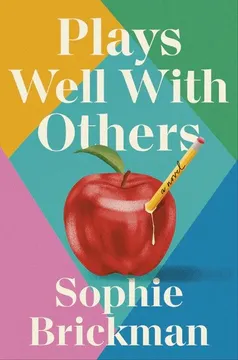


Characters
Lauren Triplett
Newcomer seeking a placeLauren is a freshman from upstate New York who chooses Atwater after her best friend, Grace, commits to another boarding school. She is observant, dryly funny, and eager to seem as though she belongs, even when the school’s vocabulary and traditions leave her behind. Her family’s affectionate, practical care embarrasses her as she tries to become independent. Lauren is quick to notice differences in class, confidence, and access, but she can also mistake polished self-assurance for proof that someone understands the world. Her friendship with Bryce, Macy, and Jade gives her a less curated way to experience the school than the one she had imagined from its brochures.
Macy Grant
Runner with a restless mindMacy is a freshman whose talent for distance running gives her a rare sense of mental quiet. Outside training, anxiety drives her to seek exhaustive instructions and anticipate every possible failure. Her parents’ advocacy at her former school left her feeling watched and burdensome, so Atwater represents a chance to be treated as capable rather than fragile. Macy is not defined by her anxiety alone: she is intellectually persistent, attentive to evidence, and drawn to journalism because it gives her questions a practical outlet. Her friendships with Jade and Lauren offer intimacy, but she has to learn that fear can damage those bonds when she turns it into accusation.
Bryce Engel
Legacy student with accessBryce is a freshman whose family history is entwined with Atwater. She arrives with an inherited fluency in the school’s customs, its alumnae network, and the social codes that make new students feel either admitted or out of place. Her polished appearance and disciplined habits can make her seem effortless, though she is shaped by a mother who treats Atwater as a defining family achievement. Bryce is observant about status and attentive to how privilege affects opportunity. She is capable of loyalty and ambition, but she also struggles to distinguish her own desires from the future her family has already imagined for her.
Mia Tavoletti
Skeptical senior journalistMia is a senior artist and newspaper staff member whose irreverent manner can disguise how seriously she takes institutional injustice. She dislikes sanctimony and resists being reduced to a conventional activist, yet she repeatedly notices where official values fail in practice. Her humor, impatience, and technical competence make her useful to the Heron, while her independence can keep others from recognizing her attachments. Mia has a strong instinct for solidarity, especially when a friend is exposed to a risk she can shoulder herself. Her skepticism is not indifference; it is a way to remain involved without surrendering her judgment to the school’s language.
Louisa Manning
Heron editor and investigatorLouisa is a coeditor of the Daily Heron who chose Atwater partly to claim stability after years of moving with her parents. The newspaper offers her a home and a structure she can build through careful work. She is disciplined, ambitious, and devoted to the ideal that reporting should make an institution answerable to its community. Her restraint is both a strength and a defense: she wants to be fair, but she sometimes edits away her own convictions to avoid appearing reckless. Louisa’s bond with Anjali anchors her leadership, while her growing respect for Mia challenges her earlier assumption that cynicism and commitment cannot coexist.
Chloe Eaton
Junior learning her boundariesChloe is a junior who measures herself against Atwater’s social and sexual milestones, often assuming that everyone else is more experienced and more certain. Her friendship with her roommate Brie gives her a space to test doubts without immediately having to perform confidence. Chloe is thoughtful about how she appears to boys and classmates, and that self-consciousness can make it difficult for her to identify what she wants in the moment. Her perspective exposes the gap between the school’s lessons about healthy relationships and students’ actual ability to navigate pressure, attraction, and consent.
Sloane Beck
Dancer with sharp defensesSloane is a senior dancer whose early promise and complicated relationship to ballet shape how she sees competition. She is witty, socially influential, and often cutting, especially when another person touches a vulnerability she has tried to seal off. Her privileged New York upbringing gives her access to elite training, but it also makes her identity feel precarious when that future narrows. Sloane is capable of deep loyalty, though she often expresses attachment through challenge rather than softness. Her relationships with Blake and Caroline reveal how ambition, jealousy, and adult authority can become entangled in a young person’s memory.
Emma Towne
Private self, public coupleEmma is a senior swimmer and Olivia’s girlfriend. She is steady, perceptive, and more private than her public relationship suggests. As a queer teenager from Ohio, she has had to build a language for herself in places where acceptance is uncertain. Online spaces allow her to explore that identity before she can share every part of it face to face. Emma values closeness but also needs room to discover who she is apart from being one half of an admired couple. Her difficulty is not a lack of love, but the strain of making intimacy and self-definition coexist.
Olivia Anderson
Beloved student leaderOlivia is a senior proctor and soccer player admired for her beauty, humor, and practiced warmth. She is a multiracial student who has learned to manage other people’s attention, often choosing to listen rather than make her own life the subject. Her public role matters to her: she tries to participate, mediate, and keep the school’s community intact, sometimes at a cost to her private relationship with Emma. Olivia’s confidence is real, but it does not make her immune to being treated as a symbol or to the effort of maintaining composure for others.
Celeste Li
Quiet watcher of intimacyCeleste is a sophomore swimmer on an academic scholarship, raised by Chinese immigrant parents in a working-class family. She feels caught between groups at Atwater and relies on Josie as her closest friend. Celeste notices details others overlook, especially around class, beauty, and adult behavior, but her limited experience can lead her to interpret fragments as complete knowledge. Her inwardness is not lack of feeling; she is intensely curious, easily ashamed, and hungry for a language that makes her body and relationships less mysterious.
Abby Randall
Roommate learning to speakAbby is a junior from Vermont who is reserved, conscientious, and still grieving her father. She often assumes that more confident classmates have already decided whether she belongs. A new roommate gives her the chance to move beyond observation and risk forming a friendship on her own terms. Abby’s memories of home are tender but complicated, particularly when she recognizes that the people she loves share private histories she cannot fully enter.
Bella Nitido
Returned student and artistBella is a stylish, self-possessed junior who has left Atwater and later returns under strict disciplinary conditions. She has a talent for making ordinary choices look deliberate, which can read as confidence or as a shield. Bella’s interest in art, risk, and personal freedom puts her at odds with the school’s preference for predictable behavior. She is more vulnerable than her image suggests, and her friendship with Abby begins to develop when both are willing to share something personal without demanding an immediate explanation.
Karen Mirro
Former student seeking redressKaren is a former Atwater student whose allegation against a faculty member brings the school’s past into the present. She was eighteen during the events she describes, and later seeks legal recourse against the institution after her criminal options have expired. The novel presents her through public reporting, school communications, and the recollections of a former friend, leaving important parts of her experience inaccessible to the current students. That distance is central to her role: the school debates her credibility while she has limited control over how her story circulates.
Patricia Brodie
Head guarding the institutionBrodie is Atwater’s longtime Head of School, skilled at fundraising, public communication, and presenting the school as a community committed to girls’ growth. She appears to believe in that mission, but her instinct for protecting Atwater’s reputation can narrow what she is willing to disclose. Her reliance on professional language helps her maintain control under pressure while making students feel that their questions have been absorbed rather than answered. Brodie embodies the tension between sincere institutional pride and the self-protective habits that can prevent an institution from confronting its own failures.
Jade Wright
Macy’s blunt roommateJade is Macy’s roommate, a confident student whose casual style and blunt humor make her difficult to intimidate. She notices when Macy is unwell and tries to offer support without treating her as incapable. Jade values loyalty, but she also expects her friends not to use private vulnerabilities as weapons. Her directness gives Macy a counterweight to anxious speculation and shows that care can include firm limits.
Anjali Reddi
Louisa’s outspoken coeditorAnjali is Louisa’s coeditor at the Heron, a sharp and energetic student with a strong appetite for public argument. She is quick to identify the political meaning of a decision and less inclined than Louisa to soften her response for adult comfort. Her intensity can edge toward impatience, but it also helps the newspaper take its own purpose seriously. Anjali is committed to student voice and to the possibility that reporting can change how a school behaves.
Aidan Beiers
Visiting student Chloe meetsAidan is a student from Westminster who reconnects with Chloe at Fall Fest. He presents himself as relaxed and flirtatious, and Chloe’s limited experience makes his attention feel both validating and difficult to interpret. His role reveals how charm and social expectation can obscure another person’s discomfort.
Caroline Keegan
Sloane’s former dance partnerCaroline trained in ballet with Sloane from childhood and once shared the rare pressures of professional-level rehearsal. She is talented and self-directed, now facing decisions about her future in dance. Her history with Sloane contains affection, injury, rivalry, and unspoken knowledge, making their reunion emotionally complicated rather than neatly reconciliatory.
Rich Breslin
Celebrated art teacherBreslin is a longtime art teacher whose skill and reputation have made him an important figure in Atwater’s creative life. Students describe him as an influential mentor, and his work carries cultural prestige beyond the classroom. His presence in the school’s history becomes inseparable from questions about adult power, professional admiration, and the responsibility institutions have when a student makes an allegation.
Linda Paulsen
Dean enforcing school rulesPaulsen is Atwater’s Dean of Students, a strict and experienced administrator responsible for discipline and student oversight. She is attentive to rules, reputation, and the practical management of a residential campus. Students can read her interventions as protection or surveillance, depending on whether they trust the system she represents. Her authority is especially visible when a student’s past violations make new accusations easier for the school to believe.
Nancy Doyle
Heron adviser and teacherMs. Doyle teaches English and advises the Daily Heron. She supports student journalism but works within a school that can restrict what the paper publishes. Her care for the staff is evident even when she cannot secure permission for their work. She occupies the uneasy position of an adult ally whose professional obligations limit how directly she can challenge the Head of School.
Michael
Sloane’s ballet mentorMichael is a young ballet instructor and choreographer who works closely with Sloane and Caroline during their childhood training. His technical attention and physical guidance are initially interpreted within the demanding culture of dance. His role raises questions about how students learn to distinguish legitimate instruction from boundary violations.
Plot Devices
The roadside signs
Public accusation, private historyAnonymous signs planted around the roads leading to Atwater announce that a rapist works at the school. They give the scandal a visible presence before the freshmen know what happened, and they force families and students to ask questions the administration is not ready to answer. Their distribution beyond campus also makes the local community a witness, even though most signs are removed quickly. The sign campaign establishes the novel’s central method of protest: take an issue the institution would prefer to handle quietly and place it where people cannot avoid seeing it.
Atwater traditions
Rituals reveal social rulesInitiation, Ringing, Fall Fest, Vespers, Senior Smoke, and Commencement give students shared structure, excitement, and a sense of belonging. The rituals also reproduce the school’s hierarchies: seniors direct freshmen, students perform maturity for one another, and the institution can call an expectation a tradition rather than a rule. Their recurring presence lets the story contrast the school’s carefully managed public identity with students’ private experiences of pressure, risk, and exclusion.
The Daily Heron
Student reporting finds a voiceAtwater’s student newspaper gives Louisa, Anjali, Macy, and Bryce a way to research sexual assault and consent through reporting, interviews, and a student survey. The planned issue treats Karen’s allegation as part of a broader educational question rather than a story students can resolve by speculation alone. When the administration blocks publication, the paper becomes a test of who controls public information at the school. Its suppressed issue also gives the student body a concrete object to read and discuss, shifting the controversy from rumor toward evidence and testimony.
Anonymous online posts
Hidden testimony disrupts controlA hacked school account, a faculty ranking bracket, and Snapchat stories circulate information the official channels do not provide. The posts are not all equally reliable or equally responsible: some expose old statements and alleged patterns, while others turn serious questions into spectacle. Their anonymity protects the person posting but makes it difficult for students to judge sources or distinguish testimony from provocation. The digital interventions show how quickly young people can create a counter-public, while also revealing the risks of making harm visible without offering a safe process for those involved.
The legal review
Institutional memory becomes evidenceKaren Mirro’s civil suit and the Jamison Jennings review turn Atwater’s past into a matter of documents, testimony, and policy. The review gathers interviews and records, finding credible accusations involving several former faculty members while distinguishing what investigators can establish from what remains uncertain. Its recommendations replace informal administrative discretion with clearer reporting, review, and anti-retaliation procedures. The device offers accountability without pretending that a report can restore what students have lost or supply every missing detail.
Download PDF
Download EPUB
.epub digital book format is ideal for reading ebooks on phones, tablets, and e-readers.








