

Plot Summary
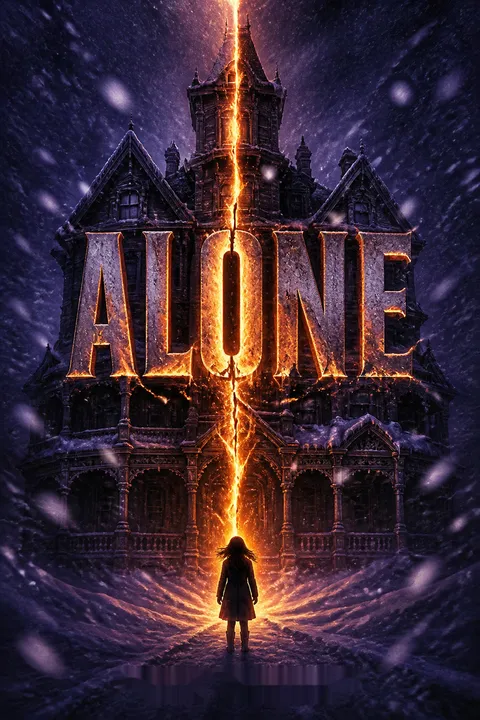
Snowbound at Bug House
Sixteen-year-old Seda Helm1 lives with her mother2 and four younger siblings in Bug House, a decaying mansion in the Alleghenies that her mother2 inherited and refuses to sell unless it remains a horror-themed inn. Seda's father13 left after a bitter argument, and months of isolation have made the voice of Sawyer, her imagined twin, harder to ignore.
When her mother2 sends her to Art's General14 for storm supplies, Seda1 encounters a lively group of teenagers, including Heath Hunter,4 a handsome boy from a Pittsburgh boarding school. Their easy confidence reminds her of the friends17 and ordinary teenage life she has lost. Returning home with food and the first snow, she fears her mother's2 promise to leave the mountain soon may never come true.
Seda's predicament is made concrete through a conflict between dependence and choice. Her mother controls the family's location and future, while Seda has been made responsible for younger children and left without the ordinary social world that might help her test her fears. Sawyer's voice is intimate, but so is the isolation that gives it room to dominate. The teens at the store matter not simply as possible friends, but as evidence that Seda's suspended life could still connect to the outside. Her longing makes the coming danger attractive before she understands its cost.
The Ax at Home
Back at the mansion, Seda1 sees evidence that someone has entered the house and finds Heath4 standing in the kitchen with an ax. The weapon is a prop from his Halloween costume, and Heath4 explains that his group got stranded after their vehicle slid off the road.
Their phones cannot find a signal, and the blizzard is worsening, so Seda1 reluctantly directs him to the ruined carriage house rather than let the group stay inside. She offers firewood but withholds food, telling herself that distance will protect the visitors from Sawyer3 and the danger she senses. Heath4 accepts the shelter, but his presence has already unsettled Seda's1 carefully closed world.
The ax turns an ordinary act of hospitality into a test of perception: Seda sees a weapon, while Heath sees a costume accessory and a practical refuge. That gap establishes the story's central difficulty, since Bug House makes staged horror and actual danger hard to distinguish. Seda's refusal to admit the group is not simple cruelty. She is trying to manage a threat she cannot explain without exposing herself to ridicule. Yet her decision to offer the carriage house shows that attraction and concern already compete with fear. She cannot keep the outsiders wholly separate from the life she wants back.
Guests in the Carriage House
That night, Seda1 carries hot dogs and bandages through the snow to the carriage house. Heath4 draws her inside, where she meets his friends: Wit,8 the joking swimmer; Liam,6 who films everything; Liam's blunt sister7 Astrid;7 and Becca,5 Heath's4 injured former girlfriend.5 Their teasing first makes Seda1 feel more isolated, but Heath4 defends her and invites her to stay by the fire.
When she admits her family is stranded on the mountain, he listens rather than mocking her. The group laughs over the hot dogs, whose brand shares Heath's4 surname, and Seda1 finds herself laughing too. In the morning, the storm keeps them from leaving. Her mother2 discovers Heath4 outside and brings the teenagers into the mansion.
The carriage-house visit is Seda's first tentative participation in a peer group since leaving Boston. The teenagers' jokes exclude her at moments, but Heath's attention offers an unusually direct form of recognition: he asks about her life and lets her answer at her own pace. Their shared laughter briefly loosens the distinction between the isolated family and the outside world. The morning reversal, when her mother welcomes the stranded group inside, also shifts control away from Seda. The guests she tried to keep at a safe distance are now under the same roof as her siblings and the voice she fears.
Halloween Comes Late
Maya2 welcomes the teenagers and gives them rooms, though the frozen pipes and mansion's grim decorations unsettle Becca.5 Seda's1 younger siblings quickly attach themselves to the visitors, who learn that the family has lost track of Halloween while waiting to return to Boston.
When the children grieve the missed costumes and festivities, Maya2 turns the disappointment into a combined Halloween and birthday party for Seda.1 She plans a murder-mystery scavenger hunt and pulls costumes from an old trunk.
Seda1 helps Heath4 carry it to her attic room, where he sees her snow globes and the hidden photograph of her family. Their conversation grows intimate, and she tells him about Sawyer, the twin she believes she absorbed before birth.3 Heath4 responds with curiosity rather than alarm.
The party plan shows Maya using performance to repair distress: she answers the children's missed Halloween with a bigger event, and folds Seda's birthday into the same solution. Her instinct is generous, but it also bypasses Seda's more difficult needs. In the attic, the photograph and Sawyer's story let Seda reveal pieces of herself she normally keeps hidden. Heath's nonjudgmental response gives her a rare experience of disclosure without immediate rejection. That trust makes the coming game more potent: Seda is not merely trapped in an eerie house, but emotionally invested in the people whose reactions she is trying to interpret.
The Kiss in the Dead Hall
Maya2 dresses the foyer with a bloodied mannequin and leaves instructions dividing everyone into teams for a hunt to identify its supposed killer. Seda1 teams with Heath4 and her fearless little sister Zoe,11 while the others fan out with separate clues. As they search the shadowed corridors, Heath4 keeps Seda1 talking, and their banter turns into a first kiss.
The warmth of the moment is interrupted by a distant cry, which Heath4 dismisses as Liam6 playing around. Their clue leads them to a staged body and the next envelope, while Seda1 begins noticing details that feel less playful: unexplained noises, unanswered calls, and blood where she expects fake gore. She wants to trust Heath's4 calm, but the house keeps changing the rules.
The hunt converts the mansion's existing architecture into a script, but Seda's uncertainty makes it impossible to know when the script ends. Her first kiss with Heath is a genuine emotional threshold for her, even as the surrounding game is designed to manufacture suspense. This juxtaposition matters: the more she invests in the possibility of ordinary intimacy, the more vulnerable she becomes to being misled by appearances. The staged rooms and the cry from elsewhere are not separate kinds of experience for Seda. Both arrive through the same dark corridors, forcing her to decide whether trust is courage or a failure to heed warning.
The Empty Dinner Room
When Seda1 and Heath4 leave the hunt to find Maya2 and the children, the dining room is locked and the kitchen is untouched, although Maya2 had promised a feast. Their calls bring no answer. A distant, eerie laugh replaces the familiar sounds of Seda's1 siblings. Heath4 pieces together another clue, then eats a brownie from a room where Maya2 has left refreshments.
A shard of glass cuts his throat, and Seda1 performs the Heimlich maneuver until he coughs it free. They find Adam9 hiding in the nursery, his long underwear soaked in blood and his body shaking. Heath4 suspects Liam6 or one of the children is responsible, but Seda1 cannot explain the blood, the empty rooms, or why her mother2 has vanished.
This is the point where the game stops functioning as harmless entertainment for Seda. The injury to Heath gives the apparent fiction a physical consequence, while Adam's terror makes it difficult to dismiss the night's events as mere mischief. Yet Seda's history at Bug House has taught her that blood, props, and frightening stories can be manufactured. Her uncertainty is not credulity; it is the result of living in a place deliberately built to confuse evidence. The locked rooms also reverse her usual role as caretaker. She cannot locate her mother or reassure her siblings with the knowledge she normally uses to keep the household steady.
Bodies Vanish at Bug House
Adam9 leads Seda1 and Heath4 to the landing, where a bloodied figure in Becca's5 red dress lies in the foyer. Heath4 rushes down, but Becca5 is still alive, badly injured and unable to speak. Before they can understand what happened, Heath4 runs outside and returns to find her body gone. A clue points toward another guest-room plaque.
Soon, he discovers Wit8 apparently dead in the bathtub, while Seda1 finds blood on Adam9 and cannot locate the other children. The costume clues suggest someone is matching each guest to a grisly death from Bug House's stories. When Heath4 spots a masked figure moving through a hidden passage, he follows it, convinced that Liam6 is attacking his friends.
The apparent deaths make the mansion's invented lore look like a mechanism for real violence. Becca's brief survival intensifies the scene because Seda and Heath are given just enough time to hope, but no way to intervene effectively. The vanished body then undermines even that evidence: someone is moving bodies, or the event itself is being staged, but Seda cannot tell which. Heath responds by turning clues into a theory about the killer, while Seda remains anchored to the missing family members. Their different priorities expose a crisis of knowledge. Solving the pattern matters less to her than finding the people she is responsible for.
Sawyer Has a Room
Following bloody traces through a concealed passage, Seda1 and Heath4 reach a furnished room hidden in the burned wing. It contains familiar food wrappers, a rocking chair, photographs, and letters from Seda's mother2 to her aunt.16 One letter says Seda's twin brother,3 Sawyer,3 was real and had been sent to live with the aunt16 because he had hurt Seda.1
A newspaper clipping reports that the aunt and uncle16 were murdered. The discovery overturns Seda's1 belief that Sawyer3 was only an imaginary companion or a vanished twin absorbed before birth. She realizes her mother2 concealed a living brother and the reason for the family's isolation. Adam9 disappears before she and Heath4 can leave the room, making the revelation immediately urgent.
The letter changes the status of Sawyer without resolving what he is doing now. A voice Seda has treated as a private symptom gains a documented history, and her mother's protection becomes inseparable from concealment. The discovery also reframes the mansion: it is not only a theatrical setting but a place where family knowledge has been hidden in rooms and correspondence. Seda's response mixes fear with relief, because an external source for Sawyer's cruelty means she may not be its origin. That relief is unstable. Adam's disappearance turns a revelation about the past into an immediate problem of survival.
The Freezer Keeps Secrets
As she and Heath4 search for Adam,9 Seda1 finally recounts what happened the night her father13 died: after finding him stabbed with an ax, she hid his body in the mansion's freezer and drove his car into the lake. She had believed Sawyer3 acted through her.
In the darkness, someone shoves her into the freezer; Seda1 forces the door open, strikes the attacker, and locks him inside, convinced the figure is Sawyer.3 Heath4 is gone. Later, a masked man corners her in the Strawberry Room and explains the costume-based deaths as part of a murder game. Seda1 recognizes that the match he threatens her with will not light, and bolts into the dark hall.
The freezer concentrates the story's deepest uncertainties: it holds the concealed evidence of the father's death, and becomes a place where Seda must act without knowing who is outside the door. Her confession is both a disclosure of guilt and an attempt to make sense of a memory she cannot fully trust. When she traps the attacker, self-preservation replaces the earlier habit of yielding to fear. But the scene does not confirm whether she has caught Sawyer, Heath, or someone else. The mask and the failed match extend the same uncertainty into the climax: a performance can be dangerous even when its tools are fake.
A Birthday Behind the Safe Door
Seda1 escapes the masked figure and bursts into the Safe Room, where Maya,2 her siblings, and the supposedly dead teenagers are waiting with a birthday cake. Liam6 removes the mask; the murders, blood, and Adam's9 apparent injury were staged to demonstrate a horror-hotel story to a prospective buyer, Liam's father.6
The teenagers are older than Seda1 believed, and Heath4 had been acting as the charming boy she trusted. Maya2 says the family will return to Boston when the house is sold. Yet Heath4 is not with the others. Seda1 remembers that she locked someone in the freezer and that the key is missing. As the party celebrates, she hears Sawyer's voice and chooses to feed him cake, still convinced he knows what is coming.
The reveal restores the apparent victims to life but does not restore Seda's trust. Her mother and the teenagers have converted her loneliness, family history, and romantic inexperience into the material for an elaborate demonstration. The staged violence explains the night, yet Heath's absence and the missing freezer key leave a residue the party cannot absorb. The ending refuses a clean distinction between delusion and supernatural truth: Seda may be acting on trauma, or she may have trapped a real person. Her choice to listen to Sawyer is therefore both frightening and psychologically legible. After a night in which adults manipulated every sign, she retreats toward the voice that has always claimed to know her.
Analysis
Alone builds horror from a problem of interpretation. Bug House is already a theater: plaques invent violent histories, mannequins simulate corpses, and its former owners16 trained guests to enjoy fear. When the scavenger hunt begins, those devices cease to be legible as harmless props because Seda1 has a private history of violence, a missing father,13 and a voice she has been taught to dismiss. The question is not simply whether the mansion is haunted. It is whether any witness, including Seda,1 can tell when a performance has become real.
Seda's1 isolation gives the plot its emotional pressure. She has been made a second parent to four young children while her mother2 pursues the house and her own plans. The arrival of Heath4 and his friends offers her a brief, intoxicating alternative: peers who ask about her and a boy who meets her vulnerability with apparent warmth. That intimacy makes the staged betrayal more than a trick. It exploits the very need the story has established, and turns attention, romance, and recognition into instruments of control.
The novel also treats family secrecy as a form of psychological architecture. Seda1 has organized her identity around the belief that Sawyer3 is part of her, a dangerous twin absorbed before birth. The letter in the hidden room gives that belief an external history, but it does not provide clean certainty. Even after the apparent deaths are exposed as a game, the freezer and missing key preserve the possibility that the performance has not contained everything. The ending therefore denies the comfort of a final explanation. Seda1 may be listening to a delusion, or to someone the adults have concealed; either way, she has learned that being told not to worry is not the same as being safe.
Review Summary
Alone by Cyn Balog received mixed reviews, with ratings ranging from 1 to 5 stars. Many readers found the book creepy and atmospheric, praising its unique premise and unexpected twists. The story follows Seda, a teenage girl living in a remote mansion with her family, as strange events unfold during a snowstorm. Some critics felt the pacing was slow at times, and the characters underdeveloped. The ending was particularly divisive, with some readers loving the shocking twist while others found it implausible or unsatisfying.
People Also Read




Characters
Seda Helm
Isolated eldest daughterSeda is sixteen, observant, self-conscious, and accustomed to making herself useful before asking for anything. She cares deeply for her four younger siblings, but years of isolation at Bug House have narrowed her world and intensified her fear of Sawyer3, the twin she believes lives inside her mind. Her mother's2 cheerful improvisations often leave Seda feeling overlooked, even as she takes on the work of protecting the children. The arrival of teenagers from outside awakens her longing for friendship, romance, and a life beyond the mountain. Seda's sharp attention to details helps her navigate the mansion, while her uncertainty about what is real complicates every judgment she makes.
Maya Helm
Inventive horror-loving motherMaya is Seda's1 mother, a charismatic former professor whose enthusiasm can transform an ordinary day into an elaborate event. She loves horror stories, old houses, and entertaining her children, and she approaches difficulty by improvising rather than following other people's schedules. Her devotion is sincere, but her confidence in her own plans can make her inattentive to Seda's1 frustration and the practical cost of staying at Bug House. She wants to preserve the inherited mansion and keep her family together, even when those aims collide with her daughter's1 need for stability. Her warmth draws people in, though Seda1 often experiences it as a force that leaves little room for dissent.
Sawyer
The feared twin voiceSawyer is the twin Seda1 believes she absorbed before birth, a voice that has accompanied her since childhood. He is bitter, mocking, and prone to urging her toward dangerous choices, especially when she feels frightened or powerless. Seda1 treats him as both part of herself and an adversary, making it difficult for her to separate her own impulses from his. Her mother2 once framed Sawyer as an imaginary childhood companion, while Seda1 privately believes his presence has grown stronger with age. His uncertain status shapes Seda's1 sense of responsibility, her shame, and her fear that she may hurt the people she loves.
Heath Hunter
Stranded teenage charmerHeath is the confident, attentive boy Seda1 first notices among the stranded teenagers. He jokes easily, takes an interest in her family, and seems comfortable moving through the strange mansion. His warmth contrasts with Seda's1 isolation, and she quickly becomes conscious of how much his approval matters to her. Heath is also closely tied to his friends, especially Becca5, his former girlfriend5, and serves as a social center for their group. Seda1 sees him as a possible bridge back to ordinary teenage life, though his composure makes it hard for her to know what he truly thinks.
Becca
Heath's guarded exBecca is a stylish, dramatic teenager with an injured ankle and a history with Heath4. She is wary of Seda1 and quick to complain about the mansion's discomforts, but she also depends on the group for warmth and help. Her sharpness reflects both her confidence in social settings and her discomfort when she is not in control of the situation. Becca's presence gives Seda1 an immediate point of comparison, feeding Seda's1 insecurity about appearance, experience, and belonging.
Liam
The watchful camera operatorLiam is Astrid's7 older brother, a quiet teenager who films the group's outing with a small camera. He is sardonic and interested in horror, often watching other people rather than joining their jokes. His outsider temperament makes him difficult for Seda1 to read, and his comments about the mansion's effect on its occupants linger with her. He is less socially fluent than Heath4 and less openly combative than Astrid7, but his habit of recording events gives him a distinctive presence in the group.
Astrid
Blunt, fearless teammateAstrid is Liam's6 adopted younger sister and Becca's5 friend. Broad-shouldered, outspoken, and competitive, she is not easily intimidated by the mansion's decorations or by the other teenagers. She often says what others are thinking, though her directness can sound unkind to Seda1, who is unused to being challenged by peers. Astrid's physical confidence and readiness to take charge make her a natural force in the scavenger hunt.
Wit
The joking swimmerWit, whose given name is Mike Whitman, is Heath's4 friend and a competitive swimmer. He uses jokes and teasing to keep the group's spirits up, especially when the storm and the mansion make their situation uncomfortable. His humor can be careless, but he also recognizes when Seda1 is being treated unfairly and tries to ease the tension. He is energetic and socially confident, with a fondness for turning nearly any awkward moment into a punchline.
Adam
Seda's observant brotherAdam is one of Seda's1 six-year-old twin siblings. He is bookish, imaginative, and unusually perceptive about the moods of the adults around him. Though he joins the household's games, he often seems more mature than the other children and shares a close bond with his twin sister Avery10. Seda's1 protective instincts are especially strong toward him, and she often relies on his attentiveness when managing the younger children.
Avery
Competitive twin sisterAvery is Adam's9 six-year-old twin and one of Seda's1 younger siblings. She is spirited, competitive, and fond of testing the reactions of people around her. Her love of costumes and games makes her easy to excite, but she also has a mischievous streak that keeps Seda1 on alert. She and Adam9 are close, even when they bicker, and she looks to Seda1 for both supervision and companionship.
Zoe
Fearless four-year-oldZoe is one of the younger twins and a vivid, high-energy child who talks, sings, and shrieks without restraint. She loves attention and quickly takes to new visitors, treating the mansion's oddities as part of her familiar surroundings. Her boldness can disguise how young she is, so Seda1 remains watchful even when Zoe appears unafraid.
Zain
Mischievous younger twinZain is Zoe's11 four-year-old twin, a restless child who dislikes the cold and often seeks comfort from his mother2. He is playful and quick to join his sister's11 schemes, but he is also easily overwhelmed when plans change. Seda1 watches over him as part of her daily role in the family.
Seda's father
Absent family anchorSeda's father is a freelance writer and musician who never wanted to remain at Bug House. His conflict with Maya2 over the family's future places Seda1 between her parents, a role that weighs on her even after he is no longer present. Seda1 remembers him as affectionate and funny, but also as someone whose departure leaves a painful silence in the household.
Elmer
Quiet general-store ownerElmer runs Art's General14 after its namesake dies. He is reserved and slow-moving, but his questions about Seda's1 family reveal that he notices their prolonged absence from the community.
Dr. Batton
Seda's childhood doctorDr. Batton assessed Seda1 when she was young and treated her account of Sawyer3 as ordinary childhood imagination. His reassurance shaped how Maya2 and Seda1 understood the voice, though Seda1 later kept its worsening presence secret.
Ellie and Edward Frick
Former mansion innkeepersMaya's2 aunt and uncle once ran Bug House as a murder-mystery inn. Their taste for theatrical horror shaped the mansion's rooms, plaques, and props, leaving Seda1 with a setting where invention and history are difficult to distinguish.
Juliet and Rachel
Seda's Boston friendsJuliet and Rachel are Seda's1 closest friends from Boston. Their absence represents the ordinary social life she lost when her family moved to the mountain, and Seda's1 attempts to contact them go unanswered.
Evan Bradley
Unfinished school crushEvan is a boy Seda1 has liked since childhood. A friend tells her he wanted to contact her just before the move, leaving Seda1 with a possibility of romance that isolation interrupts.
Plot Devices
The snowbound mansion
Isolation closes the exitsBug House is a sprawling, deteriorating mansion on a remote mountain, surrounded by a lake, woods, and a road that becomes treacherous in winter. Its dead zones, frozen pipes, unreliable electricity, locked rooms, and confusing passages make ordinary communication and movement difficult. The blizzard strands Heath's4 group nearby and gives the family no easy route back to Boston. The mansion's former identity as a murder-mystery inn adds props and grisly stories to the physical danger. The same setting can therefore support a plausible staged game and Seda's1 fear that something truly dangerous is happening.
Sawyer's voice
Uncertainty enters her thoughtsSeda1 experiences Sawyer as an internal voice with a personality of his own, a twin brother3 she believes she absorbed before birth. He mocks her, urges her toward reckless actions, and seems to sense danger before she does. Her mother2 and a childhood doctor15 have treated Sawyer3 as an imaginary companion, so Seda1 has learned to hide how persistent he remains. The discovery of family letters complicates that explanation by giving Sawyer3 a documented history. The device makes readers share Seda's1 central uncertainty: whether she is responding to trauma, a dangerous impulse she disowns, or a person whose existence was concealed from her.
Costume murder hunt
A game imitates real dangerMaya2 organizes a scavenger hunt in which teams follow clues through the mansion and match names to grisly stories attached to its rooms. Costumes, mannequins, fake blood, and staged bodies draw on the house's former murder-mystery business. As the guests encounter injuries and disappearances, Seda1 and Heath4 interpret familiar props as evidence of an actual killer. The hunt supplies a chain of clues and a reason to split up, while also making it difficult to determine whether a horrifying event is part of the performance. Its eventual explanation does not fully settle the danger Seda1 believes remains.
The locked freezer
A hidden past becomes physicalThe enormous freezer is kept locked, with its key hidden in a tea canister. Seda1 avoids going deep inside, though it contains a secret tied to the night her father13 disappeared. Its heavy, insulated door makes it a dangerous place to be trapped, and its existence gives the climax a concrete form for Seda's1 fear that she has concealed something terrible. When the freezer becomes part of her confrontation with the masked attacker, the distinction between her memories and present danger narrows. The final missing key leaves an unresolved question hanging over the party.
Plaques and brochures
History supplies false evidenceBug House's brass room plaques and old advertising brochures describe supposed deaths, legends, and guest experiences. Many details were invented for the inn's murder-mystery attractions, but some echo real people and real histories. The guests use names and death stories to solve the scavenger hunt, while Seda1 has learned to distrust the house's claims. The printed material also shapes what visitors expect to find, encouraging them to interpret every mark as either a prop or a clue. These artifacts make the mansion feel like a narrator with its own agenda, though they cannot reliably distinguish fact from fiction.
Download PDF
Download EPUB
.epub digital book format is ideal for reading ebooks on phones, tablets, and e-readers.








