

Key Takeaways
Read the Trump-Russia story as counterintelligence, not merely criminality.
The book’s central claim. Craig Unger argues that Russian intelligence cultivated Donald Trump over decades, and that Trump became a de facto Russian asset. He does not describe one master plan that began with a presidential target in mind. Instead, he presents a chain of contacts, business dealings, and influence efforts that accumulated into an extraordinary political advantage. An asset, in this account, is someone a foreign service can use or influence, whether or not that person considers himself a spy.
A different investigative lens. Unger’s argument is that the Trump-Russia story cannot be settled by asking only which crimes prosecutors could prove. Counterintelligence asks whether a foreign power has gained leverage or influence. The distinction is important, but the book’s conclusion remains an allegation, not an established finding of formal recruitment or control.
The distinction between criminal evidence and security risk is genuinely useful: lawful conduct can still create dependence, access, or vulnerability. Yet a counterintelligence lens can also become too elastic if every favorable decision is treated as proof of foreign control. Strong analysis separates observable behavior from inferred motive, then asks what evidence would disconfirm the inference. The book is most compelling when it identifies unanswered security questions. Its most vulnerable move is presenting the asset label as a conclusion despite relying heavily on circumstantial links.
A patient service can cultivate influence without handing out daily orders.
Start with the spotter. Former KGB officer Yuri Shvets says the Soviet service began tracking Trump after a deal involving hundreds of televisions for the Grand Hyatt. The seller, Semyon Kislin, owned Joy-Lud Electronics, a New York store popular with Soviet officials. Shvets alleges Kislin was a spotter agent, someone tasked with noticing promising contacts and reporting them to intelligence handlers. The first contact could have been ordinary commerce, not a planned recruitment.
Build a relationship slowly. Shvets describes an intelligence process that gathers information, tests a target’s interests, and cultivates trust over time. Trump’s ambition, public profile, and interest in foreign affairs could have made him worth watching, Shvets argues. Kislin and other intermediaries are alleged to have opened doors. The book does not establish that Trump knew the store’s alleged intelligence role or understood himself to be cooperating.
This account usefully shifts attention from spy-movie recruitment scenes to the infrastructure of relationships: introductions, favors, and repeat access. Social-network analysis likewise studies how influence can travel through intermediaries, without requiring a central command for every interaction. The hard question is attribution. A business relationship can provide an opportunity for cultivation without demonstrating that cultivation occurred, and a former intelligence officer may have specialized knowledge while still having incentives or blind spots. The method is to treat tradecraft explanations as hypotheses to test against independent records.
Trace financial dependence before hunting for a cinematic blackmail tape.
Follow the money trail. The book argues that financial entanglements could matter more than the lurid sexual blackmail imagined around Trump. It points to Russian and former Soviet buyers of Trump properties, including David Bogatin’s reported purchase of five Trump Tower condominiums with $6 million in cash. Unger also describes later condo sales through shell companies and Trump’s partnerships with Soviet émigré developers, including Bayrock. He argues these deals helped restore Trump’s fortunes after his Atlantic City casino failures.
Leverage need not be a tape. Shvets interprets the business links as potential leverage, but the book does not establish that Trump knowingly laundered criminal proceeds or that Russia directed particular transactions. Its cited estimate of more than $1.5 billion in anonymous Trump-branded condo sales is not the same as proof that all, or even most, of that money was Russian or illicit.
Financial dependency is a more testable avenue than speculation about hidden recordings. Property records, shell-company ownership, loan terms, and tax filings can be examined, and they may reveal conflicts even when no crime is proven. But opacity is not itself proof of hostile control. The crucial distinction is among receiving money, knowing its source, and acting under leverage. Those are different claims requiring different evidence. The book’s strongest contribution here is directing attention to financial transparency; its figures and causal conclusions still need careful, transaction-level verification.
Public-facing transactions can carry influence while remaining technically lawful.
Influence in plain sight. Unger uses the term active measures for intelligence efforts that shape politics through propaganda, disinformation, front organizations, and related tactics. He highlights Trump’s 1987 full-page newspaper advertisements calling for the United States to reduce defense commitments abroad. Shvets says the ads echoed Soviet talking points and were celebrated within the KGB as a successful influence operation. Trump paid for the advertisements himself, and the text was published openly.
Access can look routine. The book also describes Trump’s 1987 trip to Moscow, presented as a business opportunity involving a possible hotel. Shvets interprets the trip as a cultivation exercise organized through Soviet channels. Unger notes that Trump claimed to have met Mikhail Gorbachev, but that meeting did not occur. The advertisements and trip are documented events; their alleged role in an intelligence operation depends substantially on Shvets’s interpretation.
The episode illustrates a real feature of influence operations: a message gains reach when a local figure repeats it in an ordinary public venue. It also shows why openness is not the same as independence. Still, an idea’s overlap with an adversary’s preferred policy does not establish who originated it or why someone adopted it. Similar positions can arise from domestic politics, personal conviction, or opportunism. The analytical task is to trace transmission and coordination, not infer them from resemblance alone.
A blackmail network is not proof that every guest was compromised.
Epstein’s circle and crimes. The book describes Jeffrey Epstein’s sexual abuse and trafficking operation, Ghislaine Maxwell’s alleged role in recruiting girls, and their wide social network of wealthy, famous, and politically powerful people. Unger argues that recordings of sexual encounters could have served as kompromat, or compromising material used to pressure or influence someone. He also raises the possibility of Russian intelligence penetration through intermediaries and women connected to Epstein’s circle.
Claims remain unverified. Epstein’s contacts, flight records, and photos establish associations, not participation in crimes or intelligence work. John Mark Dougan, a former deputy sheriff living in Russia, claims to possess hundreds of videos from Epstein’s home, but the book could not verify their contents or make them available. Maxwell was awaiting trial when the book appeared. The existence, control, and use of any alleged kompromat remain unresolved.
This is where the distinction between proximity and culpability matters most. A contact book can map elite access, but it cannot show what each person knew or did. In legal reasoning, a chain of associations is not a substitute for evidence of conduct; in intelligence analysis, a lead is not a finding. The book is right to ask who might benefit from compromising material, but the answer cannot be inferred from the existence of powerful guests. That restraint protects victims’ accounts from being folded into a speculative master plot.
A spy inside the watchdog can turn security into vulnerability.
Hanssen’s proven betrayal. FBI agent Robert Hanssen sold highly classified information to Soviet and Russian intelligence over several periods, including identities of American sources. He received more than $1.4 million. The book recounts how his wife discovered suspicious cash in 1990 and how her brother, FBI agent Mark Wauck, raised concerns with a supervisor. The supervisor did not initiate an effective follow-up, and Hanssen was promoted into sensitive positions.
Institutions can miss warning signs. The account also says that an Opus Dei priest was told about Hanssen’s espionage in 1980, but Hanssen was not reported to authorities and later resumed spying. This does not establish that Opus Dei as an organization directed or approved his actions. The case demonstrates a narrower point: personal loyalties, weak procedures, and misplaced confidence can undermine the very institution tasked with detecting foreign penetration.
Hanssen provides a documented contrast to the book’s disputed claims about Trump: here, the espionage itself was established, and institutional failures can be traced. Organizational research often finds that warning systems fail not only through bad information but through unclear responsibility and deference to status. The case also cautions against blaming a whole religious community for one member’s betrayal. The useful lesson is procedural: concerns need a reliable path to independent review, especially when they involve insiders with privileged access.
Legal theories and judicial appointments can hollow out checks quietly.
Expand executive power. William Barr’s theory of the unitary executive holds that the president has broad authority over the executive branch. Unger traces Barr’s support for this view to his work in the George H. W. Bush administration, then argues that Barr used it under Trump to resist congressional oversight, defend presidential control, and weaken independent scrutiny. The book also follows conservative legal networks, including the Federalist Society and the Catholic Information Center, in shaping judicial appointments and policy.
Separate networks from conspiracy. Unger links some influential lawyers to Opus Dei and argues that their shared commitments helped advance a more authoritarian political project. Barr denied membership in Opus Dei, and the book acknowledges that denial. Membership, professional association, and coordinated action are not interchangeable. The broader, better-supported question is how legal doctrines, appointments, and executive decisions can alter checks and balances without suspending the Constitution.
This section’s strongest insight is institutional rather than theological: power can shift through appointments, legal interpretation, and routine administrative choices. Political science often calls this democratic erosion, a process in which formal rules remain while constraints become less effective. The account is less secure when it treats association with a religious or professional network as evidence of a unified secret program. A more robust test evaluates the doctrine and its consequences directly, then establishes coordination with evidence rather than proximity.
Criminal findings cannot answer every counterintelligence question.
Two investigations, different aims. A criminal investigation asks whether evidence supports charges under law. A counterintelligence investigation seeks to identify and disrupt foreign spying, interference, or leverage, even when no prosecutable crime exists. Unger argues that the FBI’s Trump-Russia inquiry began with this second purpose, but that the Mueller investigation’s public report gave little attention to the counterintelligence dimension.
Read the findings precisely. Mueller documented Russian interference and examined contacts involving the Trump campaign, but did not establish that campaign members conspired or coordinated with the Russian government’s election interference. The report also described conduct that raised obstruction concerns, without charging the president. Unger criticizes Attorney General Barr for presenting the findings in a way that made them sound more exculpatory than Mueller’s report did. The book’s point is not that criminal findings prove Trump was an asset, but that they do not resolve that separate question.
The distinction prevents a common category error: no conviction does not mean no security risk, while suspicion does not establish a crime. It also clarifies why public reports can leave genuine questions unanswered. At the same time, a counterintelligence inquiry needs its own standards of evidence, accountability, and limits. Otherwise, the absence of a public prosecution can be misread as proof of a cover-up. The most informative reading compares the mandate, the underlying evidence, and the claims made by officials about what an investigation did or did not establish.
Defend oversight before its erosion starts to look like routine politics.
Institutional damage accumulates. Unger closes on the 2020 crisis: the pandemic, protests after George Floyd’s murder, attacks on inspectors general, and Trump’s attempts to discredit the election before votes were fully counted. He describes Attorney General Barr’s role in the federal response to protests near Lafayette Square and the use of federal officers to clear demonstrators before Trump’s church visit. The author presents these episodes as signs of executive power being used for political ends.
The Russian question persists. Unger also argues that Trump’s decisions on Syria, NATO, and other issues repeatedly benefited Putin, while the president publicly rejected or minimized evidence of Russian interference. He interprets this pattern as behavior consistent with a Russian asset. The book ends before the final transition of power and does not prove that Russian direction caused each policy choice. Its warning is that weakened oversight makes influence harder to detect and correct.
The connection between oversight and national security is persuasive: inspectors general, independent investigators, and credible elections help a system detect both domestic abuse and foreign pressure. Once those safeguards are weakened, even sound evidence becomes harder to establish publicly. The challenge is to protect scrutiny without converting every policy disagreement into a loyalty test. The book’s most durable warning is therefore institutional, not predictive: democratic resilience depends on transparent procedures that apply to allies and opponents alike.
Analysis
American Kompromat is an investigative political narrative built around a bold thesis: Soviet and Russian intelligence cultivated Donald Trump across decades, and that cultivation ultimately placed a useful asset in the White House. Its structure moves from alleged early contacts and financial ties, through espionage history and the Epstein-Maxwell circle, to William Barr, executive power, and the 2020 political crisis. The connective thread is not a single smoking gun but a sequence of relationships that Unger argues gained significance when viewed together.
The book’s strongest analytical contribution is its insistence that criminal prosecution and counterintelligence answer different questions. A transaction may be lawful yet create exposure; an investigation can establish Russian interference without proving a campaign conspiracy. This distinction helps readers understand why a legal verdict cannot settle every national-security concern. The Hanssen case offers a concrete example of the damage caused when security institutions fail to act on warning signs.
The central weakness is evidentiary compression. The narrative places documented events, official findings, firsthand recollections, anonymous accounts, and conjecture close together, which can make them feel equally established. Shvets’s expertise gives his claims about KGB practice weight, but expertise in tradecraft does not independently verify that Trump was recruited, knowingly cultivated, or controlled. Nor does a pattern of business contacts alone prove that Russian money caused particular policy decisions. The claims about Epstein-related recordings and their possible intelligence uses are even less conclusive in the material presented.
A careful reader can preserve the book’s most important questions while withholding its strongest verdict. The robust takeaway is not that every disputed link has been proved, but that financial opacity, foreign influence, weakened oversight, and politicized law enforcement create vulnerabilities worth investigating. The book is most valuable as a map of possible mechanisms and institutional blind spots, and least reliable when it turns a cumulative pattern into certainty about a hidden operation. Its 2020 endpoint also matters: the narrative records a live political crisis, not a completed historical judgment.
Review Summary
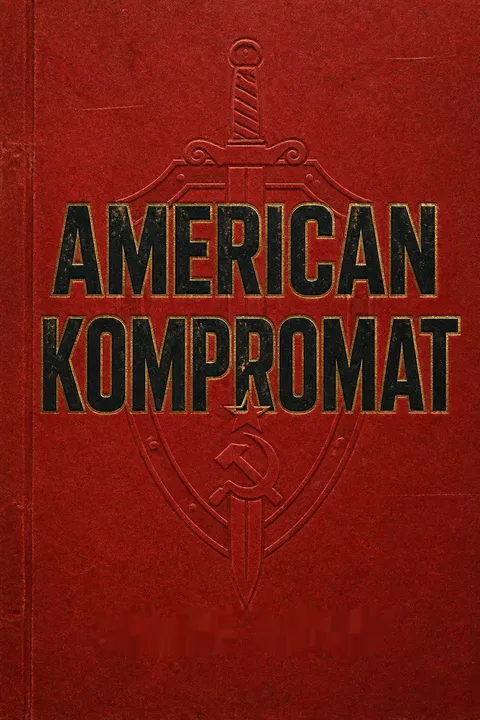
American Kompromat explores Trump's alleged ties to Russia, tracing back to the 1980s when the KGB supposedly cultivated him as an asset. The book details Trump's business dealings with Russian oligarchs, his relationship with Jeffrey Epstein, and the role of Opus Dei in American politics. While some reviewers praise Unger's research and find the book revelatory, others criticize the reliance on circumstantial evidence and speculation. The book is seen as both informative and controversial, offering a complex narrative of political intrigue, corruption, and intelligence operations.
People Also Read






Glossary
kompromat
Compromising material for leverageA Russian term for compromising information or material that can damage a person’s reputation or create leverage over them. In the book, it ranges from alleged sexual recordings to financial connections that might expose dependence or misconduct. The author argues that leverage need not involve a dramatic blackmail tape, though the existence and use of particular material remain unverified.
spotter agent
Identifies potential intelligence targetsAn intelligence asset whose task is to notice people who might be useful to a service and report information about them to a handler. The spotter does not necessarily recruit the target or pass classified documents. Unger uses the term for the role former KGB officer Yuri Shvets alleges Semyon Kislin played when he encountered Donald Trump through a business transaction.
active measures
Covert political influence tacticsA term used by Soviet and Russian security services for political influence operations. As described in the book, these can include disinformation, propaganda, fabricated documents, front organizations, and other efforts to shape public opinion or political conditions. Unger presents Trump’s 1987 newspaper advertisements as a possible example, based on Shvets’s account that they repeated Soviet talking points.
asset
A person useful to intelligenceIn the book’s discussion of Russian intelligence, an asset is a person or contact who can provide value to a service. The term does not always mean a recruited spy who knowingly follows instructions. Unger argues that Trump could have functioned as a de facto asset through relationships and actions that benefited Russian interests, while acknowledging that formal recruitment or control is not established.
counterintelligence
Defence against foreign intelligence threatsWork intended to detect, understand, and disrupt foreign spying, interference, or other intelligence activity. Unlike a criminal investigation, it need not be organized around proving a charge in court. The book argues that the Trump-Russia inquiry had a counterintelligence purpose that could not be answered solely by reviewing criminal indictments or convictions.
delo operativnoy razrabotky (DOR)
File for operational developmentA KGB file, described by Shvets, opened when an individual was being considered for sustained intelligence development. It gathered information about the person and organized the service’s assessment of whether and how to cultivate them. Unger says a DOR file would have been created for Trump if the KGB followed the process Shvets describes; the book does not present the file itself.
unitary executive
Broad presidential control of executive agenciesA constitutional theory holding that executive power is concentrated in the president, who has broad authority over the executive branch. Barr supported an expansive version of the theory, according to Unger, and used it to argue against congressional constraints and oversight. The term describes a legal argument, not a finding that every action taken under it is lawful.
trusted contact
Cultivated relationship without formal recruitmentA person whose relationship with an intelligence handler is developed through personal contact and favors rather than a formal agreement to spy. The person may understand the nature of the relationship, but is not necessarily given specific assignments or told explicitly that they are working for intelligence. Shvets distinguishes this category from a recruited agent, who knowingly accepts tasks.
About the Author
Other books by Craig Unger

Download PDF
Download EPUB
.epub digital book format is ideal for reading ebooks on phones, tablets, and e-readers.








