

Key Takeaways
Treat a good job as social infrastructure, not merely a paycheck
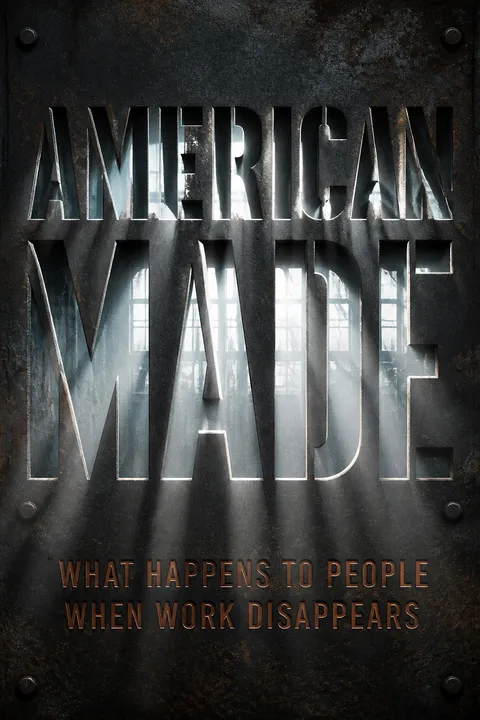
The plant was a world. Rexnord made bearings, hidden components that help machines move with less friction. Its roughly 300 workers also relied on the factory for routine, status, friendships, mentors, and a shared identity. A worker’s knowledge mattered because colleagues and customers depended on it. When the Indianapolis plant moved production to Mexico and Texas, the loss was therefore larger than wages and benefits: a whole community’s daily structure disappeared.
Work shapes a life. The book follows Shannon, Wally, and John to show how employment affects who people meet, how they care for family, and what they can imagine for themselves. Its central argument is not that every job is fulfilling, but that decent work supplies social and psychological goods that cash alone may not replace.
What's striking is how the factory functions like civic infrastructure without being publicly owned: it organizes time, relationships, learning, and mutual obligation. Sociologists call some of these benefits social capital, the useful support and knowledge people gain through relationships. The term can sound abstract until a workplace closes and those ties vanish alongside the payroll. Still, nostalgia can blur the plant's costs, including dangerous work and exclusion. The point is not to preserve every factory unchanged, but to account for the human systems a job sustains when deciding what replaces it.
Judge a job by the choices it gives people back
Work widened options. Shannon’s factory job gave her a route out of dependence on an abusive partner. The wages were not simply income: they made it possible to support children and build a life beyond his control. For Wally, a factory job offered a legal alternative to drug dealing, along with health insurance and a pension. John used steady factory work to rebuild after bankruptcy and the loss of his earlier job.
One workplace, different lifelines. The three workers shared a factory but arrived there with distinct histories and needs. The job offered each a foothold, not a guaranteed happy ending. Its value lay partly in giving them a predictable income and a recognized role, which expanded their room to make decisions about family, safety, and the future.
The story makes economic security tangible as freedom of action. In policy debates, employment is often treated as a line in a household budget; here, it changes whether someone can leave a dangerous relationship or avoid criminal work. That is a useful corrective to measuring welfare only by income. The qualification is important: paid work does not automatically create autonomy. A job can be unsafe, discriminatory, or controlling. The relevant standard is whether employment provides enough security and respect to enlarge a person's real choices.
Ask who absorbs globalization's costs before calling trade a win
Gains were uneven. The book challenges the idea that increased trade proves everyone benefits. One estimate cited for NAFTA found a net loss of about 15,000 U.S. jobs a year, while the treaty added less than half a percent to GDP. Estimates of U.S. jobs lost to trade with China ranged from 2 million to 5 million, concentrated in manufacturing regions. Lower prices and stronger corporate competitiveness benefited consumers and businesses, but displaced workers often did not receive comparable new jobs.
Place matters. A national average can conceal a town built around a single factory. When that plant closes, nearby restaurants and services lose customers too. Workers in the book were not arguing that trade had no benefits. They were asking why the gains traveled widely while the costs landed heavily on particular families and communities.
This is a distributional question, not a simple referendum on international exchange. Trade can increase total wealth while imposing concentrated losses that aggregate statistics conceal. That distinction helps explain why a policy can look successful to economists and feel disastrous to a town. It also suggests a practical test: identify who gains, who loses, and whether compensation actually reaches displaced workers. The book's account does not establish that every closure results from trade alone. Automation, competition, and management decisions interact, so causal claims need care even when the local damage is unmistakable.
A factory's know-how lives in workers, not manuals or spreadsheets
Skill was embodied. John learned to operate computer-controlled machines through coworkers, trial, and mistakes, not a formal training program. Veteran machinists knew which machine quirks mattered and how to recover when drawings or parts were wrong. Shannon learned to read furnace behavior from experienced operators, including how to judge steel samples under a microscope. Much of this expertise was difficult to reduce to written instructions.
Knowledge became leverage. As Rexnord moved equipment, the company asked workers to train their replacements. Union members opposed transferring hard-won skills to the new plants, while the company offered extra pay to recruit trainers. The dispute revealed an imbalance: workers' expertise had been essential to production, yet they had little control over where it went or how their jobs ended.
The factory illustrates tacit knowledge, expertise acquired through practice that is difficult to capture in procedures. Organizations often underestimate it because it is invisible until production fails. The move also exposes a basic asymmetry: workers carry the know-how, while owners control the assets and destination of production. Yet withholding training cannot reliably preserve jobs once a closure decision is made. The deeper issue is whether workers have a voice in decisions that use their expertise, and whether firms recognize knowledge transfer as a contribution rather than a final condition of severance.
Build solidarity by confronting who was excluded from the union's promise
Jobs were finite. Rexnord's workers argued over who deserved training, protection, and the chance to keep working. Black workers remembered earlier generations being barred from skilled positions and unions, including Wally's uncle Hulan, who initially was hired as a janitor despite his qualifications. Women faced their own occupational barriers. The book uses the term Jane Crow for gender-based segregation that kept women from industrial jobs.
The shutdown reopened old wounds. Some white unionists treated training Mexican replacements as betrayal. Some black workers saw refusal to train as a replay of unions excluding their families, and chose to train. The workers' shared vulnerability did not erase their unequal histories. Solidarity could not be assumed simply because everyone wore the same uniform.
The conflict shows why appeals to class unity can fail when they treat workers as if they entered the workplace on equal terms. A union can defend wages and still reproduce racial or gender barriers; its history affects whether members trust its calls for sacrifice. This is not an argument against solidarity. It is an argument that solidarity requires credible recognition of past exclusion and fair access to present opportunities. The book also shows how scarcity intensifies zero-sum thinking. A shrinking number of secure jobs makes every allocation decision feel like a verdict on whose labor counts.
Follow the ownership incentives behind a plant closure
The rules changed. Link-Belt once encouraged employees to own company shares and described the business as a community of stakeholders. From the 1980s, shareholder capitalism gained influence: the idea that a company's main obligation is increasing shareholder returns. Layoffs and factory moves became acceptable ways to cut costs and satisfy investors.
Financial choices had human consequences. After private equity firm Apollo acquired Rexnord, it borrowed $450 million in the company's name and took $362 million for itself and investors, leaving Rexnord responsible for repayment. The plant's closure was not simply a weather event called globalization. It happened within a system that rewarded cost reduction and placed workers far from the people making financial decisions.
The contrast between stakeholder and shareholder models clarifies that corporate governance is a choice about whose interests count, not just a technical question of efficiency. When executives are rewarded through stock-linked compensation, short-term market signals can outweigh local capabilities and long-term employment. That incentive structure deserves scrutiny, especially where a firm depends on workers' specialized knowledge. At the same time, the account should not imply that every closure is avoidable or that shareholder returns alone caused this one. Competition and market demand matter. Governance shapes how those pressures are distributed.
When work vanishes, family strain and health risks compound
Work and care collided. Shannon cared for her disabled granddaughter while working exhausting shifts, and attendance rules eventually cost her a skilled position. John’s third shift strained family routines, while his wife helped cushion the financial shocks after earlier layoffs. Wally's loss of employer health insurance became especially consequential when he later experienced chest pain and delayed seeking care because he feared the cost.
The damage can endure. The book reports research finding that laid-off men with high seniority die at rates at least 50 percent higher than comparable peers. It also recounts three former Rexnord workers who died from stress-related or alcohol-related illnesses within two years of the closure. These figures do not mean every layoff causes illness, but they show why job loss cannot be treated as a brief gap in income.
The cases reveal how employment, health coverage, caregiving, and family stability operate as a coupled system. A lost wage can trigger stress, disrupt care, and reduce access to treatment, making recovery harder. This resembles the social determinants of health: conditions outside a clinic that shape health outcomes. The mortality statistic signals elevated risk, not an individual prediction, and the book cannot isolate every cause in each death. Even so, economic policy that ignores health consequences counts only the immediate payroll savings and misses costs transferred to families and communities.
Retraining cannot recreate wages, security, or a vanished labor market
A new credential is not a new economy. After Rexnord closed, workers were urged to retrain through Trade Adjustment Assistance, a federal program for people displaced by trade. Yet many found its rules difficult, and the jobs they could reach paid less. A Department of Labor study cited in the book found that participants earned, on average, $761 less four years later than workers who did not participate. Among displaced workers who found jobs, only about half earned as much as before.
The decline was visible. John went from $28 an hour at Navistar to $25 at Rexnord, then struggled to find work above $17 before taking a hospital maintenance job at $18. Shannon left a $25-an-hour skilled job for factory work paying $19 an hour. Training may help, but it cannot create enough well-paid openings by itself.
Retraining is most effective when it connects people to genuine demand, credible employers, and a wage path, rather than treating displacement as a deficit in individual skills. The book's figures challenge the comforting assumption that workers can simply acquire credentials and recover their former position. They do not prove training is useless: outcomes depend on program design and local opportunity, and some workers may benefit substantially. The sharper lesson is that adjustment policy must be judged by employment quality and earnings, not enrollment or completion alone.
Political promises matter most where leaders stopped representing workers
Betrayal shaped votes. John and other former factory workers had once trusted Democrats to defend labor, but watched successive administrations support trade policies they associated with lost jobs. Donald Trump promised to punish companies that moved work overseas. His intervention at Carrier appeared to validate that promise, though the agreement still left more than 300 union jobs slated to leave. His tweet about Rexnord gave Shannon hope, but the plant closed anyway.
Attention was not power. Union leader Chuck Jones publicly challenged Trump's account of Carrier, and Trump attacked him online. The episode drew national attention to the workers but did not save Rexnord. The book shows why symbolic recognition matters to people who feel ignored, while also distinguishing a powerful gesture from a durable policy that protects jobs.
The political lesson is not that economic grievance determines every vote. It is that a promise can gain force when established parties have lost credibility on an issue central to voters' lives. Public recognition can feel like representation even when it produces little material change. That gap creates an accountability test: did a leader secure lasting gains, or merely stage a vivid encounter? The book's scenes help explain the emotional appeal of strongman politics without treating voters as dupes or claiming that economic concerns explain all support for Trump.
Replace lost jobs with purpose and community, not income alone
Cash did not restore the workplace. After Shannon lost Rexnord, she received generous help, including money toward her mortgage, but still felt depressed and disconnected without coworkers, tasks, and a boss who knew her abilities. She wondered what unemployed people would do all day and who they would talk to. Her experience challenges the idea that a government payment can reproduce everything a good job provides.
Work can be collective. Wally hoped to build a barbecue business that would employ relatives and friends, not just support himself. The dream represented both income and a shared future, though he died before making it real. This is not evidence that entrepreneurship is a simple remedy: Wally faced financial obstacles, and self-employment lacked the factory's benefits. The book's closing question is how to offer people both security and a meaningful role.
Income support is essential when work disappears, but it answers only one part of the problem. People also need routine, social contact, and a sense that their skills matter. Shannon's experience makes that distinction vivid, while Wally's business plan shows how work can create roles for an extended network. The caution is that meaningful employment cannot be manufactured through slogans, and not every job is worth preserving. A serious response should combine income protection with pathways to stable, respected work and community participation.
Analysis
American Made is a reported social history organized around three lives rather than a single policy argument. Shannon's experience makes gender and care visible: a dangerous, skilled job gives her economic independence, but inflexible scheduling collides with caregiving. Wally's story ties employment to race, criminalization, family entrepreneurship, and health. John's story traces the collapse of union identity and the political consequences of repeated plant closures. Their shared workplace gives the narrative a natural meeting point, while their disagreements prevent an easy claim that workers form one unified class.
The book's central achievement is connecting intimate losses to economic structures without reducing its subjects to illustrations. A broken marriage, a misplaced machine component, a severance dispute, and a factory's ownership history all disclose different scales of power. The contrast between workers' local, embodied knowledge and distant corporate decision-making is especially effective. So is the account of how race shapes interpretations of solidarity: the same choice to train replacements can mean betrayal to one worker and a refusal to repeat exclusion to another.
The argument is strongest when it distinguishes economic growth from broadly shared security. Trade may create aggregate gains, but a displaced worker cannot spend a national average. The book also resists treating retraining as a magic bridge when the available jobs offer lower wages and weaker benefits. Its limitation is that three unusually vivid lives cannot stand for every displaced worker, and the narrative's attention to one plant cannot settle the relative weight of trade, technology, and management decisions across the economy. The author acknowledges complexity rather than offering a single causal formula.
The lasting question is institutional: what obligations should attach to firms and governments when workers' livelihoods are made disposable? Preserving every existing factory is neither possible nor sufficient. But transitions can be designed to protect income, health, bargaining power, and the social value of work. The book's strongest contribution is making those obligations legible through people whose skills and relationships had been treated as invisible until the factory began to disappear.
Review Summary
American Made receives mostly positive reviews, with readers praising Stockman's in-depth exploration of factory workers' lives after job loss. Many appreciate the balanced perspective on class, race, and politics in America. The book is lauded for its empathetic portrayal of blue-collar workers and insights into the impacts of globalization. Some critics note the author's privileged background and occasional biases. Overall, reviewers find the book engaging, thought-provoking, and relevant to understanding contemporary American society and the 2016 election.
People Also Read



Glossary
Jane Crow
Gender-based job segregationA term used for workplace customs, policies, and attitudes that segregated women from occupations and tasks considered men's work. In the book, it describes the barriers women faced in industrial settings, including being denied access to machine-operating jobs despite having the skill or seniority to do them.
China parts
Imported factory componentsRexnord workers' name for bearing components sourced from China rather than made in the Indianapolis plant. Workers objected to inconsistent quality and what they saw as double standards in inspection. The phrase also came to represent outsourcing and the weakening of the factory's control over the quality associated with its established brand.
Tier 2
Lower-paid worker scaleA contract pay structure that placed newer Rexnord employees on a permanently lower wage scale than established workers. The union accepted the arrangement in an effort to protect existing pay and keep the plant open. John opposed it, warning that it would divide workers and encourage the company to replace higher-paid veterans.
Trade Adjustment Assistance (TAA)
Federal help for trade-displaced workersA federal program providing certain benefits to workers whose jobs are lost because of foreign trade or factory relocation. Rexnord workers could seek support for retraining and other assistance. The book describes the program's administrative burdens and questions whether it reliably leads to jobs with comparable wages.
minimum acceptable wage
Lowest wage before benefits riskThe wage level an unemployed person receiving assistance is considered able to accept. In John's case, officials calculated a figure and warned that refusing an eligible job offer could jeopardize benefits. The process made the expected wage decline as unemployment continued feel built into the rules.
stakeholder capitalism
Balancing business interestsA view of corporate responsibility in which leaders weigh the interests of employees, customers, suppliers, shareholders, and government. The book contrasts this approach with a stronger focus on shareholder returns, noting that Link-Belt once encouraged employee stock ownership and presented workers as part of the company's shared enterprise.
shareholder capitalism
Prioritizing shareholder returnsA corporate philosophy that treats increasing shareholder value as a company's primary obligation. The book links its growing influence from the 1980s onward to the normalization of layoffs, cost-cutting, and factory relocation as ways to improve financial performance, even when those choices undermined local employment and accumulated worker expertise.
kaizen
Continuous process improvementA Japanese business philosophy centered on ongoing experimentation to make production more efficient. At Rexnord, the approach changed assembly lines and gave workers a formal role in suggesting improvements. Wally took the idea seriously, applying its emphasis on small improvements both to factory processes and to his own work.
suck-ass clause
Pay for training replacementsA worker's disparaging term for the severance arrangement that offered additional pay to employees who trained the people taking over their jobs. Union members objected because the bonus seemed small beside the loss of work and dignity. The dispute exposed the company's leverage over severance and workers' divided needs.
golden handcuffs
Well-paid job that limits exitWally's description of a secure factory job that paid well enough to make leaving for his barbecue business difficult. The phrase captures the tradeoff between reliable wages and benefits on one hand, and the freedom to pursue self-employment on the other. The plant closure removed the security but did not automatically make entrepreneurship viable.
FAQ
What's American Made: What Happens to People When Work Disappears about?
- Focus on factory closures: The book examines the impact of factory closures on individuals and communities, particularly in Indianapolis, through the stories of Shannon, Wally, and John.
- Personal narratives: It highlights broader themes of economic change, social justice, and the struggles of the working class in America, showing how job loss affects identity and community ties.
- Cultural and political context: The narrative situates personal stories within the larger context of globalization, free trade, and the political landscape affecting blue-collar workers in the U.S.
Why should I read American Made?
- Insight into working-class struggles: The book provides a deep understanding of the challenges faced by working-class Americans amid economic shifts, humanizing statistics on job loss.
- Relevance to current issues: It is timely, shedding light on the real-life consequences of globalization and automation, which are ongoing discussions.
- Engaging storytelling: Farah Stockman combines thorough research with compelling storytelling, making the book both informative and engaging.
What are the key takeaways of American Made?
- Impact of job loss: Losing a job affects personal identity and community cohesion, with characters experiencing emotions from despair to resilience.
- Intersection of race and class: The book illustrates how race and class intersect in the workplace, affecting opportunities and experiences.
- Need for solidarity: It advocates for worker solidarity, suggesting collective action is essential for addressing globalization challenges.
What are the best quotes from American Made and what do they mean?
- “Jobs matter.” This quote emphasizes the importance of work in shaping identity and community, reflecting that employment is about purpose and belonging.
- “You are a member of a great industrial family.” It highlights the sense of community and identity provided by factory work, underscoring emotional and social ties.
- “If you want it, fight for it.” This reflects the characters' resilience and determination, serving as a rallying cry for workers to advocate for their rights.
How does American Made address the concept of globalization?
- Globalization's impact on jobs: The book discusses how globalization has led to outsourcing, devastating communities like those in Indianapolis.
- Personal stories of loss: Through Shannon, Wally, and John, it shows globalization as a reality affecting lives, highlighting the human cost of economic decisions.
- Call for awareness and action: The author encourages recognizing globalization's implications and advocating for policies that protect workers.
How do the characters in American Made react differently to their job losses?
- Shannon's resilience: She finds strength in her identity as a worker and mother, determined to provide for her family despite challenges.
- Wally's entrepreneurial spirit: He sees the factory closure as an opportunity to start a barbecue business, showcasing resilience and adaptability.
- John's anger and activism: He feels betrayed by the system, becoming politically active and advocating for workers' rights and solidarity.
What role does race play in American Made?
- Intersection of race and class: The book examines how race influences characters' experiences, particularly in job loss and economic opportunity.
- Solidarity and division: It illustrates how racial dynamics can unite or divide workers, highlighting tensions in a diverse workforce.
- Historical context: The narrative discusses past injustices shaping current experiences, emphasizing the need to address these issues for workers' rights.
How does American Made illustrate the importance of community?
- Factory as a community hub: The factory is portrayed as central to the community, with its closure disrupting relationships and causing isolation.
- Support networks: Characters rely on family and friends for support, highlighting community ties' importance in navigating unemployment challenges.
- Collective action: The book advocates for worker solidarity to address globalization challenges, suggesting it's essential for rebuilding communities.
What does American Made say about the future of work in America?
- Job displacement concerns: The book raises concerns about automation and globalization, suggesting many jobs may continue to disappear.
- Need for policy change: It calls for policies protecting workers and creating sustainable job opportunities, emphasizing a fairer economic system.
- Hope for resilience: Despite challenges, the book conveys hope and resilience among workers, illustrating potential for adaptation and change.
How does American Made explore the theme of the American Dream?
- Disillusionment with the American Dream: Characters grapple with the reality that the American Dream is increasingly out of reach for many.
- Resilience and hope: Despite setbacks, characters demonstrate resilience, reflecting the ongoing pursuit of the American Dream.
- Economic inequality: The book critiques systemic barriers preventing many from achieving the American Dream, highlighting the wealth gap.
What impact does the closure of the factory have on the local community?
- Economic decline: The closure leads to job losses affecting local businesses and services, increasing unemployment and financial instability.
- Social fragmentation: It disrupts social networks and relationships, with individuals struggling to adapt to new realities.
- Cultural shifts: The closure signifies a shift away from traditional manufacturing jobs, leading to a loss of identity for many workers.
What is the significance of the factory setting in American Made?
- Symbol of American industry: The factory represents the heart of American manufacturing, with its closure signifying the decline of blue-collar work.
- Community hub: It serves as a social space where workers build relationships, with its loss disrupting the community's social fabric.
- Economic implications: The closure highlights economic shifts towards globalization, serving as a case study for corporate decisions' consequences on workers.
Download PDF
Download EPUB
.epub digital book format is ideal for reading ebooks on phones, tablets, and e-readers.








