

Key Takeaways
Treat mind as a living process, not a ghost inside the skull
Mind is lived biology. The brain is an organ; the mind is the changing experience it makes possible. That experience depends not only on neurons, but also on the body’s sensations, hormones, memories, and surroundings. The book’s central image is not a single inner commander, but many systems working together to create a sense of one self.
Coherence is constructed. In split-brain experiments, a person’s speaking hemisphere could not see a picture shown only to the other hemisphere. Asked to explain a choice made by the silent side, it invented a plausible reason from the information it did have. The episode suggests that the mind’s steady story about itself is an achievement, not a transparent report of every process underneath.
What's striking is how this account avoids two easy mistakes: treating the mind as a supernatural substance, or dismissing experience as irrelevant because it has a physical basis. The self can be understood as a useful model assembled from bodily signals, memory, and interpretation. Such a model helps a person act coherently without tracking every hidden process. But coherence is not proof of accuracy. Recognizing that distinction can make people more curious about their own explanations, especially when a confident story about motive or memory may be a reconstruction.
Remember that evolution builds workable brains, not perfect ones
Every ability has a history. Ackerman opens with a tiny gecko, about 16 millimeters long, found on an isolated Caribbean island. Island life creates unusual ecological openings, and isolated populations can develop distinctive traits. The example frames the human brain as one result of contingent history, not a design built to meet every possible need.
Brains also outsource. Human memory and perception extend into books, photographs, telephones, and other tools. Ackerman describes this as a solution to limited space: information can be stored beyond the skull, and instruments can stretch the senses beyond their natural range. The brain’s strengths come with trade-offs, and different cultures may also cultivate different habits of thought.
Evolutionary thinking is most useful here as a corrective to perfectionism. A system shaped by constraints can be powerful without being optimal, and its quirks may be inseparable from its successes. External records also change what a brain needs to remember, so human cognition is partly distributed across tools and social practices. The caution is that adaptation stories can sound more certain than the evidence allows. Ackerman presents some evolutionary explanations as possibilities, and readers should preserve that uncertainty rather than turn every trait into a just-so tale.
Give difficult problems time to incubate beyond deliberate thought
Not all thinking feels like thought. The conscious mind is only one part of the brain’s work. Ackerman describes the unconscious as a workshop that holds observations, combines them, and sometimes sends a useful pattern into awareness as an intuition. Poet Amy Lowell described setting aside a subject and finding the poem taking shape months later. Mathematician Henri Poincaré reported a sudden insight during a break from work, after sustained effort on a problem.
Insight still needs checking. A hunch can be wrong, and a flash of understanding does not verify itself. The book’s account of creative work includes both preparation and follow-through: gather material, allow time for unexpected connections, then test and refine what appears. Creativity is not simply waiting for inspiration; it is patient work with an unpredictable middle.
This model offers a practical alternative to equating effort with constant conscious strain. Incubation can loosen a problem from its familiar frame, while background attention keeps relevant material available. The same process also explains why an idea can feel suddenly obvious without being reliable. In creative work, intuition is a generator of candidates, not a judge of truth. The strongest use of a pause is therefore neither passive faith in inspiration nor relentless analysis, but a cycle of focused work, distance, and deliberate evaluation.
Practice changes neural pathways, including the ones behind unwanted habits
Experience reshapes connections. Neurons communicate across synapses, tiny gaps where chemical messengers help pass signals. Learning can strengthen existing connections or create new ones. Ackerman points to violinists, whose brains show expanded motor representation for the hand doing the intricate work, as an illustration of how repeated activity is reflected in the brain.
Repetition cuts both ways. The brain tends to preserve connections that are used and weaken those that are not. This helps explain why a skill can become effortless, but also why defensive habits may persist after their original threat has passed. The book argues that psychotherapy takes time in part because a person is learning new responses, not merely adopting a new explanation. Plasticity means change is possible, not automatic or unlimited.
The link between repeated experience and neural change makes practice more concrete: it is not only a metaphor for improvement, but a description of biological adaptation. It also helps explain why insight alone may not undo a deeply rehearsed response. Yet plasticity should not be sold as a promise that any brain can be remade at will. Age, illness, environment, and available support matter. A realistic view joins hope with repetition, appropriate help, and patience about how long durable change can take.
Treat memory as reconstruction, not as a recording of the past
Recall edits the event. A memory is assembled from distributed traces, including sights, sounds, feelings, and knowledge. Each time it returns to awareness, present emotions and later experience can alter its shape. In a study of people recalling the Challenger shuttle disaster, roughly two thirds gave inaccurate accounts of where and with whom they first heard the news three years later, yet inaccurate memories could feel as certain as accurate ones.
The body remembers differently. The book distinguishes personal recollections of events from learned facts and practiced skills. Smell can summon emotionally charged memories with unusual force, while dreams may mix recent experience with older material. Traumatic cues can also trigger intense bodily responses. Ackerman recounts using a CPR class, alongside psychotherapy, to gain some control over sensory flashbacks from a fatal accident at sea.
A reconstructive account of memory matters in ordinary life and in high-stakes settings such as eyewitness testimony. Confidence is not a dependable measure of accuracy, especially when recollection has been repeatedly discussed or suggested to someone. At the same time, variability does not make memory worthless. Memories preserve meaning and guide action even when their details shift. The useful question is not simply whether a memory is true or false, but which parts are firsthand, which were learned later, and how present concerns may be shaping recall.
Protect your attention, because the brain cannot fully multitask
Attention selects what matters. The brain responds strongly to novelty because a change may signal opportunity or danger. Once something becomes familiar, it receives less attention, which can make ordinary surroundings seem dull. Ackerman describes asking writing students to study a view from a classroom window; noticing clouds, buds, and small animal dramas made the scene newly vivid.
Divided focus has a cost. The book cites an MRI study in which people trying to attend to two tasks did not double their output; performance on both suffered. Attention is also limited in time: a sudden novelty can briefly interrupt awareness of whatever came before. The brain’s pattern-seeking helps it make quick sense of a scene, but it can also fill gaps with assumptions.
Attention is both a cognitive limit and a way of giving experience its texture. The classroom exercise shows that close observation can renew the familiar without requiring a more exciting world. In contemporary life, novelty is also engineered to compete for attention, making deliberate focus a form of self-direction. Still, not every distraction is a failure: shifting attention can reveal relevant changes and support flexible thought. The aim is not permanent concentration, but choosing when to narrow focus and when to let the environment interrupt.
Treat emotion as an evolved signal, then decide what it warrants
Old alarms meet new problems. Fear and anger helped ancestors respond quickly to immediate threats. Modern worries can be distant, complex, and impossible to resolve through fighting or fleeing, yet the body may still produce a surge of stress. Ackerman describes a serious climbing accident in which fear and pain coexisted with intense attention to the rare albatrosses she had traveled to observe. One feeling did not erase the other.
Happiness also takes practice. The book presents temperament as partly inherited, but not fixed. Ackerman’s mother cultivated an optimistic outlook and kept seeking social connection and small pleasures, even during illness. The point is not to deny grief or distress, but to recognize that feeling states can be influenced by habits, relationships, and circumstances.
The signal model respects emotion without treating it as a perfect reading of reality. Fear can detect risk, but its intensity may reflect an old response in a setting that offers no direct action. Naming that mismatch creates room for choice without shaming the feeling. The account of happiness adds an important qualification: agency is real, but it operates within biology and circumstance. Encouraging positive habits can help, while demanding cheerfulness from someone in pain can turn a useful idea into another burden.
Use metaphor to notice how language organizes what you can think
Words carry hidden structure. Language does more than label experience; it gives the mind ways to arrange it. Everyday speech treats ideas as objects, relationships as journeys, and moods as places one can enter or leave. Such metaphors make abstract experience easier to handle, but they can also make one interpretation feel natural when it is only one possible frame.
Thought is not always verbal. In a study described by Ackerman, students reported inner speech for about 32 percent of sampled moments, imagery for about 25 percent, and clear but nonverbal thought for another 25 percent. Words can help retrieve memories and sharpen ideas, but descriptions can also overshadow perception. Witnesses who write down a face may later remember their description instead of the original visual detail.
Metaphor is a cognitive tool, not merely decoration. Calling a relationship a journey invites questions about direction and progress; calling it a container suggests boundaries and contents. These frames can reveal experience, but they also restrict it by making some questions easier to ask than others. The book’s strongest claim is that language influences thought, not that it wholly determines thought. Comparing several metaphors for the same situation can expose assumptions while leaving room for nonverbal knowledge that words do not capture.
Treat animal minds as neighboring worlds, not lesser versions of ours
Different brains solve different problems. Ackerman describes chimpanzees as social, emotional animals capable of planning and deception, while noting that their mental lives are not simply human ones. She also recounts Fu Manchu, an orangutan who repeatedly escaped a zoo enclosure by hiding and bending a paper clip to pick a lock, then concealing it again. New Caledonian crows have also been observed bending wire into a hook to retrieve food.
Similarity does not erase difference. Animals share many motives with humans, including fear, attachment, curiosity, and play. Yet each species experiences the world through its own senses and needs. The book argues that humans should not reserve subjective experience for themselves simply because other animals cannot describe it in human language.
This perspective broadens the meaning of intelligence beyond language and human-style reasoning. A crow’s tool use or an orangutan’s concealment may indicate flexible problem-solving, but such behavior does not prove that its inner experience matches ours. The careful position is neither to deny animal minds nor to claim full access to them. Observing behavior with humility supports better science and more thoughtful ethics, while acknowledging that the lived experience of another species may remain partly inaccessible.
Read brain scans as clues, never as complete explanations of a person
Images show activity, not a whole mind. PET, MRI, and related techniques let researchers observe aspects of the living brain without opening the skull. They can help locate tumors, study changing blood flow, or compare activity during different tasks. Ackerman cautions that an active region does not reveal everything happening there, any more than seeing lights in a city explains the relationships among its residents.
Measurement invites overreach. Brain imaging can offer useful evidence about treatment and cognition, but it does not provide a complete portrait of character or motive. The book raises the danger of using brain patterns to label people as likely criminals, especially when researchers lack enough comparison data to define what counts as normal. A scan can inform a question; it cannot settle a person’s identity or responsibility by itself.
The distinction between measurement and interpretation is central to responsible neuroscience. Images are persuasive because they turn invisible activity into visible color, but vividness can be mistaken for certainty. That risk grows when findings are used in law, employment, or public policy, where a probabilistic signal may become a fixed judgment about someone’s future. Combining imaging with behavior, history, and careful study can improve explanation. No single picture, however sophisticated, should stand in for the complexity of a life.
Analysis
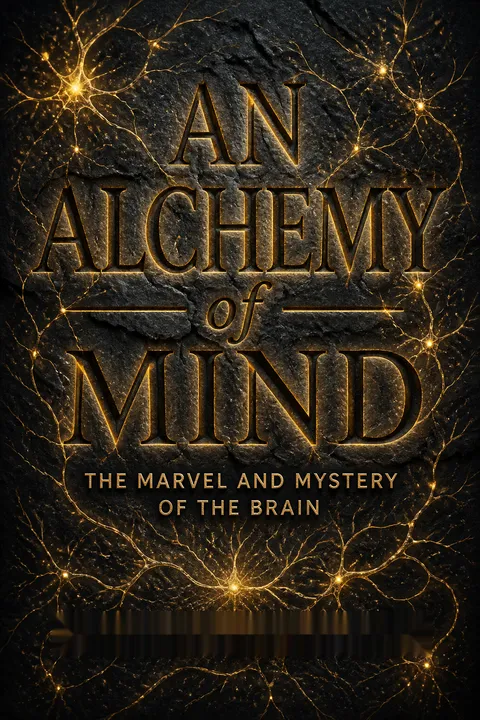
An Alchemy of Mind is a lyrical survey of neuroscience, psychology, memory, language, and animal behavior, organized less as a single proof than as a guided tour through the brain’s puzzles. Its governing idea is that the self is neither a ghost detached from matter nor a simple readout of neural activity. It is a living, bodily process assembled from sensation, emotion, memory, and interpretation. The book’s narrative strength lies in moving between scales: a tiny island gecko, a synaptic gap, a childhood smell, a near-fatal accident, and a brain scan each make an abstract point tangible.
The most durable insight is methodological. Brains simplify, predict, and narrate because complete awareness would be unusable. Those same efficiencies produce confabulation, biased attention, and mutable memories. This is not merely a catalogue of flaws. It shows how imperfect processes can support survival, creativity, and social life. The unconscious is not a rival mind hidden below the conscious one, but part of the machinery that makes conscious thought possible. Likewise, language both opens and narrows perception, while memory supplies continuity by changing with the person who remembers.
The book’s breadth is also its main limitation. It brings together findings and theories from a wide range of fields, but not every claim has equal evidentiary status. Some evolutionary explanations are speculative, and claims about average sex differences risk being read as prescriptions about individuals. The science cited dates from the book’s 2004 publication, so specific findings should be treated as historical accounts rather than a current reference guide. Its strongest contributions are conceptual: minds are embodied, selves are plural, memories are reconstructive, and other animals deserve epistemic humility. The result is less a final theory of consciousness than an invitation to see ordinary experience as biologically grounded, deeply creative, and still only partly understood.
Review Summary
An Alchemy of Mind receives mixed reviews. Some praise Ackerman's lyrical prose and insightful exploration of the brain, finding it fascinating and thought-provoking. Others criticize the excessive use of metaphors and lack of scientific rigor. Many appreciate the poetic approach to neuroscience, while some find it unfocused and self-indulgent. The book covers topics like consciousness, memory, emotions, and creativity. Readers generally agree it's not a conventional science book but rather a unique blend of poetry and neuroscience that can be either captivating or frustrating.
People Also Read








Glossary
the Interpreter
story-making brain systemA term associated in the book with neuroscientist Michael Gazzaniga’s account of the left hemisphere. The Interpreter seeks explanations for actions and experiences, helping produce a coherent personal narrative. Split-brain experiments suggest it can invent a plausible explanation even when it lacks information about what prompted an action.
working memory
temporary mental workspaceThe system that holds and combines information for immediate use, such as keeping a phone number in mind while dialing or coordinating sensations, feelings, and plans during a conversation. The book describes it as limited and dependent on the frontal lobes. Distraction can interrupt its contents and make a person lose track of a thought.
source misattribution
confusing where memories came fromA memory error in which someone recalls information or an event but confuses its source. A person may mistake something read, imagined, suggested, or heard from another person for a firsthand experience. The book discusses this in relation to false memories, eyewitness accounts, and research showing that people can feel certain while misremembering where they learned something.
long-term potentiation
lasting strengthening of synapsesA process in which repeated or strong stimulation makes communication between connected neurons more effective for an extended period. The book presents research on hippocampal pathways showing that high-frequency stimulation can strengthen connections, while low-frequency stimulation can weaken them. This change is discussed as one possible mechanism involved in learning and memory.
cognitive fluidity
blending separate kinds of knowledgeArchaeologist Steven Mithen’s term for the ability of specialized mental systems to share information and work together. In the book, this capacity allows knowledge from domains such as social understanding, natural history, and tool use to combine. Such blending is presented as a foundation for analogy, metaphor, language, art, and more flexible thought.
synesthesia
overlap between sensory experiencesA condition in which stimulation or thought in one sensory or conceptual domain is accompanied by an experience in another. Examples discussed include sounds or letters having colors, or emotions having tastes. Ackerman connects synesthesia with artistic perception and with unusual links between brain regions, while noting that its forms and intensity vary.
graceful degradation
gradual fading of memory detailThe gradual loss of clarity and detail in a memory over time, rather than its sudden disappearance. Ackerman uses the term to describe how a remembered event may retain fragments while other elements fade. Because memories are distributed and reconstructed, what remains can be vivid without preserving the original event in full.

Download PDF
Download EPUB
.epub digital book format is ideal for reading ebooks on phones, tablets, and e-readers.








