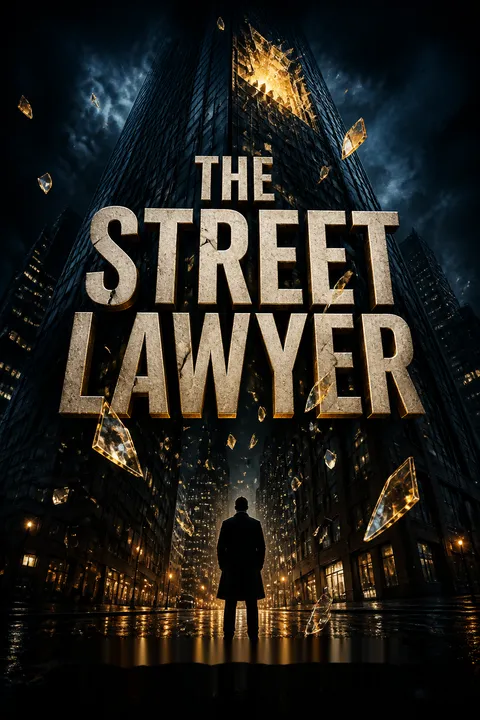


Plot Summary
The Elevator Hostage
Michael Brock, a thirty-two-year-old associate at Washington law firm Drake & Sweeney, barely notices the homeless man who follows him into the building. Minutes later, the man, DeVon Hardy, takes Michael and eight litigators hostage. Hardy wears fake explosives made from broom handles, but carries a real gun.
He makes Michael collect the lawyers' money and tax records, then forces them to confront how little they give to people in need. Hardy never explains what he intends to do. When soup arrives from a mission, a police sniper shoots him as he stands near the door. Michael escapes covered in Hardy's blood, shaken less by the danger than by the sense that the dead man had been trying to make them listen.
Hardy's performance reverses the office's ordinary hierarchy. The lawyers control other people's futures through contracts and procedure, yet in the conference room they must answer for the distance between their wealth and the poverty outside their windows. Michael's first response is professional reflex: comply, assess danger, survive. But Hardy's questions make survival insufficient. The crisis gives Michael a brief, involuntary encounter with the human cost his workplace usually keeps abstract. The sniper's shot ends the immediate threat, not the moral interrogation. Michael leaves alive, but his old confidence in the routine value of his work has already begun to fracture.
The Eviction Behind Hardy
At home, Michael's wife, Claire, is absent during the crisis because she is working in surgery. Their strained marriage leaves him alone with the aftermath. The next morning, he learns Hardy's name and discovers that Hardy had recently been evicted from an abandoned warehouse.
Michael visits the 14th Street Legal Clinic, where its director, Mordecai Green, explains that the building's new owner, RiverOaks, cleared out people who said they had paid rent. If they were tenants rather than squatters, the eviction may have violated their rights.
Green also reveals that Hardy once worked as a janitor before losing his job and becoming homeless. Michael recognizes that his own firm may have handled the eviction, and the question Hardy asked about evictors suddenly has an answer.
The discovery connects a spectacular act of violence to ordinary legal work. Hardy's hostage-taking first looks irrational; the clinic's account supplies a material history of job loss, unstable housing, and a disputed eviction. Michael is not yet an advocate, but he can no longer treat the firm as a neutral setting where technical choices stay on paper. His unease grows from recognition: his profession may have helped produce the conditions Hardy blamed on it. Green's clinic offers a countermodel to Michael's polished workplace, not by claiming to solve poverty, but by attending to people whom institutions routinely fail to hear.
Ontario's Last Night
A snowstorm fills an emergency church shelter, and Green asks Michael to help serve food. Michael makes sandwiches, chops vegetables, and meets Lontae Burton and her four children. Her eldest, four-year-old Ontario, tells him that they live in a car.
Later, Michael gives the children cookies and takes the crying baby girl from Lontae, changing her wet diaper with Green's help. He leaves before dawn, telling himself he can do more another day.
On Sunday, the newspaper reports that Lontae and all four children died in their car after snow blocked the exhaust pipe. Michael recognizes their names and fears the baby died wrapped in his jacket. He and Green identify the family at the morgue, then arrange a funeral when no relatives can claim them.
Michael's first contact with the Burtons is intimate but temporary: food in a crowded room, a child in his arms, a practical act of care that seems small enough to set aside. Their deaths turn that moment into an unbearable measure of what he did not do. The shelter could keep them warm for one night, but it could not provide stable housing, and Michael's belated wish to rescue them cannot alter the outcome. His grief is sharpened by the jacket among the family's possessions. It is both a trace of tenderness and evidence of how little one generous gesture can accomplish without durable support.
Five Coffins, One Departure
At the Burtons' funeral, Michael watches Lontae's imprisoned mother and brothers sit behind the grandmother while mourners fill the church and activists condemn the failures that left the family exposed. The service makes the deaths public, but cannot return the children to life.
Michael then tells Drake & Sweeney partner Rudolph Mayes that he is leaving for the 14th Street Legal Clinic, despite the lost salary and partnership track. At home, Claire responds by laying out their finances and proposing an uncontested divorce.
She argues that his drastic pay cut should not leave her responsible for the costs. They divide their possessions and agree to separate. Michael's decision costs him both the career he built and the marriage that had already been starved of time, but he no longer wants to return to the life that produced them.
The funeral transforms private grief into a public accusation, while the divorce makes Michael's personal costs impossible to disguise. His choice is not a clean conversion into moral certainty. He remains defensive about money, resentful of Claire's response, and attached to the status he is relinquishing. Yet the funeral forces him to compare the consequences of financial security with the consequences of neglect. Claire's insistence on accounting for rent, savings, and liabilities mirrors the way Michael once measured his life. Their separation reveals that his change in work cannot repair years of emotional absence; the new direction begins alongside, not instead of, that loss.
The File in the Lexus
An anonymous folder appears on Michael's desk at Drake & Sweeney. A list names seventeen people evicted from the RiverOaks warehouse, including DeVon Hardy and Lontae Burton. A note says the eviction was wrongful.
Real estate partner Braden Chance refuses to show Michael the file, and paralegal Hector Palma will not explain himself. On his final night at the firm, Michael uses keys left anonymously to enter Chance's office and remove the RiverOaks file. A car fleeing a drug bust crashes into Michael's Lexus before he can copy it.
After hospital treatment, he retrieves the file from an impound lot and studies it: a memo documenting the eviction is missing, while unused eviction notices have been added. His theft now gives the firm grounds to pursue him.
The file turns Michael's moral suspicion into a conflict between legal duties. It may contain evidence of wrongdoing, but it belongs to a client and he has no authorization to take it. Michael acts from an urgent belief that institutional loyalty is protecting a harmful decision, yet urgency does not erase professional responsibility. The collision adds bodily vulnerability to the legal risk, and the impounded Lexus becomes an unlikely hiding place for the evidence. His old training helps him read the file, but does not make him a principled investigator; he is improvising, and the gap between a just purpose and a lawful method becomes central to his predicament.
Learning Street Law
Michael moves into a tiny Adams-Morgan loft and begins work at the clinic, where Mordecai, social worker Sofia Mendoza, and policy lawyer Abraham Lebow divide an exhausting stream of cases. At shelters, Michael helps clients recover unpaid wages, apply for benefits, and address debt.
The work is modest in scale but immediate in consequence. He also meets Ruby Simon, a woman living in a broken-down car whose teenage son, Terrence, has been placed with foster carers.
Ruby can see him again only after entering treatment and staying sober, but she cannot secure a place in rehab. Michael arranges meetings at Naomi's women's center and tries to keep her away from drugs. His work now depends on patience, trust, and follow-through rather than billable hours.
Street law dismantles Michael's old idea of legal importance. He once measured work by the sums at stake; now a missing paycheck or inaccessible benefit can determine whether someone eats or keeps a room. The clinic's methods are practical because its clients cannot wait for a perfect institutional response. Ruby's case also unsettles any fantasy that legal skill alone can solve a person's crisis. Michael can help create a route toward Terrence, but addiction, scarcity, and Ruby's own choices remain powerful. His new role requires less command than attention: he must listen long enough to discover what a client can actually do next.
The Lawyer in Cell Three
Police first search Claire's apartment for the RiverOaks file, then raid the clinic after Michael insists it is not there. Clinic members protect their clients' files, but the search intensifies the danger surrounding his new workplace. Lieutenant Gasko later arrests Michael for grand larceny.
At the city jail, other inmates take his blazer and shoes, and Michael keeps his head down until Mordecai secures his release on bail. The firm also gives the press his photograph, framing his departure as a theft of company property.
Claire remains a friend during the immediate aftermath, but their separation continues. Michael understands that returning the file might limit the criminal risk, yet the possibility of losing his law license cannot make him abandon the people whose eviction he is investigating.
The arrest strips Michael of the protections he once mistook for ordinary life. His professional title does not shield him in the jail cell; his clothes become bargaining objects, and his safety depends on reading a room he barely understands. The episode also reveals how institutional power works through procedure and reputation. Drake & Sweeney can shape the public account before the underlying facts are known, while the clinic must absorb police intrusion in the middle of serving clients. Michael's decision to keep fighting is not fearlessness. It is a choice made with a clearer view of what he could lose.
Hector's Missing Memo
Michael and Mordecai locate Kelvin Lam, a former warehouse resident who confirms that he paid cash rent and received no eviction notice. Michael then tracks Hector to Drake & Sweeney's Chicago office, where the firm has transferred him.
Hector gives Michael a copy of the missing inspection memo. It records that Lontae showed Hector a receipt for one hundred dollars in rent, and that she worked part-time while caring for her children. Chance had the information before the eviction proceeded, but the memo and receipt were removed from the official file.
Michael and Mordecai now have evidence that the residents were tenants entitled to notice, not squatters who could be summarily expelled. They file a wrongful-death suit against RiverOaks, TAG, and Drake & Sweeney.
The receipt is a small, fragile document with enormous legal force. It gives Lontae's claim a material form that the official file tried to erase, while the memo records the moment a professional knew enough to question the eviction. Yet the evidence matters because it can be corroborated, not because paper automatically speaks for the dead. Kelvin's account and the remaining residents' testimony can establish a pattern. Michael's growth is visible in the shift from private theft to public litigation, though the stolen file remains a serious ethical breach that the case cannot simply wish away.
Witnesses Under Threat
As the lawsuit attracts newspaper attention, Lontae's former boyfriend Kito Spires tells reporters that he lived in the warehouse and helped pay rent. Soon afterward, Kito is found shot dead. Michael and Mordecai fear that Tillman Gantry, the former pimp and warehouse owner, is silencing witnesses.
They locate another evictee, Marquis Deese, and record his account on video before he can disappear. Meanwhile, a congressman's shooting prompts police sweeps that push homeless people farther from the Capitol and into other neighborhoods.
The press links the deaths and eviction to powerful defendants, increasing pressure on Drake & Sweeney. When firm chairman Arthur Jacobs contacts Mordecai to discuss settlement, it is clear that the public record and the growing witness list have made the case impossible to contain.
The investigation moves from documentary proof to bodily risk. Kito's testimony could strengthen the tenants' account, but his death makes the cost of speaking unmistakable. Deese's recorded statement is therefore more than evidence gathering; it is an attempt to preserve a voice before intimidation can remove it. The police sweeps deepen the novel's critique of official responses: after violence against a congressman, authorities displace people who had no role in the shooting. Media attention gives the homeless public visibility, but also turns their suffering into a contested narrative. Michael and Mordecai must use that attention without confusing exposure with protection.
The Nine-Month Reckoning
At a private settlement conference, Arthur admits that Chance was expelled for concealing the evidence and mishandling the eviction. Mordecai presents Hector's memo and receipt, while Michael returns the original file to the judge. The defendants first offer far less than the five million dollars Mordecai believes a jury could award.
After the negotiations stall, he threatens to proceed to trial and proposes a structured payment. The parties settle for five million dollars, including money for the Burton heirs and legal fees, with part of the sum paid over time.
Drake & Sweeney also agrees to pay fifteen other evictees twenty-five thousand dollars each. Michael accepts a nine-month suspension from practice, and the firm drops the criminal prosecution. He acknowledges that taking the file was wrong, even though exposing its contents helped secure the settlement.
The settlement refuses an easy division between righteous advocate and unethical lawyer. Michael's evidence helps establish the defendants' responsibility, but his method remains punishable; he apologizes rather than claiming that a worthy cause absolves him. The nine-month suspension is a real sanction, yet it does not remove him from the clinic's work. Mordecai's negotiation also treats compensation as only one part of justice: the additional payments recognize other people expelled from the warehouse, and the public process forces the firm to confront its conduct. The agreement closes the immediate case while leaving the difficult labor of identifying heirs and administering funds ahead.
A Wider Kind of Practice
After the settlement, Arthur visits Michael at the clinic, troubled by the harm his firm caused and searching for a more useful purpose. Michael proposes a full-time coordinator and a program sending Drake & Sweeney lawyers to help homeless clients.
Arthur agrees to bring Hector back from Chicago to organize the volunteers. The clinic gains a path toward broader support, while Michael remains suspended from legal practice but useful as an advocate and organizer. He and Megan, the director of Naomi's, take Ruby to a beach house for a few days.
Ruby has managed several sober nights, and they plan to place her in a longer-term detox program afterward. Michael and Megan share a quiet closeness, but his marriage to Claire remains over and his future is still uncertain.
The ending replaces personal rescue with infrastructure. Arthur's remorse becomes meaningful only when it changes how his firm deploys its resources, and Michael's proposal converts a scandal into a working channel between corporate lawyers and people shut out of legal help. The plan is fragile, dependent on follow-through rather than a single conversion. Ruby's progress is similarly provisional: a few sober nights matter, but they are not a cure. Michael's relationship with Megan offers warmth without pretending that the losses of his marriage or the Burtons have been repaired. The story closes on commitment as ongoing practice, not absolution.
Analysis
The novel's central conflict is not simply between rich lawyers and poor clients. It is between two ways of understanding what legal work does. At Drake & Sweeney, law is measured through hours, fees, and the orderly movement of transactions. At the 14th Street clinic, its measure is whether a person receives a benefit check, keeps a room, or is heard before being removed. Michael's change begins when these systems become physically adjacent: Hardy's blood on his clothes, Ontario's hand reaching for a cookie, and Lontae's rent receipt in a file. The book makes structural injustice legible through specific objects and procedures rather than abstract declarations.
Its treatment of responsibility is deliberately uncomfortable. Chance's misconduct is central, but the firm's institutional habits allow his decision to hide within routine. The city also fails the Burtons, and poverty exposes them to danger long before the eviction. None of this diminishes the defendants' role; it shows how individual harm can emerge from overlapping systems, each prepared to pass responsibility elsewhere. Michael's own violation of professional rules mirrors the novel's insistence that good intentions do not cancel consequences. He can expose a wrong and still owe an apology for how he acted.
The story also resists the comforting fantasy of rescue. Michael cannot save the Burtons after one night at a shelter, and he cannot make Ruby sober through legal skill or affection. His more durable contribution is institutional: helping build a volunteer program that connects a large firm to the clinic's daily work. That ending is hopeful without claiming that a single lawsuit ends homelessness. Justice appears as compensation, documentation, access, and repeated labor. The moral achievement is not Michael's transformation alone, but his willingness to make his new convictions useful to people who will need help after the headlines fade.
Review Summary
The Street Lawyer receives mixed reviews, with many praising its compelling story and social commentary on homelessness. Readers appreciate the character development and Grisham's ability to raise awareness about urban poverty. Some criticize the pacing and find certain plot elements unrealistic. The protagonist's transformation from corporate lawyer to advocate for the homeless resonates with many, though a few readers feel the message is heavy-handed. Overall, most consider it an engaging and thought-provoking legal thriller that highlights important social issues.
People Also Read






Characters
Michael Brock
The converted corporate lawyerMichael begins as a gifted antitrust associate at Drake & Sweeney, trained to treat long hours, high billing, and partnership as measures of achievement. He is observant but emotionally avoidant, and initially experiences poverty as something outside the orderly world of his clients. The hostage crisis and the Burton tragedy unsettle that distance. His intelligence remains practical and ambitious, but its target changes from corporate advantage to the specific needs of people seeking shelter, wages, benefits, or due process. Michael is not a flawless reformer: he takes a client's file without permission and must accept the consequences. His deeper change lies in learning that concern is not enough unless it becomes sustained work.
Mordecai Green
The street-law veteranMordecai directs the 14th Street Legal Clinic and has spent years defending homeless people against landlords, bureaucracies, and rules that punish poverty. Large, impatient with official indifference, and deeply attentive to individual clients, he combines legal strategy with the practical habits of shelter work. He remembers names, knows which kitchens will open during a storm, and understands that a phone call from a lawyer can make an agency respond. His humor and storytelling help him recruit Michael, but his commitment is not sentimental. He knows advocacy can fail and insists that pain remain evidence of continued attention, rather than become a reason to turn away.
Claire Brock
The distant surgeonClaire is Michael's wife and a driven surgical resident whose long hours mirror his own. She has built a demanding career partly in response to years of being neglected while Michael pursued partnership. Her medical work gives her a direct daily relationship with injury and death, but it does not automatically make her marriage emotionally available. Claire is controlled, perceptive, and careful about practical consequences, especially when Michael's decision to leave the firm changes their shared finances. Her responses are often cool, yet the strain between them comes from mutual withdrawal rather than simple indifference. She wants a life in which her work and needs are not treated as secondary.
DeVon Hardy
The homeless veteranDeVon Hardy is a Vietnam veteran who once worked as a janitor at the National Arboretum. After losing his job, he experiences homelessness, addiction, and repeated contact with the justice system. Mordecai has represented him, and his anger is tied to the warehouse eviction that removes a place where he had been staying. Hardy's history complicates the easy labels applied to people living on the street: he is vulnerable, angry, and capable of deliberate action. His brief presence forces Michael and the other lawyers to confront questions their comfortable professional lives have allowed them to ignore.
Lontae Burton
A mother seeking stabilityLontae is a young mother raising four children while trying to survive addiction, insecure work, and unstable housing. She has little formal education and a troubled history, but she also shows determination: she holds a part-time grocery job and finds a room where her children can sleep behind a locked door. Lontae's story resists both sentimental idealization and the assumption that past mistakes cancel a person's rights. Her effort to provide for her family matters because she is trying to build a foothold in conditions designed to make stability difficult.
Ruby Simon
A mother fighting addictionRuby is a homeless woman whose life is shaped by crack addiction, survival on the streets, and fierce attachment to her teenage son, Terrence. She has endured arrest, unstable shelter, and the loss of custody of younger children, while still organizing much of her life around brief visits with Terrence. Ruby can be evasive about drug use, but her dishonesty grows from fear and dependence rather than a lack of love. Michael's legal help cannot make sobriety happen for her; she must choose treatment repeatedly. Her story gives the novel a continuing, uncertain measure of how care works when relapse is always possible.
Hector Palma
The uneasy paralegalHector is a real estate paralegal who handles inspections and eviction paperwork for Braden Chance. He has a wife and four children and is careful about the security of his job, but he is not comfortable with what he sees at the warehouse. His fear makes him indirect: he communicates through an anonymous list, keys, and ultimately a copied memo. Hector's position shows how lower-ranking employees can recognize wrongdoing while lacking the power or safety to challenge a partner openly. He must weigh his family's security against his conscience and the truth he helped document.
Arthur Jacobs
The firm's aging chairmanArthur is the senior partner and chairman at Drake & Sweeney, respected for his intelligence, discipline, and long stewardship of the firm. His loyalty to the institution is genuine, as is his belief in professional ethics. That loyalty makes the eviction scandal personally painful: the firm he regards as honorable has caused grave harm and then tried to contain the damage. Arthur is capable of remorse, but he must translate it into action rather than rely on private regret. His conversations with Michael reveal an older professional confronting the limits of a life organized around the firm's success.
Braden Chance
The guarded real estate partnerBraden Chance is Drake & Sweeney's partner responsible for RiverOaks matters. He is accustomed to managing transactions through files, employees, and client relationships rather than visiting the people affected by his work. When Michael asks about the warehouse eviction, Chance becomes defensive and denies access to the file. His careful professional appearance contrasts with the human consequences hidden in the paperwork. Chance embodies a particular danger of bureaucratic work: a decision can be made at a distance, while those who bear its costs remain unnamed.
Sofia Mendoza
The clinic's fierce organizerSofia is a social worker at the 14th Street Legal Clinic who has spent years learning street law and navigating government agencies. Abrasive, efficient, and fluent in Spanish, she can locate people through networks Michael does not yet know exist. She does not perform warmth for visitors, but her loyalty to the clinic's clients is evident in the labor she takes on each day. Sofia's practical competence challenges Michael's assumption that legal authority comes only from a formal law degree.
Abraham Lebow
The policy-minded litigatorAbraham is a bright, intense clinic lawyer who focuses on policy and class-action litigation. He works on cases involving homeless people's access to census counts, education, housing grants, and protection from laws that criminalize street life. His social manner is blunt, but his analytical work gives the clinic leverage beyond individual cases. Abraham represents the strategic side of public-interest law: he seeks changes that can affect many people, even when the clinic has little money or staff.
Megan
The women's-center directorMegan runs Naomi's, a day center for homeless women, and understands the routines and risks of addiction from close daily contact. She offers Ruby structure, meetings, and practical support without confusing a short period of sobriety with a permanent cure. Megan is warm and capable, but also realistic about relapse and the limits of rescue. Her growing connection with Michael develops through shared work and careful companionship, not through a promise that either of them has already recovered from the past.
Barry Nuzzo
Michael's firm-side friendBarry is a Drake & Sweeney associate, a former hostage, and Michael's closest friend at the firm. His marriage and three young children tie him to the conventional life Michael is leaving. Barry feels guilty that he did not check on Michael after the hostage crisis, yet he also believes Michael should return to the firm and accept its help. His affection is real, but so is his inability to imagine giving up the security and rewards that sustain his own family.
Warner Brock
The successful older brotherWarner is Michael's older brother, an ambitious Atlanta lawyer who has recovered from a difficult divorce by pursuing money, travel, and new experiences. He wants Michael to be safe and successful, but his idea of safety is financial independence and a strong career. His visit exposes the difference between their values without making either man a caricature. Warner's confidence and bluntness reflect the expectations their family taught them: work hard, rise quickly, and treat wealth as protection.
Tillman Gantry
The warehouse ownerTillman Gantry is a former pimp and convicted criminal who has built a small real estate and used-car business. He owns the warehouse before selling it to RiverOaks and denies collecting rent from the people who lived there. Gantry operates through intermediaries and is feared by some people on the streets. He is not a distant corporate abstraction: his influence has a physical presence in the neighborhoods where the clinic seeks witnesses.
Marquis Deese
A warehouse eviction witnessMarquis is one of the people forced out of the Florida Avenue warehouse. He confirms that residents paid cash rent to a man known as Johnny and received no advance notice before police and eviction workers removed them. His testimony matters because it supports the claim that the residents were tenants rather than squatters. Deese's willingness to speak gives Michael and Mordecai a living witness beyond the Burton family.
Kito Spires
Lontae's former partnerKito is a young man who lived with Lontae and her children for periods of time and says he helped pay rent at the warehouse. He has a criminal record and an unstable life, so his credibility could be challenged, but his firsthand account supports the tenants' version of events. His connection to Lontae is complicated by separation and conflict, yet he remains tied to the family whose fate draws him into the legal dispute.
Ontario Burton
Lontae's eldest childOntario is four years old and the eldest of Lontae Burton's children. At the church shelter, he tells Michael that his family lives in a car and accepts cookies with a child's direct trust. His brief encounter gives Michael a specific person to remember within a crisis otherwise described through statistics.
Miss Dolly
The church kitchen veteranMiss Dolly has helped feed homeless people at the church for eleven years. She runs the kitchen with care, teaches Michael to prepare food properly, and treats the labor as both practical service and a source of purpose. Her steadiness shows how much unpaid local work sustains people through emergencies.
Rudolph Mayes
Michael's supervising partnerRudolph is Michael's supervisor in Drake & Sweeney's antitrust division and a relentless believer in the firm's work ethic. He values Michael's talent and tries to keep him on the partnership track, even offering a temporary leave when Michael threatens to quit. Rudolph is not malicious; he simply assumes that a crisis can be managed and then work can resume.
Terrence
Ruby's determined sonTerrence is Ruby's sixteen-year-old son, a strong student who plays trombone and performs in school dramas. He has lived with an older couple while his mother survives on the streets. His hopes of attending the Naval Academy make clear that he has ambitions distinct from the instability around him.
Lontae's Grandmother
The grieving family elderLontae's grandmother has limited contact with her granddaughter and great-grandchildren, but she becomes the family's visible elder at the funeral. Her grief carries the weight of family separation, incarceration, and years of hardship. She gives the public a human connection to the people named in the case.
Plot Devices
The hostage crisis
A moral interruptionDeVon Hardy's armed takeover forces Michael and the litigators to stop working and listen to questions about their wealth and charitable giving. Hardy's fake explosives make the threat look larger, while his real gun and the police sniper keep the danger immediate. The crisis supplies no neat explanation at first; its significance becomes clearer only when Michael learns about the warehouse eviction. It functions as the story's rupture between corporate routine and street life, and as the event that puts Michael physically close to a man his firm may have helped displace.
The RiverOaks file
Evidence and ethical trapThe file contains the official record of RiverOaks' purchase and eviction, including a journal entry pointing to a missing inspection memo. An anonymous list of evictees directs Michael toward the case, and a copied memo later reveals Lontae's rent receipt. The same material that helps establish the wrongful eviction also belongs to Michael's former firm and its client. His decision to take it creates criminal and professional exposure, ensuring that the means of uncovering the truth remain part of the conflict rather than disappearing once the evidence is found.
The shelter network
A map of survivalChurch basements, meal programs, day centers, and shelters form the practical geography of the homeless community. They provide food and temporary safety, but do not guarantee housing, treatment, or protection from eviction. Mordecai's relationships across this network help Michael find clients, witnesses, and support for Ruby. The network also shows why people move continually and why a missing address makes benefits and legal follow-up difficult. It is both a lifeline and evidence of how much essential care is being supplied by underfunded organizations.
The rent receipt
A buried tenant's claimLontae's handwritten rent receipt is small and imperfect, but it records a hundred-dollar payment for the warehouse room. Hector attaches a copy to the inspection memo, creating evidence that contradicts the claim that the residents were merely squatters. Chance's removal of the memo and receipt makes concealment visible, while other residents' accounts help corroborate the underlying facts. The receipt turns a disputed memory into a concrete legal argument about tenancy, notice, and the duty not to throw people into the street without process.
The suspension bargain
Justice with a priceMichael's theft of the file gives Drake & Sweeney a separate basis to pursue him even as the wrongful-death case exposes the firm's conduct. At settlement, the firm agrees to abandon the criminal prosecution, but insists that Michael face a disciplinary suspension. He admits that taking the file was wrong and accepts a nine-month suspension. The bargain prevents the story from treating a good result as a complete absolution: compensation and public accountability are secured, but Michael remains responsible for violating professional rules.
FAQ
Synopsis & Basic Details
What is The Street Lawyer about?
- Lawyer's moral awakening: A successful corporate lawyer, Michael Brock, experiences a profound moral awakening after a traumatic hostage situation, leading him to question his career and life choices.
- Journey to help the homeless: He leaves his lucrative job to work at a legal clinic for the homeless, confronting the harsh realities of poverty and injustice.
- Legal and ethical dilemmas: The story follows Michael as he navigates complex legal and ethical dilemmas, fighting for the rights of the marginalized while facing the consequences of his past actions.
Why should I read The Street Lawyer?
- Compelling character transformation: Witness a dramatic shift in Michael's values and priorities as he moves from corporate greed to social justice.
- Exploration of social issues: Gain insight into the lives of the homeless and the systemic injustices they face, prompting reflection on societal responsibility.
- Intense legal drama: Experience the tension and complexities of the legal system as Michael battles his former firm and seeks redemption.
What is the background of The Street Lawyer?
- Washington D.C. setting: The story is set in Washington D.C., highlighting the stark contrast between the affluent legal world and the harsh realities of homelessness.
- Social commentary: The novel reflects the social and political climate of the time, addressing issues of poverty, inequality, and the failures of the legal system.
- Personal transformation: The narrative explores the personal transformation of a lawyer, influenced by the social issues he encounters, rather than a specific historical event.
What are the most memorable quotes in The Street Lawyer?
- "You make a lot of money, yet you're too greedy to hand me some change on the sidewalk.": This quote encapsulates the central conflict of the story, highlighting the disparity between the wealthy and the homeless.
- "We got soup kitchens all over town, places where the poor and homeless can get something to eat. How much money did you folks give to the soup kitchens? Any?": This quote reveals the characters' lack of empathy and their disconnect from the struggles of the less fortunate.
- "I'm a human first, then a lawyer. It's possible to be both.": This quote embodies Mordecai Green's philosophy and serves as a guiding principle for Michael's transformation.
What writing style, narrative choices, and literary techniques does John Grisham use?
- First-person perspective: The story is told from Michael Brock's point of view, allowing readers to intimately experience his thoughts, emotions, and moral evolution.
- Fast-paced plot: Grisham employs a fast-paced plot with frequent shifts in setting and action, keeping the reader engaged and invested in Michael's journey.
- Legal jargon and detail: The author incorporates legal jargon and details to create a sense of authenticity, immersing the reader in the world of law and justice.
Hidden Details & Subtle Connections
What are some minor details that add significant meaning?
- The rubber boots: The homeless man's rubber boots, initially a symbol of his poverty, become a recurring image that represents the stark contrast between Michael's world and the world of the streets.
- The red wire: The red wire on the "dynamite" becomes a symbol of the constant threat and tension during the hostage situation, highlighting the fragility of life.
- The missing memo: The missing memo from Hector Palma, initially a minor detail, becomes a crucial piece of evidence that exposes the firm's unethical practices.
What are some subtle foreshadowing and callbacks?
- The elevator ride: The initial elevator ride with the homeless man foreshadows Michael's eventual descent into the world of the streets and his transformation.
- Mister's questions: Mister's questions about Michael's income and charitable giving foreshadow Michael's later guilt and his desire to make amends.
- The porcelain vase: The porcelain vase used as a makeshift urinal foreshadows the absurdity and chaos of the hostage situation, and the eventual death of Mister.
What are some unexpected character connections?
- Michael and Mordecai: The unlikely friendship between Michael, a former corporate lawyer, and Mordecai, a street lawyer, highlights the power of shared values and a common goal.
- Michael and Hector: The connection between Michael and Hector, a paralegal from his old firm, reveals the hidden layers of conscience within the corporate world.
- Michael and Ruby: The bond between Michael and Ruby, a homeless woman, demonstrates the potential for human connection across social and economic divides.
Who are the most significant supporting characters?
- Mordecai Green: As Michael's mentor, Mordecai provides guidance and inspiration, embodying the values of social justice and compassion.
- Hector Palma: As a paralegal with a conscience, Hector's actions are crucial in exposing the firm's unethical practices and driving the plot forward.
- Claire Brock: As Michael's estranged wife, Claire represents the personal cost of his transformation and the challenges of balancing personal and professional life.
Psychological, Emotional, & Relational Analysis
What are some unspoken motivations of the characters?
- Michael's guilt: Michael's actions are driven by a deep sense of guilt over his past life and his complicity in a system that perpetuates injustice.
- Mordecai's passion: Mordecai's unwavering commitment to the homeless stems from a personal tragedy and a desire to make a difference in the lives of the marginalized.
- Claire's ambition: Claire's ambition and drive to succeed in her career as a surgeon are fueled by a desire to escape the limitations of her past and achieve personal fulfillment.
What psychological complexities do the characters exhibit?
- Michael's identity crisis: Michael struggles with an identity crisis as he transitions from a corporate lawyer to a street advocate, questioning his values and purpose.
- Mordecai's cynicism: Mordecai's cynicism towards the legal system and the wealthy is a result of his years of fighting for the rights of the homeless.
- Claire's detachment: Claire's emotional detachment is a defense mechanism against the pressures of her demanding career and the strain of her failing marriage.
What are the major emotional turning points?
- The hostage crisis: The hostage situation is a major emotional turning point for Michael, forcing him to confront his own mortality and the moral implications of his work.
- Ontario's death: The death of Ontario and his family deeply affects Michael, solidifying his commitment to helping the homeless and seeking justice for the marginalized.
- The discovery of the file: The discovery of the file and its contents triggers a sense of outrage and a desire to expose the truth, driving Michael's actions.
How do relationship dynamics evolve?
- Michael and Claire: The relationship between Michael and Claire deteriorates as they grow apart, highlighting the challenges of balancing personal and professional life.
- Michael and Mordecai: The relationship between Michael and Mordecai evolves from a mentor-mentee dynamic to a partnership based on shared values and a common goal.
- Michael and Ruby: The relationship between Michael and Ruby demonstrates the potential for human connection across social and economic divides, highlighting the importance of empathy and compassion.
Interpretation & Debate
Which parts of the story remain ambiguous or open-ended?
- The extent of RiverOaks' knowledge: The extent to which RiverOaks was aware of the wrongful eviction remains ambiguous, leaving the reader to question the company's culpability.
- The future of the clinic: The long-term future of the 14th Street Legal Clinic is left open-ended, raising questions about the sustainability of public interest law.
- Michael's long-term path: Michael's long-term path and his ability to balance his personal life with his commitment to social justice remain uncertain, leaving the reader to ponder his future.
What are some debatable, controversial scenes or moments in The Street Lawyer?
- Michael's theft of the file: Michael's decision to steal the file from his former firm raises questions about the ethics of his actions, even if they are driven by a desire for justice.
- The settlement negotiations: The settlement negotiations highlight the complexities of the legal system and the challenges of achieving a fair outcome for all parties involved.
- The portrayal of the homeless: The novel's portrayal of the homeless, while sympathetic, may be seen as stereotypical or overly simplistic by some readers.
The Street Lawyer Ending Explained: How It Ends & What It Means
- Settlement and suspension: The story concludes with a settlement in the Burton case, a structured payout, and Michael agreeing to a nine-month suspension of his law license.
- Michael's new path: Michael embraces his new role at the legal clinic, committed to helping the homeless and fighting for social justice, despite the personal cost.
- Redemption and hope: The ending emphasizes the themes of hope and redemption, highlighting the potential for change and the importance of aligning one's values with their actions.
About the Author
Other books by John Grisham







Download PDF
Download EPUB
.epub digital book format is ideal for reading ebooks on phones, tablets, and e-readers.








