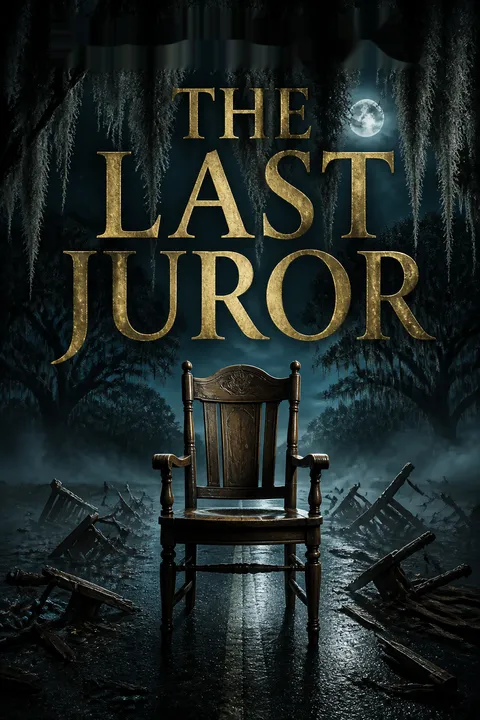


Plot Summary
A Paper Bought at Twenty-Three
In 1970, Willie Traynor is a college dropout with a borrowed future and little idea what to do in Clanton, Mississippi. The Ford County Times has collapsed under years of neglect by its editor, Wilson Caudle, a once-capable reporter who now writes almost nothing but obituaries. When creditors force the paper into bankruptcy, Willie sees an opening.
His grandmother BeeBee lends him $50,000, and a judge approves the sale. Willie becomes publisher of a shabby weekly whose failing finances and small-town habits demand more than he knows how to give. He expands its pictures, local news, and obituaries, and circulation begins to rise. Then the murder of a young widow supplies the story that will transform both his newspaper and his life.
Willie's purchase begins as a gamble made possible by privilege: BeeBee's money cushions a risk he could not otherwise take. Yet ownership immediately makes him responsible for a community he barely understands. The newspaper is not merely a business. Under Spot Caudle, its obituary page preserved local memory while its silences reflected the town's racial exclusions. Willie inherits both functions. His first instinct is to make the paper lively and profitable, but the events ahead will force him to ask whether attention is a public service or simply another way to sell.
Rhoda's Last Night
Rhoda Kassellaw is a young widow raising Michael and Teresa in a quiet country home. After years of staying secluded, she begins driving to dance clubs near the Tennessee line, where Danny Padgitt, a member of Ford County's powerful and criminal family, becomes fixated on her.
He follows her home, hides inside, and attacks her after the children are asleep. Michael and Teresa wake and enter the bedroom. Rhoda recognizes Danny, fights back, and sends the children running to the Deeces next door.
Badly wounded, she reaches the neighbors' porch and identifies her attacker before she dies. Danny flees in his truck, crashes, and is arrested by a deputy who finds him injured and drunk. The children lose their mother, and the county gains its first murder case in years.
The crime ruptures the town's comfortable belief that violence belongs elsewhere, while Danny's identity ties one private home to a century of public impunity. Rhoda's final act is not a legal argument but a mother's attempt to protect her children and make the killer answerable. The children become witnesses before they can understand what witnessing means. Their presence will shape the case, the newspaper's coverage, and the community's appetite for certainty, even as the adults struggle to separate what they know from what they suspect.
The Jailhouse Suite
Willie rushes to the jail and learns that the arrested man is Danny Padgitt. He prints a striking photograph of Danny beside Rhoda's portrait and fills the story with details from sources around the crime scene.
At the bail hearing, Danny's lawyer, Lucien Wilbanks, accuses Willie of prejudicing the county, but Judge Reed Loopus rejects the complaint and keeps Danny jailed. Willie then investigates the jail and discovers that Sheriff Mackey Don Coley has given Danny an air-conditioned private cell, good food, television, and unrestricted calls, while other prisoners endure filthy, crowded conditions.
Willie documents the contrast, and public anger rises. The Times gains readers and credibility, but its new influence comes with a cost: Willie has challenged the sheriff and the Padgitt family in print.
Willie's reporting turns a murder story into an inquiry about who receives the law's protections and who is left with its punishments. The jail comparison is powerful because it makes corruption visible through ordinary objects: a clean bed, a meal, a telephone. Still, Willie is not yet a careful investigator. He wants readers and presses facts toward sensation, risking the presumption of innocence he claims to defend. The episode establishes his central difficulty: he must use attention to expose injustice without allowing attention itself to become a substitute for evidence.
A Bomb Beneath the Press
A homemade incendiary device appears in the Times printing room, where a local handyman discovers its ticking before it can ignite the press and the buildings around the courthouse square. The bomb squad disables it, but Willie believes the Padgitts sent a warning.
Soon afterward, the paper's photographer, Wiley Meek, is beaten at home and his cameras are smashed. Sheriff Coley treats the incidents cautiously, refusing to name suspects or confront the family. Willie publishes the bomb and assault stories, then writes a defense of an independent local press.
Lawyer Harry Rex Vonner gives him a revolver and teaches him to shoot, though Willie soon stops carrying it regularly. He is frightened, but he decides that retreat would leave the Times and its readers at the mercy of the people he is covering.
The threat moves journalism from the page into the body. The bomb is aimed at the paper's machinery, while the assault on Wiley attacks the human labor that makes its claims visible. Willie's resolve is real but partly theatrical: he borrows the language of courage before he has learned how to live with danger. His wavering relationship with the gun reveals that distinction. He cannot simply become the fearless editor he performs for the town. He must keep choosing whether the public value of a story outweighs the risk to himself and his staff.
Callie Takes the Summons
Willie's reporting takes him into Lowtown, where he meets Callie and Esau Ruffin, parents of seven college professors and a son named Sam who has fled Clanton. Callie welcomes Willie with food and a friendship built around weekly lunches, but she also questions his sensational treatment of Danny before trial.
Her own history explains her insistence on fairness: as a young mother, she fought for education and voting rights, and she and Esau challenged the barriers that kept Black residents from the rolls.
When Judge Loopus orders a larger, protected jury pool, Callie receives a summons. She worries about judging another person and about the death penalty, yet accepts that jury service is her duty. After lawyers question her, she is selected as the first Black juror in Ford County.
Callie complicates Willie's moral self-image. She recognizes both the value of his reporting and the harm of treating an accusation as a verdict. Her presence on the jury is not a symbolic gift from the system; it follows decades of deliberate civic labor by her and Esau. The summons places her religious scruples against a legal duty that cannot be avoided simply because judgment is painful. Her friendship with Willie offers him a form of belonging, but it also gives him a living critic whose standards are more demanding than the applause of his readers.
The Jury's Divided Sentence
At trial, the State presents Rhoda's wounds, Danny's blood on his shirt, semen matching his, and skin beneath Rhoda's fingernail. Wilbanks attacks the investigation and produces Lydia Vince, who claims Danny was with her that night.
Her estranged husband, Malcolm, undermines her account by exposing her financial dependence and the implausibility of her story. Danny testifies despite his lawyer's advice, invents a conspiracy, and insults Rhoda. Under cross-examination, he loses control and threatens the jurors if they convict him. The jury quickly finds him guilty of rape and murder.
In the penalty phase, however, the jurors cannot agree unanimously on death. Judge Loopus sentences Danny to life in prison, a term that in Mississippi may not mean lifelong confinement. Callie collapses after the verdict, and the town turns its anger toward her.
The trial produces certainty about guilt but not agreement about what justice should do next. Danny's threat makes the jury's task more dangerous, while his testimony strips away the polished innocence Wilbanks tried to construct. Yet the death penalty vote exposes a distinction the town would rather erase: a juror can condemn a murderer without endorsing execution. Callie's inclusion in the jury is celebrated as progress until the sentence disappoints white residents, when her presence becomes a convenient target. The legal system has reached a verdict, but the community refuses to accept the moral complexity of its own decision.
A School Changes Clanton
After a federal order ends Ford County's dual school system, white parents protest and organize a private academy, while Black families welcome access to the better-equipped schools. Callie and Esau see the change as vindication for the years they spent sending Sam into hostile classrooms.
Willie gives the transition sustained, often optimistic coverage. At the first integrated football game, Black runner Ricky Patterson breaks free for long gains, and white spectators who had opposed integration cheer him with the rest of the crowd. The Times thrives on the attention.
Later, after a local soldier dies in Vietnam, Willie publishes an antiwar editorial that provokes angry letters from patriotic readers and sharp replies from students. By reporting both conflicts, he becomes a profitable publisher and an increasingly outspoken participant in county life.
The football field offers no easy reconciliation, but it reveals how public feeling can change when Black achievement becomes impossible to ignore. Willie's reporting helps make that change legible, even as its optimism cannot erase the unequal schools that preceded it. His antiwar editorial extends the same willingness to challenge local consensus, but at a cost: unlike the football story, it divides readers rather than uniting them. He is learning that a newspaper can enlarge a community's imagination, though it cannot dictate what that community will do with the new picture.
The Witness Found Dead
After Lydia Vince's testimony fails to free Danny, Malcolm Vince is shot twice outside an illegal drinking club in Tishomingo County. He had no known criminal history or obvious enemies, and the killer leaves no useful evidence.
Willie investigates and learns that Malcolm's testimony had exposed Lydia's paid-for alibi, but the distant sheriff cannot establish a connection to the Padgitts. The Times reports the killing under a headline linking Malcolm to the trial, and Willie recognizes that the family may answer public challenges with violence.
The case remains unsolved. The uncertainty feeds Willie's fear and the town's gossip, but it does not give the authorities grounds to act. Danny's conviction stands, pending appeal, while the people who helped convict him wonder whether they are safe.
Malcolm's death converts a courtroom lie into a threat that reaches beyond the courthouse, but the lack of evidence prevents suspicion from becoming proof. Willie must decide whether to publish a connection that feels plausible without being established. The episode exposes the asymmetry between organized power and public accountability: a killing can be widely attributed to the Padgitts and still remain legally unanswerable. It also makes rumor part of the danger. The town's stories can warn people, but they can just as easily harden fear into an accusation no investigation can support.
Sam's Long Road Home
Callie's youngest son, Sam, contacts Willie after years of moving between his siblings. As a teenager, Sam had been threatened after an affair with Iris Durant, a white married woman whose husband was a state trooper.
The Durants' threats drove Sam from Clanton, and he now wants to visit his parents without living as a fugitive. Willie meets him in Memphis and helps carry messages between Sam and Callie, while Harry Rex warns that Durant may still want revenge. Then a draft notice arrives for Sam.
Rather than risk being sent to Vietnam, Sam leaves for Canada, a decision Willie supports despite disagreement among the Ruffins. Years later, Sam returns to Clanton under cover of night and reunites with his family, bringing joy to Callie and another person for Willie to protect.
Sam's story carries the political conflicts of the novel into a single young life: racial violence, sexual double standards, family loyalty, and the Vietnam draft. His departure is not a simple rejection of home. It is a survival decision made after local authorities fail to make him feel safe. Willie becomes a trusted intermediary because he has earned Callie's confidence, but his help cannot remove the danger or resolve Sam's divided obligations. Sam's eventual return shows how profoundly family can draw a person back, even when the place itself has offered little protection.
The Naked Sniper
In 1971, a man fires rifles from the courthouse cupola at random, shattering windows and setting a police car ablaze. Willie shelters on the Times balcony as deputies return fire. Baggy Suggs, trying to escape from a courthouse room, climbs out a window on an electrical cord and falls into shrubs, breaking his arm. The shooter is Hank Hooten, a lawyer who had assisted the prosecution at Danny's trial.
Naked and painted with dark stripes, Hank is arrested and sent to the state mental hospital. Years later, while visiting churches across the county, Willie recognizes the gaunt Hooten at a service, but cannot learn more about his release or condition. The incident remains a grotesque local memory, its cause and consequence still obscure.
The courthouse shooting turns the center of civic order into a place of indiscriminate danger. Hank's bizarre appearance encourages the town to remember the spectacle rather than investigate the suffering behind it. Baggy's fall offers comic relief, but the comedy depends on a real failure of public safety and a man in crisis. Willie's later sighting of Hank does not solve the mystery; it quietly preserves it. That unfinished encounter matters because the novel's apparent absurdities are not separate from its violence. They are often the forms violence takes before anyone understands it.
Danny's Easy Camp
Danny's appeal survives a narrow Mississippi Supreme Court vote, leaving his conviction intact. In 1977, a former court stenographer tells Willie that Danny is not enduring Parchman prison. He has been transferred to a satellite camp, works in a highway department office, and takes escorted lunches in town.
Willie and Wiley Meek travel to Broomfield, watch Danny leave the facility, and photograph him walking freely beside a guard. The Times publishes the evidence, and larger newspapers amplify the story until state officials face public pressure.
Danny is transferred back to Parchman, but two callers threaten Willie's life. He notifies the FBI, and Sheriff Tryce McNatt places patrol cars near the Times and Willie's home. The exposure revives the case and makes clear that a life sentence can be negotiated into privilege.
The camp photographs make an obscure administrative decision visible in a way that legal documents had not. Danny's apparent freedom reveals the gap between punishment as a sentence and punishment as lived reality, especially for a prisoner with money and connections. Willie again uses the newspaper to force action, but the threats show that exposure is not neutral. His work can change where Danny is held, yet it cannot dismantle the network that secured his transfer. The episode strengthens Willie's public role while deepening the private cost of remaining its editor.
The First Parole Hearing
In 1978, Willie learns by chance that Danny's parole hearing is already scheduled at Parchman. The proceeding is kept quiet, and no representative of Rhoda's family or Ford County has been notified. Willie drives there and claims the right to attend as an opposing witness.
Lucien Wilbanks presents Danny as rehabilitated, supported by a caseworker and his mother's account of his prison conduct. Willie counters with the murder evidence, the children's ordeal, Danny's courtroom threat, and his attack on the credibility of the trial's alibi.
The board listens, then divides its vote and denies parole. Willie prints the hearing despite the board's secrecy rules and fights its lawyer's threatened retaliation. The victory is temporary, but it exposes how easily a closed process can silence the people most affected by its decision.
Willie's intervention is a direct answer to procedural secrecy: if the board can make a life-altering decision without informing the victim's community, he will make the decision visible afterward. His testimony is powerful because it restores facts that Wilbanks has reframed as a story of rehabilitation. Still, the board's split vote warns that publicity cannot guarantee justice. The hearing makes Willie an advocate as well as a reporter, blurring a boundary that the novel treats as both necessary and perilous. He cannot remain detached when the process excludes those who remember Rhoda.
A Second Chance for Danny
The next year, most of Ford County's officials are unavailable or unwilling to oppose Danny's parole. Willie is barred from the hearing, and Sheriff McNatt is nearly alone in presenting the county's case. The board votes to release Danny.
Rumors suggest the Padgitts paid a large bribe, but no proof emerges. Around the same period, Willie sells the profitable Times for $1.5 million, securing new contracts for key staff and preparing to leave the weekly grind.
Sam also returns to Clanton after eleven years away, staying close to his family and avoiding public attention. Willie promises to help Sam assess the danger. Danny's release, Willie's departure from journalism, and Sam's return converge just as the town begins to believe it can put the old trial behind it.
Three forms of return collide: Danny returns through a compromised institution, Sam returns through family love, and Willie prepares to leave the work that made him a public figure. The contrast is stark. Sam must move cautiously to reclaim home, while Danny's connections open doors for him. Willie's sale promises freedom, but it also arrives at the moment when his reporting may matter most. The community's wish to forget Danny is understandable, yet that wish creates the vacancy in public attention that an unaccountable power can exploit.
The First Juror Falls
Shortly after Danny returns, Lenny Fargarson, one of the jurors from his trial, is shot while reading on his parents' porch. The single rifle round kills him, and the woods around the house yield no tracks or other evidence. Sheriff McNatt recognizes the danger and asks Willie for the old jury list. Willie helps notify the surviving jurors and tells Callie that Lenny is dead.
She remembers praying with him before deliberations, and the news unsettles her. Sam and Esau arm themselves to guard Callie's home, while neighbors fill Lowtown porches and deputies patrol the street. The killing revives Danny's courtroom threat in every mind, but no one can yet prove that the released prisoner is responsible.
Lenny's murder makes a threat spoken years earlier feel newly present, but the absence of evidence keeps the authorities from converting fear into a case. The protection that gathers around Callie is both communal care and a sign of institutional failure: neighbors must create the safety the county cannot guarantee. Willie becomes a bridge between police and jurors because his files preserved names the town had once chosen to forget. The episode also changes the scale of his concern. This is no longer a story he can cover from the courthouse balcony without entering the lives at risk.
A Shot Across the Fields
Eleven days after Lenny's death, Mo Teale is killed while repairing a tractor in a soybean field. A shot from the woods strikes him, and the recovered shell matches the ammunition used against Lenny. Sheriff McNatt finds no fingerprints, footprints, or identifiable suspect.
Deputies guard the remaining jurors, while armed neighbors gather outside their homes. Willie and Harry Rex visit the protected households and understand that the killer can wait until vigilance wears down. Some jurors seem especially exposed, but no one knows whether the murders follow a pattern or simply target the easiest victims.
The town's gossip grows more confident even as the investigation remains nearly empty. With two jurors dead and Danny free, the county faces the prospect of a patient killer rather than a single burst of violence.
The matching ammunition gives the murders a pattern, but not an identity or motive. That distinction sustains the suspense while revealing the limits of a community organized around rumor and firearms. Protection becomes a routine that cannot last: patrols and armed neighbors may deter an attack tonight, but they cannot keep every juror indoors indefinitely. Harry Rex understands the killer's advantage as time itself. Willie's fear grows alongside his professional fatigue, making the crisis inseparable from his question about whether he should sell and leave.
Callie's Three Names
After the second killing, Callie brings Willie and Sam a notebook she kept during Danny's trial. The guilty verdict had been unanimous, but the death-penalty vote split nine to three. Callie's notes identify Lenny Fargarson, Mo Teale, and Maxine Root as the three jurors who opposed execution.
Their deaths now look especially confusing: two of the three holdouts have been killed, though Danny had threatened the entire jury. Callie had promised the others she would keep deliberations secret, but she gives the information to Willie so the sheriff can protect Maxine.
Willie warns McNatt, who places deputies around her. The revelation narrows the danger without explaining it. It also shows how Callie's private record can help the living, even as she struggles with the burden of breaking a vow.
Callie's notebook transforms a private moral decision into evidence with immediate consequences. Its revelation does not solve the murders; it creates a sharper question, because the victims were among those who spared Danny's life. The mismatch resists the easy revenge narrative the town has embraced. Callie breaks confidence only when silence may expose another juror to death, making memory an ethical obligation rather than possession. Her notes also remind Willie that the verdict was not a simple contest between good and evil. The jurors reached a unanimous judgment of guilt and still disagreed about state killing.
The Pecans That Exploded
Willie completes the sale of the Times while the Ruffin family gathers in his newly restored house, but the celebrations stop when a package arrives for Maxine Root. She learns by telephone that her sister did not send it and suspects a trap.
A deputy carries the box outside and fires at it; the explosion tears apart the porch and injures Maxine, the deputy, and two others. None appears likely to die, but the attack forces Judge Omar Noose to issue an arrest warrant for Danny, the obvious suspect despite the lack of proof connecting him to the earlier shootings.
State police join McNatt's convoy to Padgitt Island. Danny meets them at the bridge with Lucien Wilbanks and submits to arrest. The county's relief is palpable, though an arrest cannot yet establish guilt.
The package weapon turns the community's defensive rituals against it: suspicion is correct, but the deputy's attempt to test the danger triggers the blast. Maxine's injury makes the threat impossible to dismiss as a series of isolated tragedies. The warrant is a legal response to public danger, not a solved case, and that distinction matters when Danny is brought in. Willie's sale marks the end of his ownership, but the danger he has covered does not respect the boundaries of a business transaction. Leaving the paper cannot mean leaving the community's crisis.
The Courtroom's Hidden Rifle
Lucien arranges a bail hearing the morning after Danny's arrest, hoping to offer alibis and calm the county. The courtroom fills with hostile spectators, including the Ruffins and the Fargarsons. As the hearing begins, rifle shots crack from above the balcony.
Danny is struck in the head and ribs. Deputies draw their weapons while the crowd stampedes, and the shooter fires again from a concealed crawl space, then turns his rifle toward Lucien's office windows. Sheriff McNatt and deputies climb toward the cupola.
After ammunition runs out, the shooter kills himself. The man is Hank Hooten, the former prosecutor's assistant who had once fired on the town from the courthouse roof. Danny is carried away for medical care, and the courthouse crowd is left with a new, baffling question: why did Hooten kill him?
The courthouse becomes the stage for the novel's most violent reversal: the man everyone fears is not the shooter, and the apparent answer to the juror killings arrives only after the violence has escalated beyond control. Hooten's hidden position literalizes the town's failure to see danger that is both close and concealed. Danny's death does not restore justice through a verdict or a lawful sentence. It ends one threat while exposing the cost of institutions that allowed a disturbed man to disappear from view and return armed.
The Last Obituary
Willie drives to the state hospital and persuades a doctor to explain what he can. Hooten had been diagnosed with schizophrenia and, after responding to treatment, was released into a community program.
He had been obsessed with Rhoda, heard her and her children accusing him of failing to save her, and knew that Fargarson, Teale, and Root had opposed Danny's execution. Hooten killed two and attempted to kill the third before shooting Danny and himself. On the same night, Callie suffers a stroke followed by a fatal cardiac arrest.
Her family gathers at the hospital, and Willie stays with them. At dawn, grieving the friend who had made Clanton feel like home, he returns to his desk and begins writing her obituary, the work that first defined the Times.
The explanation arrives as a human account of untreated illness, not an excuse: Hooten's delusions made vengeance feel like rescue, and the system failed to keep him under care. His obsession had existed beside the public story for years, unseen because the town preferred spectacle to inquiry. Callie's death then returns the narrative to the act that began Willie's life in Clanton, obituary writing. This time the form is intimate rather than commercial. The paper's record cannot repair loss, but it can give a life the careful attention that institutions and communities so often failed to provide.
Analysis
The novel's central conflict is not simply whether Danny Padgitt committed murder. His guilt becomes clear in court; the deeper question is whether a town shaped by bought sheriffs, selective punishment, and racial exclusion can produce justice that remains credible after the verdict. The divided penalty vote exposes a distinction Clanton refuses to tolerate: condemning a crime is not identical to endorsing execution. When residents blame Callie for the life sentence, they turn a Black woman's civic participation into a scapegoat for their own frustration with a weak legal system.
Willie's newspaper stands between public memory and public spectacle. His early coverage helps expose Danny's privileges, but it also risks making the accused guilty in the minds of readers before a jury hears evidence. Over time, Willie learns to use the paper not only to sell urgency but to preserve the people and institutions the county would rather overlook. His relationship with Callie is central to that change. She makes him accountable to fairness at the very moment his readers reward certainty.
The novel also insists that legal outcomes are shaped by systems extending beyond the courtroom. Danny's sentence is weakened by parole rules and political influence; Hooten's later violence emerges from an underfunded treatment system that releases a profoundly ill man without adequate support. Neither failure erases personal responsibility, but both show how public institutions can create conditions for further harm while appearing to have completed their work.
Finally, the book's recurring acts of remembrance, jury notes, newspaper archives, family letters, and obituaries, oppose the town's impulse to forget. Memory does not guarantee justice, but it makes denial harder. Willie's last task, writing Callie's obituary, brings his professional beginning into contact with private grief. The act cannot repair what Clanton has lost. It can, however, refuse to let a life be reduced to the danger that surrounded it.
Review Summary
The Last Juror receives mostly positive reviews (3.96/5 rating), with readers praising Grisham's character development and vivid depiction of 1970s Mississippi small-town life. The story follows Willie Traynor, a young journalist who buys a local newspaper and covers a brutal rape-murder trial. Many appreciated the book's focus on social issues like racial integration and the Vietnam War, particularly Willie's friendship with Miss Callie, a beloved African-American woman. However, some found it slow-paced and less suspenseful than typical Grisham thrillers, with a predictable ending and wandering plot that disappointed those expecting a pure legal thriller.
People Also Read





Characters
Willie Traynor
The accidental publisherA twenty-three-year-old college dropout from Memphis, Willie buys the Ford County Times with a loan from his grandmother and quickly discovers that a small weekly can shape a town's sense of itself. He is ambitious, curious, and often more confident in public than he feels in private. His instinct for vivid reporting helps save the paper, but his appetite for a strong story sometimes presses him toward sensationalism. Friendship with Callie Ruffin challenges his assumptions about fairness, while threats and civic fights teach him the difference between being outspoken and being brave. Willie is both observer and participant, drawn to Clanton even as its dangers and limits make him dream of leaving.
Callie Ruffin
The town's moral anchorCallie is the thoughtful, deeply religious matriarch of the Ruffin family, whose seven professor children testify to years of discipline, sacrifice, and parental encouragement. She values education, voting, family loyalty, and careful speech, and she has little patience for treating accusation as proof. Her friendship with Willie grows through shared lunches and conversations that range from journalism to faith and local history. Callie is neither a passive symbol nor an uncomplicated moral authority: she carries genuine doubts about judging others, yet accepts civic responsibilities when they come to her. Her steady attention to ordinary details gives Willie a model of public life rooted in care rather than performance.
Danny Padgitt
The island family's heirDanny is the youngest son of Gill Padgitt and a member of a wealthy, secretive family whose influence has long shielded it from ordinary consequences. Handsome and accustomed to privilege, he carries himself with entitlement and treats other people's fear as something to exploit. His arrest for a brutal crime draws the town's attention to the Padgitts' power, while his lawyers and family use money, connections, and procedural maneuvers to protect him. Danny's confidence is not the same as control: under pressure, he becomes reckless and makes choices that expose the weakness beneath his family's carefully maintained impunity.
Rhoda Kassellaw
A guarded young widowRhoda is a young widow raising Michael and Teresa in a quiet Ford County home. Her careful gardening and devotion to her children coexist with a growing desire for adult companionship after years of grief and isolation. Because she is an outsider who keeps to herself, neighbors often interpret her choices through gossip rather than understanding her. She is neither the perfect, chastened widow some residents prefer nor the caricature later used by her attacker. Her efforts to reclaim pleasure and independence make her a person with a life beyond the crime that draws the town's attention.
Hank Hooten
The volatile local lawyerHooten is a local attorney who assists the prosecution in Danny Padgitt's trial. He is known for his unstable personal life, his fascination with women, and a temperamental intensity that others tend to treat as eccentricity. His legal work places him near the case, but he remains a peripheral figure in Willie's early understanding of the town. Hooten's presence illustrates how Ford County can absorb troubling behavior into its folklore, dismissing a person as strange rather than asking what might be wrong or what help is needed.
Sam Ruffin
The fugitive youngest sonSam is Callie and Esau's youngest child, bright and polite, but forced to make adult decisions while still young. His family's commitment to education places high expectations on him, while racism and personal danger push him away from home. He is not a born fugitive; he longs for ordinary safety, the chance to study, and the comfort of his family. His trust in Willie grows from Willie's friendship with Callie, and their connection makes Willie a messenger between a son in hiding and parents who fear for him.
Esau Ruffin
Callie's steadfast partnerEsau is Callie's husband and co-builder of the family life that allows their children to thrive. A carpenter and part-time preacher, he is practical, devoted, and less inclined than Callie to turn every worry into a long discussion. He supports her challenges to racial barriers and shares responsibility for raising their children with discipline and warmth. As danger reaches the family, Esau's care becomes physical and immediate: he watches the house, protects Callie, and keeps the household functioning without claiming to control her choices.
Lucien Wilbanks
Danny's fearless defense lawyerLucien is a combative Clanton lawyer who represents clients many respectable residents would avoid. He is an outspoken civil-liberties advocate, a formidable courtroom performer, and a man whose abrasive manner makes him easy to hate. He understands both the law's protections and the influence of public opinion, using procedure and spectacle to defend his clients. His own principles are difficult to disentangle from his professional loyalty, and his willingness to stand between a hated defendant and a hostile town makes him more complicated than either his admirers or enemies admit.
Harry Rex Vonner
The courthouse's blunt fixerHarry Rex is a large, cigar-smoking divorce lawyer who knows the county's gossip, its legal habits, and the people who operate between the two. He is irreverent and often theatrical, but he takes threats seriously and offers Willie practical help, including a gun and shooting lessons. His loyalty is expressed through action rather than sentiment. Harry Rex can be cynical about institutions and blunt about danger, which makes him a useful counterweight to Willie's youthful faith that a good story can force the powerful to behave.
Mackey Don Coley
The compromised sheriffColey has been Ford County's sheriff for decades and presents himself as a genial, courteous public servant. Behind that manner lies a long accommodation with the Padgitt family, whose money and influence have helped preserve his position. He keeps Danny comfortable in jail and resists Willie's questions, revealing how local corruption can survive inside familiar routines. Coley's authority depends on appearing respectable, even when his choices expose whom he serves more faithfully.
Tryce McNatt
The later sheriffMcNatt succeeds Coley as sheriff and inherits a county with a history of corruption and a community suspicious of law enforcement. He is less practiced at public performance than Coley, but he takes the juror killings seriously and organizes protection for those still alive. His limitations are real: without physical evidence, he cannot turn widespread suspicion into an arrest. McNatt represents the possibility of a more conscientious sheriff without suggesting that decency alone can undo entrenched power.
Baggy Suggs
The courthouse gossipBaggy is the Times's older general reporter, a habitual drinker whose courthouse routine produces a steady stream of rumors, opinions, and occasional useful leads. He is lazy about verification and often wrong with great confidence, but he knows the local legal culture better than Willie does. His friendship with Willie is practical and uneven, mixing advice, drinking, and comic mishap. Baggy gives the story a portrait of how information circulates in Clanton before anyone can establish whether it is true.
Wiley Meek
The paper's fearless photographerWiley is the Times photographer, a veteran with a keen eye for an image that can carry a story. He is excited by crime scenes and courthouse drama, but his work also exposes him to the danger surrounding the paper. He photographs Danny's arrest, the bomb, and the town's later emergencies, giving Willie visual evidence that prose alone cannot provide. Wiley's loyalty is steady, though he knows when to set boundaries, as when he refuses to make his injuries part of the paper's spectacle.
Ernie Gaddis
The people's prosecutorGaddis is the experienced district attorney who prosecutes Danny. He is methodical and restrained, preferring clear evidence and concise arguments to courtroom theatrics. He recognizes how money and intimidation could distort jury selection, so he asks for a larger, protected pool. At trial, he dismantles the defense alibi and makes the human consequences of Rhoda's murder impossible to ignore. His effectiveness comes from preparation and an understanding of the jury, not from pretending that law operates outside the pressures surrounding it.
Ginger McClure
Rhoda's grieving sisterGinger is Rhoda's sister, who comes to Ford County for the trial and carries the family's grief into the courtroom. She is independent, guarded, and emotionally exhausted by the murder and its public retelling. Her brief intimacy with Willie gives him a glimpse of the private damage that newspaper coverage cannot contain, while her desire to leave reminds him that Clanton's crisis is not the whole world.
Lydia Vince
The purchased alibi witnessLydia is a married woman who testifies that Danny was with her on the night of Rhoda's murder. Her account is meant to give the defense a reasonable alternative to the prosecution's evidence, but her uncertainty and financial circumstances make her vulnerable under cross-examination. She is neither a skilled conspirator nor a reliable guide to the truth. Her appearance demonstrates how an apparent alibi can unsettle a case even when the witness herself is easy to discredit.
Malcolm Vince
Lydia's estranged husbandMalcolm is Lydia's estranged husband, a transient laborer who is brought to court after her alibi raises doubts. His testimony exposes the unstable reality behind her polished account. He is not a legal strategist, and his willingness to answer embarrassing questions gives the prosecution crucial support. His connection to the trial makes him a vulnerable figure in a story where private relationships can become public evidence.
BeeBee
Willie's generous grandmotherBeeBee is Willie's wealthy Memphis grandmother, who finances his purchase of the Times when his own resources are limited. She is economical with money but emotionally generous toward her only grandchild. Her loan gives Willie the chance to build a life through work, while her letters show that she watches his development with pride and concern.
Lenny Fargarson
The jury's quiet skepticLenny is a young juror living with a serious physical impairment and a strong Christian faith. During the trial, he appears skeptical of the defense and attentive to the evidence. His parents support him, and his life is shaped by dependence on family and a private determination to meet each day. He is one of the jurors Willie remembers when the old case again becomes dangerous.
Maxine Root
The threatened jurorMaxine is a bookkeeper and one of the jurors in Danny's trial. She is a practical working woman whose quiet life becomes entangled with a verdict the county never stops arguing about. She comes from a close family and relies on those ties when danger reaches her home. Her private judgment reflects the difficult distinction between finding a defendant guilty and deciding whether the state should execute him.
Plot Devices
The Ford County Times
A local memory machineThe weekly paper provides the novel's central viewpoint and the means by which Willie enters Clanton's public life. Its crime reports can expose unequal treatment, its editorials can challenge local consensus, and its obituaries preserve people who might otherwise be forgotten. The Times also has limits: early sensational coverage risks prejudicing Danny's trial, and a story can make a community feel informed without giving it proof. As the paper grows, it becomes both a business and a civic record, tying Willie's ambition to his responsibility for what the town remembers.
The Ford County jury
A test of civic trustThe jury puts the legal ideal of impartial judgment against a county shaped by racial exclusion, political corruption, and the Padgitts' money. Judge Loopus protects the selection process with a larger pool and sealed names, while Callie's service marks a major breach in a long history of excluding Black citizens. The jury's unanimous guilty verdict and divided sentencing decision reveal that shared judgment does not require shared moral conclusions. Its secrecy later complicates the investigation, because knowledge of how individual jurors voted could expose motive but is difficult to obtain.
Mississippi's parole system
A sentence with loopholesThe parole system makes the novel's legal outcome unstable. Danny receives life sentences, but vague rules, good-time calculations, political connections, and work-release placements repeatedly alter what that sentence means in practice. Willie discovers that public assumptions about prison do not match the state's administrative decisions. The hearings also reveal how secrecy can exclude victims' representatives and local officials, allowing a consequential decision to proceed without public scrutiny. Parole converts the trial's apparent ending into a continuing source of danger.
Callie's jury notebook
Memory becomes evidenceCallie's private notes preserve the division over Danny's punishment after the jurors promise not to discuss their deliberations. The notebook gives Willie information the sheriff needs to protect a surviving juror, but it does not explain why the deaths seem to target people who opposed execution. Its importance lies in the tension between confidentiality and responsibility. Callie does not treat her notes as a weapon or a vindication of her own position; she releases them because silence could leave someone else exposed.
Clanton's rumor network
News before proofCoffee shops, courthouse hallways, church gatherings, and local law offices move information quickly through Ford County. Baggy often gathers useful detail from this network, but its claims are as likely to be distorted as accurate. Rumor fills gaps left by officials who will not speak and investigations that produce no evidence. It can warn Willie about danger, but it can also turn suspicion into racial blame or a confident accusation. The novel repeatedly contrasts what everyone believes with what anyone can establish.
About the Author
Other books by John Grisham






Download PDF
Download EPUB
.epub digital book format is ideal for reading ebooks on phones, tablets, and e-readers.








