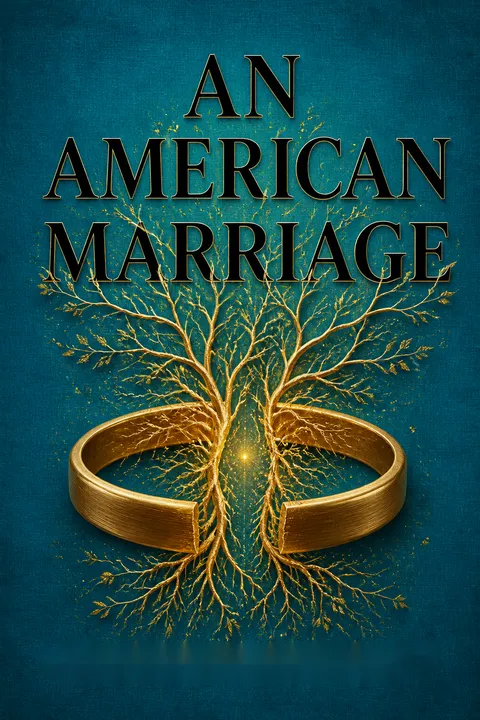


Plot Summary
Bridge Music Before Ruin
At Morehouse, Roy Hamilton first notices Celestial Davenport in their mutual friend Andre’s room; years later, they meet again in New York, where Roy chases a thief who has snatched her bag and loses a tooth defending her.
They marry, and for a year and a half build a lively partnership around Celestial’s handmade dolls and Roy’s plans to grow her business. After an anniversary card reveals a woman’s number in Roy’s wallet, Celestial forgives his flirtation, though the breach remains.
On a visit to Roy’s parents in Eloe, Louisiana, they clash over one of Celestial’s expensive dolls. At a nearby bridge, Roy finally tells her that Big Roy, who raised him, is not his biological father. The revelation reopens their argument about secrets, but they reconcile before bed.
The marriage begins with genuine affection, but intimacy does not erase the couple’s uneven habits of disclosure. Roy treats charm and withheld history as manageable flaws; Celestial experiences each new secret as evidence that she may not know the man beside her. Their shared ambition to have a child gives the trip a hopeful purpose, yet the bridge confession exposes how little their future plans can protect them from inherited histories. The bridge’s music offers a temporary harmony, not a solution: they can return to tenderness without resolving the different meanings they assign to honesty.
The Room 206 Conviction
At the Piney Woods Inn, Roy leaves their room during a fifteen-minute pause in an argument and helps an older traveler whose arm is in a sling. He carries ice to her room, opens a window, and fixes her running toilet. Later that night, the woman is sexually assaulted.
She identifies Roy as her attacker, although Celestial remembers spending the night with him. Police pull the couple from bed and arrest Roy; Celestial is injured as she tries to reach him. Held without bail, Roy waits a hundred nights for trial.
Celestial testifies that they were together, but her account fails to persuade the jury. The court sentences Roy to twelve years. His mother, Olive, and adoptive father, Big Roy, leave court with him facing a future his wife cannot imagine.
The arrest turns an ordinary act of courtesy into evidence against Roy, showing how a person’s intentions become powerless once institutions assign them a suspect’s identity. Celestial’s testimony is true but does not carry the emotional force the jury expects, a failure that leaves her questioning not only the verdict but her own performance. The novel does not make the assaulted traveler’s suffering unreal in order to establish Roy’s innocence. Instead, two people’s vulnerability collides with a system willing to treat recognition as certainty, while the consequences fall most heavily on the Black man it has chosen.
A Child Deferred
Separated by Roy’s incarceration, the newlyweds try to preserve their marriage through letters and Celestial’s prison visits. When Celestial discovers she is pregnant, Roy tells her he cannot raise a child from prison and she agrees to end the pregnancy.
Later, they argue over whether his response pushed her toward the abortion; neither can make the decision belong to only one of them. Celestial tells Roy about an earlier pregnancy at Howard, caused by an affair with a married professor who abandoned her.
Her aunt Sylvia helped her make sock dolls for hospitalized infants, and sewing gradually became her art. Celestial now makes forty-two dolls while grieving the pregnancy she ended. Roy imagines the child as a son and mourns the future he believes they surrendered, while Celestial insists that her body and loss are hers to carry.
The pregnancy gives the couple no morally clean option. Roy’s instinct to protect a hypothetical child from prison life is also a retreat from fatherhood, while Celestial’s decision is shaped by the practical isolation of being pregnant alone. Their letters reveal a conflict over whose memory will define the choice, not simply whether it was right. Celestial’s earlier pregnancy connects the dolls to both guilt and recovery: making a comfort object becomes a way to work through a loss without claiming that art cancels it. Roy, by contrast, imagines the unborn child as a promise the state has stolen.
Dolls Under the Spotlight
While Roy serves his sentence, Celestial turns her doll-making into a business, opening Poupées with financial help from her father, Franklin Davenport. She begins selling dolls to children as well as collectors, and her work earns gallery attention.
A doll based on Roy wins a portrait competition, but Celestial presents it as art about Black incarceration without explaining that her husband is imprisoned. Roy reads the omission as shame and resents that her public success seems to have no place for him.
Celestial explains that she wants audiences to see her work rather than reduce her to a prisoner’s wife. Roy eventually accepts that her silence protects her career, but the exchange exposes how distance has changed support into suspicion. Her growing life outside becomes something he can admire and fear at once.
The dolls hold several meanings at once: livelihood, artistic authorship, a record of Roy’s absent body, and a way to address incarceration without surrendering control of her public identity. Roy’s hurt is not merely jealousy of success. His former role as provider and manager has vanished, leaving him dependent on the very wife whose independence he once encouraged. Celestial’s choice not to name him publicly is self-preservation, but it also deepens his sense of disappearance. Their disagreement shows how affection can remain intact while the forms through which each person recognizes the other stop matching.
Walter's Name in Mars
Inside Parson Correctional Center, Roy earns cigarettes and noodles by writing letters for other prisoners, including Walter, an older inmate who protects him and teaches him prison routines. While helping Walter with paperwork, Roy sees the full name Othaniel Walter Jenkins and realizes Walter is the father Olive rarely discussed.
Walter confirms that he left Olive pregnant when she was a teenager, then offers his own account of their brief relationship. He also admits he arranged to have Roy moved into his cell after learning who he was.
Roy is furious at the abandonment but recognizes that Walter’s intervention may have saved him from further violence. The revelation unsettles Roy’s idea of fatherhood: Big Roy raised him, while Walter has become a source of protection in the place that separated him from his family.
Roy’s discovery makes biological inheritance an uncomfortable fact rather than a reliable guide to belonging. Walter’s past abandonment cannot be repaired by his present kindness, yet his practical care matters because Roy is exposed and alone. Big Roy’s years of parenting remain real, not diminished by the existence of another father. The novel resists the easy choice between blood and nurture by making Roy feel loyalty, anger, and gratitude at once. That emotional complexity also prepares him to reconsider his own absences as a husband and father, though recognition alone cannot undo the damage he caused.
Olive's Last Procession
When Roy’s mother, Olive, dies of lung cancer, Roy cannot leave prison to attend her funeral. Andre, Celestial’s lifelong friend and Roy’s friend, visits Roy and agrees to carry Olive’s casket in his place.
At the funeral, Celestial sings a hymn for Olive, then helps Big Roy mourn at the graveside as he buries his wife with a shovel. Andre and Celestial leave town together, drinking at a bar while she describes the strain of visiting Roy and the slap Olive once gave her for staying away.
Their closeness becomes physical at the hotel. Andre has loved Celestial since childhood, but she rejected him after their first kiss as teenagers; he later introduced her to Roy. Now the funeral has made their long history impossible to treat as harmless friendship.
The funeral makes absence visible: Roy’s place beside his mother is occupied by Andre, while Celestial performs a family duty that binds her to both men. Big Roy’s hand-dug grave gives her a model of marriage built through decades of shared life, sharpening her doubts about a relationship interrupted after eighteen months. Andre’s desire is longstanding, but the grief and drinking that precede their intimacy do not make the choice uncomplicated. The moment is neither a simple betrayal nor a destiny fulfilled. It is a decision made by two people whose history predates Roy and whose responsibilities to him remain painfully present.
The Marriage Withdrawn
After years of visits and letters, Celestial tells Roy she can no longer be his wife, though she will remain his ally and support his appeals. Roy rejects the change, then removes her from his visitors list; after Banks urges him not to sever his last ties, Roy reverses that order without asking her to visit.
Banks’s appeal succeeds in federal court after misconduct by the prosecution is exposed, and Louisiana declines to retry Roy. Before Roy is released, Celestial and Andre announce their engagement at Thanksgiving.
Franklin condemns the plan because Celestial is still Roy’s legal wife and calls on Andre to step aside. Celestial’s mother, Gloria, and aunt Sylvia defend her right to choose. The family leaves the table divided, with Roy’s freedom approaching and no agreement about where he belongs.
The impending release forces an emotional arrangement that separation had allowed everyone to postpone. Celestial’s offer of friendship is a boundary, but Roy hears it as abandonment because prison has narrowed his world to the marriage he hopes to recover. Franklin frames fidelity as a racial and moral obligation to an unjustly imprisoned man; Gloria insists that her daughter remains a person with her own will. Their dispute exposes the danger of turning Roy’s victimization into a claim on Celestial. The appeal restores Roy’s freedom, but no court can decide what the marriage should mean afterward.
Homecoming by the Back Gate
Roy is released five years into his sentence and finds Big Roy waiting in the prison’s back parking lot. He returns to Eloe, visits Olive’s grave, and tries to imagine life outside.
Davina Hardrick, a former schoolmate, invites him to dinner; her food and affection make him feel human again, and they spend the night together. Roy knows he intends to seek Celestial, so he returns to Walmart to say goodbye. Davina demands that he not treat their time as a disposable prison story and asks him never to return to her door.
Meanwhile, Andre drives to Eloe to collect Roy, only to learn that Roy has already taken Big Roy’s car to Atlanta. Andre stays overnight, then heads back after Big Roy insists that Roy deserves one unpressured meeting with his wife.
Roy’s release is not a return to his former life but an abrupt entry into a world that continued without him. Davina offers bodily warmth and ordinary hospitality, yet Roy cannot turn that comfort into a future without first facing Celestial. His farewell injures her because he understands the intimacy as restorative while she has experienced it as a relationship with its own claims. Andre’s delayed arrival also matters: even his good intentions cannot manage Roy’s choices. Big Roy’s decision to give the couple space recognizes that a fair encounter cannot be staged by the rival or the family.
The Key Still Turns
Roy uses his old key to enter Celestial’s house and waits for her at the dining table. She is startled but embraces him, and he takes her silence and the unchanged locks as signs that she still wants their marriage.
Tamar, Celestial’s assistant, arrives with her baby and briefly fills the room with the ordinary noise of a young family. After Tamar leaves, Roy asks Celestial to accept his forgiveness for the years apart and kisses her, but she remains guarded. In the bedroom, he tries to initiate sex without protection.
Celestial repeatedly asks him to use it and then tells him to stop. Roy presses her with his pain and the history of his imprisonment, but when he recognizes that she is frightened, he gets off the bed. He sleeps alone in her sewing room, surrounded by dolls.
The working key grants Roy access to a house, not consent to reclaim the marriage. His hope turns material details into promises because the legal bond and the familiar rooms are the few continuities he can still grasp. Celestial’s silence is not agreement, though Roy initially treats it that way. Her repeated request for protection gives her a concrete boundary, and his eventual withdrawal matters without erasing the pressure that preceded it. Tamar’s baby intensifies the contrast between the family Roy imagined and the life Celestial now inhabits. The sewing room becomes a space of refuge for both the art she built and the distance he cannot yet accept.
An Axe Against Hickey
On Christmas Eve, Roy empties his stored belongings into the yard, searching for the tooth he lost while defending Celestial years earlier. Finding it missing, he strikes Celestial’s car with a tennis racket, then takes Andre’s axe and hacks at Old Hickey, the tree Celestial’s father gave her with the house.
Andre arrives, and the men fight until Celestial threatens to call the police; officers separate them, leaving Roy concussed. As she watches over him, she tells him that Walter’s presence comforted Olive near the end, not that it caused her death.
Roy later admits he slept with Davina and insists he will never force himself on a woman. Celestial and Roy do not reunite. In the letters that follow, they complete the divorce and begin lives that no longer depend on pretending the old marriage can be restored.
The axe gives Roy’s grief a target, but the tree is also bound to Celestial’s home and to the life she has made without him. His violence against it turns private pain into a threat others must answer, and the fight with Andre briefly repeats the coercion of a world in which force decides whose claim prevails. Celestial’s intervention prevents the conflict from becoming fatal, while Roy’s later refusal to exploit her fear marks a moral limit he must choose for himself. The marriage ends not because love has vanished, but because neither person can safely inhabit the old arrangement.
Epilogue
Roy and Celestial sign divorce papers. Celestial tells him she is pregnant with Andre’s child and asks him to pray for them. She and Andre choose to live together without marrying, while Roy marries Davina and accepts that they will not have a child together.
Roy and Big Roy open a barbershop, and Roy visits Walter in prison. He returns to the stream near the bridge, where its music gives him a place to think about the life he has rather than the one he lost.
The ending refuses to reward suffering with a neat restoration. Celestial’s pregnancy gives her and Andre a future, but it also touches the grief Roy and Celestial share over the child they did not have. Roy’s marriage to Davina is not a substitute version of his first marriage: he relinquishes the fantasy of a son and makes a family from the relationship available to him. The barbershop joins his practical ambition to Big Roy’s care, while the bridge returns Roy to a place where memory can be heard without being mistaken for a path backward. Each character builds a life that acknowledges the past without requiring it to repeat.
Analysis
The novel treats marriage as both a promise and a lived practice. Roy and Celestial remain legally bound for years, but the sentence that removes Roy from their home also makes their shared life impossible to maintain. Celestial’s decision to stop being his wife is not presented as proof that she has stopped caring; Roy’s insistence that she remain one is not simply romantic devotion. Each is trying to preserve a self under conditions that the other cannot fully experience.
The wrongful conviction links private loss to racialized state power. Roy’s innocence does not prevent the courtroom from converting an identification into certainty, and his release does not restore his former job, family role, or sense of safety. The book avoids making the state the only source of harm, however. Roy’s jealousy and sexual pressure injure Celestial, while Andre’s love does not absolve him of choosing a relationship that wounds his friend. Personal responsibility persists inside structural injustice, though the two are never equal in scale or consequence.
Objects and acts of care carry the emotional argument. A doll, a meal, an old key, a tooth, or a grave dug by hand can say what a character cannot. Yet care is not always harmless: support can become obligation, and a promise can become a demand when circumstances change. The ending therefore offers no restored first marriage or uncomplicated second one. Roy, Celestial, and Andre must build lives that admit what happened, what they did, and what cannot be returned. The novel’s deepest measure of love is not permanence at any cost, but the difficult recognition of another person’s freedom.
Review Summary
An American Marriage receives mostly positive reviews for its powerful exploration of marriage, race, and injustice. Readers praise Jones' writing, character development, and emotional depth. The novel follows newlyweds Roy and Celestial as their lives are upended when Roy is wrongfully imprisoned. Many find the story thought-provoking and raw, though some struggled to connect with the characters. The book's examination of relationships, loyalty, and the impact of incarceration resonates with many readers. Overall, it's considered a compelling and timely work that sparks important discussions.
People Also Read









Characters
Roy Hamilton
Ambitious son and husbandRoy is a Morehouse graduate from Eloe who wants to build a secure life through work, marriage, and fatherhood. Raised by Big Roy, he measures love through practical acts, such as supporting Celestial’s art, but can mistake provision for proof that he is fully known. His charm and confidence cover a sensitivity to class difference, family history, and the possibility of being left behind. Roy is most at ease when he has a plan; uncertainty exposes his jealousy and pride. His story asks what remains of a man’s identity when a wrongful conviction removes his work, freedom, and the future he expected.
Celestial Davenport
Artist guarding her freedomCelestial is an Atlanta artist who makes distinctive cloth dolls and resists being defined by marriage, motherhood, or other people’s expectations. Her parents’ education and later wealth give her opportunities, but she is not insulated from loss, shame, or the demands placed on Black women to sacrifice for family. She is observant, direct, and often willing to pursue what she wants, yet guilt can make her delay difficult decisions. Her art lets her turn private experience into public work while preserving some control over what remains private. Celestial’s central struggle is not choosing between love and independence, but discovering what forms of intimacy leave room for both.
Andre Tucker
Lifelong friend and rivalAndre grows up next door to Celestial and becomes a close friend to both her and Roy. He has loved Celestial for years, though she once asked him to treat their teenage kiss as if it had never happened. Thoughtful and loyal, Andre is also capable of using restraint to disguise how much he wants. He sees himself as a decent man, and that self-image is tested when his relationship with Celestial changes his friendship with Roy. Andre’s history with an absent father shapes his longing for guidance and family, even as he tries to make choices without claiming that virtue guarantees he deserves the outcome.
Big Roy
Roy's devoted fatherBig Roy raises Roy as his own son and provides the steady example against which Roy measures manhood. A practical, hardworking man, he expresses love through labor, loyalty, and showing up when life is difficult. He is deeply attached to Olive and does not pretend that grief can be hurried. His experience gives him a long view of commitment, but it can also make him judge younger people by the durability of his own marriage. He stands between Roy’s past and uncertain future, offering care without being able to restore what his son has lost.
Olive Hamilton
Protective mother and cookOlive is Roy’s hardworking mother, a small-town woman whose devotion appears in meals, prayer, and fierce concern for her son. She worries that Roy’s ambitions will take him beyond the people who raised him, and she is wary of Celestial before she understands her. Her protectiveness can become judgment, particularly when she feels excluded from Roy’s life. Olive’s care is not abstract: she saves money, visits, cooks, and expects family members to show up for one another. Her love gives Roy a deep sense of home and leaves him with a standard of loyalty he struggles to reconcile with changing circumstances.
Walter Jenkins
Prison mentor and letter writerWalter is an older prisoner who knows how to survive institutional life and helps Roy navigate its daily dangers. He writes and brokers letters, offers blunt advice, and watches over younger inmates. His wit and rough pragmatism can conceal regret, while his attention to Roy suggests that prison creates forms of kinship as well as confinement. Walter speaks from a life shaped by missed chances, so his counsel is useful but never uncomplicated. He represents the possibility that care can arrive from someone whose past actions remain painful.
Davina Hardrick
Eloe neighbor and companionDavina is a former schoolmate of Roy’s who lives in Eloe and works at Walmart. She offers him a home-cooked meal when he returns, but she is not simply a refuge for his loneliness. Direct and self-respecting, she asks whether he is still married and expects him to be honest about what their intimacy means. Her son’s incarceration has made her familiar with the damage prison visits and police scrutiny can cause. Davina’s care comes with boundaries, and she insists that Roy treat her as a person rather than a temporary comfort.
Franklin Davenport
Inventor and disapproving fatherFranklin is Celestial’s father, a determined former chemistry teacher whose invention brings his family wealth. He prizes persistence, education, and historical awareness, and his renovated Atlanta home embodies the life he built through ambition. Franklin loves his daughter but can turn that love into a demand that she follow his moral conclusions. His own complicated marriage makes his judgment of Celestial and Andre especially charged. He is a father who wants to protect his daughter from harm, yet must confront the difference between protection and control.
Gloria Davenport
Celestial's steady motherGloria is Celestial’s mother, an educator with a composed public manner and a deep capacity for loyalty. She understands the costs of complicated love through her own history, but she does not assume that her daughter must repeat it. Gloria often provides a quieter counterweight to Franklin’s certainty, supporting Celestial’s right to make her own decisions. Her presence offers warmth without easy answers, especially when family members expect her to take one side. She values care, but believes it must leave room for a woman’s own judgment.
Robert Banks
Relentless family lawyerBanks is Celestial’s uncle and Roy’s attorney. He uses his legal skill and long friendship with Franklin to pursue Roy’s appeals, even when the local system gives him little reason for optimism. Banks is devoted but not sentimental about the law: he knows the difference between a possible route and a promised victory. He also refuses to let family loyalty become a private conspiracy against Celestial, sharing Roy’s plea with her rather than speaking for her. His persistence keeps a legal door open when Roy has almost stopped believing one exists.
Sylvia
Aunt and practical guideSylvia is Celestial’s aunt and Banks’s partner. She offers frank counsel when Celestial is overwhelmed and first teaches her to make dolls from socks and stuffing. Sylvia treats art as a way to work through experience, not as a cure that erases it. At family gatherings she is willing to challenge the people with the most authority, especially when their arguments leave Celestial little room to speak. Her combination of humor, practicality, and nerve makes her a source of support without turning her into a moral referee.
Carlos Tucker
Andre's estranged fatherCarlos is Andre’s father, a charismatic man who left Andre’s mother and built another household. He has not been a steady presence in Andre’s life, but their connection is not entirely severed. Carlos can be candid about his own failures, offering advice that is colored by the choices he made and the family he lost. Andre approaches him when he needs guidance, not because Carlos has earned unquestioned authority, but because the absence itself remains part of Andre’s understanding of manhood and family.
Evie Tucker
Andre's resilient motherEvie raises Andre after Carlos leaves and remains a source of blunt advice and emotional steadiness. Her long illness brings Andre face to face with anger at his father, while her survival gives them a chance to speak more honestly. Evie understands both the pain of abandonment and the limits of trying to control another person’s choices. Her history helps explain Andre’s sensitivity to fatherhood and his wish to be dependable.
Tamar
Artist's assistant and motherTamar works at Poupées and makes miniature quilts that accompany the dolls. She is a young mother finishing graduate school, confident in her craft and unwilling to let Celestial underprice her work. Her son, Jelani, brings an ordinary family presence into a tense encounter between Celestial and Roy. Tamar’s life shows another version of ambition and motherhood, one that is imperfect, busy, and actively chosen.
The assaulted traveler
Survivor and key witnessThe traveler stays at the Piney Woods Inn and is assaulted during Roy and Celestial’s visit. Her account becomes central to Roy’s prosecution. The terror of the attack and the pressure of identifying its perpetrator shape her testimony, while her experience remains a human trauma rather than merely a plot mechanism. Her presence asks readers to hold concern for the survivor alongside doubt about the justice system’s conclusions.
Antoine Hopper Guillory
Davina's incarcerated sonAntoine, known as Hopper, is Davina’s son, imprisoned as a teenager on a weapons charge. His situation connects the risks faced by young men in Eloe with the hardships their families endure outside prison. Roy remembers him from inside but initially avoids telling Davina what he knows.
Plot Devices
Prison letters
Keep intimacy at a distanceRoy and Celestial use letters to maintain a marriage that cannot be lived in ordinary daily contact. The correspondence carries practical news, longing, resentment, and disputes about the abortion and Celestial’s public art. Because each letter arrives after its writer has already lived through the moment it describes, written language preserves connection while also freezing misunderstandings into competing records. Roy’s prison correspondence with Walter creates a second channel of intimacy, one shaped by advice, barter, and the discovery of family history.
Celestial's dolls
Make absence visibleThe cloth dolls begin as Celestial’s craft and develop into a business and an artistic language. They take forms drawn from family, children, and Roy, allowing her to make private experience tangible without explaining it to every audience. Their commercial success gives Celestial independence, while Roy’s appearance in the work reminds him that he is both inspiration and absent husband. The dolls also connect separate questions of motherhood, care, and representation without resolving them into a single message.
The bridge music
Mark a fragile homecomingThe bridge near Eloe turns passing traffic into music, a private memory Roy and Celestial share from their last peaceful visit before his arrest. Its sound links intimacy with place and becomes a way to remember what the couple once expected from their future. Roy later returns to the stream alone, using the routine to think and pray. The bridge does not lead him back to his former marriage; it gives him a repeatable place where memory can coexist with a changed life.
Roy's tooth and keys
Carry pieces of homeRoy loses a tooth while defending Celestial from a thief, and he keeps the absence as evidence of a moment when he felt able to protect her. The old keys he carries from prison represent doors and homes he hopes remain accessible. His search for the tooth among his stored belongings and his use of a house key on release turn small objects into measures of what can still be recovered. They provide access to places, not guarantees that the relationships inside remain unchanged.
The wrongful conviction
Break the expected futureRoy’s conviction follows his identification by an assault survivor after he had helped her at the motel. The case separates him from Celestial, turns their plans for a child into a crisis, and changes both spouses’ daily lives. His lawyer continues to challenge the conviction, but the eventual legal remedy cannot return the lost years or settle the marriage. The prosecution’s misconduct makes the injustice concrete while leaving the novel focused on the personal consequences that no legal reversal can erase.
FAQ
Synopsis & Basic Details
What is An American Marriage about?
- Marriage Interrupted by Injustice: The novel centers on the marriage of Roy and Celestial, a young Black couple whose lives are disrupted when Roy is wrongfully imprisoned.
- Emotional and Relational Impact: It explores the emotional and relational toll of Roy's imprisonment on both him and Celestial, as well as their families and friends.
- Complexities of Love and Loyalty: The story delves into the complexities of love, loyalty, and identity, as the characters grapple with their pasts, presents, and uncertain futures.
Why should I read An American Marriage?
- Deeply Emotional Narrative: The novel offers a deeply emotional and thought-provoking narrative that explores the complexities of love, loss, and injustice.
- Compelling Character Studies: It features compelling and well-developed characters whose struggles and triumphs resonate with readers on a personal level.
- Exploration of Social Issues: The book provides a nuanced exploration of social issues, including race, class, and the impact of the criminal justice system on individuals and communities.
What is the background of An American Marriage?
- Contemporary American South: The story is set in the contemporary American South, primarily in Atlanta, Georgia, and Eloe, Louisiana, reflecting the cultural and social dynamics of the region.
- Racial and Social Injustice: The novel is deeply rooted in the context of racial and social injustice in America, highlighting the disproportionate impact of the criminal justice system on Black communities.
- Personal and Political Intertwined: The narrative intertwines personal stories with broader political and social themes, exploring how systemic issues affect individual lives and relationships.
What are the most memorable quotes in An American Marriage?
- "What happens to you doesn't belong to you, only half concerns you. It's not yours. Not yours only.": This quote, from Claudia Rankine, encapsulates the theme of shared experience and the impact of external forces on individual lives.
- "Home isn't where you land; home is where you launch.": This quote, spoken by Roy, highlights the idea that one's origins shape their identity and trajectory, even as they move away.
- "Love is the enemy of sound judgment, and occasionally this is in service of the good.": This quote, from Celestial's mother, reflects the complex and sometimes contradictory nature of love and its influence on decision-making.
What writing style, narrative choices, and literary techniques does Tayari Jones use?
- Multiple Perspectives: Jones employs a multi-perspective narrative, allowing readers to experience the story through the eyes of Roy, Celestial, and Andre, providing a nuanced understanding of their individual experiences and motivations.
- Epistolary Elements: The use of letters between Roy and Celestial adds depth and intimacy to their relationship, revealing their inner thoughts and feelings during their separation.
- Figurative Language and Symbolism: Jones uses rich figurative language and symbolism, such as the recurring image of Old Hickey, to enhance the emotional impact of the story and explore deeper themes.
Hidden Details & Subtle Connections
What are some minor details that add significant meaning?
- The Significance of Names: The characters' names, such as Roy Othaniel Hamilton Jr., and Celestial Gloriana Davenport, carry symbolic weight, reflecting their family histories and personal identities.
- Recurring Objects: The recurring presence of objects like the tennis racket, the wedding ring, and the dolls, serve as symbols of the characters' relationships, desires, and inner conflicts.
- The Use of Music: References to specific songs and artists, like Aretha Franklin and Prince, enhance the emotional tone of scenes and reflect the characters' cultural backgrounds and personal tastes.
What are some subtle foreshadowing and callbacks?
- Celestial's Apprehension: Celestial's repeated feelings of unease and her desire to turn back on the road trip foreshadow the impending disaster and the disruption of their lives.
- The Broken Champagne Glasses: The scene where Celestial throws the champagne glasses into the trash foreshadows the breakdown of their marriage and the shattering of their dreams.
- The Bridge Music: The recurring motif of the bridge music symbolizes the fleeting moments of connection and harmony in Roy and Celestial's relationship, which are later disrupted by tragedy.
What are some unexpected character connections?
- Roy and Walter's Relationship: The revelation that Roy's biological father, Walter, is also incarcerated in the same prison creates an unexpected and complex connection, forcing Roy to confront his past and identity.
- Celestial and Sylvia's Bond: The close relationship between Celestial and her aunt Sylvia, who taught her to sew, reveals a deeper understanding of female support and resilience.
- Big Roy and Mr. Davenport's Shared Experiences: The shared experiences of Big Roy and Mr. Davenport as men who have had to work hard to provide for their families, despite their different backgrounds, create an unexpected bond.
Who are the most significant supporting characters?
- Andre Tucker: As Celestial's childhood friend and confidant, Andre's presence creates a complex love triangle and highlights the themes of loyalty and desire.
- Big Roy Hamilton: Roy's stepfather, Big Roy, provides a sense of stability and support, embodying the themes of family and unconditional love.
- Olive Hamilton: Roy's mother, Olive, though deceased, continues to influence the narrative through her memory and the values she instilled in Roy.
Psychological, Emotional, & Relational Analysis
What are some unspoken motivations of the characters?
- Roy's Need for Control: Roy's actions often stem from a deep-seated need for control, which is challenged by his imprisonment and the changes in his relationship with Celestial.
- Celestial's Fear of Commitment: Celestial's reluctance to fully commit to either Roy or Andre reveals a fear of vulnerability and a desire for independence.
- Andre's Longing for Acceptance: Andre's actions are driven by a desire to be accepted and loved by Celestial, as well as a need to prove his worth to her family.
What psychological complexities do the characters exhibit?
- Roy's Internal Conflict: Roy struggles with feelings of anger, betrayal, and a loss of identity, as he grapples with his wrongful imprisonment and the changes in his life.
- Celestial's Guilt and Ambivalence: Celestial experiences intense guilt and ambivalence as she navigates her feelings for both Roy and Andre, struggling to reconcile her past and present.
- Andre's Insecurity and Loyalty: Andre's loyalty to Celestial is intertwined with his own insecurities and a desire to be seen as worthy of her love, leading to internal conflict and self-doubt.
What are the major emotional turning points?
- Roy's Sentencing: Roy's sentencing is a major emotional turning point, shattering his life and setting the stage for the subsequent conflicts and transformations.
- Celestial's Decision to End the Marriage: Celestial's decision to end her marriage with Roy marks a significant emotional shift, highlighting her struggle for independence and self-discovery.
- Roy's Release and Return: Roy's release and return to Atlanta create a major emotional upheaval, forcing all three main characters to confront their feelings and choices.
How do relationship dynamics evolve?
- Roy and Celestial's Marriage: The marriage between Roy and Celestial evolves from a passionate love affair to a complex relationship strained by distance, secrets, and the weight of injustice.
- Celestial and Andre's Relationship: The relationship between Celestial and Andre evolves from a childhood friendship to a complex love triangle, marked by unspoken desires and shared history.
- Roy and Big Roy's Relationship: The relationship between Roy and Big Roy deepens as they navigate the challenges of Roy's imprisonment and his return, highlighting the enduring power of familial love and support.
Interpretation & Debate
Which parts of the story remain ambiguous or open-ended?
- Celestial's True Feelings: Celestial's true feelings for both Roy and Andre remain somewhat ambiguous, leaving readers to interpret her motivations and desires.
- The Future of Roy and Celestial: The ending leaves the future of Roy and Celestial's relationship open-ended, suggesting that their paths may diverge or converge in unexpected ways.
- The Nature of Justice: The novel raises questions about the nature of justice and whether true redemption is possible, leaving readers to ponder the complexities of the criminal justice system and its impact on individuals and communities.
What are some debatable, controversial scenes or moments in An American Marriage?
- Celestial's Decision to Have an Abortion: Celestial's decision to have an abortion, influenced by Roy's imprisonment, is a controversial moment that raises questions about agency, choice, and the impact of external circumstances on personal decisions.
- Roy's Infidelity: Roy's flirtations and the phone number on his business card, while not a full-blown affair, raise questions about his commitment to Celestial and the nature of fidelity in marriage.
- The Violence Between Roy and Andre: The physical confrontation between Roy and Andre is a controversial scene that highlights the destructive nature of jealousy and the complexities of male relationships.
An American Marriage Ending Explained: How It Ends & What It Means
- Open-Ended Conclusion: The ending of "An American Marriage" is deliberately open-ended, leaving the characters' futures uncertain and inviting readers to contemplate the complexities of love, loss, and forgiveness.
- No Easy Answers: The novel avoids providing easy answers or resolutions, instead highlighting the ongoing struggles and challenges that the characters face as they navigate their lives.
- Focus on Personal Growth: The ending emphasizes the importance of personal growth and self-discovery, suggesting that true healing and redemption come from within, rather than from external circumstances or relationships.
Download PDF
Download EPUB
.epub digital book format is ideal for reading ebooks on phones, tablets, and e-readers.








