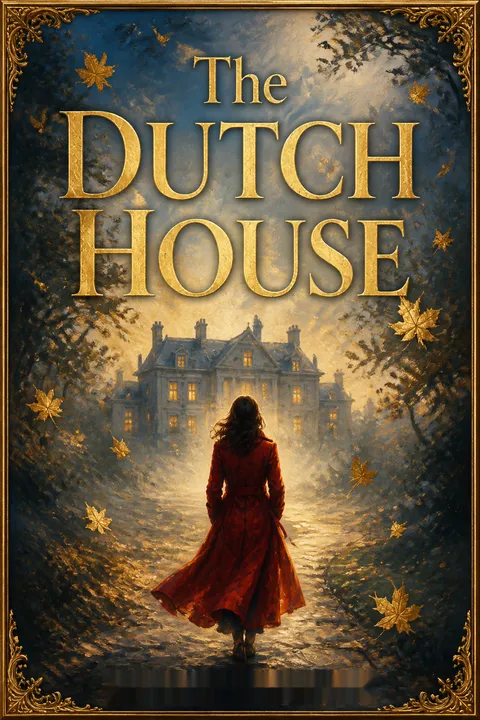


Plot Summary
Elna Leaves the Children
Danny is three when his mother, Elna, begins disappearing from the Dutch House for days at a time. His older sister Maeve, ten, remembers Elna growing thinner and more distressed, then leaving for India without returning. Their father, Cyril, gives Maeve the news but cannot comfort her. Maeve stops going to school and drinks compulsively; after she collapses, doctors diagnose diabetes.
She survives two hospital stays, while the household grows afraid that speaking of Elna might make her worse. Danny has no memory of his mother and is raised instead by Maeve, housekeeper Sandy, cook Jocelyn, and nanny Fiona, whom he calls Fluffy. The children learn to depend on one another inside a mansion their mother had never felt at home in.
The first wound is not simply abandonment but the unequal distribution of memory. Maeve loses a mother she can recall, while Danny inherits the loss without having known its source. Her diabetes makes grief bodily and frightening, teaching the family to treat silence as protection. That strategy preserves daily life but leaves the children without an explanation they can use. The Dutch House intensifies the contradiction: a setting of extraordinary material abundance contains a family unable to provide the one security its children need. Maeve compensates by becoming Danny’s parent, a role that will shape both their intimacy and their limits.
Andrea Claims the Rooms
After years of irregular visits, Andrea Smith becomes a fixture in the Dutch House, first bringing her daughters, Norma and Bright, and then marrying Cyril beneath the VanHoebeek portraits. Danny and Maeve initially hope the girls will make Andrea disappear, but she moves them into the household instead.
When Maeve leaves for Barnard, Andrea gives her bedroom and window seat to Norma, sending Maeve’s belongings to a cramped room under the eaves. Maeve jokes about the downgrade when she returns for Thanksgiving, but the rearrangement makes her place in the family unmistakably conditional.
She remains kind to Norma and Bright, who trail after her, while Cyril avoids challenging Andrea. The house that once sheltered the siblings begins to feel like a territory Andrea is steadily reorganizing.
Andrea’s power emerges through domestic decisions rather than open confrontation. By assigning rooms, menus, and duties, she converts the house from a shared inheritance into a system arranged around her preferences. Maeve’s displacement is especially consequential because she has already spent years protecting Danny and compensating for Cyril’s emotional distance. Her outward humor helps her endure the humiliation, but it also makes the adults’ failure easier to ignore. Norma and Bright are children caught inside this contest, not simply intruders, which is why Maeve can resent what their mother does while still caring for them.
The Heirs Are Evicted
Cyril dies suddenly of a heart attack while inspecting a building site. Maeve and Danny reach the hospital together, but in the shock of bringing his body home they fail to notify Andrea. She remembers that omission as a deliberate injury.
Soon afterward, Maeve offers to keep Cyril’s company running, and Danny offers to collect rent; Andrea refuses both, then orders them out of the house. Sandy and Jocelyn are dismissed as well. Maeve and Danny leave with clothes stuffed into bags, abandoning treasured objects and Maeve’s portrait.
Lawyer Gooch explains that Cyril left no will: Andrea’s name on the company and house gives her control, while an education trust covers Danny, Norma, and Bright, but not Maeve. Maeve takes Danny to her small apartment and assumes responsibility for him.
Grief is rapidly converted into a dispute over who belongs. Danny and Maeve’s failure to include Andrea at the hospital is understandable in their shock, but Andrea uses it to justify a permanent expulsion. The legal arrangement gives emotional betrayal a material form: the siblings lose their home, their father’s business, and the objects that had made childhood tangible. Maeve’s response is practical, finding shelter and learning the trust’s terms, while Danny still imagines that the injustice can be reversed. Their different reactions reveal their established roles: she acts; he hopes she can act for both of them.
The Chemistry Train
After the eviction, Maeve sends Danny to Choate and secures his place at Columbia through the education trust. At Columbia, struggling in chemistry and worried about losing his academic deferment during the Vietnam War, Danny studies on a Thanksgiving train.
Celeste Norcross, a student from nearby Rydal, borrows his textbook and begins talking with him. When her family fails to meet her at Philadelphia’s station, Maeve offers her a ride home. Danny and Celeste later begin a relationship while he attends medical school.
Their arrangement suits his need to study and her hope for a shared future, until Celeste asks him to marry her after graduation. Danny refuses, unable to promise commitment or admit what he wants, and Celeste leaves. His education advances, but the life it is supposed to prepare him for remains uncertain.
The train encounter joins chance to obligation: Danny is reading chemistry because the trust and Maeve’s plans have put him on a medical track, while Celeste’s missed ride lets Maeve draw him toward intimacy. Yet their early compatibility rests partly on what remains unsaid. Celeste adapts to Danny’s schedule, and he mistakes her accommodation for a relationship that can remain indefinitely unchanged. Her request for marriage exposes the cost of that assumption. Danny does not reject her out of cruelty so much as an inability to picture a future that belongs to him, a hesitation rooted in the life his father and sister have designed.
Harlem Points the Way
During college, Danny walks through Harlem with classmates looking for a basketball game and sees a foreclosed building marked for auction. The sight awakens the knowledge his father gave him on construction sites and rent-collection rounds: buildings are not abstractions but work he understands.
He tries to use the education trust to buy the property, but Lawyer Gooch explains that the money is restricted to schooling. Danny neglects classes while searching for other opportunities, and Professor Morey Able intervenes, tutoring him back into good standing.
Near the end of medical training, Danny spots two parking lots whose value may rise beside a planned homeless shelter. He secures them, sells them to Columbia, and uses the proceeds to buy his first building. Medicine becomes the credential he completes, not the vocation he chooses.
Danny’s decisive awakening is not a rejection of his father but a belated recognition of their resemblance. He sees value in the same neglected properties Cyril once pursued, yet lacks the financial knowledge and authority that made his father’s decisions possible. The trust blocks him because it encodes Cyril’s wishes more rigidly than his son’s character. Morey’s intervention matters for the same reason: education becomes a discipline Danny can use, even when medicine is not his destination. His eventual success comes through attention, patience, and calculated risk, the very habits he had mistaken for someone else’s inheritance.
Fluffy Knows the Secret
After Danny reconnects with Celeste at his former coach’s funeral, he resumes their relationship but avoids explaining his plans. Then he meets Fluffy, now Fiona DiCamillo, at the Hungarian Pastry Shop.
She apologizes for striking him as a child and reveals that she saw Elna years earlier in Manhattan, working among the poor on the Bowery. Danny remembers a thin woman in his hospital emergency room who called him by Cyril’s name, but he had not recognized his mother.
He refuses Fluffy’s suggestion that Elna’s charity makes her abandonment noble. He also keeps the news from Maeve, fearing it will reopen their old wounds. With Celeste, he finally tells the story of his family and his real-estate plans, then asks her to marry him. They wed that summer.
The revelation changes absence from a closed loss into an ongoing choice. Elna was not simply unreachable in India; she had lived within traveling distance while making no attempt to find her children. Danny’s anger is sharpened by this fact, but it is also complicated by his encounter with her in the emergency room, where professional urgency kept him from recognizing her. His silence toward Maeve repeats the family’s old protective habit, though now it is Danny deciding what his sister can bear. His decision to marry Celeste follows a different movement: he offers her the story he had kept private, making disclosure a form of commitment.
A House Built on Dirt
Danny and Celeste build a family in New York, raising May and Kevin while Danny expands his property business. Celeste hoped he would practice medicine, and she remains frustrated by how much Maeve handles the company’s books, but Maeve values her work at Otterson’s frozen-vegetable firm and stays close to Danny.
When Celeste’s difficult pregnancy leaves her needing help with May, Danny calls Fluffy, who becomes their nanny and confidante. While caring for the children, Fluffy tells them how Cyril bought cheap land in Horsham after a wounded soldier mentioned the place in a hospital in France.
Cyril had saved wages from dam work, then sold land to the Navy when it built a base there. Danny recognizes the origin of his father’s fortune, and the family’s vanished house becomes part of a longer story of risk and reinvention.
Fluffy supplies the missing bridge between Cyril’s poverty and his success, answering the question Danny could never ask his father. The origin is neither a master plan nor a miracle: it begins with listening to another wounded man, remembering a place, and having saved enough to act. That sequence clarifies the inheritance Danny receives beyond money. At home, however, different inheritances collide. Celeste wants a husband whose medical identity can be shared and admired; Danny wants to build. Maeve gives his business structure without surrendering her own working life. The family holds together through care, but not through agreement.
The Last Drive-By
Years later, Maeve attends May’s Nutcracker performance with the family. After the long ballet, her blood sugar drops dangerously; Danny gives her glucose, while Celeste and Kevin quickly bring juice and ice.
Maeve recovers but is too exhausted to join the family dinner, so Danny drives her back to Jenkintown. Before dawn, they stop at the Dutch House and watch Andrea come outside to collect the newspaper, unaware of them in the car. The sight makes Maeve realize that even decades after their eviction, seeing Andrea still hurts physically.
At breakfast, she tells Danny she will stop visiting the street. They have mistaken the ritual of returning for a way to reclaim childhood, but the house can offer neither their father nor the lives they lost.
The ballet episode makes Maeve’s dependence visible in front of the family, while also showing how care can cross old divisions: Celeste and Kevin act quickly, without turning the crisis into a contest. The dawn visit then strips the Dutch House of its power as a secret refuge. Andrea is simply a woman retrieving a newspaper, yet her presence still activates the siblings’ history. Maeve’s decision to stop returning is not forgiveness or forgetting. It is recognition that repetition has become its own form of captivity, one sustained by the hope that the past might finally answer them.
Their Mother Returns
When Maeve suffers a serious heart attack at work, her employer, Mr. Otterson, recognizes the danger and drives her to the hospital instead of taking her home. Danny arrives to find Maeve in intensive care.
On his fourth morning there, he discovers Elna in the waiting room; Fluffy had told her Maeve was ill. Elna has been absent for more than four decades, but Maeve welcomes her and asks Danny not to drive her away. Danny fears that their mother’s return will harm Maeve, remembering the illness that followed Elna’s departure.
He reluctantly makes room for her, then watches Maeve recover while Elna helps with food, medication, and visitors. The reunion gives Maeve the mother she has long wanted, while leaving Danny to confront the anger he has kept intact.
The hospital reverses the family’s old arrangement: Maeve, once the child who nearly died after Elna left, now has the power to welcome her back. Danny’s protective impulse is genuine, but it also threatens to substitute his judgment for Maeve’s. His fear treats the past as a prediction, as though the same loss must recur because it once did. Elna’s presence cannot repair the decades, yet her practical care offers Maeve a relationship in the present. The contrast between Maeve’s joy and Danny’s distrust prevents reconciliation from becoming an easy moral lesson.
Andrea’s Daughter Comes Home
As Maeve recovers, Elna describes her departure as a mistake rooted in shame and her inability to live in the Dutch House. She had wanted to serve people in need, but the mansion made her feel useless and out of place. More than a year later, Elna drives Maeve and Danny to visit the house. Andrea, now severely impaired, mistakes Danny for Cyril and clings to him; her daughter Norma explains that she has returned from California to care for her.
Maeve sees her childhood portrait still hanging opposite the VanHoebeeks and removes it, intending to give it to Danny’s daughter, May. She also apologizes to Norma for leaving her behind when Andrea expelled them. Elna decides to remain and help Andrea, while Maeve leaves the house with Danny.
The return turns the house from a symbol into a room occupied by vulnerable people. Andrea’s illness does not erase her earlier cruelty, but it makes revenge feel inadequate to the immediate fact of her dependence. Maeve’s portrait restores something she had feared was lost, while her apology to Norma recognizes that the younger girls were also abandoned by the adults’ decisions. Elna’s account complicates Danny’s verdict without nullifying it: she loved her children and still chose a calling that left them. The family can see one another more clearly, but clarity does not make their histories painless.
Maeve Does Not Come Home
Two weeks after the visit to the Dutch House, Elna calls Danny before daylight to say Maeve has died. The book gives no single explanation that can make her death feel orderly; her diabetes and earlier heart attack have made her health precarious, but the loss still arrives as a shock. Danny can barely remember the period that follows, except for Mr. Otterson weeping at Maeve’s funeral Mass.
The death revives the fear Danny has carried since childhood: that loving Maeve means waiting for the moment she will be taken from him. It also leaves him unable to turn back to the conversations they postponed or the years he spent trying to keep her safe. The sister who held their family together is gone, and no house can contain her presence.
Maeve’s death refuses the consolations of narrative accounting. Her earlier heart attack gives the reader reason to fear, but it does not make the loss feel earned or inevitable. Danny has spent his life translating uncertainty into tasks: checking blood sugar, managing buildings, arranging transport. None of those skills can prevent this absence. Mr. Otterson’s grief confirms that Maeve’s importance extended beyond family duty; she had made herself indispensable through work and attention. The loss also exposes the cost of their closeness: Danny’s identity has been organized around a sister he cannot protect forever.
The House Opens Again
After Maeve’s death, Danny’s marriage to Celeste ends, and he eventually returns to the Dutch House without the old need to watch it from across the street. Andrea has died, while Elna remains there caring for her; Danny finds his mother feeding the woman who once displaced her family. Their shared recognition of the house and its failures lets his anger loosen, though it never becomes a simple pardon.
Maeve’s portrait passes to May, who later returns it to the drawing room after her acting career flourishes. Norma holds the house for her. At a party May hosts there, Danny sees a figure in the garden and imagines Maeve for an instant, then recognizes his daughter. The house is alive again, but its future belongs to someone who chose it.
The ending does not restore the original family or make the house innocent. Instead, it changes who can inhabit its meaning. Danny’s return to Elna is made possible by witnessing care rather than receiving a complete explanation, and his forgiveness remains partial and specific. May’s return transforms inheritance from a claim imposed by parents into a choice made by the next generation. Her party fills the ballroom with life that is not a reenactment of the VanHoebeeks’ grandeur. Danny’s fleeting vision of Maeve marks memory as presence, but recognition lets him return to the living.
Analysis
The novel asks what people inherit when legal ownership, emotional belonging, and remembered history do not align. Cyril gives his children a mansion and a business, yet his financial arrangements transfer control to Andrea and leave Maeve outside the education trust. The objects that survive, especially the Dutch House and Maeve’s portrait, become evidence of lives that cannot be recovered by possession alone. Danny’s narrative makes memory both intimate and unstable: he revises his understanding as he learns what his father did not tell him, what Maeve noticed, and what Fluffy preserved.
The siblings’ bond is the book’s central form of care, but it also has costs. Maeve raises Danny, guides his education, and helps build his business; Danny’s wish to protect her can become another way of deciding for her. Elna’s return reveals the danger of making love and forgiveness synonymous. Maeve can welcome their mother without requiring Danny to erase his anger. Likewise, Danny’s eventual care for Elna does not transform her departure into a good choice. The novel allows affection to coexist with judgment.
Its family history is also a study of labor. Sandy, Jocelyn, Fluffy, Maeve, and eventually Elna sustain households through cooking, accounting, nursing, and attention, while wealth and status obscure who performs the work. Danny finds purpose in buildings because construction makes responsibility visible: a leak can be repaired, a tenant heard, a neglected property restored. But family losses cannot be managed with the same tools. The ending offers no return to an untouched past. Instead, May’s chosen use of the house gives inheritance a new possibility: not a claim that the past belongs to her, but a decision about what life can happen there next.
Review Summary
The Dutch House receives mostly positive reviews for its compelling family saga spanning decades, with many praising Patchett's masterful characterization and storytelling. Readers appreciate the complex sibling relationship between Danny and Maeve, and the house's role as a central character. Some criticize the slow pacing and unbelievable plot elements. The audiobook narrated by Tom Hanks is highly praised. While not universally loved, most reviewers find it a worthy addition to Patchett's acclaimed body of work, with rich themes of family, forgiveness, and the meaning of home.
People Also Read










Characters
Danny Conroy
The builder of memoryDanny narrates the family story from the perspective of a man trained as a doctor but drawn to buildings, property, and the practical labor his father taught him. As a child, he depends on Maeve to interpret a household shaped by absence; as an adult, he often understands people through work, objects, and remembered scenes. His instinct is to protect those he loves, sometimes by withholding information or trying to manage their choices. He is observant but not omniscient, and his recollections repeatedly expose what he failed to ask while people were still available to answer.
Maeve Conroy
Danny’s fierce guardianMaeve is Danny’s older sister, a gifted mathematician whose steadiness becomes the family’s substitute for parental care. Living with diabetes, she is alert to other people’s needs and often hides her own vulnerability behind competence, humor, and an unwavering gaze. She manages money with unusual skill, supports Danny’s education and business, and remains devoted to the people who cared for them. Her loyalty can become controlling, especially when she believes she is protecting her brother, but it grows from a childhood in which no one reliably protected her.
Cyril Conroy
The practical patriarchCyril is Danny and Maeve’s father, a Brooklyn-born businessman who builds a real-estate fortune through patience, observation, and calculated risk. He is more comfortable repairing a tenant’s stove or explaining a building site than discussing feelings at home. His care often appears as instruction, work, or provision rather than tenderness, leaving his children to infer what he means. He admires self-reliance and believes hardship teaches people how money works, even though his own success gives his children a very different start. His choices shape both their opportunities and their deepest family conflicts.
Elna Conroy
The restless giverElna is Danny and Maeve’s mother, a compassionate woman whose attention is drawn toward people in need. She is uncomfortable with wealth, domestic grandeur, and the role of passive recipient, even when others interpret her discomfort as ingratitude. Her generosity is sincere, but it can become an escape from the obligations closest to her. She is remembered differently by her children and by the women who worked beside her, creating a complicated portrait that resists both easy condemnation and saintly idealization.
Andrea Conroy
The house’s determined mistressAndrea is Cyril’s second wife and the mother of Norma and Bright. She is captivated by the Dutch House and approaches domestic life as something to organize and possess. Her polished manners conceal a forceful desire to determine who belongs, where people sleep, and how the household runs. She wants security and recognition, but her efforts to secure them often disregard the emotional lives of Cyril’s children and the household staff. Andrea is not defined only by her antagonism; her bond with the house reflects a deeper need to make a place feel unquestionably hers.
Celeste Norcross
Danny’s searching partnerCeleste meets Danny on a train while he is studying chemistry and later becomes his wife and the mother of May and Kevin. An English student who becomes a teacher, she is warm, capable, and attentive to the everyday work of family life. She wants a secure partnership and hopes Danny will embrace medicine, the future his education seems to promise. His devotion to real estate and Maeve frustrates her, while her own compromises are not always visible to him. Celeste is neither simply patient nor simply demanding; she is a person trying to build a life from expectations she has not fully examined.
Fiona DiCamillo
The beloved former nannyFiona, called Fluffy by the children, cares for Maeve and Danny when they are young and has earlier ties to the VanHoebeek household. She is affectionate, energetic, and deeply attached to the children, but her judgment is imperfect and her own hopes complicate her position in the family. Years later, she remains an important keeper of stories about the house and the adults who lived in it. Her capacity to care for children is central to her identity, as is the guilt she carries over choices made when she was young.
Norma Smith
Andrea’s watchful daughterNorma is Andrea’s older daughter and Bright’s more serious, protective sister. As a child, she is careful to observe the rules and moods around her, even when adults have made decisions without asking what she wants. She is drawn to Maeve and the Dutch House, but her place in the family is complicated by the rivalry between her mother and the Conroy siblings. Norma’s conscientiousness makes her dependable, though it also leaves her carrying responsibilities that began long before she was ready.
Bright Smith
Norma’s sunny younger sisterBright is Andrea’s younger daughter, cheerful and openly affectionate, especially with Norma and Maeve. She initially struggles with the scale of the Dutch House and prefers the safety of being near her sister. Her lightness can make adults underestimate how closely she notices what is happening around her. Bright represents the childhood that all four children share for a time, even though the adults’ conflicts divide them into different households and loyalties.
Sandy
The steady housekeeperSandy is the Conroy family’s housekeeper and Jocelyn’s sister. She helps keep Danny and Maeve fed, clothed, and cared for, often noticing needs before the children voice them. Her affection is practical rather than ceremonial, and she offers comfort without demanding gratitude. Sandy is loyal to the children and to the household’s earlier rhythms, but she also has a life and family beyond the Dutch House.
Jocelyn
The blunt family cookJocelyn is the Conroys’ cook and Sandy’s sister. Direct, capable, and protective, she understands that food and routine can steady a household when adults cannot. She cares for Maeve and Danny as individuals, not merely as the children of her employers, and is willing to speak plainly when someone is being mistreated. Her judgments are fierce, but they are grounded in years of service and affection rather than deference to status.
May Conroy
The daughter who chooses the houseMay is Danny and Celeste’s daughter, an expressive child who takes ballet seriously before turning toward performance. She is close to Maeve and fascinated by family photographs, stories, and the Dutch House, even though she has no clear memory of living there. Her imagination allows her to treat inherited history as something she can enter, while her ambition points toward a future of her own. May’s relationship to the house differs from her father’s: she approaches it as a chosen setting, not only a lost home.
Kevin Conroy
Danny’s curious sonKevin is Danny and Celeste’s son. He is practical, energetic, and interested in how things work, from frozen-vegetable machinery to the motion of a crowded theater. His easy affection for Maeve and his ability to move through the city make him a bridge between family members who are often divided by old grievances. Kevin is also one of the people through whom Danny experiences fatherhood as an active, ordinary responsibility.
Mr. Otterson
Maeve’s trusted employerMr. Otterson runs the frozen-vegetable company where Maeve works. Quiet and unassuming, he recognizes her financial intelligence and gives her unusual latitude because he trusts her judgment. His respect for Maeve is personal as well as professional, and he treats her as essential without trying to redirect her life. He is one of the few adults outside the family whose steadiness offers Danny and Maeve dependable support.
Morey Able
Danny’s chemistry mentorMorey Able is Danny’s Columbia chemistry professor. He sees that Danny’s poor performance comes from distraction rather than inability and gives him demanding, structured help. His concern extends beyond the classroom: he checks on Danny’s progress, offers guidance, and remains a mentor as Danny moves through medical training. Morey’s intervention teaches Danny how disciplined study can serve a life he has not yet chosen.
Lawyer Gooch
The family’s legal guideLawyer Gooch is Cyril’s friend and the family’s attorney. He explains the legal arrangements that govern the business, the house, and the education trust after Cyril’s death. He tries to help Maeve and Danny understand their options, while being constrained by documents Cyril signed and failed to revise.
Simon
Maeve’s portrait painterSimon is a visiting painter hired to make a portrait of Elna. When Elna refuses to sit for him, he paints the young Maeve instead. His attention to light and his sustained focus give Maeve an unusually intense experience of being seen, and the resulting portrait remains a powerful object in the family’s history.
Inez
Andrea’s devoted caregiverInez is the caregiver who helps Norma look after Andrea in the Dutch House. Patient and observant, she knows how to approach Andrea when illness makes her frightened or confused. Her kindness provides practical stability in a household still shaped by old divisions.
Plot Devices
The Dutch House
A home turned memoryThe mansion once belonged to the VanHoebeeks, whose portraits and possessions remain after their family disappears. Cyril buys it as a gift for Elna, but she finds its scale and inherited luxury suffocating. For Danny and Maeve, it becomes the setting of childhood, eviction, and decades of returns by car. Its rooms preserve family history without resolving it. When later generations enter the house, its meaning shifts from lost property to a place they may choose to inhabit or care for.
The Parked Car
A mobile memory roomDanny and Maeve repeatedly park across from the Dutch House, often sharing cigarettes and reconstructing the past while watching the windows. The car lets them approach the family home without crossing its threshold. It becomes a private setting for sibling conversations, an alternative to the house where they once lived, and a ritual that sustains their bond. Their eventual decision to stop returning marks a change in how they carry memory, while later drives still let them test what the house means to them.
Maeve’s Portrait
A child preserved in paintCommissioned as a substitute for the portrait Elna refused to sit for, the painting records Maeve at ten, before the family’s later losses. It hangs in the drawing room opposite the VanHoebeeks, giving Maeve a lasting presence in the home even after she is displaced. Its survival matters because the family fears Andrea might discard it. The portrait links Maeve’s childhood to the next generation when it passes to May, who eventually returns it to the house.
The Education Trust
A legacy with conditionsCyril leaves no will, but the education trust he established pays for schooling for Danny, Norma, and Bright. Maeve, already graduated, is excluded. Its terms protect education while limiting Danny’s ability to use the money to buy a building, even though real estate is the work he wants. The trust therefore functions as both inheritance and constraint. It gives Danny an opportunity to pursue medical training, connects his future to the Smith girls, and intensifies the siblings’ sense that Andrea controls what their father left behind.
Insulin and Glucose
Care measured in minutesMaeve’s diabetes shapes the family’s daily attention, from insulin supplies and sugar tablets to Danny’s awareness of her changing color and energy. It makes care concrete and urgent, giving Danny a practiced role in responding to crises. The illness also magnifies the family’s fear that grief or stress can undo Maeve’s health, leading others to decide what she should be told. Her medical condition is not a symbol alone; it is a continuing reality that shapes her work, travel, relationships, and vulnerability.
FAQ
Synopsis & Basic Details
What is The Dutch House about?
- Family Saga of Loss: The Dutch House follows the lives of siblings Danny and Maeve Conroy as they navigate their complex family history, marked by their mother's abandonment, their father's remarriage, and the loss of their childhood home.
- House as a Character: The story revolves around the Dutch House, a grand estate that becomes a symbol of both their shared past and the source of their pain, influencing their relationships and decisions.
- Themes of Memory and Forgiveness: The narrative explores themes of memory, inheritance, betrayal, and the search for forgiveness as the siblings grapple with their past and try to forge their own paths in life.
Why should I read The Dutch House?
- Compelling Characters: The novel features richly developed characters, particularly the complex relationship between Danny and Maeve, whose bond is tested by the events of their lives.
- Intricate Family Dynamics: The story delves into the intricacies of family relationships, exploring the impact of parental absence, sibling loyalty, and the challenges of blended families.
- Atmospheric Setting: The Dutch House itself is a character, creating a haunting and atmospheric backdrop for the unfolding drama, adding depth and symbolism to the narrative.
What is the background of The Dutch House?
- Post-War America: The story is set in post-World War II America, reflecting the social and economic changes of the time, particularly the rise of suburban development and the changing roles of women.
- Wealth and Class: The novel explores themes of wealth and class through the lens of the Conroy family, highlighting the disparities between the wealthy and the working class, and the impact of sudden wealth and loss.
- Architectural Significance: The Dutch House, with its unique design and history, serves as a symbol of the past, reflecting the changing fortunes of its inhabitants and the broader societal shifts of the era.
What are the most memorable quotes in The Dutch House?
- "The biggest lie in business is that it takes money to make money.": This quote from Cyril Conroy reveals his belief in hard work and ingenuity over inherited wealth, a theme that resonates throughout the story.
- "I could never do that. Never in a million years could I say goodbye to you.": This quote from the children's mother highlights her inability to face her children when she leaves, emphasizing the emotional turmoil and the lasting impact of her departure.
- "We pretended that what we had lost was the house, not our mother, not our father.": This quote encapsulates the siblings' tendency to focus on the tangible loss of the house rather than the deeper emotional losses they experienced, revealing their coping mechanisms.
What writing style, narrative choices, and literary techniques does Ann Patchett use?
- First-Person Narration: The story is told from Danny's perspective, providing an intimate and subjective view of the events, allowing readers to connect with his emotions and experiences.
- Non-Linear Timeline: Patchett employs a non-linear timeline, weaving together past and present events to reveal the complexities of the characters' lives and the enduring impact of their history.
- Symbolism and Imagery: The author uses rich symbolism and imagery, particularly in the descriptions of the Dutch House, to enhance the themes of memory, loss, and the passage of time.
Hidden Details & Subtle Connections
What are some minor details that add significant meaning?
- The Ship in the Clock: The grandfather clock with a ship that rocks back and forth symbolizes the passage of time and the cyclical nature of life, reflecting the characters' journeys and the recurring patterns in their family history.
- The Blue Delft Mantels: The blue delft mantels, said to be from a castle in Utrecht, represent the house's history and the VanHoebeeks' past, adding a layer of mystery and intrigue to the narrative.
- The Red Coat in the Portrait: Maeve's red coat in her portrait foreshadows her strength and resilience, as well as her connection to the past, as she is often seen wearing red in the present.
What are some subtle foreshadowing and callbacks?
- Andrea's Concern About Windows: Andrea's initial concern about people looking into the house foreshadows her desire for control and her eventual attempts to shut out the past, highlighting her insecurity and ambition.
- The Basement Tour: Maeve's tour of the basement with Norma and Bright foreshadows the girls' eventual inheritance of the house and their connection to its history, as well as Maeve's deep understanding of the house's secrets.
- The Mention of Fluffy's Parents: The mention of Fluffy's parents working for the VanHoebeeks foreshadows her later connection to the house and her role in the Conroy family's lives, highlighting the cyclical nature of history and the interconnectedness of lives.
What are some unexpected character connections?
- Fluffy and the VanHoebeeks: Fluffy's childhood connection to the VanHoebeeks reveals a hidden layer of history within the Dutch House, highlighting the interconnectedness of lives and the enduring impact of the past.
- Sandy and Jocelyn as Sisters: The revelation that Sandy and Jocelyn are sisters adds depth to their relationship and their shared history with the Conroy family, emphasizing the importance of family bonds and loyalty.
- Mrs. Buchsbaum's Observations: Mrs. Buchsbaum's observations about Andrea and Maeve highlight the community's awareness of the family dynamics, adding a layer of social commentary and foreshadowing future conflicts.
Who are the most significant supporting characters?
- Sandy and Jocelyn: The housekeepers, Sandy and Jocelyn, provide a sense of stability and continuity in the Conroy children's lives, offering a maternal presence and a connection to the past.
- Mr. Otterson: Mr. Otterson, Maeve's employer, becomes a significant figure in her life, offering her a sense of purpose and stability, and later playing a crucial role in her health crisis.
- Lawyer Gooch: Lawyer Gooch, the family lawyer, serves as a link to the past and a source of information about the family's legal and financial affairs, highlighting the complexities of inheritance and legacy.
Psychological, Emotional, & Relational Analysis
What are some unspoken motivations of the characters?
- Andrea's Desire for Control: Andrea's unspoken motivation is her desire for control over the Dutch House and the Conroy family, stemming from her own insecurities and ambitions, which ultimately lead to her downfall.
- Cyril's Need for Stability: Cyril's unspoken motivation is his need for stability and a sense of family, which leads him to marry Andrea, despite the obvious tensions and conflicts it creates.
- Maeve's Need to Protect Danny: Maeve's unspoken motivation is her need to protect Danny, stemming from their shared trauma and her deep sense of responsibility for his well-being, which often leads her to make sacrifices for him.
What psychological complexities do the characters exhibit?
- Danny's Obsessive Nature: Danny exhibits an obsessive nature, particularly in his pursuit of real estate and his fixation on the past, reflecting his struggle to reconcile his identity and his family's legacy.
- Maeve's Self-Sacrifice: Maeve's self-sacrificing nature, often putting Danny's needs before her own, reveals her deep sense of responsibility and her struggle to find her own path in life.
- Andrea's Insecurity and Ambition: Andrea's insecurity and ambition drive her actions, leading her to seek control over the Dutch House and the Conroy family, ultimately resulting in her isolation and decline.
What are the major emotional turning points?
- Cyril's Death: Cyril's sudden death is a major emotional turning point, shattering the siblings' sense of security and forcing them to confront the realities of their inheritance and their relationship with Andrea.
- Maeve's Heart Attack: Maeve's heart attack is a major emotional turning point, highlighting her vulnerability and forcing Danny to confront his fears of losing her, as well as bringing their mother back into their lives.
- The Encounter with Andrea at the Dutch House: The encounter with Andrea at the Dutch House is a major emotional turning point, forcing Danny and Maeve to confront their unresolved feelings and the enduring impact of their past.
How do relationship dynamics evolve?
- Danny and Maeve's Bond: Danny and Maeve's bond evolves from a childhood alliance to a deep and complex relationship marked by loyalty, protectiveness, and unspoken understanding, highlighting the enduring power of sibling love.
- Danny and Celeste's Relationship: Danny and Celeste's relationship evolves from a chance encounter to a complex partnership marked by love, support, and ultimately, the challenges of reconciling their different perspectives and desires.
- The Conroy Family and Elna: The Conroy family's relationship with Elna evolves from a state of absence and resentment to a complex dynamic marked by forgiveness, understanding, and the enduring impact of their shared history.
Interpretation & Debate
Which parts of the story remain ambiguous or open-ended?
- The Mother's True Motivations: The mother's true motivations for leaving and her feelings about her children remain somewhat ambiguous, leaving readers to interpret her actions and her return.
- The Nature of Andrea's Illness: The nature of Andrea's illness and its impact on her actions remain open to interpretation, raising questions about the complexities of mental health and the nature of responsibility.
- The Future of the Dutch House: The future of the Dutch House and its significance for the characters remains open-ended, leaving readers to ponder the enduring impact of the past and the possibilities for new beginnings.
What are some debatable, controversial scenes or moments in The Dutch House?
- Andrea's Treatment of Maeve and Danny: Andrea's treatment of Maeve and Danny, particularly her decision to throw them out of the house, is a controversial moment that raises questions about her character and her motivations.
- Cyril's Decision to Marry Andrea: Cyril's decision to marry Andrea, despite the obvious tensions and conflicts it creates, is a debatable moment that raises questions about his judgment and his understanding of his children's needs.
- Elna's Decision to Leave: Elna's decision to leave her children and her husband is a controversial moment that raises questions about her motivations and her responsibility as a mother, sparking debate about the nature of motherhood and personal fulfillment.
The Dutch House Ending Explained: How It Ends & What It Means
- The Cycle of Loss and Legacy: The ending of The Dutch House emphasizes the cyclical nature of loss and legacy, as the house passes into May's hands, highlighting the enduring impact of the past on future generations.
- The Power of Forgiveness and Acceptance: The ending suggests the possibility of forgiveness and acceptance, as Danny and his mother find a way to coexist, and as the characters come to terms with their past and their present.
- The Enduring Power of Family: The ending underscores the enduring power of family bonds, as Danny and Maeve's relationship continues to shape their lives, even after death, and as the Conroy family finds a way to move forward, carrying their history with them.
About the Author







Download PDF
Download EPUB
.epub digital book format is ideal for reading ebooks on phones, tablets, and e-readers.








