

Key Takeaways
Find a soul friend who sees beyond your role and receives your truth
A friend as witness. O’Donohue’s central idea is the anam ċara, a Gaelic term meaning “soul friend.” In early Celtic Christianity, it described a spiritual companion or guide to whom a person could reveal private thoughts and fears. Such friendship is not just shared interests or constant contact. It is the experience of being understood without having to perform a more acceptable self.
Attention makes friendship real. A friend can also notice what someone cannot see alone, including evasions and recurring habits. O’Donohue draws on Aristotle’s view that friendship takes time to develop: wanting closeness may happen quickly, but trust grows through sustained care. The practical invitation is to offer that kind of attention, and to notice who offers it in return.
What's valuable here is the move from friendship as social activity to friendship as a way of knowing. Close relationships can help people regulate distress and revise their understanding of themselves, because another person notices patterns that self-reflection misses. Still, the ideal should not become a search for one flawless, all-understanding soulmate. The book’s own broader view allows soul friendship to exceed conventional categories. In practice, this kind of recognition can be distributed across several trustworthy relationships, and it depends on mutual consent, honesty, and respect.
Let love create closeness without making either person disappear
Love is not possession. O’Donohue argues that love can awaken a person’s capacity to care for themselves, rather than leaving them dependent on another’s approval. He imagines an inner source of affection that makes it possible to approach a beloved from generosity, not desperation. That inner security helps a person offer love without demanding that it repair every private ache.
Difference needs room. Love should make two people more fully themselves, not copies of each other. The book recalls an elderly man who compared wedding photographs with pictures of the same couples years later, amused by how one partner sometimes began to resemble the other. The point is not that similarity is bad, but that intimacy can quietly erase the differences that first made each person vivid.
This resembles the idea of differentiation in family psychology: people can stay emotionally close while keeping distinct identities, preferences, and responsibilities. That balance supports intimacy without turning it into fusion. O’Donohue’s language of sacred union adds a generous spiritual dimension, but closeness should never be used to excuse control or blurred boundaries. Healthy love includes the ability to say no, change, and remain separate. The strongest version of the argument is that security makes difference less threatening, not that all difference dissolves.
Return to the body and senses when life becomes abstract
The body is a home. O’Donohue rejects the idea that spiritual life requires treating the body as a lesser, troublesome container. He sees the body as the place where inner life becomes present, and the senses as thresholds through which the self encounters the world. Looking closely at a face, breathing with attention, or listening for what remains unspoken can make ordinary experience feel newly vivid.
Attention changes the scene. A meal eaten slowly offers a contrast to hurried eating, while a familiar smell can suddenly bring childhood to mind. The eyes, ears, skin, and tongue do more than collect information: they shape how the world feels and what becomes meaningful. The book’s challenge is simple: notice what the senses actually meet, instead of living only through plans, images, and abstractions.
The argument has a clear connection to embodied cognition, the view that thinking is shaped by bodily activity and sensory contact, not conducted by a detached mind alone. Attending to breath, food, or another person’s face can interrupt habitual abstraction and restore a sense of presence. Yet bodily signals are not infallible guides: pain, illness, and trauma can make sensation confusing or distressing. Sensory attentiveness is best treated as a source of information and connection, not a replacement for medical care or considered judgment.
Protect solitude from both distraction and relentless self-analysis
Solitude is not abandonment. O’Donohue distinguishes chosen solitude from loneliness. Solitude can be a return to one’s inner life, especially when silence gives thoughts and feelings room to emerge. He warns against trying to force a spiritual transformation through a rigid program or by endlessly dissecting the self. The soul, in his account, does some of its work indirectly, much as seeds grow out of sight beneath soil.
Leave room for quiet. The book contrasts the harsh, exposing light of constant analysis with the softer light of a candle, which lets mystery remain partly unseen. A useful practice is to spend some time without entertainment or a task, allowing the mind to settle before deciding what its feelings mean. This is not an argument against therapy; it is a caution against treating every inward difficulty as something to excavate immediately.
The distinction between reflective quiet and compulsive rumination matters. Research on attention and contemplative practice suggests that periods with fewer demands can support emotional processing, but solitude is not equally available or welcome to everyone. Isolation, depression, caregiving, and unsafe living conditions change what quiet means. O’Donohue’s metaphor of noninterference is strongest when understood as patience, not passivity. Some experiences need direct support, including therapy. A gentle inward practice should increase a person’s capacity to act and connect, rather than make withdrawal seem spiritually superior.
Treat contradictions as material for growth, not defects to erase
A self has many voices. O’Donohue presents inner life as complex: different desires, memories, and temperaments can coexist, and sometimes pull in opposite directions. He cautions against forcing these tensions into a simple, tidy identity. Contradiction may reveal that more than one important need is present, and listening to those needs can lead to a fuller response than suppressing whichever one feels inconvenient.
Integrate instead of banishing. The book recommends welcoming difficult qualities with enough kindness to understand what they are protecting or expressing. Art offers a model: a musical composition can hold tension without collapsing into noise. That does not make every impulse wise or harmless. It means that shame and repression alone rarely help someone understand a recurring pattern, while honest attention can create room for a more deliberate choice.
This approach makes inner conflict potentially informative rather than proof of personal failure. It also has limits. Some conflicts reflect competing values that cannot be perfectly reconciled, and some recurring patterns cause harm that requires boundaries, accountability, or professional help. Integration does not mean approving every impulse. A useful distinction is between accepting that a feeling exists and obeying what it urges. That distinction preserves O’Donohue’s compassion while making it possible to respond responsibly to difficult emotions.
Make work express human gifts instead of shrinking people into roles
Work can reveal or conceal. O’Donohue sees work as a chance to give visible form to abilities and ideas that would otherwise remain private. But a workplace organized only around output, hierarchy, and competition can reduce people to functions. He recounts an employer who deliberately provoked workers over a loud radio, then lowered its volume once their anger peaked, leaving them with the impression they had won a concession. The episode illustrates how power can manipulate even small conflicts.
Ask what work serves. The book argues that work should benefit workers and communities, not only owners or employers. It calls for workplaces that welcome imagination, recognize individual contributions, and question products that harm people or nature. Where changing a job is not possible, noticing whether the work allows any expression, dignity, or contribution can still clarify what is being lost.
The critique joins a spiritual question about purpose to a structural one about power. Research on job design and self-determination likewise emphasizes autonomy, competence, and meaningful contribution, but these conditions cannot be created by attitude alone. Pay, worker protections, management practices, and job security shape people’s options. The story of staged conflict is a reminder that an apparently small workplace decision can expose a larger imbalance. The practical lesson is not to romanticize vocation, but to examine how institutions distribute control, recognition, and risk.
Age by gathering experience, not by measuring what the body loses
Life has inner seasons. O’Donohue uses the cycle of nature to describe changing capacities. A difficult period may call for shelter, while a season of renewed energy may invite a new project. He sees old age as autumn: experiences that once seemed scattered can yield understanding. This image does not deny physical decline; it asks readers to see more than decline when they consider aging.
Hope can become seasoned. The book calls “second innocence” a trust in goodness that has survived real knowledge of disappointment. It is different from childhood’s untested optimism. O’Donohue evokes older people whose faces carry hardship without losing warmth or playfulness. Their example suggests that vitality is not identical to youth, and that aging can bring clearer priorities, greater freedom from false obligations, and a deeper appreciation of what remains possible.
The seasonal image resists a culture that treats aging chiefly as a problem to hide or defeat. Gerontology also distinguishes chronological age from a person’s sense of purpose, connection, and agency. Still, the harvest metaphor should not turn suffering into a requirement for wisdom, or imply that every older person has the time and health to reflect peacefully. Aging includes inequality, disability, and loss as well as insight. Its value here is as an alternative lens, not a universal account of what old age must feel like.
Use memory to integrate the past, not prosecute yourself with it
Memory gathers what time scatters. Days disappear as lived events, but O’Donohue imagines memory as an inner place where their meaning can be revisited. He compares it to the rings of a redwood tree: each layer holds traces of a different period. His term “inner harvesting” describes selecting and integrating experiences, including painful ones, rather than leaving them isolated or forgotten.
Return with compassion. Reflection can help a person recognize how a mistake, loss, or difficult choice shaped the life that followed. The aim is not to reopen every wound or rewrite the past as if it were fully controllable. O’Donohue warns against harsh self-judgment and relentless excavation. A gentler question is what an experience now means, and whether some part of it can be brought into a more coherent understanding of one’s life.
This account anticipates the idea of narrative identity: people make sense of who they are partly by arranging remembered events into a story. Memory, however, is reconstructive rather than a perfectly preserved archive. Revisiting the past can build meaning, but it can also strengthen a distorted or overly self-blaming account. Compassionate reflection therefore benefits from other perspectives and from attention to present evidence. The book’s image of harvesting is useful because it implies selection and care, not the impossible task of recovering every detail exactly.
Treat death as a companion that clarifies what deserves your time
Mortality is already present. O’Donohue describes death not only as a final event, but as a companion that appears in fear, loss, and the awareness of vulnerability. He argues that naming a fear can make it more manageable: instead of being surrounded by a shapeless dread, a person can ask what, specifically, is frightening. The book also presents death as a return to spiritual belonging, a belief grounded in its Celtic and Christian vision rather than something it can prove.
Grief needs witnesses. In Irish tradition, the caoineadh was a form of keening in which mourners voiced the dead person’s life through lament. A wake gathered family and neighbors around the body and the bereaved. These practices made room for sadness and remembrance. They suggest that grief need not be hurried into private acceptance; care can mean staying present with the bereaved and honoring the person who died.
The chapter brings existential reflection together with social ritual. Naming fears can make them easier to discuss, while communal mourning gives loss a shared form and prevents bereaved people from carrying every task alone. The spiritual assurance of reunion may comfort some readers, but it is a matter of faith, not a universal fact. Likewise, grief does not follow one correct timetable. The book’s most widely useful claim is not that death should cease to hurt, but that mortality can deepen attention and that mourning deserves human company.
Do not let fear or borrowed expectations author your one life
A day is a real unit of life. O’Donohue warns against postponing meaningful choices until an imagined future, such as retirement, when the conditions may never arrive as expected. He recalls the regret of a dying person who wished for more time to do what had long mattered to him. The story turns the book’s spiritual argument toward action: a life is shaped by the days actually inhabited, not by intentions kept safely on hold.
Test the barriers. Some limits are real, but others are predictions about what other people will think, or images of failure that have become more frightening than the task itself. The book asks readers to notice whether they are living from their own gifts or from a role they have inherited. Taking one modest step toward a long-postponed possibility can be a way of returning to that life without pretending risk has vanished.
Mortality can sharpen priorities by making opportunity feel finite, a central insight in existential thought. But urgency should not become another demand for constant achievement. Financial pressure, illness, discrimination, and caregiving can place genuine limits on choice; describing every obstacle as an illusion would blame people for constraints they did not create. The useful question is narrower: among the options available now, which are being rejected mainly to avoid embarrassment or disapproval? That distinction protects the book’s call to live more fully from a simplistic promise of unlimited freedom.
Analysis
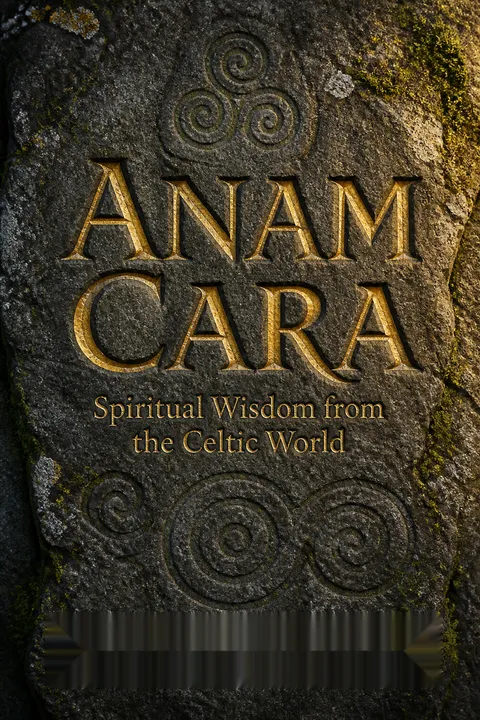
Anam Cara is less a manual than a lyrical philosophy of attention. Its chapters circle through friendship, the senses, solitude, work, aging, and death, presenting each as a different threshold between visible life and an inward dimension. The recurring metaphor is not escape from ordinary existence, but permeability: body and soul, person and landscape, memory and present experience, the living and the dead are imagined as interwoven rather than sealed apart. The book’s Celtic inheritance supplies a symbolic vocabulary for this view, especially the circle, the well, the hearth, and the changing seasons.
That poetic method is also the book’s strength and its limitation. A story about a wake or a landscape does not establish a metaphysical claim about the soul; instead, it gives readers an image through which to experience attention, grief, or belonging differently. Read this way, the work can be transformative without requiring every reader to accept its theology. Its critique of modern life is most persuasive when it identifies concrete habits of alienation: treating people as roles, senses as distractions, work as mere output, and grief as an inconvenience. It is less persuasive when it generalizes about modernity or presents Celtic spirituality as a unified alternative. The text is a lyrical interpretation of a tradition, not a systematic history of it.
The most practical ethic that emerges is one of reverent attention. Notice the person before the role, the body before the abstraction, and the actual day before the imagined future. At the same time, the book’s language of inner healing should not be mistaken for a clinical prescription. Some wounds call for therapy, medical care, structural change, or protection from harm, not patient metaphor alone. Its enduring value lies in making those practical questions feel spiritually consequential: How does a person’s way of seeing shape the world they inhabit, and what forms of attention allow that world to become more generous, truthful, and fully lived?
Review Summary
Anam Cara is widely praised for its profound spiritual wisdom and poetic language. Readers appreciate O'Donohue's exploration of Celtic spirituality, friendship, and the soul. Many find the book deeply moving and transformative, returning to it repeatedly for insights. Some critics find it overly flowery or religious, but most reviewers highlight its beautiful prose and thought-provoking ideas. The book's contemplative nature and focus on inner reflection resonate strongly with many readers, who describe it as a source of comfort and inspiration in their lives.
People Also Read


Glossary
anam ċara
soul friendA Gaelic term meaning soul friend. O’Donohue uses it for a companion with whom a person can disclose private thoughts and feelings and experience deep recognition. In early Celtic Christianity, the term could describe a teacher, spiritual guide, or trusted confidant. The idea extends beyond a conventional social role to friendship as a source of belonging and insight.
candlelight perception
reverent inward attentionO’Donohue’s image for approaching inner life without trying to expose or control it completely. Like candlelight, this mode of attention offers enough illumination to notice what is present while allowing some mystery and privacy to remain. It contrasts with what he calls a harsh, overly analytical approach to the soul.
inner harvesting
integrating lived experienceThe process of revisiting and thoughtfully gathering experiences so their meaning can become part of a more coherent life. O’Donohue especially applies the idea to old age and to neglected or painful memories. It calls for discernment and self-compassion, rather than either ignoring every wound or repeatedly reopening all of them.
second innocence
seasoned trust in goodnessA form of hope that follows experience rather than preceding it. Unlike a child’s innocence, it does not depend on ignorance of pain or disappointment. O’Donohue uses the term for the possibility of remaining open to goodness, truth, and beauty after having encountered life’s difficulties.
caoineadh
Irish communal lamentA traditional Irish form of mourning, described by O’Donohue as a lament often led by women. The keening voiced grief while recalling the life and character of the person who had died. It gave mourners a shared ritual for expressing loss and placing the deceased’s story within the community’s memory.
FAQ
1. What is "Anam Cara: A Book of Celtic Wisdom" by John O’Donohue about?
- Exploration of Celtic Spirituality: The book delves into the ancient wisdom and spirituality of the Celtic tradition, focusing on themes of friendship, belonging, and the soul.
- Concept of Anam Ċara: Central to the book is the Gaelic concept of "anam ċara," meaning "soul friend," and how this deep, spiritual friendship can transform our lives.
- Lyrical and Philosophical Approach: O’Donohue blends poetry, philosophy, and personal reflection to offer a lyrical meditation on the human experience, nature, and the divine.
- Structure and Themes: The book is organized around key life stages and experiences—friendship, the senses, solitude, work, aging, and death—each explored through a Celtic lens.
2. Why should I read "Anam Cara: A Book of Celtic Wisdom" by John O’Donohue?
- Deepens Understanding of Self: The book encourages readers to explore their inner world, fostering self-awareness and spiritual growth.
- Offers Timeless Wisdom: O’Donohue draws on Celtic tradition to provide insights into love, friendship, and the meaning of life that are relevant across cultures and eras.
- Healing and Inspiration: The poetic language and gentle guidance offer comfort, healing, and inspiration, especially for those seeking meaning or going through transitions.
- Practical Spirituality: The book provides practical advice for living more mindfully, nurturing relationships, and embracing the sacred in everyday life.
3. What are the key takeaways from "Anam Cara: A Book of Celtic Wisdom"?
- Soul Friendship is Transformative: The concept of anam ċara teaches that deep, authentic friendship is a sacred bond that nurtures the soul.
- Unity of Body and Soul: O’Donohue emphasizes that the body is not separate from the soul; rather, the body is in the soul, and both are sacred.
- Embrace of Paradox and Mystery: The Celtic worldview values the coexistence of light and darkness, joy and sorrow, and the acceptance of life’s mysteries.
- Importance of Belonging and Solitude: True belonging comes from within, and solitude is seen as a luminous, creative space rather than a source of loneliness.
4. How does John O’Donohue define "anam ċara" (soul friend) in the book?
- Ancient Gaelic Concept: "Anam ċara" literally means "soul friend" in Gaelic, referring to a person with whom one can share the deepest aspects of the self.
- Beyond Conventional Friendship: This relationship transcends social categories, time, and space, offering unconditional acceptance and understanding.
- Spiritual and Transformative Bond: The anam ċara is someone who helps you recognize your true self, supports your spiritual journey, and awakens your inner potential.
- Divine Dimension: O’Donohue links the anam ċara to the divine, suggesting that such friendships reflect the nature of God as ultimate friendship and belonging.
5. What is the Celtic view of the soul and its relationship to the body, according to "Anam Cara"?
- Body is in the Soul: O’Donohue reverses the common Western notion, asserting that the body is contained within the soul, not the other way around.
- Sacredness of the Body: The body is seen as a sacred home, a visible sign of invisible grace, and deserving of reverence and care.
- Unity of Visible and Invisible: The Celtic tradition does not separate the spiritual from the physical; both are intertwined and equally real.
- Senses as Thresholds: The senses are described as thresholds of the soul, gateways through which we experience the divine in the world.
6. How does "Anam Cara" by John O’Donohue approach the theme of friendship?
- Friendship as Sacred Encounter: True friendship is seen as a sacred, creative force that brings out the best in each person and fosters spiritual growth.
- Act of Recognition: Real friendship is described as an act of ancient recognition, where two souls remember their deep connection.
- Beyond Sentimentality: O’Donohue warns against reducing friendship to sentimentality or utility, emphasizing its transformative and subversive power.
- Friendship with Self: The book also stresses the importance of befriending oneself, cultivating inner kindness, and embracing one’s own complexity.
7. What role do the senses play in Celtic spirituality, as described in "Anam Cara"?
- Senses as Spiritual Gateways: The senses are viewed as sacred thresholds that connect us to the divine and to the world around us.
- Celebration of Sensuousness: Celtic spirituality encourages a full embrace of the senses—sight, taste, touch, hearing, and smell—as sources of joy and wisdom.
- Transfiguration, Not Denial: Rather than denying the senses, the Celtic tradition seeks to transfigure them, allowing them to reveal deeper spiritual realities.
- Integration with Nature: The senses are a means of experiencing the unity of all creation, fostering a sense of belonging and reverence for the earth.
8. How does John O’Donohue in "Anam Cara" view solitude and its importance?
- Solitude as Luminous: Solitude is portrayed as a luminous, creative space where one can encounter the depths of the soul and the divine.
- Distinction from Loneliness: O’Donohue distinguishes between loneliness (a sense of lack) and solitude (a state of fullness and presence).
- Source of Creativity: Solitude is seen as essential for self-discovery, healing, and the cultivation of inner richness.
- Noninterference and Acceptance: The book advocates for a gentle, non-intrusive approach to one’s inner life, allowing the soul to unfold naturally in solitude.
9. What guidance does "Anam Cara" offer about work and creativity?
- Work as Poetics of Growth: Work is viewed as an opportunity for the soul to express itself and for the invisible to become visible.
- Importance of Imagination: O’Donohue emphasizes the role of imagination in transforming work from mere function to creative expression.
- Dangers of False Belonging: The book warns against losing oneself in roles or systems, advocating for authentic engagement and balance.
- Heartful Work: Bringing love and presence to one’s work is seen as a way to create beauty, healing, and fulfillment.
10. How does "Anam Cara" by John O’Donohue address aging and the passage of time?
- Time as a Circle: The book presents time as a circular, rather than linear, process, mirroring the cycles of nature and the soul.
- Aging as Inner Harvest: Aging is described as a time of gathering wisdom, integrating experiences, and coming home to oneself.
- Memory as Sacred: Memory is honored as the temple where the soul gathers and preserves the richness of life.
- Embracing Second Innocence: O’Donohue encourages embracing a "second innocence" in old age—a return to wonder, openness, and self-compassion.
11. What is the Celtic perspective on death and the afterlife in "Anam Cara"?
- Death as Companion: Death is seen as a lifelong companion, not a distant event, and is integrated into the rhythm of life.
- Thin Veil Between Worlds: The Celtic tradition views the boundary between life and death as thin, with the dead remaining close to the living.
- Death as Homecoming: Dying is described as a return to the eternal home, a release into the fullness of the soul’s belonging.
- Blessings and Rituals: The book highlights the importance of rituals, blessings, and communal support in facing death and mourning.
12. What are the best quotes from "Anam Cara" by John O’Donohue and what do they mean?
- "The anam ċara was a person to whom you could reveal the hidden intimacies of your life." — This highlights the depth and sacredness of soul friendship.
- "Your body is in the soul, and the soul suffuses you completely." — Emphasizes the unity and sacredness of body and soul in Celtic thought.
- "One of the greatest sins is the unlived life." — Encourages readers to embrace their unique destiny and live fully, rather than succumbing to fear or conformity.
- "May you recognize in your life the presence, power, and light of your soul." — A blessing that encapsulates the book’s message of self-discovery, belonging, and spiritual awakening.
About the Author

Download PDF
Download EPUB
.epub digital book format is ideal for reading ebooks on phones, tablets, and e-readers.








