

Key Takeaways
Treat wonder as a way of thinking, not a passing feeling
Wonder begins with a question. O’Donohue sees people as carrying an inner world while also meeting a world outside themselves. Thought connects the two, and questions help reveal what familiar assumptions leave unseen. A question is not merely a request for information. It can open a new view of a person, a place, or a problem.
Limits can open doors. A narrow opening may make us more attentive to what lies beyond it. Wonder, in this account, grows from recognizing that knowledge is partial. It can make thought more compassionate because it resists treating any person or experience as fully understood. The book’s title points to a practice: move through ordinary life alert to what remains mysterious.
What's striking is that wonder is presented as an intellectual discipline, not just amazement at beautiful things. It asks a person to notice where certainty has outrun experience. That attitude can improve conversation: a sincere question makes room for another person’s complexity instead of forcing them into a familiar category. Wonder also has limits. Curiosity alone does not guarantee kindness, and questions can be used to interrogate or dominate. O’Donohue’s claim depends on wonder being joined to humility and compassion. The practical test is whether a question enlarges understanding, rather than simply displaying cleverness.
Use imagination to keep unlived possibilities from disappearing
Imagination explores what is unfinished. For O’Donohue, it is a way of knowing that accepts it cannot see the whole picture. It can hold apparent opposites together, such as fact and possibility, or sorrow and hope, instead of rushing to settle them. This makes imagination central to personal growth: a fixed identity can hide capacities that have not yet found expression.
Facts are not the whole field. O’Donohue suggests that every realized outcome sits among many possibilities that did not take shape. He even wonders whether the lives not chosen might remain part of us in some unseen sense. The claim is imaginative rather than provable, but its advice is concrete: do not confuse the life already built with the only life you could live.
This account gives imagination a serious role in judgment. It can help people see more than the immediate options presented by habit, institutions, or fear. In that sense, it resembles a rehearsal space: possibilities can be considered before they become actions. The distinction between possibility and fact matters, however. Imagining an alternative does not make it attainable, and a person may face constraints that imagination cannot remove. The strongest use of the idea is neither wishful thinking nor resignation. It is a wider search for meaningful choices, paired with an honest view of what those choices require.
Meet landscapes as presences, not scenery to consume
Attention changes the encounter. On Máméan, a mountain in Connemara, O’Donohue describes cloud, streams, sheep, and shifting light as more than a backdrop to human activity. He imagines landscape as carrying a memory older than people, while admitting that our senses cannot grasp all that may be present. The place becomes legible through stillness and close attention, not through a quick glance.
Visit like a pilgrim. O’Donohue contrasts attentive presence with tourism that treats a place as an experience to collect. He describes walking into wild country until the mind slows and the body feels connected to the land. His language of landscape as alive and prayerful is spiritual, not a scientific claim. The practical invitation is to notice a place’s particular character before deciding what it is for.
The book’s landscape writing makes attention an ethical act. To look carefully is to resist treating every place as interchangeable scenery or a resource for personal enjoyment. That shift can support ecological care because it encourages a relationship of belonging and responsibility. The language of mountains remembering or praying is best read as poetic and spiritual perception, not literal evidence about geological consciousness. That distinction does not make the imagery empty: it asks what human habits become possible when nature is granted dignity. A useful extension is to ask whether a visit leaves the place, and its inhabitants, less burdened.
Let memory turn absence into an ongoing relationship
Absence is more than emptiness. O’Donohue distinguishes vacancy, which feels blank, from absence, which carries longing because a real connection came first. He illustrates this through the Irish legend of Midhir and Étaín: separated by enchantment and lost memory, the lovers remain bound by a relationship one of them cannot fully recall. The story makes absence feel active, not merely final.
Memory gives presence another form. A person who has died or left may continue to shape how someone thinks, remembers, and loves. Memory can return an old experience with surprising vividness, though it can also hold pain. O’Donohue encourages people to revisit nourishing memories as well as face difficult ones. He also treats the unknown future as a kind of absence, one that questions and imagination can explore.
This distinction helps explain why grief is not simply a problem to solve. Longing can testify to the importance of a relationship, while memory gives that relationship a place in the present. The legend of Midhir and Étaín turns this idea into a story about separation, recognition, and the persistence of attachment. Still, memory is not a flawless archive, and returning to it does not always bring comfort. Its value depends on how it is approached: as a source of connection and meaning, not as proof that the past can be restored unchanged.
Question the monsters fear builds from incomplete evidence
Fear can distort the scene. O’Donohue calls fear “negative wonder”: the mind’s uncertain attention turning into suspicion, until possibilities are imagined as threats. In an old story he recounts, a prisoner spends the night frozen beside what he believes is a poisonous snake. At dawn, he sees that the shape was only a rope. His fear was real, but its picture of the danger was false.
Bring more light to the mind. O’Donohue uses divine light as an image of hope and the possibility of seeing differently. His advice is to work at changing one’s relation to fear rather than letting it govern every decision. This is not a guarantee that danger is imaginary. It is a prompt to examine what is known, what is guessed, and whether fear has turned uncertainty into certainty.
The rope story captures a useful distinction between the felt reality of fear and the accuracy of its interpretation. That distinction creates room to pause, gather evidence, and choose a response rather than obeying the first alarming image. The spiritual language of light offers comfort to readers who share O’Donohue’s faith, while others may understand it as attention, support, or a more hopeful perspective. The nuance is important: not every perceived threat is a harmless rope. Fear can warn of genuine danger, so the task is not to dismiss it, but to test its story.
Clear the inner room of borrowed images and rigid answers
Eckhart’s God is both near and beyond definition. O’Donohue presents Meister Eckhart, a medieval Dominican priest and mystic whose teachings were condemned as heretical after his death, as a thinker who resisted narrow pictures of God. In Eckhart’s view, divine presence is not simply an external object to seek. It can be encountered within the soul, while remaining beyond any human image or category.
Make room through detachment. O’Donohue describes detachment as releasing the grip of things that pretend to satisfy spiritual hunger. He also stresses the quality of thought: borrowed or impoverished ideas can limit how people see themselves. Eckhart’s term Gelassenheit names a calmness or letting-go that can persist through difficulty. The emphasis is less on following a spiritual program than on becoming present to what is already alive within.
Eckhart’s appeal here lies in holding intimacy and mystery together. A God made entirely familiar risks becoming a projection of human preferences; a God treated as wholly remote offers little basis for inward transformation. The tension between nearness and unknowability keeps both possibilities in view. Detachment can also be misunderstood as indifference or withdrawal. O’Donohue means something closer to loosening the hold of false necessities so that attention can deepen. The approach is most useful when it makes a person more present to life and other people, rather than more certain of private spiritual authority.
Let opposing truths speak before forcing a tidy balance
Balance is not a frozen midpoint. O’Donohue sees life as shaped by paired realities: light and darkness, inner and outer life, change and continuity. A threshold is the meeting place where these opposites can affect one another. If one side is denied, balance becomes repression; if a person assumes they can invent order alone, they may ignore realities beyond their control.
Listen for what can emerge. O’Donohue argues that genuine balance develops through dialogue between opposing forces. He connects this to listening: in a real conversation, something unexpected can arise that neither speaker had planned. He also warns that consumerism can overwhelm people with excess until they lose a sense of their own shape. Balance, then, involves attention, flexibility, and an honest meeting with contradiction, not simply dividing time into neat portions.
This model is more dynamic than the familiar advice to keep every part of life equally weighted. It treats conflict as information: tension may expose needs or assumptions that a quick compromise would conceal. The emphasis on dialogue is especially valuable because it shifts balance from private self-management to a relationship with other people and circumstances. Yet not every opposition can be reconciled, and some demands are incompatible. The idea should not become pressure to find harmony in unjust conditions. Its strongest use is to listen carefully, identify what is actually in conflict, and remain flexible about the form a resolution might take.
Use each dawn to begin the life fear keeps postponing
A new beginning is a practice. At the Easter Dawn Mass he led at Corcomroe Abbey, O’Donohue gathered people before sunrise in a place of worship centuries old. Darkness gave way to dawn as the congregation reflected on fear, resentment, blindness, and the need for healing. The setting made renewal tangible: a community waited together for light to arrive.
Possibility calls for action. O’Donohue tells the congregation that people should not let fear or old habits block the life they have been given. He connects purpose with discovering what one can contribute, then sharing that contribution generously. This is not a promise that every obstacle will disappear. It is an invitation to put down needless baggage, begin again, and offer others practical kindness, such as encouragement or help.
The Dawn Mass shows how ritual can give an inward intention a shared form. The participants do not merely hear a message about renewal; they experience darkness, silence, music, and sunrise together. That sequence can make a change in perspective easier to remember and enact. The sermon’s language of being sent into the world belongs to its Christian setting, but the broader ethical point is accessible beyond it: personal possibility gains depth when it becomes useful to others. A new beginning is not only a private feeling. It becomes credible through the next concrete act.
Treat old age as a harvest, not a slow disappearance
Aging brings real losses. O’Donohue acknowledges that illness, reduced mobility, dependence, and loneliness can make old age difficult. He recalls visiting a care home where residents seemed starved for company, and argues that society often overlooks the effort involved in ordinary tasks for an older person. His positive view does not require pretending those hardships are small.
Time can deepen a life. As activity narrows, a person may have more room to revisit experience, discern what matters, and develop a contemplative life. O’Donohue compares memory to the growth rings of a tree: the past remains within the person who has lived it. He also says age depends partly on temperament, not simply years. Ritual, friendship, and creative expectation can help keep the future open rather than treating old age as mere decline.
The harvest image pushes back against a culture that equates worth with speed, productivity, and youthful appearance. It also asks younger people to notice what older adults know, rather than treating them as invisible once they need help. The argument is strongest when it holds two truths at once: reflection and perspective can deepen with age, while disability and isolation may require material support, not just a change in outlook. Calling old age liberating should never erase the responsibility to provide care, companionship, and autonomy wherever possible.
Remember death to stop postponing your actual life
Death is a constant threshold. O’Donohue imagines it as a companion present from birth, rather than a distant event that suddenly interrupts life. He sees death through the metaphor of birth: just as a child might fear leaving the familiar darkness of the womb, the living may misunderstand a passage into what they cannot yet know. For him, death is a homecoming into a spiritual reality where separation ends.
The belief points back to today. The book presents this afterlife as faith and hope, not something that can be demonstrated. Its practical force lies in how mortality changes priorities. O’Donohue calls an unlived life a profound loss and describes the people, places, work, music, and love that made his own days vivid. Remembering death, on this view, is a reason to stop delaying what matters.
The birth analogy makes an unfamiliar possibility emotionally imaginable without claiming to prove it. Readers who do not share the theology can still use the central question: what would make this life feel genuinely lived? O’Donohue’s list of valued experiences is telling because it includes ordinary relationships and sensory pleasures alongside spiritual practice. That specificity keeps mortality from becoming a dramatic abstraction. There is a risk that reassurance about death could soften the grief of people facing loss. The most grounded takeaway is therefore not certainty about what follows, but a sharper attention to the life and relationships present now.
Analysis
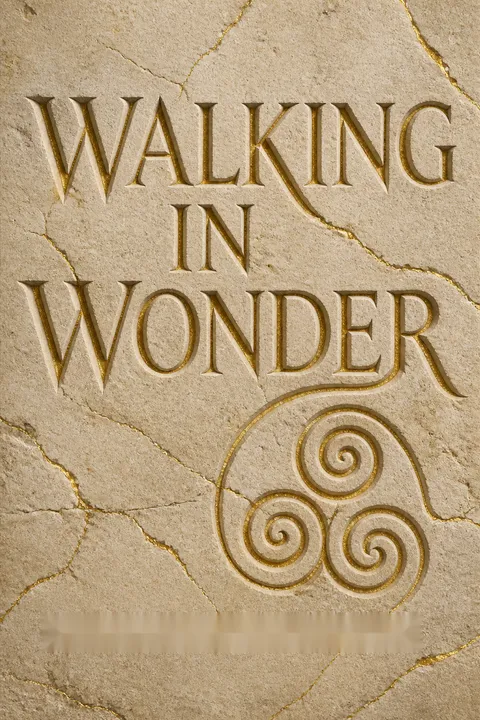
Walking in Wonder is a collection of radio conversations, lectures, poetry, and a recorded Easter service, shaped into a conversation with a distinctive center: wonder trains attention to the depth concealed by familiar appearances. Its structure is associative rather than linear. Themes recur in changing settings, so landscape, memory, imagination, fear, spiritual presence, aging, and death gradually illuminate one another. That form is part of the argument. The reader is invited to inhabit questions rather than follow a prescriptive sequence.
The book’s most useful conceptual move is to treat absence and contradiction as active. Loss can retain a relationship in memory; tension between opposing truths can produce a new understanding; uncertainty can open possibility rather than merely expose ignorance. The same approach makes its treatment of balance richer than a checklist of competing obligations. Balance is a responsiveness to changing conditions, grounded in listening and attention.
The work is also openly theological and poetic. Its claims about a divine presence within the soul, the spiritual life of landscape, and death as homecoming are commitments of faith, not conclusions established by evidence. That distinction matters. Some readers will receive them as literal convictions, while others may find value in their metaphors without accepting their metaphysics. Similarly, describing old age as a harvest is illuminating only when held alongside the book’s clear recognition of illness, dependence, and loneliness.
O’Donohue’s lyrical style sometimes circles an idea from several directions, and the collection’s repeated themes can feel less like a compact system than a sustained meditation. That is also its strength: it offers no universal technique for grief or fear. Instead, it asks readers to become more attentive, less hurried in judgment, and more willing to meet the complexity of their own lives and the lives around them. Its practical test is whether wonder changes how a person sees and treats the world.
Review Summary
Walking in Wonder is praised for its gentle wisdom, poetic language, and insights on Celtic spirituality, nature, and the human experience. Readers appreciate O'Donohue's reflections on wonder, absence, aging, and death. Many find the book comforting and thought-provoking, particularly during difficult times. The audiobook narrated by O'Donohue's brother is highly recommended. Some readers note repetition and a strong Catholic influence. Overall, the book is seen as a beautiful exploration of life's mysteries and a source of inspiration for mindful living.
People Also Read



Glossary
Negative wonder
Fear distorting uncertaintyO’Donohue’s name for fear that turns openness to the unknown into imagined threat. Instead of noticing that a situation is uncertain, the mind fills the uncertainty with frightening interpretations and can mistake them for facts. The term does not imply that danger is always imaginary; it encourages distinguishing actual evidence from fear’s projections.
Otherness
What exceeds the familiar selfO’Donohue uses otherness for what is different from, unfamiliar to, or outside a person. It can be encountered in another person, a contradiction within the self, illness, nature, or an unexpected change. Meeting otherness can be unsettling, but it can also reveal dimensions that a simplified image of the self or world leaves out.
Gelassenheit
Calm letting-goA German term O’Donohue draws from Meister Eckhart to describe a calmness that can remain through difficulty. It involves loosening attachment to external things and rigid expectations, rather than trying to control every circumstance. In O’Donohue’s account, this stillness helps a person stay inwardly connected and receptive when life becomes uncomfortable or uncertain.
Quarried light
Wisdom earned through sufferingO’Donohue’s image for the insight and strength that can emerge after someone has endured pain, isolation, or hardship. Like light brought out of stone, it is not an abstract lesson but a hard-won resource that may help a person face similar difficulty again. The phrase describes a possibility of suffering, not a claim that every hardship is beneficial.
Absence
Longing shaped by lost presenceO’Donohue distinguishes absence from vacancy. Vacancy is blankness, while absence carries the emotional force of someone or something that once belonged in a person’s life. It may follow death, separation, or departure, and it can remain active through longing and memory. He also uses absence for what has not yet arrived, making it a space of future possibility.
Balance
Equilibrium through opposing forcesO’Donohue redefines balance as a living relation among opposing forces, not a fixed midpoint or an external rule imposed on life. It emerges through attention, listening, and dialogue between realities such as inner and outer life, light and darkness, or change and continuity. Because circumstances keep moving, balance requires flexibility rather than a final state of perfect order.
FAQ
1. What is "Walking in Wonder: Eternal Wisdom for a Modern World" by John O’Donohue about?
- Conversational Spiritual Wisdom: The book is a collection of conversations between poet-philosopher John O’Donohue and broadcaster John Quinn, exploring themes of wonder, presence, absence, aging, death, and the spiritual dimensions of everyday life.
- Celtic Spirituality and Philosophy: It draws deeply from Celtic spirituality, mystical philosophy, and O’Donohue’s poetic sensibility, offering reflections on the human experience and the sacredness of the world.
- Practical and Poetic Insights: The text combines practical advice, philosophical musings, and poetic blessings, aiming to inspire readers to live more fully and mindfully.
- Legacy of Presence: The book serves as a testament to O’Donohue’s enduring wisdom, inviting readers to engage with life’s mysteries and thresholds with openness and courage.
2. Why should I read "Walking in Wonder: Eternal Wisdom for a Modern World" by John O’Donohue?
- Profound Spiritual Guidance: The book offers accessible yet profound spiritual insights that can help readers navigate modern challenges with grace and depth.
- Unique Blend of Poetry and Philosophy: O’Donohue’s lyrical language and philosophical depth make the book both beautiful to read and intellectually stimulating.
- Encouragement for Self-Discovery: Readers are encouraged to explore their inner worlds, embrace their uniqueness, and find meaning in both joy and suffering.
- Timeless Relevance: The themes of wonder, presence, and the search for meaning are universally relevant, making the book valuable for readers at any stage of life.
3. What are the key takeaways from "Walking in Wonder: Eternal Wisdom for a Modern World"?
- Embrace Wonder and Imagination: Wonder is a gateway to deeper understanding and a more gracious way of thinking; imagination is essential for exploring possibilities and embracing life’s mysteries.
- Balance Presence and Absence: Life is shaped by both presence and absence; learning to honor both can lead to greater wholeness and healing.
- Value of Memory and Transience: Memory is a treasure house of wonder, and recognizing the transience of life can inspire us to live more fully and authentically.
- Aging and Death as Transformation: Aging is portrayed as a time of harvest and liberation, while death is seen as a homecoming rather than something to fear.
4. How does John O’Donohue define and explore the concept of "wonder" in "Walking in Wonder"?
- Wonder as a Gateway: O’Donohue sees wonder as a fundamental human capacity that opens us to new possibilities and deeper understanding.
- Questions as Lanterns: He likens questions to lanterns that illuminate new landscapes, suggesting that curiosity and inquiry are forms of wonder.
- Imagination and Limitation: Wonder arises from our limitations and the thresholds we encounter, encouraging us to move beyond the familiar.
- Compassion and Grace: Wonder is closely linked to compassion and gracious thinking, fostering a more kind and open-hearted approach to life.
5. What role does imagination play in "Walking in Wonder" by John O’Donohue?
- Imagination as Threshold: Imagination is described as the threshold where inner and outer worlds meet, allowing us to explore the unknown and embrace difference.
- Compassionate Knowing: O’Donohue emphasizes that imagination is compassionate, weaving together contradictions and embracing complexity.
- Possibility Over Fact: He argues that possibilities are more interesting than facts, and imagination keeps us open to unrealized potential.
- Moral and Spiritual Growth: Imagination is essential for moral and spiritual development, helping us to see beyond rigid choices and embrace the fullness of our being.
6. How does "Walking in Wonder" by John O’Donohue address the themes of presence and absence?
- Absence as Vital Energy: Absence is not mere vacancy but is infused with longing and vitality, shaping our experience of loss and connection.
- Memory as Transfiguration: Memory is the place where absence is transformed into presence, allowing us to revisit and find meaning in what is gone.
- Imagination’s Role: The imagination helps us navigate absence, filling the gaps with possibility and new forms of presence.
- Spiritual and Social Dimensions: The book explores absence in personal, social, and spiritual contexts, including the absence of God, loved ones, and even aspects of ourselves.
7. What insights does John O’Donohue offer about aging and old age in "Walking in Wonder"?
- Aging as Harvest: O’Donohue views aging as a time of gathering wisdom, sifting experiences, and reaping the rewards of a lived life.
- Liberation and Freedom: Old age is seen as a period of great liberation, where social expectations fall away and one can embrace their true essence.
- Memory and Narrative: The elderly are portrayed as keepers of memory, whose stories and experiences are invaluable treasures.
- Possibility and Imagination: Even in old age, imagination opens doors to new possibilities, and the future is shaped by our expectations and openness.
8. How does "Walking in Wonder" by John O’Donohue approach the topic of death and the afterlife?
- Death as Homecoming: Death is described as a return home, a meeting with one’s true self, and a transition into a realm of complete presence and belonging.
- No Need for Fear: O’Donohue encourages readers not to fear death, seeing it as a natural and even joyful part of existence.
- Continuity of Spirit: The eternal world is not distant but present; the dead remain with us in invisible ways, and spirit can never be absent.
- Blessings for the Dying: The book includes poetic blessings and reflections to comfort those facing death or grieving loss.
9. What is the significance of landscape and nature in "Walking in Wonder" by John O’Donohue?
- Landscape as Living Presence: O’Donohue treats landscape as a living, soulful presence that predates humanity and holds deep memory.
- Nature as Teacher: The natural world is seen as a mystical teacher, offering lessons in stillness, wildness, and the sacredness of place.
- Human Connection to Earth: He emphasizes the kinship between the human body (as clay) and the earth, suggesting that being in nature restores balance and belonging.
- Environmental Reflection: The book also touches on the dangers of consumerism and the need to protect and honor the land for future generations.
10. How does John O’Donohue discuss the concept of balance in "Walking in Wonder"?
- Balance as Dynamic Threshold: True balance is found at the threshold where opposites meet—light and darkness, inner and outer, self and other.
- Not Just Strategy: Balance is not a static or imposed strategy but an emergent grace that arises from engaging with life’s contradictions and oppositions.
- Imagination and Dialogue: The imagination helps us navigate change and contradiction, while genuine conversation allows new forms of balance to emerge.
- Cultural and Social Balance: O’Donohue critiques the imbalances of modern society, especially consumerism and the loss of dialogue between different cultures and communities.
11. What are some of the most memorable quotes from "Walking in Wonder" by John O’Donohue, and what do they mean?
- “So many people are frightened by the wonder of their own presence.” This highlights the importance of embracing one’s unique existence and not shrinking from the mystery within.
- “All thinking that is imbued with wonder is graceful and gracious thinking.” O’Donohue suggests that wonder leads to more compassionate and open-minded thought.
- “The opposite of presence is not absence, but vacancy.” He distinguishes between absence (which is full of longing and energy) and mere emptiness.
- “Old age can be a time of great liberation and freedom.” This reframes aging as a positive, liberating stage of life rather than a decline.
12. How can readers apply the wisdom and advice from "Walking in Wonder" by John O’Donohue to their own lives?
- Cultivate Daily Wonder: Practice seeing the world with fresh eyes, asking questions, and remaining open to new experiences and perspectives.
- Honor Memory and Presence: Reflect on your memories, cherish your relationships, and be present to the people and places that matter to you.
- Embrace Change and Thresholds: Recognize life’s transitions as opportunities for growth, and use imagination to explore new possibilities.
- Live with Compassion and Courage: Let go of fear, embrace your unique path, and offer kindness and encouragement to others as you journey through life.
About the Author
Download PDF
Download EPUB
.epub digital book format is ideal for reading ebooks on phones, tablets, and e-readers.








