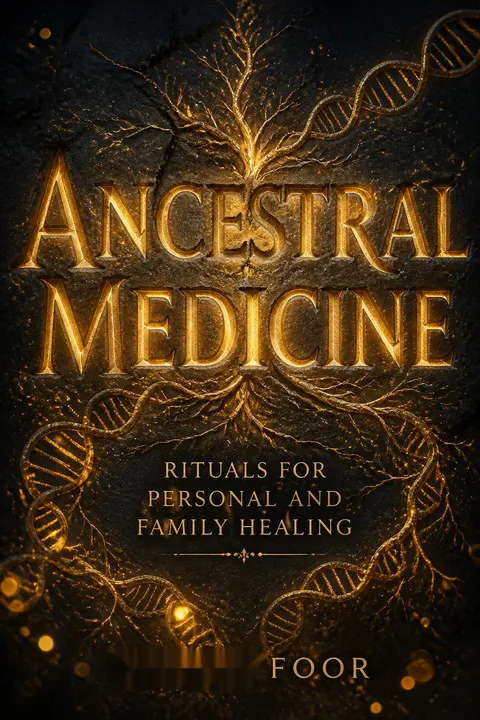


Key Takeaways
Treat ancestry as a relationship to tend, not merely a past to study.
A living connection. Foor’s central claim is that family history is not only a record of what happened. He approaches ancestors as continuing relations who may offer support, while the living can honor them and address harms carried through generations. This spiritual framework assumes that some consciousness continues after death, a premise readers need not share to consider its practices.
A personal beginning. Foor describes meeting a supportive ancestor during ritual, then helping his grandfather, who had died by suicide, in a spiritual encounter he understood as repair. That experience led him to investigate family history and work with relatives. The book’s larger invitation is to build a sustained relationship, rather than treating one ritual as a cure.
What's compelling is the shift from ancestry as static identity to ancestry as relationship and responsibility. That move has parallels in family systems thinking, where patterns are understood across generations without reducing a person to their family history. The spiritual premise remains a matter of belief, not an established scientific conclusion. Readers can still use the relational approach as a prompt to remember, investigate, and act more consciously, while keeping clear which claims are personal experience and which are independently supported.
Distinguish remembered relatives, forgotten lineages, and chosen ancestral kin.
More than genealogy. Foor distinguishes ancestors remembered by name or story from older collective ancestors whose identities have faded from memory. He also includes chosen family, influential teachers, cultural figures, spiritual predecessors, and people connected to a particular place or vocation. These relationships may overlap, but they are not interchangeable.
Discernment matters. The book does not portray every dead person as automatically wise or benevolent. It differentiates supportive ancestors from troubled dead who may need help, and recommends care when interpreting dreams, coincidences, or other sensed contact. The author’s broad definition makes the practice accessible across backgrounds, including for adoptees, while retaining family lineage as the central focus of his method.
This layered map avoids the assumption that identity comes only from biology. Social scientists distinguish genealogical descent from cultural affiliation and chosen kinship, each of which can shape belonging in different ways. Foor’s categories offer a useful inventory, especially for people whose family records are incomplete. The challenge is that spiritual labels can blur important differences between traditions, histories, and living communities. Treating the categories as a personal map, rather than a universal taxonomy, preserves their usefulness without flattening cultural specificity.
Research family history before deciding what your inheritance means.
Build from evidence. Foor recommends gathering names, dates, photographs, letters, family stories, and records before attempting direct spiritual contact. Interviews with older relatives can preserve knowledge that may soon disappear; online databases and DNA tests can add clues, though records vary in reliability. Research may uncover both cherished stories and painful gaps.
Make the scale manageable. His starting point is four primary bloodlines, one associated with each grandparent’s maternal or paternal line. Knowing names across seven generations can mean tracking 254 ancestors, an undertaking many families cannot complete. Adoption, migration, slavery, genocide, and other disruptions may limit what can be recovered. Missing records are not a failure, and the book says biological connection need not depend on knowing names.
The sequence of research before interpretation is an important safeguard. Documents and family testimony cannot answer every emotional question, but they can interrupt confident storytelling built on guesswork. Genealogical work also reveals how record keeping reflects power: some families were carefully documented, while others were deliberately separated from their histories. A family tree can therefore show both connection and archival exclusion. The author’s four-lineage structure gives a practical beginning, though complex families may need a wider model than four branches.
Let wise ancestors, not urgency, set the pace of family repair.
Repair in stages. Foor’s lineage repair cycle begins with family research and an assessment of ancestral well-being. The practitioner then seeks a wise ancestral guide, learns where a lineage carries gifts and burdens, attends to older forgotten ancestors, and only then addresses recently deceased relatives and the living family. This order is meant to provide support before engaging painful material.
A guide is not any ancestor. In the book, an ancestral guide is a deceased blood relative regarded as loving, wise, and capable of helping the family line. Foor uses a one-to-ten wellness scale and advises maintaining distance from spirits rated below seven. The scale is a ritual tool within his framework, not a clinical measurement.
The sequence resembles trauma-informed practice: establish stability and support before approaching emotionally charged material. It also resists the rescuer’s impulse to fix a problem before understanding it. These are useful principles even for readers who interpret guides symbolically, as elders, family stories, or internalized sources of wisdom. The numerical spiritual rating, however, should not be mistaken for an objective diagnostic instrument. Its value lies in slowing decisions and encouraging caution, not in proving what a spirit is or needs.
Separate inherited patterns from identity, then choose what continues.
Name gifts and burdens. Foor describes lineages as transmitting both strengths, such as humor, creativity, practical skill, and resilience, and difficulties, such as addiction, abuse, illness, or disconnection from cultural roots. He uses the image of inherited bundles: some gifts can be developed, while harmful patterns can be ignored, repeated, or consciously transformed.
Change the family story. Learning that emotional reserve or another difficulty appeared across generations can reduce shame by showing that it is a learned or inherited pattern, not the whole of a person’s character. The author calls this story repair: restoring a larger account of family life that includes losses and wrongdoing, but also forgotten capacities and care.
This is strongest when understood through family systems and narrative identity. A pattern can be real without being destiny, and a person can recognize its history while taking responsibility for present choices. The book also invokes epigenetics to explain how trauma may echo across generations. Research in this area is developing, and biological findings should not be treated as proof of spiritual transmission or as a simple account of complex family outcomes. Social learning, material conditions, and historical forces also shape what families pass on.
Keep boundaries and reality checks stronger than the urge to intervene.
Protect choice. Foor advises setting limits with both living relatives and spirits, staying emotionally grounded, and remembering that a spiritual explanation never removes personal responsibility. He warns against rushing to help a troubled dead person without guidance or permission. If ritual work becomes destabilizing, he recommends stopping, seeking trusted support, and prioritizing psychological well-being.
Check what you perceive. The book suggests comparing intuitive impressions with dreams, divination, trusted advisers, common sense, and the observable effects of decisions. It also notes that unusual experiences do not automatically indicate psychosis, while a history of psychosis or worsening symptoms calls for professional help. Spiritual practice and mental health care need not be treated as enemies.
This caution is essential because strong experiences can feel certain without being accurate. Reality testing, consultation, and consent are useful across spiritual practice, psychotherapy, and high-stakes decisions. The author’s distinction between spiritual contact and psychosis is appropriately framed as something that may require multiple perspectives, not a judgment made from one vivid encounter. A further ethical principle follows: support should not override another person’s explicit boundaries. Ritual can offer meaning, but it cannot substitute for medical care or consent.
Forgive without excusing harm or reopening unsafe relationships.
Make room for honest grief. Foor argues that a loved one’s death does not instantly resolve anger, regret, relief, or unfinished conflict. He encourages people to acknowledge these feelings and seek support when grief becomes overwhelming. Practical completions, such as honoring a request or settling family affairs, can also help people face what remains unresolved.
Forgiveness has limits. In this book, forgiveness means working toward emotional resolution, not forgetting, approving, or minimizing abuse. A person can forgive privately while maintaining distance, ending contact, or taking other steps to stay safe. Foor also suggests that prayers or rituals for the dead can be separate from direct contact with them.
The distinction between forgiveness and reconciliation protects the concept from becoming a demand placed on people who have been harmed. In clinical contexts, grief is not a tidy sequence, and anger may remain meaningful rather than signaling a failure to heal. Ritual can give difficult emotions a shared form, especially when family members lack ordinary language for them. Its usefulness depends on choice: no script should force forgiveness, and no spiritual claim should pressure someone to return to an unsafe relationship.
Use simple rituals to make remembrance reciprocal and embodied.
Give remembrance a form. Foor describes ancestor reverence as practices that honor the dead within a wider community of relations. Common elements include a dedicated space, prayer or song, quiet attention, and offerings such as water, food, flowers, or handmade objects. The point is not elaborate ceremony: a sincere gesture matters more than a grand one without personal meaning.
Let practice continue. A shrine can make remembrance part of ordinary life, while a shared meal or annual observance can renew family connection. Foor’s own genealogy research led him to arrange a marker for relatives buried in an unmarked grave. The ceremony brought older family knowledge into view and helped living relatives feel included. The book treats ritual as a practice of ongoing relationship, not a shortcut around everyday care.
Ritual turns an abstract commitment into a repeated, sensory act. Anthropologists and psychologists have observed that shared ceremonies can organize grief, reinforce group identity, and give people a way to express what conversation alone cannot hold. The reciprocity described here is meaningful within the book’s spiritual worldview; outside it, offerings can still function as material signs of attention and gratitude. Ecological care and respect for local customs matter, particularly when rituals occur in public or culturally significant places.
Honor ancestors of place and affinity without claiming another culture.
Belonging has layers. The book includes ancestors connected to a landscape, a spiritual tradition, a vocation, or a personal relationship. Foor recommends learning the human and ecological history of a place, caring for it, and approaching local ancestors with humility. In a story he recounts, an Ohlone educator advises newcomers to introduce their own ancestors to the ancestors of the land, rather than speaking on behalf of Indigenous communities.
One tradition-specific lens. Foor also presents his Buryat Mongolian teacher Sarangerel Odigan’s model of three soul aspects: suld, ami, and suns. The model associates them differently with body and nature, bloodline, and affinity or past-life connections. It is presented as one cultural framework, not a universal account of the soul.
This section links personal belonging to place-based history and ecological stewardship, correcting the idea that land is an empty backdrop. Its call for humility is especially important where Indigenous peoples remain present and continue to hold relationships with ancestral territories. Learning local history is a beginning, not permission to borrow ceremonies or claim authority. The multiple-soul model likewise gains value from being presented in context. Comparative spirituality can broaden imagination, but only when differences are preserved rather than blended into a generic universal system.
Prepare for death by completing goodbyes, practical affairs, and grief.
Make wishes known. Foor urges people to consider wills, possessions, funeral preferences, and the words they want loved ones to hear. These preparations reduce the practical burden on survivors and create opportunities for reconciliation while conversation remains possible. He cautions against assuming that a good life guarantees a peaceful or predictable death.
Allow the transition time. The book describes a broad three-part pattern after death: saying goodbye, giving the deceased space to transition, and resuming contact when it feels appropriate. Practices vary by religion and family, so the pattern is a guide rather than a universal rule. Funerals, mourning, and first-anniversary rituals can help living relatives express grief and mark changing relationships.
Advance care planning is often treated as paperwork, but it is also communication about values, relationships, and bodily autonomy. Making preferences explicit can spare families avoidable uncertainty, although plans cannot remove the emotional shock of loss. The suggested mourning pattern offers a useful rhythm: connection, separation, and renewed relationship. Grief does not reliably follow a calendar, however, and contact with the dead is a spiritual interpretation rather than a requirement for mourning. The most transferable lesson is to talk about death before crisis makes it harder.
Analysis
Ancestral Medicine is both a spiritual practice manual and a theory of family healing. Its argument moves from a personal encounter with the dead to a structured method for tending family history, then widens toward place, vocation, cultural inheritance, and death. The emotional center is not the promise of paranormal certainty; it is the possibility that people can feel less isolated by locating private pain within a longer story and taking responsibility for what they pass forward.
The book’s most useful discipline is its insistence on sequence. Research precedes interpretation, trusted support precedes engagement with difficult material, and attention to a lineage’s broader history precedes work with a specific deceased relative. This structure can be read spiritually, but it also resembles sound practice in counseling and community work: gather context, establish safety, avoid premature intervention, and integrate changes into daily relationships. The emphasis on boundaries and on forgiveness without renewed access is especially valuable.
Its central epistemic tension is equally important. Foor treats spirits and post-death communication as real within his working worldview, while acknowledging uncertainty, imagination, and psychological risk. Those claims are not established by the family stories or research findings cited. Readers can engage with the ritual and relational insights without accepting supernatural explanations. Likewise, the book’s use of epigenetics should not collapse biological research into a general theory of ancestral influence; family patterns also travel through caregiving, social conditions, cultural memory, and institutions.
The cross-cultural breadth is ambitious, drawing from traditions with distinct histories and authority structures. The book’s warnings against cultural appropriation and ancestral superiority strengthen that ambition, but a universal method can never replace learning from living practitioners within a tradition. The most durable synthesis is therefore modest: investigate the past, honor grief, recognize inherited patterns without treating them as fate, protect personal boundaries, and make chosen values visible in relationships with the living. These practices retain value whether ancestors are understood as spirits, memories, or both.
Review Summary
Ancestral Medicine receives overwhelmingly positive reviews, with readers praising its practical approach to ancestral healing. Many find the book transformative, offering clear instructions for connecting with ancestors and resolving generational trauma. Reviewers appreciate the author's cultural sensitivity and non-dogmatic approach. The book is described as accessible, thorough, and life-changing. Some readers note the density of information and the challenge of completing all exercises. Overall, it's highly recommended for those interested in ancestral work, healing, and spirituality.
People Also Read






Glossary
Ancestor reverence
Honoring the human deadPractices that recognize and honor deceased people as part of a larger web of relationships. In Foor’s account, these practices may include prayer, offerings, song, family research, ritual, or care for burial places. Traditions differ widely, and the term does not require adopting one particular religion.
Ancestral guides
Supportive lineage ancestorsIn Foor’s framework, ancestral guides are deceased blood ancestors regarded as wise, loving, and capable of supporting living relatives and assisting troubled members of the lineage. They may be historically distant and remembered only as part of a larger family line. The term describes a spiritual role within the book’s practice, not a clinically verifiable category.
Lineage repair cycle
Staged family healing practiceFoor’s five-stage process for working with a family line. It begins with research and assessment, establishes a relationship with supportive ancestral guides, examines transmitted strengths and difficulties, addresses deceased relatives who may need support, and grounds the work in care for living family. The author recommends proceeding gradually and completing one lineage at a time.
Ancestralization
Becoming part of the ancestorsA term used for the process through which a deceased person joins the community of established, supportive ancestors. Foor distinguishes this relational change of status from simply guiding a soul to another realm or helping it become more peaceful. In his account, ancestralization involves welcome by the older lineage and the deceased person’s integration into its collective life.
Psychopomp
Guide for the newly deadA psychopomp is a person, spirit, deity, or other figure who guides a deceased soul through the transition after death. Foor describes this work as helping the dead move from one state or realm to another, sometimes after addressing confusion or fragmentation. Traditions name different guides and understand the destination in different ways.
Ongon
Physical spirit relationship objectIn the Mongolian practice described by Foor through his teacher Sarangerel Odigan, an ongon is a physical object made and consecrated to embody or strengthen a relationship with a spirit, such as an ancestral guide. It may be kept on a shrine or carried. The term belongs to a specific cultural context, not a generic name for every ancestor object.
Affinity ancestors
Ancestors linked by shared purposeDeceased people connected to someone through meaningful relationship or shared commitments rather than direct biological descent or residence in the same place. Foor includes friends, teachers, cultural figures, spiritual predecessors, and people associated with a vocation. He recommends discerning whether such relationships are supportive and respecting their distinct cultural contexts.
suld
Bone and body soulIn the Buryat Mongolian model presented by Foor from Sarangerel Odigan’s teaching, suld is the soul aspect most closely associated with the physical body, personality, and this particular lifetime. In that account, it does not reincarnate as a human and, after death, becomes integrated with nature. This is a tradition-specific teaching.
ami
Blood and breath soulIn the Buryat Mongolian model described in the book, ami is the soul aspect associated with breath, blood, instinct, and biological lineage. It is understood to leave the body and may return through the same family line in a later birth. Foor presents this as one culturally specific account of consciousness and ancestry.
suns
Star and ghost soulIn the Buryat Mongolian model presented by Foor, suns is the soul aspect associated with individuality, stars, and connections beyond biological lineage. It may reincarnate outside the family line and, if unsettled after death, may be associated with hauntings or spiritual disturbance. These claims belong to the tradition being described and are not offered as universal doctrine.
Witness state
Observing without interveningA stance of attention in which a practitioner observes what arises during ritual without immediately judging it, trying to fix it, or becoming absorbed in it. Foor presents this as a way to maintain discernment and personal boundaries, especially when encountering painful or unsettling material. It does not mean abandoning ethical judgment or ignoring danger.
FAQ
1. What is Ancestral Medicine: Rituals for Personal and Family Healing by Daniel Foor about?
- Comprehensive ancestor work guide: The book explores ancestor reverence, lineage repair, and rituals for personal and family healing, drawing from indigenous, psychological, and spiritual traditions.
- Three-part structure: It covers foundational concepts, practical healing with lineage and family ancestors, and honoring ancestors of place and affinity.
- Accessible for all backgrounds: Foor presents cross-cultural practices and emphasizes that anyone, regardless of spiritual background, can engage in ancestor work.
- Practical exercises included: The book offers rituals, exercises, and reflections to help readers build conscious, healing relationships with their ancestors.
2. Why should I read Ancestral Medicine by Daniel Foor?
- Healing intergenerational trauma: The book provides tools and rituals to address family dysfunction, ancestral burdens, and inherited patterns, supporting emotional and spiritual healing.
- Bridging science and spirituality: Foor combines his background as a psychotherapist with indigenous and spiritual practices, making the material grounded and accessible.
- Empowerment and personal growth: Readers learn to reclaim cultural roots, foster forgiveness, and find meaning through ancestral connection.
- Inclusive and respectful approach: The guidance is adaptable to diverse spiritual paths and encourages working within one’s own lineage and cultural context.
3. What are the key takeaways from Ancestral Medicine by Daniel Foor?
- Lineage repair process: A five-stage cycle guides readers from family research to connecting with ancestral guides, healing lineages, and integrating blessings into living family relationships.
- Multiple types of ancestors: The book distinguishes between family, collective, place, and affinity ancestors, offering tailored practices for each.
- Practical rituals and exercises: Foor provides step-by-step guidance for rituals, visualizations, and offerings to deepen ancestral connection and healing.
- Emphasis on boundaries and discernment: The importance of safety, clear intent, and healthy boundaries is woven throughout the practices.
4. What are the best quotes from Ancestral Medicine by Daniel Foor and what do they mean?
- “Not all the dead are equally well.” This highlights the need for discernment in ancestor work, as some ancestors may require healing before they can offer support.
- “The living and the dead affect each other profoundly.” Foor emphasizes the ongoing, mutual influence between ancestors and descendants.
- “Anyone can engage with their ancestors, regardless of spiritual background.” The book’s inclusive philosophy encourages all readers to explore ancestral healing.
- “Healing the lineage uplifts both ancestors and descendants.” This underscores the transformative power of ancestral repair for families and communities.
5. What are the foundational concepts of ancestor reverence in Ancestral Medicine by Daniel Foor?
- Consciousness continues after death: Ancestors are seen as living spirits capable of communication and influence.
- Diversity among the dead: Not all ancestors are well; some are wise guides, while others may be troubled and require healing.
- Mutual influence: The living and the dead impact each other, and rituals help maintain positive, healing relationships.
- Safety and boundaries: Practitioners are encouraged to engage only with supportive ancestors and to set clear boundaries with troubled spirits.
6. How does Daniel Foor define different types of ancestors in Ancestral Medicine?
- Family and remembered ancestors: Recent relatives known by name, who may be well or in need of healing.
- Older and collective ancestors: Ancestors beyond living memory, representing the broader lineage and cultural heritage.
- Ancestors of place and affinity: Spirits connected to land, vocation, or shared values, not just bloodline.
- Lineage, individual, and collective spirits: Ancestors may appear as individuals, lineage representatives, or as part of a collective consciousness.
7. What is the five-stage lineage repair process in Ancestral Medicine by Daniel Foor?
- Gathering family information: Start with genealogy, family stories, and personal reflection to understand ancestral blessings and burdens.
- Connecting with ancestral guides: Use visualizations and rituals to meet wise, supportive ancestors who can assist in healing.
- Assessing and healing lineages: Evaluate the spiritual health of each bloodline and perform rituals to repair troubled lineages.
- Assisting recent ancestors: Help the remembered dead transition into peaceful ancestors through specific rituals and forgiveness practices.
- Grounding in living relationships: Integrate ancestral blessings into relationships with living family members for ongoing healing.
8. How does Ancestral Medicine by Daniel Foor address the “troubled dead” and their healing?
- Prevalence and impact: Foor notes that about one-third of recently deceased spirits may not transition smoothly, potentially affecting the living.
- Eight-step healing process: The book outlines a careful, stepwise approach involving ancestral support, prayers, resolving attachments, and guiding soul repair.
- Ethical and safety considerations: Strong boundaries, ancestral guidance, and sometimes professional collaboration are recommended for safety.
- Family and lineage focus: Healing troubled ancestors is seen as a sacred act of family and cultural repair.
9. What is the multiple souls concept in Ancestral Medicine by Daniel Foor and how does it shape ancestor work?
- Three-soul model: Drawing from Buryat Mongolian tradition, humans have suld (bone/body), ami (blood/breath), and suns (star/ghost) souls.
- Different ancestral types: After death, these souls relate to different kinds of ancestors—family, place, and affinity.
- Reincarnation nuances: The ami and suns souls reincarnate, while the suld does not, allowing for complex ancestral relationships.
- Practical implications: Understanding this model helps practitioners discern types of ancestral contact and tailor rituals accordingly.
10. What practical advice does Daniel Foor give for initiating contact with ancestors in Ancestral Medicine?
- Set clear ritual intent: Begin with a focused intention to connect with loving, supportive ancestors and exclude troubled spirits.
- Create sacred space: Use a quiet, clean area with simple altar items like candles, water, or incense to invite ancestral presence.
- Offerings and receptive awareness: Make heartfelt offerings and spend time in open awareness, allowing responses to arise naturally.
- Closure and grounding: End rituals with gratitude and grounding practices to ensure safety and integration.
11. How does Ancestral Medicine by Daniel Foor guide working with living family members and integrating ancestor work?
- Grounding ancestor work: The final stage of lineage repair focuses on healthy, empowered relationships with living relatives.
- Embodiment and mediumship: Practices include embodying lineage ancestors and praying for living family members.
- Harmonizing lineages: Exercises help harmonize the four primary bloodlines and extended family for collective support.
- Celebration and ongoing connection: Ritual feasts and prayers are recommended to celebrate and maintain relationships with both living and deceased family.
12. How does Ancestral Medicine by Daniel Foor address death, funerary customs, and the post-death journey?
- Preparation and reflection: The book encourages practical and emotional preparation for death, including legal affairs and relationship completions.
- Elemental symbolism: Death and funerary customs are explored through the four elements—fire, water, wind, and earth.
- Stages after death: Foor describes a three-part progression: saying goodbye, mourning, and resuming contact with the newly established ancestor.
- Ritual support: Exercises are provided for conscious participation in burial, first anniversary rituals, and ongoing tending to support the deceased’s transition.
Download PDF
Download EPUB
.epub digital book format is ideal for reading ebooks on phones, tablets, and e-readers.








