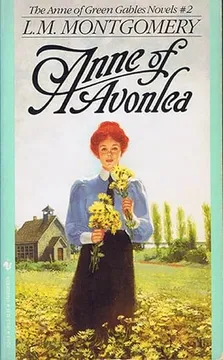


Plot Summary
The Cow in the Oats
At sixteen, Anne Shirley is preparing to teach Avonlea’s children when her new neighbor, the blunt and solitary J. A. Harrison, storms over to complain that her Jersey cow has trampled his oats. Anne promises to keep the animal out, but the next day she spots a Jersey in Harrison’s field and, with Diana Barry’s help, chases it out.
Frustrated and soaked, Anne sells the cow to a passing buyer, only to discover that her own cow is still safely penned. She has sold Harrison’s. Expecting fury, she visits him with the money and a cake. Harrison forgives her, accepts Anne’s cow in exchange, and invites her to tea. Their unlikely friendship begins with an error neither can quite blame on the other.
The mistake establishes Anne’s characteristic collision with practical reality: she acts from urgency and good intentions, then discovers that intention cannot undo a consequence. Harrison’s response complicates the village’s ready-made judgment of him. He is prickly, but also capable of admitting his own temper and accepting repair. Their tea is more than a comic reconciliation. It gives both characters a first experience of being met without being reduced to their reputation.
A Schoolroom of Her Own
On the first morning of September, Anne faces the pupils she once sat beside, carrying a carefully prepared speech she cannot remember once she enters the classroom. She settles into the work, confiscating a boy’s pet crickets and trying, without success, to soften the sullen Anthony Pye through patient instruction.
Her first day seems weary and uncertain until Paul Irving, a quiet, imaginative boy newly arrived from the United States, gives her wild orchids because he believes she will appreciate them. His gesture restores her confidence.
Anne also negotiates the absurd demands of Jacob Donnell’s mother, who insists her son be called St. Clair. The children’s varied temperaments turn teaching into a daily test of her principles, while Paul’s trust offers an early sign that her way of seeing them matters.
Anne enters the classroom with an ideal of influence but no guarantee that her pupils will welcome it. Paul’s flowers do not prove her theories correct; they remind her that connection may appear in small, unplanned forms. Anthony, by contrast, resists being interpreted as a project to be won. The tension between them prepares the book’s recurring question: whether care can shape another person without becoming a demand that the person change on schedule.
Avonlea Goes Blue
Anne and Gilbert Blythe help establish the Avonlea Village Improvement Society, with Diana as treasurer and Anne as secretary. Its first campaign raises enough money to repair the leaking roof and repaint the neglected community hall.
The canvassers meet refusals, complaints, and small acts of generosity, including a contribution from Catherine Andrews, who hides it from her pessimistic sister. The work appears successful until a mix-up between paint numbers leaves the hall a glaring blue instead of the intended green.
The society pays its contractor, and Anne fears the public will laugh the project out of existence. Instead, neighbors sympathize with the young organizers, offer new improvements, and begin taking their work seriously. The failure makes the society more credible than its flawless plans might have done.
The blue hall is a public mistake, not merely Anne’s private embarrassment. The society’s response matters more than the error: its members honor their obligation to the painter, while Avonlea recognizes their effort rather than demanding perfection. Improvement here is neither expert control nor instant consensus. It is the slow conversion of ridicule into participation, helped by the visibility of a failure everyone can see.
Two Children at Green Gables
As Anne and Marilla worry over the ailing Mary Keith, they learn that her twin children, Dora and Davy, may have nowhere safe to go. Their uncle cannot take them until the following spring, and Marilla hesitates at the prospect of raising two six-year-olds.
Anne argues that the children need guidance, drawing on her own neglected childhood; Marilla agrees to bring them home. Dora is tidy and compliant, while Davy arrives hungry, restless, and ready to test every rule.
He steals Dora’s cake, plays a caterpillar prank in church, and gets her soaked after persuading her to walk a pigpen fence. Anne’s affectionate corrections and Marilla’s firmer limits begin turning a temporary refuge into a household, though neither woman mistakes Davy’s charm for good behavior.
The twins expose two different needs that conventional ideas of a well-behaved child can obscure. Dora asks little of her caregivers because she has learned to comply; Davy demands attention through disruption. Anne recognizes that his mischief is partly the consequence of a childhood without consistent teaching, while Marilla brings structure to the home. Their shared decision to take the twins makes care an ongoing practice, not a single act of rescue.
Dora Vanishes
When Marilla leaves to help Rachel Lynde, Dora disappears from Green Gables. Anne and Marilla search the rooms, outbuildings, orchard, and woods, then fear she has fallen into the deep well. Mr. Barry helps drag it without finding her. Anne eventually hears a cry at Harrison’s tool shed and discovers Dora locked inside, cold and hungry.
Davy had taken her there to see Harrison’s parrot, then shut the door and lied about knowing where she was. Anne’s distress finally makes him understand that his deception caused real fear, not just an amusing commotion. He admits he did not know lying was wrong, promises to stop, and is punished for imprisoning Dora. The episode changes Anne’s approach: Davy needs to be taught, not simply scolded.
Davy’s lie is not treated as proof of a fixed moral character. Anne’s anguish reveals the effect of his actions, and his remorse begins when he understands that effect. The scene distinguishes ignorance from innocence without erasing responsibility: Marilla still punishes him for shutting Dora away. Their response combines explanation, affection, and limits, the practical education Davy has not previously received.
A Jonah Day
A sleepless night and toothache leave Anne irritable at school. She snaps at awkward Barbara Shaw, then mistakes a parcel passed between pupils for forbidden nut cakes and orders it thrown into the stove. It contains firecrackers and pinwheels, which explode through the classroom and frighten the children.
Later, Anne finds a mouse in her desk and learns Anthony Pye put it there. In anger, she strikes him with her pointer, breaking her own promise never to whip a pupil. At home she weeps over her loss of self-control.
The next morning Anthony carries her books and treats her with new respect. Anne is relieved, but she does not accept the result as proof that her principle was foolish: the punishment worked partly because her anger, rather than considered judgment, drove it.
Anne’s crisis comes from the gap between a principle and the person trying to live by it. Her remorse is not simply embarrassment at breaking a rule; she knows she punished Anthony while angry, without deciding whether the punishment was fair. His changed behavior offers no easy moral vindication. The episode asks readers to separate an outcome that seems effective from a method that was ethically sound.
Hester Gray’s Garden
For an adopted spring birthday, Anne takes Diana, Priscilla Grant, and Jane Andrews into the woods to explore country lanes and share a picnic. They find a long-abandoned garden thick with narcissi and learn from Diana that it belonged to Hester Gray, who left city life for a quiet farm with Jordan Gray. When Hester became ill, Jordan carried her into the garden each day, and she died there among the flowers he had gathered.
Anne imagines the garden as a place whose beauty continues to hold the couple’s life. She later brings flowers from it to Hester’s grave. The discovery deepens Anne’s habit of honoring the histories attached to ordinary places, and gives her friends a day that remains precious even after its picnic food is gone.
The garden joins memory to material care. Its flowers outlast the people who planted and tended them, but Anne refuses to treat that persistence as a substitute for remembering. By carrying blossoms to Hester’s grave, she makes imagination an ethical gesture rather than an escape from fact. The story also offers a quiet counterpoint to Anne’s future: love is shown as tenderness enacted in daily care, not only as romantic spectacle.
A Fence for Sale
The Improvement Society’s first gains spread across Avonlea: residents clear road fronts, plant flowers at a crossroads, and plan trees around the church. Then the members hear that Judson Parker intends to rent his roadside fence to a patent-medicine company for advertisements.
Anne, Diana, and Jane fail to persuade him to reconsider. Later, Anne overhears Parker discussing a political vote with campaign agent Jerry Corcoran, who offers to cancel a debt in exchange for support. Parker agrees.
Anne refuses to trade her silence for influence, but Parker soon withdraws his plan for the advertisements because he fears the exposure will damage his standing with Louisa Spencer’s family. Anne tells the society the fence is safe without revealing what she heard. The rescue comes through his self-interest, not a public conversion.
The society’s ideals meet a political world in which public virtue and private advantage overlap. Anne’s decision not to use the overheard bargain as leverage protects her own integrity, but it cannot make Parker principled. The fence is saved for a compromised reason. Montgomery lets the improvement project succeed without pretending that communal beauty abolishes opportunism, or that a good result always reflects a good motive.
The Platter and the Poet
Anne prepares an elaborate dinner for celebrated writer Charlotte E. Morgan, but the expected visit is cancelled when Morgan sprains her ankle. Davy falls on the lemon pies, then accidentally knocks a borrowed willow-pattern platter down the stairs and smashes it.
Determined to replace it, Anne and Diana travel to Spencervale, where Anne becomes trapped waist-deep in a disused duck house while peering into the Copp sisters’ pantry. A storm drenches her before Sarah Copp frees her and sells her the matching platter.
Months later, Morgan arrives without warning while Anne is covered in feathers from changing a bed and has dyed her nose red by mistake. The lotion washes off, and the visitors enjoy an easy afternoon. Anne discovers the real writer is warmer and less perfect than the heroines she had imagined.
Anne’s preparation is powered by her wish to measure herself against fictional models, so each accident feels like evidence of personal inadequacy. Yet the meeting she actually enjoys occurs after those models have failed her. Morgan’s kindness depends neither on a perfect meal nor on Anne’s polished appearance. The book gently revises the authority of fiction: stories can inspire, but living people are not obliged to perform their roles.
The Stone House Appears
Walking to a tea invitation, Anne and Diana take the wrong road and arrive at Echo Lodge, a small stone house hidden among trees. Its owner, forty-five-year-old Lavendar Lewis, has set a table for imaginary guests because she is lonely and enjoys make-believe.
Anne immediately recognizes a kindred imagination, and she and Diana stay for tea instead of hurrying onward. Lavendar’s young helper, Charlotta the Fourth, keeps the little household running and shares its playful rituals.
Before the girls leave, Anne mentions Paul Irving, and Lavendar’s reaction reveals that his father, Stephen, belongs to an old chapter of her life. The encounter gives Anne a new friendship and offers a glimpse of how loneliness can preserve a person’s private world while narrowing the company she has.
Echo Lodge is at once refuge and enclosure. Lavendar has built a life rich in ritual and fantasy, but her imagined guests also mark the absence of real companionship. Anne’s response does not ridicule the make-believe; she meets it as a legitimate form of expression, then brings actual friendship into the house. The scene prepares the novel’s later test of whether imagination can reconnect people to the lives they left unfinished.
The Twins Stay
As Anne grows close to Lavendar and Charlotta, the Keith twins’ future remains uncertain. Their uncle, Richard Keith, has repeatedly delayed taking them in. Then Marilla receives a letter from his executor: Richard has died and left money in trust for Davy and Dora, with the interest available for their care.
Marilla can now keep them without fearing that the farm’s limited income will fail them. The twins are delighted to learn that Green Gables is their permanent home, though Dora briefly worries that their dead uncle might return as a ghost.
Davy, meanwhile, has become better mannered through school and steady guidance, even if his questions and impulsive schemes continue. The inheritance secures the household materially; the affection that made it a home was already there.
The bequest removes an economic threat but does not create the family bond. Marilla had wanted to keep the children before she knew how she could afford it, and Anne had argued for them because their need mattered. The practical money and the emotional commitment work together. Davy’s continuing mischief also resists a neat transformation story: security gives him room to grow, not a new temperament.
Lavendar’s Lost Engagement
During a snowy visit, Lavendar tells Anne how she and Stephen Irving were once engaged. A quarrel began over something so ordinary that she can scarcely recall it, but pride and sulking kept them apart. Stephen left, Lavendar refused to call him back, and both let time harden a temporary grievance into a life apart. Anne later brings Paul to Echo Lodge.
Lavendar is moved by his resemblance to his father, yet welcomes him warmly; Paul, in turn, asks to be her special friend. Anne’s visits help revive Lavendar’s spirits, while Charlotta notices that her mistress has become unusually tired and withdrawn. The story of the old romance now has a living bridge in Paul, though neither Anne nor Lavendar knows whether Stephen will return.
Lavendar’s account strips romantic separation of grandeur. The lasting wound grows not from a single dramatic betrayal but from ordinary pride that neither person could interrupt. Paul makes the past emotionally present without becoming a replacement for Stephen. His ease with Lavendar suggests that intimacy can begin anew, while Charlotta’s concern reminds Anne that affection alone cannot always lift someone from isolation.
Hail Over Avonlea
After Gilbert and Anne jokingly publish a prediction that local weather prophet Uncle Abe expects a storm, Avonlea endures a real, violent hailstorm on the specified day. Anne gets Davy and Dora home just before hail breaks the windows and strips the gardens, crops, orchards, and most of the two hundred trees planted by the Improvement Society.
The family survives, but at Harrison’s house lightning kills Ginger the parrot, his closest companion. Anne finds Harrison grieving beside the bird and stays with him, understanding that his roughness has concealed deep attachment.
The storm also destroys Levi Boulter’s abandoned house, which the society had failed to persuade him to remove. The community begins rebuilding, but nature’s sudden violence makes every improvement feel both fragile and worth attempting again.
The storm collapses several kinds of security at once: food, shelter, communal work, and private companionship. Its destruction is not a moral judgment, though the removal of Boulter’s ruin invites that interpretation. Ginger’s death matters because it makes Harrison’s grief visible to Anne, not because it resolves it. The society’s decision to plant again frames resilience as labor repeated after loss, not confidence that loss can be prevented.
Harrison’s Wife Arrives
Soon after the storm, a visitor arrives at Green Gables asking for James Harrison and reveals herself as his wife, Emily. The villagers had assumed Harrison was a bachelor; in fact, Emily had left him after years of conflict over his untidy habits and his beloved, profane parrot.
With Ginger dead, she believes the main source of their worst quarrels is gone. Harrison explains that both spouses contributed to their separation: Emily tried to remake him, while he answered criticism with stubbornness. Anne hears both sides without turning either into a villain.
Emily settles into Avonlea, befriends Rachel Lynde, and brings order to Harrison’s household. He complains about the new tidiness, but Anne recognizes that he is glad she has returned. Their reunion rests on altered expectations, not on either spouse winning the old argument.
The marriage plot echoes Anne’s belief that people should be understood in their particularity, but it complicates easy tolerance. Emily’s standards and Harrison’s resistance both became weapons when neither made room for adjustment. Ginger had been a genuine attachment and a point of conflict, not a convenient villain; his absence changes the conditions but does not erase the couple’s responsibility. Reconciliation becomes possible when each recognizes a share of the failure.
A Door Opens to College
Thomas Lynde dies after a long illness, leaving Rachel grieving and with little money from the family farm. Marilla offers Rachel a home at Green Gables, arranging separate rooms so the two strong-minded women can live together without fighting over the kitchen.
With Rachel to help care for the twins, Anne no longer has to give up college to support Marilla. She accepts the chance to attend Redmond, though leaving her school and the children pains her. The pupils mourn her departure, especially Paul, who cannot imagine another teacher understanding him in the same way.
Anne resigns, recognizing that her students have taught her as much tenderness and patience as she has taught them lessons. The decision opens her future without diminishing the life she has built in Avonlea.
Anne’s opportunity comes through a chain of care rather than individual triumph. Marilla makes room for Rachel, Rachel’s presence makes room for Anne, and Anne’s earlier responsibilities have already shaped her ambitions. The choice therefore carries grief as well as possibility. Leaving is not a rejection of home; it is a recognition that devotion becomes limiting when it requires one person to abandon every other form of growth.
The Prince Comes Home
After Anne’s final school term, Paul’s father, Stephen Irving, arrives unexpectedly from the United States and embraces the son he has been separated from. Stephen thanks Anne for understanding Paul’s imaginative nature and then asks her to find out whether Lavendar would receive him.
Anne carries the request to Echo Lodge. Lavendar guesses the news before Anne can reveal it, and agrees to see Stephen, though she tries to treat the meeting as an ordinary visit. They meet again in the garden where their old courtship began.
Anne and Charlotta wait anxiously inside until Stephen and Lavendar emerge walking together. Their renewed affection points toward marriage. Meanwhile, Anne’s close friend Diana tells her she is engaged to Fred Wright, a change that leaves Anne happy for Diana and newly aware that their lives are moving into adulthood.
Stephen’s return is enabled by connections formed years after he left: Paul’s letters, Anne’s friendship with Lavendar, and the boy’s ease between the two adults. Anne acts as a messenger, but the choice belongs to Stephen and Lavendar. Diana’s engagement makes the transition more personal for Anne. She is not merely observing romance in an older generation; she is beginning to notice the distance between her childhood expectations and the life unfolding beside her.
A Wedding, Then a Glance
Stephen and Lavendar marry in the garden at Echo Lodge, beneath the honeysuckle where he once proposed. Paul rings the old brass bell as the couple leaves, and the garden’s echoes follow them toward their new life. The house will remain for their summer visits, while Charlotta goes with them to Boston.
After the guests depart, Anne and Gilbert sit together in the quiet garden. Gilbert suggests that a love uninterrupted by years of separation might be even more beautiful than a reunion. Anne blushes, suddenly sensing that his devotion may be more than friendship.
She does not answer with a declaration, and Gilbert does not press her. As she walks home, the thought of romance has shifted: it may grow from familiar companionship rather than arrive as the grand, distant ideal she once expected.
The wedding resolves Lavendar’s long estrangement while giving Anne a new way to understand love. Her response to Gilbert is a recognition, not a completed romance; the ending preserves her uncertainty and her plans for college. That restraint is essential. Anne’s future is not presented as a prize waiting for her, but as an unfolding life in which friendship, education, work, and affection may coexist.
Analysis
Anne of Avonlea follows a young woman learning that good intentions become meaningful only when they survive contact with other people’s needs. Anne begins with bright, almost total confidence in the power of imagination, kindness, and improvement. Her cow mistake, classroom failures, and elaborate plans repeatedly expose the costs of acting too quickly or expecting reality to match an ideal. The novel does not punish her for hoping. Instead, it makes growth a process of revising hope without surrendering it.
Teaching gives this process its clearest form. Anne wants to govern through affection, but Anthony’s contempt, Davy’s untrained mischief, and her own angry punishment show that care is not a technique that guarantees compliance. Davy improves when adults explain consequences and remain present; Anthony’s respect after being struck does not erase Anne’s remorse. The distinction is crucial: effectiveness and ethical rightness are not identical. Anne’s maturity lies partly in her willingness to remain accountable even when others congratulate her result.
The community plot extends the same question beyond the classroom. The Improvement Society cannot control paint colors, landowners, weather, or public opinion. It can raise money, persist after ridicule, and persuade neighbors to participate. Its work is fragile by design. The hailstorm destroys much of what its members planted, yet the promise of another spring keeps rebuilding from seeming futile.
Montgomery also treats imagination as a form of attention. Anne sees emotional histories in landscapes; Paul and Lavendar use make-believe to give shape to feelings ordinary speech cannot hold. Such vision can comfort, but it becomes most valuable when it leads back toward living people. Anne’s visits bring company to Lavendar, and her understanding helps Paul feel accepted. The novel’s romances reinforce this preference for attentive, imperfect companionship over idealized spectacle. By the end, Anne has not abandoned dreams. She has begun to recognize that a life worth imagining is made through ordinary choices, mutual care, and the courage to keep changing.
Review Summary
Anne of Avonlea receives mixed reviews, with many praising its charming characters and beautiful prose. Readers appreciate Anne's growth and the introduction of new characters like Davy and Miss Lavendar. However, some find the sequel less engaging than the first book, criticizing the favoritism shown towards Davy and the changes in Anne's character. Despite these critiques, many readers still find comfort and joy in revisiting Avonlea and following Anne's journey into young adulthood.
People Also Read






Characters
Anne Shirley
Imaginative young teacherAnne is an orphan raised at Green Gables who approaches teaching, friendship, and daily work with emotional intensity and a powerful imagination. Her ideals are sincere, but experience repeatedly tests them: she loses her temper, acts before thinking, and discovers that kindness cannot guarantee another person’s response. She is especially alert to people whose inner lives others dismiss, including Paul, Davy, and Lavendar. Anne’s imagination does not make her indifferent to practical consequences; it helps her find meaning in them and repair what she can. She wants education and a purposeful life, yet remains deeply attached to her home and community. Her central tension is how to keep her openness without mistaking hope for certainty.
Marilla Cuthbert
Steady keeper of homeMarilla is Anne’s guardian, a practical and disciplined woman whose household runs on duty, thrift, and clear limits. She distrusts impulsive plans, but her care is more generous than her severity first suggests. Taking responsibility for children is not instinctive ease for her; she must learn to adapt her rules to the particular child in front of her. Anne’s influence makes Marilla more flexible without dissolving her judgment. She values dependable work and worries about financial security, especially when others rely on her. Her affection often appears through practical decisions rather than sentiment, and the warmth beneath her reserve becomes increasingly visible as she shares her home with Anne and the twins.
Gilbert Blythe
Anne’s ambitious schoolmateGilbert is Anne’s longtime friend and fellow teacher, thoughtful, capable, and less inclined than she is to dramatize his ambitions. He supports the Village Improvement Society and takes education seriously, while preparing for a profession that will let him serve others. His affection for Anne is patient and restrained; he does not force her to recognize feelings she has not yet understood. Gilbert can be conciliatory to a fault, as when he tries to satisfy opposing views about discipline, but his steadiness gives him a useful counterpoint to Anne’s impulsiveness. He respects her ideals even when experience makes them difficult to maintain, and their friendship provides a durable foundation for the novel’s final emotional shift.
Diana Barry
Anne’s steadfast friendDiana is Anne’s closest friend, loyal and affectionate, with a practical streak that balances Anne’s flights of fancy. She joins the Improvement Society and shares Anne’s adventures, but does not always follow her into imaginative interpretations of places and people. Their friendship rests on years of trust rather than constant agreement. As Diana begins to consider adult love and domestic plans, she and Anne experience the first gentle pressure of changing lives. Diana remains sincere with Anne, even as her own hopes take a more conventional shape.
Paul Irving
Dreaming young pupilPaul is a small, sensitive boy from the United States who lives with his grandmother while his father is away. He creates elaborate stories around the shore’s rocks and speaks about them with a seriousness that many adults misread. Anne recognizes that his imagination is not a defect to be corrected, and their trust gives him someone with whom he can share grief, wonder, and questions. Paul misses his mother and longs for closeness with his father, yet he is resilient and able to form new attachments. His imaginative life and emotional candor make him one of Anne’s most memorable pupils.
Davy Keith
Mischief with a tender heartDavy is Dora’s twin, a restless, funny child whose pranks and blunt questions often unsettle Marilla’s orderly household. Because he has received little consistent guidance, he does not automatically understand why certain actions hurt or frighten others. Anne’s patience helps him connect behavior with consequence, while Marilla supplies firmer boundaries. Davy is not naturally compliant, but his capacity for remorse and affection is genuine. He wants to be good when he understands what goodness requires, even if he remains easily distracted by food, games, and an opportunity for excitement.
Dora Keith
Quiet, dependable twinDora is Davy’s twin sister, neat, obedient, and content to help with ordinary household tasks. Her quietness makes her easy for adults to overlook beside her more demanding brother. She is gentle and cautious, though Davy’s adventures sometimes pull her into situations beyond her comfort. Dora’s reliability is a strength, but the novel also shows how readily good behavior can make a child’s needs less visible.
J. A. Harrison
Blunt, lonely neighborHarrison is Anne’s odd, outspoken neighbor, known for his untidy habits, sharp remarks, and devotion to his parrot. He often says what he thinks without considering how it will land, yet Anne recognizes that his roughness covers loneliness and a capacity for loyalty. Their friendship grows through small acts of hospitality and honest disagreement. Harrison resists being improved by other people, a trait that makes him a useful challenge to Anne’s community-minded optimism. His connection to Avonlea develops through reciprocal attention rather than conformity to local expectations.
Lavendar Lewis
Keeper of a dreamlike homeLavendar is a middle-aged woman who lives at secluded Echo Lodge, where she preserves a playful, imaginative way of life. She enjoys make-believe and welcomes people who can meet her without condescension. Beneath her charm is a real vulnerability to loneliness, which Anne and Diana ease through frequent visits. Lavendar’s history has taught her how stubbornness can outlast the feelings that first caused it. She remains affectionate and lively, but her private world can also become a shelter from risks she once refused to take.
Stephen Irving
Paul’s thoughtful fatherStephen is Paul’s father, a businessman whose absences have shaped the boy’s childhood. He is reserved but deeply affectionate, and his care is expressed in attention to Paul’s needs and temperament. Stephen is difficult to know at first, yet Anne senses a tenderness beneath his serious manner. His earlier life in Avonlea links him to people and places his son is only beginning to discover.
Rachel Lynde
Avonlea’s outspoken observerRachel is a sharp-eyed neighbor whose opinions and observations travel quickly through Avonlea. She can be nosy and blunt, but she is also charitable, industrious, and deeply invested in the well-being of the people around her. Her judgments often begin in suspicion, yet she is capable of revising them when experience contradicts her assumptions. Rachel’s long marriage and active community life have made her both a source of comic commentary and a dependable presence.
Anthony Pye
Defiant young pupilAnthony is a mischievous pupil who distrusts Anne partly because he believes women cannot teach effectively. He obeys with visible contempt and tests her authority through small provocations. His resistance forces Anne to confront the limits of winning affection through kindness alone. Anthony is stubborn, but not beyond responding to competence and fairness.
Charlotta the Fourth
Echo Lodge’s loyal helperCharlotta the Fourth is the latest in a succession of young helpers whom Lavendar gives the same affectionate name. She is loyal to Lavendar, eager to help, and sometimes comically anxious about practical details. Her admiration for Anne reflects her longing to imitate the poise she sees in others, while her fierce devotion to Lavendar gives her a steadier identity of her own.
Emily Harrison
Order-loving independent womanEmily is a self-possessed woman with strong standards for domestic order and a forceful sense of how a household should be run. Her competence and determination can become controlling when she expects others to conform without negotiation. She is not without humor or capacity for reflection, and her perspective complicates the village’s tendency to judge a marriage from the outside.
Thomas Lynde
Rachel’s gentle husbandThomas is Rachel’s quiet, mild-mannered husband. He is less forceful than his wife and relies on her practical judgment, but his gentleness becomes especially evident in moments of vulnerability. Their long partnership reveals a tenderness that can remain hidden beneath the routines and imbalances of domestic life.
Ginger
Harrison’s profane parrotGinger is Harrison’s colorful parrot, notorious for repeating rough language and insulting Anne on sight. His sharp beak and sharper imitation make him a comic presence, but he is also Harrison’s constant companion. Their attachment shows a softer side of Harrison that his neighbors rarely see.
Mrs. Allan
Anne’s trusted mentorMrs. Allan is the minister’s wife and one of Anne’s trusted adult friends. She encourages Anne to keep her ideals while learning from mistakes, and she offers counsel without demanding that Anne become less imaginative. Her own experience of family joy and sorrow gives her sympathy a grounded, patient quality.
Priscilla Grant
Anne’s Queen’s friendPriscilla is Anne’s friend from Queen’s Academy, later a teacher at Carmody. She shares Anne’s literary enthusiasms and helps connect her with writer Charlotte Morgan. Her presence links Anne’s local life to the larger world of study and creative ambition.
Matthew Cuthbert
Anne’s remembered protectorMatthew is Marilla’s late brother and the first person at Green Gables to welcome Anne with uncomplicated kindness. Anne continues to honor his memory with flowers, and his quiet generosity remains a measure of the care she hopes to offer others.
Charlotte E. Morgan
Admired visiting novelistCharlotte Morgan is a celebrated writer whose books have helped shape Anne’s ideas about girls, romance, and proper behavior. In person she proves perceptive, humorous, and approachable. Meeting her allows Anne to distinguish the real artist from the flawless characters she has imagined.
Judson Parker
Self-interested landownerJudson Parker is a smooth, commercially minded Avonlea resident who looks for personal advantage in business and politics. He is difficult for the Improvement Society to persuade because public sentiment matters less to him than profit. His polished manner conceals a calculation that Anne detects when she overhears him negotiating.
Plot Devices
Village Improvement Society
Turns ideals into workAnne and Gilbert organize Avonlea’s young people to improve shared spaces. The society gives Anne a practical outlet for her optimism, and its campaigns reveal how community projects depend on money, persuasion, compromise, and follow-through. The blue hall, roadside plantings, and proposed advertisements each test whether the group can survive public error or self-interest. Its gradual success is measured less by perfect execution than by the number of neighbors who begin contributing.
Anne’s teaching ideals
Tests care against authorityAnne enters Avonlea school determined to guide pupils through affection rather than corporal punishment. The classroom repeatedly tests that conviction through Anthony’s defiance, ordinary mischief, and Anne’s own exhaustion. Her mistakes matter because teaching is not a theory practiced at a distance: the children respond to the adult she is in each moment. Paul’s trust and Davy’s learning provide different forms of encouragement, while Anthony’s response makes Anne question whether a successful outcome can justify an angry action.
Imagined places and people
Makes inner lives visibleAnne and Paul imagine histories and companions around landscapes, while Lavendar turns Echo Lodge and its echoes into a private world. These acts of imagination do not simply decorate the setting. They give characters a language for grief, loneliness, and beauty when ordinary conversation feels inadequate. Anne’s imagination also motivates concrete acts, such as visiting graves and sustaining friendships. The story distinguishes this creative attention from self-deception by repeatedly bringing fantasy into contact with practical consequences and real relationships.
The abandoned garden
Connects beauty to memoryHester Gray’s overgrown garden preserves traces of a private life most of Avonlea has forgotten. Its narcissi lead Anne and her friends to hear Hester’s story, and Anne’s later visits to the grave turn a chance discovery into a continuing act of remembrance. The garden also becomes a model for how Anne reads places: as records of human affection rather than empty scenery. Its flowers survive their original caretakers, but Anne’s attention makes that survival meaningful.
The Avonlea storm
Resets the community’s plansThe exceptional hailstorm arrives after a joking newspaper prediction and radically changes the landscape. It destroys crops, gardens, and most of the Improvement Society’s new trees, kills Harrison’s parrot, and burns Boulter’s abandoned house. These consequences bring private grief and public loss into one event. The storm does not simply clear obstacles or reward the society; it creates fresh damage that demands repair. Its aftermath makes the decision to plant again a measure of persistence rather than confidence in a guaranteed result.
Anne of Green Gables Series

Download PDF
Download EPUB
.epub digital book format is ideal for reading ebooks on phones, tablets, and e-readers.








