


Plot Summary
Cair Paravel Beneath the Trees
On their way back to school, Peter, Susan, Edmund, and Lucy are suddenly pulled from an English railway platform into a sunlit island forest. With little food and no idea where they are, they follow a stream, find an abandoned orchard, and emerge into the roofless courtyard of a ruined castle.
A golden chess piece near the well, the castle’s familiar layout, and a hidden stairway persuade them that this is Cair Paravel, their old home in Narnia. In its treasure chamber, they reclaim Peter’s sword and shield, Susan’s bow, and Lucy’s healing cordial. Susan’s magic horn is missing. That loss matters less to them than the chamber’s dust: centuries seem to have passed since they last ruled.
Trumpkin's Execution Boat
At dawn, the children see two armed men rowing toward the island with a bound dwarf. Susan wounds one with an arrow, the other leaps overboard, and Peter and Susan haul the boat ashore before it drifts away. The rescued dwarf, Trumpkin, explains that his captors meant to drown him and leave him to the supposed ghosts of the coast.
He is a messenger for Caspian, a king supported by Narnia’s hidden older creatures, and begins recounting how the prince came to oppose his uncle Miraz. Edmund recognizes the strange scale of time: the children’s year in England may have contained centuries in Narnia. The island rescue becomes their first link to a rebellion they did not know existed.
The Tutor's Hidden Blood
Caspian grows up in the castle of his uncle Miraz, believing Nurse’s stories about talking beasts and the old Narnian kings, until Miraz dismisses her for telling them. The prince’s new tutor, Doctor Cornelius, secretly confirms that the stories are true.
Telmarines conquered Narnia, drove its native creatures into hiding, and now suppress their memory. Cornelius also reveals that he has Dwarf ancestry, though he has concealed it among humans. He hopes Caspian will rule differently, protect the remnants of the old peoples, and let Narnia’s forests live again.
The lessons give Caspian a history that contradicts the court’s official account. What began as a child’s longing for magical stories becomes a moral allegiance to those his own people displaced.
A Horn and a Crown
Years later, Queen Prunaprismia gives Miraz a son, making Caspian an obstacle to the succession. Cornelius tells the prince that Miraz usurped the throne and arranged his father’s death, then urges him to flee before the new heir makes murder convenient. He gives Caspian gold and the long-lost horn once carried by Queen Susan, said to summon help in dire need.
Caspian rides south alone, but a violent storm sends his horse bolting through the forest and leaves him unconscious. He wakes in a cave with the badger Trufflehunter and the dwarfs Trumpkin and Nikabrik. Nikabrik wants the human killed; Trufflehunter and Trumpkin oppose him, and Caspian persuades them that he needs refuge from Miraz.
A Kingdom in Hiding
As Caspian recovers, Trufflehunter and the dwarfs introduce him to the scattered peoples hiding in the wild: bears, squirrels, underground smiths, badgers, fauns, and other talking creatures.
Some welcome him because they believe a human king can restore Narnia; others, especially Nikabrik, distrust him as a Telmarine and care only about defeating Miraz. The martial mouse Reepicheep offers his small company of fighters, while the Centaur Glenstorm declares that the time has come for war.
Until then, the rebels have mostly imagined surviving apart from humans. Glenstorm’s certainty changes their gathering into an army. Caspian must now prove that his love for the old stories can become responsible leadership among allies who do not share the same loyalties.
The How Under Siege
When Doctor Cornelius warns that Miraz’s forces are closing in, the rebels abandon Dancing Lawn and retreat to Aslan’s How, a mound built around the ancient Stone Table. They fight repeated skirmishes, but Miraz’s larger army presses close.
A badly timed charge led by the brave but simple giant Wimbleweather fails, leaving the Narnians injured and demoralized. With food dwindling and followers losing hope, Caspian agrees to use Susan’s horn. He sends Trumpkin toward the river’s mouth and another messenger toward Lantern Waste, hoping they will meet whatever help the horn summons.
Trumpkin sets out, but Miraz’s men capture him. The horn’s call reaches the Pevensies at their railway station, drawing them into Narnia while Caspian’s army waits, unsure whether its appeal has been answered.
The Road Through Glasswater
After hearing Trumpkin’s account, the children leave the island by boat, rowing up Glasswater Creek toward Caspian’s camp. Edmund defeats Trumpkin in a sword bout, Susan wins an archery contest, and Lucy uses her cordial to heal his injured shoulder. Their confidence falters in the woods: a wild bear attacks, Peter’s directions lead them astray, and the group debates whether to follow Lucy, who says she has seen Aslan.
Edmund remembers that she was right about Narnia before and supports her, but Peter and Susan vote to continue downstream. The detour brings them no closer to safety. That night Aslan appears to Lucy and tells her to wake the others and follow, even if they refuse. Her trust now demands action, not merely private certainty.
The Witch in the Mound
Lucy wakes the others, and though Susan and Trumpkin cannot see Aslan, they follow as he leads the group down the gorge and toward Aslan’s How. Edmund sees the Lion first, then Peter and Susan; Susan admits she had sensed Lucy was right but let fear and fatigue overrule her.
At the mound, Aslan sends Peter, Edmund, and Trumpkin into the central chamber. Inside, Caspian and his council are arguing with Nikabrik, who has brought a hag and a werewolf to summon the White Witch as a weapon against Miraz.
The Pevensies and Trumpkin interrupt the rite. Trumpkin kills the hag, Peter and Edmund help defeat the werewolf, and Nikabrik dies in the struggle. Caspian is wounded, but Peter makes clear that he has come to support Caspian’s claim, not seize his crown.
Aslan Wakes the Wood
While Peter and Edmund reach Caspian, Aslan roars across Narnia, waking the trees, river spirits, and other creatures silenced under Telmarine rule. Lucy and Susan travel with him as Bacchus and his followers join the joyful procession; the river god is freed when they destroy the bridge at Beruna.
Meanwhile, Peter judges the rebel army too weak for a full battle and challenges Miraz to single combat. Caspian wants to avenge his father himself, but his wound and Miraz’s contempt for him make Peter the stronger choice.
Miraz’s lords, Glozelle and Sopespian, deliberately provoke their king’s pride until he accepts. The challenge buys the Narnians time, but it also places Peter’s life and Caspian’s claim in the hands of a swordsman backed by a larger army.
The Bridge Breaks
Peter and Miraz fight in the marked lists, and Peter gradually gains ground despite Miraz’s reach and strength. When Miraz falls, Glozelle stabs his own king and accuses Peter of treachery, giving the Telmarine army a pretext to attack.
Peter kills Sopespian, and the battle erupts. The Narnians fight back, but the decisive terror comes when the awakened trees charge through Miraz’s ranks. Soldiers flee toward Beruna, only to find that Aslan’s party has already destroyed the bridge, leaving them trapped at the river and ready to surrender.
Aslan’s procession reaches the battlefield, where Caspian is reunited with Nurse, now an old woman. Her return gives the prince a living connection to the stories and affection that first shaped his hopes.
Caspian Takes the Crown
Aslan confirms Caspian as king under Peter’s authority, and Caspian admits that he does not yet feel equal to the office. The injured Reepicheep arrives on a tiny litter, badly wounded and missing his tail. Lucy heals his wounds, but the cordial cannot restore what was severed.
Reepicheep explains that his people regard the tail as part of a mouse’s honor, and his followers offer to cut off their own tails rather than keep an advantage denied to their leader. Aslan restores it, valuing the bond behind their sacrifice over Reepicheep’s pride.
Peter knights Caspian; Caspian honors Trufflehunter, Trumpkin, and Reepicheep, and appoints Cornelius his chancellor. The defeated Telmarines receive food and custody without revenge, then must decide where they belong.
A Door Closes Behind Them
Aslan offers the Telmarines who fear the restored Narnia a passage to an uninhabited island in the human world, where their ancestors first came from. The doorway will close permanently after they pass through. Many accept, while younger Telmarines who welcome the talking creatures stay under Caspian’s rule.
As the Pevensies prepare to leave, Peter and Susan learn they will not return to Narnia because they have grown too old; Edmund and Lucy may come back another time. They exchange farewells with Caspian and the creatures, and Susan leaves her horn with the new king. The four step through and find themselves back at the English station, still on their way to school. Narnia’s centuries have passed within the instant they lost there.
Analysis
Prince Caspian makes political restoration depend on the recovery of memory. Miraz maintains power not only by controlling the throne but by teaching that Narnia’s older inhabitants never existed. Caspian’s education therefore becomes an ethical problem: he must decide whether inherited authority obliges him to defend the people his ancestors displaced. His mixed position as Telmarine prince and would-be protector of Old Narnia prevents the conflict from collapsing into a simple contest between pure groups. Nikabrik’s anger is grounded in real exclusion, yet his willingness to seek the White Witch shows how injury can narrow political imagination until any instrument of revenge appears useful.
The Pevensies face a parallel difficulty. They possess genuine experience of Narnia, but time has made that experience insufficient as a map. Peter’s remembered geography fails; Lucy’s perception is right, but she must endure disbelief before others follow. Authority here is not the same as certainty. The children regain their place by accepting that past competence must be renewed through attention, trust, and correction.
Aslan’s return does not erase human action. Peter still challenges Miraz, Caspian must accept responsibility, and the rebels must survive until the trees can act. The magical restoration arrives through a sequence of choices rather than as a substitute for them. The final offer to the Telmarines extends that principle: victory does not require forcing every defeated person into one political identity. Some can remain under new conditions; others can leave. The book imagines just rule not as possession of a country, but as making room for communities whose histories and needs differ.
Review Summary
Prince Caspian is generally well-received by readers, praised for its magical world-building and character development. Many appreciate the return of the Pevensie siblings and the introduction of new characters like Caspian. The book's themes of faith, courage, and good versus evil resonate with readers. Some find the pacing slower than the first book, and a few note dated elements. Overall, fans enjoy revisiting Narnia and its blend of adventure and moral lessons, though opinions vary on its place within the series.
People Also Read

Characters
Peter
The burdened High KingPeter is the eldest Pevensie and the former High King of Narnia. He is accustomed to taking responsibility, but his years in England have made him a schoolboy again, and the changed landscape challenges his confidence in what he once knew. He values courage, discipline, and fair combat, sometimes trusting his own judgment too firmly. His instinct is to protect his siblings and to act when others hesitate. In Narnia, leadership requires him to balance remembered authority with humility: the country has changed, and old victories cannot simply be repeated. Peter’s sense of duty is strongest when it costs him something, but he must learn that responsibility also means listening to people with knowledge he lacks.
Susan
The wary archerSusan is Peter’s sister, a skilled archer and swimmer whose practical judgment often keeps the group attentive to danger. She prefers evidence and reliable plans to uncertain impressions, which makes her a steady companion in unfamiliar terrain but can also make her resist what she fears she cannot verify. Susan is tenderhearted about violence and reluctant to hurt even when a decision must be made quickly. Her caution is not cowardice; it is a desire to keep people safe by staying within what she can understand. In Narnia, where memory and perception carry unusual weight, her struggle is between sensible self-protection and openness to possibilities that do not arrive as proof.
Edmund
The chastened strategistEdmund is Peter’s younger brother, quick-minded, observant, and increasingly willing to revise his first judgment. He has a practical streak and is often the one who links clues or proposes a workable route. His earlier history has taught him the cost of dismissing what he does not understand, so he is more alert than Peter to the value of listening when someone has been right before. Edmund can be sharp with his siblings, especially when tension rises, but his loyalty is active rather than ceremonial: he takes risks, fights when needed, and supports Lucy when others doubt her. His development centers on turning hard-won self-knowledge into dependable judgment.
Lucy
The faithful youngest queenLucy is the youngest Pevensie and the sibling most willing to trust what she perceives, even when others cannot confirm it. Her openness is not simple credulity: she notices details others overlook and has learned that being doubted does not make her experience false. Lucy is compassionate, especially toward injured or frightened beings, and carries a healing cordial that gives her care a practical form. Yet conviction costs her; she feels deeply when her family refuses to follow her. Her courage grows as she acts without assurance that others will approve. Lucy’s faith is embodied in attention, tenderness, and a willingness to move toward what she recognizes as good.
Caspian
The heir to hidden NarniaCaspian is a young Telmarine prince raised at the court of his uncle, King Miraz. He is curious about histories his society treats as childish inventions, and he feels an instinctive sympathy for the creatures his people have pushed out of public life. His education makes him capable in many courtly and martial skills, but his deeper preparation comes from asking whose account of the past has been suppressed. Caspian is not free of inherited prejudice: he has lived within the culture that harmed Old Narnia and must reckon with what that means. He wants to govern justly rather than merely inherit power, and his uncertainty about whether he deserves rule keeps his ambition from becoming entitlement.
Aslan
Narnia's returning guideAslan is the great Lion associated with Narnia’s deepest history and moral order. He does not simply remove danger on behalf of others; he calls characters to act, especially when obedience or courage requires them to accept uncertainty. His presence can comfort, unsettle, or rebuke, depending on what a person needs to face. The Pevensies know him from an earlier Narnian reign, while Caspian encounters the reality behind stories he has long cherished. Aslan’s authority is expressed through both gentleness and formidable power. He restores relationships and life, but he does not make choices meaningless by making them easy.
Trumpkin
The skeptical red dwarfTrumpkin is a practical red dwarf who serves Caspian’s cause despite doubting old stories about Aslan and the ancient kings. He values clear plans, food, weapons, and evidence, and his blunt humor punctures the reverence of those around him. Captured while carrying a message, he is rescued by the Pevensies and becomes their guide through a Narnia he knows better than they do. Trumpkin’s skepticism is not disloyalty: he follows the king he serves even when he expects little from magic. His encounters with the children force him to reconsider whether their remembered authority is more than legend.
Doctor Cornelius
The secretive royal tutorDoctor Cornelius is Caspian’s tutor, a learned, cautious man who preserves knowledge the court has tried to erase. His mixed human and Dwarf ancestry gives him a personal connection to the hidden peoples of Narnia, though he must conceal it to survive at Miraz’s court. Cornelius teaches Caspian history and politics while carefully gauging how much truth the prince can bear. He is brave without being reckless, relying on secrecy, scholarship, and modest magic rather than open defiance. His hope is not for revenge but for a ruler who will protect the old creatures and allow the country’s real past to be spoken.
Trufflehunter
The steadfast badgerTrufflehunter is an old badger who offers Caspian care when he wakes injured in the forest. He remembers the old Narnian order and believes that a just human king can serve a country that does not belong to humans alone. His loyalty is patient and rooted in memory, contrasting with the suspicion and resentment of some of the dwarfs. Trufflehunter does not mistake kindness for weakness: he argues firmly against fear-driven choices and insists that long suffering does not justify abandoning principle. His steadiness gives Caspian an example of allegiance based on a shared moral future rather than ancestry.
Nikabrik
The embittered black dwarfNikabrik is a black dwarf whose hatred of Miraz grows from generations of danger and exclusion. He distrusts humans, including Caspian, because he sees little reason for the oppressed to trust another human ruler. Unlike Trufflehunter, he gives priority to immediate survival and vengeance over faith in old stories or future reconciliation. His anger makes him perceptive about the unequal costs of the rebellion, especially when dwarfs are repeatedly sent into danger. But his pain narrows his idea of possible allies and makes him vulnerable to powers that promise results without regard for the price.
Miraz
The usurping kingMiraz is Caspian’s uncle and the ruler of Narnia’s Telmarine court. He is ambitious, controlling, and determined to secure the throne for his own household. He suppresses stories of the old creatures because their existence threatens the official history that supports his authority. Miraz prefers fear and political calculation, but he is also vulnerable to wounded pride when challenged publicly. His rule has made ordinary people cautious and the old peoples fearful. As an antagonist, he represents more than personal cruelty: he depends on controlling what Narnia is allowed to remember.
Reepicheep
The fearless mouse captainReepicheep is a tiny talking mouse with a rapier, a proud manner, and a deep commitment to his people. He treats courage and courtesy as serious obligations, not decorative habits, and expects to be judged by his actions rather than his size. His confidence can make him seem comically grand, but he is a real fighter who willingly places himself in danger. Reepicheep’s understanding of honor is especially bound to the dignity of the mice, whom larger creatures might otherwise dismiss. His loyalty to Caspian is inseparable from his loyalty to the community that follows him.
Caspian's Nurse
The prince's first storytellerCaspian’s Nurse raises him with stories of talking animals, fauns, and the ancient kings of Narnia. Her tales give him a language for imagining a kinder country than the one governed by Miraz. She is affectionate and courageous enough to share truths the court forbids, though she has little power to protect herself from its authority. For Caspian, she represents both personal warmth and a history that survives through memory rather than official records. Her influence helps shape his sense of what a king might owe to people beyond his own household.
Glenstorm
The prophetic centaurGlenstorm is a centaur, warrior, and observer of the stars. He reads the conjunction of two planets as a sign that Narnia’s struggle has reached its appointed moment. His certainty gives the scattered rebels a purpose beyond mere survival and helps turn Caspian’s gathering into a war council. Glenstorm combines discipline with a willingness to act, and his sons share his readiness. He does not treat prophecy as a substitute for effort; he sees it as a summons to prepare and fight.
Queen Prunaprismia
Miraz's courtly queenPrunaprismia is Miraz’s wife and queen of the Telmarine court. Her pregnancy and the birth of a son alter Caspian’s position in the succession, even though she plays little direct role in the political conflict. She is presented through the formal, guarded world of the castle, where family events carry immediate consequences for power.
Pattertwig
The quick-footed squirrelPattertwig is a large talking squirrel who welcomes Caspian and eagerly carries messages through the woods. His speed and access to hidden places make him useful to the scattered Narnians, while his chatter and enthusiasm bring levity to their preparations.
Lord Glozelle
Miraz's calculating lordGlozelle is one of Miraz’s powerful Telmarine lords. He understands how pride and public reputation can be used to steer a ruler’s decisions. His counsel is shaped less by loyalty than by his own position within the court.
Lord Sopespian
Miraz's opportunistic lordSopespian is a Telmarine lord who works alongside Glozelle in the political contest surrounding Miraz. He watches for chances to improve his own standing and treats royal authority as something that can be maneuvered for personal advantage.
Plot Devices
Susan's magic horn
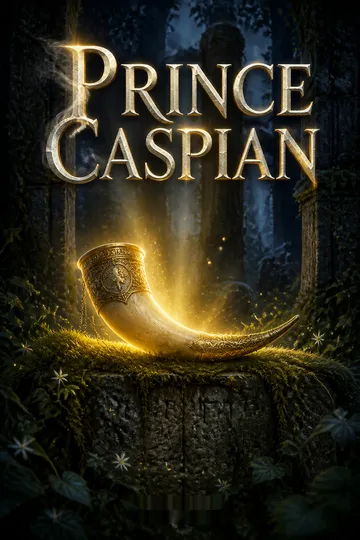
Summons help across timeThe horn once belonged to Susan and is said to call for help when its bearer faces extreme need. Doctor Cornelius preserves it and gives it to Caspian as he flees Miraz, making it both a relic of the old reign and a possible means of reaching beyond the present. Caspian blows it only after the rebellion suffers heavy losses and its leaders fear defeat. Its call draws the Pevensies from England into Narnia, though they do not know who summoned them until Trumpkin explains. The horn turns a private heirloom into a bridge between separated histories, and its uncertain power forces the rebels to act without knowing exactly what response will come.
Narnian time
Makes centuries an instantTime passes at different rates in Narnia and the Pevensies’ world. The children return to England after reigning in Narnia, then find that only a year has passed at home even though centuries have transformed their former kingdom. This difference explains why Cair Paravel lies in ruins, why forests cover the coast, and why Caspian knows the Pevensies only through stories. Edmund pieces together the discrepancy after seeing the castle and hearing Trumpkin’s account. The device makes homecoming uncanny: the children return as if to a country they remember intimately, yet almost everything around them belongs to a later age.
The royal gifts
Turn memory into actionIn Cair Paravel’s treasure chamber, the Pevensies recover the objects associated with their former reign: Peter’s sword and shield, Susan’s bow, and Lucy’s healing cordial. These objects reconnect the children to abilities and responsibilities they had acquired in Narnia, even though they have returned to the bodies and circumstances of schoolchildren. The missing horn is the crucial exception, since it has passed into Caspian’s possession. The gifts are not simply nostalgic keepsakes. Peter and Susan use their weapons, Lucy heals Trumpkin, and the objects help the siblings recognize that their old experience still has practical force in a country that has changed without them.
Aslan's How
Shelters the rebellion's heartAslan’s How is a mound built over the ancient Stone Table, with tunnels and chambers that can shelter the hidden Narnians. Doctor Cornelius recommends it because Miraz’s Telmarines fear the great forest and the coast, while the old mound offers stores, cover, and symbolic importance. The rebels use it as a refuge and council chamber when Miraz’s army advances. Its central chamber also brings Caspian’s alliance to a breaking point, when Nikabrik tries to enlist forbidden supernatural help. The How concentrates the story’s conflict in a place where buried history, political necessity, and competing ideas of power meet.
The sleeping trees
Returns Narnia's strengthThe trees and water spirits of Narnia have fallen into silence after the Telmarines cut forests, defiled streams, and taught people to fear the wild. The rebels hope they might awaken, but they cannot force that restoration through weapons or strategy. Lucy’s encounter with the moonlit woods suggests that the trees remain near consciousness, and Aslan’s return brings them fully to life. When they move against Miraz’s army, the political balance changes at once. Their awakening makes the landscape an active participant in Narnia’s liberation, rather than a neutral setting to be controlled by whichever army holds it.
The Chronicles of Narnia (Chronological Order) Series

About the Author
Other books by C.S. Lewis






Download PDF
Download EPUB
.epub digital book format is ideal for reading ebooks on phones, tablets, and e-readers.








