

Plot Summary
The Door Behind the Gym
At Experiment House, where older pupils torment Jill Pole and the adults fail to stop them, she finds an unexpected ally in Eustace Scrubb, a boy changed by an earlier adventure in another world. As they flee the bullies through a door in the school wall, they step into Narnia and nearly fall from a vast cliff.
Jill's panic and struggle send Eustace over the edge, but a great lion blows him safely away toward Narnia. The lion, Aslan, tells Jill that Eustace is safe and gives her a mission: find Prince Rilian, the missing son of the aging King Caspian. He teaches her four signs to guide the search, then sends her after Eustace, alone and responsible for remembering them.
The quest begins in a place where cruelty thrives because responsible adults have mistaken permissiveness for care. Jill's first failure is not malice but fear and pride: she refuses Eustace's help, then struggles to face the harm she caused. Aslan's response holds danger and mercy together. He does not erase the consequence, yet he gives Jill a task that makes responsibility active rather than paralyzing. The signs establish a test of attention: the children will need to recognize meaning when fatigue, comfort, and persuasive appearances make it inconvenient.
Caspian Leaves at Sunset
Jill reaches Cair Paravel just as Caspian, now frail with age, sails away, and Eustace is too stunned by seeing his old friend to greet him. The first sign is lost before either child understands the cost. The owl Glimfeather brings them to the dwarf Trumpkin, the king's regent, then secretly gathers owls to explain why the search for Rilian has been forbidden: many Narnian champions have vanished looking for him.
They learn that Rilian disappeared after his mother was killed by a great serpent, and that a beautiful green-clad woman appeared soon afterward. Eustace knows Aslan has confirmed that the prince is alive, but the owls fear the stranger may be connected to an old northern danger.
The missed greeting turns a simple instruction into an early lesson in how grief and distraction narrow perception. Eustace's sorrow is understandable, but it still costs the quest practical help. The owls' history gives the mission political weight: Rilian's absence is not merely a family wound, but a vacuum that has unsettled the kingdom and exhausted its rescuers. Their account also links personal bereavement to vulnerability. Rilian's search for the creature that harmed his mother becomes the opening through which a more calculating influence can reach him.
A Marsh-Wiggle Joins
Because Trumpkin would obey the ban on searching for Rilian, Glimfeather carries the children by night to Puddleglum, a Marsh-wiggle who lives alone in the wetlands. Puddleglum expects their journey to fail, yet volunteers to go with them and helps plan a route north toward the ruined city of the giants.
His warnings do not prevent action; they make him a steady companion when Jill and Eustace become impatient. The three pack food, blankets, weapons, and fire-making tools, then cross the shallow Shribble River into Ettinsmoor. Jill begins to enjoy the open moor, while Puddleglum keeps their attention on the hazards ahead. For the first time, the search has a guide who knows the country and shares their risk.
Puddleglum's pessimism is not simple despair. By naming possible failure without pretending it can be controlled, he gives the children a model of courage that does not depend on optimism. His decision to join them matters more than his forecasts: he commits himself despite believing the odds are poor. The group's early cooperation remains fragile, however. Jill and Eustace are inexperienced in interpreting instructions, while Puddleglum's caution can sound like obstruction. Their journey therefore tests not only endurance but whether they can treat disagreement as information instead of an insult.
The Green Lady's Road
On Ettinsmoor, the travelers pass a line of giants who throw boulders at a target and nearly strike them by accident. Farther on, they cross an ancient bridge and meet a silent black-armored knight riding beside the Lady of the Green Kirtle. She praises the supposed hospitality of the giants at Harfang and offers the children a warm bed, baths, and rich meals.
Puddleglum distrusts her, but Jill and Eustace are cold, hungry, and eager to believe her. They agree to visit Harfang while concealing their real mission. As the road grows harsher, thoughts of comfort crowd out thoughts of Rilian; Jill stops rehearsing the signs, and the children grow irritable with their guide.
The Lady's influence works through an offer that answers real bodily needs. Hunger and cold do not make Jill and Eustace foolish; they make the promise of relief unusually persuasive. The danger lies in how comfort redirects attention. Instead of openly forbidding the quest, the Lady gives them a plausible detour that feels earned after hardship. Puddleglum sees the risk but cannot make their judgment for them. The episode portrays distraction as a gradual surrender of priorities, not a sudden collapse of character, which is why the children experience the detour as their own reasonable choice.
The City Under Snow
A snowstorm drives the travelers across a flat hill scored with trenches and low stone walls. They mistake the remains of the giant city for rough ground, even though the trenches trace letters across its pavement.
Reaching Harfang exhausted, they are welcomed by the giants and given warm rooms, food, and baths. From Jill's window the next morning, the three see that the hill was the ruined city, and that its pavement spells the instruction they were meant to follow: the words direct them beneath it.
Jill remembers a dream in which Aslan urged her to look below. She admits she stopped memorizing the signs, while Puddleglum and Eustace acknowledge that they let comfort overrule their doubts. They decide to escape the giants and return to the city.
The sign is present, but recognition requires the travelers to connect what they see with what they were told. Their failure is therefore epistemic as well as moral: they have allowed exhaustion and desire to dictate what counts as relevant. The dream does not provide a new instruction so much as restore an old one. Jill's willingness to admit fault begins a more useful form of responsibility, one that does not confuse guilt with helplessness. The city makes the book's central problem concrete: guidance can be clear and still be missed when people stop practicing attention.
The Autumn Feast
While the giants leave for a hunt, Jill pretends to be delighted by their plans for the Autumn Feast and persuades the household to let the children explore. The trio learns of a back door, then waits in the kitchen for a servant to fall asleep. Jill finds a cookery book whose entries reveal that humans and Marsh-wiggles are listed as food.
The travelers slip outside, but the returning hunt spots them and gives chase. They crawl into a crack beneath the giant stairs, block it with stones, and grope deeper into the hill. The ground suddenly gives way. Jill, Eustace, and Puddleglum slide through loose earth and rubble into a hot, pitch-dark cavern, bruised and trapped far below the surface.
The cookbook changes Harfang from a mistaken refuge into an immediate threat, and the children must act on evidence rather than hospitality. Jill's performance of childish enthusiasm, initially shaped by the giants' assumptions about her, becomes a practical tool for escape. Yet their route out is improvised under pressure and carries them deeper into danger. The abrupt fall strips away the comforts that had distracted them, leaving the travelers with little control over their bodies or direction. Their shared fall also makes the costs of earlier choices collective: none can simply abandon the consequences to another.
The Black Knight Below
The Warden of the Marches and a company of pale Earthmen find the travelers and escort them through caverns to the Queen of Underland. They pass a strange underground forest and the sleeping giant Father Time, then cross the Sunless Sea by boat. In the silent subterranean city, a young black-clad knight receives them in a room lit by an ordinary lamp and insists he has never heard of Narnia or Rilian.
He describes a spell that leaves him violent and serpent-like each night, and says the Queen is the only person who can free him. He also recounts her plan to send him through a tunnel beneath an unsuspecting land and make him its ruler. The children recognize his armor as the knight from the bridge, but not yet who he is.
Underland makes disorientation physical: the travelers descend through narrowing passages, lose the familiar sun, and enter a city whose inhabitants move without joy or curiosity. The knight's polished manners and coherent explanation offer a tempting substitute for the children's uncertain memories. His story also exposes the political shape of the threat: the Queen means to use him as a figurehead for conquest. Because the travelers do not yet know his identity, they must judge his account without the reassurance of a name or history. The scene tests whether apparent reason can be trusted when the speaker's understanding has been shaped by captivity.
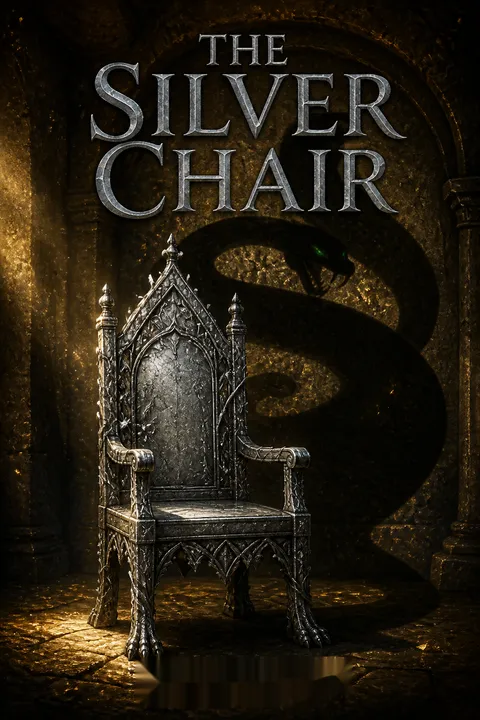
The Silver Chair Breaks
As the knight's nightly crisis approaches, he asks the travelers to stay while the Earthmen bind him into a silver chair. Before the spell takes hold, he warns them that he may beg to be released and urges them not to trust those pleas. Once bound, he struggles and demands freedom, then invokes Aslan's name.
Jill, Eustace, and Puddleglum realize that this is the final sign: the lost prince would be the first person in their journey to ask something in Aslan's name. They cut the cords despite the danger. The knight immediately destroys the chair with his sword, and his mind clears. He identifies himself as Rilian, son of Caspian, and learns that he has been missing for more than ten years.
The final sign does not arrive as a comforting confirmation. It arrives inside a situation where obedience may expose the children to violence, and where the captive himself has warned them against complying. Their choice depends on remembering the instruction without demanding certainty about its outcome. Puddleglum helps distinguish faithfulness from prediction: Aslan gave them a duty, not a guarantee of safety. Rilian's restoration also shows how coercion can divide a person from his own memories and values. Freedom begins not with a complete account of the past, but with the destruction of the device that keeps him bound.
The Witch Loses Her Mask
The Queen of Underland returns and finds Rilian free, then fills the room with scented powder and a repetitive melody. She tries to persuade the travelers that Narnia, the sun, and Aslan are only inventions borrowed from things in her kingdom. Jill and Eustace begin to doubt what they remember, but Puddleglum stamps out part of the fire, breaking the spell's hold.
He chooses to trust the world they have known even without proof the Queen will accept. The Queen drops her disguise and becomes the great green serpent that killed Rilian's mother. Rilian, Puddleglum, and Eustace attack together and kill her. The prince recognizes the serpent as his mother's murderer, while the travelers understand that her enchantment is over.
The Queen attacks perception before she attacks bodies. Her music and fragrance make her account feel like common sense, showing how manipulation can work by narrowing what people can imagine rather than by winning an argument. Puddleglum's physical pain interrupts that narrowing; he uses his own body to restore the others' ability to choose. His defense is neither a proof nor a clever rebuttal. It is a commitment to the value of remembered experience and the kind of world that experience makes possible. Rilian's final recognition turns the abstract struggle into a personal reckoning with the source of his mother's loss.
The Sea Swallows Underland
With the Queen dead, her spells break, and the Underworld begins to flood and collapse. Its Earthmen recover their memories and explain that they are gnomes from the deeper land of Bism, not willing servants of the Queen.
Their guide Golg shows the travelers the road toward the tunnel she planned to use for invasion. Rilian briefly considers descending to Bism, but the closing chasm and rising water force the party onward. As the lamps fail, Jill climbs through a hole in the hillside and emerges into Narnia during a moonlit snow dance.
The dancers and woodland creatures dig out Eustace, Puddleglum, Rilian, and the horses. Narnian creatures recognize the missing prince, and their welcome confirms that the dangerous journey has brought him home.
The collapse of Underland reveals that the Queen's control had shaped not only Rilian but the gnomes' sense of who they were. Their sudden joy is a political consequence of liberation: once the spell lifts, they choose their own destination. Rilian's temptation to explore Bism echoes the expedition's earlier detours, but the flood makes delay visibly costly. Jill's emergence into music, moonlight, and communal labor reverses the isolation of the descent. The rescue is not accomplished by a single hero; the Narnian creatures answer her call and make the return possible.
Caspian's Last Homecoming
At Cair Paravel, Rilian reaches the river just as Caspian returns from his voyage, but the old king dies after seeing his son again. Aslan leads Jill and Eustace to his mountain, where Caspian's body lies in a stream; Eustace drives a thorn into Aslan's paw, and Caspian rises young again in Aslan's country.
He accompanies the children briefly to Experiment House, where Aslan breaks the wall and Jill, Eustace, and Caspian drive off the bullies. The exposure of the school's cruelty forces an inquiry and changes the institution. Aslan absolves Jill's guilt over the journey's mistakes and takes the children home. Caspian returns to Aslan's country, while Rilian remains to rule Narnia and mourn his father.
The ending refuses to make restoration mean that loss never happened. Caspian's reunion with Rilian is brief, and his return to youth occurs beyond Narnia, while his son must still grieve and govern. Aslan's forgiveness similarly does not erase Jill's mistakes; it releases her from turning remorse into a permanent judgment of herself. The visit to Experiment House carries the quest's moral conflict back to its source. The bullies lose their impunity because the children's experience has made them willing to act, and the inquiry exposes what passive authority had concealed.
Analysis
The Silver Chair builds its adventure around a problem of attention. Aslan's signs are not obscure, yet the children repeatedly fail to act on them because their immediate feelings seem more reliable: Eustace is overcome by grief at seeing Caspian, Jill wants warmth and sleep, and the travelers trust Harfang's hospitality because they are exhausted. The pattern treats error as ordinary and cumulative. No single mistake destroys the quest, but each one makes the next decision harder and more dangerous.
The book's most unsettling antagonist is effective because she does not begin with force. The Lady offers comfort, then the Queen of Underland offers an explanation of reality itself. Her spell makes the surface world seem childish and invented, reducing the travelers' shared memory to something they are embarrassed to defend. Puddleglum answers not with superior evidence but with a decision about what kind of world deserves loyalty. His act of hurting himself breaks the spell's sensory hold, joining conviction to bodily cost. The companions also model different forms of resilience. Jill learns to acknowledge mistakes without surrendering to shame. Eustace's past connection to Narnia becomes useful only when he listens and cooperates. Puddleglum's bleakness prevents optimism from becoming a prerequisite for courage. Rilian's captivity shows how a person can be made to forget himself, while his recovery depends on other people honoring a sign he cannot recognize alone.
The ending brings the quest's moral problem back to Experiment House. The children have seen what happens when power is allowed to define reality for everyone else, so they no longer treat bullying as a private inconvenience. Yet the resolution does not promise that justice prevents grief: Caspian dies, and Rilian must mourn him. The story offers restoration and forgiveness without pretending that either can make loss unreal.
Review Summary
The Silver Chair receives mixed reviews but is generally well-liked. Readers appreciate the expanded Narnian world, new characters like Puddleglum, and the quest storyline. Some find it less engaging than earlier books, missing the Pevensies. Critics note Lewis's dated social views and heavy-handed religious symbolism. Fans praise the atmospheric writing, humor, and themes of faith and perseverance. Many consider it one of the stronger entries in the series, with memorable scenes and quotes. The book's darker tone and more complex plot are seen as both strengths and weaknesses.
People Also Read


Characters
Jill Pole
Reluctant sign-bearerJill begins as a lonely pupil who has been bullied and has learned to protect herself with sharpness. She can be brave, but her courage often depends on whether she feels exposed or in control. When she causes Eustace's fall, guilt makes her defensive; when Aslan entrusts her with the signs, she must turn remorse into attention and action. Her longing for comfort during the northern journey makes her vulnerable to convenient distractions, and she later recognizes her part in the group's errors. Jill's growth is not a simple transformation into fearlessness. She learns to admit when she has failed, accept help, and act even when she cannot be certain that a choice will end safely.
Eustace Scrubb
Returning Narnian voyagerEustace arrives at Experiment House changed by an earlier experience in Narnia, more considerate and more willing to resist the school's bullies than he once was. He wants Jill to trust him, though his earnestness can become self-righteousness when she is upset. His previous voyage gives him useful skills and an emotional bond with Caspian, but that connection can also pull his attention away from the immediate task. Eustace becomes a more capable companion by taking responsibility, working alongside Jill and Puddleglum, and facing danger without the assurance that he understands it. His progress is measured less by grand heroics than by greater loyalty and less concern with defending his pride.
Puddleglum
Marsh-born, wary guidePuddleglum is a Marsh-wiggle whose habitual forecasts of rain, failure, and danger make him seem timid, yet he repeatedly chooses the difficult course. He knows the wetlands and northern country, reads people cautiously, and joins Jill and Eustace despite expecting the expedition to end badly. His gloomy manner is both temperament and discipline: he does not need to believe success is likely in order to keep moving. Puddleglum is also capable of seeing when the children's desires have displaced their purpose. In moments of danger, his blunt realism becomes a form of loyalty, and his willingness to endure discomfort helps the group recover its judgment when charm and enchantment make truth difficult to hold.
Aslan
Lion beyond worldsAslan is the great lion who summons Jill and Eustace to Narnia and gives them the signs for their search. He is powerful enough to rescue Eustace from the cliff and send Jill across worlds, yet he does not make the children's choices for them. His guidance is concrete, demanding memory and action, but the signs do not promise an easy journey or explain every consequence. Aslan can be stern about responsibility without reducing a mistake to a person's whole identity. His presence joins authority with compassion, making him at once the source of the quest, its moral measure, and the figure who receives the children when their work is done.
Prince Rilian
Missing Narnian heirRilian is the son and heir of King Caspian, whose disappearance has left Narnia without certainty about its succession. Before he vanished, he was a young prince deeply affected by his mother's death and drawn to the northern woods. His history connects private grief to the wider vulnerability of the kingdom. Rilian is brave and courteous, but he can also be captivated by an appealing explanation of his own circumstances. His role in the story invites a distinction between a person's deeper identity and the account imposed on him by others. He represents both the family's longing and Narnia's need for a future shaped by its own traditions.
King Caspian
Aging seafaring kingCaspian is an elderly Narnian king whose history includes voyages, friendship, and a long relationship with Eustace. His departure from Cair Paravel frames the children's arrival with the painful difference between time in Narnia and time in their own world. He remains loved by his people and deeply concerned about who will follow him. Caspian's presence gives the search for Rilian its intimate stakes: the missing heir is not an abstract political problem, but the son of a father who has already endured years of uncertainty.
The Lady of the Green Kirtle
Courteous northern strangerThe Lady of the Green Kirtle meets the travelers on a remote road with a silent, black-armored companion. She is poised, persuasive, and quick to notice what the cold and hungry children most want. Her offer of shelter at Harfang sounds generous, while her polished manner makes Puddleglum's suspicion seem unnecessarily severe. The Lady's influence depends on presenting a detour as sensible advice rather than an obvious threat. She embodies the danger of comfort offered without enough knowledge of the person offering it.
Glimfeather
Night-flying owl guideGlimfeather is a large talking owl who notices Jill and Eustace arrive at Cair Paravel and helps them reach the regent. He gathers the owls to explain the history of the lost prince and takes the children to Puddleglum. His willingness to act quietly reflects the practical limits facing Narnia: the king is away, the search has been prohibited, and direct appeals may stop the children before they begin.
Trumpkin
Dwarf king's regentTrumpkin governs Narnia while Caspian is away. He is loyal to the king and committed to the rule against sending more champions after Rilian, since previous searches have ended in disappearance. His deafness and irritable manner complicate communication, but he is not a traitor or an enemy. Trumpkin represents the limits of careful administration when an exceptional mission needs to be judged outside established policy.
Lord Drinian
Caspian's trusted captainDrinian is an experienced courtier and Caspian's trusted friend, remembered for his service on the king's eastern voyage. He witnesses the strange woman who appears to Rilian and later regrets keeping the encounter to himself. His part in the prince's history reveals how silence can arise from conscientious motives, such as a reluctance to gossip, and still have lasting consequences.
Golg
Underworld gnome guideGolg is a gnome who helps the travelers understand what happened to Underland's inhabitants after the Queen's power breaks. He explains their connection to Bism and points the group toward the tunnel leading upward. His longing to return home gives the gnomes an identity beyond the role they appeared to serve.
Puddleglum's Narnian queen
Beloved royal motherRilian's mother is a beloved queen whose memory shapes the grief of her family and the history of the missing prince. Her relationship with Caspian and Rilian gives the search its personal depth. The story remembers her as a gracious presence in Narnia, rather than defining her only by the events surrounding her absence.
Experiment House bullies
Schoolyard tormentorsThe older pupils who target Jill embody the daily threat that the school's adults have allowed to continue. They use their numbers and the institution's inaction to make other children feel unsafe. Their behavior gives Jill and Eustace a reason to flee together and establishes the ordinary-world injustice that the ending confronts.
Plot Devices
Aslan's four signs
Guidance under pressureAslan gives Jill four instructions to guide the search: Eustace must greet an old friend on arrival; they must travel north to the ruined giant city; they must obey the writing there; and they will recognize the lost prince when he asks something in Aslan's name. The signs are memorable but not self-executing. Jill forgets them, the children misread the city, and the final sign arrives in a frightening situation. Their function is to make attention and obedience part of the adventure, rather than supplying a map that removes uncertainty.
The silver chair
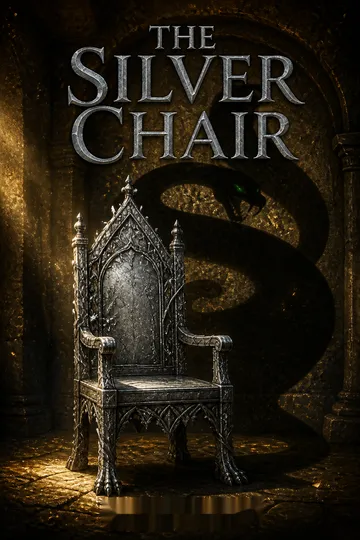
Captivity made visibleThe chair is used to bind the knight during his nightly loss of control. Its restraints make the Queen's claim that she is protecting him appear plausible, while also preventing him from acting freely. The travelers are warned not to release him, which turns the chair into a test of judgment when he later invokes Aslan. Destroying it marks a decisive break in the enchantment and allows the knight to recover his identity.
The witch's enchantment
Reality narrowed by suggestionThe Queen uses scented powder and repetitive music to weaken the travelers' ability to trust their memories. She then insists that Narnia, the sun, and Aslan are inventions based on the dim things they can see in Underland. The enchantment works by making a smaller reality feel sufficient and making resistance seem foolish. Puddleglum's act of stamping on the fire interrupts the spell physically, giving the others enough clarity to choose what they believe.
The ruined city's inscription
A sign hidden in plain sightThe ancient city pavement carries the instruction that the travelers must look beneath it. Snow, exhaustion, and their eagerness to reach Harfang keep them from recognizing that they are walking across the ruins and its lettering. The inscription later gives Puddleglum a basis for making sense of their accidental fall into Underland. It binds the route through the story together while showing that a sign can be physically visible and still go unnoticed.
FAQ
Synopsis & Basic Details
What is The Silver Chair about?
- Quest for Lost Prince: The story follows Jill Pole and Eustace Scrubb as they are summoned to Narnia by Aslan to find the missing Prince Rilian, son of King Caspian.
- Journey Through Perilous Lands: Guided by the pessimistic Marsh-wiggle Puddleglum, they journey through treacherous landscapes, including the giants' realm and the dark Underland, facing various challenges and temptations.
- Confronting Evil Enchantment: They ultimately discover Rilian is under the spell of the Green Lady, who seeks to use him to conquer Narnia, and they must break the enchantment and help him return to his rightful place.
Why should I read The Silver Chair?
- Exploration of Deeper Themes: Beyond a simple adventure, the book delves into themes of faith, doubt, temptation, and the importance of holding onto truth even in the face of overwhelming deception.
- Unique and Memorable Characters: The story features a compelling cast, including the relatable Jill, the redeemed Eustace, and the endearingly gloomy Puddleglum, each offering a unique perspective and contributing to the narrative's richness.
- Classic Narnian World-Building: The Silver Chair expands the Narnian universe, introducing new and imaginative settings like the Underland and exploring the complexities of its inhabitants, adding depth and intrigue to the overall series.
What is the background of The Silver Chair?
- Post-Voyage of the Dawn Treader: The story takes place some years after Eustace's voyage, with Caspian now an old king contemplating his legacy and facing the mystery of his son's disappearance.
- Experiment House Critique: The story opens at Experiment House, a thinly veiled critique of progressive, unstructured education, highlighting the lack of moral guidance and the prevalence of bullying. "These people had the idea that boys and girls should be allowed to do what they liked."
- World War II Allegories: Written during and published shortly after World War II, the story subtly reflects the anxieties and moral ambiguities of the time, with the Green Lady representing deceptive ideologies and the importance of resisting propaganda.
What are the most memorable quotes in The Silver Chair?
- Aslan's Unconditional Guidance: "There are no accidents. Our guide is Aslan; and he was there when the giant King caused the letters to be cut, and he knew already all things that would come of them; including this." This quote emphasizes Aslan's omnipresence and the idea that everything happens for a reason within a divine plan.
- Puddleglum's Steadfast Allegiance: "I'm on Aslan's side even if there isn't any Aslan to lead it. I'm going to live as like a Narnian as I can even if there isn't any Narnia." This quote encapsulates the theme of unwavering faith and commitment to truth, even in the face of doubt and despair.
- Aslan's Comfort in Loss: "Yes," said the Lion in a very quiet voice, almost (Jill thought) as if he were laughing. "He has died. Most people have, you know. Even I have. There are very few who haven't." This quote offers a comforting perspective on death, suggesting it is a natural part of the cycle and not necessarily an end.
What writing style, narrative choices, and literary techniques does C.S. Lewis use?
- Allegorical Storytelling: Lewis employs allegory to explore moral and spiritual themes, with characters and events representing abstract concepts such as good and evil, faith and doubt, and temptation and redemption.
- Third-Person Omniscient Narration: The story is told from a third-person omniscient perspective, allowing the narrator to access the thoughts and feelings of multiple characters and provide commentary on the events unfolding.
- Vivid Imagery and Descriptive Language: Lewis uses rich and evocative language to create a vivid sense of place, bringing the landscapes of Narnia and Underland to life and immersing the reader in the story's atmosphere. "They saw smooth turf, smoother and brighter than Jill had ever seen before, and blue sky, and, darting to and fro, things so bright that they might have been jewels or huge butterflies."
Hidden Details & Subtle Connections
What are some minor details that add significant meaning?
- The Silver Chair's Symbolism: The silver chair, initially presented as a means of comfort for Rilian, is actually a tool of imprisonment and enchantment, symbolizing the deceptive nature of comfort and the importance of resisting false promises.
- The Earthmen's Sadness: The pervasive sadness of the Earthmen in Underland hints at their enslaved state and the loss of their true identities, reflecting the soul-crushing effects of oppression and the importance of freedom. "In one respect they were all alike: every face in the whole hundred was as sad as a face could be."
- The Taste of Live Gems: Golg's description of the "live" gems in Bism, contrasting with the "dead" treasures of the surface, subtly critiques materialism and suggests that true value lies in things that are vibrant and connected to life, not merely in possessions.
What are some subtle foreshadowing and callbacks?
- The Green Lady's Initial Appearance: The Green Lady's first appearance at the spring where Rilian's mother died foreshadows her role as the source of evil and enchantment, linking her to death and deception from the beginning.
- Puddleglum's Constant Pessimism: Puddleglum's consistent expectation of the worst, while often humorous, foreshadows the genuine dangers and hardships the group will face, preparing the reader for the darker aspects of their journey.
- Eustace's Past Voyage: Eustace's prior experience on the Dawn Treader is subtly referenced through his knowledge of sailing and shooting, highlighting his growth and providing him with skills that prove valuable during the quest.
What are some unexpected character connections?
- The Green Lady and Rilian's Mother: The revelation that the Green Lady is the serpent who killed Rilian's mother adds a layer of personal vengeance to Rilian's quest, transforming it from a mission to save Narnia into a deeply personal act of retribution.
- Glimfeather and Past Events: Glimfeather's knowledge of Caspian's voyage and his connection to the owl parliament establish a sense of continuity and interconnectedness within the Narnian world, reminding the reader of the larger history and community.
- The Connection to the White Witch: The owls' speculation that the Green Lady may be "some of the same crew" as the White Witch connects the story to the broader conflict between good and evil in Narnia, suggesting a recurring pattern of darkness and the need for constant vigilance.
Who are the most significant supporting characters?
- Glimfeather: As a wise owl and member of the parliament, Glimfeather provides crucial information and guidance to Jill and Eustace, helping them navigate the political landscape of Narnia and understand the urgency of their mission.
- The Warden of the Marches of Underland: While initially appearing as an antagonist, the Warden's adherence to duty and his role as a guide through the Underland highlight the complexities of morality and the potential for unexpected assistance.
- Golg: Golg's transformation from an enslaved gnome to a joyful Bismite represents the power of freedom and the importance of remembering one's true identity, offering a hopeful counterpoint to the darkness of Underland.
Psychological, Emotional, & Relational Analysis
What are some unspoken motivations of the characters?
- Jill's Need for Validation: Jill's initial recklessness on the cliff edge stems from a desire to prove herself and overcome her feelings of inadequacy, highlighting her underlying insecurity and the need for acceptance. "I was showing off, Sir."
- Eustace's Desire for Redemption: Eustace's eagerness to help Jill and his loyalty to Caspian reflect his deep-seated desire to atone for his past selfishness and prove that he has truly changed, seeking validation for his transformation.
- Puddleglum's Fear of Complacency: Puddleglum's willingness to join the quest, despite his pessimistic outlook, is driven by a fear of becoming complacent and a desire to challenge himself, suggesting a hidden yearning for purpose and meaning beyond his mundane existence. "They all say - I mean, the other wiggles all say-that I'm too flighty; don't take life seriously enough."
What psychological complexities do the characters exhibit?
- Rilian's Stockholm Syndrome: Rilian's initial defense of the Green Lady, despite his captivity, suggests a form of Stockholm syndrome, highlighting the psychological manipulation and control exerted by the Witch and the difficulty of breaking free from such influence.
- Puddleglum's Existentialism: Puddleglum's constant pessimism and questioning of reality reflect an existential outlook, grappling with the meaning of life and the possibility that everything is meaningless, yet choosing to act with courage and loyalty despite these doubts.
- Jill's Imposter Syndrome: Jill's repeated mistakes and self-doubt throughout the quest suggest a form of imposter syndrome, questioning her own abilities and worthiness to fulfill the task assigned to her by Aslan, despite her genuine desire to succeed.
What are the major emotional turning points?
- Jill's Encounter with Aslan: Jill's initial encounter with Aslan is a turning point, instilling in her a sense of purpose and responsibility that motivates her throughout the quest, despite her moments of doubt and fear.
- The Discovery of Talking Stag: The realization that they have unknowingly consumed a Talking Stag is a major emotional blow, forcing the group to confront the moral implications of their actions and the potential consequences of their failure to heed Aslan's signs.
- Puddleglum's Fire Stomping: Puddleglum's act of stamping out the fire is a pivotal moment, demonstrating his unwavering commitment to truth and breaking the Witch's enchantment, inspiring the others to resist her influence and reaffirm their faith.
How do relationship dynamics evolve?
- Jill and Eustace's Evolving Friendship: Jill and Eustace's relationship evolves from initial animosity to mutual respect and reliance, as they learn to overcome their differences and support each other through the challenges of the quest, highlighting the transformative power of shared experience.
- The Trio's Shared Purpose: The bond between Jill, Eustace, and Puddleglum strengthens as they face adversity together, forming a unique dynamic based on loyalty, humor, and a shared commitment to fulfilling their mission, despite their contrasting personalities and perspectives.
- Rilian's Dependence on His Rescuers: Rilian's initial dependence on Jill, Eustace, and Puddleglum after his release highlights the importance of friendship and support in overcoming adversity, as he relies on their guidance and strength to rediscover his true self and reclaim his identity.
Interpretation & Debate
Which parts of the story remain ambiguous or open-ended?
- The Nature of Aslan's Tests: The exact purpose and nature of Aslan's tests, particularly the signs, remain somewhat ambiguous, leaving room for interpretation regarding the balance between free will and divine guidance in the characters' journey.
- The Green Lady's Origins: The Green Lady's true origins and connection to other Narnian villains, such as the White Witch, are never fully explained, leaving her shrouded in mystery and suggesting a broader, more ancient source of evil in the Narnian universe.
- The Future of Underland: The fate of Underland and its inhabitants after the Witch's defeat is left open-ended, raising questions about the possibility of redemption and renewal in a realm defined by darkness and oppression.
What are some debatable, controversial scenes or moments in The Silver Chair?
- Puddleglum's Fire Stomping: While widely praised as a heroic act, Puddleglum's decision to stomp out the fire could be debated as a reckless gamble, potentially endangering the group if it had failed to break the enchantment.
- The Portrayal of Giants: The depiction of the giants, particularly those at Harfang, raises questions about prejudice and the potential for judging entire groups based on stereotypes, prompting reflection on the complexities of cultural understanding and acceptance.
- Aslan's Instructions and Free Will: The interpretation of Aslan's instructions and the extent to which the characters have free will to deviate from them is a source of ongoing debate, raising questions about the nature of divine guidance and the balance between destiny and choice.
The Silver Chair Ending Explained: How It Ends & What It Means
- Caspian's Rejuvenation and Death: Caspian's brief return to youth and subsequent death in Aslan's country symbolize the cyclical nature of life and death, and the promise of renewal and eternal life beyond the physical realm.
- Experiment House's Transformation: The reforms at Experiment House after Jill and Eustace's return represent the power of individual action to effect positive change in the world, highlighting the importance of standing up against injustice and promoting moral values.
- Aslan's Presence in Both Worlds: Aslan's ability to impact both Narnia and the children's world underscores his omnipresence and the interconnectedness of all realities, suggesting that his influence extends beyond the boundaries of any single world.
The Chronicles of Narnia (Chronological Order) Series
About the Author
Other books by C.S. Lewis





Download PDF
Download EPUB
.epub digital book format is ideal for reading ebooks on phones, tablets, and e-readers.








