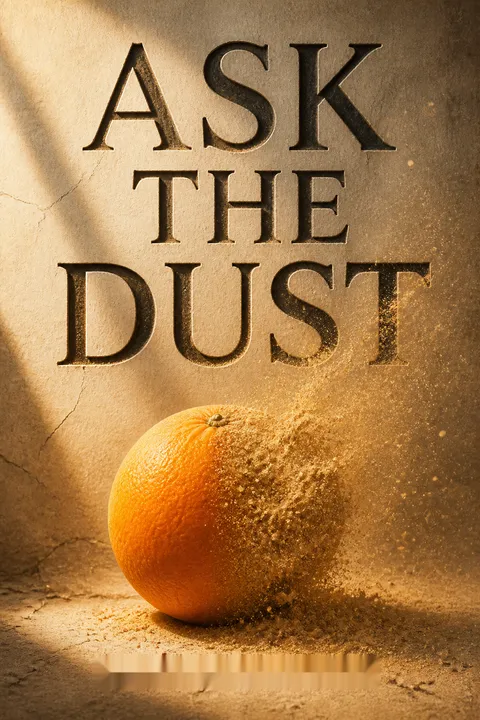


Plot Summary
Rent Due, Dreams Unpaid
Arturo Bandini has come from Colorado to Los Angeles with a single published story and a grand picture of the writer he will become. Five weeks behind on rent at the Alta Loma Hotel, he avoids his landlady and waits for a letter from editor J. C. Hackmuth to rescue him. His mother sends ten dollars, money Arturo could spend on food or postage.
Instead, he sets out to gain the experience he believes a writer needs and follows a woman who sells sex. He pays her eight dollars to listen to his questions, invents an appointment when intimacy becomes real, and bolts. The encounter leaves him ashamed, poorer, and no wiser about love, though he can already imagine turning it into literature.
Arturo's first crisis is not simply poverty; it is the distance between the person he performs and the person he can bear to be. He treats money as proof of future greatness, then spends nearly all of it to rehearse an adult role he cannot inhabit. Even his retreat becomes material for an imagined book, letting him convert humiliation into a claim of artistic experience. The episode establishes a pattern: he wants life to validate his self-image, but when life makes an actual demand, he escapes into narration.
Camilla's Ragged Shoes
At the Columbia Buffet, Arturo meets Camilla Lopez, a Mexican American waitress, and takes her laughter at his bad coffee as an insult. He mocks her worn huaraches, then leaves her a copy of The Little Dog Laughed with a contemptuous dedication.
When she tears out the story and drops its pages into a spittoon, he leaves wounded; she catches up to apologize, but he answers her kindness by using a racial slur against her. His triumph lasts only until he remembers how similar the insult is to those that drove him from Colorado. Arturo recognizes the old injury speaking through him, yet recognition does not stop him from turning his shame into another weapon.
Camilla's destruction of the magazine strikes at the fragile evidence Arturo uses to certify his identity. His retaliation exposes a contradiction he cannot resolve: he wants sympathy for the ethnic contempt directed at him, yet borrows that same contempt when he has power over Camilla. The scene is not a simple lesson in hypocrisy, because Arturo understands the source of his cruelty almost as soon as he commits it. The deeper failure is that self-awareness arrives without self-command. His capacity to name his wound is not yet the capacity to avoid passing it on.
The Beach Between Them
Hackmuth accepts a long, rambling letter from Arturo as a story, The Long Lost Hills, and sends him $175. Arturo pays his rent, buys a new wardrobe, then finds the clothes so uncomfortable that he returns to his old ones. At the buffet he tries to impress Camilla with expensive drinks and music; she resents his sudden pose of wealth, but the two arrange a drive to the coast.
Camilla takes the wheel of her battered Ford and plunges into the surf. When she cries for help, Arturo swims out, nearly drowns, and struggles back exhausted. He angrily throws her into shallow water after discovering the prank. Later, when she reaches for him under a blanket, his desire collapses into fear and shame.
Money briefly gives Arturo the means to stage a more successful self, but the borrowed costume feels less convincing than his poverty. Camilla sees the performance and resists being cast as its admiring audience. Their trip to the beach offers a more exposed encounter: Arturo risks his life when he believes she is drowning, yet cannot convert rescue into closeness. The episode makes his central difficulty physical and immediate. He can write himself as a confident lover, but the body refuses to obey the script, and his embarrassment turns tenderness into aggression.
Declarations in Pieces
After the beach, Arturo sends Camilla a marriage telegram, then watches her share it with the men at work. He follows with a poem, which she tears apart, and seeks counsel from a priest who dismisses The Little Dog Laughed as false and irreverent. Arturo tries to drown the rejection in bars, buying drinks for women whose attention he cannot mistake for affection.
Then Vera Rivken, a lonely housekeeper from Long Beach, enters his hotel room after following him. She mocks his writing, recites poetry, and insists that he will love her. Her intensity unsettles him, but when she speaks of being repulsive, Arturo tries to reassure her. She demands that he see the bodily wound she believes has made her unlovable.
The failed telegram and poem show Arturo treating expression as a substitute for mutual knowledge. He can send grand language across town, but he cannot make it answer the particular person who receives it. The priest's criticism threatens his belief that publication has already settled the question of his talent. Vera arrives as a sharper mirror: she also asks another person to confirm a story about her worth, but she does so without Arturo's protective comic distance. Her need draws out his compassion, though he still approaches intimacy as a test he hopes to pass.
Vera's Borrowed Princess
Vera reveals a scarred, atrophied patch of flesh near her groin, expecting Arturo to recoil. He tells her she is beautiful, then goes into the hallway and cries at what he sees as God's cruelty. Soon afterward he visits her Long Beach apartment, carrying his own hidden hope that she can cure his failure with Camilla.
When Vera asks about the woman he loves, Arturo has her pretend to be Camilla, a princess ruling the coast. He casts himself as a conqueror and makes love to Vera inside the fantasy, then sleeps while she sobs. On waking, he leaves her two dollars and walks out. The small payment cannot quiet his guilt, which follows him onto the beach as the ground begins to shake.
Arturo's kindness toward Vera is genuine, but it does not make the encounter free of self-interest. He responds to her exposed body with tenderness, then turns her into a stand-in for Camilla and uses the fantasy to restore his own sense of potency. Vera participates, yet her tears mark the cost of being made to serve someone else's desire. The two dollars afterward function as a thin attempt at repair, not restitution. His guilt reveals that he knows the difference, even while he keeps trying to explain his actions through romance, religion, or artistic ambition.
Long Beach Comes Apart
As Arturo sits among the dunes, a powerful earthquake tears through Long Beach. Buildings collapse, people are injured or killed, and rescuers cordon off the streets. Arturo searches the damaged area for Vera but cannot find her. He returns to Los Angeles frightened of tall buildings and tells hotel residents invented stories in which he rescued the wounded.
For a time he tries to make himself new through Catholic rituals: Mass, confession, Communion, and money sent to his mother. His discipline proves fragile. He sees a woman in a window, gives in to sexual temptation, and then finds that the experience has loosened his writing. A story about Vera begins to take shape, carrying him back toward Camilla.
The earthquake gives Arturo's private guilt an external scale, but it does not provide the clear moral judgment he wants. He cannot know whether Vera survived, and the uncertainty is more painful than a neat resolution would be. His fabricated rescue stories reveal how quickly fear becomes performance, while his religious return shows a sincere wish for order that cannot withstand desire. Creativity follows not from moral purification but from the messy life he has tried to control. The novel refuses to make artistic energy a reward for virtue; it emerges from Arturo's contradictions and leaves them intact.
The First Hard Pursuit
With Vera's story moving through his mind, Arturo returns to the Columbia Buffet and asks Camilla to see him. She refuses, and he waits by her car until she arrives with Sammy, the bartender she cares for. Arturo grabs Camilla, insists she leave with him, and throws her aside when she fights back. Sammy escorts her away.
Arturo discovers Camilla's address but abandons the pursuit and goes home. The story he is beginning offers him a route into the lives of others, yet his behavior toward Camilla remains coercive. The difference between his generous image of himself and the man who uses his strength against her is now impossible to ignore.
Arturo's aggression is not presented as an expression of love, but as the consequence of treating Camilla's refusal as a challenge to his authority. He recognizes that he is acting badly, yet recognition arrives after he has already tried to control her body. The contrast with his emerging story matters: writing may make him attentive to vulnerability, but that attention has not yet become an ethical practice in his relationships. His retreat prevents further harm in the moment, though it does not undo the threat. The scene tests the limits of self-knowledge and shows that narration alone cannot discipline impulse.
Sammy's Manuscripts
A later sale of The Long Lost Hills earns Arturo another hundred dollars, which he partly sends to his mother. He begins a novel about Vera and settles into weeks of writing. Camilla visits with two crude stories by Sammy Wiggins, hoping Arturo can help the sick bartender become a writer. Arturo drafts a vicious rejection, mocking Sammy's talent and approaching death.
Before mailing it, he imagines the desert waiting for all of them and recognizes Sammy's manuscript as an attempt to resist the same silence he fears. He rewrites his response as practical criticism and sends the stories back with usable advice. For once, Arturo's literary judgment serves another struggling writer instead of his own vanity.
Sammy's bad stories provoke Arturo's most revealing moral choice because they awaken both envy and recognition. His first response is to defend his status by humiliating a rival, but the desert perspective makes rivalry seem briefly trivial. The compassion that follows does not require him to pretend the work is good; he can be truthful without making truth a weapon. This is a significant shift in his sense of authorship. Writing becomes not only proof that he matters, but a way of helping another person make an imperfect attempt at meaning.
A Lover's Empty Gun
When Camilla returns, Arturo criticizes her appearance and tries to provoke her into wanting him. She kisses him, but his body again refuses the confident role he has invented; when he finally feels desire, it comes through anger and the wish to overpower her. Later she takes him to a shooting gallery, where she hits the targets and he misses.
Her teasing and the crowd's laughter leave him exposed. On the drive, she orders him out in a deserted industrial district and speeds away. Arturo walks back to Bunker Hill, insisting that her contempt does not matter because he can write. The claim is familiar, but the humiliation has reached him more deeply than he admits.
The shooting gallery turns the private pressure of sexual performance into a public test of masculine competence. Camilla handles the gun with ease; Arturo cannot make the weapon, his body, or his prose fulfill the role he expects from himself. His desire becomes strongest when he imagines domination, suggesting that he experiences vulnerability as a threat to be overcome rather than shared. Camilla's cruelty is real, but so is the harm in Arturo's response. His retreat to literary pride protects him from the scene's shame without resolving the insecurity that produced it.
The Road Back to Sammy
Camilla later arrives at Arturo's room with a bruised face and explains that Sammy struck her after she drove to the desert to see him. Arturo comforts her while she drinks and grieves for the man she loves. On a visit to Terminal Island, their quarrel over the sea gulls and local children ends with Camilla leaving Arturo behind.
She returns to his room later, hiding in his closet and smoking marijuana. When she breaks down and asks to visit Sammy, Arturo agrees to drive her into the Mojave. He is not the person she wants, but she trusts him enough to carry her back toward the man who has hurt her.
Camilla's return gives Arturo the intimacy he has pursued, but it arrives through her pain and remains organized around Sammy. His willingness to comfort her reflects real tenderness, though he cannot stop measuring himself against the absent bartender. The Terminal Island quarrel exposes how little shared pleasure they can sustain without turning it into a contest. Her concealed marijuana use adds another private refuge to her life, one Arturo discovers without yet understanding its full hold. By driving her to Sammy, he chooses care over possession, even as that choice takes him toward a scene that will test his limits.
The Desert's Bitter Welcome
At Sammy's isolated shack, Camilla gathers wood, cooks, cleans, and waits on him while he discusses writing with Arturo. Sammy tells her to leave, and she returns with Arturo to Los Angeles exhausted. Arturo then finds marijuana traces in his closet and realizes she has been using his room to smoke.
The next night Camilla takes him to a hidden den on Central Avenue, where Black patrons share the drug. Arturo smokes with her, feels its intoxicating lift, and has sex with her in her apartment. When the drug fades, he sees the broken lamp and cuts on his feet, and the old guilt returns. The encounter gives him access to Camilla's body, not to the reciprocal love he wants.
The desert visit reveals the imbalance in Camilla's attachment: she offers Sammy labor and devotion, while he accepts her presence only on his terms. Arturo witnesses this without being able to change it. Marijuana briefly suspends his self-consciousness and enables intimacy, but it also makes the intimacy harder to trust. The broken lamp and wounded feet give the aftermath a material weight that his fantasies cannot erase. Desire has been achieved through intoxication and unequal power, leaving Arturo with contact but not connection, and Camilla with another temporary escape from rejection.
A Contract, Then Silence
Arturo finishes his novel about Vera and learns that Hackmuth has accepted it, with a contract and a five-hundred-dollar advance. He wants to share the news with Camilla, but she has vanished from the buffet. At her apartment he finds her gaunt, isolated, and unable to keep food down.
He buys groceries and tries to care for her, but she locks him out and the landlady calls the police. After Camilla is taken away in an ambulance, Arturo pays for the damage and tracks her to the County Hospital. By the time he arrives, she has been transferred. He tricks a staff member into revealing that she is at an institution for the insane, but he cannot visit her.
The novel's acceptance gives Arturo the public recognition he has wanted, yet the moment arrives when the person he most wants to reach is inaccessible. His response to Camilla's illness is practical: food, cleaning, money, persistence. But his efforts cannot override her fear or the institutional rules that govern her care. The contrast between his career's opening and her world contracting into a locked room keeps success from functioning as emotional rescue. Arturo can finally claim a book, but he cannot claim the right to decide what will help Camilla.
Willie at the Edge
Months later Arturo learns that Camilla has escaped the institution. Collect telegrams from San Francisco, Fresno, and Bakersfield ask him for money, and he sends it despite promising himself he will stop. When she appears in his hotel room, he finds her using marijuana and offers a life together at Laguna Beach. He buys a white collie puppy, whom they name Willie, and empties Camilla's remaining marijuana into the toilet.
But when Arturo returns after collecting his belongings, Camilla and the dog have disappeared. His book is published, and Sammy sends a postcard saying Camilla came to the desert and left three days earlier. Arturo searches the ridges without finding her, then throws his signed book into the wasteland she entered.
Arturo's plan for Laguna Beach combines care with another attempt to author Camilla's life. He provides money, shelter, a puppy, and a drug-free setting, but he mistakes a hopeful arrangement for a choice they have made together. Camilla's disappearance refuses the ending he has prepared. The last act of throwing his book toward the desert is both a gesture of love and a surrender of control: he sends his achievement after someone he cannot locate or keep. The landscape receives the book without promising that either art or devotion can retrieve her.
Analysis
Ask the Dust follows Arturo Bandini's attempt to make a self from three unreliable materials: money he rarely has, recognition he cannot stop craving, and stories he can revise after the fact. Los Angeles intensifies that effort. Its beaches, hotels, bars, and sunlit streets promise abundance, but Arturo encounters unpaid rent, cheap meals, prejudice, and people whose dreams have already been worn thin. The setting is not merely a backdrop to his ambition; it is the landscape against which he measures the distance between the advertised paradise and the lives actually being lived.
The novel's sharpest moral pressure comes through Arturo's relationship with Camilla. Both carry the mark of ethnic contempt, yet Arturo sometimes turns his own injury into a license to insult or control her. His self-awareness is real, but the book refuses to treat awareness as an automatic cure. He can recognize his cruelty and still repeat it; he can feel tenderness and still confuse care with possession. Camilla, meanwhile, remains more than the object of his longing. Her attachment to Sammy, her drug use, her humor, and her flight from Arturo's plans reveal a person whose choices cannot be absorbed into his preferred romantic plot.
Writing offers Arturo a more promising form of relation. His revised criticism of Sammy's work shows that he can tell the truth without using it to crush someone. Yet artistic achievement cannot repair the damage of his relationships or make the people he loves available to him. The accepted novel brings money and status, but Camilla's crisis continues beyond his control. The ending gives no triumphal answer: Arturo sends his book into the desert after her, making art a gesture of attachment and relinquishment at once. The novel's emotional force lies in that limit. To write about another person may be a way of reaching toward them, but it is not the same as knowing, saving, or possessing them.
Review Summary
Ask the Dust receives widespread praise for its raw, honest prose and vivid portrayal of Depression-era Los Angeles. Readers are captivated by protagonist Arturo Bandini's contradictory nature — simultaneously arrogant and insecure, charming and infuriating. Charles Bukowski's enthusiastic endorsement draws many readers to the novel. The turbulent relationship between Bandini and Mexican waitress Camilla resonates emotionally, though some critics note the thin plot and underdeveloped supporting characters. A minority of readers find Bandini's racism and immaturity off-putting, while most consider Fante's writing visceral, poetic, and deeply moving.
People Also Read



Characters
Arturo Bandini
The starving writerArturo is a young Italian American writer living on Bunker Hill, where poverty and ambition continually collide. He is funny, observant, self-dramatizing, and often generous, but he also uses wit and ethnic contempt to defend himself from shame. He longs for money, literary fame, sexual confidence, and recognition from the people who once diminished him. His correspondence with editor J. C. Hackmuth and his volatile bond with Camilla reveal how readily he turns experience into a story about his own importance. Arturo's conscience is active, though not always powerful enough to govern him. He can see his selfishness clearly, then repeat it, making his struggle less a simple fall from innocence than a fight to make self-awareness matter.
Camilla Lopez
The restless waitressCamilla is a Mexican American waitress whose sharp humor, pride, and appetite for movement resist Arturo's attempts to define her. She insists on her American identity even as Arturo repeatedly casts her as an exotic figure or a symbol of his own wounded origins. Her attachment to Sammy shapes much of her private life, while her attraction to Arturo is tangled with anger, loneliness, and the desire to be seen on her own terms. She can be playful and tender, but she also knows how to make rejection sting. Camilla's contradictions are not a puzzle Arturo can solve: she wants freedom and closeness, and she is drawn to people whose affection does not reliably protect her.
Vera Rivken
The wounded housekeeperVera is a lonely housekeeper from Pennsylvania who lives in Long Beach and approaches Arturo with startling intensity. Her theatrical manner and alcohol-fueled recklessness conceal a profound fear that her body makes her unworthy of love. She seeks reassurance directly, even when her demands unsettle the person she is asking to trust. Arturo's attention briefly gives her relief, but their connection is shaped by his fantasies as much as by her needs. Vera exposes the difference between offering comfort and truly understanding another person's suffering.
Sammy Wiggins
The ailing bartenderSammy is a bartender and aspiring writer who lives with tuberculosis in a remote Mojave shack. He speaks confidently about the publishing world and produces stories Arturo considers inept, but he keeps writing because the work matters to him. Camilla loves him and repeatedly returns to his orbit, despite his harshness and demands. Sammy's combination of illness, ambition, and emotional bluntness unsettles Arturo, who sees in him both a rival and another person struggling to leave a mark.
J. C. Hackmuth
The distant editorHackmuth is the influential New York editor who publishes Arturo's first story and answers his letters. His brief, measured encouragement carries enormous weight because Arturo treats him as both professional mentor and private authority. Hackmuth's acceptance of unconventional work gives Arturo money and a reason to keep writing, while the distance between them lets Arturo imagine a more intimate bond than their correspondence provides. He represents the real but limited power of recognition.
Mrs. Hargraves
The vigilant landladyMrs. Hargraves runs the Alta Loma Hotel and demands rent from Arturo even when he has little to pay. Her strictness grows from loneliness and a hard-earned suspicion of people who promise more than they can deliver. She can be dismissive, yet Arturo also glimpses the grief and pride behind her vigilance, especially when she remembers her late husband. Her presence keeps the practical cost of his artistic dreams in view.
Mr. Hellfrick
The indebted neighborHellfrick is Arturo's elderly hotel neighbor, a retired soldier who drinks heavily and lives amid disorder. He offers Arturo food through dishonest schemes, borrows money he cannot repay, and later draws him into a morally ugly theft. His mix of need, bluster, and evasion gives Arturo an uneasy portrait of a life where survival can crowd out principle. Their strained friendship tests Arturo's claims to be kind to both people and animals.
Arturo's mother
The distant benefactorArturo's mother remains in Colorado and supports him with money from an insurance policy when his finances fail. He writes home with grand stories about his career, concealing the hunger and insecurity behind them. Her faith and prayers shape his Catholic imagination, and sending money back to her becomes one of his rare chances to act as a provider rather than a dependent son.
Father Abbot
The unsparing priestFather Abbot is a Catholic priest whom Arturo approaches for advice about a woman. He challenges Arturo's pride in his published work and refuses to flatter him. His bluntness forces Arturo to confront the possibility that publication and artistic merit are not the same thing.
Judy Palmer
The young readerJudy is a fourteen-year-old hotel guest who reads Arturo's story with genuine emotion. Her response gives him a rare experience of being understood through his writing, though her visit is brief and guarded by her mother.
Benny Cohen
The radical newsdealerBenny sells newspapers and marijuana cigarettes from a room near the Grand Central Market. His political certainty unsettles Arturo, who feels both accused by Benny's class analysis and drawn to his uncompromising view of the city.
Plot Devices
The Little Dog Laughed
Proof of a fragile identityArturo's published story gives him his first tangible evidence that he might become a writer. He carries copies, offers them to strangers, and treats Hackmuth's approval as confirmation of his exceptional talent. The magazine also exposes the gap between artistic recognition and ordinary human connection: most people ignore it, while Camilla destroys it. Arturo's attachment to the story makes its reception feel like a verdict on his entire self, revealing how much of his identity rests on a single success.
The desert and dust
A measure of human fragilityThe desert surrounds Los Angeles as both landscape and imagined final witness. Arturo sees the city as a temporary human construction against an older, indifferent terrain. It helps him recognize a kinship with Sammy, whose writing he first mocks, and later becomes the place Camilla enters beyond his reach. Dust also links the novel's setting to its central pressure: lives, ambitions, and literary reputations may matter deeply to the people living them without leaving any guarantee of permanence.
The typewriter and manuscripts
A stage for self-inventionArturo's typewriter records both genuine work and elaborate evasions. He cannot begin a story, writes letters to Hackmuth instead, and turns imagined romances into scenes on the page. Manuscripts also connect him to others: Sammy's stories invite Arturo to choose between cruelty and useful criticism, while the novel about Vera becomes the work that earns him a contract. Writing is neither pure escape nor guaranteed redemption; it is the instrument through which Arturo practices seeing, boasting, revising, and sometimes helping.
Marijuana
An escape with a costMarijuana enters Camilla's life as a way to blunt exhaustion and distress, first appearing in Arturo's closet and then in a hidden smoking den. When Arturo joins her, the drug loosens his inhibitions and permits intimacy he has repeatedly failed to manage sober. Yet the episode leaves him with guilt and physical injury rather than a stable bond. The drug makes closeness possible for a night while deepening the secrecy and dependence already shaping Camilla's life.
The Saga of Arturo Bandini Series
Download PDF
Download EPUB
.epub digital book format is ideal for reading ebooks on phones, tablets, and e-readers.








