


Plot Summary
Snowbound, Owed, and Angry
In Rocklin, Colorado, winter stops Svevo Bandini1 from laying bricks and leaves his family short of money. He patches his shoes with cardboard, loses ten dollars at the pool hall, and slips over Arturo’s3 sled, destroying it in a burst of anger. At home, Maria2 tries to soothe him while the unpaid house, the banker, and mounting bills crowd his thoughts.
A letter from Maria’s mother,8 Donna Toscana,8 announces her visit and condemns the hardship her daughter2 endures. Svevo1 cannot bear the prospect of facing Donna,8 so he leaves the house. His departure begins a Christmas stretch in which the family must manage without its volatile provider,1 while Svevo1 seeks a place to escape his failures.
Svevo’s anger is not simply temper; it is his defense against a life in which nearly every measure of security belongs to someone else. The bank owns the house, winter takes his wages, and even a ten-dollar loss becomes proof of his powerlessness. Breaking Arturo’s sled lets him convert shame into action, but the gesture costs the family another possession. His exit after Donna’s letter repeats the same pattern: rather than endure judgment, he chooses flight. The novel begins with a man who wants to be master of his household yet cannot tolerate reminders of his dependence.
Arturo’s Freckled Romance
Arturo,3 Svevo1 and Maria’s2 oldest son,3 spends class counting freckles and imagining himself a famous baseball player loved by Rosa Pinelli,6 his classmate. His daydream earns him detention, where Sister Mary Celia’s10 praise of Maria’s2 goodness makes him feel the family’s poverty more sharply. Later, he steals a dime from his mother’s2 purse to see a movie, transforming its romance into a fantasy starring himself and Rosa.6
He spots Rosa6 in the audience and flees before she can see his patched clothes or suspect the theft. At home, he breaks down beside Maria2 as she prays. She already knows he took the coin, but sends him to bathe rather than shame him, leaving him both comforted and eager to outwit her next time.
Arturo’s imagination gives him a stage on which poverty and ethnic shame can be rewritten as stardom, but it cannot protect him from the ordinary facts of his life. The movie lets him become a handsome doctor who rescues Rosa; the theater itself reminds him that he is a boy in worn clothes who has stolen his mother’s money. His confession is less a mature moral choice than an urgent attempt to escape the feeling of being seen. Maria’s quiet knowledge makes her a secure presence, yet Arturo interprets that security as a challenge to his independence.
Donna’s Cruel Visit
Arturo’s3 small cruelties surface when he kills one of Maria’s2 hens with a lump of coal. Fearful that the dead bird will haunt him, he prays for forgiveness, then eats it with his brothers.4 Donna Toscana8 arrives soon afterward and questions the boys3 about Svevo,1 offering coins for information while Maria2 tries to shield her husband1 and preserve her dignity.
Donna8 inspects the house, criticizes the food, and exposes private stories from Maria’s2 childhood to her own children. Maria2 endures the visit without answering in kind. Once Donna8 leaves, Maria’s2 attention turns to the grocery bill and the family’s dwindling supplies. Svevo1 is still absent, so she must face the neighboring grocer12 alone, carrying the shame of asking for more credit.
The visit makes poverty feel like a public examination. Donna treats the house, the meal, and Maria’s past as evidence in a case against her daughter’s marriage, while the boys learn how easily adults recruit children into family conflict. Arturo’s killing of the hen echoes that harshness on a smaller scale: he acts violently, then turns to ritual to manage the guilt. Maria absorbs both kinds of injury without openly retaliating. Her patience is not passivity so much as a survival practice, though the cost is that the household’s pain remains largely unspoken.
Credit at Craik’s
With Svevo1 gone and food running low, Maria2 struggles to make herself enter Mr. Craik’s12 store, where the unpaid account has made every purchase humiliating. Arturo3 refuses to go in her place, so she faces the grocer12 alone and waits while he finishes closing tasks before serving her. Craik12 complains about the debt, then mentions that he saw Svevo1 near Effie Hildegarde’s7 home and notes the widow’s7 wealth.
Maria2 takes this as evidence of a possible work connection, choosing reassurance over suspicion. The remark gives the reader a first sign that Svevo’s1 absence may involve more than his quarrel with Donna.8 At home, however, Maria2 still has to feed three boys3 without knowing where her husband1 is or when he will return.
Craik’s store turns an ordinary purchase into a test of social power. Maria needs food, but the creditor controls when she may ask and how much shame accompanies the request. His gossip about Effie opens a second kind of uncertainty: Maria can imagine Svevo’s contact with a wealthy woman as employment because that interpretation preserves the family’s stability. Her response is psychologically credible, not naïve. She has spent years translating danger into manageable explanations, while the boys can see that the household is changing before she admits it.
The Widow’s New Shoes
The reason for Svevo’s1 absence comes into focus when Arturo3 and August4 spot him riding with Effie Hildegarde,7 a wealthy widow. Their father1 first met her through a repair job: she admired his careful masonry, hired him again, and gave him a heater and new shoes. Her house offers warmth, comfort, and attention he rarely receives at home.
Svevo1 begins a sexual relationship with Effie7 and stays away from Maria,2 though he tells himself that money and work are the only reasons he visits. August4 wants to tell their mother2 what he has seen. Arturo3 beats him, then threatens to reveal August’s4 former bedwetting until his brother4 promises silence. The brothers3 are left carrying knowledge that neither knows how to use.
Effie’s home gives Svevo what he longs for: evidence that his skill can command respect and that he can move among the comfortable. Yet the gifts that make him feel valued also expose his dependence on her wealth. Arturo’s response to the affair is morally compromised. He protects Maria from a painful truth, but he also protects the fantasy of his father as a powerful man and uses August’s childhood vulnerability to silence him. The boys inherit the adult secret without adult authority, turning family loyalty into coercion.
The Cameo in the Trunk
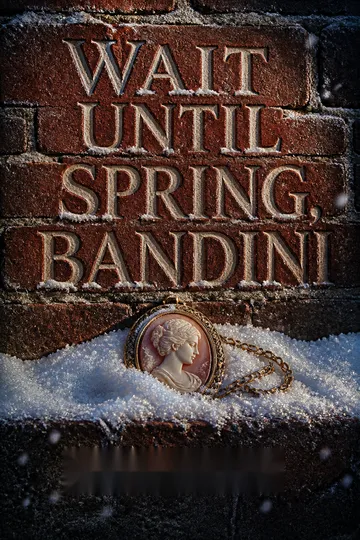
As Svevo1 stays away, Maria2 grows so distressed that Arturo3 finds her sitting alone in the coal shed, holding his father’s1 trowel. He sees how deeply the affair has wounded her, though he still cannot name what is happening. Later he searches Maria’s2 trunk for a photograph of her as a young woman and discovers a cameo Svevo1 gave her early in their marriage.
Arturo3 takes it, imagining Rosa6 will accept it as proof of his devotion. A donated Christmas tree intensifies his shame about the family’s poverty; he tears it apart rather than let the neighbors’ charity stand in the house. He prepares for the altar boy banquet in borrowed family clothes, clinging to the belief that his gift can make Rosa6 see him differently.
The trowel and cameo connect the family’s two forms of inheritance. Svevo’s tool represents skilled labor and the father Arturo admires; the cameo carries the history of Svevo and Maria’s marriage. Arturo takes the keepsake because he wants to enter Rosa’s life as a giver, but his imagined generosity depends on stealing from the person who has already given him security. His destruction of the donated tree follows the same logic: he would rather damage a visible sign of need than be seen receiving help. Pride protects him from humiliation while making him hurt those closest to him.
A Gift Returned
On his way to the altar boy banquet, Arturo3 suddenly collapses on the railroad bridge and believes the stolen cameo has brought divine punishment. He goes to confession and agrees to return the jewel or replace it. Before the banquet begins, Rosa6 gives it back, explaining that she will not keep something stolen.
Arturo3 denies taking it, then shoves her from the raised doorway when she refuses to accept his lie. He throws the cameo over a nearby roof and abandons the banquet. His fantasy of winning Rosa6 has become an act of aggression against her. The incident leaves him with no gift, no reconciliation, and a fresh reason to fear that his own impulses are steering him toward the very shame he tried to escape.
Arturo’s fainting spell turns bodily fear into a moral alarm, and confession briefly gives him a route back to order. But the test is not whether he can feel remorse; it is whether he can tolerate Rosa’s judgment without forcing her to soothe him. When she refuses the cameo, he chooses violence over accountability. The gesture exposes the gap between his romantic self-image and his treatment of a real girl who has made a clear choice. His shame is genuine, yet it does not automatically make him safe or kind.
Blood on Christmas Eve
Svevo1 returns on Christmas Eve wearing new shoes and carrying money he presents as poker winnings. He proposes that the family buy presents, but Maria2 reads his wounded face and the money as signs of his betrayal. When he bends toward her, she scratches both cheeks, drawing blood and driving him from the house.
Arturo3 follows his father1 outside, devastated to see the man1 he admires injured and crying. Svevo1 tells the boys3 to use the money, then walks away. Federico5 burns much of it in the stove. Arturo3 turns on Maria,2 tears apart her rosary, and scatters the beads into the snow as she searches for them. He leaves the house, unable to accept either his father’s1 humiliation or his mother’s2 faith.
The attack shatters the family’s customary arrangement, in which Maria absorbs Svevo’s neglect and he returns without naming its cost. Her violence makes the injury visible, while Svevo’s retreat restores his pride more quickly than it repairs the marriage. Arturo’s loyalty splits: he resents his father’s affair but cannot bear seeing him diminished, so he redirects his anger at Maria and her rosary. The burned money compounds the rupture. What might have bought the children a happier Christmas becomes another object consumed by the adults’ conflict.
The Scissors Through the Screen
After leaving Maria,2 Svevo1 returns to Effie’s7 house, where he sleeps in a spare room and tells himself he will apologize once his face heals. Effie7 gives him a side-door key, but her efforts to keep their arrangement discreet make him feel like a hidden guest. He decides to face Maria2 rather than remain sheltered by Effie’s7 comfort.
At the Bandini home, he finds the doors locked and calls to Maria2 through a bedroom window. She refuses to see him and hurls sewing scissors through the screen, missing his head. Svevo1 retreats with Effie’s7 key still in his pocket. His attempted return has brought no forgiveness, and he remains caught between a home that rejects him and a refuge where he cannot belong as an equal.
Svevo’s Christmas Day decision briefly suggests that shame might move him toward responsibility. But he still imagines an apology as a performance that will restore his place, rather than as the beginning of a difficult repair. Maria’s refusal and the scissors make clear that she will no longer accept his return on the old terms. Effie’s key offers literal access to another house, yet it cannot give him the status he seeks there. Neither woman can make his choices disappear, and his movement between their homes leaves him more exposed than settled.
Two Empty Places
During Christmas vacation, Maria2 withdraws from the boys,3 leaving dishes undone and sometimes vanishing into sheds or the cellar to pray. Arturo3 and his brothers4 search for her, bring her blankets, and make meals from what little remains. Arturo3 also looks for Svevo.1 At first he finds only Rocco,9 who denies knowing where his friend is, but Arturo3 follows his suspicions to Effie’s7 house.
There he sees Svevo1 outside in bright pajamas and a robe, looking prosperous and important. The sight fills Arturo3 with pride, even though his mother2 and brothers4 are suffering. When he returns, he tells Maria2 that Svevo1 is staying at the hotel with Rocco,9 hiding the truth to spare her. At school, Rosa’s6 desk is empty, and Arturo3 cannot discover why.
Arturo’s loyalties remain divided between material spectacle and emotional responsibility. Seeing Svevo dressed like a wealthy man gratifies his ambition, although he has just watched Maria’s distress and helped search for her. His lie is intended as protection, but it also preserves the image that his father has not chosen another household. Maria’s disappearances show how her usual rituals no longer contain her pain. Rosa’s empty desk creates a parallel absence, one Arturo initially approaches as a puzzle rather than a loss.
Rosa’s Empty Desk
When classes resume, Arturo3 finds Rosa’s6 desk empty and keeps pressing her friend Gertie11 for an explanation. Gertie11 leaves him a note claiming Rosa6 disliked him and had recently said so. Before he can make sense of it, Sister Mary Celia10 announces that Rosa6 has died of pneumonia. Arturo3 cannot serve as a pallbearer because the nun10 doubts his strength, and he grieves alone before Maria2 gives him spending money and draws him close at home.
At the funeral, he recognizes that Gertie’s11 claim about a recent conversation could not be true. He confronts her and understands that she invented Rosa’s6 rejection. The discovery does not undo his shame or restore Rosa,6 but it loosens the cruel certainty he had carried about her feelings.
Rosa’s death turns Arturo’s imagined romance into grief for a person he never truly knew. The note from Gertie exploits his deepest insecurity, making his private fear of being despised seem confirmed at the moment he cannot ask Rosa himself. His exclusion from the pallbearers repeats a familiar wound: adults underestimate the strength he privately believes he possesses. Maria offers comfort without demanding that he explain his feelings. The later exposure of Gertie’s lie grants Arturo a small correction, not absolution. He must mourn without receiving the romantic ending his fantasies supplied.
Jumbo Leads Home
On the morning of Rosa’s6 funeral, Arturo3 stays home and befriends a stray dog he names Jumbo.14 Maria2 returns from town with spaghetti meant for Svevo,1 convinced he will come back. Arturo3 finds his father1 working stone at Effie’s7 property and tells him Maria2 wants him home. When Jumbo14 appears carrying a rotting rabbit, Effie7 demands that the dog be removed and insults Arturo3 and Svevo1 as foreigners.
Svevo1 defends his son3 as an American, then abandons the job and walks down the hill with him. Arturo3 has helped his father1 choose family over the widow’s7 estate, even as the dog ranges ahead through the brush. Svevo1 notices a snowflake and speaks of spring, and the two continue toward home together.
Jumbo disrupts the polished order of Effie’s property with mud, appetite, and a decaying rabbit. The dog’s unruly presence forces Svevo to choose between the wealthy woman who has offered him comfort and the son who claims him despite everything. Effie’s insult makes class and immigrant identity explicit; Svevo answers not by asserting his own status but by defending Arturo’s belonging. The walk home is not a solved marriage or a settled household. It is a first movement back toward responsibility, carried by a father and son whose affection has survived pride, secrecy, and injury.
Analysis
The novel makes material hardship inseparable from emotional life. Cold weather halts Svevo’s1 work, debt makes Maria’s2 grocery trips humiliating, and the boys3 learn to read family status through patched clothes, donated gifts, and the food on the table. Yet money is not the only force shaping the household. Svevo’s1 pride turns dependency into anger; Maria’s2 faith helps her endure, but cannot prevent her from being hurt; Arturo’s3 wish to become American and admired makes him both imaginative and cruel. Each character develops a private method for surviving shame, and those methods collide.
Arturo3 is the book’s most revealing consciousness because he can see injustice without reliably acting justly. He recognizes his mother’s2 suffering, protects her from some truths, then wounds her by destroying her rosary. He fears being treated as a thief, yet steals the cameo and lashes out when Rosa6 refuses it. His moral world is intensely active, but feeling guilty is easier for him than accepting another person’s boundary. His growth is therefore not a clean conversion. It begins when imagined heroism fails to protect him from the consequences of what he has done.
Svevo’s1 return is equally unresolved. Effie7 offers him comfort and status, but the insult against Arturo3 makes him defend a bond that pride and betrayal have strained. Walking home with his son3 is a meaningful choice, not proof that the marriage has healed. The final hint of spring leaves the family facing the same economic and emotional difficulties, but no longer at precisely the same distance from one another. The novel’s tenderness comes from that modest measure of change: a damaged family can move toward home before it knows how to make home safe.
Review Summary
Wait Until Spring, Bandini receives mostly positive reviews, with readers praising Fante's simple yet poetic writing style and emotional honesty. The novel portrays the struggles of an Italian-American immigrant family in 1930s Colorado, focusing on young Arturo Bandini and his complex relationships with his parents. Many readers appreciate the vivid characterizations and the book's exploration of poverty, religion, and coming-of-age themes. Some find the story slow-paced but ultimately rewarding, while others consider it a powerful introduction to Fante's work.
People Also Read





Characters
Svevo Bandini
Proud bricklayer, corneredSvevo is an Italian immigrant, union bricklayer, husband to Maria2, and father to Arturo3, August4, and Federico5. He measures himself through physical strength, skilled work, and the hope that luck will someday lift his family out of debt. Poverty makes him feel watched and diminished, so he often turns shame into anger, boasting, gambling, or flight. He loves his family but struggles to express tenderness without disguising it as authority or teasing. His pride is both an engine and a trap: it keeps him working through humiliation, yet makes it difficult for him to acknowledge how much his choices hurt the people who depend on him.
Maria Bandini
Faithful household centerMaria is Svevo’s1 wife and the mother of Arturo3, August4, and Federico5. Small, devout, and tirelessly attentive, she manages food, clothes, children, and creditors in a home where money rarely stretches far enough. Her rosary gives her a private structure for enduring what she cannot control, while her patience can make others mistake her for weak. She loves Svevo1 intensely, even when his absences and moods leave her alone with the consequences. Maria’s care is practical as well as spiritual: she knows what each child needs, sees through Arturo’s3 attempts to hide small wrongs, and finds ways to protect their dignity without pretending their hardship is imaginary.
Arturo Bandini
Freckled dreamer in revoltArturo, twelve years old, is Svevo and Maria’s eldest son, a baseball devotee, altar boy, and self-appointed romantic hero. He wants a new name, an American future, clear skin, and Rosa Pinelli’s affection, all of which seem to promise escape from poverty and ethnic shame. His imagination is vivid enough to turn movie plots into personal destiny, but he often treats other people as supporting characters in those fantasies. Arturo can be cruel to his brothers and careless with his mother’s trust, yet he is also sharply observant and capable of tenderness. His central struggle is learning that feeling intensely does not excuse the harm his actions cause.
August Bandini
Devout middle brotherAugust is the second Bandini son, between Arturo3 and Federico5. His yellow hair, religious seriousness, and wish to become a priest make him the child Maria2 most readily sees through a spiritual lens. He values rules and tries to judge family behavior by the commandments, even when that brings him into conflict with Arturo3. August is not simply a holy foil to his brother3: he wants recognition, has his own pride, and can be stubborn when he believes someone is doing wrong. His earnestness gives the family a moral counterweight, though it cannot protect him from the rough power dynamics of boyhood.
Federico Bandini
Playful youngest sonFederico is the youngest Bandini boy, a lively child who builds imaginary boats from scraps and turns small comforts into adventures. His mother’s2 tenderness is especially important to him, and he seeks warmth and reassurance when his older brothers3 exclude or frighten him. He is easily distracted, enjoys forbidden words, and often approaches family tension through play rather than analysis. Federico’s innocence is not complete ignorance: he senses when the household is frightened, but lacks the age and authority to change what is happening. His presence brings bursts of humor into scenes otherwise weighed down by debt and adult conflict.
Rosa Pinelli
Unreachable school sweetheartRosa is Arturo’s3 classmate and the girl around whom he builds elaborate dreams of romance and success. She is studious, admired by other students, and involved in the school’s religious activities. Arturo’s3 idealization tells more about his longing than about Rosa, who has her own judgments and boundaries. Her refusal to accept a gift she believes was stolen shows that she is not merely a figure in his imagination. Rosa’s presence sharpens Arturo’s3 hopes of belonging, while her independence challenges his assumption that affection can be won through grand gestures.
Effie Hildegarde
Wealthy widow and patronEffie is a wealthy widow who owns property in Rocklin and hires Svevo1 for masonry work. Her comfortable home, education, and money place her in sharp contrast with the Bandinis’ crowded, cold house. She can be generous, offering work and practical comforts, but her position also gives her power over the terms of their relationship. Effie’s attention makes Svevo1 feel recognized, while her distance and social confidence leave him uncertain how to meet her as an equal. She represents both opportunity and the class boundary Svevo1 longs to cross.
Donna Toscana
Maria’s merciless motherDonna Toscana is Maria’s2 widowed mother and the Bandini boys’3 grandmother. She is critical, theatrical, and convinced that her daughter’s2 marriage has brought disgrace and hardship. She uses family history and small payments to draw the boys3 into her judgments of Svevo1 and Maria2. Her concern for her daughter2 is real, but it arrives wrapped in contempt, making it difficult for Maria2 to receive as comfort. Donna’s visits turn private domestic strain into a public assessment of how the Bandinis live.
Rocco Saccone
Svevo’s loyal old friendRocco is a stonecutter and Svevo’s1 longtime friend from their childhood in Italy. He offers company, lodging, and practical help when Svevo1 is short of money, and he shares a private language of memories that Maria2 cannot enter. Rocco is more openly opportunistic than Svevo1 about wealth, and his blunt opinions sometimes expose the difference between his friend’s pride and his own pragmatism. He is loyal, but his loyalty also helps Svevo1 remain away from home.
Sister Mary Celia
Sharp-eyed school authoritySister Mary Celia teaches Arturo’s3 eighth-grade class at St. Catherine’s. Her glass eye and strict classroom manner make her a formidable presence to the children, but she can also recognize the tenderness beneath their misbehavior. She notices Arturo’s3 inattention and his family circumstances, sometimes trying to redirect him through religious duty. Her efforts are compassionate but limited by the assumptions and rules of the school she represents.
Gertie Williams
Rival with a sharp tongueGertie is Rosa’s6 friend and one of Arturo’s3 classmates. She is proud, socially alert, and quick to retaliate when Arturo3 insults her. Her relationship with him is shaped by mutual dislike and the power of information about Rosa6. Gertie understands how intensely Arturo3 wants approval, which gives her words unusual force, even when she does not deserve his trust.
Mr. Craik
Creditor next doorMr. Craik runs the grocery store beside the Bandini home and extends credit to Maria’s2 family. He is burdened by his own business pressures and increasingly impatient with the unpaid account. His treatment of Maria2 shows how dependence can turn a neighborly transaction into humiliation. He also spreads local knowledge, making him an accidental source of information about Svevo’s1 movements.
Father Andrew
Confessor and moral guideFather Andrew is the priest Arturo3 visits when fear of sin overwhelms him. He takes the boy’s3 confessions seriously and gives him concrete duties rather than dismissing his anxieties. His guidance reflects Arturo’s3 religious world, where guilt can feel enormous but repair still requires action.
Jumbo
Rough, roaming companionJumbo is a stray dog Arturo3 befriends near the end of the winter. Partly wolfish in appearance and behavior, he roams freely, picks up carrion, and resists being controlled. Arturo3 sees intelligence and loyalty in him, while the adults see a nuisance or threat. Jumbo’s unruly presence brings the family’s private attachments into the open.
Plot Devices
Colorado winter
Weather as economic trapSnow and cold repeatedly stop Svevo1 from working, freeze the mortar he needs, and make every household task harder. Winter is not just scenery: it deepens debt, keeps the rooms cold, and gives the family a physical measure of how long they must wait for work to return. The approaching spring represents wages and baseball to different members of the family, linking economic relief to Arturo’s3 private hopes.
The rosary and catechism
Faith’s private accountingMaria2 uses the rosary to endure fear and maintain hope, while Arturo3 uses confession and catechism to classify his impulses as sins. August4 treats religious rules as a guide for everyday conduct. The same faith therefore offers refuge, discipline, and anxiety, depending on who holds the beads or applies the rules. Its role in the family changes with each character’s needs, rather than supplying one simple moral answer.
Maria’s cameo
A keepsake of intimacyThe cameo is a gift Svevo1 gave Maria2 early in their marriage, a small object that carries their shared history. Arturo3 takes it from her trunk because he believes an impressive gift can win Rosa’s6 affection. Its passage from Maria2 to Arturo3 to Rosa6 exposes the difference between romantic fantasy and responsibility: Arturo3 treats the object as a symbol of devotion, while Rosa6 judges the way he obtained it.
Baseball and movies
A stage for escapeBaseball statistics and movie plots let Arturo3 imagine a future in which he is admired, handsome, and free of the limits attached to his family’s poverty. He casts himself as the hero and Rosa6 as the beloved audience for his success. These fantasies give him energy, but they also encourage him to confuse the person he imagines with the person in front of him.
Effie’s patronage
Work becomes private refugeEffie’s7 calls for masonry work give Svevo1 wages, warmth, and recognition at a time when winter has shut down his usual livelihood. The jobs lead him into a more comfortable world and create a relationship that competes with his responsibilities at home. The device binds the novel’s economic and intimate conflicts: Svevo’s1 desire to be respected through his craft is inseparable from the choices he makes around Effie7.
FAQ
Synopsis & Basic Details
What is Wait Until Spring, Bandini about?
- Struggling Immigrant Family: The novel centers on the Bandini family, Italian immigrants living in poverty in snowbound Rocklin, Colorado, during the harsh winter, depicting their daily struggles for survival, food, and warmth.
- Patriarch's Desperation: Svevo Bandini, a bricklayer unable to work in the winter, grapples with mounting debt, gambling losses, and the pressure to provide, leading him to seek solace and temptation outside the family home.
- Family Dynamics Under Strain: The story explores the complex relationships between Svevo, his devout and suffering wife Maria, and their three sons, particularly the eldest, Arturo, as they navigate hardship, cultural identity, and the emotional turmoil caused by Svevo's absence and infidelity.
- Coming-of-Age in Poverty: Arturo, the protagonist, experiences adolescence amidst the family's crisis, dealing with first love, religious guilt, and the painful realities of poverty and his parents' flawed humanity.
Why should I read Wait Until Spring, Bandini?
- Raw, Emotional Prose: John Fante's writing is celebrated for its visceral, unflinching portrayal of human emotion, poverty, and the immigrant experience, offering a powerful and authentic voice.
- Deeply Human Characters: The novel presents flawed, complex characters whose struggles feel intensely real, exploring universal themes of family, faith, desire, and the search for dignity in difficult circumstances.
- Foundation of a Literary Saga: This is the first novel featuring Arturo Bandini, a character who became central to Fante's most acclaimed works, providing essential context for his later development.
What is the background of Wait Until Spring, Bandini?
- Author's Semi-Autobiographical Roots: John Fante drew heavily on his own childhood experiences as the son of Italian immigrants in Colorado for the Bandini family and setting, infusing the narrative with personal authenticity.
- Great Depression Era Setting: Although not explicitly stated as the Depression, the pervasive themes of unemployment, poverty, and financial desperation reflect the economic climate of the 1930s when the book was written and set.
- Immigrant Experience in Early 20th Century America: The story captures the challenges faced by Italian immigrants, including cultural clashes, discrimination (Arturo's self-hatred of being "Wop"), and the struggle for assimilation and economic stability in a new country.
What are the most memorable quotes in Wait Until Spring, Bandini?
- "Dio cane. Dio cane. It means God is a dog, and Svevo Bandini was saying it to the snow.": This recurring phrase encapsulates Svevo's bitter frustration and blasphemous despair towards the relentless winter and his circumstances, highlighting his internal conflict between faith and hardship.
- "Wait until spring, Bandini.": This phrase, spoken by Arturo's baseball teammates, symbolizes the deferred hope and the longing for a better time when the literal and metaphorical "winter" of their struggles will end and life, like baseball season, can begin anew.
- "Ah, poor America! Ah, America, thy children shall tear out one another's throats and die like bloodthirsty beasts!": Donna Toscana's dramatic lament reflects the older generation's disillusionment with the harsh realities of the American Dream, seeing it as a place of corruption and moral decay rather than opportunity.
What writing style, narrative choices, and literary techniques does John Fante use?
- First-Person (Arturo) & Third-Person Limited (Svevo, Maria): The narrative shifts perspective, primarily focusing on Arturo's internal world and experiences, but also delving into the thoughts and feelings of Svevo and Maria, providing a multi-faceted view of the family's struggles.
- Visceral and Sensory Language: Fante employs vivid, often harsh, sensory details (the smell of garlic, the cold of the house, the taste of snow, the feel of worn shoes) to immerse the reader in the physical reality of the characters' lives and their environment.
- Internal Monologue and Stream of Consciousness: The characters' thoughts, anxieties, and desires are frequently presented through internal monologues, revealing their psychological states and motivations directly to the reader, often in a raw and unfiltered manner.
Hidden Details & Subtle Connections
What are some minor details that add significant meaning?
- Maria's Chloroform Ear Odor: Svevo's persistent belief that Maria's right ear smells of chloroform after a difficult birth ("or was it his imagination?") subtly hints at the trauma and near-death experience Maria endured, adding a layer of unspoken suffering to her character beyond her religious piety.
- Federico's Bread Crumb Boat: Federico's brief, imaginative escape into seeing a bread crumb in his milk as a motorboat ("Drrrrrrr, said the motor boat, drrrrrrr") highlights the innocent, imaginative coping mechanisms of the youngest child amidst the family's tension and poverty.
- Arturo's Freckle Counting: Arturo's obsessive counting of his freckles and attempts to remove them with lemon juice ("ninety-three, ninety-four, ninety-five...") reveals his deep-seated self-consciousness and desire to shed perceived imperfections linked to his Italian identity, connecting to his broader struggle for assimilation.
What are some subtle foreshadowing and callbacks?
- Svevo's Snow Plow Idea: Svevo's fleeting thought of inventing a snow plow ("Just an idea he had in his head: a snow plow") early in the novel foreshadows his later attempts at ingenuity and finding workarounds (like getting credit without money) in the face of the paralyzing winter.
- Maria's Rosary as a "Cold Serpent": Svevo's description of Maria's rosary cross touching him like a "tittering little cold serpent" foreshadows the later scene where Maria, in her fury, uses sewing scissors (a sharp, piercing object) to attack him, linking her religious devotion to a hidden capacity for sharp, cold retaliation.
- Arturo's Crucified Rat on Good Friday: Arturo's confession about crucifying a rat on Good Friday ("done this evil thing on Good Friday, and right after saying the Stations of the Cross!") is a dark callback to the religious context of the story and foreshadows his later, less literal acts of cruelty and rebellion against religious and moral norms.
What are some unexpected character connections?
- Arturo's Empathy for Svevo's Tools: Arturo's internal reflection on his father's mason tools ("for his father's mason tools, for the walls his father had built... and they were all so very beautiful") reveals a hidden connection and admiration for his father's craft and legacy, contrasting with his outward disdain and desire to surpass him.
- Maria's Fondness for the Stove: Maria's relationship with the kitchen stove, described as a "black bear of a stove" that "loved only her" and purred "like an idiot" under her care, highlights her capacity for nurturing and finding connection even with inanimate objects, contrasting with the often strained human relationships in the house.
- Jumbo's Defiance Mirroring Bandini Men: The dog Jumbo's defiant stance against the Widow Hildegarde ("Jumbo leered at the Widow and showed his teeth") and later against Bandini ("Jumbo turned to Bandini and silenced him with a snarl") mirrors the rebellious spirit and pride exhibited by both Svevo and Arturo when challenged, creating an unexpected parallel between the dog and the male characters.
Who are the most significant supporting characters?
- Donna Toscana: Maria's mother serves as a critical external force, embodying the judgment and traditional values that Maria struggles against, while also providing unexpected financial aid, highlighting the complex, often contradictory nature of family ties.
- Rocco Saccone: Svevo's friend represents a life of bachelor freedom and indulgence that Svevo is tempted by but ultimately cannot fully embrace, acting as both a confidant and a catalyst for Svevo's time away from home.
- The Widow Hildegarde: She is the primary external temptation for Svevo, representing wealth, comfort, and a different social world, forcing Svevo to confront his desires and his responsibilities to his family.
Psychological, Emotional, & Relational Analysis
What are some unspoken motivations of the characters?
- Svevo's Need for Validation: Beyond financial gain, Svevo's interactions with the Widow Hildegarde reveal an unspoken need for validation and respect ("You're a splendid worker, Mr Bandini. Splendid.") that he doesn't feel he receives at home, particularly from Maria's family or the townspeople who see him as a "wop."
- Maria's Passive Resistance: Maria's quiet suffering, her endless prayers, and her eventual violent outburst are motivated by a deep, unspoken resentment towards Svevo's irresponsibility and betrayal, which she expresses through passive endurance until she reaches a breaking point.
- Arturo's Desire for Acceptance: Arturo's actions, from trying to remove his freckles to his infatuation with Rosa and his complex feelings about his father, are driven by an unspoken longing for acceptance and belonging, both within his family and in the wider American society.
What psychological complexities do the characters exhibit?
- Svevo's Self-Deception and Blame: Svevo exhibits psychological complexity through his tendency to blame external factors (the snow, the house, Maria's family) for his problems and his self-deception regarding his affair, rationalizing his actions to maintain a sense of pride despite his guilt.
- Maria's Martyrdom and Repressed Anger: Maria's character displays a complex mix of religious martyrdom, finding solace and identity in suffering, alongside deeply repressed anger that eventually erupts violently, showing the psychological toll of her silent endurance.
- Arturo's Internal Conflict and Projection: Arturo's psychological state is marked by intense internal conflict between love and hate for his parents, his Italian heritage and American aspirations, and his projection of his desires and anxieties onto others, particularly Rosa.
What are the major emotional turning points?
- Svevo's Loss at the Pool Hall: Svevo losing ten dollars at the Imperial Poolhall in Chapter 1 is an early emotional turning point, setting the stage for his despair and driving him towards seeking escape and validation elsewhere.
- Maria's Discovery of Svevo's Affair (Implied): Maria's shift from quiet prayer to listlessness and her eventual violent reaction on Christmas Eve mark a major emotional turning point, indicating her awareness of Svevo's betrayal and the depth of her pain.
- Rosa's Death: Rosa Pinelli's death is a significant emotional turning point for Arturo, forcing him to confront mortality, the fragility of his dreams, and the reality of loss, leading to a period of profound grief and reflection.
How do relationship dynamics evolve?
- Svevo and Maria's Deterioration and Tentative Hope: Their relationship deteriorates from strained cohabitation to open conflict and separation due to Svevo's actions and Maria's reaction, but the ending suggests a fragile possibility of reconciliation and rebuilding.
- Arturo's Shifting View of Svevo: Arturo's view of his father evolves from childhood admiration ("snakes inside" his muscles) and fear to disillusionment, fascination with his perceived "success" with the Widow, and ultimately a complex mix of pride, pity, and understanding.
- Arturo and August's Sibling Rivalry and Loyalty: The rivalry between Arturo and August, particularly concerning August's piety and height, is a constant source of conflict, but their shared experiences and the threat of revealing August's past bedwetting also highlight a complex bond and reluctant loyalty.
Interpretation & Debate
Which parts of the story remain ambiguous or open-ended?
- The Future of Svevo and Maria's Marriage: While Svevo returns at the end, Maria's reaction (locking him out, throwing scissors) and his subsequent return to the Widow's house leave the long-term stability and healing of their marriage highly ambiguous.
- The Extent of Svevo's Relationship with the Widow: The narrative describes their encounters with a focus on Svevo's internal state and perceptions, leaving the precise nature and depth of their physical and emotional connection open to interpretation.
- The Bandini Family's Financial Future: Despite Svevo's brief period of earning money from the Widow, the story ends with winter still present and no clear indication of how the family will overcome their chronic poverty, leaving their economic future uncertain.
What are some debatable, controversial scenes or moments in Wait Until Spring, Bandini?
- Maria's Attack on Svevo: Maria scratching Svevo's face on Christmas Eve is a controversial moment, open to interpretation as either a desperate act of a woman pushed too far by betrayal and suffering, or a shocking and perhaps excessive act of violence.
- Arturo's Treatment of August: Arturo's bullying and physical intimidation of August, particularly threatening to reveal his past bedwetting ("I'll tell everybody that you pee the bed"), is a harsh and debatable depiction of sibling dynamics, highlighting the cruelty that can exist even within close family relationships.
- Svevo's Rationalization of His Actions: Svevo's internal justifications for his time with the Widow, portraying himself as a victim or simply seeking respect, are debatable and challenge the reader to judge his character and motivations.
Wait Until Spring, Bandini Ending Explained: How It Ends & What It Means
- Svevo's Failed Return and Retreat: The novel culminates on Christmas Day with Svevo attempting to return home, only to be violently rejected by Maria (who throws scissors at him), leading him to retreat back to the Widow Hildegarde's house, unable to face the consequences of his actions or the depth of his wife's pain.
- Arturo's Witnessing and Shifting Loyalties: Arturo witnesses the aftermath of his parents' conflict and Svevo's departure, solidifying his complex feelings towards both, and later lies to Maria about Svevo's whereabouts, indicating his shifting understanding and protection of his father, even as he feels pity for his mother.
- Symbolic Return to Winter and Uncertainty: The final scene shows Svevo and Arturo together on Hildegarde Road as snow begins to fall again, symbolizing a return to the harsh conditions and uncertainty that defined the beginning of the story, suggesting that despite moments of hope and connection, the family's struggles and unresolved conflicts persist as winter returns.
The Saga of Arturo Bandini Series

Download PDF
Download EPUB
.epub digital book format is ideal for reading ebooks on phones, tablets, and e-readers.








