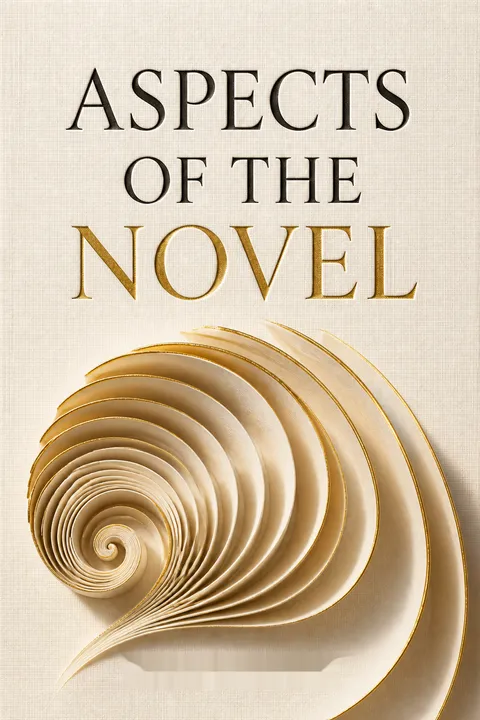


Key Takeaways
Read novels as negotiations between human lives and the forms that contain them.

A novel holds competing claims. Forster sees fiction as more than a sequence of events or a gallery of characters. Its writer must reconcile human beings with the other forces shaping the book: chronology, causality, style, atmosphere, and formal design. Each force can enrich the people in a novel, or squeeze them into roles that serve the structure. His lectures explore seven aspects: story, people, plot, fantasy, prophecy, pattern, and rhythm. The title signals that no single lens explains the whole art.
No master recipe. Forster resists a universal definition beyond the practical idea of an extended prose fiction. He also resists judging books solely by historical period or topic. The test, for him, is how the parts work together and what kind of experience the finished novel creates. His examples range from Defoe and Austen to Dostoevsky and Proust, showing how different artistic solutions can succeed.
What's compelling is the refusal to treat a novel as a machine with one governing part. Character, structure, and voice are not independent ingredients; each changes the effect of the others. This resembles an ecological view of art, where a change to one element alters the whole system. The approach also explains why a checklist cannot reliably predict a novel's success. Its limitation is that Forster's judgments sometimes treat his own preferences as standards, so the framework is most useful as a way to notice trade-offs, not to rank every book.
Follow the story's clock, but do not mistake suspense for depth.

Story means sequence. Forster defines a story as events arranged in time: one thing happens, then another. Its basic appeal is curiosity about what comes next. He illustrates this with Scheherazade, who survives by stopping her tales at moments that keep the king listening. Suspense can hold attention, but it cannot by itself supply complex characters, ideas, or beauty.
Time is unavoidable. A novel may distort chronology, as Forster says Sterne and Proust do, but it cannot abolish sequence altogether without making language unintelligible. He contrasts the story's clock with the life measured by intensity and value: five minutes with someone can matter more than a long stretch of ordinary time. A good novel carries both kinds of experience, even though its events must still unfold in sequence.
The distinction clarifies why page-turning and literary depth are different achievements. Suspense organizes attention around the future, while significance often depends on how an event alters the meaning of what came before. Forster's account also leaves room for readers who simply enjoy a well-told tale; curiosity is not a defect, just an incomplete measure of value. His sharp hierarchy between primitive suspense and more refined effects is debatable, since a gripping sequence can itself reveal character or moral stakes. The useful question is not whether a novel tells a story, but what the story makes possible.
Let fiction reveal the private motives that historical evidence cannot prove.

Fiction can enter inward. A historian works from evidence such as actions, speech, and visible expression. A novelist can invent what lies behind those signs: a character's concealed thoughts, half-understood motives, and private emotional life. Forster calls the fictional person Homo Fictus. Unlike an actual person, this created figure can be fully known by the writer, even when the reader is shown only part of that knowledge.
The difference changes the human portrait. Forster notes that novels often skip or reshape ordinary experiences such as birth, eating, and sleep, while giving love unusually large space and using death as a convenient ending. Moll Flanders feels physically present and psychologically legible, yet Forster argues that she could not simply be encountered in real life. Fiction's realism comes not from copying life exactly, but from making an invented inner life convincing.
Forster identifies a central power of narrative: readers receive access to minds that remain opaque in ordinary encounters. That access can cultivate empathy by making motives legible, but it can also create a false sense that people are ultimately transparent. The contrast with history is productive because it distinguishes imaginative knowledge from evidence-based knowledge, rather than treating them as rivals. Fiction can make a private motive plausible; it cannot establish that the same explanation would be true of an actual person. The distinction matters especially when novels are read as if they were reliable records of social life.
Use flat characters for instant force, and round ones for credible surprise.
Two useful designs. A flat character is organized around a dominant trait or idea, making the figure easy to recognize and remember. A round character has greater psychological complexity and can surprise the reader in a way that still feels believable. Forster presents neither type as automatically wrong: flatness can create comic force, while roundness can support sustained emotional or tragic change.
Dickens and Austen show the range. Many Dickens characters are vivid types, yet their energy gives them a sense of life beyond their simple design. Jane Austen's characters may initially seem equally easy to summarize, but small shifts reveal unexpected depth. Forster's test is not whether a character is complicated on every page. It is whether the character can change or surprise convincingly when the novel asks for it.
The distinction is powerful because it separates memorability from psychological depth. A figure with one defining quality can be more immediately legible than a nuanced character, and that clarity may serve comedy, satire, or a crowded cast. Yet the labels are best treated as points on a spectrum. Characters can be highly complex in one relationship and simplified in another, depending on what a scene needs. Forster's test of credible surprise is especially practical: the unexpected action should enlarge the character, not merely shock the reader.
Make causality serve character, not turn people into plot machinery.
Plot asks why. A story reports that one event follows another; a plot makes the connection between them matter. The reader must remember earlier details and use intelligence to infer causes, motives, or concealed facts. Mystery is not just a withheld answer. It is a structure that invites the reader to revise the meaning of what has already happened.
Too much design can thin people out. Forster admires George Meredith's incidents because they arise from character and then alter it. He finds Thomas Hardy's novels less successful when fate and causality dominate so strongly that characters seem depleted by the machinery. He also observes that novels often weaken near their endings, when the plot demands closure and marriage or death conveniently ties things up. A satisfying ending should resolve the design without making the people feel artificial.
The contrast between sequence and causality offers a practical way to diagnose a novel: does an event deepen the characters, or do the characters merely carry the event to its destination? Forster's preference for people over plot is persuasive, particularly when a neat resolution erases the mess that gave a story its force. Yet causality need not be an enemy of freedom. A carefully structured chain of consequences can reveal how people shape, and are shaped by, the conditions around them. The real problem is not strong plotting, but plotting that leaves no room for human opacity.
Accept fantasy's impossible premise before judging what it makes visible.
Fantasy asks for extra consent. Forster uses the term for fiction that requires the reader to accept something impossible or uncanny within an otherwise recognizable world. The impossible element may be supernatural, or the book may simply make ordinary reality behave according to a strange inner logic. The reader must accept both the book's world and the particular departure from everyday expectation.
The premise can expose ordinary assumptions. In Norman Matson's Flecker's Magic, a young painter receives a ring that grants wishes, but every desire becomes harder to define the more seriously he considers it. Max Beerbohm's Zuleika Dobson uses supernatural interventions for comic effect, while Sterne's Tristram Shandy makes confusion itself feel like the governing force. These works do not use fantasy as decoration. Their impossible devices reveal desires, habits, or disorder that realism might leave hidden.
Fantasy makes the reader's assumptions visible by temporarily changing the rules of evidence. The crucial question becomes not whether an event could happen, but whether the invented rule produces insight within the work. This is close to the logic of a thought experiment: alter one condition and observe what becomes newly legible. The approach also guards against dismissing fantasy as childish or unserious. Still, an unusual premise is not automatically meaningful. The imagined departure must affect the novel's emotional or intellectual structure, rather than function as a novelty detached from it.
Hear prophetic fiction as a voice reaching beyond individual fate.
Prophecy is a mode, not prediction. Forster uses the term for fiction whose tone makes individual characters and events suggest a larger, shared reality. The work does not need to state a doctrine. Its language and atmosphere imply that a character's suffering or joy reaches beyond that person alone.
Dostoevsky makes the contrast vivid. In The Brothers Karamazov, Dmitri dreams of a hungry child and feels an overwhelming responsibility toward suffering beyond his own case. Forster contrasts this expansive effect with George Eliot's moving scene of a condemned woman confessing, which remains focused on that woman's moral crisis. He also turns to Melville, Lawrence, and Emily Bronte, whose fiction can make evil, nature, or passion feel larger than ordinary explanation. Such writing asks the reader to set aside easy mockery and attend to its tone.
Forster's distinction captures an important difference between a novel that presents a moral position and one that changes the reader's sense of scale. A prophetic effect need not persuade through argument; it can make another person's suffering feel continuous with the reader's own world. That power helps explain why certain scenes resist paraphrase. The category is also vulnerable to personal taste: what one reader hears as transcendent, another may find inflated or obscure. Forster's advice to attend to tone rather than reduce the passage to a message offers a disciplined way to read without requiring agreement.
Choose forms that expand a novel's life instead of pruning it.
Pattern unifies, but can restrict. Forster calls a novel's overall formal design its pattern. A sharply controlled pattern can make the whole book feel inevitable. In Henry James's The Ambassadors, Strether and Chad effectively exchange positions, giving the novel a satisfying symmetry. Forster admires the result but argues that James's strict design limits the range of people and experiences the book can accommodate.
Rhythm binds by recurrence. Forster uses rhythm for a subtler effect: a detail returns with variation, gaining meaning through its changing context. In Proust, a musical phrase first associated with one character's love later returns in a different emotional world, joining distant parts of the book. Forster also hears a spacious, cumulative force in War and Peace. Rhythm can create unity without forcing every character into a single geometric design.
The distinction between pattern and rhythm is a distinction between closure and resonance. A pattern is visible as a whole; rhythm makes earlier material newly audible when it returns. Forster's comparison suggests that formal unity need not mean symmetry or tidy resolution. It can arise through recurrence, contrast, or expansion. His concern about James is a useful warning against equating elegance with completeness: a novel may achieve an exquisite shape by narrowing the human world it depicts. The stronger design is not always the most regular one.
Read through the book before classifying it from the outside.
Labels can replace reading. Forster mocks criticism that sorts novels by period, subject, setting, or other convenient categories before understanding how a particular book works. Such classifications may be accurate and still miss what matters. His alternative is to imagine novelists from different eras working side by side, so attention falls first on their choices as makers rather than on historical labels.
Context still has value. Forster does not claim that literary technique never changes. He acknowledges that methods of humor, fantasy, and dialogue develop over time. His point is that a critic should not pretend to know a work through chronology or influence alone. Close attention to the book comes first; historical context can then sharpen, rather than substitute for, judgment. The final response to a novel remains partly personal, but should not be merely a reflexive statement of liking or dislike.
Forster's polemic remains useful because classification can give the comforting illusion of understanding. A category supplies context, but it cannot show how a sentence, character, or structural choice works in the particular book. His transhistorical method encourages comparison across periods, though it can also flatten historical differences that shape what writers could imagine and publish. The productive balance is sequential: attend closely to the work, then use its historical situation to refine interpretation. Neither the isolated text nor the historical label is sufficient by itself.
Analysis
Aspects of the Novel is less a definitive theory than a guided argument about how to notice what novels do. Its memorable distinctions, story versus plot, flat versus round character, fantasy versus prophecy, pattern versus rhythm, are useful because they make different reading experiences easier to name. They are not presented as mutually exclusive boxes. The real subject is the pressure among a novel's components: suspense competes with reflection, formal unity with human variety, and realistic detail with imaginative reach.
Forster's method is deliberately personal. His willingness to praise one writer and dismiss another gives the lectures energy, but it also exposes a weakness: his evaluative categories can carry the weight of his preferences. His ideal of psychological fullness favors some kinds of characterization; his account of prophecy privileges forms of spiritual intensity that some readers may not experience in the same way. These limits do not invalidate the distinctions. They suggest treating them as prompts for reading rather than laws of literary value.
The book's sharpest continuing insight is that artistic success can involve sacrifice. A tightly shaped novel may achieve coherence by excluding much of ordinary life. A sprawling work may preserve a sense of human abundance at the cost of neat closure. Neither choice is automatically superior. The question is whether the form's costs produce an experience worth having. This framing also connects the apparently technical discussion of narrative to ethics: readers are asked to notice whose inner life is granted complexity, what kinds of experience are omitted, and whether a character serves the design or exceeds it.
Forster's argument that art stands apart from historical change is more provocative than persuasive as a general claim. He himself recognizes shifts in technique, and the books he discusses are inseparable from their literary settings. His circular room of novelists is best understood as a critical exercise, not a historical account. It temporarily suspends chronology to make comparison possible. The lasting value of the book lies in that freedom of attention, balanced by awareness that no single framework can contain the novel.
Review Summary
Aspects of the Novel receives mixed reviews, with many praising Forster's insightful analysis of fiction and witty writing style. Readers appreciate his examination of story elements, character types, and narrative techniques. Some find the lectures outdated or difficult to follow, especially when referencing unfamiliar novels. Critics note Forster's emphasis on the aesthetic qualities of fiction and his unique approach to literary criticism. Overall, the book is considered a valuable resource for students of literature and aspiring writers, despite its occasional obscurity.
People Also Read

Glossary
Story
Events in time orderForster uses story to mean a narrative of events arranged in chronological sequence. Its basic appeal is curiosity about what happens next. A story is necessary to a novel, but it is not the same as plot: sequence alone does not explain why events occur or how they connect.
Plot
Events linked by causePlot is a narrative in which causality matters as much as sequence. It leads readers to ask why something happened, remember earlier details, and infer connections that may only become clear later. Forster sees mystery as a key resource of plot, while warning that excessive causal control can subordinate characters.
Homo Fictus
The novel's invented personForster's term for the human-like character created by a novelist. Unlike a real person, Homo Fictus can be known inwardly by a narrator who may reveal private thoughts and motives unavailable to historical evidence. Fictional people also differ from actual people in ordinary habits, since novels often omit or alter bodily experiences.
Flat character
A character built around one traitA flat character is organized around one dominant quality or idea and can often be summarized briefly. Such figures are easy to recognize and remember, and can be especially effective in comedy. Forster does not consider flatness automatically inferior, though he finds that sustained tragedy usually requires greater psychological range.
Round character
A character capable of surpriseA round character has enough psychological complexity to respond in unexpected ways. Forster's test is whether the character can surprise the reader convincingly. Surprise without credibility feels like a simple character pretending to be complex; credible change suggests a fuller inner life.
Fantasy
Fiction with an impossible premiseForster uses fantasy for fiction that asks readers to accept an impossible, uncanny, or supernatural element within its imagined world. It requires an extra imaginative adjustment beyond accepting fiction as fiction. The fantastic device may reveal a character, desire, or disorder that ordinary realism would not express in the same way.
Prophecy
A voice reaching beyond individualsForster's specialized use of prophecy does not mean predicting future events. It describes a tonal and imaginative effect in which characters and incidents imply a reality larger than their individual circumstances. The writing may suggest universal suffering, spiritual unity, or an encompassing force without reducing that effect to a stated doctrine.
Pattern
The novel's overall designPattern is the formal shape that lets a reader apprehend a novel as a whole. It may arise from plot, character relations, or recurring arrangements. A strong pattern can make a book feel unified and satisfying, but Forster warns that rigid design may require the novelist to exclude or simplify too much of human experience.
Rhythm
Recurrence with variationForster uses rhythm for a recurring element that returns in altered contexts and gathers new meaning. Unlike a fixed pattern, rhythm need not be present continuously or impose a visible shape on the entire book. Its effect is cumulative: a phrase, image, or situation can connect distant parts while preserving their differences.
Life in time
Experience as chronological sequenceForster's phrase for life understood through temporal order: events happen before or after one another, and people age and die. The story aspect of a novel narrates this dimension. Forster contrasts it with life measured by intensity or significance, which does not distribute itself evenly across minutes and years.
Life by values
Experience measured by significanceForster's phrase for the dimension of life measured by emotional or personal importance rather than duration. A brief encounter may matter more than a long ordinary period, and memory gathers around intense experiences instead of forming a uniform timeline. In a good novel, this dimension presses against the chronological sequence of the story.
FAQ
What's "Aspects of the Novel" about?
- Overview of the book: "Aspects of the Novel" by E.M. Forster is a series of lectures that explore the various elements that make up a novel. It was originally delivered as the Clark Lectures at Cambridge University in 1927.
- Focus on literary criticism: The book examines the novel's structure, characters, plot, and other components, offering insights into how these elements contribute to the overall impact of a novel.
- Influence on literary theory: Forster's work has been influential in 20th-century literary criticism, particularly his distinctions between "flat" and "round" characters.
Why should I read "Aspects of the Novel"?
- Understanding of novel structure: The book provides a comprehensive analysis of the novel's form, which can enhance your appreciation and understanding of literature.
- Insight into character development: Forster's discussion on "flat" and "round" characters offers valuable insights into character creation and development in fiction.
- Influential literary criticism: As a seminal work in literary criticism, it has shaped the way novels are analyzed and understood, making it essential reading for students and enthusiasts of literature.
What are the key takeaways of "Aspects of the Novel"?
- Story vs. plot: Forster distinguishes between the story, which is a sequence of events, and the plot, which involves causality and the reasons behind events.
- Character types: He introduces the concepts of "flat" and "round" characters, explaining how they function differently within a narrative.
- Role of fantasy and prophecy: Forster discusses how fantasy and prophecy can be used in novels to transcend ordinary reality and explore deeper truths.
What is the difference between "flat" and "round" characters according to E.M. Forster?
- Flat characters: These are simple, one-dimensional characters that can be summed up in a single sentence. They are often used for comic effect or to serve a specific narrative function.
- Round characters: These are complex and multi-dimensional, capable of growth and change. They surprise the reader in a convincing way and are more like real people.
- Purpose in novels: Forster argues that both types of characters have their place in literature, with flat characters providing stability and round characters offering depth.
How does E.M. Forster define "story" and "plot" in "Aspects of the Novel"?
- Story definition: Forster defines a story as a narrative of events arranged in their time sequence, focusing on what happens next.
- Plot definition: A plot, on the other hand, emphasizes causality, exploring why events happen and how they are interconnected.
- Importance of plot: Forster suggests that a plot requires intelligence and memory from the reader, as it involves understanding the underlying causes and effects within the narrative.
What role does fantasy play in novels according to "Aspects of the Novel"?
- Fantasy's unique demand: Fantasy asks readers to accept the supernatural or the absence of it, requiring an additional adjustment beyond the literal.
- Mythological elements: It often involves mythological or supernatural elements that challenge the reader's perception of reality.
- Purpose of fantasy: Forster suggests that fantasy can illuminate aspects of the human experience that are not accessible through realism alone.
What is the "prophetic" aspect of novels as discussed by E.M. Forster?
- Prophetic tone: Prophecy in novels is characterized by a tone of voice that implies a deeper, often spiritual or universal truth.
- Beyond the literal: It transcends the literal and the logical, aiming to evoke a sense of the infinite or the divine.
- Impact on readers: This aspect requires humility and the suspension of the sense of humor from the reader, as it seeks to convey profound insights.
How does E.M. Forster view the relationship between history and art in "Aspects of the Novel"?
- Art vs. history: Forster argues that while history develops, art stands still, suggesting that the creative process remains constant despite changes in historical context.
- Timelessness of art: He believes that the novel, as an art form, transcends the specificities of its time and place, focusing instead on universal human experiences.
- Creative process: The creative process in art is seen as a constant, unchanging force that shapes the way novels are written and understood.
What are some of the best quotes from "Aspects of the Novel" and what do they mean?
- "Yes—oh, dear, yes—the novel tells a story." This quote emphasizes the fundamental aspect of storytelling in novels, acknowledging its importance while expressing a desire for novels to offer more than just a sequence of events.
- "History develops, Art stands still." Forster highlights the timeless nature of art, suggesting that while historical contexts change, the essence of artistic creation remains constant.
- "The final test of a novel will be our affection for it." This quote underscores the subjective nature of literary appreciation, suggesting that personal connection and emotional response are key to evaluating a novel's success.
How does E.M. Forster address the concept of "pattern" in novels?
- Pattern as unity: Forster describes pattern as an aesthetic aspect that provides unity to a novel, often emerging from the plot.
- Examples of pattern: He uses examples like the hour-glass shape in "Thais" and the grand chain in "Roman Pictures" to illustrate how pattern can enhance a novel's structure.
- Sacrifices for pattern: Forster acknowledges that achieving a rigid pattern may require sacrifices in character development and richness of material.
What is the significance of "rhythm" in novels according to E.M. Forster?
- Rhythm in literature: Forster compares rhythm in novels to musical rhythm, suggesting it can provide beauty and coherence to a narrative.
- Proust's use of rhythm: He cites Marcel Proust's use of a musical phrase as an example of how rhythm can stitch a novel together internally.
- Beyond pattern: Rhythm offers an alternative to rigid pattern, allowing for variation and surprise while maintaining a sense of unity.
How does E.M. Forster's "Aspects of the Novel" influence modern literary criticism?
- Character analysis: Forster's distinction between "flat" and "round" characters has become a foundational concept in character analysis.
- Narrative structure: His exploration of story and plot has influenced how narratives are structured and understood in literary studies.
- Enduring relevance: The book continues to be a key text in literary criticism, offering insights that remain relevant to both scholars and readers interested in the art of the novel.


Download PDF
Download EPUB
.epub digital book format is ideal for reading ebooks on phones, tablets, and e-readers.








