

Key Takeaways
Repeated Confederate assaults won ground at times, but consumed the manpower needed to survive.
Courage came at a price. McWhiney and Jamieson argue that the Confederacy lost heavily because its armies attacked more often than the Union armies did. In eight of the first twelve major battles, Confederate forces took the tactical offensive. Across those battles, they suffered about 97,000 casualties, roughly 20,000 more than the Federals. The authors estimate that more than 175,000 Confederate soldiers had been lost in the war's first twenty-seven months.
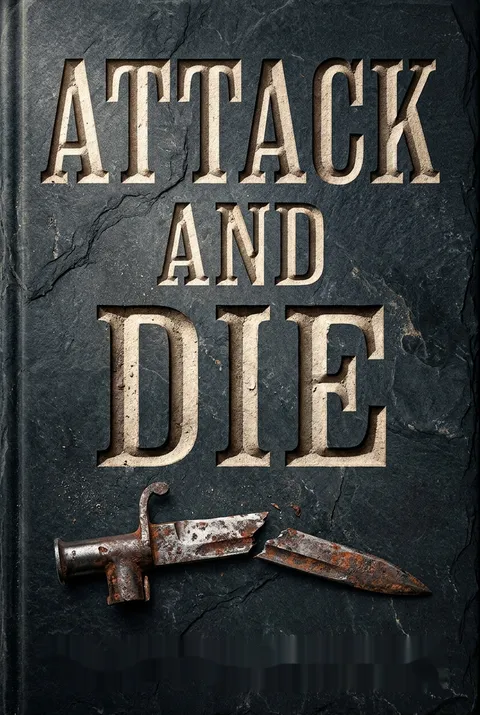
Defeat accumulated in the ranks. At Malvern Hill, fourteen Confederate brigades assaulted a strongly defended position. Daniel Hill's division lost 2,000 of its 6,500 men. Such attacks sometimes drove the enemy back, but the South could not replace soldiers and officers as readily as the North. The book's title captures its central argument: valor repeatedly spent where caution might have preserved the army.
What's striking is the distinction between winning a position and improving the chance of winning a war. An attack can succeed locally while weakening the force that must fight tomorrow. That is a useful lens for any study of attrition: measure what an operation costs relative to what it gains, not simply whether the line moved. The authors' figures make a forceful case, though casualty totals alone cannot explain each commander’s choice or every battle's outcome.
When rifles outrange muskets, the defender gains more than better aim.
A weapon changed the equation. In the Mexican War, most infantry carried smoothbore muskets, which were inaccurate beyond a few hundred yards. By the Civil War, rifled muskets using the Minié bullet could be loaded nearly as readily while reaching much farther. The book gives the Springfield rifle-musket an effective range of roughly 300 to 400 yards, with bullets capable of killing at greater distances.
Distance favored protection. A defender could fire accurately from cover before attackers reached the short range at which older musket tactics had been most effective. The authors argue that a rifleman behind cover could hold off several exposed attackers. This did not make every defender invincible: terrain, training, visibility, and ammunition mattered. But it made the old assumption that courage and a bayonet charge could reliably overcome a position far more dangerous.
The key insight is not simply that the new weapon was more powerful. It is that technology altered the relative value of exposure and protection. A tactical doctrine can remain familiar while its underlying cost structure changes dramatically. The book sometimes describes the rifle's advantage in near-absolute terms, but weapon performance depends on conditions in the field. Its strongest point is the changed balance, not the claim that rifles made every defense unbeatable.
Do not mistake yesterday's successful attack for tomorrow's sound doctrine.
Mexico taught a misleading lesson. Many Civil War leaders had served in the Mexican War, where American forces repeatedly attacked and won, sometimes against larger armies and fortified positions. The tactics relied on close formations, musket volleys, and bayonet assaults. At Churubusco, for example, American troops crossed a ditch and carried a fortified work with a bayonet attack.
The battlefield had changed. In the 1840s, these methods faced defenders whose smoothbore weapons had limited range and accuracy. By the 1860s, rifle muskets made exposed advances much more costly. Yet many commanders retained confidence in the offensive methods they had seen succeed. The authors trace this influence through figures including Jefferson Davis, Robert E. Lee, and Ulysses S. Grant, while emphasizing that their experiences did not affect them all in identical ways.
The episode illustrates how experience can become a trap when the conditions that made it useful disappear. A remembered victory carries emotional force, and it can feel more persuasive than a new technical analysis. The book is especially compelling when it connects leaders' earlier service to their expectations. Still, past experience was one influence among many. Commanders also faced political pressure, incomplete information, and the practical difficulty of changing doctrine during a war.
Treat prepared positions as systems that multiply a defender's strength.
Earth and timber mattered. Entrenchments were used throughout the war, but their importance grew as rifle fire made exposed movement more dangerous. Soldiers built breastworks from logs, rails, and earth, often quickly. During the Atlanta campaign, Oliver Howard observed that troops could create strong cover with axes and shovels in less than an hour.
Frontal attacks paid dearly. At Fredericksburg, Union assaults against Lee's position failed at great cost. At Franklin, Confederate attacks against entrenched Federals produced a devastating loss of life. Kennesaw Mountain offered another warning: Sherman's attack cost nearly 2,000 Union casualties, while Confederate losses were far lower. The authors argue that defenders combined cover, firepower, and favorable ground, making a direct assault a poor exchange unless the attacker had a compelling advantage.
A fieldwork is not merely a wall. It changes how many defenders can use their weapons, how long they can remain under fire, and how much risk an attacker must accept to reach them. That systems view helps explain why simple earthworks could matter so much. It also points to a limitation in judging attacks afterward: a commander may see a position as vulnerable from a map, while the people ordered forward experience its full defensive power.
Keep assault lines far enough apart to preserve command and control.
Formation could collapse under fire. Armies often attacked in successive lines, with one line expected to support or reinforce another. In practice, close spacing sometimes made units merge before officers could direct them. At Shiloh, broken terrain and thick undergrowth scattered and mixed Confederate formations. At Murfreesboro, units in the second line advanced into the first, adding confusion and exposure.
Spacing was not a minor detail. At Sharpsburg, John Sedgwick's division advanced with supporting brigades only about seventy-five yards apart. When fire struck from several directions in the West Woods, the division suffered 2,210 casualties. The book shows that difficult ground, battlefield noise, and the instinct to close ranks could undo a carefully designed formation. Once units intermingled, commanders struggled to maintain a coherent attack or bring reserves to the right place.
This is a lesson about coordination as much as courage. An army's strength exists partly in its ability to keep units distinct enough to receive orders and support one another. Tight formations can concentrate force, but they can also create a single crowded target. The book's battle accounts make that tradeoff vivid. Its examples also caution against treating a formation diagram as proof of how troops actually moved once terrain and enemy fire disrupted control.
Use storm columns selectively, and plan support before the breakthrough.
Columns sometimes opened a breach. In May 1864 at Spotsylvania Court House, Emory Upton led twelve regiments in a deep formation against Confederate works. His troops crossed open ground, broke into the position, and captured prisoners. Two days later, Hancock's Second Corps used a dense mass to assault the Mule Shoe salient and captured thousands of Confederates.
A breach is not the same as a victory. Upton's attack was not adequately supported, so the Confederates contained his breakthrough. Hancock's success also left his troops disorganized, and another defensive line blocked further advance. Columns could deliver concentrated force, but they exposed men to rifle and artillery fire and could become confused as they pressed forward. These episodes show that attacking formations mattered, but timing, follow-up forces, and the ability to exploit success mattered too.
These exceptions strengthen rather than weaken the book's main argument. They show that frontal attacks were not automatically futile, but that success required more than an impressive charge. A breakthrough is a temporary opportunity, not a completed operation. The decisive question is whether command, reserves, and follow-up plans can turn local penetration into lasting advantage. The authors' examples also resist a simplistic lesson that one formation could solve the rifle's defensive power.
Expect artillery to anchor defense, not to decide every assault.
Guns could devastate exposed troops. At Malvern Hill, Union artillery helped break repeated Confederate attacks across open ground. At Fredericksburg, Confederate guns concentrated on advancing Union infantry, contributing to the defense of the heights. At Murfreesboro, a mass of Federal artillery helped repel Breckinridge's assault.
Offensive use was harder. Field guns needed room to move and a clear view of their targets. Woods, mud, and broken ground often restricted them, while rifle-armed infantry could threaten batteries at ranges that had once been safer. The Confederate bombardment before Pickett's Charge at Gettysburg made immense noise, but the book finds little evidence that it substantially weakened the Union line. Artillery remained powerful, especially on defense, yet could not reliably prepare the way for an infantry assault.
The artillery story underlines a broader point: a weapon's value depends on how it fits the terrain and the other arms. Guns could be formidable when placed to cover an approach, but their mobility and visibility limited what they could do during an advance. The Gettysburg bombardment is a useful reminder that dramatic sound is not the same as measurable effect. A careful account distinguishes spectacle, damage, and actual change in the enemy's position.
Cavalry's battlefield role changed from charging to fighting on foot.
Rifle fire checked mounted attacks. At Gaines's Mill, a charge by the Fifth United States Cavalry was shattered by Confederate infantry fire. At Gettysburg, Elon Farnsworth led cavalry against infantry protected by stone walls and was killed. Such actions showed how difficult it was for horsemen to reach prepared riflemen.
Mobility found other uses. Cavalry scouted, screened movements, pursued retreating forces, and often fought dismounted. At Selma, Federal cavalry armed with repeating rifles advanced on foot and captured Confederate works. Some units combined dismounted troops with mounted reserves, using horses for movement and pursuit while men on foot delivered fire. The change was not complete or uniform, but the war weakened the traditional image of cavalry as a force whose decisive purpose was the saber charge.
The cavalry's adaptation shows that military roles are not fixed by an arm's name. When mounted shock became too costly, mobility still mattered, but it served reconnaissance, rapid movement, and pursuit as much as direct attack. Dismounted fighting also blurred the distinction between cavalry and infantry. The shift was practical rather than tidy: armies adapted unevenly, and horse-holding arrangements created new vulnerabilities even as they made foot combat possible.
Confederate losses mattered more because the Union could replace its armies.
Attrition was unequal. The Union had greater population and material resources, while the Confederacy faced a smaller pool of soldiers. The authors estimate that Confederate forces lost about 175,000 men in the first twenty-seven months. They also report that 235 of 425 Confederate generals were killed or wounded during the war, with many of those killed falling in attacks.
Losses weakened more than head counts. The death or wounding of experienced officers disrupted command and made later operations harder to conduct. As defeats mounted, Confederate morale generally fell, especially after Gettysburg and Vicksburg in 1863. The book argues that repeated offensives accelerated this erosion. A battle's cost therefore included not only the soldiers who fell, but also the lost experience, leadership, and confidence that a resource-poor army could not easily restore.
The strategic significance of casualties depends on a side's capacity to replace people, equipment, and leadership. Equal losses can have unequal consequences when the armies have different reserves. This makes the Confederacy's repeated high-cost attacks especially consequential. At the same time, the book's totals should not be read as a complete causal model of defeat. Blockade, economic strain, political conflict, and Union strategy also shaped the South's shrinking ability to continue the war.
Treat the Celtic charge as a hypothesis, not a complete explanation.
Culture is the book's boldest claim. McWhiney and Jamieson connect Southern military aggressiveness to a Celtic heritage, contrasting it with a more calculating, orderly Northern tradition. They compare Confederate assaults with earlier Celtic attacks at events such as Telamon and Culloden, where brave charges met disciplined forces with stronger defensive advantages. The authors also point to the Confederate yell, loyalty to leaders, and a cultural preference for bold action.
The interpretation reaches beyond the battle evidence. Their tactical case is clearest when it documents rifle fire, entrenchments, and casualties. The claim that ethnic inheritance explains Southern behavior is more difficult to prove. The same evidence can be read through military training, leadership choices, political aims, or the Confederacy's strategic circumstances. The cultural argument is provocative, but it should not be mistaken for a settled explanation of every Southern soldier's decisions.
What's valuable here is the question of how inherited norms shape military institutions and expectations. Stories about courage can reward risk-taking, while stories about prudence can legitimize delay. But cultural history becomes too neat when diverse people are assigned a single temperament through ancestry. The book offers a memorable interpretive frame, not proof that ethnic heritage dictated battlefield behavior. Its strongest and most durable contribution remains the analysis of tactics and the costs of failing to adapt.
Analysis
Attack and Die is strongest as a study of the gap between military technology and inherited doctrine. The rifle did not merely improve marksmanship. It made distance, cover, and preparation more valuable, while raising the cost of advancing in close formation. The book's accumulation of battle reports makes this argument concrete: units are not abstract counters when a regiment loses half its men in a charge, and an army cannot treat repeated sacrifice as a renewable resource.
Its structure moves persuasively from what happened, to how weapons and formations shaped events, to why leaders continued to attack. The transition from tactical analysis to cultural explanation is also where the argument becomes less secure. The authors associate Southern aggressiveness with Celtic ancestry and Northern conduct with English heritage. That framing gives coherence to a complex story, but it risks turning broad cultural contrasts into fixed group characteristics. The evidence presented for battlefield tactics does not by itself demonstrate that ethnic inheritance caused those tactics.
The more convincing explanation is layered. Mexican War experience, professional teaching, political pressure to carry the war into enemy territory, command decisions, and the Confederacy's limited resources all help explain the persistence of offensive action. These causes need not cancel the authors' cultural argument, but they limit how much weight it can bear. The book's own examples show that officers differed: Joseph E. Johnston valued defensive positions, while other commanders persisted in attacks.
The central claim should therefore be read as a strong account of tactical costs, paired with a provocative and contestable account of cultural causes. Its lasting question is not simply why Confederates charged, but why armies continue to trust familiar methods after battlefield evidence has changed. The answer matters because military adaptation depends on more than new weapons. It requires institutions and leaders willing to revise assumptions, and a strategic system capable of surviving the time it takes to learn.
Review Summary
The reviews for Attack and Die are mixed, with ratings ranging from 1 to 4 stars. Many readers found the book's analysis of Confederate military tactics and their consequences informative, particularly regarding the impact of rifled muskets on offensive strategies. However, the final chapter's theory linking Confederate aggression to Celtic heritage was widely criticized as far-fetched and poorly supported. Some readers appreciated the book's insights into Civil War tactics, while others found it dry and unconvincing, especially in its cultural arguments.
People Also Read
Glossary
Minié bullet
Expanding rifle projectileA bullet with a hollow base that expands when fired, engaging the rifling inside the barrel. Its design allowed a rifle to be loaded more easily than earlier tight-fitting rifle ammunition while retaining the greater range and accuracy of a rifled weapon. The book treats its adoption as a key step in the increased power of infantry fire.
Hardee's Tactics
Rifle infantry drill manualWilliam J. Hardee's two-volume manual for rifle and light infantry, first published in 1855. It adapted earlier drill practices to the rifle and allowed faster movements, including the double quick step. The manual remained close to older formations, however, and the book argues that its adjustments did not fully account for the defensive power of rifle fire.
Shanghai Drill
Nickname for Hardee's drillA soldiers' nickname for the rapid marching style in Hardee's infantry tactics. The drill included a longer stride and a faster double quick pace than the older system. Cadets and soldiers used the name partly because the new gait looked and felt unusually brisk compared with the more deliberate movements they had previously practiced.
Rebel yell
Confederate battle cryThe piercing cry associated with Confederate attacks. The book connects it to the emotional force of the charge and compares it with older Celtic battle cries. Accounts describe it as distinct from the Union cheer. The authors suggest that its sound could unsettle opponents, while also presenting it as part of the cultural explanation they advance for Southern aggressiveness.
offensive-defensive
Defend while seeking attackJefferson Davis's description of Confederate military policy. In practice, the authors argue, the policy often became offensive warfare: Confederate forces sought to carry the conflict into Union territory and defeat enemy armies through attacks. The term captures the tension between the stated aim of self-defense and the operational preference for taking the initiative.
comrades in battle
Four-man tactical groupsSmall groups of four adjacent infantrymen used in Hardee's skirmisher system and in certain flank movements. The men were expected to know and support one another while operating in loose order. The groups helped maintain contact when soldiers were spread out more widely than in the close ranks used for standard line formations.
Download PDF
Download EPUB
.epub digital book format is ideal for reading ebooks on phones, tablets, and e-readers.








