

Key Takeaways
Read ayahuasca as a relationship, not a vision machine
A long apprenticeship. Ayahuasca is a brew usually made from Banisteriopsis caapi vine and chacruna leaves. Its name is often translated as vine of the soul. Gorman first drinks it in Peru in 1984, expecting an unusual experience. He sees through a bird's eyes, then spends the next 25 years returning to the Amazon, its people, and its healers. The visions matter, but they are only one part of the story.
Context is the lesson. Preparation includes fasting, gathering plants, traveling by river, listening to the jungle, and sitting with a healer's songs. Gorman comes to see the medicine as a relationship requiring patience, discomfort, and responsibility, rather than a shortcut to dazzling visions. His account is personal testimony, not a general guide to using the brew.
What's distinctive is that the book makes the setting part of the experience, not a decorative backdrop. Anthropology has long shown that healing practices gain meaning through shared ritual, local knowledge, and relationships between practitioners and patients. That perspective helps explain why Gorman's journeys cannot be reduced to a chemical event. It also suggests a useful caution: a powerful personal experience does not establish that every participant, or every tradition, will experience the same thing. The narrative is strongest when it shows how the Amazon community shapes what the visions mean.
Ask what needs healing, not which spectacle you want
Desire is not direction. Early on, Gorman hopes ayahuasca will bring back the bird he saw during his first ceremony. Instead, one night he is asked to find Junior, the son of his guide Moises, who is lost in the jungle. Gorman's first visions take him elsewhere. Later, after returning to his hammock, he imagines a snake traveling up the river and sees a canoe. Junior does return with another man, though the experience cannot establish how Gorman knew.
The lesson he accepts. Moises tells him that the medicine may offer what a person needs rather than the spectacle they came seeking. Across the memoir, visions of animals, relatives, and spirits compete with less glamorous demands: face grief, stop drinking, or take responsibility for someone else.
The distinction between what a person wants and what may help can be useful even without accepting Gorman's spiritual explanation. In psychotherapy, a client's first stated goal can differ from the problem that sustains their distress. Good care requires curiosity about that gap, rather than automatic compliance with the initial request. Yet the idea becomes risky if a practitioner claims privileged authority to define what someone else needs. The book's more grounded examples work because the guidance points toward observable responsibilities, not because unusual visions are assumed to be infallible.
A healer's skill shapes the ceremony as much as the brew
Ritual is active work. Gorman describes a curandero as a traditional healer, and an ayahuasquero as one who specializes in ayahuasca. Julio's work includes preparing the brew, singing icaros, or healing songs, shaking a shacapa, a leaf rattle, and attending to people during the ceremony. Gorman believes Julio can respond to participants' needs even when they are silent or unaware of them.
A visitor sees the difference. One guest, Lynn, feels little at first and privately asks for some sign that the ceremony matters. He then experiences Julio as towering above the room, luminous and busy tending to the women. For Lynn, the moment changes the ceremony from an inert drug experience into a setting where a healer is actively present.
A skilled facilitator can change how people interpret and tolerate intense experiences. Ritual, music, expectation, and a trusted guide all influence attention and emotional regulation, a principle that appears in clinical care as well as religious practice. That does not prove that Julio could perceive hidden visions or spirits. It does explain why his role mattered to participants. The distinction between spiritual authority and practical competence also matters: a compelling ceremony leader may offer containment, but that alone does not establish medical expertise or make every intervention safe.
Check the broken step before blaming an invisible attack
Start with the ordinary cause. In Gorman's account, illness and misfortune are often interpreted as signs of disturbance on another plane. But Julio's diagnoses sometimes point directly back to everyday behavior. A man who keeps hurting himself after selling plantains suspects someone has put the evil eye on him. Julio notices that the man gets drunk at a tavern and then trips on a broken step. His choices are practical: stop drinking there or repair the step.
Look for the human conflict. In another case, a jealous husband asks whether his wife is having an affair. Julio's vision, as Gorman recounts it, leads to the husband's violence and the wife's plan to leave. The diagnosis challenges the husband's accusation and directs attention toward the harm he is causing.
These stories turn spiritual diagnosis into a form of accountability. The broken step is a memorable reminder that people can misread preventable risks as persecution, while jealousy can disguise itself as a search for certainty. This resembles cognitive behavioral approaches that examine actions, interpretations, and consequences. The corrective has limits, though: not every illness has a simple behavioral cause, and insisting otherwise can blame people for suffering beyond their control. Julio's examples are persuasive because they test a supernatural explanation against details the client can recognize.
Treat the purge as an ordeal, not proof of detoxification
A difficult bodily experience. Gorman calls the vomiting associated with ayahuasca la purga, meaning the purge. He says it often begins within 20 to 40 minutes. In ceremonies, he experiences it as a forceful physical event and interprets it as clearing emotional and spiritual burdens as well as bodily contents. He also describes local beliefs that the purge can help with intestinal parasites.
Meaning is not medical evidence. The book presents the purge as a central part of healing, especially when people fast beforehand and have little food in their stomachs. It does not provide clinical evidence that vomiting removes emotional burdens or reliably treats parasites. Several guests become distressed or keep vomiting for hours, and Gorman must help them through it. The ritual's significance and its physical risks both belong in the account.
The metaphor of expelling emotional burdens can help people give shape to grief, shame, or fear. But vomiting is not a reliable measure of psychological progress, and the body's dramatic response does not prove that toxins or illness have been removed. Prolonged vomiting can cause dehydration, while intoxication can make it harder to recognize danger. The book's distinction between physical purging and spiritual meaning is valuable, but its healing claims should be read as cultural interpretation and personal testimony, not as established treatment advice.
Let vivid experiences move you without mistaking them for verified facts
The visions feel real. Gorman repeatedly wonders whether he has encountered spirits or invented the experience. During one ceremony, he sees his sister Pat working on a drawing and imagines her greeting him. Afterward, she says she was drawing late and had thought of him, but denies speaking aloud. She had also drawn a snake in a jungle scene. Gorman takes the overlap seriously, yet the details do not prove that he traveled outside his body.
Check what can be checked. On other occasions, Gorman sees friends doing ordinary things and later finds some details match. He develops a personal test: an experience feels less likely to be his invention if it contains something he could not have anticipated. The book shows how this test helps him make sense of the visions, but it cannot independently confirm their source.
High emotional intensity can make a memory feel unusually certain, while expectation and suggestion can shape what people notice and recall. Independent confirmation is therefore more informative than conviction alone, especially when details are specific and recorded before checking. Gorman's willingness to question himself gives the memoir some epistemic humility, but his personal test remains subjective: an unexpected idea can still arise from unconscious memory or chance. The useful takeaway is not to dismiss the experience, but to separate its personal importance from claims that require outside evidence.
Love people by learning their needs, not projecting your own
Good intentions can miss. Gorman repeatedly asks how to make Chepa and their daughter happy, then realizes he has been offering what he thinks they should want. In one ceremony, a voice challenges him to imagine their experience rather than treating his own intentions as proof of love. He also recognizes that his drinking has made him unreliable and frightened his family.
The family remains imperfect. Chepa leaves, and Gorman does not win her back through a vision or a song. He moves to Texas so his children can live nearer to her, stays involved in their lives, and helps care for her younger children. The spiritual lessons matter because they change his behavior, not because they restore the household he wanted.
This is one of the book's clearest psychological insights: care is measured partly by whether it responds to the other person's experience. Family therapy makes a similar move by asking people to understand the impact of their behavior, not only the intention behind it. The account also resists a sentimental ending. Empathy cannot guarantee reconciliation, and trying to become another person completely is neither possible nor necessary. What can change is the quality of attention, reliability, and support offered after a relationship has ended.
Refuse power when its price is becoming someone you reject
An offer with a cost. Gorman's ceremonies repeatedly bring him into contact with what he calls the book's four colors of magic. He associates black magic with a deep force, but also encounters figures who tempt him with money, influence, and sexual power in exchange for joining them. Their promises feel compelling. He refuses because the bargain seems to require surrendering his own judgment and becoming someone he does not want to be.
The ethical test is restraint. Elsewhere, Gorman experiences himself fighting enemies with invisible darts, then chooses not to kill them. He uses the imagery of the red healing room, where he believes harmful material can be transformed rather than passed on. The story's supernatural frame is his interpretation; its moral problem is recognizable: power can invite retaliation, domination, and self-justification.
The temptation in these scenes resembles a familiar ethical trap: a person starts with a legitimate desire, then accepts increasingly harmful means because the promised end seems important. The narrative gives that conflict a vivid spiritual form, making restraint feel like an action rather than a vague virtue. It also raises a useful question about certainty: if an enemy exists only within a visionary experience, acting against that person in ordinary life would be dangerous. The strongest moral lesson is to avoid converting private imagery into permission to harm.
Keep medical care in place when spiritual healing promises a cure
A father's fear. When Gorman's son Marco develops nephrosis, a kidney disorder, doctors in Lima hospitalize him and treat him with Prednisone and other care. Gorman also drinks ayahuasca, interpreting a vision as a spiritual battle to protect his son. Marco later recovers after months of medical treatment. The memoir does not establish that the ceremony caused that recovery.
Testimony is not a trial. Elsewhere, Gorman describes healers treating serious illness and recounts a guest whose cancer reportedly becomes undetectable after plant remedies and conventional treatment. Such stories may be meaningful to families, but the book provides no controlled evidence that ayahuasca or the remedies cured cancer. Its most responsible example is Marco's case, where spiritual meaning accompanies, rather than replaces, medical care.
Spiritual practice can give families language for fear, hope, and connection during illness. That value is different from proving that a treatment changes the course of disease. A personal recovery story cannot identify which intervention caused the outcome, and serious illnesses can worsen when effective care is delayed. This distinction protects both the emotional worth of ritual and the patient's access to evidence-based medicine. The memoir's extraordinary claims deserve the same care as any health claim: respect the experience, then ask what independent evidence supports the proposed cure.
A new song helped him keep showing up after his family split
The ending is not a reunion. After years of ceremonies, Gorman composes a song asking for help with his broken family. He gradually accepts that repair will not mean everyone living together again. Chepa has built a separate life, while their children remain part of a family spread across households.
Care becomes the practical work. Gorman continues to support his children, help with Chepa's younger children, and stay present for ordinary responsibilities. Julio's death deepens the sense that his education is unfinished, but the final measure is not another vision. It is whether Gorman can carry what he has learned into daily life, without demanding that his family return to the shape he once wanted.
The ending offers a modest but credible account of change. Many stories of transformation promise a clean resolution, while family life often requires ongoing care without a satisfying final scene. Gorman's continued involvement does not erase the hurt or make him a flawless parent. It does show how spiritual insight can be judged by conduct beyond the ceremony. The memoir's lasting tension is between wanting the medicine to reveal a complete answer and learning that some repair consists of showing up without control over the outcome.
Analysis
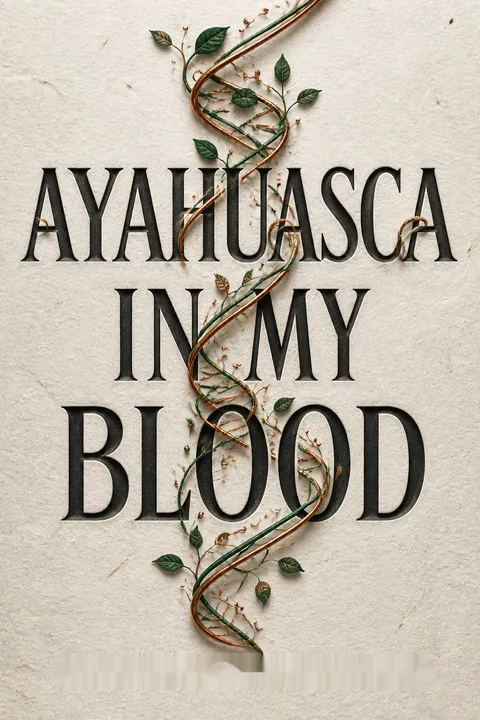
Ayahuasca in My Blood is best read as a spiritual memoir and apprenticeship narrative, not as a scientific account of ayahuasca or a clinical handbook. Its plot follows Gorman from an early vision in the Peruvian jungle to years of ceremonies, healing work, family conflict, and the death of his teacher Julio. The book's organizing idea is experiential: a ceremony is not simply a drug event, but a meeting among a plant brew, a healer, a community, a landscape, and a participant's needs. The narrative gains force by repeatedly setting the spectacular beside the mundane. A snake may seem to guide the narrator, but a broken stair can still explain an injury; a spiritual battle may help a father bear fear, but his son also needs hospital treatment.
The memoir's greatest strength is its candid uncertainty. Gorman recounts experiences he regards as real while acknowledging that he cannot always distinguish vision from imagination or establish how a striking coincidence occurred. That tension invites readers to take the experience seriously without treating his interpretation as proof. The book is less careful when its accounts of plant remedies and dramatic healing approach medical claims. Anecdotes cannot establish that a remedy cures cancer, reverses organ disease, or reliably treats infection. The distinction between spiritual meaning and demonstrated efficacy is essential, particularly because ayahuasca ceremonies can involve intense distress and prolonged vomiting.
There is also a question of cultural authority. Gorman's teacher and much of his practical knowledge come from Peruvian healers and Indigenous communities, while Gorman organizes paid trips for outsiders. He acknowledges the money, the labor of his team, and his own discomfort about turning the medicine into a business, but the memoir is still told chiefly through his perspective. Its most persuasive passages show reciprocity, relationships, and local expertise; its more troubling passages risk making other people's knowledge a resource for a Western narrator's transformation.
Ultimately, the book's value lies less in confirming a hidden spirit world than in tracing how belief changes behavior. Its strongest lessons concern humility, responsibility, care, and the limits of control. Its unresolved visions remain part of the story, but the final test is ordinary life after the ceremony.
Review Summary
Ayahuasca in My Blood by Peter Gorman receives overwhelmingly positive reviews (4.28/5 stars), with readers praising its honest, vivid portrayal of 25 years of ayahuasca experiences in the Peruvian Amazon. Reviewers commend Gorman's transparency about personal struggles and "character flaws," his detailed descriptions of shamanic ceremonies and visions, and his skilled storytelling that reads like fiction despite being non-fiction. Many found it essential reading for understanding ayahuasca's spiritual dimensions, though some question the literal accuracy of events and note Gorman's controversial reputation.
People Also Read





Glossary
Ayahuasca
Amazonian visionary brewA traditional Amazonian brew usually prepared from Banisteriopsis caapi vine and chacruna leaves, though recipes and names vary by region. In the communities Gorman describes, it is used in ceremonies for spiritual insight and healing. The book presents both the cultural meanings of the brew and the author's personal interpretations of its effects.
Curandero
Traditional healerA traditional healer who may work with plants, ceremonies, smoke, stones, eggs, or other practices. In Gorman's account, curanderos identify and address illness understood as physical, emotional, or spiritual. The term includes women healers, called curanderas, and does not by itself indicate formal biomedical training.
Ayahuasquero
Ayahuasca specialist healerA healer whose work centers on ayahuasca. In the book, an ayahuasquero prepares or serves the brew and leads ceremonies, often using songs, tobacco smoke, and a leaf rattle. Gorman distinguishes skilled healers from brujos, whom the book describes as practitioners who use spiritual abilities to harm or exploit others.
Icaro
Ceremonial healing songA song or whistle used by a healer during ceremony. Gorman's teacher Julio sings icaros while serving ayahuasca and tending to participants. Some healers in the traditions he describes say plant spirits teach them these songs; others inherit them through training. The book treats the songs as both musical guidance and part of healing work.
La purga
Ayahuasca-induced vomitingThe forceful vomiting, sometimes accompanied by bowel movements, that Gorman describes as a common effect of ayahuasca. In local healing practice, it may be understood as physical, emotional, or spiritual cleansing. The memoir's interpretation of the purge is not evidence that vomiting removes toxins or treats disease.
Viroté
Invisible harmful dartAn invisible dart that, in the beliefs described by Gorman, one healer may send to injure another person. He recounts experiences of seeing or removing virotés during ceremonies and interprets some illnesses and attacks through this framework. The term belongs to the book's spiritual worldview and does not describe a medically established cause of illness.
Arcana
Protective ceremonial boundaryA boundary a healer creates around a ceremony to keep unwanted spirits from entering. Gorman describes Julio making an arcana through prayer and ritual, and later attempts to create one himself with smoke and perfume. The boundary is presented as a feature of the healer's spiritual practice, not as a physical barrier.
Red magic
Healing force in bloodOne of four colors of magic in the songs and spiritual explanations Gorman encounters. He comes to associate red magic with blood, suffering, and the transformation of harmful experience into healing. This is the narrator's ceremonial and visionary interpretation, not a scientific classification.
Black magic
Deep force, tempting powerOne of the four colors of magic in the book. Gorman first encounters it as a temptation toward wealth, influence, and sexual power, then interprets a deeper form as a dense force sustaining life. The term shifts between harmful, selfish use and a vast underlying power within his spiritual account.
Download PDF
Download EPUB
.epub digital book format is ideal for reading ebooks on phones, tablets, and e-readers.








