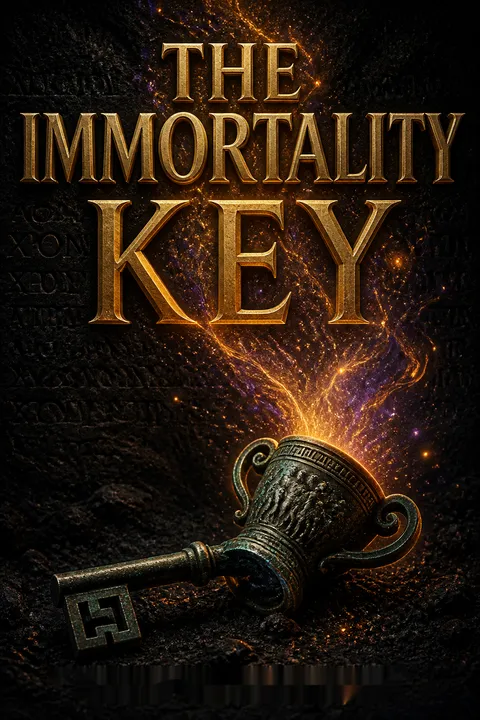


Key Takeaways
Treat mystical experience as evidence about meaning, not automatic proof of heaven.
A skeptic meets transcendence. The book opens with Dinah Bazer, an atheist recovering from ovarian cancer who joined a supervised psilocybin study because fear of the disease's return had overwhelmed her. During one session, she experienced an enveloping sense of love and a loosening of the boundary between herself and the world. The fear that had felt like a physical mass disappeared, and the experience continued to matter to her years afterward.
The research behind her story. In the trials described, 70 percent of NYU participants rated their dose among the most meaningful experiences of their lives, and 87 percent reported increased life satisfaction or well-being. The author treats these findings as clues to an ancient religious technology: an experience that can transform how people face death.
The strongest point is the separation between the reality of an experience and the interpretation placed on it. Bazer's reduced fear and lasting sense of connection are meaningful outcomes whether or not they establish a supernatural realm. That distinction is valuable in both psychology and religious studies: first describe what changed, then ask what explains it. The studies support the possibility of therapeutic benefit under controlled conditions, but a powerful feeling of certainty cannot, by itself, verify beliefs about an afterlife.
Investigate whether psychedelic sacraments linked Eleusis to Christianity's earliest communities.
The book's central hypothesis. Muraresku asks whether some Greek mystery traditions used psychoactive drinks to induce transformative visions, and whether Greek-speaking early Christians adapted such practices into their Eucharist. He calls this a psychedelic version of the pagan continuity hypothesis, the idea that Christianity developed within, and absorbed elements from, the religious world around it.
A long investigation, not a settled answer. Trained in Greek, Latin, and Sanskrit, Muraresku spends twelve years comparing ancient texts, artifacts, archaeological chemistry, and Vatican records. He does not report personal psychedelic use. The argument moves from possible prehistoric brewing to Eleusis, Dionysus, early Christian communities, and medieval witchcraft. Its reach is striking, but each link needs evidence of its own. A plausible route through history is not proof that the same sacrament traveled every mile.
The book's best intellectual move is to make a provocative story testable. Instead of treating religious similarity as proof, it asks what residues, texts, and ritual settings might support a historical connection. That interdisciplinary approach can expose questions specialists miss when they work in isolation. Yet a chain of suggestive parallels can create an illusion of continuity: each connection may be plausible while the full lineage remains unproven. Readers should keep the distinction between an ambitious research program and a demonstrated historical account.
Ask whether Eleusis offered initiates a vision, not merely a lesson.
A mystery built around seeing. For roughly two thousand years, people traveled to Eleusis, near Athens, for rites whose central events were kept secret. Ancient writers describe initiates returning with a changed view of death. The book emphasizes Aristotle's reported distinction: participants came to undergo something, not simply learn information. The experience was associated with the hope that death was not the end.
The proposed drink. Before the ceremony, initiates drank the kukeon, a mixture associated with barley, water, and mint. In 1978, ethnomycologist Gordon Wasson, chemist Albert Hofmann, and classicist Carl Ruck proposed that ergot, a fungus that can grow on grain, supplied mind-altering compounds. Hofmann argued some ergot alkaloids could be separated using ancient methods. No surviving account confirms the recipe, and the proposed brew has not been convincingly reproduced.
The Eleusis case illustrates why ritual secrecy creates both historical fascination and evidentiary problems. A recurring ceremony, a special drink, and reports of changed attitudes toward death make the psychedelic proposal worth investigating. They do not identify the active ingredient. Fasting, exertion, music, anticipation, and communal ritual could also shape unusual experiences. The useful lesson is methodological: when several mechanisms could explain an event, preserve the competing explanations instead of allowing the most vivid one to become the default.
Follow ancient residues, while separating evidence of brewing from evidence of visions.
Beer may predate bread. At Raqefet Cave in Israel, researchers identified plant remains in 13,000-year-old stone mortars that they interpreted as evidence of brewing. The cave was also a burial site, making ritual feasting a possibility. The book connects this finding to a broader debate about whether the desire for beer helped motivate early farming. The plant evidence indicates processing, but does not by itself prove fermentation or psychoactive effects.
A temple and enormous vessels. At Gobekli Tepe in Turkey, limestone basins large enough to hold about 42 gallons have been tested for beerstone, a residue associated with brewing. Results described in the book were mixed, and further sampling was needed. The sanctuary's scale and ritual setting make feasting plausible, but the proposed beer, its ingredients, and its role in the growth of farming remain open questions.
These sites make the book's deep-time argument compelling without making it conclusive. Archaeobotany can identify plants and processing; chemistry can test for fermentation; archaeology can place vessels in a social setting. Those are distinct forms of evidence, and combining them carefully is more powerful than treating any one as a complete explanation. The leap from fermented drink to psychedelic sacrament is larger still. A ritual context raises the possibility of religious use, but it does not reveal what participants experienced or why farming began.
Treat Catalonia's ergot cup as a lead, not a solved Eleusinian secret.
A Greek farm in Spain. At Mas Castellar de Pontos, an ancient settlement with Greek artifacts and a room interpreted as a domestic shrine, archaeobotanist Jordi Juan-Tresserras reported remains of beer and ergot in a tiny drinking vessel. Ergot was also identified in a human jawbone found in the ritual area. The objects date to the Hellenistic period, centuries before Christianity. Their context links the find to Greek-influenced religious practice, but does not establish that the drink was the Eleusinian kukeon.
The caveat matters. The original researcher later supplied his analysis, but the photomicrographs that would allow independent inspection could not be located. The book's author regards the find as major support for the psychedelic hypothesis, while acknowledging that modern confirmation is needed. This is the adaptation's clearest proposed evidence for ergot in a ritual drink, not definitive proof of what Plato or other Eleusinian initiates consumed.
This discovery is a useful case study in how archaeological claims gain or lose strength. The combination of a ritual setting, a drinking vessel, and reported ergot is more informative than any single clue alone. But the missing images and lack of fresh analysis limit independent verification. That limitation does not make the report worthless; it defines the next research step. Strong historical arguments welcome uncertainty in public, because transparent gaps help other researchers decide exactly what to test.
Read ancient wine as a possible pharmacological mixture, not simply fermented grape juice.
Wine could carry more than alcohol. Greek writers used pharmakon, a word that can mean drug, remedy, or poison, for substances with varied effects. The book examines ancient texts and pottery showing women adding unidentified plants to wine during Dionysian rites. Dioscorides, a first-century Greek physician, recorded many infused wines, including preparations involving plants from the nightshade family. Their effects could range from medicinal to dangerous, depending on the plant and dose.
Evidence across the eastern Mediterranean. Chemical analysis of wine jars from Tel Kabri, in Galilee, found traces consistent with resins and other botanical additives. A Roman-era vessel from the Pompeian countryside contained grape remains alongside opium, cannabis, and nightshade seeds, among other materials. Researchers have suggested medicinal or ritual uses, but neither find proves a Christian sacrament was drugged. The book uses them to show that complex, infused beverages were technically possible.
The distinction between ordinary wine and a formulated potion is historically productive. It counters the assumption that ancient drinking was just a less refined version of modern wine culture, and it encourages close attention to vessels, plant traces, and dosage. Still, botanical ingredients do not automatically imply a psychedelic purpose. Medicines, preservatives, flavorings, and ritual substances can overlap. A sound interpretation therefore asks what the compounds could do, what the context suggests, and what cannot be inferred from residue alone.
Track who prepares the sacrament to understand who holds religious authority.
Women's roles are central to the argument. Muraresku points to women as ritual leaders in Greek mystery traditions, brewers and wine mixers, and organizers of early Christian house gatherings. He highlights New Testament women such as Lydia, who hosted a Christian community, and Junia, whom Paul calls prominent among the apostles. In Rome, catacomb paintings show women holding or raising cups at funerary banquets. Such evidence supports women's participation in early religious life, though the precise meaning of individual images is debated.
A contested Eucharist. The book reads Paul's criticism of the Corinthian meal, including his statement that some participants were sick and some had died, as possible evidence of a dangerously potent sacrament. It also links Christian funerary meals with the Roman refrigerium, a meal shared in memory of the dead. The proposed psychedelic content is an interpretation, not an established translation of Paul's warning.
The focus on ritual labor adds a valuable social question to the chemical one: who controlled the materials, the ceremony, and the right to interpret its effects? Domestic religious life often depends on forms of work that institutional histories understate. At the same time, women's participation does not by itself demonstrate that women administered psychedelic wine, and a funerary banquet is not automatically a Eucharist. The evidence is strongest when the book identifies neglected roles, and weaker when it assigns one hidden meaning to ambiguous scenes.
See drug prohibition as a struggle over religious practice, not only public safety.
The book traces repeated suppression. It recounts the closure of Eleusis under Christian Roman rule, the Roman crackdown on Dionysian gatherings, and later prosecutions of women accused of witchcraft. In Vatican records from Siena, Muraresku finds accusations involving herbal wines, incense, ointments, and a stolen consecrated wafer. These cases show that authorities scrutinized folk healing and unauthorized uses of religious objects. They do not establish an unbroken, organized psychedelic church surviving from antiquity.
A modern parallel. The book connects these episodes to campaigns against Indigenous psychedelic practices, including efforts to suppress peyote use in the United States. It argues that religious control has often shaped drug policy. The comparison is provocative, but the motives and legal settings differ across centuries and communities. The practical question is whether regulation can protect people from harm without treating every noninstitutional spiritual practice as inherently illegitimate.
The historical pattern invites a broader analysis of power: institutions often define legitimate ritual, medicine, and knowledge at the same time. The book is persuasive in showing that drug laws have religious and political histories, not just neutral medical rationales. Its account becomes less secure when distinct episodes are treated as one continuous campaign against a single tradition. Differences in substances, institutions, and historical aims matter. Recognizing those differences strengthens, rather than weakens, the case for examining how authority shapes prohibition.
Judge psychedelic research by lasting change and safety, not visions alone.
The modern laboratory reframes an ancient question. Johns Hopkins and NYU studies described in the book report that many participants with cancer-related distress experienced sustained improvements after supervised psilocybin sessions. Across studies cited, about 75 percent of volunteers rated a single psilocybin experience among the most meaningful of their lives. The author sees a modern parallel to Eleusis: preparation, guidance, a communal framework, and an encounter that changes how people understand death.
Experience is not proof of history. Clinical findings can support therapeutic potential and show that mystical-type experiences occur under particular conditions. They cannot verify that ancient Christians used psychedelics, or that consciousness survives bodily death. Muraresku ends by calling for rigorous residue testing and carefully controlled settings, while imagining broader access. The strongest version of that proposal keeps both the promise and the risks in view.
The book's ending is most useful when it separates two questions: whether supervised psychedelic therapy can help people, and whether ancient sacraments contained similar compounds. The first is a clinical question; the second is archaeological and historical. Each requires different evidence. A vivid mystical experience may be therapeutically valuable without serving as proof of metaphysics. Likewise, a safer, regulated setting is essential to any responsible discussion of expanded access. The book's invitation to test its claims is more durable than its certainty about what those tests will find.
Analysis
The Immortality Key is a hybrid of investigative history, personal narrative, and a bold hypothesis about the religious past. Its narrative engine is a search for a missing sacrament: first the barley drink at Eleusis, then Greek wine, early Christian Eucharists, and finally the underground practices of women and alleged heretics. The author makes this sequence vivid by moving between modern psychedelic studies, archaeological sites, ancient texts, and Vatican archives. Readers receive a useful map of neglected questions: ancient fermented drinks could contain botanicals, religious life was not always controlled by clergy, and the boundaries between medicine, ritual, and intoxication were historically porous.
The argument's strength is its insistence that evidence can cross disciplinary borders. Plant remains, residue chemistry, linguistic study, funerary art, and institutional records each illuminate a different part of the puzzle. Its weakness is the distance between those parts. A prehistoric brewing site does not establish a continuous tradition to Eleusis. A Greek literary parallel in John does not prove that the Eucharist contained psychoactive ingredients. A woman holding a cup in a tomb painting cannot, without corroboration, identify a drug ritual. The book sometimes narrates these inferences as a single lineage even when the evidence supports only separate possibilities.
That distinction does not make the thesis trivial. It clarifies what research could answer. Reanalysis of the Catalonian vessel, chemical testing of ancient containers, and careful comparison of ritual texts could strengthen or weaken specific claims. Even if the psychedelic Eucharist hypothesis fails, the inquiry exposes the limits of treating ancient wine as modern wine, or early Christianity as a single standardized institution from its beginning.
The book also raises a contemporary philosophical question: does a profound experience disclose an external spiritual reality, or does it reveal the brain's capacity to create meaning, connection, and relief from fear? The clinical effects described are important either way. A disciplined reader can value the experience, study its consequences, and remain agnostic about its metaphysical interpretation. The lasting contribution is not proof that Christianity began as a drug cult, but a case for investigating how ritual, chemistry, gender, and authority shaped religious experience.
Review Summary
The Immortality Key receives mixed reviews. Praised for its fascinating exploration of psychedelics in ancient religious practices, particularly early Christianity, and well-researched historical connections. Critics argue it lacks solid evidence, makes unsubstantiated leaps, and contains too much personal narrative. Some find the theories compelling, while others see confirmation bias. Readers appreciate the author's dedication and the book's thought-provoking nature, but many question the validity of its bold claims. Overall, it sparks interest in the origins of religious rituals and the potential role of psychoactive substances in spiritual experiences.
People Also Read

Glossary
Beatific vision
vision of divine realityA direct, transformative perception of the divine or sacred, rather than knowledge acquired through teaching or scripture. In the book, the term describes the vision Eleusinian initiates were said to receive and also serves as a comparison for mystical experiences reported in modern psychedelic studies. The historical accounts support claims about reported experience, not proof that a supernatural realm was objectively encountered.
kukeon
Eleusinian ritual drinkThe ceremonial beverage associated with the Mysteries of Eleusis, an ancient Greek initiation tradition devoted to Demeter and Persephone. Ancient descriptions connect it with barley, water, and mint. The book examines the possibility that ergot or another psychoactive ingredient was included, but the exact ancient recipe and its effects remain unknown.
pagan continuity hypothesis
pagan influences on ChristianityThe broad claim that Christianity emerged within a religiously diverse Greco-Roman world and adopted or adapted some existing practices and ideas. Muraresku advances a more specific version: that Greek mystery traditions may have passed a psychoactive sacrament into some early Christian communities. Similarities between traditions support investigation, but do not by themselves prove direct borrowing or a shared drug recipe.
pharmakon athanasias
drug of immortalityA Greek phrase meaning drug or remedy of immortality, used by early Christian writer Ignatius of Antioch for the Eucharist. Muraresku emphasizes the phrase's resonance with ancient traditions in which a sacred drink promised life beyond death. The wording establishes a religious metaphor and a cultural context; it does not demonstrate that the Eucharist contained a psychoactive drug.
marzeah
Near Eastern funerary feastA ritual banquet described in ancient Near Eastern evidence, associated in the book with wine, music, the dead, and contact with the divine. Some surviving texts are interpreted as instructions for intoxication or trance. The book proposes the marzeah as a possible bridge between older funerary drinking traditions and later Greek and Christian mysteries, while noting that the ritual's exact practices remain debated.
refrigerium
meal for the Christian deadA Roman funerary meal held to honor and refresh the deceased, sometimes at a tomb or on an anniversary. Early Christians adopted forms of this practice, and surviving inscriptions and catacomb imagery attest to communal meals and remembrance of the dead. Muraresku argues that refrigeria may have overlapped with Eucharistic practice, but their existence alone does not establish psychedelic wine.
Secret of Secrets
hidden ritual craft knowledgeCarl Ruck's phrase for the specialized agricultural and biochemical knowledge that, in his interpretation, enabled ancient ritual experts to cultivate, select, and prepare ingredients for sacred drinks. Muraresku applies the idea to the possible management of ergot and other potent plants. It is a proposed account of ancient expertise, not a documented manual or confirmed historical institution.
the religion with no name
proposed ancient mystical traditionMuraresku's label for a hypothesized long-running tradition of visionary rites involving psychoactive plants, fungi, or drinks. He traces possible connections from prehistoric funerary rituals to Greek mysteries, some early Christian practices, and later folk traditions. The phrase unifies the book's narrative, but the continuity it implies is a hypothesis rather than an established uninterrupted religion.
FAQ
What is The Immortality Key by Brian C. Muraresku about?
- Secret history of religion: The book explores the hidden role of psychedelic substances in ancient Greek Mysteries and early Christianity, arguing that visionary drugs were central to spiritual experiences and the promise of immortality.
- Interdisciplinary investigation: Muraresku combines archaeology, classical literature, archaeochemistry, and religious studies to uncover evidence of hallucinogenic beer and wine used in ancient rituals.
- Focus on women and mystics: The narrative highlights the critical role of Greek-speaking women with pharmacological expertise who preserved and transmitted these secret sacramental traditions, often facing persecution.
Why should I read The Immortality Key by Brian C. Muraresku?
- Reveals hidden religious history: The book uncovers a long-suppressed tradition of psychedelic use in ancient religious rites, challenging conventional views of Christianity’s origins and Western spirituality.
- Bridges science and spirituality: It presents scientific evidence from archaeobotany and chemistry alongside historical and theological analysis, appealing to readers interested in the intersection of religion, history, and psychedelics.
- Engaging investigative narrative: Muraresku’s journey through archaeological sites, Vatican archives, and interviews with scholars makes complex topics accessible and compelling.
What are the key takeaways from The Immortality Key by Brian C. Muraresku?
- Psychedelic sacraments were real: Archaeobotanical and chemical evidence confirms that ancient religious rituals involved mind-altering substances, such as ergot-infused beer and drugged wine.
- Women as spiritual leaders: Greek-speaking women with pharmacological knowledge were central to preserving and administering these sacraments, often facing persecution during the Inquisition and witch hunts.
- Suppression by religious authorities: The Catholic Church systematically suppressed these practices, replacing them with a symbolic Eucharist and persecuting those who maintained the original traditions.
- Modern revival: Contemporary psychedelic research is rediscovering the therapeutic and spiritual potential of these substances, potentially heralding a new era of mystical experience.
How does Brian C. Muraresku use scientific and archaeological evidence in The Immortality Key?
- Archaeochemical breakthroughs: Techniques like gas chromatography-mass spectrometry are used to detect ancient organic residues, identifying psychoactive compounds in ritual vessels.
- Archaeobotanical discoveries: Finds such as ergot-infused beer at Mas Castellar de Pontós and the psychedelic wine at Villa Vesuvio provide physical evidence of mind-altering substances in ancient rituals.
- Textual and artistic analysis: Ancient literature, hymns, and iconography are examined for coded references to psychedelic ingredients and visionary experiences, corroborated by modern scientific analysis.
What is the significance of the Eleusinian Mysteries in The Immortality Key by Brian C. Muraresku?
- Spiritual capital of Greece: Eleusis hosted the longest-running and most prominent mystery religion, promising initiates a vision that abolished fear of death and granted immortality.
- Secret psychedelic sacrament: The Mysteries involved a secret potion, the kukeon, likely containing ergot fungus, which induced powerful visionary experiences central to the rite.
- Suppression by Christianity: The Mysteries were outlawed in the fourth century AD by Christian emperors, marking the start of a spiritual identity crisis between Greek paganism and Christianity.
How does The Immortality Key by Brian C. Muraresku connect ancient Greek Mysteries to early Christianity?
- Inherited sacramental tradition: The book argues that early Greek-speaking Christians adopted a psychedelic Eucharist, using bread and wine infused with visionary plants and fungi to induce mystical experiences.
- Dionysian and Christian parallels: The Gospel of John and other early Christian texts use language and symbolism echoing Dionysian cult imagery, suggesting a continuity of psychedelic ritual.
- Suppression and transformation: With the rise of Roman Catholicism, psychedelic elements were removed from Communion, reducing it to a symbolic ritual devoid of experiential content.
What is the "pharmakon athanasias" or "Drug of Immortality" in The Immortality Key by Brian C. Muraresku?
- Ancient term for Eucharist: The phrase, found in a letter by Ignatius of Antioch, refers to the Christian Eucharist as a drug or remedy capable of granting eternal life.
- Connection to Greek sacramental wine: The book argues that this concept derives from the Greek understanding of wine as a pharmakon—both a medicine and a poison—that could induce mystical experiences and immortality.
- Symbol of pagan-Christian continuity: The pharmakon athanasias embodies the chemical and spiritual link between the Dionysian Mysteries and early Christian rituals.
What role did women play in the history described in The Immortality Key by Brian C. Muraresku?
- Priestesses and ritual leaders: Women were the primary officiants preparing and dispensing the psychedelic sacrament in Eleusis and other mystery cults.
- Early Christian leadership: Secret Christian ceremonies involving psychedelic Communion were often led by women, a role later marginalized by the male-dominated Church.
- Suppression and witch hunts: The marginalization of women and the eradication of their spiritual roles contributed to the loss of the original psychedelic sacrament and the rise of witch persecutions.
What is the significance of the archaeological finds at Mas Castellar de Pontós and Villa Vesuvio in The Immortality Key?
- Earliest scientific evidence: The discovery of ergotized beer at Mas Castellar de Pontós represents the earliest scientific data for ritual use of psychedelic drugs in classical antiquity.
- Psychedelic wine at Villa Vesuvio: Excavations uncovered a wine mixture containing opium, cannabis, henbane, nightshade, and lizard bones, suggesting a drugged sacrament used in ancient rituals.
- Support for sacramental hypothesis: These finds provide hard data that psychedelic sacraments existed in the earliest days of Christianity and Greek Mysteries, challenging the notion of a purely symbolic Eucharist.
How does The Immortality Key by Brian C. Muraresku explain the Church’s persecution of witches and herbalists?
- Threat to religious monopoly: Women who brewed and administered psychedelic sacraments posed a direct challenge to the Church’s control over spiritual authority and the Eucharist.
- Witches’ ointment and potions: Herbal mixtures containing nightshades, mandrake, and lizards were used in witchcraft, linked to visionary experiences and the beatific vision.
- Inquisition and witch hunts: The persecution was a calculated campaign to suppress a competing sacramental tradition that offered genuine mystical experiences.
What is the "Gospel of Infinity" and its relevance in The Immortality Key by Brian C. Muraresku?
- Giordano Bruno’s heresy: The "Gospel of Infinity" refers to Bruno’s cosmological vision of multiple worlds and infinite universes, which challenged Church doctrine and contributed to his execution.
- Connection to psychedelic Eucharist: Bruno’s writings allegorically describe a drugged sacrament involving Circe’s “plants” and “charms” that induce a beatific vision, linking him to the ancient mystery traditions.
- Symbol of resistance: Bruno represents the continuity of the secret chain of heretics who preserved the psychedelic sacrament against institutional suppression.
How does The Immortality Key by Brian C. Muraresku relate modern psychedelic research to ancient practices?
- Therapeutic parallels: The book highlights recent clinical studies at Johns Hopkins and NYU showing psilocybin’s ability to relieve end-of-life anxiety and induce mystical experiences similar to those described by ancient initiates.
- Potential for spiritual revival: Muraresku and others see modern psychedelics as catalysts for a new Reformation, reconnecting people with direct spiritual experience beyond dogma.
- Call for openness: The author advocates for archaeological testing of ancient Christian vessels to confirm the psychedelic origins of the Eucharist, which could transform contemporary understanding of faith.
Download PDF
Download EPUB
.epub digital book format is ideal for reading ebooks on phones, tablets, and e-readers.








