

Key Takeaways
America may hide an Ice Age civilization erased 12,800 years ago
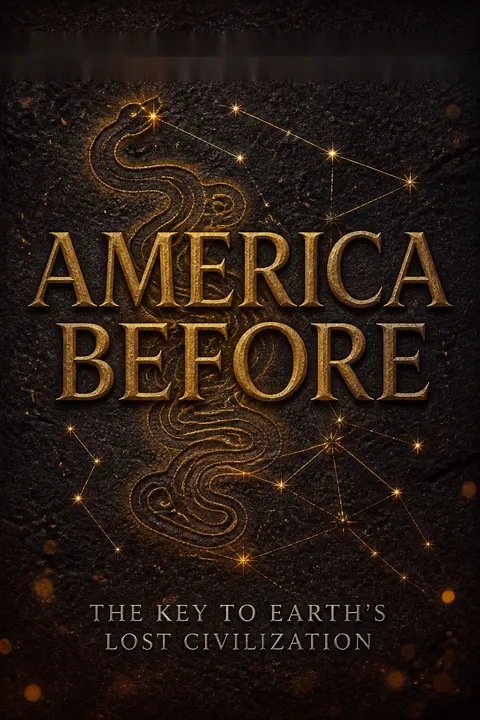
The book’s central proposal. Graham Hancock argues that a sophisticated civilization may have flourished in the Americas before the end of the last Ice Age. He connects ancient maps, monumental earthworks, unusual genetic findings, Amazonian agriculture, and shared afterlife imagery to propose a common source behind cultures separated by time and distance. The Younger Dryas catastrophe, around 12,800 years ago, supplies his candidate for how that civilization disappeared.
A hypothesis, not a discovery. The book offers no securely identified city, artifact assemblage, or human remains belonging to this proposed civilization. Instead, Hancock builds an interpretive case from clues that he believes conventional archaeology has overlooked. That distinction matters: the evidence for ancient American peoples and impressive societies is far stronger than the evidence for a lost global civilization.
The book’s appeal lies in its ambition: it asks whether seemingly separate clues form a larger pattern, rather than treating each as an isolated curiosity. That is a legitimate way to generate research questions. But a compelling pattern is not yet proof of a common cause. Historical inference is strongest when independent evidence converges on a specific, testable prediction, such as a securely dated site with distinctive features. Here, the proposed civilization explains many different phenomena, but its lack of a diagnostic archaeological footprint leaves the thesis open rather than established.
Clovis was not first: Monte Verde pushes settlement back at least 18,500 years
A settled timeline changed. The Clovis culture, known for distinctive fluted stone points, was once widely treated as the first human presence in the Americas, around 13,000 years ago. Sites including Monte Verde in Chile, Meadowcroft in Pennsylvania, and Bluefish Caves in the Yukon challenged that account. The book highlights Monte Verde’s evidence for human activity around 18,500 years ago and Bluefish Caves’ reported evidence older than 24,000 years.
Claims vary in strength. Hancock also discusses Topper, where Al Goodyear reports artifacts dating to about 50,000 years ago, and the Cerutti Mastodon Site in California, whose researchers argue that humans modified bones 130,000 years ago. Those much older claims are disputed. Their significance is not that they prove a civilization, but that they make the peopling of the Americas an active scientific question.
The collapse of a rigid first-arrival model is a useful lesson in how science corrects itself: new sites can invalidate a chronology that once appeared secure. Yet “Clovis was not first” does not mean every proposed pre-Clovis date is equally credible. Archaeologists assess stratigraphy, dating methods, tool marks, and alternative natural explanations site by site. The distinction between a robust earlier occupation and a highly controversial extreme date is essential. A more complicated timeline widens the questions; it does not automatically validate the book’s answer to them.
Ancient DNA reveals tangled migrations, not a clean Siberia-to-America story
Genomes complicate the map. DNA from a 24,000-year-old Siberian child known as MA-1 links ancient Siberian ancestry to Native Americans and to populations related to western Eurasians. The genome of Anzick-1, a child buried with Clovis artifacts in Montana, is more closely related to South American Indigenous groups than to many North American groups. Researchers have also detected an Australasian-related genetic signal among some Indigenous peoples of the Amazon.
The route remains unresolved. Geneticists disagree about whether the Amazonian signal reflects one founding population, later gene flow, population structure in Asia, or another migration. One proposed label, Population Y, names a hypothesized ancestral lineage, not a known tribe or confirmed ocean-crossing party. The book emphasizes a trans-Pacific voyage, but the genetic results alone do not establish one.
Ancient DNA is powerful because it can reveal ancestry that left few visible traces, but genetic affinity is not a travel diary. A shared signal may arise through several migration and interbreeding histories, especially when populations mix repeatedly across long periods. The Amazonian finding is a real puzzle in the book’s account, and preserving uncertainty is more informative than forcing it into a single route. The strongest conclusion is that the peopling of the Americas involved more population structure and complexity than a simple one-wave story suggests.
Amazonian cities and black earth overturn the rainforest-as-wilderness stereotype
A managed landscape. Early Spanish accounts describe populous settlements, roads, abundant food, and political territories along the Amazon. Later epidemics and violence sharply reduced Indigenous populations, helping make once-inhabited areas appear empty to subsequent visitors. Archaeology now supports the existence of substantial pre-Columbian societies in parts of Amazonia, though the scale of particular settlements remains debated.
The soil tells another story. Amazonian Dark Earths, often called terra preta, are unusually fertile soils enriched through human activity. They contain charcoal, pottery fragments, food remains, and other materials, and can retain nutrients far better than many surrounding soils. Evidence of plant domestication and human influence on forest composition adds to the picture of a cultivated landscape. The exact origins and formation processes of these soils remain unsettled.
This is among the book’s strongest corrections to an older stereotype: dense forest does not mean untouched nature, and poor soils do not make complex societies impossible. Archaeology and ecology together show that people shaped forests and soils over long periods. The caution concerns intent and scale. Human-made soil does not, by itself, reveal whether its ingredients were deliberately engineered for agriculture or accumulated through settlement practices. Likewise, early colonial descriptions are valuable witnesses, but their population estimates require careful corroboration.
Read ancient alignments as evidence of skill, not proof of a vanished world
Careful building is clear. Serpent Mound in Ohio aligns with the summer solstice sunset, and its construction history includes multiple episodes of rebuilding or repair. At Watson Brake in Louisiana, a mound complex built by hunter-gatherers more than 5,000 years ago appears to incorporate solar alignments. The Hopewell earthworks at Newark and High Bank in Ohio show geometric planning and alignments to extreme positions of the Moon during its 18.6-year cycle.
Interpretation is another step. Such measurements suggest that builders could observe the sky, plan large projects, and pass knowledge across generations. Hancock treats recurring geometry and astronomy as evidence of a shared ancient system. The sites themselves demonstrate sophisticated design, but similarities do not establish that one lost civilization supplied their plans.
Archaeoastronomy is most persuasive when a proposed alignment is precise, independently measurable, and supported by several features rather than selected after the fact. The sites described here make a strong case that ancient builders paid sustained attention to celestial cycles. Their social meaning is harder to recover, especially where later repairs and incomplete surveys complicate dating. Similar monuments can emerge independently when communities watch the same sky and use similar geometric reasoning. The evidence supports skill and cultural importance more directly than a worldwide source.
Mississippi mound traditions connect astronomy, geometry, and the afterlife
A journey through the sky. Mississippian imagery and Indigenous oral traditions describe the Milky Way as a path for the dead. Some accounts connect the soul’s passage to Orion, a celestial opening, and trials on the way to the afterlife. At Moundville in Alabama, a carved stone disk combines serpents with a hand-and-center motif interpreted by researchers as a representation of the night sky and a portal for souls.
A comparison, not a proven contact. Hancock notes parallels with ancient Egyptian funerary texts, which also describe a soul’s journey involving Orion and the Milky Way. He argues that both traditions may preserve elements of a remote shared system. The book acknowledges major cultural differences and the absence of a plausible direct link between Egypt and the much later Mississippian civilization.
The comparison is evocative because both traditions make the visible night sky part of a moral and spiritual geography. It also shows how oral history, art, and architecture can preserve ideas that excavated objects alone cannot explain. However, Orion and the Milky Way are conspicuous features available to any culture with clear skies. Similar human concerns about death can produce parallel symbols without shared ancestry. A remote connection remains one possible interpretation, but it needs evidence more distinctive than broad similarities in celestial storytelling.
The Younger Dryas impact theory links a 12,800-year-old catastrophe to extinctions
A sudden environmental shock. Around 12,800 years ago, the climate shifted abruptly into the Younger Dryas cold period. In North America, Clovis artifacts and many megafaunal remains occur below or near a widespread dark sediment layer. Researchers who support the Younger Dryas Impact Hypothesis point to platinum, microscopic spheres, melt materials, and signs of extensive burning as evidence of extraterrestrial impacts. They propose that impacts destabilized ice sheets, triggered floods and fires, and contributed to extinctions.
The cause remains contested. Hancock presents the hypothesis as a coherent explanation for several dramatic changes occurring close together. The book also describes a dispute among researchers over the interpretation of the evidence and proposed mechanisms. The abrupt climate shift and extinctions are not the same claim as a comet swarm causing them.
The hypothesis gains force from attempting to explain several signals at once, rather than treating each as unrelated. But synchrony is not causation, and impact proxies require careful replication, dating, and geological interpretation. The distinction between an established climate transition and a disputed trigger is crucial. A strong scientific test would compare predictions of impact, meltwater, fire, and other explanations across independently sampled locations. The book’s account is useful for showing why the debate matters, though its confidence in a single catastrophic mechanism exceeds what the presented uncertainty can settle.
Treat cross-cultural patterns as leads to test, not conclusions about lost origins
The grand synthesis. Hancock links geometric earthworks in the Americas and Amazonia, ancient maps that he believes portray Ice Age shorelines, unusual genetic signals, and afterlife traditions. He proposes that survivors of a lost American civilization carried knowledge to other societies after the Younger Dryas catastrophe. The book even speculates that this civilization may have used forms of science that modern archaeology would not recognize.
The evidence has limits. The maps’ proposed antiquity and interpretation are disputed, and the book does not identify a securely dated homeland or diagnostic remains of the civilization. Its strongest evidence establishes ancient human presence, complex societies, astronomical planning, and deliberate environmental management. The lost civilization is Hancock’s explanation for those findings, not a consensus conclusion drawn directly from them.
The synthesis is a productive generator of questions, but it risks treating resemblance as a fingerprint of transmission. This is a classic problem of equifinality: different histories can produce similar outcomes. A persuasive case would need predictions that distinguish inheritance from independent invention, such as uniquely shared technical procedures or securely dated artifacts appearing along a plausible route. The proposal should remain open to investigation without being confused with established archaeology. That standard protects both the genuine surprises in American prehistory and the credibility of claims about their origins.
Analysis
America Before is part travel narrative, part survey of archaeology and genetics, and part speculative reconstruction. Its strength is the insistence that the American past is not a short prelude to European arrival. Pre-Clovis sites, Indigenous landscape management, Amazonian earthworks, and major mound complexes expose how much was erased, underfunded, or once dismissed. The book also makes a valuable case for treating the sky, soil, oral tradition, and ancient DNA as evidence worth studying together.
Its central weakness is a shift in evidentiary scale. Findings that support old human presence or sophisticated regional societies are repeatedly recruited to support a much larger claim: a globally connected Ice Age civilization, with North America as its likely homeland. Yet the connecting evidence is often ambiguous. A celestial alignment can show deliberate planning without demonstrating common instruction; a genetic affinity cannot specify a route; a shared afterlife motif can reflect common human experience as well as inheritance. The book recognizes some uncertainty but frequently treats the most dramatic interpretation as the best fit before alternatives have been excluded.
A useful reading therefore separates three levels: well-supported revisions to American prehistory, active disputes about particular sites and causes, and Hancock’s overarching lost-civilization hypothesis. The first deserves attention in its own right. The second calls for transparent discussion of dating, context, and competing explanations. The third is a provocative research program, not a demonstrated historical fact. This distinction does not diminish the wonder of ancient American achievements. It makes that wonder more precise, and keeps real discoveries from carrying conclusions they cannot yet bear.
Review Summary
America Before explores ancient civilizations in the Americas, challenging conventional theories about human arrival and development. Hancock presents evidence of advanced societies predating known history, discussing archaeological sites, genetic studies, and astronomical alignments. While some readers praise the book's thought-provoking ideas and extensive research, others criticize its speculative nature and lack of scientific rigor. The book's strengths lie in highlighting new discoveries and questioning established paradigms, but its conclusions about lost civilizations and psychic abilities are controversial.
People Also Read






Glossary
Clovis First
the former first-arrival modelA once influential archaeological model holding that the Clovis culture, identified by distinctive fluted stone points and dated to roughly 13,000 years ago, represented the earliest human presence in the Americas. Evidence from older sites, including Monte Verde, undermined this model. Clovis First is now rejected as a general account, though the dates and interpretations of individual pre-Clovis sites remain debated.
Younger Dryas Impact Hypothesis
a proposed comet-impact causeA hypothesis that fragments of a comet or other extraterrestrial material struck Earth around 12,800 years ago, contributing to abrupt cooling at the beginning of the Younger Dryas, widespread fires, floods, and megafaunal extinctions. Supporters cite platinum and other impact-related materials in dated sediments. The hypothesis and interpretation of its evidence remain contested.
Amazonian Dark Earths
human-enriched fertile Amazon soilsUnusually dark, fertile soils found in parts of the Amazon basin, also called terra preta. They contain charcoal and materials associated with past human activity, including pottery and food remains, and can retain nutrients better than many surrounding soils. Researchers agree that people contributed to their formation, but the processes, purposes, and earliest dates of formation remain under investigation.
Population Y
a proposed ancestral lineageA label genetic researchers gave to a hypothesized ancestral population related more closely to Indigenous Australians, New Guineans, and Andaman Islanders than to most present-day Eurasians or Native Americans. The label derives from a Tupi word meaning ancestor. It describes an inference from genetic patterns in some Indigenous South American populations, not an identified historical people or a confirmed migration route.
lunar standstill
the Moon’s extreme horizon positionsA recurring astronomical event associated with the Moon’s 18.6-year cycle. At maximum and minimum standstill, the Moon reaches its farthest north or south rising and setting positions on the horizon. The book discusses proposed alignments to these extremes at the Newark and High Bank earthworks in Ohio, where researchers interpret the geometry as deliberate.
Manitou
a spiritual presence or powerA term used by some Indigenous North American peoples for spiritual power or presence, which may be associated with a being, natural feature, place, or human-made object. In Hancock’s discussion of Serpent Mound, the term frames the landscape as spiritually alive. Its meanings vary across communities and should not be treated as one universal Indigenous doctrine.
FAQ
What is America Before: The Key to Earth's Lost Civilization by Graham Hancock about?
- Investigation of lost civilizations: The book explores the possibility that advanced civilizations existed in the Americas long before mainstream archaeology acknowledges, challenging the "Clovis First" model and traditional timelines.
- Interdisciplinary evidence: Hancock draws on archaeology, genetics, astronomy, linguistics, and ancient cartography to build his case for a much older and more complex human history in the Americas.
- Focus on monumental sites and events: Key topics include the Serpent Mound, Amazonian geoglyphs, the Younger Dryas comet impact, and the cultural and genetic links between distant regions.
Why should I read America Before by Graham Hancock?
- Challenges conventional history: The book offers a compelling critique of established archaeological paradigms, encouraging readers to reconsider what is known about the origins of civilization in the Americas.
- Rich, interdisciplinary narrative: Hancock synthesizes data from multiple scientific fields, making complex topics accessible and engaging for those interested in ancient mysteries and lost civilizations.
- Engaging storytelling: Personal field research, interviews with scientists, and vivid descriptions of ancient sites bring the narrative to life.
What are the key takeaways from America Before by Graham Hancock?
- Ancient human presence: Evidence suggests humans inhabited the Americas far earlier than traditionally believed, possibly over 130,000 years ago.
- Lost civilizations and advanced knowledge: Monumental earthworks, sacred geometry, and ancient maps point to sophisticated prehistoric societies with advanced astronomical and cartographic skills.
- Cultural and genetic connections: Linguistic diversity, genetic signals, and shared cultural practices indicate ancient links between the Americas, Australasia, and other regions.
How does Graham Hancock in America Before challenge the traditional timeline of human presence in the Americas?
- Pre-Clovis archaeological sites: Discoveries like the Cerutti Mastodon Site (130,000 years old) and Monte Verde (Chile) provide evidence of human activity long before the Clovis culture.
- Genetic anomalies: DNA studies reveal complex ancestries in Native Americans, including Denisovan and Australasian genetic signals, suggesting multiple migration waves.
- Reevaluation of migration models: Hancock discusses alternative theories such as coastal migrations and possible transoceanic voyages, challenging the Bering land bridge-only model.
What is the significance of the Serpent Mound in America Before by Graham Hancock?
- Astronomical alignment: The Serpent Mound is precisely aligned with the summer solstice sunset, indicating advanced astronomical knowledge among its builders.
- Multiple construction phases: Radiocarbon dating suggests the mound was built and renovated over thousands of years, possibly reflecting a continuous sacred tradition.
- Spiritual and symbolic importance: The mound is considered a "Manitou," a sacred force linking earth and sky, and is built on a natural ridge with features interpreted as entrances to the underworld.
What are Amazonian geoglyphs and terra preta, and why are they important in America Before?
- Geoglyphs as monumental earthworks: Massive geometric earthworks in the Amazon, some dating back 2,500–4,000 years, reveal advanced monument-building societies with ceremonial and astronomical functions.
- Terra preta as engineered soil: Amazonian Dark Earths are man-made, highly fertile soils that supported large populations and intensive agriculture, indicating sophisticated ecological knowledge.
- Implications for civilization: These discoveries challenge the idea of a sparsely inhabited Amazon and suggest the existence of complex, urbanized societies before European contact.
How does America Before by Graham Hancock explain the genetic heritage and anomalies in Native American populations?
- Dual ancestry: Native Americans have genetic roots in both East Asian Siberian and Australo-Melanesian-related populations, indicating complex migration histories.
- Denisovan and Neanderthal DNA: Small percentages of archaic hominin DNA in Native Americans point to ancient interbreeding events.
- Multiple migration waves: The genetic evidence supports scenarios involving coastal, inland, and possibly transoceanic migrations, rather than a single migration event.
What is the Younger Dryas Impact Hypothesis and its role in America Before by Graham Hancock?
- Catastrophic comet impact: Around 12,800 years ago, Earth was struck by comet fragments, causing abrupt climate change, mass extinctions, and the collapse of Ice Age civilizations.
- Evidence from geology and ice cores: Layers rich in impact proxies (nanodiamonds, platinum) and widespread biomass burning support the hypothesis.
- Impact on human history: Hancock argues this event destroyed an advanced North American civilization, erasing much of its physical evidence and shaping subsequent cultural developments.
How does America Before by Graham Hancock connect ancient American and Egyptian beliefs about the afterlife?
- Shared cosmological motifs: Both cultures believed in a soul’s journey through the sky, passing through Orion and along the Milky Way, facing trials and guardians.
- Symbolic architecture: Monumental structures in both regions are aligned with celestial events and replicate the "Land of the Dead" in the sky.
- Parallel spiritual systems: The "Hand-and-Eye" motif at Moundville and Egyptian afterlife texts reflect a universal cosmological blueprint.
What is the significance of men’s cults and cultural parallels between Amazonia and Melanesia in America Before?
- Secret societies and rituals: Both regions feature men’s cults with initiation rituals, gender separation, and symbolic objects like bullroarers and flutes.
- Shared myths and social systems: Myths explaining gender dominance and similar egalitarian social structures suggest deep-rooted cultural connections.
- Anthropological implications: These parallels, along with genetic links, point to ancient diffusion or shared origins rather than isolated development.
How does America Before by Graham Hancock interpret the role of sacred geometry and astronomy in ancient American civilizations?
- Monumental alignments: Earthworks and mounds in North and South America are precisely aligned to solstices, equinoxes, and lunar cycles, reflecting advanced archaeoastronomical knowledge.
- Sacred geometry as a meme: Hancock proposes that geometric and astronomical motifs are cultural "memes" inherited from a lost global civilization.
- Spiritual and ritual significance: These alignments and forms were integral to religious practices, cosmology, and the construction of sacred spaces.
What evidence does America Before by Graham Hancock present regarding ancient maps and Ice Age geography?
- Sixteenth-century maps with Ice Age features: Maps like the Waldseemüller World Map depict coastlines and islands matching Ice Age geography, suggesting access to ancient source maps.
- Hypothesis of lost cartographic knowledge: Hancock argues these maps may have been copied from originals created by a prehistoric civilization with advanced maritime and mapping skills.
- Implications for seafaring and exploration: The accuracy of these maps supports the idea of global exploration and knowledge transmission long before recorded history.
About the Author

Download PDF
Download EPUB
.epub digital book format is ideal for reading ebooks on phones, tablets, and e-readers.








