

Key Takeaways
Use visionary experience as evidence to investigate, not proof to accept
A night changed the inquiry. Graham Hancock describes taking ibogaine, a powerful hallucinogen derived from an African shrub, while grieving his father. The experience was physically punishing and brought visions of the dead. Afterwards, he felt a marked easing of his depression and guilt. He could not determine whether that change came from contact with a spirit world or from altered brain chemistry, but the experience made him take the question seriously.
Experience is not explanation. This distinction drives the book: a vision can be psychologically real and consequential without proving that its apparent beings exist outside the mind. Hancock uses his own encounters to motivate research, not to claim certainty about what caused them.
The opening is strongest when it treats personal experience as a reason to ask better questions, not as a shortcut to metaphysical certainty. Bereavement can make contact with the dead especially compelling, while the emotional relief after a drug experience can arise through several mechanisms. Those possibilities do not invalidate the experience; they make careful interpretation more important. The same discipline applies to any intense state: describe what happened, track its effects, and keep conclusions proportional to the evidence.
Read cave art as possible trance records, not merely hunting magic
The caves preserve a puzzle. At Pech Merle in France, artists entered deep, dark chambers to paint animals, abstract marks, and unusual human-animal figures. Some images were placed where reaching them required difficult movement through the cave. The art appeared in Europe roughly 40,000 to 30,000 years ago, during a major expansion of symbolic behavior. A simple theory that the paintings were hunting magic struggles to explain the supernatural figures and the settings in which the works were made.
A trance-based account. Archaeologist David Lewis-Williams argues that altered states of consciousness can produce geometric visual patterns and vivid beings, including therianthropes, figures combining human and animal traits. On this account, cave images may record visions rather than ordinary scenes. It is a persuasive interpretation, but the artists left no written explanation of their intentions.
The location of an image is evidence, not decoration. A difficult-to-reach chamber changes the likely purpose of a painting and invites questions about ritual, access, and authority. The neuropsychological account also connects visual experience to material culture in a testable way: recurring patterns can be compared across sites and with reported trance imagery. Its limit is that resemblance cannot establish that a particular artist was hallucinating. Archaeology gains most when this model is tested against competing explanations rather than treated as a complete decoding key.
Shared trance states may have turned isolated visions into religion
A common human capacity. An altered state of consciousness is a condition in which ordinary perception and awareness change, sometimes producing vivid imagery, unusual bodily sensations, or a sense of leaving the body. Such states can follow hallucinogens, rhythmic dancing, sensory deprivation, fasting, or other intense conditions. Because human neurology is broadly shared, Hancock argues that prehistoric people could have had experiences resembling those reported by shamans today.
From rare to communal. The book proposes that some individuals may enter deep trance spontaneously, while reliable techniques allowed others to do so as well. When visions once limited to a few could be shared by a community, their stories and images might have shaped common beliefs. Hancock links this possibility to the rise of art and religion, while acknowledging that the proposed evolutionary trigger remains an interpretation, not a demonstrated cause.
This argument offers a useful social mechanism: a private experience becomes culturally powerful when a group shares ways to induce, interpret, and remember it. Anthropology often distinguishes the event itself from the institution built around it; repeated ritual can stabilize meaning even when participants interpret visions differently. The proposed leap from shared trance to a species-wide cultural transformation is much harder to establish. Similar practices can produce different institutions, so the hypothesis is strongest as a possible catalyst rather than a single explanation for human creativity.
Compare spirits, fairies, and aliens before dismissing recurring reports
A repeated pattern. Hancock compares shamanic encounters with spirits, historical accounts of fairies, and modern reports of alien abduction. Across these settings, people describe small or shape-shifting beings, unusual journeys to caves or the sky, bodily procedures, and missing time. The cultural labels differ, but the similarities are striking enough to raise a real question about why these stories recur.
A survey, not a verdict. A 1991 Roper Organization survey found that about 2 percent of U.S. adults reported at least four of five experiences associated by the researchers with abduction accounts, such as waking paralyzed or finding unexplained scars. The survey did not verify that abductions happened. It measured reported experiences, which Hancock places beside older folklore and ethnography to argue for serious investigation.
Cross-cultural comparison can reveal patterns that single-discipline research misses, especially when the same unusual details recur in independent traditions. It can also mislead: researchers may select the most similar cases, overlook differences, or translate local concepts into familiar modern categories. The Roper result is particularly easy to overread because its indicators were not proof of alien contact. The responsible conclusion is narrower and still important: many people report experiences that deserve careful study, regardless of whether their preferred explanation is correct.
DMT turns the hallucination debate into a question about perception
A controlled encounter. Psychiatrist Rick Strassman gave DMT, a fast-acting hallucinogen also found in plants and in small quantities in the human body, to volunteers in a monitored research setting. Some described encounters with intelligent beings, technological rooms, and procedures resembling those reported by people who believe they have been abducted. Hancock recounts these reports because they make the same kinds of experiences accessible for study without requiring a physical UFO encounter.
Cause is not content. DMT can help explain how an experience begins, but it does not establish whether the beings perceived are only mental constructions or exist independently. Strassman considers the possibility that the brain acts as a receiver whose range can be altered. Hancock finds that possibility compelling, while the book offers no instrument or test that confirms an external realm.
A drug-induced experience can be both biologically caused and meaningful to the person having it. That distinction prevents a false choice between dismissing visions as meaningless and accepting their contents as literal fact. Strassman's work makes the question experimentally tractable, but repeated reports of beings do not prove that beings exist outside the participants' minds. A strong research program would separate pharmacology, subjective report, and claims about external reality, measuring each with methods suited to that specific question.
Follow the hybrid-child motif across centuries, but separate pattern from proof
Reproduction recurs. In shamanic accounts, spirits may become lovers or spouses and produce hybrid offspring. European fairy stories describe changelings, while modern abduction reports include alien-human babies and women asked to nurse them. Hancock sees a striking continuity in the idea that non-human beings seek intimate contact with people and create offspring that are often described as frail, unusual, or partly human.
The story also changes. Fairy lore includes children taken away or replaced, while modern accounts more often describe babies shown to abductees during brief visits. Hancock interprets this as an evolving pattern, perhaps reflecting changing forms of contact. These are reports and traditions, not verified biological events. Similar story elements may indicate shared experience, cultural transmission, or both, and the available evidence cannot decide among them.
Reproductive motifs are unusually revealing because they connect private visions to kinship, identity, and social anxiety. The comparison also draws attention to change within traditions, rather than treating folklore as a frozen archive. Yet stories about strange offspring can express fears about illness, birth, and family difference without recording literal hybrids. The book's comparative method is valuable for generating questions; its account of a single evolving non-human project remains speculative and should not be mistaken for a confirmed history.
Look for shamanic experience beneath the world's formal religions
Religions begin with encounters. Hancock argues that major traditions often start with a person who reports direct contact with a supernatural being or realm, followed by institutions that preserve and interpret the experience. He reads Christian accounts of visions and healing, the journeys of ancient Egyptian souls through the Duat, and the Maya stories of descent into Xibalba as retaining shamanic themes: transformation, encounters with non-human beings, and journeys through the afterlife.
Hallucinogens may matter. The Maya used psychoactive plants and mushrooms in religious practice, and their art depicts visionary creatures. Hancock also presents the water lily as a possible Egyptian hallucinogen and ergot as a possible ingredient in the Greek Eleusinian potion. The evidence differs in strength across these cases. The book's broader point is that religious experience may be rooted in altered consciousness, even when the later institution no longer uses those methods.
The distinction between founding experience and later religious administration clarifies how a living encounter can become doctrine, ceremony, and authority. It also encourages historians to examine the sensory and material conditions of ritual, not only its texts. The comparative reach is ambitious, and the evidence is uneven: hallucinogen use is well established in some American contexts, while claims about Egypt and Eleusis are debated. Similar spiritual themes alone cannot prove that the same technique or substance produced them.
Treat DNA's mysterious regions as unknown, not encoded revelation
A provocative possibility. Hancock explores Jeremy Narby's suggestion that ayahuasca visions may reveal information associated with DNA. The book notes that much human DNA does not code for proteins and that a 1994 study found tested non-coding sequences followed a statistical pattern, Zipf's Law, also observed in human language. Some researchers suggested this pattern might indicate structured information. Hancock connects that possibility to recurring visions of serpents and double-helix forms.
A long leap remains. The book speculates that intelligent entities may have placed messages in DNA and that altered states allow people to access them. Neither a language-like statistical pattern nor a DNA vision demonstrates that messages exist, much less that shamans can read them. The idea is presented as a way to explain recurring imagery and knowledge, not as an established scientific finding.
The distinction between unexplained function and hidden message is essential. A biological sequence can have statistical structure without being a language, and a language-like pattern does not by itself identify an author or intended reader. The analogy between DNA and an information archive is stimulating, but it risks turning every unknown into evidence for design. The most productive version of the hypothesis would specify what information should be recoverable and how an independent observer could verify it.
Test the brain-as-receiver idea without treating it as established science
Two models of mind. The standard view discussed in the book treats the brain as generating hallucinations from its own activity. The receiver model instead proposes that the brain filters or receives a wider field of consciousness, and that DMT or other methods temporarily change what it can perceive. Hancock links this possibility to reports of similar beings and realms across cultures, and to older proposals by thinkers including William James and Aldous Huxley.
An open question, not a finding. The book argues that science has not fully explained consciousness or hallucination, so external realities should not be ruled out in advance. That is a case for inquiry, not evidence that the receiver model is true. The safest practical lesson is to keep experience, possible mechanism, and metaphysical interpretation distinct, especially when powerful drugs and serious physical risks are involved.
The receiver model is intellectually useful because it exposes an assumption often hidden inside discussions of hallucination: that the brain must manufacture every perceived object. But the alternative model also needs positive evidence; gaps in neuroscience do not automatically support an external source. A fruitful approach compares predictions. If perception is receiving information from outside the person, it should sometimes yield independently checkable information unavailable through ordinary means. Without such tests, the model remains a philosophical possibility rather than a scientific conclusion.
Analysis
The book's distinctive move is to connect three bodies of material that are usually kept apart: prehistoric art, shamanic practice, and modern reports of alien encounters. Its narrative begins with Hancock's own hallucinogen experiences, then uses archaeology and cross-cultural reports to build a case that altered states have shaped religion and perhaps human cultural evolution. The strongest link is the modest one: altered states can produce vivid, patterned experiences, and human beings have used those experiences to make art, ritual, and shared accounts of supernatural worlds.
The argument becomes less secure as it moves from the origin of visions to the ontology of their contents. Recurring imagery across cultures is suggestive, but comparison cannot establish that the same external beings caused each report. Selection effects, inherited storytelling, similar human nervous systems, and later reinterpretation all remain possible. Likewise, evidence for hallucinogen use among the Maya does not establish equivalent use in every ancient religion, and a statistical property of non-coding DNA does not demonstrate a hidden message. The book often signals uncertainty, but its narrative momentum can make speculation feel more settled than it is.
Its lasting contribution is therefore not a proof of spirits, fairies, aliens, or intelligent DNA. It is a challenge to treat visionary experience as a serious subject rather than dismissing it by definition. The most productive legacy would combine the author's comparative curiosity with stricter distinctions among observation, interpretation, and explanation. Carefully designed research can investigate drug effects and reported experiences while protecting participants and respecting cultural contexts. Such work need not accept supernatural claims in advance, nor exclude them by fiat. It can ask what is experienced, how experience changes behavior and belief, and which claims can be independently tested. That is a more durable inquiry than either credulity or reflexive ridicule.
Review Summary
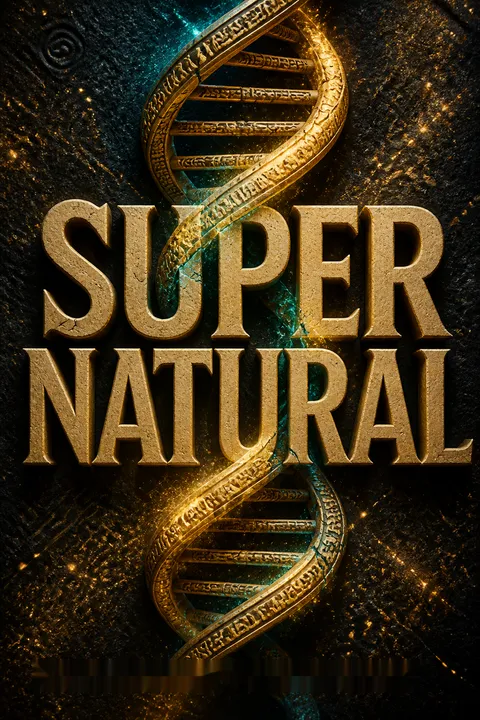
Supernatural by Graham Hancock explores the connection between ancient cave art, shamanic practices, and altered states of consciousness. Readers find the book thought-provoking, well-researched, and controversial. Hancock's personal experiences with psychedelics and his theories about DNA, UFOs, and fairies intrigue some readers while others find them far-fetched. The book's strengths lie in its exploration of prehistoric art and shamanic traditions, but some criticize its length and speculative nature. Overall, it challenges conventional thinking about human history and consciousness.
People Also Read



Glossary
Altered states of consciousness
Changed modes of awarenessStates in which ordinary perception, attention, bodily awareness, or sense of self changes. In the book, they include experiences induced by hallucinogenic plants, rhythmic dancing, sensory deprivation, fasting, or other intense conditions. They are central to the proposed origins of shamanic visions and prehistoric religious art.
Neuropsychological model
Trance-based cave-art explanationDavid Lewis-Williams's account of prehistoric art as an expression of experiences arising in altered states of consciousness. It links abstract visual patterns to neurological effects and interprets some human-animal figures as images of beings seen during trance. Hancock uses it to connect cave art with shamanic practice.
Entoptic phenomena
Internally generated visual patternsGeometric or luminous forms, such as grids, dots, zigzags, and lattices, reported during altered states of consciousness. Lewis-Williams treats these patterns as associated with the visual system and proposes that prehistoric artists represented them in rock and cave art, sometimes alongside more recognizable beings.
Therianthrope
Human-animal hybrid figureA figure that combines human and animal characteristics, or appears to transform between them. The term is used for imagery in prehistoric cave art, shamanic visions, and later religious traditions. Hancock emphasizes its recurrence as a possible sign of visionary experience, while the images' original meanings remain uncertain.
Ayahuasca
Amazonian visionary brewA hallucinogenic drink traditionally prepared by combining the Banisteriopsis caapi vine with leaves from a DMT-containing plant such as Psychotria viridis. The vine contains compounds that allow orally consumed DMT to remain active. Amazonian shamans use the brew in healing and ritual, and Hancock describes his own sessions with it.
DMT
Fast-acting hallucinogenic compoundN,N-dimethyltryptamine, a powerful hallucinogen found in some plants and in small quantities in the human body. It is a principal psychoactive component of ayahuasca when combined with compounds that make it active orally. Rick Strassman's research examined volunteers' experiences after controlled doses of DMT.
Plant teachers
Plants as sources of knowledgeA term used for the Amazonian belief that psychoactive plants, especially ayahuasca, can communicate knowledge to shamans. Practitioners describe learning about healing, plant properties, diagnosis, and ritual through visions and encounters. The book presents this as a culturally important interpretation, not as a scientifically verified transfer of information.
Zipf's Law
Word frequency-rank relationshipA statistical relationship observed in human-language texts: the frequency of a word tends to be inversely related to its rank in a frequency list. The book discusses a study reporting that some tested non-coding DNA sequences showed a similar pattern. The finding does not establish that DNA is a language or contains intentional messages.
Duat
Egyptian afterlife realmThe ancient Egyptian realm through which the deceased was believed to travel after death. Religious texts describe its gates, dangers, beings, and routes, and provide knowledge meant to guide the dead. Hancock interprets these accounts as preserving imagery associated with shamanic journeys and altered states.
Roper Organization surveys
Poll of unusual experiencesA set of 1991 U.S. surveys commissioned by researchers examining experiences associated with alleged UFO abductions. About 2 percent of adult respondents reported at least four of five selected indicators, including waking paralyzed or finding unexplained scars. The result measured self-reported experiences, not verified abductions.
FAQ
What is Supernatural: Meetings with the Ancient Teachers of Mankind by Graham Hancock about?
- Exploration of ancient encounters: The book investigates humanity’s earliest and ongoing encounters with supernatural beings—spirits, fairies, and aliens—through shamanic experiences, altered states, and visionary art.
- Interdisciplinary research: Hancock combines archaeology, anthropology, neuropsychology, ethnobotany, and personal experimentation to explore the origins of religion, symbolic behavior, and consciousness.
- Challenge to materialism: The author questions the strictly materialist worldview, suggesting that altered states may reveal genuine parallel dimensions or realities, not just hallucinations.
- Continuity across cultures: The book links prehistoric cave art, ancient mystery cults, and modern UFO abductions as expressions of a single, protean supernatural phenomenon.
Why should I read Supernatural by Graham Hancock?
- Reveals hidden spiritual roots: The book uncovers the shamanic origins of major world religions and shows how ancient visionary practices shaped sacred traditions and symbols.
- Bridges ancient and modern mysteries: Hancock connects prehistoric cave art and ancient rituals with contemporary reports of UFOs, alien abductions, and fairy encounters, offering a unified perspective on supernatural experiences.
- Scientific and spiritual insights: The book presents cutting-edge research on brain chemistry and hallucinogens, challenging conventional scientific paradigms about consciousness and reality.
- Encourages open-minded exploration: Readers are invited to reconsider the nature of consciousness and the possibility of real supernatural realms, fostering a respectful and inquisitive approach to mystical experiences.
What are the key takeaways from Supernatural by Graham Hancock?
- Supernatural encounters are universal: Experiences with spirits, fairies, and aliens share deep structural similarities and have influenced human culture for tens of thousands of years.
- Altered states unlock hidden realities: Psychoactive plants and trance states provide access to other dimensions and intelligent beings, which may be encoded in our DNA.
- Human evolution and the supernatural: Encounters with supernatural teachers may have catalyzed the emergence of modern human consciousness, art, and religion.
- Integration of science and spirituality: Hancock calls for open-minded research that bridges materialist science and spiritual traditions to better understand the impact of supernatural realms on humanity.
How does Graham Hancock in Supernatural explain the origins of religion and symbolic behavior in humans?
- Symbolic revolution: Around 40,000 years ago, humans began expressing complex symbolic thought through cave art and ritual, marking the birth of religion and modern behavior.
- Role of psychoactive plants: The use of hallucinogenic plants likely triggered altered states of consciousness, inspiring early religious beliefs and artistic expression.
- Universal neurological basis: The structure of the human brain has remained stable, making visionary experiences and their symbolic representations universal and timeless.
- Shamanic roots of religion: Hancock argues that all major religions originated from the direct supernatural experiences of shamans, later institutionalized by organized religions.
What is the neuropsychological theory of cave art presented in Supernatural by Graham Hancock?
- Altered states as inspiration: The theory, developed by David Lewis-Williams, suggests that Upper Paleolithic cave art represents visions seen by shamans in trance states, often induced by psychoactive plants.
- Entoptic phenomena and therianthropes: Geometric patterns and half-human, half-animal figures in cave art are interpreted as universal hallucinations and spirit beings encountered during altered consciousness.
- Caves as portals: Deep caves were chosen as sacred sites because they symbolized and facilitated entry into the spirit world, making them ideal canvases for visionary art.
- Continuity of motifs: The same visionary motifs appear in ancient art, shamanic traditions, and modern supernatural experiences, indicating a long-standing human engagement with altered states.
What role do altered states of consciousness and hallucinogens play in Supernatural by Graham Hancock?
- Catalyst for creativity and religion: Altered states, often induced by plant hallucinogens like ayahuasca and DMT, are proposed as the key to the emergence of symbolic art, religion, and modern behavior.
- Access to other realities: These states allow shamans and others to perceive and interact with parallel dimensions or spirit worlds, which are otherwise invisible in normal consciousness.
- Source of supernatural knowledge: Many teachings and revelations described in the book come from trance-induced encounters, interpreted as spirits, fairies, or aliens.
- Personal experimentation: Hancock personally experimented with substances like ibogaine and ayahuasca to validate these theories and gain firsthand insight into visionary states.
How does Supernatural by Graham Hancock link UFO abductions, fairies, and spirits across cultures and history?
- Shared core experiences: Hancock identifies deep structural similarities among UFO abductions, fairy folklore, and shamanic spirit encounters, including themes like therianthropic beings, hybrid children, and abduction settings.
- Cross-cultural and historical continuity: These phenomena appear consistently from Upper Paleolithic cave art to modern America, suggesting a single, evolving phenomenon rather than unrelated myths.
- Evolution of expression: While the core experience remains, its cultural expression has shifted—from spirits to fairies to aliens—adapting to the prevailing worldview of each era.
- Spiritual rather than extraterrestrial: Hancock and other researchers propose that these experiences may be manifestations of the same spirit world accessed via altered states, not literal alien visitations.
What is the significance of DMT and ayahuasca in Supernatural by Graham Hancock?
- DMT as the "spirit molecule": Psychiatrist Rick Strassman’s research shows that DMT induces experiences similar to UFO abductions and shamanic visions, suggesting a biochemical basis for these encounters.
- Ayahuasca as a gateway: The Amazonian brew ayahuasca, containing DMT, is used by shamans to access spirit realms and receive teachings, supporting the idea that these substances unlock hidden dimensions.
- Shared visionary motifs: Both DMT and ayahuasca experiences feature common imagery such as machine-like beings, serpents, and interactive information, linking ancient shamanism with modern psychedelic research.
- Endogenous production: DMT is naturally produced in the human brain, raising questions about its evolutionary purpose and role in spiritual experiences.
How does Supernatural by Graham Hancock interpret the presence of hybrid offspring in supernatural narratives?
- Universal theme of hybridization: Spirits, fairies, and aliens are all reported to mate with humans, producing hybrid children—a motif found worldwide and throughout history.
- Symbolic and evolutionary significance: The creation of hybrids may represent an ancient supernatural agenda to “strengthen their race,” possibly reflecting real or symbolic processes influencing human evolution.
- Care and nurturing: Hybrid offspring are often nurtured in special settings and require human contact, such as wetnursing, to survive, echoing motifs in both folklore and modern abduction accounts.
- Continuity of the motif: The hybridization theme links ancient myths, fairy tales, and contemporary UFO narratives, suggesting a persistent supernatural concern with human genetics.
What evidence does Supernatural by Graham Hancock present for the reality of spirit worlds and beings?
- Cross-cultural consistency: The book documents remarkably similar supernatural experiences—abductions, initiations, hybrid births—across unrelated cultures and epochs, challenging purely psychological explanations.
- Psychedelic research support: Modern studies with DMT and ayahuasca reproduce many of these experiences under controlled conditions, indicating they are not mere fantasy but linked to brain chemistry and possibly external realities.
- Limits of materialism: Hancock critiques the scientific dismissal of these phenomena as hallucinations, arguing for a “receiver” model of consciousness that can access parallel dimensions.
- Shamanic knowledge: The long-standing experiential knowledge of shamans is contrasted with scientific reluctance to engage personally with altered states, highlighting a gap in understanding.
How does Supernatural by Graham Hancock connect DNA and supernatural experiences?
- DNA as a coded message: The book explores the idea that vast portions of non-coding “junk” DNA exhibit language-like patterns, suggesting they may contain intelligent messages or information.
- Hallucinogens reveal DNA knowledge: Visionary experiences under ayahuasca and DMT often include imagery of serpents and double helices, implying that altered states may allow access to DNA-encoded knowledge.
- Directed panspermia: Hancock discusses Francis Crick’s theory that DNA was seeded on Earth by aliens, paralleling indigenous myths of ancient teachers and suggesting DNA may be a “technology” with embedded teachings.
- Interactive messages: Jeremy Narby’s hypothesis suggests that DNA contains interactive messages from “ancient teachers,” accessed in visionary states and explaining universal imagery.
What are the main theories about the nature of supernatural beings and realms in Supernatural by Graham Hancock?
- Multiple interpretations: Beings encountered in altered states have been called spirits, fairies, aliens, or DNA-encoded virtual teachers, reflecting different cultural and scientific perspectives.
- Extra-human realms: The book entertains the possibility that supernatural realms are real parallel dimensions inhabited by intelligent entities influencing human evolution and spirituality.
- Scientific challenges: Researchers like Rick Strassman and Benny Shanon acknowledge the difficulty of explaining these experiences solely as brain phenomena, opening the door to new models of consciousness and reality.
- Universal motifs: The recurrence of therianthropes, serpents, and hybrid beings in visionary experiences suggests a shared source or reality underlying global supernatural traditions.
About the Author
Download PDF
Download EPUB
.epub digital book format is ideal for reading ebooks on phones, tablets, and e-readers.








