

Plot Summary
Prologue
In 1930 Harlem, numbers runner Stephanie St. Clair calls on the demon Ahiku when Obeah threatens the business she has built. Stephanie offers Ahiku passage into America and directs her toward Obeah’s son, hoping to weaken her rival without sacrificing her nephew, Jamey.
Ahiku agrees to spare Jamey, but binds him to work for her in the human world. She promises Stephanie power in Harlem, then warns that their alliance will last only while Stephanie never opposes her. The bargain brings an ancient predator into the country and sets a hidden price on Jamey’s life.
The pact frames power as a bargain made under pressure, not a clean escape from vulnerability. Stephanie is pragmatic: she protects her nephew and her independence, but secures both by directing danger toward another child. Ahiku accepts the logic of self-interest while quietly setting its terms. Their relationship is neither simple servitude nor friendship; each woman needs the other, and that dependence gives the demon leverage. The opening also establishes the novel’s moral tension: survival can demand choices that protect one person by exposing another, while a promise made in fear can shape lives decades later.
The Possum and the Monster
In the Louisiana swamp, Eliza Meeks tries to calm a trapped possum by sending it gentle images, but the flood of memories overwhelms the animal and kills it. Her father has called her a monster, her mother vanished after giving her an unexplained amulet, and Eliza has no one to teach her what her power means.
By 1939, she is living as a servant at Mrs. Shippen’s Baton Rouge boardinghouse, longing to find her missing family and little sister, Twiggy. When she spots a traveling carnival’s recruiters, Jamey Blotter and Clay Kennel, she follows them and asks to join. Clay turns her down for lack of an act, but Eliza follows the carnival to its alligator show.
Eliza’s first failure defines the wound beneath her ambition: she wants connection, yet her attempt to communicate becomes an act of harm. Her power is not merely a gift awaiting confidence; it requires restraint, interpretation, and an understanding of another creature’s limits. The accusation that she is a monster has already become part of her own self-image, so every mistake confirms a judgment she learned from her father. Her pursuit of the carnival is therefore more than escape from Mrs. Shippen. It is an attempt to find a place where her difference can become useful without becoming a sentence.
The Gator's Sudden Mercy
When the alligator wrestler is seized by the animal, Eliza sends the gator a calming image, and it releases him. Clay sees her ability and offers her work, but Mrs. Shippen plants the wrestler’s stolen earnings in Eliza’s room. The sheriff arrests her as the crowd turns against her. Locked in a cell, Eliza persuades a hungry rat to fetch the keys rather than attack Mico, her tiny marmoset, and escapes.
Jamey and Clay hide her in their truck and take her away before the sheriff can recapture her. She reaches the G. B. Bacchanal, where food, a bunk, and a chance to earn money replace the boardinghouse’s meager shelter. Clay also warns her to stay away from his red management trailer.
The alligator scene offers Eliza her first evidence that communication can protect rather than destroy, but Baton Rouge immediately turns that achievement into an excuse for punishment. The false accusation makes belonging feel conditional: even a remarkable act cannot overcome a community’s readiness to cast her as dangerous. Her escape with the rat is a small but consequential shift from helplessness to judgment. She does not overpower the animal; she listens to its hunger and negotiates. That choice previews the ethical discipline her gift will eventually require, while the carnival’s welcome introduces a new home whose safety is also conditional.
Behind the Red Trailer
At the carnival, fortune-teller Hope Child welcomes Eliza, and Eliza meets Autumn, the dancer who becomes her bunkmate, along with strongman Bombardier and the guarded Dahomey soldiers, Zinsa and Efe. The performers treat the red trailer as forbidden territory. Inside it, Geneva Broussard, Ahiku’s human guise, examines Eliza and decides she is harmless.
The demon’s private work is far darker. In Baton Rouge, she lures a poor boy named Toby into the trailer and consumes his soul, then tortures and kills Yejide, a Dahomey witch doctor who refuses to reveal where Ahiku’s enemy is hidden. Clay buries both bodies and prays for forgiveness. Eliza notices the strange trailer’s pull but has no idea what the carnival conceals.
The carnival’s hospitality and its violence occupy the same ground. Eliza finds meals, companionship, and the first community that does not treat her gift as a public menace, while Geneva’s hidden room turns that apparent refuge into a hunting site. The contrast is not simply between good performers and an evil proprietor: Clay helps conceal bodies, and the soldiers enforce secrecy, yet they also protect a working community. The novel makes safety morally unstable. Eliza’s instinctive curiosity is therefore not childish nosiness; it is a response to the gap between the carnival’s visible care and the harm its rules keep out of sight.
The Hyena in the Alley
As the carnival moves to Lake Charles, Eliza struggles to make her animal act work and kills a grasshopper during practice. She also meets Ishe Okoye, a quiet carnival worker who runs the milk-bottle game and resists her questions. When Ishe disappears into town, Clay takes Eliza along to find him.
In an alley, they discover Ishe transformed into a hyena-like creature over a dead man. Eliza approaches despite Clay’s warning and touches his head, helping him return to human form. Ishe is shaken by the killing, while Eliza is fascinated and frightened by what she has seen. Their encounter gives her a companion who understands that a person can carry a power that does not obey him.
Ishe’s transformation gives physical form to Eliza’s private fear: a person can be both responsible for harm and not fully in command of the force that caused it. Eliza does not excuse the dead man’s presence or pretend the danger is harmless, but she approaches Ishe rather than reducing him to his worst act. That instinct distinguishes her from the townspeople who label her a monster after her failed attempts. Their shared isolation creates intimacy, but it also introduces a perilous model of kinship: understanding someone’s burden does not make its consequences disappear.
Two Caged Spirits
Ishe helps Eliza see that sending images can hurt as well as comfort, and that listening matters more than forcing a response. At the animal tent, she learns the turtle Ikaki is a Nigerian water spirit, brought across the ocean and held against their will. Sabina, the last Tasmanian tiger, reveals the grief of losing her young and the pride with which she refuses to perform like a dog.
When handler Uly threatens Sabina, Eliza steps between them and changes how the animals are treated. In San Antonio, she debuts a show built around their chosen tricks. Ikaki dances with children from the audience, Sabina amazes them with her leaps, and Jamey kisses Eliza after the successful performance.
The animal act becomes an ethical experiment: Eliza succeeds only after she stops treating communication as a command. Ikaki and Sabina are not props whose value lies in obedience; each has history, preference, and the power to refuse. Their consent gives the show its wonder, while Eliza’s defense of Sabina marks a change from a frightened novice to someone willing to challenge the carnival’s own routines. Jamey’s kiss arrives alongside this professional success, offering affection at the moment Eliza begins to feel capable. The scene ties intimacy to recognition, though the novel will test whether attraction can survive incompatible expectations.
The Pack Takes Command
In Waco, poor attendance leaves the performers restless, and Eliza still doubts her ability to control her gift. Hope’s tarot reading warns of a coming transformation, though she cannot explain what it means. When local deputies demand more money and imprison several carnies, Eliza follows Clay and the others into town.
As the rescue becomes a fight, she calls the carnival’s stray dogs to attack the deputies, then loses control of the pack. Ishe sends her an image of hyenas at ease with their group, helping Eliza steady herself and lead the dogs away before they kill anyone. The carnies escape, and Eliza and Ishe share the admiration of their companions, while their closeness unsettles Jamey.
The Waco rescue demonstrates both the reach and the danger of Eliza’s power. She can turn animals into a protective force, but intention alone does not guarantee control; the pack’s violence escalates beyond what she meant to authorize. Ishe’s image helps her recover not by imposing mastery but by giving her a model of belonging and calm. Their collaboration deepens trust, while Jamey’s jealousy exposes a tension that cannot be solved by the carnival’s shared affection. Eliza’s emerging authority is real, but it remains relational and fallible, dependent on emotional clarity as much as technical skill.
Oya's Warning
After another failed animal performance, Eliza meditates with Malachi Dumas and sees Oya, the goddess of storms and death, who identifies herself as Eliza’s grandmother. Oya warns that Eliza must accept her animal spirits to face an approaching enemy. Eliza then tries to peer into the red trailer and is confronted by a skeletal stilt walker whose skulls resemble the animals she has killed; an elephant’s call breaks the vision.
Hope pulls her away before she can investigate further. Soon Madame Stephanie St. Clair arrives looking for her nephew Jamey. She reveals that he is her sister’s son and offers him a place in her Harlem business. Eliza learns that the carnival’s secrets and her own ancestry are converging.
Oya’s appearance reframes Eliza’s gift as inheritance rather than freakish accident, but the revelation offers responsibility before comfort. Eliza is told that her ancestry contains allies, yet her first encounter with the red trailer turns that history into accusation, forcing her to face the creatures her mistakes have killed. Stephanie’s arrival adds a human parallel: Jamey, too, is claimed by family and asked to choose a future. Both young people confront competing forms of belonging, but Eliza’s path is increasingly bound to a threat that Jamey’s Harlem offer cannot address.
Queenie Finds Jamey
Stephanie and Geneva meet privately in the red trailer. Their old bargain has bound them together for years, and Stephanie warns that other demons are turning against Ahiku because she has not found her hidden adversary.
She leaves Jamey to decide whether to join her in Harlem, where she wants his intelligence rather than another gunman. Jamey considers the chance to manage a business and escape carnival life, while Eliza fears losing the first home she has chosen for herself.
Their arguments expose how little they know about building a shared future. Eliza also clashes with Autumn and grows increasingly restless about the trailer and her family. The carnival keeps moving toward Oklahoma, carrying both the unresolved romance and the approaching supernatural danger.
Stephanie’s offer is attractive because it promises Jamey the security and status that a Black man is rarely permitted to claim in the world around him. Yet the inheritance also carries the moral shadow of her criminal enterprise and the old bargain with Ahiku. Eliza’s anxiety is not simply possessiveness: she has learned that relationships can vanish without explanation, and she is terrified of being left behind again. Their conflict shows how affection can be sincere while still failing to become a mutual plan. The carnival’s nomadic life makes every attachment provisional, and the characters have not yet learned how to negotiate that fact.
The Mountain's Three Tests
On the road toward Tulsa, Eliza and Ishe follow Hope’s vision to a hidden mountain and a cemetery where the spirit Ago explains that Eliza’s elephant, raven, and badger are animal guides. Each tests her: Elephant teaches her not to pursue a goal while ruled by grievance, Raven forces her to confront hunger and cunning, and Badger makes her defend herself instead of collapsing in fear.
Ago tells her to coexist with the spirits rather than control them. Ishe, meanwhile, admits he loves Eliza but has promised fidelity to the wife he left in Nigeria. When his hyena spirit takes over near the mountain, Eliza becomes Badger to survive and bring him back. Their encounter turns intimate, complicating her relationship with Jamey.
Ago’s trials replace the fantasy of mastery with a more difficult model of partnership. Eliza must learn to negotiate with spirits whose motives are not human and whose help can arrive as a test, a threat, or an uncomfortable truth. The sequence also makes emotion practical: resentment clouds judgment, while courage requires action rather than bravado. Ishe’s transformation gives their bond a cost that neither attraction nor sympathy can erase. Eliza’s intimacy with him is not a simple romantic choice; it grows from shared danger and mutual recognition, setting up the painful honesty she will need with Jamey.
The Sister in Taft
In Taft, Oklahoma, a shopkeeper recognizes Eliza’s family baskets and tells her that her father died there, while her mother had disappeared. He directs her to a home for Black orphans, where Eliza finds Twiggy, now a bright, guarded child. Twiggy says a witch doctor named Yejide had told her Eliza would come.
The memory calls up the truth: Eliza’s parents had not abandoned their daughters out of indifference. After learning that a demon was hunting their family, they sent Eliza to Mrs. Margaret and Twiggy to Yejide, then fled to draw the danger away. Eliza promises to return, but Twiggy escapes the orphanage and stows away in the carnival truck. Clay protests, yet Eliza keeps her sister with her.
The reunion does not erase the years of abandonment Eliza endured; it changes what those years mean. Her parents’ choice was protective, but protection imposed through silence still left a child to interpret separation as rejection. The vision allows Eliza to revise her judgment without pretending the injury never happened. Twiggy’s decision to follow her complicates Eliza’s instinct to keep loved ones at a distance for their safety. She now has to protect someone without controlling her, repeating in family life the same lesson she learned from Ikaki and Sabina.
Eloko's Knife Comes Down
At Tulsa, Eliza learns from her animal guides that Eloko has been watching her for Ahiku. The demon has also been warned by her rivals that Oya’s descendant is hiding in her own carnival. Ishe finally admits he made a bargain with Ahiku to save his sick daughter: he accepted a spirit that turns him into a hyena and later joined the carnival when called.
Eloko approaches Eliza with a knife, boasting that Ahiku consumes children’s souls and intends to take Twiggy. Jamey rushes in to help and is struck with a rock. Eliza’s Badger guide takes over; she kills Eloko in the fight. His death breaks the protection around Ahiku’s trailer and gives Eliza a route to the demon.
The threat becomes personal when Eloko links Ahiku’s appetite to Twiggy, turning Eliza’s recovered family bond into a vulnerability. Ishe’s confession compounds the danger: his affection has been real, but so has his concealment, and his daughter’s safety has shaped every choice he made. Eliza’s killing of Eloko is a decisive departure from the girl who equated every animal death with proof of monstrosity. She acts to protect another person, yet the victory leaves grief and moral weight rather than triumph. Breaking the trailer’s spell moves the story from suspicion into direct confrontation.
Bombardier Breaks the Line
After Eloko’s death, Eliza’s spider guide shows her how to reach Ahiku’s trailer. Before she can confront the demon, Hope admits she has long suspected that the carnival’s hidden evil takes children. Afraid that stopping it will destroy the only livelihood supporting her and Bombardier’s son, Hope allows Zinsa and Efe to take Twiggy to Clay.
Bombardier discovers what his wife has done and fights the soldiers to reach the trailer. He breaks Efe’s wrist, wounds Zinsa, and is badly injured himself before collapsing on the way to the demon. Eliza has left Twiggy with Hope and Bombardier, trusting them to keep her safe; now the carnival’s adults have turned that trust into a desperate gamble.
Hope’s betrayal grows from a recognizable survival calculus: she measures the endangered child against the son whose needs depend on her employment. The novel does not make that calculation admirable, but it makes its pressure legible. Bombardier’s response exposes the human cost of treating children as collateral, even when the threatened livelihood is real. His fight also reverses the soldiers’ usual role as enforcers of Ahiku’s order. The carnival’s chosen family fractures at the exact moment Eliza most needs it, showing that affection without moral courage can become complicity.
Oya Meets Ahiku
At the red trailer, Ahiku emerges with Twiggy held by Clay as a dust storm bears down. Ishe charges the demon but is stopped by her magic, transforms into a hyena, and is shot in the chest by Clay. As Ishe dies, Eliza forgives him. Ahiku then turns Twiggy toward herself, and Eliza fully accepts Oya and her animal guides.
She becomes a vessel for the storm goddess, deflects Ahiku’s magic, and destroys the skeletal stilt walker Ahiku conjures. With Oya’s power, Eliza opens Ahiku’s chest and releases the souls of the children she consumed. The freed children turn on the demon, and Oya carries them away. Clay tries to resist Ahiku and is burned from within; the storm engulfs the carnival.
The climax resolves Eliza’s central conflict through integration, not the defeat of her human self. She does not become powerful by suppressing fear or mastering the spirits as tools; she accepts a lineage that includes contradictory forms of care, violence, and transformation. Ishe’s death makes forgiveness an act of release rather than reconciliation, while Clay’s final resistance cannot undo his years of assistance to Ahiku. The children’s souls help destroy their captor, reversing the predatory structure that treated them as food. Eliza’s victory is therefore collective, but its cost is irreversible.
The Carnival's Last Storm
The dust storm flattens the G. B. Bacchanal and leaves the red trailer’s place scorched. Eliza survives with Twiggy, but the carnival that gave her work, friendship, and a temporary home is gone. In the years that follow, Oya guides the sisters back to their mother, Ella, who is alive in Jamaica. Eliza builds a different life there, raising a daughter and later telling her granddaughter Mia the story of the carnival.
Hope remains in Eliza’s memories, though their relationship never recovers; Jamey’s later indictment and Malachi’s work as a meditation teacher appear among the family’s kept reminders. Eliza still calls on Raven, turning its gold coin into a feather for Mia, and refuses to let the old religion be dismissed as dust.
The storm destroys the institution that offered Eliza belonging, but it does not erase the relationships and knowledge she carries away. Her later life in Jamaica reconnects the family scattered by Ahiku’s pursuit, answering the novel’s opening wound without pretending reunion can restore lost childhood. The objects and clippings in Eliza’s room preserve people whose paths diverged, including those with whom she could not make peace. Telling Mia the story becomes another form of protection: memory counters the demon’s attempt to consume children and disappear their histories.
Epilogue
Years later in Jamaica, an elderly Eliza rocks her granddaughter Mia and recounts the story of the G. B. Bacchanal. Her daughter Kala dismisses the old religion as superstition, but Eliza answers by summoning Raven and turning a gold coin into a feather.
Photographs and clippings in her room hold the scattered carnival’s memory: Hope, Autumn, Jamey, Malachi, and the others. Twiggy lives in Kingston with their mother, Ella, and the family has been brought together again. Eliza leaves Mia with the tale and the feather, keeping alive a history that others would rather call imaginary.
The epilogue turns survival into the work of remembering. Eliza is no longer the child who could not understand her family’s silences, but she still has to defend the reality of what shaped her against a daughter who prefers a safer, modern explanation. Her feather is not proof offered to win an argument; it is an inheritance placed in a child’s hand. The final image links supernatural power to storytelling and kinship. Eliza preserves the carnival not as a perfect home, but as a history containing love, exploitation, loss, and the people who made a life together inside it.
Analysis
Bacchanal asks what it means to belong when every available refuge has a price. Liza begins by understanding herself through other people’s verdicts: her father’s word for her, the townspeople’s suspicion, and her own belief that a failed act makes her dangerous. The carnival offers a counterexample, but not a simple sanctuary. Its meals and friendships are real, as are its complicity and predation. The tension prevents belonging from becoming sentimental. A community is not made safe by affection alone; it is made safe by the choices its members are willing to make when someone vulnerable is at risk.
The novel’s supernatural system sharpens this question through consent. Liza’s earliest attempts to help animals fail because she treats communication as transmission rather than exchange. Her growth comes not from perfect command, but from learning to wait, interpret, apologize, and accept refusal. The animal guides intensify that lesson: they cannot be reduced to instruments, even when their power is needed. This offers a pointed contrast to Ahiku, whose survival depends on treating children as resources and workers as possessions. The conflict is therefore not simply good magic against bad magic. It is a struggle over whether power recognizes the personhood of those it touches.
Family history gives that ethical struggle its emotional force. Liza reads her parents’ separation as rejection until she learns they scattered their daughters to shield them from a hunter. That truth does not restore the lost years, but it lets her exchange accusation for understanding. Twiggy’s determination to follow Liza then prevents protection from becoming another form of control. The sisters must face danger together, while Liza learns she cannot guarantee safety by deciding everything for someone else.
The ending refuses a clean restoration. The carnival is destroyed, Ishe and Clay are lost, and Hope’s choice damages a friendship. Yet the children’s released souls, the reunion with Ella, and Eliza’s later storytelling resist erasure. Remembering is not a substitute for justice, but it denies the predator the final victory of making its victims disappear without witness.
Review Summary
Bacchanal follows Eliza, a young Black woman with the ability to communicate with animals, who joins a traveling carnival in the 1930s Depression-era South. Reviews are mixed, with an overall 3.83 rating. Readers praised the atmospheric writing, unique premise blending historical fiction with African mythology, and diverse cast. However, common criticisms include severe pacing issues—too slow in the middle with a rushed ending—underdeveloped characters, an unlikeable protagonist, too many POVs, a poorly executed love triangle, and writing that felt like a first draft needing revision.
People Also Read





Characters
Eliza Meeks
The animal-speaking heirEliza, usually called Liza, is a resourceful young Black woman whose ability to communicate with animals frightens her as often as it helps her. Abandoned by her family and treated as an oddity, she protects herself with wit, reading, and a sharp suspicion of anyone who claims authority over her. Her deepest desire is to find Twiggy and understand the power she inherited. She is curious and stubborn, but her compassion can become overreach when she assumes she knows what another creature needs. At the carnival, she begins learning to listen, accept help, and claim an identity that joins her American life to her African ancestry.
Ahiku
The carnival's hidden sovereignAhiku is an ancient spirit who operates within the carnival under the name Geneva Broussard. She is strategic, theatrical, and accustomed to treating alliances as contracts whose terms she alone controls. Her arrangements with Stephanie St. Clair and the carnival workers reveal a capacity for loyalty, but that care never cancels her appetite for power. Ahiku is especially interested in finding people who could threaten her, and she builds a traveling show that lets her search while concealing her methods. Her polished human appearance, colorful clothes, and command of spirits make her difficult to separate from the performance she has constructed.
Ishe Okoye
The hyena-bound gamesmanIshe is a Nigerian-born carnival worker who runs games with a keen eye for odds and human behavior. Quiet and guarded, he carries the consequences of a bargain made to save his sick daughter, a choice that has left him sharing his body with a dangerous spirit. He tries to meet his condition with discipline, but shame and grief keep him apart from the people around him. With Liza, he becomes a patient teacher because he recognizes her fear of harming others. His tenderness, attraction, and secrecy coexist, making him compassionate without making him uncomplicated.
Jamey Blotter
The carnival's ambitious right handJamey is a young Black man from Louisiana who works closely with Clay and knows how to negotiate with both local officials and carnival patrons. He is capable, proud, and hungry for a future beyond the road, though he often hides uncertainty behind bravado. His attraction to Liza is genuine, but he wants a clearer commitment than she is ready to offer. Stephanie St. Clair, his aunt, offers him access to a different kind of power in Harlem, forcing him to weigh ambition and family against the life he has built with the carnival.
Clay Kennel
The carnival's compromised managerClay is the white front man and practical manager of the G. B. Bacchanal, responsible for scouting towns, negotiating fees, hiring performers, and keeping the show moving. He is canny and capable, with a talent for bargaining and a guarded loyalty to the workers who depend on him. Beneath his authority lies a history of racial violence, guilt, and religious fear. Clay has accepted a supernatural arrangement to protect his son, and he tries to contain the cost through rules and compartmentalization. His concern for the carnival is sincere, but so is his participation in its darkest secrets.
Twiggy Meeks
Liza's irrepressible sisterTwiggy is Liza’s younger sister, bright, direct, and unwilling to accept the explanations adults offer simply because they are adults. She has a vivid memory, a fierce sense of fairness, and a gift for asking the question everyone else avoids. Separation from Liza leaves her with her own wounds, but it does not break her attachment to her sister. Her curiosity and courage make her more than someone to be protected: she chooses her own path, even when Liza tries to decide what safety should mean for her.
Hope Child
The guarded fortune-tellerHope is the carnival’s fortune-teller, a perceptive woman whose visions often arrive without the clarity she wishes they had. She becomes one of Liza’s first friends and offers warmth, humor, and practical advice. Her husband and young son are central to her decisions, especially because the carnival provides the income her family needs. Hope can recognize danger but hesitates to confront what it might cost her. Her care is real, yet fear and self-preservation sometimes pull her toward choices she struggles to admit.
Bombardier
The generous strongmanBombardier is a Senegalese strongman and wrestler, celebrated for his size, humor, and openhearted presence. He is devoted to Hope and their son, and he often acts as a stabilizing force among the performers. His confidence can shade into firm beliefs about gender and the roles women should occupy, which puts him at odds with Zinsa and Efe. Beneath the showmanship, he is observant and emotionally perceptive. He values loyalty as an action, not a sentiment, and tends to respond decisively when someone he loves is threatened.
Autumn
The ambitious carnival dancerAutumn is Liza’s bunkmate, a stylish performer who presents burlesque while holding firm boundaries about what she will do offstage. She once imagined a career in the movies, and fashion magazines preserve that ambition even as she makes a life on the road. Her sharp tongue protects a private history of grief and disappointment. Autumn is wary of sentimental promises, but she can be generous with Liza and unexpectedly tender with Twiggy. She offers a model of independence that is neither glamorous nor defeated.
Malachi Dumas
The meditative performerMalachi is a well-read performer whose act combines contortion, needles, and feats of pain endurance. His study of meditation and ancient medical traditions gives him a calm that affects the people around him. He treats Eloko without fear or pity and helps Liza understand how attention can quiet her thoughts. His formal manners sometimes seem out of place in the rough carnival, but they are part of a deliberate dignity. Malachi believes knowledge should cultivate steadiness rather than superiority.
Eloko
The hungry carnival spyEloko is a small, grass-covered being from Zaire who performs for carnival crowds and watches the other workers for Ahiku. His humor is sly, his pride easily stirred, and his appetite tied to a violent history among his people. He resents being treated as a curiosity, yet he turns that very curiosity into a skilled performance. Malachi’s kindness unsettles his habitual suspicion, while his fascination with Liza mixes desire, envy, and danger. Eloko’s narration reveals how a creature can be both victim of extinction and threat to others.
Zinsa
The sharp-tongued soldierZinsa is one of the last Dahomey women soldiers and serves as a guard at Ahiku’s trailer. Proud, combative, and disciplined, she carries the habits of a fighter into a life far from the war that shaped her. She often provokes the other carnies, especially Bombardier, but her harshness is inseparable from loss and displacement. Zinsa values strength and loyalty, though her service to Ahiku places those values in uneasy company.
Efe
The measured Dahomey fighterEfe is Zinsa’s fellow Dahomey soldier, a skilled fighter whose gentle voice can disguise how quickly she assesses a threat. She shares Zinsa’s pride in their military past and their difficulty imagining life beyond it. Efe is loyal to her companion and wary of the carnival’s men, though she can show curiosity and respect when she encounters people she admires. Her discipline is both a source of strength and a reminder that she has been trained to remain ready for conflict.
Stephanie St. Clair
The Harlem numbers queenStephanie, also known as Queenie, is a powerful Harlem businesswoman who runs a numbers operation and has made a dangerous alliance with Ahiku. She is stylish, controlled, and unwilling to confuse power with respectability. Her affection for her nephew Jamey is genuine, but she has spent much of his life caring for him at a distance because of the dangers surrounding her own world. Stephanie understands that survival often demands bargains, and she expects people to make their own choices about the price.
Oya
The storm goddess grandmotherOya is an African goddess associated with storms, death, and rebirth, and she is part of Liza’s maternal ancestry. She does not offer easy reassurance or explain every demand in human terms. Instead, her visions challenge Liza to recognize the spirits connected to her and prepare for a danger that reaches beyond ordinary life. Oya embodies protection and transformation, but her power can be fierce. Her relationship with Liza centers on inheritance: the difficult work of accepting an identity that has been hidden, misunderstood, and scattered across generations.
Ago
The cemetery's spirit guideAgo is an ancient spirit who receives Liza at a cemetery on a hidden mountain. He tests her through stories and visions rather than offering a simple answer to her questions. His instruction clarifies that the animal guides cannot be controlled like trained performers; Liza must learn to coexist with them and answer when they need her. Stern and patient in turn, Ago links the present danger to ancestral memory and gives Liza the discipline needed to face it.
Plot Devices
The carved amulet
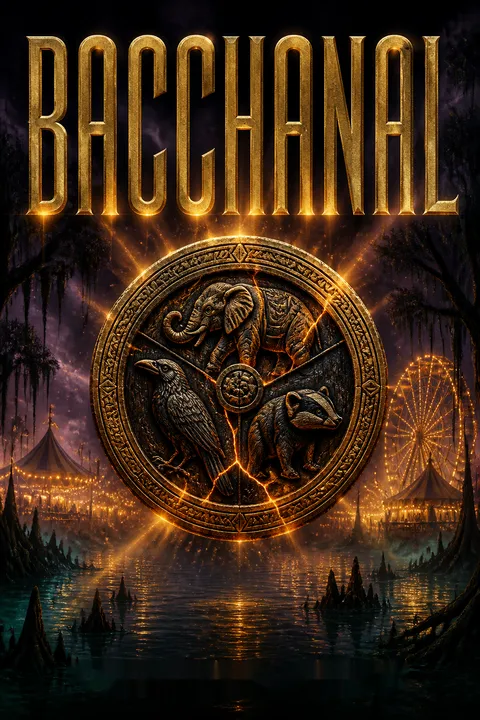
A key to ancestral memoryLiza’s mother gives her a leather-cord amulet bearing carved images of an elephant, raven, and badger. For years, Liza keeps it without knowing what it means. The carvings become the focus of meditation, visions, and the recognition of her animal guides. As she learns to approach the spirits, the amulet connects her personal history to her family’s African ancestry and helps her understand why her parents separated her from Twiggy. Its function is not simply to grant power; it makes inherited obligations visible.
Animal communication
Connection through shared imagesLiza communicates with animals by forming mental images and sending them across an invisible bond. Her early attempts overwhelm or distress creatures because she sends too much, too quickly, and assumes their responses are simple. Experience teaches her to wait, ask what the animals want, and respect their refusals. This ability first saves an alligator wrestler, then becomes the basis of her carnival act and a way to protect the workers. Later, the animal guides within her become more than outside companions, changing communication into a spiritual relationship.
The red trailer
A moving hideout for dangerSet apart from the performers’ trailers, the red management trailer is guarded by Zinsa and Efe and surrounded by strict rules. Its interior contains masks, a curtain, and the space where Geneva conducts hidden work. The trailer conceals the carnival’s connection to Ahiku and helps explain why children are kept away from the workers’ private life. Its protections make it difficult for Liza to reach, even after she suspects something is wrong. When Eloko dies, the barrier around it weakens, allowing the final confrontation to become possible.
Soul bargains
Protection with a hidden priceAhiku’s power rests on bargains that trade protection, access, or a loved one’s safety for future service and sacrifice. Stephanie secures an alliance that protects Jamey but binds him to work for Ahiku in the human realm. Ishe accepts a spirit inside himself to save his sick daughter, then answers Ahiku’s later call to join the carnival. Clay also accepts terms meant to shield his son. These agreements drive the characters’ loyalties and secrecy, showing how a promise can protect one person while making others vulnerable.
The traveling carnival
A refuge built around concealmentThe G. B. Bacchanal travels from town to town, offering performers work, meals, and a temporary community during the Depression. Its unusual acts attract paying crowds, while its mobility lets Clay recruit people and keep the show supplied. The same structure also hides disappearances and gives Ahiku a means to search for her adversary. Carnival rules, especially the prohibition on children and questions about the red trailer, have practical and supernatural motives. The show becomes both the home Liza needs and the place where she must confront concealed violence.
Download PDF
Download EPUB
.epub digital book format is ideal for reading ebooks on phones, tablets, and e-readers.








