

Plot Summary
The Hidden Envelope
Nine months into raising twins Alaric and Verity, Ella Fletcher shares a comfortable home with her husband, Sebastian, and the dangerous figure she calls Death, who appears when Sebastian’s headaches become severe.
Their tender family life does not quiet Ella’s unease: she has been collecting records about the murder of Sebastian’s parents, despite his warning that investigating could endanger them. When Death finds the hidden envelope beneath her bedroom floor, he scatters its contents and confronts her about the betrayal.
Ella admits that she wants to find the killer, learn why the parents were targeted, and make him suffer. Her research has turned a private fear into a threat that can reach their home, while her admission exposes how strongly she shares Death’s appetite for vengeance.
The domestic opening places a criminal secret inside the ordinary labor of parenting. Ella’s investigation is not simple curiosity: she sees knowledge as protection, especially when her husband’s shifting presence leaves parts of his life opaque. Death reads that search as disloyalty, but her desire to know is also an assertion of agency in a relationship built around his power. Her confession changes the conflict from whether she is capable of violence to whether she will be allowed to choose its purpose. The sleeping twins sharpen the stakes: the past is no longer only a question between spouses, because whatever follows can reach the next generation.
Vengeance Becomes Shared
Death pursues Ella through the house, then binds her in their bedroom and tries to force an explanation for her investigation. His anger turns their already intense sexual bond into a contest over control, but Ella refuses to apologize for seeking answers. She explains that she wants to track down the person who killed his parents and punish him herself.
That honesty shifts Death’s response: he agrees that, if the killer is found, Ella may join the hunt, provided he can keep her safe. Their agreement gives her the place beside him that she has demanded, but it also binds her to the danger she hoped her research could contain. After Death leaves to attend to his hidden work, a stranger arrives at the house and approaches Ella alone.
The scene makes consent, power, and danger deliberately difficult to separate. Ella speaks her violent intention rather than merely submitting to Death’s interpretation of her motives, and that candor produces a negotiated role in the coming hunt. Yet the agreement is conditional on his protection, preserving the unequal structure she has challenged. Their intimacy does not resolve their conflict; it becomes the arena in which they bargain over knowledge and agency. Death’s departure immediately tests the bargain in practical terms. Ella has won recognition as his partner, but she is still exposed when he is absent, a vulnerability the stranger exploits.
Taken From the Porch
A suited man identifies Ella outside the house, then an accomplice comes up behind her and injects her with a drug. She collapses before she can reach the open door, and the men carry her away in a car while others enter the house and wreck it. Dope, the hacker who monitors the family’s security cameras, sees the abduction only when he reviews the footage.
He alerts Death, who rushes back and finds the home ransacked and Ella missing. A severe headache then brings Sebastian forward, confused by the destruction and unable to remember what happened. He confirms that the twins are safe with their nanny, Lulu, but he has no idea that Ella’s disappearance is tied to the other self he cannot recall.
The kidnapping converts a private identity problem into an external emergency. Security systems and careful routines, which had seemed to make the family safe, fail because the attackers understand the household’s schedule and exploit the gap in surveillance. The wrecked rooms are more than damage: they turn the family’s material comforts into evidence of helplessness. Sebastian’s return at the moment of crisis makes his memory loss consequential rather than atmospheric. He must act as a husband without access to the knowledge held by the person who was present before him. The twins’ safety offers one small certainty, while Ella’s absence exposes how fragile every other protection has been.
The Secret Named Death
Sebastian’s friends Kip and Dope arrive to help identify suspects, and they explain that the Horizon Society, which Sebastian founded, secretly relocates women and children escaping dangerous men. His police friend Ryan and his allies have also helped conceal Death’s killings.
The revelation shocks Sebastian: Death is not an outside enemy but another self who shares his body and memories, though the two have not been conscious of each other. Cami, Ella’s closest friend and Ryan’s fiancée, overhears the confession and is horrified by Ryan’s deception.
Meanwhile, Ella calls Sebastian from captivity. Her captor demands Death and offers cryptic clues, making clear that the kidnapping is intended to draw him out. The group must find her without exposing the Society or themselves.
The disclosure forces the characters to revise their understanding of responsibility. Sebastian has been protected from his own actions by friends who believe both his benevolent work and Death’s violence serve a purpose, while Cami discovers that love has not given her access to the truth. Their concealment may have protected the Society, but it has also denied Sebastian the chance to understand his own life. Ella’s call cuts through the debate with an immediate demand: whatever the group thinks of Death, she needs the knowledge and force associated with him. The story makes loyalty both practical and ethically compromised.
A Cage of Glass
Ella wakes inside a cramped glass enclosure in an underground room, surrounded by stuffed animals and venomous spiders. Her captor, Xavier Hyde, treats her as a future wife and boasts that he has watched her for months. He reveals that a boss wants her alive, while Xavier himself intends to keep her permanently.
Ella crushes a spider that enters the cage, then pretends to befriend Xavier so he will protect her from the others. He shows her the corpses of his family, preserved and arranged at a table, and uses the cage’s air holes to frighten her with suffocation. When Xavier lets her speak to Sebastian, Ella tries to provide clues, but he cuts her off and offers another riddle. Her survival depends on reading his shifts in mood.
The cage literalizes the loss of control while leaving Ella’s mind active. Xavier controls air, movement, food, and information, but she studies his loneliness and erratic need for companionship as possible leverage. Her calculated friendliness is not surrender; it is a survival strategy shaped by her ability to read dangerous people. The preserved family turns his stated longing for connection into a grotesque form of possession: he makes people permanent by denying them life and choice. The riddles extend that control beyond the basement, forcing Sebastian’s friends to solve Xavier’s private game while Ella bears its physical consequences.
The Children Know
At home, Sebastian’s friends try to provoke Death into appearing by showing him crime scene images, but the shock only deepens his horror. When Cami brings in Alaric and Verity, both babies reach for and recognize Death by name. Their response, followed by a headache, brings Death forward at last. He learns that Ella is missing and accepts the truth that Sebastian shares his body, though the idea angers him.
Death recalls a threatening note left at a warehouse and learns Ella had secretly gathered information about the childhood murders. A second clue points toward the house where Sebastian’s parents died. Dope connects its references to ghosts and remembered rooms with Sebastian’s childhood home, sending Death and Ryan to investigate.
The twins function as a relational bridge where adult explanations have failed. Their recognition persuades Sebastian that Death is real, while their affection complicates his fear that the darker self will endanger them. The revelation is emotionally costly because it does not arrive through calm reflection; it comes under pressure, when Ella’s life may depend on accepting the truth. Death’s return restores a capable searcher, but the old note and Ella’s hidden research show that his own secrecy helped create the present danger. The children do not solve the mystery, but they make denial impossible.
The House in the Woods
Death and Ryan return to the Minnesota neighborhood where Sebastian grew up, only to find the original house demolished. A local walker recalls that someone built an exact replica near Mount Casper, and the men follow the clue into the woods.
The discovery gives Death a likely destination, though darkness and the rough terrain slow their search. Meanwhile, Ella keeps Xavier talking and meets Fiona, a woman connected to his boss. Fiona confirms that Ella is bait meant to draw her husband out, but refuses to help her escape.
Xavier leaves to buy food, allowing Ella to test the cage with her wedding ring, then returns and drugs her while forcing her into a wedding dress. His effort to make her his bride leaves her physically weak and more desperate to escape.
The replica turns a location into a manufactured memory. The antagonist has reconstructed Sebastian’s childhood setting, making the place both a clue and a form of psychological attack. While the search party follows the trail, Ella’s practical intelligence develops under confinement: she questions Fiona, tests the cage, and notices the role her ring might play. But Xavier’s drugging shows the limits of strategy when he controls her body. His wedding fantasy recasts captivity as devotion, exposing the gulf between the relationship he imagines and the consent he refuses to recognize.
The Ring Breaks Glass
When Xavier returns from another errand, Ella secretly coats his toothbrush with crushed medication. He takes the drug, loses his balance, and falls hard enough to injure his knees. Alone, Ella uses her platinum wedding ring to weaken a corner of the glass cage and reach its lock. She retrieves her original rings, leaves Xavier’s imposed band behind, takes a kitchen knife, and climbs outside.
Two men chase her through the woods. Ella attacks one with the knife and uses his falling body to throw the second off balance, then runs into the dark. Exhaustion, dehydration, and an injured leg finally bring her down on a dirt road. She is unconscious when Death and Ryan find her on their way back from the replica.
Ella’s escape is built from observation, patience, and improvised tools rather than a sudden rescue. The wedding ring, a symbol of her chosen bond, becomes the instrument that breaks the cage Xavier designed to replace that bond. Leaving his ring behind marks a refusal of his claim. Her violence against the pursuing men complicates the usual image of a captive waiting to be saved: she takes action, but survival exacts a physical cost. The rescue arrives only after she has escaped on her own, and her collapse keeps that success from becoming a simple victory.
Alive After All
Death carries Ella to an emergency room, where a doctor later tells him that her heart has stopped. He destroys the waiting area in grief and nearly gets arrested, but Ryan pulls him away before authorities identify him.
Sebastian takes control, then realizes that both selves are present and can hear each other. A resident doctor gives Ella emergency medication, and her heart starts again. When she wakes, Ryan reaches her first and reports that Sebastian has been restrained at a motel to prevent another crisis.
Ella speaks to him by phone and explains that Xavier held her in a basement, that a boss wanted Death, and that the cage and stuffed animals resembled Sebastian’s childhood home. She also remembers a Chucky doll with a knife from before his parents’ murders.
The false death forces both selves to experience the same loss without the usual wall of missing memory. Sebastian’s grief becomes the pressure that makes their awareness overlap, while Death’s public outburst shows the cost of violence uncontrolled by purpose or caution. Ella’s revival is medically precarious, not supernatural, and her first concerns are the people she left behind. Her account also transforms childhood fragments into evidence: the doll and basement details suggest the kidnapping is connected to the original family trauma. Survival restores the family, but it does not restore the old sense of safety.
The Captors’ Price
After Ella leaves the hospital, Sebastian brings her to Portland, where she reunites with the twins and Cami. Cami struggles with what she learned about Death and ends her relationship with Ryan, though she stays to help Ella. Death then returns to California, where Kip and Dope have taken the captors from the replica.
He tortures the kidnapper named John until he identifies his boss as the Pied Piper, a notorious killer who wants Death. Death kills John and leaves a blood-covered scene. Sebastian surfaces amid the aftermath, appalled by what his body has done. Ella finds him and refuses to abandon him, reminding him that she chose both parts of him. Death returns to question Xavier, who claims he and Sebastian were both stolen as babies.
This section makes protection difficult to distinguish from revenge. Death’s effort to punish the men who harmed Ella produces a spectacle that Sebastian experiences as evidence that he may be irredeemable. Ella responds not by denying the violence, but by remaining with him through its consequences. That support does not settle the moral question; it keeps the family intact long enough for them to face it. Xavier’s claim of shared origins shifts the conflict again. The captor may be more than an accomplice, and the investigation now reaches backward beyond the murders that first drove Ella to search.
Two Stolen Brothers
Ella questions the injured Xavier, who says that he and Sebastian were stolen as infants and separated; he also claims they are brothers. Before she can make sense of the revelation, Sebastian takes a walk outside the hideout and is struck with a tranquilizer dart.
The Pied Piper has him brought to a remote home, where he identifies himself and explains his version of the past. He says a college friend, Emma Jo, stole the two boys, later became Sebastian’s adoptive mother, and sold Xavier while raising Sebastian.
According to the Pied Piper, Emma Jo knew that Martin abused Sebastian, then blackmailed him to kill Martin. He claims he killed Emma Jo first and manipulated young Sebastian into stabbing Martin. He offers protection from prosecution if they return Xavier to him.
The revelation destabilizes the story’s most basic family categories. The parents Sebastian mourned may have been his kidnappers, and the man who killed them presents himself as both architect of his trauma and a source of protection. Because this account comes from a manipulator, it cannot be treated as a neutral history, even when it explains previously disjointed memories. Sebastian must confront the possibility that childhood guilt was deliberately planted and shaped. The offer to trade Xavier for immunity makes truth inseparable from coercion: the Piper gives information, but only while bargaining for control.
A Daughter in the Bargain
The Pied Piper returns Sebastian to the hideout and gives the group three hours to decide whether to hand Xavier over. He promises to shield them from law enforcement, but the bargain requires surrendering the man who kidnapped Ella.
Sebastian, Ella, and Kip agree that protecting the family matters more than keeping Xavier captive. At the exchange, the Pied Piper speaks privately with Ella. He says he has cancer, then reveals an identity that the book does not disclose to the reader.
He threatens Verity’s future, claiming he wants to watch and eventually mentor her, and demands that Ella keep his identity secret from everyone, including Sebastian. Ella agrees to protect her daughter. The family returns to Portland with Xavier in the Piper’s hands and a new danger hidden between the spouses.
The exchange looks like a resolution because it removes Xavier and buys the family legal protection, but the Piper makes that safety conditional. His interest in Verity turns the twins from loved ones to be protected into possible heirs of a violent legacy. Ella’s silence is therefore an act of immediate maternal defense, yet it fractures the openness she and Sebastian need to build a life together. The undisclosed identity is an intentional gap: the reader, like Sebastian, cannot evaluate the secret’s full meaning. The bargain solves the captivity while preserving the power imbalance that caused it.
Learning to Share One Life
Back in Portland, Ella’s trauma persists: she scans rooms for spiders, struggles in the elevator, and needs Sebastian close. He improves security at the penthouse, and she agrees that returning to their New York home is not possible yet.
Sebastian considers leaving her and the twins because he fears Death’s violence will destroy them, but after witnessing the cost of separation and speaking with Kip, he admits he cannot face the struggle alone. Death also acknowledges that Sebastian has a place in Ella’s life.
Cami remains hurt by Ryan’s concealment and does not resume their relationship, though she helps care for the twins and supports Ella. The household begins to function again, not because its dangers vanish, but because its members stop pretending they can manage them separately.
Integration here is relational rather than curative. Sebastian does not gain complete control, and Death does not disappear; instead, each must recognize the costs of trying to exclude the other. Ella’s continuing fear prevents the reunion from becoming a tidy recovery, while practical accommodations, surveillance and trusted company, make daily life possible. Cami’s unresolved breakup offers a useful counterpoint: care does not automatically repair deception. The group can remain loyal without restoring every relationship to its former state. Their fragile household is organized around acknowledged risk rather than denial.
A Vow for Death
After the family settles in Portland, Death arranges a ceremony with help from Kip, Dope, Ryan, and Cami. He proposes to Ella and marries her in a red dress, with Sebastian present within their shared consciousness. The ceremony gives Death a public place in the marriage rather than leaving him only as a hidden presence who appears during crises.
Ella makes clear that she accepts both selves, while the men around them support the union despite its danger and complexity. The new rings mark a shared commitment rather than a choice between Sebastian and Death. Yet the happiness is not uncomplicated: Ella still carries the Piper’s secret, and the threat to Verity has not been settled. The wedding offers belonging, not a guarantee of safety.
The ceremony answers a specific wound: Death has been loved privately but denied the ordinary recognition attached to marriage. The shared vows convert an unstable arrangement into an acknowledged relationship, while the two-tone ring gives material form to the couple’s refusal to divide the household into acceptable and unacceptable selves. That recognition is not the same as moral absolution. The Piper’s threat remains unspoken, and Death’s violence remains part of their life. The wedding’s emotional force comes from choosing connection without claiming that love has neutralized danger.
Ashes of the Old House
For a wedding gift, Death takes Ella to a captive named Jameson, who once posed as her childhood friend while helping John Bordeaux lure children to him. Ella recognizes the betrayal and kills Jameson herself.
Death then gives her the captured kidnapper John’s eyes, a grotesque token of the revenge he has already taken. Later, the Pied Piper appears unexpectedly, congratulates them, and gives them the deed to the replica of Sebastian’s childhood home.
Ella and Death return to the property and decide to destroy it rather than preserve the place built from their trauma. They set the house ablaze and leave before the sirens arrive. Fire closes the physical setting that bound the past to the present, but the Piper’s access to their lives remains unresolved.
The ending makes destruction both an act of agency and an imperfect form of closure. Ella’s killing of Jameson is not simply Death’s gift to her; it is her own chosen response to a betrayal that reopened childhood harm. The deed gives the couple control over the replica, and burning it rejects the Piper’s attempt to turn trauma into a permanent residence. Yet the final escape from the arriving authorities echoes their continued dependence on secrecy and evasion. The house can be reduced to ash; the social network that shaped their danger cannot. The conclusion resolves a place, not the entire threat.
Analysis
The novel makes identity a source of both danger and intimacy. Sebastian and Death share a body, but the story initially gives them separate names, memories, and moral positions. The kidnapping collapses that distance: Sebastian must confront actions he cannot remember, while Death cannot treat Sebastian as an irrelevant obstacle when Ella and the twins need both parts of their family. Their gradual awareness is not a neat cure. It is a negotiation about responsibility, control, and whether one self can disown the other without abandoning the people they love.
Ella’s arc resists the familiar division between innocent victim and violent protector. She investigates the murders because she believes information can safeguard her family, then uses deception, observation, and force to escape Xavier. Her survival makes her more than the object of Death’s protection, but it does not erase the trauma of captivity. After returning home, she still fears spiders and enclosed spaces. The narrative recognizes that physical rescue and emotional recovery do not occur on the same timetable.
The romance deliberately binds care to coercive power. Sebastian’s gentleness, Death’s possessiveness, and Ella’s attraction to danger coexist, creating a relationship whose emotional truth does not make every action safe or ethical. The friends’ cover-ups extend that ambiguity into a community: the Horizon Society rescues families, while its members also conceal killings. Their loyalty protects people, but secrecy deprives others, especially Cami and Sebastian, of informed choice.
The ending offers symbolic closure rather than complete safety. Ella and Death destroy the replica of the childhood home, reclaiming a place built to keep their trauma alive. Yet the Pied Piper’s threat to Verity remains active, and Ella carries his identity in silence. The past can be burned as a building; its influence survives in family secrets, inherited fears, and choices still to come.
Review Summary
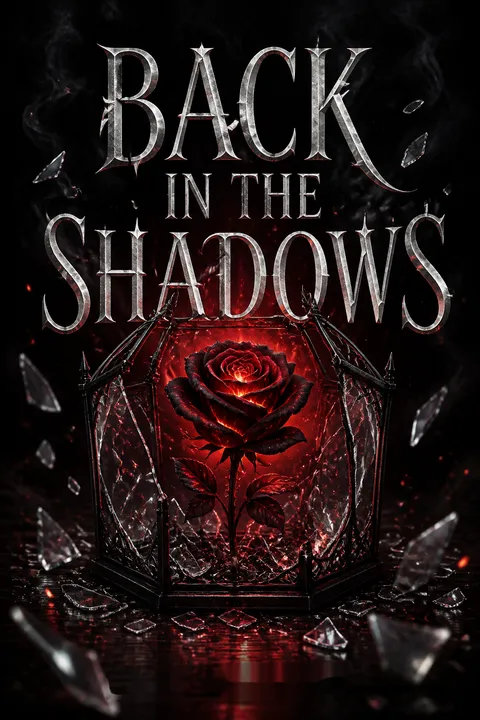
Back In the Shadows is a dark romance sequel that continues the story of Ella, Sebastian, and Death. Readers praise its intense plot twists, character development, and spicy scenes. The book explores themes of kidnapping, psychological struggles, and obsessive love. Many reviewers found it even more gripping than the first installment, though some felt the ending left unanswered questions. Overall, fans of dark romance and morally grey characters highly recommend this book, noting its ability to keep readers on the edge of their seats.
People Also Read






Characters
Ella Fletcher
The defiant motherElla is Sebastian’s wife and the mother of Alaric and Verity. Her work around criminal cases has taught her to read evasions, assess danger, and treat information as a form of protection. She is affectionate and attentive with her children, yet she is not sheltered by domestic life: she is drawn to risk and recognizes a capacity for violence within herself. Her relationship with Sebastian and Death requires her to manage competing needs for tenderness, danger, honesty, and control. Ella’s resilience is practical rather than invulnerable. She makes plans, adapts to unstable people, and asks to be treated as a participant in decisions affecting her family.
Sebastian Fletcher
The protective husbandSebastian is Ella’s husband, the twins’ father, and the founder of the Horizon Society, which helps women and children escape dangerous homes. He is affectionate, responsible, and inclined to solve threats through planning and protection. His headaches and gaps in memory unsettle his confidence, though he initially explains them away as a medical problem. He trusts a close circle of friends with work he cannot openly discuss and carries a strong sense of obligation toward those depending on him. Sebastian’s central psychological tension lies between his desire to be a safe partner and his fear that parts of his life may violate that identity.
Death
The feared avengerDeath is a lethal, possessive presence in Ella’s life, known for targeting violent men whom the law has failed to stop. He is capable of tenderness with Ella and the twins, but he also uses intimidation and force as readily as other people use conversation. His bond with Ella is built around her recognition of the darkness he refuses to hide, though that intimacy can blur protection with ownership. Death acts quickly when someone threatens his family and trusts a small circle of allies to cover his tracks. Under his confidence lies a need to be seen as more than an instrument of violence.
Cami
Ella’s steadfast best friendCami is Ella’s closest friend and an important source of affection outside the marriage. She is direct, expressive, and protective, which makes it difficult for her to accept the secrets surrounding Sebastian, Death, and the Horizon Society. Her relationship with Ryan becomes strained when she learns how much he has concealed. Even while angry, she stays close to Ella and helps care for the twins. Cami’s loyalty is not automatic approval; she needs time to understand what the others have done and decide what she can live with.
Kip
The loyal longtime allyKip has known Sebastian since childhood and helps manage the dangerous work surrounding both the Horizon Society and Death. He is practical under pressure, willing to confront Sebastian with hard truths, and accustomed to keeping secrets for the people he considers family. His loyalty is active rather than passive: he organizes searches, guards captives, and helps the group make decisions when emotions threaten to overwhelm them. Kip also carries private pain he rarely shares, which complicates his easy confidence.
Dope
The watchful hackerDope, also known as Hal, is a longtime friend of Sebastian and the Society’s hacker. He monitors surveillance, searches records, and connects clues that others overlook. His humor and casual manner can disguise how seriously he takes the safety of the group. Dope has spent years helping Sebastian and Death avoid exposure, even when he is uncomfortable with the violence involved. His skill makes him a vital problem-solver, while his loyalty rests on friendship and a belief that the Society’s work protects vulnerable families.
Ryan
The compromised police allyRyan is a police officer, a close ally of Sebastian and Death, and Cami’s partner. He uses his knowledge of law enforcement to protect the Society and misdirect attention from Death’s crimes. His divided loyalties create a serious breach when Cami discovers what he has hidden. Ryan is disciplined and guarded, but his concern for Ella and Sebastian makes him willing to risk his career. He embodies the tension between legal duty, personal loyalty, and the belief that official systems sometimes fail the people they should protect.
Xavier Hyde
The obsessive captorXavier is an unstable, lonely man whose fascination with preserving people and keeping them close turns violently possessive. He speaks of companionship while denying others the freedom to leave, and his moods can swing from childish eagerness to cruelty. He is deeply attached to the idea of a perfect family and a perfect bride, even when his actions make such intimacy impossible. Xavier is dangerous not because he is consistently calculating, but because his distorted beliefs can make sudden violence seem reasonable to him.
The Pied Piper
The shadowed manipulatorThe Pied Piper is a powerful, calculating figure with a network that reaches into criminal circles and law enforcement. He studies people’s vulnerabilities, shapes events from a distance, and presents coercion as a bargain. His interest in Death is personal, while his attention to the Fletcher family makes him difficult to dismiss as a temporary enemy. He is patient enough to let others believe they have escaped his influence. His calm manner conceals a worldview in which people are resources to be cultivated and controlled.
Fiona
Xavier’s uneasy associateFiona works within the Pied Piper’s orbit and has known Xavier for years. She recognizes that his captivity of Ella is dangerous, but fear of her own employer keeps her from offering a direct escape. Her visit gives Ella a clearer picture of the kidnapping’s purpose, while Fiona’s limits show how people can recognize wrongdoing and still protect themselves first.
Alaric Fletcher
The observant sonAlaric is Ella and Sebastian’s infant son and Verity’s twin. His attachment to his parents is apparent even before he can speak clearly. He responds to the different presence in Sebastian in ways the adults cannot ignore, making him an emotional link between the family and the conflict they are trying to understand.
Verity Fletcher
The cherished daughterVerity is Ella and Sebastian’s infant daughter and Alaric’s twin. She is affectionate, curious, and closely bonded to both parents. Her presence gives Ella and Sebastian a daily reason to choose safety, while the adults’ fears about what their children may inherit add pressure to their decisions.
Lulu
The trusted nannyLulu cares for Alaric and Verity for limited hours, giving exhausted parents time to rest and reconnect. She is trusted with the twins but kept outside the family’s dangerous secrets. Her ordinary presence represents the practical support the family needs, as well as the boundary between their public home life and hidden work.
John Bordeaux
The hidden childhood predatorJohn Bordeaux is a dangerous adult from Ella’s childhood whose influence shaped her understanding of fear and survival. He represents the kind of offender whose harm persists long after the immediate threat has passed. His history links Ella’s past to the people who help her make sense of violence in the present.
Jameson
The false childhood friendJameson knew Ella when they were children and presented himself as a friend. His place in her memories is complicated by the difference between the trust she believed she shared with him and the role he played around dangerous adults. He represents the way betrayal can alter even a seemingly ordinary childhood friendship.
Martin Fletcher
The adoptive patriarchMartin is the man Sebastian remembers as his father. His place in Sebastian’s childhood is tied to the family home and the trauma that shaped Sebastian’s later life. The uncertainty surrounding his past makes him central to the questions of memory, parenthood, and what a family owes a child.
Emma Jo Fletcher
The guarded adoptive motherEmma Jo is the woman Sebastian remembers as his mother. Her history is entangled with the childhood home, the separation of two boys, and secrets that others have controlled. She represents the troubling gap between the care a child believes he received and the truth adults may have concealed.
Plot Devices
Shared consciousness
The divided selfSebastian and Death occupy one body but have long experienced gaps in awareness and memory. Sebastian initially treats the headaches as a medical problem, while Death appears when the pressure becomes intense. Ella and their friends know more about this arrangement than Sebastian does, so the kidnapping forces them to disclose it. The device makes identity an active plot problem: Sebastian must learn what Death has done, Death must accept Sebastian’s place in the family, and their growing awareness of each other changes how they make decisions. It also lets the narrative contrast protective care with punitive violence without separating either from the same shared life.
Horizon Society
A hidden rescue networkSebastian’s Society helps women and children escape dangerous partners by moving them to safety and arranging new identities. Its work gives the protagonists a reason to violate laws and creates a wide circle of people who might know about their activities. The Society also connects the kidnapping to the wider plot: a hidden enemy may be retaliating against Sebastian, while the group’s secrecy complicates the decision to involve police. Ryan’s position as an officer and Dope’s technical skills help the Society operate, but both roles carry risks when the family’s safety is threatened.
The riddles
Clues tied to childhoodThe kidnapper calls Sebastian and delivers cryptic clues about remembered rooms, ghosts, and a childhood home. The riddles force the search party to connect Ella’s cage with the place where Sebastian’s parents were killed. Their function is practical and psychological at once: they direct the rescuers toward the replica house while making Sebastian revisit memories he has tried to avoid. The clues also reveal that the captor knows details about Death and Sebastian that ordinary enemies should not possess, turning the search into an investigation of the family’s past.
The glass cage
Captivity and escapeXavier confines Ella in a small glass enclosure with air holes that he can plug and openings that admit his venomous spiders. The cage gives him direct control over her movement and oxygen, while its transparency lets him watch her fear. Ella turns its design against him by testing the glass and using her wedding ring to reach the lock after drugging him. The enclosure concentrates the novel’s central struggle over agency: Xavier claims to love Ella but makes escape physically difficult, while Ella survives through observation, deception, and a carefully timed attempt.
The replica house
A past made physicalThe Pied Piper has a replica built of Sebastian’s childhood home, including the underground space that becomes Ella’s prison. This reconstruction makes the past part of the present landscape and supplies a destination for the riddles. It also reveals the antagonist’s intimacy with the family’s history. After the crisis, ownership of the property passes to Sebastian and Ella, giving them the choice to keep or destroy a place designed by someone else to control their memories. Their decision to burn it turns the setting into a concrete object they can finally refuse.
About the Author
Other books by J.A. Owenby

Download PDF
Download EPUB
.epub digital book format is ideal for reading ebooks on phones, tablets, and e-readers.








