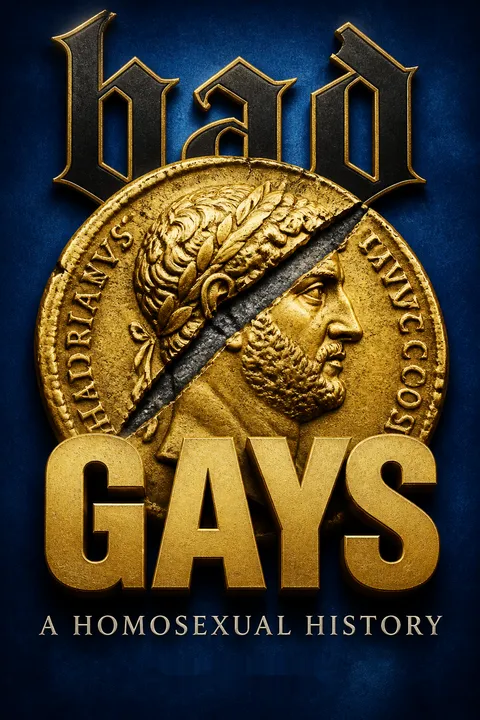


Key Takeaways
Read gay history as changing social categories, not a timeless family tree.
Categories change over time. Same-sex acts and love existed long before homosexuality became a way to describe a kind of person. In medieval Europe, sodomy could mean any non-procreative sex, including acts between a man and a woman. In ancient Rome, status and sexual role often mattered more than a partner’s gender. In the 1860s, Karl Heinrich Ulrichs described men with same-sex desire as Urnings, while Karl-Maria Kertbeny coined the term homosexual. Their arguments helped shift desire from an act into an identity, a process later shaped by medicine, law, and activism.
Memory is political. Oscar Wilde’s 1895 trial became a movement origin story, casting him as a martyr. Yet Lord Alfred Douglas, whose actions helped set the trial in motion, later promoted antisemitic conspiracy theories. A history made only of heroes hides both the people left out and the troubling legacies within the community.
The distinction between behavior and identity is useful well beyond queer history. It shows how institutions can turn a practice into a category, then treat that category as natural and permanent. Historians face a genuine dilemma: applying present-day labels can make past lives legible, but it can also overwrite the concepts people used in their own time. The book’s solution is to use gay as a lens, not a verdict. That approach preserves connection without pretending that ancient relationships and modern identities were interchangeable.
Track who held power before calling an old relationship gay.
Desire follows social rules. Emperor Hadrian’s devotion to the much younger Antinous shaped imperial monuments, a new city, and a cult after Antinous drowned in the Nile. Roman expectations around sex were structured by citizenship, status, and sexual role, not by a modern gay identity. In early modern Scotland, James VI’s attachment to Esmé Stewart and later royal favorites affected the court’s balance of power. Prussian king Frederick the Great’s relationships with men, meanwhile, could coexist with the masculine ideals of his own era.
Desire could make influence. Renaissance writer Pietro Aretino used bawdy writing, printing, and relationships with patrons to gain political and financial leverage. These stories show same-sex desire operating through the institutions of empire, monarchy, and commerce, not outside them.
Power is not simply a backdrop to intimacy. It determines who can choose, who can refuse, and which relationships leave a documentary record. Modern readers may be tempted to treat historical romance as proof that society was more accepting, but tolerance for particular arrangements often depended on rank, age, and role. The same caution applies to present-day narratives that celebrate visibility while ignoring unequal conditions within relationships. A useful historical question is not only who desired whom, but what each person could do with that desire.
Follow how criminal laws turned sex acts into punishable identities.
Law widened its reach. For centuries, European authorities punished sodomy as sin or crime without necessarily treating it as evidence of a distinct kind of person. The 1885 Labouchere Amendment changed the stakes in Britain: it criminalized a broad range of sexual behavior between men as gross indecency, not just anal sex. The amendment became a tool for prosecuting Oscar Wilde and many others.
Class shaped punishment. Jack Saul, an Irish working-class sex worker in London, testified about wealthy clients at the Cleveland Street brothel scandal. Some working-class men and telegraph boys faced prosecution, while aristocratic patrons escaped. Saul’s testimony was dismissed in court as untrustworthy, despite the protection powerful men received. The law’s broad wording gave police and courts discretion, and that discretion fell unevenly.
This history illustrates a familiar feature of criminal law: vague categories can give authorities flexibility while making ordinary people less secure. The power to define an offense can matter as much as the penalty attached to it. Class differences also shape who can afford privacy, lawyers, and reputational repair. The story complicates a simple account of progress from repression to tolerance. Legal reform can reduce one form of punishment while leaving intact the social conditions that make some people far more exposed than others.
Question queer liberation stories built from colonial portraits of other people.
The colonial gaze shaped desire. Roger Casement documented forced labor and atrocities in the Congo and the Peruvian Amazon for British investigations. His private diaries also recorded sexual encounters with men he met during his travels. His attention to their lives could express tenderness and political solidarity, yet the power imbalance and racialized gaze remained. T. E. Lawrence supported Arab independence while romanticizing Arabs as untouched by modern civilization, even as British and French plans divided the region.
Anthropology had a double edge. Margaret Mead challenged claims that gender and sexual norms were universal by studying Samoa and New Guinea. Her work helped readers imagine different ways to live, but it also treated colonized societies as material for Western debates and sometimes misrepresented the people she studied. Queer insight did not erase colonial privilege.
The tension here is not solved by deciding whether an observer was sympathetic or exploitative. Care and unequal power can coexist, as can valuable criticism of one’s own society and careless simplification of another. Contemporary research ethics offers a practical extension: people studied should have agency in defining questions, interpreting results, and correcting the record. That standard does not make earlier work worthless. It helps readers separate its contribution from its blind spots, and notice who gained authority from the exchange.
Respectability often buys safety by exposing less respectable queer people.
Reform drew boundaries. In Weimar Germany, Magnus Hirschfeld’s research and advocacy supported sexual and gender minorities, but progressive reformers could also pathologize people they considered socially disruptive. A proposed legal change would have permitted some consensual sex between adult men while retaining restrictions that fell heavily on sex workers. This kind of reform offered protection to some by separating them from others.
Accommodation failed. Publisher Friedrich Radszuweit, who ran a mass-membership organization and publications serving gay men, lesbians, and trans people, later argued that the Nazis might leave discreet homosexuals alone. He echoed antisemitic attacks on Hirschfeld and hoped to secure concessions. Nazi rule destroyed queer institutions and persecuted queer people. The term Weimar consensus describes the era’s broad agreement that sexual freedom could be managed scientifically and selectively, rather than granted equally.
Respectability politics can produce real short-term gains, so its appeal is not irrational. The danger is that conditional rights invite authorities to decide which members of a group count as acceptable. This resembles the logic of tiered citizenship: security is offered to people who perform conformity, while those with fewer resources or less conventional lives remain targets. The Weimar case shows the further risk of bargaining with movements whose power depends on exclusion. A concession from an authoritarian force is not the same as a durable guarantee.
Never mistake queer desire for evidence of ethical politics.
Identity is no moral shield. Roy Cohn helped prosecute suspected Communists, including the Rosenbergs, and became a powerful conservative lawyer. Although his male partners and social life were known in some circles, he publicly denied being gay and denounced gay people. J. Edgar Hoover’s FBI surveilled and helped purge queer people from public employment; claims about Hoover’s own sex life remain disputed, even as his long partnership with Clyde Tolson drew speculation.
Politics still matters. Yukio Mishima wrote sensitively about same-sex desire, then built a far-right militia and died by ritual suicide after a failed appeal to the military. These lives resist the comforting idea that marginalized people automatically become allies of other marginalized groups. Desire can shape a life without making its politics humane.
The book’s moral complexity is strongest when it refuses both shame and exoneration. A person’s oppression may help explain a fear or a choice, but explanation is not absolution. Nor does a person’s identity establish that they speak for everyone who shares it. This distinction is important in political analysis: personal biography can illuminate motivations, but institutions, incentives, and chosen actions still require scrutiny. A more useful question than whether someone is authentically queer is what their power does to other people.
Visibility protects elites more readily than poor and working-class queers.
Privacy has a price. Architect Philip Johnson built his Glass House as an open, largely transparent living space while keeping another, brick-built guest house on the estate. The property could make queer life visible to invited guests while preserving discretion from the wider public. Johnson’s wealth and access helped him sustain a long career, despite his Nazi sympathies and racism.
Networks can shield the powerful. Gangster Ronnie Kray moved among celebrities and politicians, some of whom intervened when the police investigated him. By contrast, Jack Saul’s public testimony exposed him to ridicule and legal danger. The difference was not simply who was open about desire. It was who could control the setting, the audience, and the consequences of being seen.
Visibility is often treated as an uncomplicated good, but it is also a question of control. Who chooses the audience? Who can withdraw from public scrutiny? Who bears the cost of exposure? The answers depend on money, housing, social connections, and institutional status. The Glass House makes this paradox physical: transparency for selected visitors can sit beside privacy from everyone else. Visibility can challenge stigma, but without attention to material inequality it may chiefly benefit those already equipped to manage their public image.
When gay rights become national pride, immigrants can be cast as threats.
Tolerance can become a border. After September 11, Dutch politician Pim Fortuyn presented himself as an openly gay defender of a permissive society and cast Islam and immigration as threats to it. His politics linked sexual freedom to a narrow image of national belonging, even as he spoke about sexual relationships with Moroccan and Turkish men. The book uses homonationalism for the incorporation of some gay people into national identity while racialized outsiders are positioned as its enemies.
Inclusion can narrow politics. As AIDS treatments became available to some gay men in wealthy countries, parts of the movement shifted toward marriage and state recognition, while people without access to treatment remained in crisis. The appeal of security and belonging is understandable, but it can displace attention from those still excluded.
This is a warning about political framing, not an argument against legal protections or marriage. A state can recognize one minority while using that recognition to portray another group as backward or dangerous. The result is a conditional inclusion that rewards conformity to national, racial, and class norms. The concept of homonationalism is useful when it prompts concrete questions: which people receive protection, whose freedoms are invoked, and who is made to look like the obstacle? Those questions keep equality claims from serving as mere national branding.
Build queer belonging through shared struggle, not identity alone.
Chosen kin can organize. The book closes by treating queer family as something people can build, not simply inherit. That possibility can become political as well as intimate. The Marine Cooks and Stewards Union developed an explicitly anti-racist and pro-queer labor politics. At Stonewall, working-class street kids, drag queens, trans women, and sex workers resisted police together. Sylvia Rivera and Marsha P. Johnson helped create STAR, which supported queer young people and people in prison.
Solidarity takes work. Lesbians and Gays Support the Miners backed striking miners in Britain during the 1984-85 strike, while the miners later opposed anti-queer restrictions in schools. These alliances did not depend on identical lives. They connected groups facing different forms of power and built practical support across those differences.
Coalitions are not automatically virtuous, and a shared label does not settle disagreements about race, class, gender, or strategy. The examples matter because they show solidarity as a practice: organizing resources, accepting risk, and recognizing another group’s struggle as connected to one’s own. Political theory often distinguishes recognition from redistribution. These stories require both. Being seen can matter, but durable belonging also depends on who has housing, healthcare, safety, and the power to shape institutions. Chosen kinship becomes consequential when care is joined to material action.
Analysis
Bad Gays is a history of queer identity told through lives that resist easy commemoration. Its central move is to replace a progress narrative, repression followed by liberation, with a history of changing arrangements among desire, law, class, race, and political power. The biographies make that argument vivid: the same-sex relationships of emperors and kings could coexist with hierarchy; reform campaigns could distinguish respectable men from sex workers; and public recognition could be turned into a defense of racial exclusion. The result is a deliberately unsettling archive in which identity never guarantees either virtue or solidarity.
The method is strongest when it treats biography as a way to examine systems. Jack Saul’s testimony reveals how class structured policing; Casement’s career complicates the line between anti-colonial sympathy and colonial authority; Fortuyn shows how inclusion can be used to define national outsiders. The chapters also resist the urge to make queer desire the single explanation for a person’s politics. That restraint matters: sexuality can help interpret a life, but does not explain fascism, violence, or state power by itself.
There is a risk in the book’s intentionally provocative category of bad gays. Memorable villains can make a political argument feel more complete than the evidence allows, especially when the record is fragmentary or gossip-laden. The authors partly offset this by acknowledging uncertainty and by centering structures rather than assigning a single cause. These portraits are best read as diagnostic cases, not as a representative sample of queer history.
The conclusion offers a constructive alternative to both hero worship and cynicism. It points toward political belonging built through alliances, chosen kinship, and shared material struggles. That is not a tidy resolution to the book’s failures. It is a demanding standard: judge queer politics by whom it protects, whom it leaves exposed, and whether its idea of freedom can extend beyond the already powerful.
Review Summary
Bad Gays: A Homosexual History explores the lives of controversial queer figures throughout history, challenging the notion of purely heroic gay narratives. Readers appreciated the book's unique perspective and humor, but some criticized its narrow focus on white gay men. Many found the historical context informative, though opinions varied on the selection criteria for "bad gays" and the book's overall thesis. Some readers felt the execution was uneven, with disconnected chapters and unclear definitions of "badness." Despite these critiques, many found the book thought-provoking and valuable for its examination of queer history's complexities.
People Also Read



Glossary
sodomy
Non-procreative sexual actsA historical category for sexual acts understood as sinful or unlawful, but its meaning changed across time and place. In medieval Europe it could include any sex thought unable to produce children, including acts between a man and a woman. Later laws increasingly targeted sex between men, helping turn particular acts into evidence of a stigmatized kind of person.
Urnings
Ulrichs’s term for menKarl Heinrich Ulrichs used Urnings for men whose desire was directed toward men. He argued that this desire was part of a person’s nature, rather than merely a behavior anyone might perform. His writing helped establish an early language for same-sex identity and supported campaigns against laws punishing sex between men.
Labouchere Amendment
Broad British indecency lawAn 1885 amendment to British law that criminalized gross indecency between men. Unlike earlier laws focused on proving anal sex, it could be applied to a wide range of behavior, including sexual solicitation and other expressions of desire. Its broad wording enabled prosecutions of Oscar Wilde and many other men.
Weimar consensus
Selective sexual reformA term used by historian Laurie Marhoefer for the broad agreement in Weimar Germany that sexuality should be governed through scientific and rational policy rather than religious morality. This approach could expand freedom for some while restricting sex workers and other people considered disorderly. It describes reform as selective, not universally liberating.
Lavender Scare
Cold War queer purgeThe campaign to investigate and remove gay and lesbian people from US federal employment during the Cold War. Officials treated homosexuality as a security threat, using surveillance, interrogations, and employment records to identify suspected workers. The campaign overlapped with anti-Communist repression and helped drive some people into emerging gay rights organizing.
homonationalism
National inclusion through sexualityA term associated with queer theorist Jasbir K. Puar for the incorporation of certain gay and lesbian people into national identity, often alongside the portrayal of racialized or religious minorities as threats to national freedom. In the book’s account of Pim Fortuyn, gay rights become evidence of Dutch tolerance while Muslim immigrants are cast as its opposite.
FAQ
What's Bad Gays: A Homosexual History about?
- Exploration of Historical Figures: The book examines historical figures known for same-sex relationships but remembered for negative traits, from Alexander the Great to J. Edgar Hoover.
- Critique of Gay Identity: It argues that mainstream white male homosexuality has often aligned with bourgeois values, neglecting marginalized voices.
- Interplay of Sexuality and Power: The book investigates how same-sex desire has influenced historical events and power dynamics, complicating identity and morality.
Why should I read Bad Gays: A Homosexual History?
- Challenging Normative Narratives: It offers a fresh perspective on LGBTQ history by focusing on overlooked or vilified figures, encouraging a reevaluation of gay heroes.
- Rich Historical Context: The authors provide detailed socio-political contexts, making it a valuable resource for understanding sexual identity evolution.
- Engaging Storytelling: The narrative blends historical analysis with captivating storytelling, making it both informative and provocative.
What are the key takeaways of Bad Gays: A Homosexual History?
- Complexity of Identity: Sexual identity is not static and evolves over time, shaped by cultural and political forces.
- Critique of Gay Liberation: The mainstream gay rights movement often fails to address race, class, and gender non-conformity, needing a more inclusive understanding.
- Lessons from History: Examining "bad gays" encourages learning from the past to inform contemporary LGBTQ struggles.
What are the best quotes from Bad Gays: A Homosexual History and what do they mean?
- “The love that dare not speak its name”: Highlights societal pressures forcing LGBTQ individuals into silence, coined by Lord Alfred Douglas.
- “The failure of homosexuality as an identity and a political project”: Critiques mainstream gay identity's alignment with capitalist values, calling for reevaluation.
- “Their poison was part of their perfection”: Refers to the complexities in relationships like Wilde and Douglas, integral to understanding their legacies.
How does Bad Gays: A Homosexual History address the concept of masculinity?
- Masculinity and Power: Discusses how historical figures navigated sexual identities within masculine norms, tied to power dynamics.
- Hypermasculinity in Queer Culture: Explores hypermasculine ideals in queer movements, reflecting societal struggles over masculinity definitions.
- Critique of Traditional Masculinity: Challenges the notion that masculinity opposes femininity, advocating for nuanced male identities including queer experiences.
How does Bad Gays: A Homosexual History address the intersectionality of race and sexuality?
- Racialized Sexuality: Explores how race intersects with sexual identities, often marginalizing queer people of color in LGBTQ narratives.
- Colonial Exploitation: Discusses colonialism's role in shaping perceptions of race and sexuality, complicating sexual politics.
- Solidarity Across Identities: Advocates for an inclusive LGBTQ activism approach, recognizing and uplifting queer people of color's voices.
What role does colonialism play in Bad Gays: A Homosexual History?
- Colonial Context: Sexualities of historical figures were shaped by colonial contexts, crucial for understanding identity complexities.
- Exoticism and Desire: Colonial narratives romanticized and sexualized colonized peoples, intertwining desire with power and exploitation.
- Resistance and Solidarity: Some queer individuals engaged in anti-colonial struggles, using sexual identities to forge cross-cultural connections.
How does Bad Gays: A Homosexual History redefine the notion of "bad" in relation to gay history?
- Reframing "Bad": "Bad" encompasses complexity and nuance in historical narratives, allowing for a more inclusive queer history understanding.
- Understanding Flaws: Examining historical figures' flaws encourages seeing them as multifaceted, not one-dimensional heroes or villains.
- Lessons from the Past: Acknowledging "bad" aspects provides valuable lessons for contemporary movements, examining past actions' impact on present identities.
What is the significance of the Weimar Republic in Bad Gays: A Homosexual History?
- Cultural Flourishing: The Weimar Republic was a time of cultural and sexual experimentation, laying groundwork for modern sexuality understandings.
- Political Tensions: Political instability fostered both progressive movements and reactionary forces, crucial for understanding queer identities' historical context.
- Legacy of Resistance: Weimar's queer movements are precursors to contemporary LGBTQ activism, highlighting ongoing rights and recognition struggles.
Who are some notable figures discussed in Bad Gays: A Homosexual History?
- Oscar Wilde: His life exemplifies tension between public persona and private identity, serving as a cautionary tale of societal consequences.
- Hadrian and Antinous: Explores their relationship, illustrating love, loss, and power dynamics in ancient Rome.
- Yukio Mishima: Examines his complex relationship with masculinity, beauty, and death, reflecting tensions between personal desire and societal expectations.
How does Bad Gays: A Homosexual History relate to contemporary LGBTQ+ issues?
- Reflection on Current Struggles: Draws parallels between historical events and contemporary LGBTQ+ issues, highlighting queer history's ongoing relevance.
- Critique of Assimilationist Politics: Critiques LGBTQ+ movements prioritizing assimilation over broader social justice, encouraging a more radical activism approach.
- Call for Solidarity: Emphasizes solidarity among diverse LGBTQ+ identities, relevant amid rising global anti-LGBTQ+ sentiment and policies.
What methods do the authors use in Bad Gays: A Homosexual History?
- Historical Analysis: Examines figures' lives within socio-political climates, deepening understanding of history's impact on identity.
- Critical Theory: Analyzes queer identities and actions, encouraging questioning of dominant narratives for nuanced morality and identity discussions.
- Intersectional Framework: Explores how different identities interact, enriching historical figures' analysis and legacies.
Download PDF
Download EPUB
.epub digital book format is ideal for reading ebooks on phones, tablets, and e-readers.








