

Key Takeaways
Write toward small human truths, then let beauty enlarge them
Begin close to life. Straczynski’s childhood stories gave him refuge and a way to imagine connection. Yet he learned that trying to write something grand and important often made his work pompous. A modest truth can carry more emotional force: a grieving husband regrets snapping at his wife over a breakfast joke, not a monumental dispute. The regret feels familiar because it is petty, specific, and irreversible. A small human detail can open a door to empathy more effectively than a speech about life’s meaning.
Let art transform. The book’s larger aim is not merely accurate storytelling, but beauty: work that helps readers imagine what people might become. Truth grounds a story in recognizable experience; beauty gives that experience reach and possibility.
The small detail works because it lets audiences supply their own memories. Cognitive research on narrative transportation suggests that vivid, concrete scenes can draw people into a story more readily than abstract claims. The method also resists a common artistic trap: confusing seriousness with importance. Still, small truths do not automatically become universal. Their force depends on context, and a writer must avoid treating one personal experience as a template for everyone. Specificity invites recognition; it does not guarantee it.
Treat writing as a profession before anyone else does
Make the appointment. Straczynski rejects waiting for a Muse or a perfect stretch of free time. Choose a realistic daily target, protect a regular writing hour, and produce new pages before polishing old ones. A 100,000-word novel averages about 285 words a day over a year, roughly a page. Even a much smaller daily effort can complete substantial work over time.
Finish the project. Beginners often protect themselves from judgment by leaving stories unfinished or endlessly revising them. Completion creates evidence of what the writer can do and teaches lessons that speculation cannot. One practical trick is to stop mid-sentence at the end of a session, giving the next session an easy starting point. A missed day is not a debt that must be repaid with double the work.
This advice translates ambition into behavior that can be repeated, a principle shared with skill training in music and sport. Small targets reduce the psychological cost of beginning, while finishing creates feedback that can guide improvement. The professional framing is useful even before income arrives, but it should not erase material constraints: caregiving, disability, and precarious employment can make daily schedules unrealistic. A sustainable practice is one that survives the writer’s actual circumstances, not one that merely sounds disciplined.
Let critique test the page, not pronounce judgment on the writer
Ask for reasons. A workshop is most useful when readers identify what specifically fails: unclear motivation, a contrived turn, or an ending that has not been earned. A bare verdict that a story is bad, or simply not to someone’s taste, offers little guidance. Straczynski describes an instructor who punished him after he objected to the instructor’s harsh treatment of a female student. Another teacher, Richard Kim, gave better advice by sending him from lectures toward intensive workshops where writers had to produce and discuss work.
Keep the exchange fair. Critique fellow writers with care and precision, then listen for concrete problems in return. Treat factual errors and contradictions seriously; treat subjective reactions as questions to investigate, not commands to obey.
The distinction between an evaluation of a draft and a judgment of a person is central to psychological safety. In learning environments, people take more creative risks when mistakes can be examined without humiliation. The book’s insistence on specific feedback supports that kind of learning. Its tougher language about workshops as arenas may motivate some writers, but can also confuse cruelty with rigor. High standards work best when criticism is exact, proportionate, and aimed at improving the work.
Revise until every sentence earns its place and the story stays clear
Draft broadly, edit selectively. First drafts often carry repeated explanations, slow openings, and scenes that exist only to deliver one piece of information. Straczynski’s Three Cs offer a practical editing lens: condense unnecessary wording, combine scenes that can carry conflict and information together, and collapse whole scenes or duplicate characters that add little. He also recommends examining the first page closely and cutting material that delays the real story.
Choose the exact word. Revision is not just shortening. A word that is nearly right can blur a character or image, while a precise word can do the work of several. The goal is lean prose that remains understandable to someone who has not spent months inside the draft. A short pause before a final read helps reveal whether clarity was lost in the pursuit of brevity.
Revision resembles signal processing: removing noise can make the intended voice easier to hear. The useful question is not whether a sentence is beautiful in isolation, but whether it contributes to the reader’s experience. Yet compression is not an absolute good. Some scenes need room for atmosphere, ambiguity, or a character’s distinctive rhythm. Editing should remove accidental excess, not sand every work into the same polished surface.
Build plot outward from a character's history, relationships, and actual place
Start with a life. Instead of assigning a character a job and a plot function, ask where they grew up and what that environment taught them. Straczynski imagines a young man raised near New York neighborhoods shaped by different immigrant communities, wealth, and shipping routes. That specific geography suggests a restless, adaptable person with a complicated sense of belonging. A formative friendship can then give him a personal reason to investigate a murder, turning an abstract assignment into an urgent choice.
Make the setting consequential. A harsh desert planet can shape biology, housing, religion, clothing, and political conflict. Research for Sense8 involved visiting locations and speaking with people who understood them firsthand. Details such as heat, food, language, and work make a place feel lived in rather than pasted behind the action.
This inside-out method resembles systems thinking: a character’s traits and choices emerge from interacting influences rather than a checklist of quirks. It also makes speculative settings more credible because social practices follow environmental pressures. The caution is that geography and culture should inform a person, not determine them. People from the same neighborhood do not become interchangeable products of place. Specific research is most valuable when it deepens individual lives instead of turning communities into scenery.
Give every scene a private want, resistance, and emotional turn
Build tension locally. A scene should do more than move a character from one plot point to the next. Ask what each person wants from the encounter, what they are hiding, and what they fear the other person might discover. A seemingly ordinary conversation can carry conflict when two people are discussing a party while silently testing what each knows about an affair. Gesture, distance, and tone can reveal what dialogue avoids.
Vary the pressure. A story needs peaks and quieter passages. A tense scene followed by an intimate exchange gives the audience room to recover while making the danger matter more, because the characters now feel closer. Repeating one emotional register, whether comedy, grief, or fear, can flatten its effect. The scene should change something, even if the change is small.
A scene’s hidden agenda resembles the subtext people navigate in real conversation: the spoken topic may differ from the social stakes. This gives writers a way to create tension without constant arguments or exposition. The emphasis on emotional variation also aligns with how contrast shapes perception. A quieter beat can sharpen a later shock. But not every scene needs overt conflict; observation and stillness can matter when they alter what the audience understands.
Make the antagonist strong enough to force meaningful choices
Give opposition a mind. If the villain is merely foolish, the hero’s victory feels automatic. A formidable antagonist should have resources, intelligence, and reasons that make sense from their own perspective. Straczynski points to Mr. Bester, a law-enforcement telepath in Babylon 5 who sees himself as defending his people, even while opposing the series’ heroes.
Reverse the camera. The technique he calls Turning your hat around asks the writer to imagine the conflict from the antagonist’s side. What does that person want, what do they fear, and why might they regard the protagonist as the threat? The resulting sympathy need not excuse harm. It makes choices, consequences, and responsibility more visible, and can leave an audience pulled between competing claims.
This approach reflects moral psychology: people commonly interpret their own actions through intentions and justifications, while judging others by consequences. A believable antagonist exposes that asymmetry and makes conflict more than a contest between virtue and wickedness. Sympathy is not absolution, however. Stories can humanize a harmful actor without minimizing victims or treating every grievance as equally legitimate. The writer’s task is to make motives intelligible while keeping the consequences in view.
Turn a premise into finished proof before asking the industry to invest
Execution is the asset. The same premise about a nuclear disaster produced both the serious drama Fail Safe and the dark comedy Dr. Strangelove. The difference was not the idea but the writers’ interpretations. Straczynski argues that an undeveloped idea cannot show an editor or producer what the writer can actually deliver. New television writers, in particular, need experience and samples before expecting to sell and run a series.
Pitch with substance. Introduce compelling characters, explain the main story turns, and show why this particular story matters to its writer. Keep the conversation focused rather than reciting every detail. Verify professional claims, read contracts carefully, and be wary of promises of future payment from people who ask for extensive unpaid work. A real opportunity can withstand reasonable questions about credits, contacts, and compensation.
The distinction between an idea and its execution is also a distinction between potential and evidence. Buyers need confidence not only in a concept, but in the person who can complete the work and collaborate through production. The advice is especially strong in industries where access, budgets, and legal rights matter. It should not imply that every unpaid collaboration is a scam; student projects and carefully bounded experiments can be valuable. Clear terms and reciprocal benefit make the difference.
Diagnose a stalled story instead of waiting for inspiration to return
Name the obstruction. Straczynski treats writer’s block as a label for different problems, not a mysterious force. A writer may have reached a plateau and need new tools, discovered a mistake far earlier in the draft, or begun work before understanding the characters well enough. Each cause calls for a different response: learn, revise backward, or deepen the preparation. Staring harder at the current page rarely solves the wrong problem.
Change the premise’s direction. In a Twilight Zone script, a man first seemed to be protecting a woman from a monster behind a door. Reconsidering the image as a door keeping a cherished memory trapped led to a more emotionally revealing ending. The method, called Turning it upside down, asks what changes if the story’s central assumption is reversed.
Treating a stall as diagnostic information can reduce shame and restore agency. It resembles debugging: identify where the system stopped working before replacing the entire machine. The reversal technique is especially useful because it changes the question, not just the wording of a weak answer. Still, a pause is not always evidence of a craft problem. Fatigue, stress, or illness can also interrupt creative work, so diagnosis should include the writer’s condition as well as the manuscript.
Change forms before success hardens into a career-shaped box
Keep several supports. The Three Legged Stool Theory recommends maintaining multiple kinds of creative work and income. If one area slows down, others can provide money, practice, and room to breathe. Straczynski moved among journalism, radio, animation, television, comics, film, and books rather than relying on one identity.
Rotate the craft. Skills transfer between forms: articles sharpen structure, scripts teach economy and dialogue, and fiction develops sustained narrative. A television writer entering comics, or a comics writer pitching television, may also seem newly valuable because buyers encounter a different kind of experience. This Prince from a Distant Land Scenario describes that advantage. Variety is not change for its own sake; it keeps the writer learning and can reduce dependence on a market that may stop wanting yesterday’s success.
Career resilience often comes from reducing dependence on a single buyer, format, or skill. In economic terms, multiple income sources can limit exposure to one industry shock; creatively, unfamiliar forms disrupt habitual solutions. The strategy requires care, since spreading attention too thin can undermine mastery or financial stability. Rotation works best when each new form adds capacity rather than functioning as an escape from difficult work in the current one.
Defend the story's structural truth, not your ego, when notes arrive
Separate useful notes from destructive ones. Outside readers can spot problems hidden by a writer’s closeness to the draft, but authority does not make every suggestion sound. In adapting Tom Godwin’s The Cold Equations, a studio requested a happier ending that contradicted the story’s fuel limits and central dilemma. Straczynski resisted because the proposed fix removed the logic that gave the story its force.
Collaborate without surrendering judgment. A note that strengthens motivation or clarity deserves serious attention. A change that breaks the story’s essential logic may require a clear explanation and a firm refusal. That stance is not a license for theatrical stubbornness. The same standard applies to collaborators: understand their strengths, agree on professional boundaries, and let the quality of the work, not friendship or rank, decide disagreements.
The load-bearing-beam analogy is apt: some choices are preferences, while others support the entire structure. Distinguishing them requires the writer to explain what a proposed change would damage, not simply insist on ownership. This is a useful model for creative negotiation and for professional dissent more broadly. The challenge is epistemic humility: writers can mislabel ego-protecting choices as structural necessities. Strong reasoning, not status, should carry the argument.
Keep a life beyond the desk, and keep looking at the present
Protect the conditions for joy. Writing can consume every available hour, but the book warns against treating loved ones, rest, and ordinary experience as distractions. Straczynski recalls turning down rare invitations, including a chance to watch a space-shuttle launch, because he had more writing to do. He regrets the experiences he missed. Set writing hours, keep personal commitments, and mark finished work with small rewards.
Stay in contact with the world. A writer who retreats entirely into nostalgia or familiar subjects risks losing the friction that gives stories life. Listen to people outside familiar circles, encounter new places and ideas, and remain willing to question settled beliefs. Writing can extend empathy by placing readers inside lives they might not otherwise notice, but that work depends on ongoing attention to real people and the changing present.
The argument treats attention as both an artistic resource and an ethical practice. Relationships and unfamiliar experience supply material, but they also matter in their own right, beyond their usefulness to a manuscript. That distinction prevents a writer from turning every human encounter into research. The call to remain present is persuasive, though continual openness should not be confused with automatic agreement. Listening carefully can coexist with judgment, boundaries, and disagreement.
Analysis
The book is best understood as a working writer’s field guide rather than a writing textbook. Its governing tension is between the private, almost involuntary impulse to make stories and the public discipline required to turn that impulse into a durable profession. Straczynski’s anecdotes, from destroyed typewriters to studio arguments, make craft memorable because they show knowledge acquired through consequences rather than abstract rules.
A useful distinction reconciles two claims that might otherwise conflict. The book suggests that the storytelling impulse is innate, yet argues that technique, judgment, and professional habits can be learned. The impulse may explain why someone keeps returning to writing; it does not guarantee competence. Workshops, revision, deadlines, and finished work develop the competence that inspiration alone cannot supply.
The strongest craft advice is relational. Character grows from specific places and histories. Scenes gain force through conflicting intentions. Antagonists become compelling when their motives make sense to them. These principles treat stories less as containers for clever premises and more as simulations of people choosing under pressure. The advice to reverse a story’s central assumption is especially useful because it generates novelty from existing material rather than relying on spectacle.
The professional guidance is unusually candid about exploitation, gatekeeping, and the need to demonstrate reliability. It is also rooted in television and film, where staffing systems, production authority, and access to agents shape a career in ways that differ from book publishing or independent work. Readers should borrow the principles of verification, finished samples, and financial caution without assuming that one industry’s route is universal.
Finally, the book’s account of endurance is not simply a demand for relentless output. Its closing argument insists that work must remain connected to love, joy, and current experience. This is not an ornamental balance. It is a condition for making stories that continue to notice the world they hope to change.
Review Summary
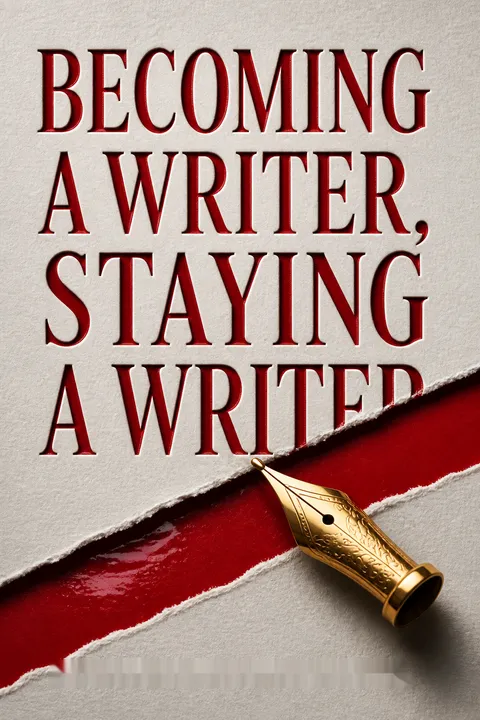
Becoming a Writer, Staying a Writer receives high praise for its practical advice, personal anecdotes, and honest insights into the writing profession. Readers appreciate Straczynski's conversational tone, humor, and encouragement. The book is valued for addressing both aspiring and established writers, offering unique perspectives on the craft and industry. While some find certain sections less helpful, most reviewers consider it an essential resource for writers, comparing it favorably to other writing guides and recommending it for its motivational impact and real-world wisdom.
People Also Read



Glossary
The Tyranny of Reasonable Voices
Protective discouragementStraczynski’s term for well-meaning advice from relatives or friends that urges an aspiring writer toward safer, more conventional work. The advice may come from love and fear of failure rather than hostility, but can still steer someone away from an artistic commitment before that person has tested what they can do.
Three Cs
A revision checklistA shorthand for three editing moves: condense unnecessary language, combine scenes that can carry several functions together, and collapse scenes or characters that contribute little or duplicate another element. The method helps writers remove excess while preserving the story’s necessary information, conflict, and clarity.
Turning it upside down
Reverse the central assumptionA story-development technique that asks what happens if a core premise is interpreted in the opposite way. A threat behind a door might, for example, become something the character is trying to keep inside. Following the changed premise through its emotional and practical consequences can reveal a less predictable story.
Turning your hat around
Recenter the antagonistA perspective exercise that temporarily treats the antagonist as the protagonist. The writer considers the conflict, goals, and events from that character’s point of view, then revises scenes so the antagonist’s motives and self-understanding become vivid. The technique creates a more dimensional opponent without requiring the story to endorse the opponent’s actions.
Three Legged Stool Theory
Diversify creative workStraczynski’s career strategy of maintaining at least three streams of creative expression and income. If one line of work weakens, the others can provide financial support and room to continue. The different forms can also strengthen one another by developing transferable skills in structure, dialogue, research, and storytelling.
Prince from a Distant Land Scenario
Enter a new creative marketThe advantage a writer may gain by presenting an unfamiliar kind of experience to a buyer. A television writer approaching a comics publisher, for example, may stand out among familiar applicants. The concept encourages writers to move between forms and industries rather than letting buyers reduce them to one established category.
The Velvet Alley
Dependence on peak incomeA career trap in which a writer’s spending rises to match unusually high earnings, making the writer dependent on continued access to the same work and income. That dependence can make it harder to refuse assignments that conflict with personal or artistic judgment. Saving during prosperous periods can preserve future freedom.
Craft Rotation
Move between formsThe practice of shifting among different kinds of writing so skills and ideas circulate rather than stagnate. Work in journalism, fiction, television, or other forms can teach techniques useful elsewhere. Rotation can refresh a writer’s approach and make a career less dependent on a single genre or market.
Writer’s block
A symptom with causesStraczynski uses the phrase for several distinct situations rather than a single mysterious condition. A writer may be reaching a learning plateau, avoiding an earlier structural mistake, or attempting a story before understanding its characters and subject. Identifying the cause is more useful than waiting passively for inspiration.
Download PDF
Download EPUB
.epub digital book format is ideal for reading ebooks on phones, tablets, and e-readers.








