

Key Takeaways
Turn intelligence into wisdom by practicing virtues in ordinary life
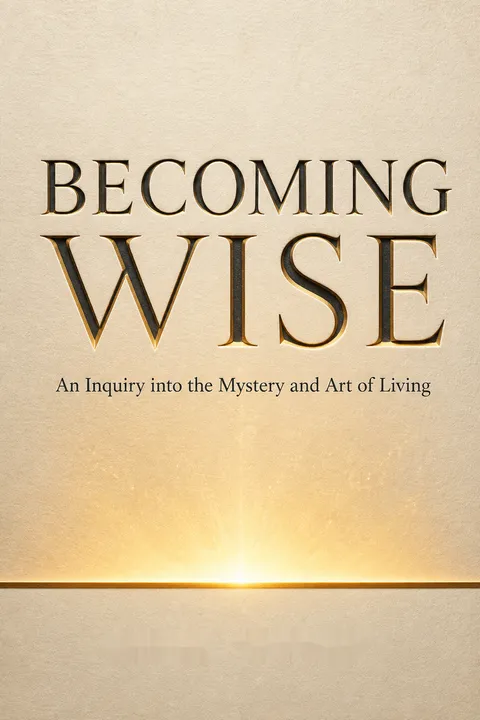
Knowledge needs character. Krista Tippett’s central question is how people can become wise enough to use their growing power well. Scientific and technological intelligence can explain and alter the world, but it does not guarantee humane choices. Albert Einstein saw this danger after science contributed to fascism and weapons of mass destruction. Tippett argues that qualities such as compassion, humility, courage, and attentiveness are practical capacities, not decorations reserved for saints. They grow through repeated actions, just as a physical skill does.
Her book follows five everyday starting points: words, the body, love, faith, and hope. Each can either narrow human possibility or help people live more generously together. The aim is not perfect behavior. It is to notice how daily habits shape relationships, and to practice the kind of person and community worth becoming.
What's striking is the book's refusal to treat wisdom as information with a halo. It presents ethical life as a learned capacity, which aligns with virtue ethics: good judgment develops through practice, relationships, and attention to consequences. That view is especially relevant when technical systems amplify human decisions at scale. Yet virtues do not replace institutions, expertise, or policy. A compassionate individual cannot, alone, repair an unjust system. The strongest reading is reciprocal: personal formation shapes public choices, while fair structures make humane conduct easier to sustain.
Ask questions that reveal a person before defending a position
Words shape the encounter. Tippett argues that language does more than describe reality: it influences what people can notice and how they treat one another. Tolerance, for example, permits difference without requiring curiosity or care. A better conversation begins with a question that invites experience rather than demanding a slogan. At a Benedictine institute in Collegeville, participants approached difficult theological questions by telling the stories that had shaped their answers. Disagreement remained, but personal experience made it harder to reduce someone to a position.
The method also applies to public disputes. In a conversation about abortion, Frances Kissling and an Evangelical ethicist explored the human stakes beneath familiar opposing labels. They did not need to agree to understand each other more fully. Tippett calls this generous listening: attention guided by curiosity and a willingness to be changed or surprised. A useful question is not the one that corners someone, but the one that makes a more honest answer possible.
This approach resembles narrative medicine, where clinicians seek the patient's account rather than relying only on a diagnostic category. In both settings, a story adds context that a label cannot carry. The political value is real: recognition can lower defensiveness without requiring ideological surrender. But listening should not become a substitute for accountability. Some disputes involve unequal power or immediate harm, and dialogue alone may preserve the status quo. The method works best when curiosity is paired with clear boundaries and a willingness to act on what is learned.
Let your body teach what abstract advice cannot
Wisdom is embodied. Tippett challenges the habit of treating mind, spirit, and body as separate domains. Memory, emotion, attention, and trauma are lived physically, so healing and moral practice cannot be purely intellectual. Matthew Sanford, paralyzed after a car accident that killed his father and sister, spent years trying to ignore his legs. Yoga helped him relate to his whole body, even though it could not restore his ability to walk. His story distinguishes healing from cure: a person can become more whole without undoing injury.
Trauma psychiatrist Bessel van der Kolk likewise describes how overwhelming experiences can disrupt a person's sense of bodily safety. Practices such as breathing, movement, and meditation can help people regain awareness and choice. Tippett also connects embodiment to ordinary pleasures, from cooking to noticing beauty. The point is not to master the body, but to attend to its signals and treat its limits with respect.
The book's emphasis on embodiment fits contemporary work on interoception, the brain's monitoring of internal bodily states. That awareness can help people distinguish a present threat from an old alarm, although it is not a universal or sufficient treatment for trauma. The distinction between healing and cure is particularly humane: it resists making physical restoration the only measure of a life. A necessary caution is that bodily practices can feel unsafe for some trauma survivors. Choice, skilled support, and cultural context matter as much as the practice itself.
Make love a public practice, not a private feeling
Care crosses boundaries. Tippett argues that love is more than romance or affection among family. It can become sustained civic care: the choice to recognize another person's humanity and build conditions in which more people can belong. The civil rights movement offers a demanding example. John Lewis and fellow activists prepared for nonviolent action by studying, rehearsing, and imagining the perspective of people who might attack them. Their goal was not only legal change, but a community in which former opponents could live together.
The book also resists the idea that romantic partnership is the sole proof of being loved. Tippett describes recognizing the everyday care surrounding her after divorce, while Eve Ensler recounts the friends and relatives who supported her through cancer. Their experiences widen the definition of love from a feeling or ideal to acts of attention, protection, and practical help. Civic love does not erase disagreement or grievance; it asks how people can remain responsible to one another amid them.
This account connects love to the political idea of solidarity: people take responsibility for conditions that affect others, not merely for those inside their immediate circle. The civil rights example makes clear that such care can be disciplined and strategic, rather than sentimental. Still, love should not be used to demand reconciliation from people who have been harmed, or to excuse institutions from justice. A public ethic of care needs both compassion and enforceable rights. Love is most politically credible when it expands accountability rather than softening it.
Keep faith curious enough to survive doubt and change
Belief can keep evolving. Tippett portrays faith not as possession of settled answers, but as a changing response to experience, uncertainty, and mystery. Religious traditions can preserve practices and stories that help people live, yet their institutions can also become rigid or exclusionary. The growing number of people who identify with no religion does not necessarily signal a lack of spiritual or ethical concern. Some seek purpose, service, and community while remaining wary of inherited institutions.
The book brings scientists and religious thinkers into conversation because both encounter limits to what they can explain. Physicists can describe phenomena with extraordinary precision while acknowledging that much about reality remains hidden. Jesuit astronomers describe scientific discovery as a process in which each answer opens new questions. Tippett finds a shared discipline in this: convictions can matter deeply without pretending to be final. Faith, in this account, is less about certainty than a continuing orientation toward life and responsibility.
The most valuable move here is to distinguish intellectual humility from indifference. A person can hold commitments while admitting that understanding is incomplete. This resembles the scientific practice of provisional models: explanations earn trust through evidence, but remain open to revision. The analogy has limits. Scientific uncertainty concerns testable claims, while religious mystery may involve claims that cannot be tested in the same way. Respectful exchange does not require treating all claims as equally supported. It does require resisting the assumption that certainty is the only form of seriousness.
Face grief, then train attention to recognize what remains good
Hope faces the whole picture. Tippett separates hope from optimism: it does not predict that things will turn out well, and it does not ask people to ignore suffering. Environmental activist Joanna Macy describes allowing grief about ecological damage to be felt rather than suppressed. For her, grief can disclose attachment to the living world and move people toward care. Similarly, theologian Walter Brueggemann argues that religious communities need practices for lament, because loss cannot be managed away by plans or positive slogans.
Attention also needs training. Tippett points to gratitude practices that ask people to register what is good even on difficult days. This does not cancel violence, injustice, or loss. It corrects a distorted picture in which bad news becomes the whole of reality. Hope is therefore both emotional honesty and deliberate perception: face what is broken, notice what is sustaining life, and choose a next action rather than surrendering to despair.
This is a strong corrective to both forced positivity and doom-driven paralysis. Psychological research on attention and gratitude suggests that what people repeatedly notice can shape mood and behavior, though such practices cannot resolve structural causes of suffering. The distinction matters: gratitude is not a duty imposed on those in crisis, and hope is not a guarantee. Its public value lies in preserving agency without falsifying reality. Grief can motivate action, but it can also overwhelm; companionship and concrete avenues for response help turn feeling into sustained care.
Seed change in small groups willing to cross divides
Transformation starts below the headlines. Tippett's years in Berlin taught her that political outcomes can hinge on changes no official plan fully controls. When the Berlin Wall opened in 1989, a bureaucratic misstatement helped trigger a crowd's movement through the border, and guards joined rather than stopping it. The event did not make politics irrelevant; it showed that fear and human agency can shift what once seemed immovable.
Conflict mediator John Paul Lederach describes small, unlikely groups that build relationships across lines of division and create new possibilities over time. He calls their influence critical yeast: like yeast in dough, a small element can change the larger mixture. These groups do not replace mass movements or legislation. They prepare new trust, language, and cooperation that larger changes can draw upon. The practical lesson is to find people outside the familiar choir, work on something tangible together, and let that relationship reshape what seems possible.
The yeast metaphor captures a feature often missed by theories that measure change mainly through crowds, elections, or laws: social trust is infrastructure too. Small groups can test new norms and build bridges before public consensus exists. This is consistent with network accounts of diffusion, where influential ties help ideas travel between otherwise separate communities. The limit is scale. Close-knit groups can also become insular or fail to alter formal power. Their contribution becomes consequential when relationships connect to organizing, institutions, and durable rules.
Build resilience by expecting failure and sharing the repair
Prepare for disruption. Tippett uses resilience to describe the capacity to endure disruption, learn, and adapt rather than expecting steady progress. Andrew Zolli argues that complex systems should fail without taking everything around them down. This applies to communities as well as infrastructure: dependence on one person, one institution, or one imagined perfect plan makes recovery harder. Resilience accepts that losses and mistakes are part of life, and asks how relationships and systems can respond without collapsing.
Vulnerability is part of that capacity, not its opposite. Researcher Brené Brown describes courage as requiring a willingness to risk exposure and imperfection. Her interviews with people living wholehearted lives did not reveal lives free of divorce, trauma, or financial difficulty. They revealed people less governed by perfectionism and performance. Tippett's conclusion is practical: do not attempt to save everything alone. Build trustworthy relationships, take a share of the work, and allow failure to inform the next attempt.
Resilience is most useful when understood as a property of systems and relationships, not as an individual's obligation to endure anything. In ecology and engineering, resilience often means retaining essential functions while adapting to shocks; in human communities, that requires resources, redundancy, and shared decision-making. The book's emphasis on vulnerability adds a needed psychological dimension. Yet praising resilience can accidentally normalize preventable harm. The better question is not only how people recover, but which conditions keep exposing them to avoidable failure and who has power to change those conditions.
Analysis
Becoming Wise is a braided inquiry rather than a conventional manual. Tippett moves from her own path, including the abrupt transformation of Berlin in 1989, into conversations with poets, scientists, activists, theologians, and people whose lives embody care. The five organizing materials, words, flesh, love, faith, and hope, function less as isolated subjects than as a connected account of how inner life becomes public reality.
The book's central strength is its insistence that human beings cannot solve shared problems through intelligence alone. Language can humanize or polarize; bodily safety affects whether people can listen; love can become civic practice; uncertainty can keep belief and science open to correction; and hope can sustain action without denial. Stories make those claims tangible. The Collegeville conversations show that disagreement need not prevent relationship. Matthew Sanford's experience separates healing from cure. Civil rights organizing shows how love can involve rigorous preparation, not just goodwill. These examples keep the argument grounded in lives rather than slogans.
The book also asks readers to change what counts as evidence of social change. Media attention favors conflict, scale, and immediate results, while the book highlights small groups, everyday kindness, community gardens, and practices of listening. That attention is generative, but it creates a selection problem: exemplary lives illustrate possibility, not prevalence. Local care can build trust, yet it cannot by itself correct unequal institutions or substitute for public policy. The book is most persuasive when its intimate and civic scales are treated as mutually necessary.
Its lasting contribution is a vocabulary for connecting personal formation to common life without pretending that either is simple. It resists both cynicism and easy optimism, and makes room for grief, contradiction, and unfinished questions. The reader is not handed a formula for wisdom. Instead, the book offers a discipline of attention: attend to the words being used, the bodies carrying experience, the relationships that cross boundaries, and the quiet signs of change. That is an appealing, demanding account of how societies may grow wiser.
Review Summary
Becoming Wise receives largely positive reviews, praised for its thought-provoking content and insights from Krista Tippett's interviews. Readers appreciate the book's exploration of spirituality, wisdom, and human connection. Some find the writing style and organization challenging, preferring the podcast format. The audiobook version is highly recommended for its inclusion of interview clips. Critics note the book's dense language and lack of clear structure. Overall, readers find value in Tippett's reflections on love, faith, and hope, though some struggle with the book's pacing and organization.
People Also Read





Glossary
critical yeast
Small groups catalyzing changeJohn Paul Lederach's term for small, diverse groups whose relationships help generate new social possibilities within polarized or conflict-ridden settings. Rather than waiting for mass agreement, members build trust and cooperation across differences, then help new ways of working spread. Tippett presents such groups as one source of change alongside large movements and formal institutions.
generous listening
Curious, vulnerable attentionA way of listening that seeks the humanity and experience behind another person's words. It depends on curiosity, patience, and a willingness to be surprised or to revise assumptions. In Tippett's account, generous listening is active rather than merely silent: it shapes questions that invite honesty and dignity instead of defensiveness.
tikkun olam
Repairing the worldA Hebrew phrase commonly rendered as restoration or repair of the world. Rachel Naomi Remen explains it through a story in which the world's wholeness is broken and its light scattered among people and events. Human beings participate in repair by noticing and bringing that hidden value into view, beginning with the people and places within reach.
near enemies
Virtue-like trapsIn Buddhist psychology, near enemies are responses that resemble a virtue but can lead away from its deeper purpose. Tippett uses sorrow as an example: it can look like compassion because it arises from sensitivity to suffering, yet it may turn inward and become paralysis. The distinction helps identify when a feeling of care needs to become practical action.
body memory
Physical traces of experienceA term used in the book for the way experiences, especially trauma, can remain present in bodily sensations and reactions even when a person cannot consciously recall the event. Matthew Sanford uses it to describe how his body carried the effects of his accident. The concept points toward forms of healing that include bodily awareness and safety, not conversation alone.
healing story
A story that helps survivalA personal account that enables someone to endure and continue living through difficult circumstances. Tippett uses the term for a story about her parents' marriage that helped her move through life, though she later recognized that it did not fully match her family's reality. Such stories can be protective without remaining truthful or helpful forever.
noosphere
Human thought surrounding EarthPierre Teilhard de Chardin's term for a sphere of human intelligence, information, and activity that develops over the biosphere. Tippett connects the idea to communication technologies and the growing reach of human influence. The concept frames social and spiritual development as part of evolution, while leaving open whether global connection leads to progress or collapse.
Nones
People reporting no affiliationThe label used in surveys for people who select no religious affiliation. Tippett argues that this category does not necessarily mean spiritual or ethical indifference. Some people outside formal religious institutions show strong interest in meaning, service, community, and religious traditions, while resisting institutions they experience as rigid or unwelcoming.
skilled mastery
Responsible human careEllen Davis's interpretive rendering of the biblical human role often translated as dominion over other creatures. It suggests an art or craft of living among other life forms, carrying power together with responsibility. In the book, the phrase reframes human authority as care that must respect the prior value and fruitfulness of other creatures.
Download PDF
Download EPUB
.epub digital book format is ideal for reading ebooks on phones, tablets, and e-readers.








