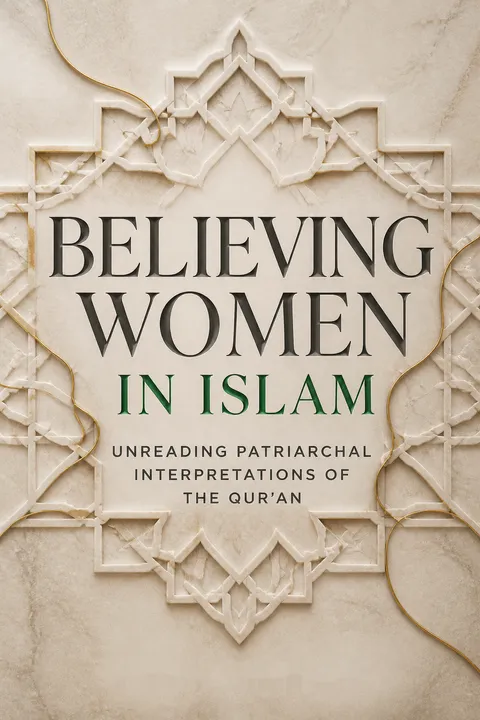


Key Takeaways
Separate the Qur’an from its patriarchal interpretations before judging Islam
Text is not interpretation. Barlas’s central argument is that Muslim women can challenge oppression from within the Qur’an, rather than treating Islam and patriarchy as inseparable. She distinguishes revelation from human readings of revelation, and the Qur’an from Muslim history and practice. This matters because patriarchal rules are often presented as God’s own words, even when they come from later commentaries or social customs.
Reading has consequences. Barlas does not deny that Muslim societies have oppressed women or that readers can find patriarchal meanings in the text. She asks instead which readings best fit the Qur’an’s complete message, its historical setting, and its claims about justice. The book’s task is to show that liberation is not an import imposed on Islam, but a possibility within its scripture.
What's striking is the refusal to let either side own the interpretive choice. Treating a scripture and its commentary as identical makes historical decisions look divinely inevitable; treating every reading as equally valid, meanwhile, removes any basis for criticizing oppressive interpretations. Barlas seeks a middle ground: readers remain responsible for interpretation, but the text’s larger structure constrains what can plausibly be claimed. That position is demanding. It asks believers to scrutinize inherited authority without assuming that faith itself must be discarded.
Read the Qur’an through its claims about a just, indivisible God
God is not a patriarch. Tawhīd is the Qur’an’s teaching that God is one and indivisible, with no partner or sharer in divine sovereignty. Barlas argues that this rules out presenting God as male or as a father whose earthly authority men inherit. The Qur’an also describes God as just and rejects zulm, meaning harm done by transgressing against another’s rights. A reading that makes God endorse women’s degradation therefore conflicts with these claims about God.
A theological test. Barlas uses God’s self-disclosure as a guide to interpretation: claims about scripture should cohere with claims about divine justice and incomparability. On this view, a husband’s or father’s authority cannot be treated as a second sovereignty alongside God’s.
The argument places theology at the center of gender interpretation, rather than treating it as a decorative preface to rules about family life. That move is powerful because it makes claims about women’s rights consequential for how a community imagines God. It also creates a responsibility: readers must explain why a disputed verse contradicts, or coheres with, this account of divine justice. Invoking a just God cannot settle every interpretive disagreement by itself, but it provides a moral standard against which readings can be tested.
Treat inherited religious authority as history, not revelation itself
Tradition was made. Tafsīr is Qur’anic commentary, while ahādith are reports about the Prophet’s words and conduct. Both help Muslims understand the Qur’an, but neither is identical to it. Barlas traces how early scholars incorporated existing customs and historical judgments into religious interpretation. Over time, some commentaries and reports gained authority that could overshadow the scripture they were meant to explain.
Authority narrowed. The Prophet’s Sunnah, meaning his example and practice, became closely tied to these reports. Scholarly consensus, or ijmāʿ, increasingly constrained ijtihād, the exercise of independent reasoning. Barlas argues that this history helped establish a conservative interpretive system and gave the state and religious scholars power over religious meaning. The claim that the system was inevitable or wholly uniform, however, is not her point: she stresses the choices that built it.
This history turns interpretation into a question of institutions, not merely individual bias. A reading can become authoritative because a legal school, scholarly network, or state repeats it, even when other readings remain available. That insight helps explain why correcting an interpretation on the page may not change people’s lives: authority is also maintained through education, law, and public power. The account is necessarily selective, but it makes a useful distinction between respecting a tradition and treating every historical decision within it as untouchable.
In Abraham’s trial, his son’s consent limits a father’s power
A different sacrifice story. In the Qur’anic account, Abraham tells his son about a dream in which he sees himself sacrificing him. The son agrees to what he understands as God’s command, and God stops the sacrifice. The text does not name the son or describe Abraham binding him. This differs from the biblical account, in which Abraham does not tell Isaac his intent before the journey.
Consent changes the meaning. Barlas reads the son’s response as more than a detail: without his willing participation, the sacrifice would be an act of paternal violence, not a chosen expression of faith. The story therefore places a limit on a father’s claim over his child and makes moral responsibility personal. It also echoes the book’s larger argument that God’s authority is not a license for human beings to rule absolutely over one another.
The son’s voice shifts the story’s center of gravity. Instead of viewing the episode only through a father’s obedience, the reading asks what makes the son a moral agent rather than an object of another person’s faith. That question travels beyond scripture into debates about parental authority and consent. The comparison also shows why shared religious ancestry should not erase differences between texts: the Qur’anic and biblical narratives are related, but their details support distinct interpretations. Barlas’s reading is a persuasive possibility, not the only interpretation Muslims have offered.
Build equality from shared human origin, not identical social roles
One human source. The Qur’an describes women and men as originating from a single nafs, meaning a self or person, and as created in pairs. Barlas argues that this account does not make the male the original human and the female a derivative, lesser version. Nor does the Qur’an consistently assign one fixed social role to each sex.
Moral agency is shared. The text addresses believing women and men as capable of faith, patience, charity, chastity, and wrongdoing. Their standing depends on taqwá, or God-consciousness expressed through moral conduct, not on being male or female. The Qur’an also calls believing women and men protectors and guides of one another. For Barlas, these teachings support equality without requiring identical responsibilities in every circumstance.
This distinction between equal moral standing and identical treatment avoids a familiar trap: assuming that any difference in a rule proves that one group is inferior. It also makes the argument more precise. Equality here begins with shared origin and moral capacity, while questions about particular legal arrangements require separate contextual analysis. The model still leaves hard questions about how to translate equal agency into institutions where power is uneven. Naming that gap strengthens the argument, since moral equality needs practical forms if it is to matter beyond interpretation.
Read modesty and chastity as obligations for both sexes
Desire is not shame. Barlas reads the Qur’an as treating sexuality as a natural part of human life, not as a stain attached to women. Marriage is described through mutual love, mercy, and sexual tranquility. The text’s standards of chastity apply to women and men, and sexual virtue depends on conduct rather than a person’s sex, social class, or virginity.
Modesty is mutual. In the passages on dress and gaze, the Qur’an instructs both believing men and women to lower their gaze and guard their private parts. Barlas distinguishes these general expectations from a separate instruction involving a cloak in seventh-century Arabia, which she reads in the context of protecting free women from abuse in a slave-owning society. She argues that this historical instruction does not establish a universal requirement to cover the face or seclude women.
The emphasis on mutual responsibility challenges the idea that women’s clothing must manage men’s behavior. It also resists the opposite assumption that sexual freedom requires public exposure. Barlas’s reading makes modesty a shared ethical practice rather than a tool for policing women alone. Her historical account of the cloak is especially important, though present-day meanings of dress can differ sharply from its original setting. A careful interpretation must therefore distinguish the Qur’an’s ethical principle from the social meanings later attached to particular garments.
Use the Qur’an’s safeguards to read marriage rules, not isolated permissions
Marriage carries obligations. The Qur’an presents marriage as a contract and describes spouses as sharing mutual rights, affection, and responsibility. It also gives parents duties toward children and emphasizes the mother’s physical labor in pregnancy and nursing. Barlas argues that these teachings do not make the husband a sovereign or the wife his property.
Restrictions matter. The Qur’an mentions polygyny while addressing justice toward female orphans in a guardian’s care. Barlas reads this as a limited safeguard, not a general license for men to acquire multiple wives for sexual convenience. The text warns that men may fail to treat wives equitably and urges restraint. Divorce, too, comes with requirements of fairness, support, and decent conduct, including toward a divorced wife who is pregnant or nursing.
The strength of this approach is its attention to what a rule is meant to prevent, not merely what it permits. A permission detached from its surrounding duties can become a blank check, especially when one party already holds more power. The marriage contract offers a practical tool for specifying rights, but its value depends on whether communities honor and enforce those terms. Textual safeguards can guide reform, yet they cannot substitute for legal institutions that protect people when promises are broken.
Treat contested verses as questions for interpretation, not instant licenses
One verse, disputed terms. Qur’an 4:34 is often used to claim that men rule women and may beat disobedient wives. Barlas challenges that reading. She argues that qawwāmūn, commonly rendered as men being in charge, can refer to financial maintenance, and that the verse’s reference to men having more of certain resources need not mean they are inherently superior.
Context constrains permission. The Arabic term daraba, often translated as “beat,” has multiple meanings, and Barlas discusses readings that treat the verse as restricting existing practices rather than authorizing violence. She also notes the Qur’an’s broader emphasis on kindness and mediation in marital conflict. The verse remains contested, but a disputed translation should not be treated as unquestionable divine permission to harm a spouse.
This is the book’s most urgent interpretive test because the stakes are immediate and bodily. Barlas’s case draws strength from comparing translations, context, and the Qur’an’s wider ethical direction. At the same time, linguistic possibility alone cannot decide a contested verse; readers need transparent criteria and must confront how their interpretation operates in law and everyday life. The key ethical point is firmer than any single translation: no reading should turn a difficult passage into automatic impunity for violence.
Keep feminist justice in conversation with faith, without pretending tensions vanish
Two shortcuts fail. Some conservatives treat inherited patriarchal readings as the only faithful ones. Some secular critics conclude that the Qur’an is irreparably patriarchal and that Muslim women should stop seeking equality through it. Barlas rejects both positions. She argues that Muslims can criticize interpretations without abandoning the scripture, and that historical context and holistic reading can recover egalitarian principles.
The dispute is real. Critics question whether her readings impose modern ideals on a premodern text. Barlas answers that every reader brings a standpoint and that the Qur’an itself encourages reflection and the search for its best meanings. Her position is not that every passage is simple or that interpretation settles political injustice. It is that Muslim women need not concede religious authority to those who claim a monopoly over the text.
The book’s enduring contribution is to make interpretive authority part of the struggle for justice. Its method gives believers a way to resist both religious gatekeeping and the assumption that secularization is the price of equality. The unresolved difficulty is how to distinguish a principled rereading from a reading that simply reaches a desired conclusion. Barlas offers criteria in textual coherence, context, and divine justice, but communities may disagree about how to apply them. That disagreement is not proof that interpretation is futile; it makes accountable interpretation essential.
Analysis
Barlas’s central contribution is not simply the claim that the Qur’an is egalitarian. It is the argument that conclusions about gender depend on a whole interpretive apparatus: which sources count, who is authorized to read them, how historical context is treated, and what conception of God guides interpretation. This shifts the debate from isolated verses to the production of religious authority. Her approach links theology and hermeneutics: if God is just and incomparable, readings that make divine sovereignty a model for male rule require scrutiny.
The most compelling parts of the argument are those where textual detail disrupts familiar assumptions. Abraham’s son speaks before the sacrifice proceeds. The Qur’an addresses women and men as moral agents. The cloak passage is situated in a society where women faced specific forms of vulnerability. Such readings recover possibilities obscured when commentary is mistaken for revelation. They also show that interpretation can change the ethical meaning of a story or rule without denying the text’s sacred status.
The book’s method carries a genuine tension. Barlas appeals to the Qur’an’s own principles, especially justice and coherence, to judge interpretations, but readers can disagree about what justice requires and which passages should govern a conflict. Her claim that the Qur’an’s episteme is antipatriarchal is therefore an argued theological position, not a neutral result that every reader must accept. The value lies partly in making its criteria visible and contestable.
The book also distinguishes textual reform from political reform. A more egalitarian reading cannot, by itself, undo state coercion, legal inequality, or the control of religious education. Yet reform that ignores the authority of scripture may fail to persuade believers whose lives are shaped by it. Barlas’s proposal is consequently both intellectual and political: reopen the text to readers excluded from its interpretation, while refusing to confuse inherited power with divine command.
Review Summary
"Believing Women" in Islam offers a groundbreaking reinterpretation of the Qur'an, challenging patriarchal readings and arguing for gender equality. Barlas meticulously analyzes Qur'anic verses, presenting an egalitarian perspective on women's rights in Islam. Readers praise her scholarly approach and the book's potential to reshape understanding of Islamic teachings. While some find the academic language challenging, many consider it essential reading for Muslims and non-Muslims alike. The book is lauded for its comprehensive examination of women's roles in Islam and its potential to inspire critical thinking about religious interpretation.
People Also Read




Glossary
Tawhīd
God’s indivisible unityThe Islamic doctrine that God is one, unique, and indivisible, with no partner who shares divine sovereignty. In Barlas’s argument, Tawhīd rules out treating men, fathers, or husbands as extensions of God’s authority. It also informs her claim that God cannot be represented as a male deity or patriarch.
zulm
Transgression against another’s rightsA Qur’anic term for wrongdoing that exceeds proper limits and harms another person by violating their rights. Barlas uses it to argue that interpretations authorizing women’s degradation conflict with the Qur’an’s description of God as just. The term is morally and interpretively important because readings attributed to God also make claims about what God wills.
nafs
Self or personA Qur’anic term that can mean self or person. In the creation passages central to Barlas’s argument, women and men originate from a single nafs. She uses this reading to challenge claims that the male was created first or that the female is derivative, lesser, or ontologically separate.
taqwá
God-conscious moral conductGod-consciousness expressed through a person’s moral choices and conduct. Barlas treats taqwá as the Qur’an’s basis for distinguishing people, rather than sex, race, class, or social position. Women and men are both presented as capable of this moral orientation and are assessed by the same ethical standard.
ijtihād
Independent critical reasoningThe exercise of critical reasoning to interpret religious sources and apply their teachings to changing circumstances. Barlas contrasts ijtihād with unquestioning imitation of inherited precedent. Its restriction in parts of Muslim history, she argues, helped preserve older interpretations and limited the emergence of new readers and methods.
ijmāʿ
Scholarly or communal consensusConsensus used in Muslim legal and interpretive reasoning. Barlas describes how consensus came to be treated as a stabilizing authority, sometimes at the expense of continued independent reasoning. She stresses that historical consensus was shaped by particular interpretive communities and did not necessarily include women or the whole Muslim community.
Sunnah
The Prophet’s example and practiceThe Prophet Muhammad’s reported practice, sayings, and tacit approval, used as a model for Muslim life and as a context for reading the Qur’an. Barlas distinguishes the Prophet’s Sunnah from customary practices that were later incorporated into reports about him. The distinction matters because those reports can reflect historical culture as well as prophetic example.
tafsīr
Qur’anic commentaryInterpretive commentary that explains Qur’anic verses and their meanings. Barlas treats tafsīr as human work shaped by methods, historical settings, and the interests of its authors. It can illuminate the Qur’an, but it should not be collapsed into revelation itself or treated as immune from critique.
Sharīʿah
Islamic legal traditionThe body of Islamic legal norms developed through interpretation of the Qur’an, the Prophet’s Sunnah, and other legal methods. Barlas distinguishes the divine ideal Muslims associate with the Sharīʿah from fiqh, the human process of deriving legal rules. In practice, the terms are often blurred, making historically produced rules appear divinely fixed.
qawwāmūn
Those who provide supportA Qur’anic term in verse 4:34, often translated to mean that men are in charge of women. Barlas discusses readings that understand it as a responsibility to provide financial support or maintenance, rather than as a declaration of male superiority or authority. The meaning remains contested among interpreters.
FAQ
What is "Believing Women" in Islam by Asma Barlas about?
- Critical examination of patriarchy: The book investigates whether the Qur'an is inherently patriarchal or misogynistic, challenging dominant interpretations that privilege men.
- Hermeneutical framework: Asma Barlas develops a Qur'anic hermeneutics rooted in divine ontology, emphasizing God's unity, justice, and lack of gender, to argue for an egalitarian reading.
- Scope and aim: The book covers Qur'anic teachings on family, marriage, sex/gender, and critiques both traditional and secular/feminist readings, aiming to empower Muslim women from within the tradition.
- Liberatory goal: Barlas seeks to recover the scriptural basis for sexual equality in Islam and provide tools for contesting oppressive interpretations.
Why should I read "Believing Women" in Islam by Asma Barlas?
- Correcting misconceptions: The book dispels the widespread belief that the Qur'an inherently supports patriarchy, showing that many such readings are misinterpretations shaped by history and culture.
- Theological and hermeneutical insight: Readers gain a deep understanding of how the Qur'an’s conception of God as just and unsexed undermines patriarchal authority.
- Contemporary relevance: The book addresses modern feminist and secular critiques, offering a nuanced response that respects the Qur'an’s sacredness while advocating for gender justice.
- Empowerment for Muslim women: It provides a Qur'anic basis for women to claim equality and rights from within their religious tradition.
What are the key takeaways from "Believing Women" in Islam by Asma Barlas?
- Qur'an’s egalitarian message: The Qur'an affirms the ontological equality of men and women, making them mutual protectors and vice-regents on earth.
- Difference vs. inequality: Gender differences are recognized but not equated with inequality or male superiority; patriarchal norms are historically contingent, not divinely mandated.
- Critique of patriarchal exegesis: Many patriarchal readings are products of male-dominated interpretive traditions, not faithful to the Qur'an’s core teachings of justice and mutuality.
- Need for critical rereading: Recovering the Qur'an’s egalitarian vision requires challenging entrenched patriarchal interpretations and applying ethical responsibility in interpretation.
How does Asma Barlas define patriarchy in "Believing Women" in Islam?
- Continuum of patriarchy: Patriarchy is defined as a continuum from God-as-Father and father/husband rule to the privileging of males through sexual differentiation.
- Not Qur'an-based: The Qur'an does not support patriarchal authority or male supremacy; instead, it dislocates father/husband rule and theories of male sovereignty.
- Patriarchy as shirk: Barlas argues that patriarchal authority borders on shirk (associating partners with God), which is condemned in the Qur'an.
- Theological and epistemological focus: The definition highlights how patriarchal readings violate the Qur'an’s conception of God and justice.
What is Asma Barlas’s approach to Qur'anic hermeneutics in "Believing Women" in Islam?
- Polysemy and context: Barlas emphasizes the Qur'an’s polysemic nature and the necessity of contextual and holistic reading.
- Rejecting interpretive relativism: Not all readings are equally valid; interpretations must align with the Qur'an’s principles of justice, kindness, and equality.
- Theological grounding: Hermeneutics should be rooted in the Qur'an’s portrayal of God as just and unsexed, avoiding readings that attribute injustice or male privilege to God.
- Moral responsibility: Interpreters have an ethical obligation to seek the best meanings and avoid misreadings that distort the Qur'an’s message.
How does "Believing Women" in Islam by Asma Barlas address the role of tafsīr and ahādith in shaping patriarchal interpretations?
- Tafsīr as interpretive tradition: Tafsīr developed to explain the Qur'an’s polysemy but was shaped by scholars’ religious, political, and cultural contexts, often overshadowing the Qur'an itself.
- Ahādith’s influence: Prophetic traditions, compiled centuries after the Prophet, incorporated pre-Islamic and misogynistic ideas, becoming authoritative for law and exegesis.
- State and scholarly collusion: Early Muslim states and religious elites used tafsīr and ahādith to legitimize their authority, embedding patriarchal norms into Islamic tradition and law.
- Confusion of sources: Patriarchal readings often conflate the Qur'an with tafsīr and ahādith, ignoring the Qur'an’s polysemy and historical context.
What is the significance of divine unity (Tawhīd) and divine ontology in Asma Barlas’s reading of the Qur'an?
- God as unsexed and just: The Qur'an’s depiction of God as unsexed/ungendered and just is foundational, precluding any justification for male supremacy or patriarchal authority.
- Tawhīd and anti-patriarchy: Divine unity means God’s sovereignty cannot be shared or represented by male authority; claims of male rule as divine are theologically unsound.
- Patriarchy as shirk: Male claims to authority over women that infringe on God’s sovereignty amount to shirk, a grave violation in Islam.
- Basis for egalitarian hermeneutics: Centering interpretation on a just and unsexed God allows for readings that affirm sexual equality and challenge patriarchal norms.
How does "Believing Women" in Islam by Asma Barlas interpret the Qur'an’s teachings on sex, gender, and sexuality?
- Ontological equality: Men and women originate from a single Self (nafs) and share the same nature, establishing equality rather than hierarchy.
- No sexual differentiation theory: The Qur'an does not espouse gender essentialism or treat men and women as binary opposites; difference is not a basis for inequality.
- Sexuality as mutual and moral: Sexual relations are natural and positive within moral limits, with mutual love, mercy, and consent emphasized for both sexes.
- Gender roles as flexible: The Qur'an recognizes gender roles but does not rigidly define or assign them ontological status, allowing for social change.
What does "Believing Women" in Islam by Asma Barlas say about the Qur'an’s teachings on marriage and family roles?
- Mutuality and equality: Marriage is based on mutual love, mercy, and tranquility, with spouses as each other’s protectors, implying equality and shared responsibility.
- Displacement of father-right: The Qur'an repudiates father/husband rule and does not sacralize men as rulers or owners of wives and children.
- Mothers’ elevated status: Mothers are given special reverence linked to God-consciousness, often elevated above fathers in the Qur'anic framework.
- Conditional obedience: Children’s obedience to parents is conditional on not conflicting with obedience to God, and the Qur'an condemns practices like female infanticide.
How does Asma Barlas interpret the controversial Qur'anic verse 4:34 about men’s role and wife discipline?
- Men as providers, not rulers: The term qawwāmūn refers to financial responsibility, not authority or rulership over women.
- Daraba’s multiple meanings: The word daraba, often translated as “beat,” can also mean “to separate” or “to set an example,” and does not support wife-beating as normative.
- Contextual and restrictive reading: The verse outlines a process for resolving marital discord, emphasizing reconciliation and legal arbitration, not violence or abuse.
- Misinterpretation critique: Classical and patriarchal readings often ignore the verse’s context and the Qur'an’s overall egalitarian ethos.
How does "Believing Women" in Islam by Asma Barlas respond to secular and feminist critiques of the Qur'an?
- Critique of patriarchal label: Barlas argues that secular/feminist scholars often uncritically accept patriarchal readings and dismiss egalitarian interpretations as manipulative.
- Misunderstanding theology and hermeneutics: Many critics conflate theological and hermeneutical issues, fail to contextualize, and reject the Qur'an’s sacredness.
- Doctrine of the created Qur'an: Some invoke this doctrine to question the Qur'an’s divinity, but Barlas clarifies it was meant to protect God’s unity, not deny sacredness.
- Double standards: Critics sometimes admit male privilege in the text but reject feminist readings, or question the Qur'an’s divinity based on exegeses they also reject.
What are the best quotes from "Believing Women" in Islam by Asma Barlas and what do they mean?
- “The Qur'an’s episteme is stubbornly egalitarian.” This highlights Barlas’s central claim that the Qur'an, at its core, affirms equality between men and women.
- “Patriarchal authority borders on shirk.” Barlas argues that male supremacy usurps God’s unique sovereignty, which is a grave theological error in Islam.
- “God is not male, nor like a male.” This quote underscores the Qur'an’s rejection of gendered representations of God, challenging the theological basis for patriarchy.
- “The Qur'an does not sacralize fathers or husbands as rulers.” Barlas points out that the Qur'an displaces, rather than replaces, patriarchal authority with divine rule.
- “Interpretation is a moral as well as intellectual endeavor.” This emphasizes the ethical responsibility of interpreters to seek just and egalitarian readings of the Qur'an.
Download PDF
Download EPUB
.epub digital book format is ideal for reading ebooks on phones, tablets, and e-readers.








