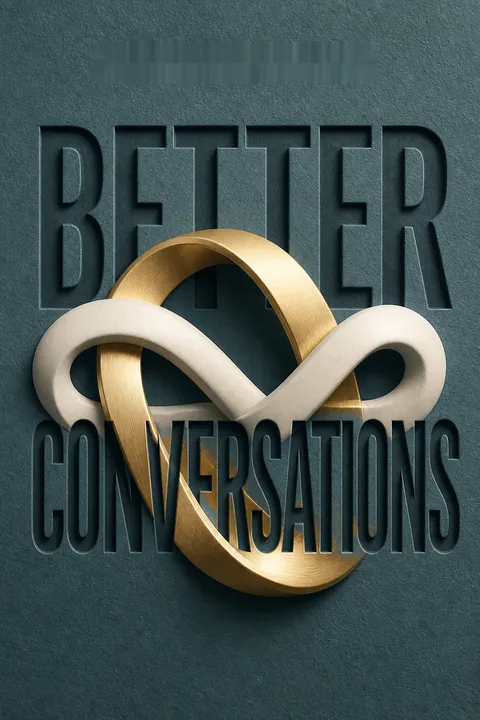


Key Takeaways
Treat conversation partners as equal thinkers, not containers for your expertise.
Replace control with partnership. Paulo Freire criticized education that treats learners as empty vessels to fill. Jim Knight applies the same concern to conversation: top-down communication treats people as audiences to persuade or manage, rather than partners whose thinking matters. There are moments for direct instruction, such as an immediate safety warning, but it should not be the default for every difficult discussion.
Respect changes the outcome. Jane, an aspiring school leader, described a supervisor spending 90 minutes attacking her competence and ethics over school results. The encounter drained her, not improved the school. Knight's alternative rests on equality, genuine interest in others' views, autonomy, nonjudgment, reciprocal exchange, and conversations that leave people more capable. These are not manners layered onto leadership. They shape whether people can speak honestly and learn.
The useful distinction is not between authority and no authority, but between authority that invites information and authority that suppresses it. A supervisor may retain responsibility for a decision while still asking what the people closest to the work know. That stance can improve both fairness and the quality of the decision. Equality in conversation does not mean equal expertise, identical roles, or automatic agreement. It means status is not used as a shortcut for proving that one person's interpretation deserves no hearing.
Use video to expose the gap between your beliefs and behavior.
Make habits visible. Knight's global self-coaching project involved about 200 volunteers and more than 1,000 completed reflection forms. Participants recorded conversations, reviewed their behavior, studied a communication habit, planned a change, then practiced and reviewed again. The process turns tacit knowledge, what people do without noticing, into explicit knowledge they can examine and act on.
Watch what stress reveals. Instructional coach Jenni Jones believed she respected her colleagues, but video showed her head shaking while she asked questions. During a tense discussion, she interrupted and took over. She could now name the mismatch and choose a behavior to practice. Knight offers three reflection angles: look back at a conversation, look at behavior in the moment or in others, and look ahead by planning a future conversation.
Video can correct a familiar self-perception problem: people remember their intentions more clearly than their impact. But a recording is not a neutral verdict. Camera placement, the selected excerpt, and the viewer's expectations all shape interpretation. The method works best when the goal is narrow, such as noticing interruptions, and when feedback remains descriptive rather than moralizing. Consent matters, too. Recording should support learning, not become surveillance or a covert performance review.
Listen to understand the person, not to prepare your rebuttal.
Empathy is active attention. Knight defines empathy as imagining another person's perspective and feelings, then letting that understanding guide one's response. It differs from sympathy, which may express concern without trying to understand the other person's viewpoint. A teacher who shadowed students through two school days saw how exhausting prolonged sitting and passive listening could be, and how sarcasm could make students afraid to ask questions.
Practice the basics first. Commit to hearing the other person, give them room to speak, pause before responding, and avoid interrupting. Knight warns that people often listen more easily to those they like, while assumptions about a person's motives can block attention. A teacher who approached a disruptive student by asking what would help him succeed learned important personal context and worked with him on a solution.
Listening is not merely silence. A pause can give another person room to clarify, while a thoughtful response shows that their words registered. This makes listening especially valuable across differences in age, role, and authority, where one person may rarely be asked for an account of their experience. Empathy should not be confused with agreement or limitless emotional availability. A person can understand why someone feels angry, acknowledge that feeling, and still set a boundary or make a different decision.
Ask questions that invite a real answer, not compliance.
Start with honest curiosity. Open questions allow a wide-ranging answer; opinion questions invite people to explain what they think, rather than guess a single correct response. Asking what a teacher thinks about a new reading program, for instance, opens more space than asking whether the program is working. Knight also recommends asking for examples, which can clarify broad statements and show genuine interest.
Check the question's hidden purpose. Some questions are disguised demands, traps, tests of the other person's knowledge, or expressions of anger. A question can sound open while actually steering someone toward the answer the speaker prefers. The book also highlights three useful inquiry prompts: why, what if, and how. They can help a group examine causes, imagine alternatives, and consider practical next steps.
Questions distribute conversational power: they can give another person room to think, or quietly put that person on trial. The difference often lies in whether the questioner is prepared to hear an inconvenient answer. Still, questioning is not automatically generous. A rapid series of prompts can feel like interrogation, and some discussions need the speaker to share relevant information before asking for more. Curiosity works best when paired with patience, context, and a willingness to offer one's own view.
Build dialogue by sharing your view while staying willing to revise it.
Combine advocacy with inquiry. Dialogue is a conversation in which people share ideas and shape understanding together. It is not simply listening quietly, nor is it a debate with a winner. Participants need to state their own thinking clearly while asking what they do not yet understand. They also need to clarify terms, share useful context, and surface assumptions that may be steering the discussion.
Co-create a way forward. Instructional coach Jennifer used this approach with an experienced teacher who was helping a student struggling with persuasive writing. Instead of prescribing a fix, Jennifer asked questions and explored the teacher's reasoning. Together they developed an assignment tied to something the student cared about, which helped him write with more focus and evidence. Dialogue can improve decisions because more people contribute, and it can make people feel respected rather than managed.
The combination of conviction and openness is demanding: without advocacy, important knowledge stays hidden; without inquiry, conversation becomes a contest. This is also a practical design problem. Groups can make dialogue easier by defining key terms, sharing background materials, and clarifying who makes the final decision. A collaborative discussion need not end in consensus. Its value may be a better-informed disagreement, a more workable decision, or a clearer understanding of why people differ.
Treat small bids for connection as relationship-making moments.
Notice the invitation. In John Gottman's relationship research, a bid is a small attempt to connect, such as a question, glance, smile, or offer of help. A person can turn toward it with a positive response, turn away by ignoring it, or turn against it with hostility. Many missed bids are not deliberate; attention is captured by work, phones, or the reply someone is already planning.
Be present and persistent. Knight tells of Lisa, who reached out by text to her estranged adult daughter. The daughter responded and agreed to visit. One message did not erase years of difficulty, but it opened a path toward reconnection. The lesson is to make sincere attempts and respond when others reach out, without assuming every gesture will be returned or that a relationship can be repaired by one person alone.
Small social signals matter partly because relationships are built through repeated encounters, not only dramatic declarations. A quick acknowledgment can communicate attention; repeated dismissal can communicate that the other person is not worth attending to. The idea also gives people a concrete behavior to notice instead of judging a relationship by vague impressions. Its limit is important: persistence is not a license to press someone who has asked for distance. Respectful connection includes recognizing a boundary.
Make praise observable, specific, and useful rather than flattering.
Train attention toward what works. Knight calls the deliberate practice of noticing and communicating good work being a witness to the good. It takes intention because problems often grab attention first. Bonnie Tomberlin, expecting a tense meeting with a struggling team, observed that its members were asking thoughtful questions and working through new ideas respectfully. She described those specific behaviors, and the team responded with visible relief and emotion.
Describe evidence, not a personality verdict. Effective positive feedback is direct, specific, and nonattributive: it tells someone what was noticed and how it affected the observer, rather than assigning a fixed label such as brilliant or naturally gifted. The book also draws on research about praise for process, such as effort or strategy, rather than intelligence. Positive feedback should be genuine, not a way to soften manipulation or avoid necessary criticism.
Specific appreciation is more informative than a generic compliment because it gives people evidence about which actions helped. It can also counterbalance workplaces where problems receive detailed analysis while successful work passes unnoticed. Praise becomes less useful when it is used to secure compliance, reward only visible achievement, or imply that effort matters more than structural support. The strongest version names a real contribution and leaves room for candor about what still needs to change.
Search for shared ground before differences harden into identities.
Look beyond the first label. Knight groups possible points of connection into I-CARE: interests, convictions, activities, roles, and experiences. The point is not to pretend people agree, but to search for authentic similarities that make conversation possible. His son Geoff avoided a traffic fine in Tanzania after greeting an officer in the officer's local language. The brief connection changed the interaction, and the officer later helped recover Geoff's wife's stolen computer.
Notice what blocks recognition. Confirmation bias makes people favor evidence that supports their existing views; habituation can make familiar shared purposes fade from attention; stereotypes and first impressions can flatten a person into a category. Seeking common ground can interrupt those habits. But connection becomes toxic when people bond by gossiping or diminishing someone else, so commonality should unite without requiring a shared target.
Common ground can lower the social cost of listening: once people see one another as more than representatives of opposing camps, they may become more curious and less defensive. Yet the search must remain honest. Shared interests do not dissolve real conflicts over resources, rights, or responsibility, and calls for unity can sometimes silence people describing harm. A bridge is useful when it helps people face disagreement more clearly, not when it requires them to deny that disagreement exists.
Stop contempt early, and keep anger from drafting your reply.
Recognize your trigger. Knight's emotion-management method is Name It, Reframe It, Tame It. Identify what is provoking a reaction and ask repeated why questions to find the deeper concern. Then imagine another interpretation, or adopt the role of listener, learner, or observer. To tame the reaction, pause, take a break, check assumptions, or replay what the other person said before answering.
Redirect harmful talk. Toxic conversations include blatant demeaning comments as well as subtler gossip, blame, and complaint. Knight describes responsive turns: interrupt the exchange, name what is happening, correct inaccurate claims, or divert attention to a constructive topic. Silence can also signal refusal to join in. In a team, shared norms can make intervention less personal, but they work only when people help shape and consistently uphold them.
The strength of this approach is that it separates an emotion from the action that follows it. Anger may contain useful information about a violated boundary, but it does not dictate whether the next move should be accusation, inquiry, or delay. Redirecting harmful talk also requires judgment: a quick diversion may stop gossip, while an explicit challenge may be needed when someone is being demeaned. Calmness should not become an excuse for staying silent about serious harm.
Earn trust through truthful character, reliable follow-through, and competent care.
Trust is built in observable ways. Knight organizes trust around five factors: character, competence, reliability, warmth, and stewardship. Character means acting honestly; competence means being able to do the work; reliability means matching promises with action. Warmth helps people feel safe, while stewardship means focusing on others' needs rather than personal credit or advantage.
Protect promises from overload. A coach who agrees to every request may appear helpful at first, but missed commitments erode confidence. Knight recommends making promises carefully, leaving enough time to deliver, and giving colleagues credit for their contributions. In schools, trust matters because teachers are unlikely to share their practice or take risks with a coach they do not trust. The same pattern applies at home: people become more open when care is matched by honesty and dependable behavior.
The five factors capture an important point: good intentions alone cannot make someone trustworthy if the person lacks the skill or consistency to act on them. Trust also depends on context. A colleague may trust someone with technical guidance but not with confidential information, or may value competence while distrusting the person's motives. That makes trust less like a permanent personal score and more like a relationship-specific judgment, strengthened when actions repeatedly match stated commitments.
Analysis
The book's central claim is that conversation is not a soft skill added to professional work. It is a mechanism through which people distribute voice, exercise authority, learn, and decide whether they can risk honesty. Its educational examples make this concrete: a supervisor's humiliating meeting can drain a capable employee, while a coach's questions can help a teacher discover a solution that changes student work. The argument therefore links interpersonal conduct to institutional outcomes without reducing relationships to productivity tools.
Its strongest practical move is treating communication as observable behavior. People can sincerely value listening and still interrupt, appear dismissive, or dominate when stressed. Video review and repeated reflection expose that discrepancy, then turn an abstract aspiration into a behavior that can be practiced. This approach is especially useful because it avoids the fantasy that insight alone produces change.
The framework also carries a productive tension. Partnership, autonomy, and nonjudgment support trust, but schools still involve unequal authority, evaluation, and obligations to protect students. Dialogue cannot erase those conditions. It can make power more accountable by asking leaders to hear evidence, explain constraints, and distinguish genuine choice from nominal participation. Likewise, common ground can open a conversation, but it should not obscure meaningful disagreement or make people responsible for repairing every damaged relationship.
A deeper implication is that better conversation depends on institutional design as well as individual virtue. People need time, clear decision roles, privacy, and norms that protect dissent. Without those supports, the person asked to listen may be blamed for a problem they lack power to fix, or the person asked to speak openly may face consequences. The habits are most credible when organizations reward the candor, learning, and follow-through they ask individuals to practice.
Review Summary
Better Conversations receives mostly positive reviews, with readers praising its practical advice for improving communication skills. Many find it valuable for both professional and personal relationships. Some appreciate the research-based approach and examples, while others feel it's repetitive or lacks depth. Educators and coaches particularly benefit from the book's insights. Criticisms include its simplicity and lack of concrete exercises. Overall, readers find the book helpful for developing listening skills, empathy, and fostering stronger connections with others.
People Also Read



Glossary
Better Conversations Beliefs
Partnership principles for conversationKnight's six guiding convictions for interaction: treat conversation partners as equals, want to hear their views, respect their autonomy, avoid diminishing judgment, make conversation reciprocal, and aim for exchanges that leave people more engaged. The beliefs provide a standard for checking whether communication habits reflect the kind of relationship a person intends to create.
Top-down communication
One-way, authority-led talkA way of communicating that positions one person as the source of answers and others as an audience to instruct, persuade, or manage. Knight contrasts it with partnership conversation, where people contribute to shared understanding. Direct instruction can be appropriate in urgent or specific situations, but relying on it by default can limit autonomy, candor, and learning.
Tacit knowledge
Unnoticed practical knowingKnowledge a person possesses but may not be able to describe clearly, including habitual assumptions and behaviors. In Knight's self-coaching process, recording and reviewing conversations can make tacit patterns visible. A person then studies an explicit description of a better practice and rehearses it until the new behavior becomes familiar and usable without constant conscious effort.
I-CARE
Prompts for finding similaritiesA memory aid for searching for common ground through interests, convictions, activities, roles, and experiences. Knight uses these categories to help people find authentic points of connection, including with people who initially seem very different. The method is meant to begin mutual discovery, not to claim agreement where none exists or to conceal substantive differences.
Bid
A small connection attemptIn the relationship research Knight draws on, a bid is an expression inviting emotional connection. It may be a question, gesture, look, touch, compliment, or offer of help. A response can turn toward the bid with acknowledgment, turn away by ignoring it, or turn against it with hostility. Noticing and responding to bids helps people observe everyday patterns of connection.
Responsive turns
Moves to redirect harmful talkConversation moves adapted from negotiation work to interrupt a damaging exchange without simply condemning the speaker. The four moves are interrupting the interaction, naming what is happening, correcting an inaccurate or harmful claim, and diverting the discussion toward a more constructive subject. Which move fits depends on the situation, the harm, and the relationship.
Name It, Reframe It, Tame It
A sequence for managing emotionKnight's three-part approach to handling strong emotions in conversation. Name the trigger and examine the underlying concern. Reframe the situation by considering another interpretation or adopting a listening, learning, or observer perspective. Tame the reaction by pausing, buying time, checking assumptions, or interrupting a destructive cycle before responding.
Looking Back, Looking At, Looking Ahead
A cycle for communication practiceA reflection structure for learning communication habits. Looking Back means reviewing a past interaction and identifying what happened. Looking At means observing behavior as it occurs or studying examples in others. Looking Ahead means planning how to use a chosen habit in a future conversation. The three perspectives help turn general intentions into deliberate practice.
Trust factors
Five foundations of trustKnight's framework describes trust through character, competence, reliability, warmth, and stewardship. Character concerns honesty and ethical conduct; competence concerns the ability to do the work; reliability links promises with follow-through; warmth conveys care and safety; stewardship places service ahead of self-promotion. The factors help identify specific strengths and weaknesses in a relationship.
FAQ
What's Better Conversations about?
- Focus on Communication: Better Conversations by Jim Knight emphasizes the importance of effective communication, particularly in educational settings.
- Enhancing Relationships: The book outlines how improved conversations can strengthen relationships among educators, students, and parents.
- Core Beliefs and Habits: Knight introduces six core beliefs and ten habits that underpin effective communication, such as seeing conversation partners as equals.
- Practical Strategies: It provides practical strategies, including self-coaching techniques, to help individuals assess and enhance their communication skills.
Why should I read Better Conversations?
- Enhance Relationships: The book helps build stronger, more meaningful relationships in both personal and professional contexts.
- Practical Advice: Offers actionable advice and methods that can be implemented immediately to improve communication skills.
- Research-Based Insights: Knight draws on extensive research and real-life examples, making the content credible and relatable.
- Immediate Application: The strategies can lead to more productive and fulfilling interactions right away.
What are the key takeaways of Better Conversations?
- Core Beliefs: Six beliefs central to better conversations include seeing partners as equals and believing that conversation should be life-giving.
- Ten Habits: Habits like demonstrating empathy and asking better questions provide a framework for improving conversations.
- Self-Coaching: Emphasizes the importance of self-coaching and reflection in developing communication skills.
- Continuous Improvement: Encourages recording and analyzing conversations for ongoing enhancement of communication abilities.
What are the best quotes from Better Conversations and what do they mean?
- Transformative Listening: "I believe we can change the world if we start listening to one another again." This highlights the power of listening in fostering understanding.
- Life-Giving Conversations: "Conversation should be life-giving." Effective conversations should energize and value participants.
- Current Communication State: "We are radically broken as Desmond Tutu says." Reflects societal isolation and disconnection, which can be remedied through better conversations.
What are the six beliefs outlined in Better Conversations?
- Equality in Conversations: Conversation partners should be seen as equals, fostering mutual respect.
- Desire to Hear Others: Emphasizes wanting to hear what others have to say, creating an inclusive environment.
- Autonomy: Individuals should express thoughts freely without feeling pressured.
- Non-Judgment: Avoiding judgment helps create a safe space for open communication.
What are the ten habits for better conversations in Better Conversations?
- Demonstrating Empathy: Involves understanding and sharing the feelings of others.
- Listening with Empathy: Focuses on truly hearing what others say for deeper understanding.
- Fostering Dialogue: Encourages open, two-way conversations where all participants contribute.
- Asking Better Questions: Emphasizes open-ended questions to promote discussion and exploration.
How can I implement the self-coaching strategies from Better Conversations?
- Video Record Conversations: Recording allows for self-reflection and identification of areas for improvement.
- Use Reflection Forms: Various forms help assess conversations and plan for future interactions.
- Set Communication Goals: Establish specific goals for improving communication skills based on reflections.
What is the significance of empathy in Better Conversations?
- Foundation of Connection: Empathy is crucial for building emotional connections and understanding others' perspectives.
- Enhances Listening: Encourages individuals to be fully present and engaged, leading to more productive interactions.
- Promotes Trust: When people feel understood and valued, trust is built, essential for effective communication.
How does Better Conversations address toxic communication?
- Identifying Toxic Patterns: Discusses recognizing toxic communication patterns like interrupting or dismissing others.
- Strategies for Redirection: Provides strategies for redirecting toxic conversations towards constructive dialogue.
- Emotional Management: Highlights the need to control toxic emotions to engage in healthier discussions.
How can I foster dialogue according to Better Conversations?
- Balance Advocacy and Inquiry: Engage by articulating thoughts while being open to others' perspectives.
- Create a Safe Environment: Foster a space where participants feel comfortable sharing ideas without fear of judgment.
- Practice Active Listening: Use techniques to ensure all voices are heard and valued, enhancing dialogue quality.
How can I improve my emotional connections according to Better Conversations?
- Be Fully Present: Engage in conversations by minimizing distractions, showing respect, and enhancing interaction quality.
- Practice Persistence: Make consistent efforts to connect, even when faced with resistance, for deeper relationships.
- Observe and Reflect: Observe interactions and reflect on communication style to identify improvement areas.
How does Better Conversations define trust?
- Trust Equation: References the trust equation by Maister, Green, and Galford, highlighting credibility, reliability, intimacy, and low self-orientation.
- Five Trust Factors: Identifies character, competence, reliability, warmth, and stewardship as key trust factors.
- Character and Integrity: Emphasizes that trust begins with character and ethical behavior, essential for building trust.
About the Author
Other books by Jim Knight
Download PDF
Download EPUB
.epub digital book format is ideal for reading ebooks on phones, tablets, and e-readers.








