

Key Takeaways
See race as a hierarchy built by racism, not its natural cause.
Power creates the category. Coates argues that race is not a biological fact that first appears and then causes racism. Instead, racial categories are made to justify unequal power. The people later called white came from varied backgrounds, and their shared status was shaped by the boundaries drawn around rights, property, and belonging. Treating race as nature makes choices and institutions look as unavoidable as storms. Treating it as history makes human responsibility visible.
The body bears the cost. In the book, the body means more than physical vulnerability: it is where policies, customs, and supposedly abstract ideas become lived experience. The argument begins with how people are named, then traces what those names permit others to do.
This reversal is useful because it shifts attention from supposed group traits to the institutions that sort people and distribute protection. Political sociology often asks the same question in a different vocabulary: who benefits from a category, and what rules keep it consequential? The body-centered framing also guards against a familiar abstraction, in which inequality becomes a chart detached from injury. One nuance is that categories can acquire real cultural meaning for people even when their origins are political. Showing that race is constructed does not make racial identity or its consequences imaginary.
Measure national ideals by who gets excluded from their promises.
Democracy has a boundary. Coates asks what Americans have meant by the people when celebrating government by the people. At the founding and through much of the country's history, Black people were excluded from the political community even as national ideals spoke in universal terms. The contradiction is not simply that America failed to live up to its principles. The definition of who counted as a full person helped determine how those principles worked.
Innocence hides choices. The book connects the country's self-image as uniquely noble to slavery, land seizure, and continuing racial subordination. Coates calls for judging America by its own exceptional claims, not excusing violence as ordinary human error. Good intentions, in this account, cannot settle whether an institution's effects are unjust.
The distinction between ideals and membership is a sharp way to examine political hypocrisy. A constitution can promise universal rights while laws and practices quietly narrow the class of people entitled to them. This resembles the idea of a gap between formal citizenship and substantive citizenship, meaning the difference between having rights on paper and being able to exercise them safely. The challenge is to avoid treating national ideals as either pure lies or automatic engines of progress. Their meaning is contested, and the people excluded from them often use that language to demand change.
Treat bodily safety as political, not merely personal.
Fear shaped ordinary life. Coates recalls growing up in Baltimore, where a walk home could involve reading neighborhood signals, avoiding certain blocks, and anticipating violence. His father used physical punishment partly from fear that the streets or police would harm his son first. The book does not present this as a uniquely bad family or a problem of individual character. It describes fear as a response to a world where children had little reliable protection.
School and street converged. Streets threatened immediate harm; schools often demanded obedience without making their promises of future opportunity clear. Coates felt that failure in school could send a child back into the same dangerous conditions. He cites a claim that 60 percent of young Black men who leave high school will go to jail, using it to indict a system that offers discipline where safety and support are missing.
This account connects intimate family behavior to the wider conditions that shape it. In public health, safety is often understood as more than the absence of personal risk: housing, education, and institutional trust influence what risks people face and what choices are realistic. That perspective helps explain why advice to simply behave responsibly can sound hollow when danger is unequally distributed. Still, fear does not produce one uniform response, and communities develop care, humor, and mutual support alongside it. Naming structural pressure should deepen the account of agency, not erase it.
Interrogate your own explanations, especially the ones that comfort you.
Self-examination became a method. Coates's mother asked him to write about why he had misbehaved, what he believed, and how he might act differently. The point was not simply to improve classroom conduct. Writing taught him to question his own motives instead of assuming his feelings were proof of innocence. He carried that habit into questions about the stories schools and society told about race and history.
Study without a ready answer. His father, a research librarian, directed him toward books rather than supplying conclusions. Coates read Black history, political thought, and the writings of Malcolm X, then encountered sharp disagreement among scholars and activists. He came to see political consciousness not as possession of a final doctrine but as a repeated practice of asking better questions.
This method resembles reflective practice in education and clinical work: experience becomes more informative when a person examines assumptions, motives, and consequences. Its strength is that it makes critique reciprocal. The narrator questions national myths and his own desire for a consoling counter-myth. That is harder than replacing one settled story with another. The method does have a limit: introspection alone cannot correct an archive that omits people or institutions that conceal evidence. Self-questioning works best alongside external facts, other perspectives, and the willingness to revise a conclusion.
Let education unsettle your identity instead of supplying a flattering origin myth.
Howard widened the frame. At Howard University, which Coates calls The Mecca, he encountered Black students and traditions spanning national origins, religions, politics, and artistic forms. The campus made Black life feel expansive rather than a simple mirror image of white America. Its libraries and conversations gave him a place to investigate the history that school had often reduced to a few familiar lessons.
Research broke the trophy case. Coates initially wanted a grand, unified history that would restore Black greatness. But his reading and history courses exposed disputes, contradictions, and morally complicated figures. The account of Queen Nzinga, whom he had admired as a symbol of power, also showed the human cost of her rule. Learning did not hand him a more satisfying myth. It made him less willing to accept myths as substitutes for complexity.
The movement from identity affirmation to historical complexity is an important distinction. Communities need histories that counter erasure, but a history designed only to confer honor can become as selective as the one it opposes. Historians call attention to this problem by separating recovery from idealization: restoring neglected people to the record does not require making them flawless. The account also suggests that education is not merely information transfer. It can change the questions a person considers legitimate. That disruption is productive, though it can feel destabilizing before a more mature understanding takes shape.
Build belonging without turning identity into a purity test.
A people is made together. The Mecca showed Coates a Black world too varied to fit a single definition. Students carried different ancestries, beliefs, languages, and styles, yet shared histories and cultural connections. He came to understand Black identity as a lived community shaped by both imposed boundaries and the ways people made meaning within them, not as a uniform biological essence.
Difference challenged his own limits. Friendships and encounters at Howard introduced him to people whose sexual identities and relationships contradicted the assumptions he had inherited. Their ordinary acts of care made it harder to dismiss them as outsiders. Coates recognized that people harmed by exclusion can still exclude others. Belonging becomes richer when it does not depend on finding a new group to demean.
This is a strong account of identity as relational: people share histories without sharing every belief or experience. That idea resonates with intersectional analysis, which examines how identities such as race, gender, and sexuality overlap rather than operating in separate compartments. The section also refuses a convenient moral division between oppressed people and oppressors. Being harmed by one hierarchy does not automatically prevent someone from enforcing another. The productive tension is that shared identity can sustain solidarity, while any demand for sameness can narrow the very community it is meant to protect.
Look beyond a violent individual to the system that authorizes him.
Prince Jones was not an abstraction. Jones, a Howard student and friend of Coates, was killed by a police officer after being followed across jurisdictions. The officer claimed Jones had threatened him; later reporting raised serious questions about the account and the investigation. The officer faced no criminal punishment. Coates describes Jones as a particular person with a family, friendships, plans, and a daughter, not merely another entry in a pattern of police violence.
Institutions shape the outcome. The officer was Black, as were some of the officials overseeing the department. For Coates, this made it harder to reduce the case to individual prejudice. The broader issue was a policing system that gave officers great power and limited accountability. Reforms such as training or cameras may matter, but the book argues that they cannot substitute for examining the public choices and policies behind the system.
The case illustrates why accountability requires attention to both individual action and institutional design. A person may pull the trigger, while rules about investigation, prosecution, and oversight determine whether power is checked. Political science describes this as a principal-agent problem: institutions delegate authority to officials, but weak monitoring can leave the public unable to control how that authority is used. The section's insistence on public responsibility is forceful, though broad claims about what an entire population wants can obscure differences in political power, knowledge, and opposition. Structural analysis is strongest when it identifies the specific mechanisms that preserve the harm.
Remember enslaved people as full lives, not fuel for national redemption.
History was lived in bodies. Coates rejects accounts of slavery that turn enslaved people into a general symbol of suffering or a stepping-stone toward later national progress. He asks readers to imagine a particular person with preferences, relationships, skills, and private thoughts, while recognizing that the law treated her family and future as property. The book stresses that Black people were enslaved in the United States for 250 years, longer than they had been free at the time of writing.
The economy depended on theft. Coates notes that, at the start of the Civil War, enslaved people were valued at roughly four billion dollars, more than the nation's industrial and transportation assets combined. Cotton, produced through their coerced labor, was the leading American export. These facts expose slavery as a central economic institution, not a regrettable side story to national development.
The insistence on particular lives counters a common failure of historical memory: large numbers can make human beings easier to overlook. Microhistory, the close study of individual lives, helps restore texture without pretending that one person's experience represents everyone. The economic figures also resist the idea that slavery was peripheral to national prosperity. A further caution is that numbers and vivid examples can never fully recreate the experience of people denied control over their lives. They are evidence of scale and structure, not a substitute for the voices the archive failed to preserve.
Choose struggle and solidarity even when history offers no victory guarantee.
Effort is not a contract. Coates rejects the comforting idea that history naturally bends toward justice or that past suffering is redeemed by later success. His advice to his son is to act without pretending the outcome is assured. The name Samori recalls an African leader who resisted French colonial rule, but the deeper inheritance is not a promised triumph. It is the responsibility to continue a struggle whose results may exceed any one person's life.
Companionship is a real choice. Coates recalls a street rule that friends should stand together when one was attacked. The rule could not guarantee safety, but it changed whether someone faced danger alone. He draws from this a practical ethic: people cannot control every force around them, but they can decide whether to abandon one another.
This is an ethic of action without the emotional insurance of guaranteed success. It resembles existentialist thought, where meaning is made through choices under conditions that cannot be fully controlled. The emphasis on solidarity also offers a more concrete form of hope than prediction: care can matter even when institutions fail. Yet the burden of continual struggle can become exhausting if treated as an obligation that individuals must carry alone. The account is most humane when effort is paired with community, rest, and a clear-eyed recognition that responsibility for injustice belongs to those who create and maintain it.
Explore unfamiliar worlds without mistaking distance for escape.
Travel altered the map. Coates describes arriving in Paris unsure of the language and customs. The experience was frightening, then exhilarating: he saw people living by rhythms he had not known to imagine. In a public garden, he felt the loneliness of being outside another country's ordinary life. Travel revealed that the world was larger than the American landscapes he had known, and that new surroundings could loosen the habits fear had taught him.
No place is outside history. Paris did not erase the past or make him invulnerable. He remained aware of colonial plunder and of the different histories shaping how Black Americans were regarded there. The journey expanded his sense of possibility, not his control over events. Coates urges his son to encounter other cultures while staying alert to the power relations and exclusions built into every national story.
Travel can unsettle the assumption that one's local way of life is universal. In anthropology, this is a form of defamiliarization: ordinary habits become visible as cultural choices when encountered beside other habits. The book adds an important qualification. Exposure to difference does not automatically make a traveler wise, and temporary mobility is not the same as freedom from historical inequality. The most valuable travel combines curiosity with attention to whose labor, wealth, and stories shaped the destination. That keeps openness from becoming another form of consumption.
Protect a child's joy without teaching him to live permanently on guard.
Fear can masquerade as care. Coates remembers warning his young son to be cautious around strangers, then reconsidering when the boy ran freely into a group of children at preschool. He saw that teaching constant vigilance could take away a child's present happiness. In another incident, Coates angrily confronted adults who had pushed his son, then realized his response could have exposed the boy to police violence.
Protection has limits. The father cannot promise safety or control how strangers and institutions will treat his child. He can still refuse to make fear the child's whole inheritance. Coates also recognizes how his own upbringing, including a household shaped by physical punishment, made tenderness feel unfamiliar. Learning to express affection becomes part of changing what one generation passes to the next.
This section makes parenting an ethical problem under unequal risk: vigilance may reduce some dangers while imposing psychological costs on a child. Developmental thinking emphasizes that children need both protection and room to explore, but families do not all face the same consequences when a child makes a mistake. The father's self-criticism is valuable because it treats protective intentions as insufficient evidence that a response is harmless. At the same time, no parent can solve structural danger through perfect emotional technique. Tenderness matters, but it cannot replace public responsibility for making children safer.
Analysis
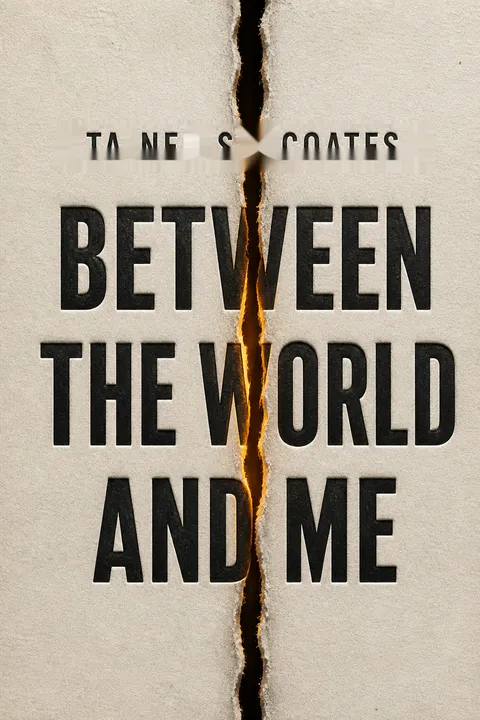
Between the World and Me is a memoir shaped as a letter from a father to his teenage son. Its argument moves through scenes rather than a formal policy framework: a boy navigating Baltimore, a student finding intellectual community at Howard, a friend killed by police, a father trying to explain danger without surrendering his child's future. This form gives the book its central force. Historical claims are never detached from bodies, relationships, or ordinary decisions.
The book's most consequential conceptual move is to treat race as a political outcome rather than a natural cause. That move links slavery, segregation, policing, housing, and national memory without reducing them to identical events. Coates also turns scrutiny inward. His early attraction to heroic counter-histories gives way to discomfort with any account that grants a whole group innocence or nobility. Study becomes valuable not because it guarantees certainty, but because it makes easy certainty harder to maintain.
The result is intellectually bracing and emotionally demanding. Coates refuses religious consolation and rejects the promise that progress will compensate for past suffering. This is a deliberate defense against false hope, especially for a child whose safety cannot be guaranteed. Its cost is that readers may hear the insistence on danger more loudly than the book's equally vivid record of love, cultural invention, and shared pleasure. Those moments are not exceptions to the argument. They show what people build despite insecurity.
The book is not a comprehensive account of every racial history or a practical blueprint for reform. It is a morally serious personal interpretation, written to transmit knowledge without dictating a finished worldview. Its lasting challenge is to combine historical honesty with active care: neither accepting national innocence nor letting disillusionment make human connection seem futile. The struggle matters here not as a promise of victory, but as a way to live truthfully and refuse abandonment.
Review Summary
Between the World and Me is a powerful, thought-provoking book that addresses racism and racial violence in America. Written as a letter to his son, Coates offers a raw, honest perspective on being Black in the US. Many readers praise the beautiful prose and important message, finding it eye-opening and emotionally impactful. While some criticize the bleak outlook and lack of solutions, most recommend it as essential reading for understanding the Black experience and confronting white privilege. The book has garnered widespread acclaim and awards for its profound insights.
People Also Read




Glossary
The Dream
Myth of innocent belongingCoates's term for the appealing story of American innocence, comfort, and deserved prosperity, often pictured through secure homes and ordinary suburban life. The Dream depends on forgetting or minimizing the violence and exclusion that helped produce that security. It is not simply a private ambition. It is a national narrative that makes unequal power appear natural, harmless, or unrelated to present life.
Dreamers
Believers in that mythCoates's name for people who identify with the privileges and innocence promised by the Dream. The term refers not just to individuals with personal prejudice, but to those who accept a national story that disconnects present comfort from historical plunder. Their belief can persist without explicit hatred because it is reinforced by familiar institutions, cultural memory, and the desire to see the country as fundamentally just.
The Mecca
Howard's Black cultural crossroadsCoates's name for the broader experience of Howard University beyond its formal role as a college. The Mecca is a gathering place where Black histories, cultures, ideas, and forms of life meet. Its force comes from Howard's location, legacy, alumni, and diverse student community. For Coates, it made the range of Black identity tangible and offered a place to learn through encounter as well as study.
disembodiment
Threat of bodily destructionCoates uses this term for the condition created when Black people know their bodies can be injured, controlled, or destroyed with little accountability. The threat extends beyond physical violence: it shapes parenting, movement, speech, and the choices people make to avoid being misread or punished. It names both actual bodily danger and the fear that reorganizes everyday life around that danger.
FAQ
What's "Between the World and Me" about?
- Letter to Son: The book is written as a letter from Ta-Nehisi Coates to his teenage son, Samori, exploring the realities of being Black in America.
- Personal and Historical Narrative: Coates combines personal experiences with historical context to discuss systemic racism and its impact on Black bodies.
- Exploration of Identity: It delves into the complexities of Black identity and the struggle for self-preservation in a society that devalues Black lives.
- Reflection on American History: The book critiques the American Dream and its foundation on the exploitation and oppression of Black people.
Why should I read "Between the World and Me"?
- Insightful Perspective: It offers a deeply personal and insightful perspective on race relations in America.
- Cultural Relevance: The book is highly relevant in understanding contemporary issues of racial injustice and inequality.
- Emotional and Thought-Provoking: Coates' writing is both emotional and thought-provoking, encouraging readers to reflect on their own beliefs and biases.
- Award-Winning Work: It has received critical acclaim, including the National Book Award for Nonfiction, highlighting its significance and impact.
What are the key takeaways of "Between the World and Me"?
- Racism's Physical Impact: Coates emphasizes that racism is not just an abstract concept but a visceral experience that affects Black bodies.
- The Illusion of the American Dream: The book critiques the American Dream as a construct built on the exploitation of Black people.
- Importance of Struggle: Coates advocates for the necessity of struggle and resistance in the face of systemic oppression.
- Legacy and Ancestry: The narrative underscores the importance of understanding one's history and the legacy of ancestors in shaping identity.
How does Ta-Nehisi Coates describe the American Dream in "Between the World and Me"?
- Built on Oppression: Coates argues that the American Dream is built on the backs of Black people, through slavery and systemic racism.
- Exclusive and Illusory: He describes it as an exclusive ideal that is not accessible to everyone, particularly Black Americans.
- A False Promise: The Dream is portrayed as a false promise that ignores the historical and ongoing injustices faced by Black people.
- Critique of Innocence: Coates critiques the innocence claimed by those who benefit from the Dream, highlighting their complicity in racial oppression.
What are the best quotes from "Between the World and Me" and what do they mean?
- "The Dream is the enemy of all art, courageous thinking, and honest writing." This quote emphasizes how the American Dream stifles creativity and truth by promoting a false narrative of equality.
- "Race is the child of racism, not the father." Coates argues that the concept of race was created to justify the systemic oppression of Black people.
- "In America, it is traditional to destroy the black body—it is heritage." This stark statement highlights the historical and ongoing violence against Black bodies as a foundational aspect of American society.
- "Struggle for wisdom. Struggle for the warmth of The Mecca." Coates encourages his son to seek knowledge and community as a means of resistance and survival.
How does Ta-Nehisi Coates address the concept of race in "Between the World and Me"?
- Race as a Construct: Coates describes race as a social construct created to justify the exploitation and oppression of Black people.
- Racism's Role: He argues that racism precedes race, suggesting that the need to oppress led to the creation of racial categories.
- Hierarchy and Power: The book discusses how race is used to maintain a hierarchy that privileges those who identify as white.
- Personal Impact: Coates shares personal experiences to illustrate how the concept of race affects his life and the lives of other Black Americans.
What is the significance of "The Mecca" in "Between the World and Me"?
- Howard University: "The Mecca" refers to Howard University, a historically Black university where Coates found a sense of community and identity.
- Cultural Hub: It is depicted as a cultural and intellectual hub for Black people, offering a space to explore and affirm Black identity.
- Symbol of Empowerment: The Mecca symbolizes empowerment and the potential for Black excellence and resistance against systemic oppression.
- Personal Transformation: For Coates, The Mecca was a transformative experience that shaped his understanding of race and identity.
How does Ta-Nehisi Coates use personal narrative in "Between the World and Me"?
- Letter Format: The book is structured as a letter to his son, making the narrative intimate and personal.
- Anecdotes and Reflections: Coates shares anecdotes from his own life, reflecting on his experiences with racism and identity.
- Emotional Depth: The personal narrative adds emotional depth, allowing readers to connect with Coates' experiences on a human level.
- Universal Themes: While personal, the narrative addresses universal themes of fear, love, and the struggle for dignity and justice.
What role does fear play in "Between the World and Me"?
- Constant Presence: Fear is a constant presence in the lives of Black people, as described by Coates, due to the threat of violence and systemic oppression.
- Parental Fear: Coates discusses the fear he feels as a parent, knowing the dangers his son faces simply for being Black.
- Motivator for Action: Fear is also portrayed as a motivator for action and resistance, driving Coates and others to fight for justice.
- Historical Context: The book places personal fear within a historical context, showing how it is rooted in centuries of racial violence and discrimination.
How does Ta-Nehisi Coates address the theme of identity in "Between the World and Me"?
- Complex Identity: Coates explores the complexity of Black identity in America, shaped by history, culture, and personal experiences.
- Struggle for Self-Definition: The book highlights the struggle for self-definition in a society that imposes limiting stereotypes and expectations.
- Connection to Ancestry: Coates emphasizes the importance of understanding one's ancestry and history in shaping identity.
- Resistance and Affirmation: Identity is portrayed as a form of resistance and affirmation against systemic oppression and dehumanization.
What is Ta-Nehisi Coates' perspective on hope in "Between the World and Me"?
- Skeptical of False Hope: Coates is skeptical of false hope that ignores the realities of systemic racism and oppression.
- Struggle Over Hope: He emphasizes the importance of struggle and resistance over passive hope for change.
- Realistic Outlook: The book presents a realistic outlook, acknowledging the challenges while encouraging active engagement with the world.
- Hope in Community: Coates finds hope in the strength and resilience of the Black community and the potential for collective action.
How does "Between the World and Me" address the concept of the body?
- Central Theme: The body is a central theme, representing the physical and symbolic site of racial oppression and violence.
- Vulnerability of Black Bodies: Coates discusses the vulnerability of Black bodies in a society that devalues and dehumanizes them.
- Personal Connection: He shares personal experiences to illustrate how the threat to his body has shaped his identity and worldview.
- Resistance and Ownership: The book advocates for the resistance and reclamation of one's body as an act of empowerment and defiance.

Download PDF
Download EPUB
.epub digital book format is ideal for reading ebooks on phones, tablets, and e-readers.








