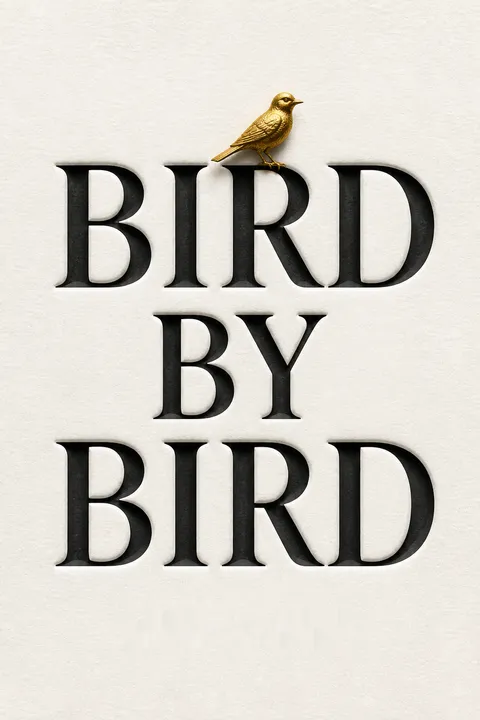


Key Takeaways
Write for the daily discovery, not publication’s imagined rescue
The work is the reward. Lamott grew up watching her father write each morning, long before she understood writing was a chosen life rather than a conventional job. His example helped her persist through years of weak stories and ordinary employment. When he developed brain cancer, she finally found a story she needed to tell, shaping family fear and humor into a book he could read before he died.
Recognition cannot do the writing. Publication brought reviews, publicity, and a few painful silences, not the permanent confidence Lamott had imagined. She recounts waiting for her book’s release as if acclaim would transform her life, then discovering that the phone could stay quiet. Writing itself offered the more reliable return: attention, invention, and the satisfaction of making something true.
The distinction between making work and being recognized for it resembles the difference between intrinsic and extrinsic motivation. A craft can remain meaningful even when external rewards are erratic, while tying identity to applause makes every review a verdict on the self. Lamott’s account is especially useful because she does not pretend that publication is meaningless; it can bring real acknowledgment and income. The sharper point is that it cannot reliably provide emotional repair. Readers should ask what part of a creative practice remains worthwhile on a day when nobody notices.
Advance one small scene at a time instead of solving the whole book
Shrink the assignment. A large project can feel like an impossible climb. Lamott’s short assignments reduce it to a piece small enough to see and finish: one scene, one remembered exchange, or one paragraph establishing a place. Her one-inch picture frame is the name she gives this narrowing of attention. It does not require knowing the whole story before beginning.
Move by what is visible. Lamott recalls her ten-year-old brother freezing over a school report on birds. Their father helped him stop facing the entire report at once and focus on one bird at a time. The same principle appears in writing: work on the small portion in front of you, then let the next portion become visible. A regular time at the desk can help the mind learn when it is expected to contribute.
This is a practical antidote to the planning fallacy, the tendency to imagine a large task as one unit and become immobilized by its total size. A bounded assignment creates a finish line close enough to reach, and completion supplies information about what the next step should be. The picture-frame idea also protects attention from premature evaluation. Its limit is that some projects require research or structural planning before scenes can be drafted. Even then, the same method applies: define the next useful unit rather than demanding a complete map.
Draft without judgment, then use revision to discover what you mean
Separate making from judging. Lamott argues that strong writers do not reliably produce polished prose on the first try. A first draft can be sprawling, sentimental, or confused because its job is to get material onto the page, not to impress anyone. She describes writing restaurant reviews by first recording everything, then returning the next day to find the real opening, cut excess, and shape an ending.
Revise in stages. One useful sequence she passes along is to get the material down, improve its accuracy and clarity, then inspect each sentence closely. The first attempt can contain a line, image, or character that was unreachable through careful planning alone. Lamott’s point is not that every rough draft becomes good, but that revision needs raw material to work on.
Separating generation from evaluation has parallels with divergent and convergent thinking. The first mode produces possibilities; the second selects and refines them. Asking both modes to operate at once can make a writer censor ideas before their value is clear. The restaurant-review example also shows that revision is not merely proofreading. It can reveal the structure latent in a pile of observations. The counterpoint is that permission to write badly can become an excuse for never revising. The discipline lies in protecting the messy stage and then returning with standards.
Gather exact details before deciding what your memories mean
Attention creates material. Lamott’s school-lunch exercise begins with apparently minor facts: what bread was allowed, which fillings invited ridicule, and how a homemade lunch exposed a family’s private life to classmates. As she writes, an isolated memory of a boy who stood apart emerges. She had not planned him; the detail-led exercise brought him into view.
Save what might vanish. Lamott keeps index cards nearby because a vivid phrase or scene can disappear before she reaches home. One remembered smell once returned her to an aunt making lemonade during a difficult period. The family drank sweetened water because the lemon juice had not been added, yet the mistake held affection, worry, and an attempt at comfort. Notes preserve such raw material without requiring an immediate explanation.
Specific observation is a route from private memory to shared recognition. A sandwich, a smell, or a worn kitchen floor can carry social information that a broad statement about childhood cannot. This resembles ethnographic practice, where careful description precedes interpretation so the observer does not force evidence into a ready-made theory. The method also guards against the assumption that only dramatic events matter. Still, detail alone is not meaning. A writer must select, arrange, and sometimes discard material so that vividness serves the piece rather than becoming an inventory.
Let character create the plot, then make the stakes unmistakable
Motivation drives events. Lamott advises discovering what a character wants and fears before imposing a sequence of dramatic incidents. Plot grows from what people choose under pressure. If nothing important is at stake, readers have little reason to follow; if characters behave only to satisfy the outline, their actions feel false.
Structure can guide discovery. Lamott shares a story structure from Alice Adams called ABDCE: begin with action, provide background, develop the people and conflict, bring events to a climax, and show what the outcome leaves behind. Lamott learned the value of structure through a painful revision. Her editor said a novel contained appealing people but gave the reader no clear way through. She reorganized its scenes and wrote a chapter-by-chapter treatment before building a new draft.
Character-led plotting offers a strong defense against mechanical twists: events feel consequential when they emerge from a person’s established desires and contradictions. Yet spontaneous discovery does not eliminate architecture. Lamott’s failed novel shows that vivid scenes can still leave readers without a usable causal path. The combination matters: let behavior generate events, then test whether each scene changes the reader’s understanding or the characters’ options. ABDCE works as a scaffold, not a law. Some narratives deliberately resist a conventional climax, but they still need perceptible movement and a reason for each section to follow the last.
Observe people compassionately enough to show more than their surfaces
Look beyond first impressions. Lamott describes visiting a care home and initially seeing its residents through the blunt filters of age, illness, and confusion. Repeated visits revealed differences in gesture, memory, and temperament. One resident, whom Lamott had assumed she understood, held her hands as if protecting a small bird. That image complicated the observer’s first judgment and made room for the resident’s inward life.
Care is not prettification. Lamott’s moral point of view asks writers to take suffering seriously without turning a story into a lecture. Characters should face consequences, including those caused by their own choices, and even antagonists need an inner life. When real people inspire a painful story, identifying details can be changed or combined so the writer can pursue emotional truth without exposing someone unnecessarily.
Compassionate attention is not the same as excusing behavior. It is a method for resisting reduction, whether the target is an older person, a villain, or a family member remembered through anger. In narrative terms, dimensionality makes actions more credible because people rarely experience themselves as simple symbols of good or evil. The ethical caution about disguising real people is equally important: autobiographical truth does not erase another person’s privacy. The challenge is to preserve the truth of an experience while changing identifying facts and resisting the temptation to use a story as revenge.
Quiet self-praise and self-attack so intuition can contribute
Notice the inner broadcast. Lamott calls the competing stream of self-congratulation and self-condemnation KFKD. The imagined station fills attention with fantasies of acclaim on one side and claims of total failure on the other. Both distract from the actual work. She recommends simple rituals, prayer, or deliberate breathing as ways to notice the mental noise and return to the page.
Listen, then check. Lamott calls intuition broccoli, a playful name for the quiet inner sense that can tell a writer what feels true before the conscious mind can explain why. A character may suddenly appear in an unexpected outfit or say something that redirects a scene. The writer can follow the hunch in a draft, then assess it later. The aim is not to treat every impulse as correct, but to let imagination speak before the critic edits it away.
The paired voices Lamott describes resemble two forms of self-focused rumination: grandiose fantasy and harsh self-judgment. Neither offers much information about the sentence being written. Ritual and breathing can function as attentional cues, marking a transition from evaluation to observation. The value of intuition is strongest when treated as a source of hypotheses rather than unquestionable authority. A surprising image may expose an unnoticed possibility, but it still needs testing against character, tone, and evidence. The productive cycle is to listen generously during invention and become more skeptical during revision.
Treat envy as a clue to longing, then turn it into usable material
Name the feeling honestly. Lamott recounts envying a writer friend whose book became highly successful. She resented hearing about the money and attention, especially while she herself felt financially strained. Advice to simply celebrate her friend did not dissolve the feeling. Talking about it, finding humor in it, and writing about its roots helped her see that envy was tied to older feelings of exclusion and comparison.
Use the feeling, do not obey it. Writing made Lamott inspect the jealousy instead of hiding it or pretending it was noble. She also recognized that the friendship needed a boundary while the emotion was raw. The feeling became material and gradually less poisonous, but it did not require her to approve of every boast or maintain unlimited closeness.
Envy can point toward a desire that has been disguised as moral judgment: recognition, security, creative success, or belonging. Treating it as information makes it possible to ask what the other person’s achievement represents, rather than concluding that the achievement diminishes everyone else. Lamott also avoids the false demand for instant generosity. A person can wish a friend well and still need distance from repeated comparisons. The useful distinction is between feeling envy, which is involuntary, and letting it dictate sabotage, self-contempt, or a performance of happiness.
Find readers who tell the truth without humiliating the writer
Feedback needs trust. Lamott recommends writing groups and draft readers who provide honest response, encouragement, and practical pressure to keep working. A dependable reader may identify a slow beginning, a weak motivation, or an ending that does not land. That can hurt, but it is safer to hear before submitting the work to an editor or agent.
Cruelty is not rigor. Lamott recalls a workshop participant who delivered a harsh critique of a beginner’s story. Some of the criticism was accurate, but the manner risked discouraging the writer rather than helping him improve. Useful feedback distinguishes the draft from the person: it explains what did not work and why, while leaving the writer with a next step. A small group can also normalize rejection and bad writing days through mutual support.
Good critique is a form of information design. Specific observations help a writer revise; global verdicts about talent provide little guidance and can shut down experimentation. A group also supplies social accountability, which can make solitary work more sustainable. Yet kindness should not become vague praise that protects a draft from useful scrutiny. The strongest readers combine candor about the page with respect for the person who made it. Writers should also retain editorial judgment: feedback is evidence about a reader’s experience, not an order that must be followed.
Give your story to someone who needs company, not applause
Write toward connection. Lamott wrote about her father’s illness so he could read the family’s account while he was alive. Years later, she wrote about her friend Pammy’s cancer and her young son, hoping the book might help people facing single parenthood, illness, and loss. In each case, the work began as a present for people she loved, not as a strategy for fame.
A private story can travel. Lamott argues that writing honestly about grief, fear, or shame can help readers recognize experiences they thought they had to face alone. That does not make every personal detail automatically worth publishing; she describes drafting freely and cutting what feels self-indulgent. The aim is to shape lived experience into something another person can enter, while keeping the people involved worthy of care.
The gift model shifts the writer’s question from whether a story proves personal importance to whether it offers another person recognition, language, or companionship. This connects private memory to narrative identity: experience becomes more intelligible when it is arranged and shared. The model also imposes a useful discipline, since intimacy alone does not guarantee a compelling work. The writer must shape, select, and protect. Lamott’s strongest implication is not that every wound should be public, but that carefully made art can turn isolation into a form of contact.
Analysis
Bird by Bird is part writing manual, part memoir, and part candid workshop conversation. Its structure is cumulative rather than strictly systematic: Lamott returns to the same craft problems through family stories, teaching episodes, illness, envy, and publication disappointments. The repetition is functional. Writing anxiety is repetitive too, and the book answers it with a stable set of practices: show up, reduce the task, draft without premature judgment, observe closely, and revise with help.
The book’s central tension is between control and receptivity. Writers need routine and craft, yet they cannot command insight on schedule. They can make conditions for discovery, but must tolerate uncertainty about what a scene means or where a character is going. The practical advice follows from this tension. Small assignments create manageable structure; rough drafts protect discovery; revision supplies discernment. The writer is neither a passive channel nor an all-powerful architect, but a participant who works and listens.
Lamott’s personal voice is also part of the method. Her comic self-exposure makes shame, self-importance, grief, and professional envy discussable without pretending they are attractive. Her anecdotes model a form of attention: an awkward lunch, a forgotten smell, or a gesture in a care home can reveal a whole social world. This is why the book is not simply a checklist of techniques. Its craft advice depends on a view of writing as ethical attention to people, including oneself.
Some claims need careful boundaries. A regular schedule suits many writers, but work, disability, caregiving, and temperament shape what consistency can mean. Personal truth also requires privacy and judgment, especially when real people are recognizable. And publication, though not a cure for insecurity, can still be a meaningful professional achievement. The lasting value of the book is its refusal to confuse these distinctions: ambition can coexist with humility, structure with uncertainty, and painful honesty with compassion. It makes writing a practice of making contact, not a guarantee of acclaim.
Review Summary
Bird by Bird is widely praised as an insightful, humorous guide to writing and life. Many readers appreciate Lamott's candid advice, personal anecdotes, and encouragement to aspiring writers. The book offers practical tips on overcoming writer's block, dealing with criticism, and developing characters. While some find it dated or self-indulgent, most reviewers consider it an inspiring, comforting resource for writers at all levels. Lamott's conversational style and relatable experiences resonate with many, making it a beloved classic in the writing community.
People Also Read



Glossary
Short assignments
Small, finishable writing tasksA way to approach an overwhelming project by choosing one limited piece to write now, such as a scene, paragraph, or exchange. The small task reduces paralysis and provides a concrete place to begin. Completing it does not require knowing the whole book in advance.
One-inch picture frame
A narrow focus for draftingLamott’s image for concentrating on a small, visible portion of a larger story. Rather than attempting to understand or write an entire novel at once, the writer describes what fits within the immediate frame, such as one character’s first appearance or one place-setting paragraph.
Shitty first drafts
Unpolished exploratory draftsLamott’s term for early drafts written without demanding elegance or correctness. Their purpose is to generate material that can later be shaped, not to represent the finished work. The approach separates the freedom needed to invent from the judgment needed to revise.
ABDCE
A story-development sequenceA short-story structure Lamott attributes to writer Alice Adams: Action, Background, Development, Climax, and Ending. It begins with compelling activity, establishes the relevant context, deepens character and tension, brings events to a consequential turning point, and shows what the outcome leaves changed.
KFKD
A metaphor for mental chatterLamott’s imaginary radio station for the distracting inner voices that compete with writing. One channel broadcasts self-importance and fantasies of success; another broadcasts self-criticism and predictions of failure. Noticing the station is a cue to quiet the noise and return attention to the work.
Broccoli
A metaphor for intuitionLamott’s playful name for a quiet, intuitive sense of what may feel true in a scene or character. It can suggest a direction before the writer can explain the reasoning. The impulse is followed provisionally during drafting and assessed during revision, rather than treated as automatically correct.
Plot treatment
A chapter-by-chapter story mapA prose outline describing what happens in each chapter, who is involved, why events matter, and how one section leads to the next. Lamott used one to clarify a novel whose scenes and characters were appealing but whose overall movement was difficult for her editor to follow.
FAQ
What's "Bird by Bird" about?
- Overview: "Bird by Bird" by Anne Lamott is a guide on writing and life, offering practical advice and personal anecdotes to help writers navigate the creative process.
- Structure: The book is divided into five parts, covering topics from getting started with writing to dealing with writer's block and the realities of publication.
- Personal Stories: Lamott shares her own experiences as a writer, including the challenges and triumphs she has faced, making the book relatable and engaging.
- Life Lessons: Beyond writing, the book offers insights into life, encouraging readers to embrace imperfection and find joy in the process of creation.
Why should I read "Bird by Bird"?
- Practical Advice: The book provides actionable tips for writers at all stages, from beginners to seasoned authors, making it a valuable resource for anyone interested in writing.
- Inspiration: Lamott's candid and humorous style inspires readers to persevere through the challenges of writing and life, offering encouragement and motivation.
- Relatable Stories: Through personal anecdotes, Lamott connects with readers on a human level, sharing her struggles and successes in a way that resonates with many.
- Broader Life Lessons: The book goes beyond writing, offering wisdom on living a fulfilling life, dealing with perfectionism, and finding one's voice.
What are the key takeaways of "Bird by Bird"?
- Shitty First Drafts: Embrace the concept of writing terrible first drafts as a necessary step in the creative process, allowing for eventual refinement and improvement.
- Short Assignments: Break down writing tasks into manageable pieces, focusing on small sections at a time to avoid feeling overwhelmed.
- Perfectionism: Recognize perfectionism as an obstacle to creativity and learn to let go of the need for everything to be perfect.
- Finding Your Voice: Discover and develop your unique voice as a writer, which is essential for authentic storytelling.
What is the "Shitty First Drafts" concept in "Bird by Bird"?
- Embrace Imperfection: Lamott emphasizes that all good writers start with rough, imperfect first drafts, which are essential for developing ideas and finding direction.
- Creative Freedom: Allowing yourself to write poorly initially frees you from the pressure of perfection, enabling more authentic and creative expression.
- Revision Process: The first draft is just the beginning; it provides the raw material that can be shaped and refined through subsequent drafts.
- Encouragement: This concept encourages writers to start writing without fear, knowing that the first attempt doesn't have to be perfect.
How does Anne Lamott suggest dealing with writer's block in "Bird by Bird"?
- Acceptance: Recognize that writer's block is a natural part of the writing process and not a sign of failure.
- Short Assignments: Focus on small, manageable writing tasks to overcome the paralysis of writer's block.
- Routine and Rituals: Establish a regular writing routine and use rituals to signal to your brain that it's time to write.
- Self-Compassion: Be kind to yourself during periods of writer's block, understanding that creativity ebbs and flows.
What is the significance of the title "Bird by Bird"?
- Origin of the Phrase: The title comes from an anecdote about Lamott's brother, who was overwhelmed by a school project on birds. Their father advised him to take it "bird by bird," meaning one step at a time.
- Metaphor for Writing: The phrase symbolizes breaking down large, daunting tasks into smaller, more manageable parts, applicable to writing and life.
- Encouragement: It serves as a reminder to focus on the process rather than the end result, encouraging persistence and patience.
- Life Philosophy: The title reflects a broader life philosophy of tackling challenges incrementally, reducing anxiety and promoting progress.
What are the best quotes from "Bird by Bird" and what do they mean?
- "Perfectionism is the voice of the oppressor." This quote highlights how striving for perfection can stifle creativity and prevent progress.
- "You own everything that happened to you." Lamott encourages writers to embrace their experiences as valuable material for storytelling.
- "Almost all good writing begins with terrible first efforts." This quote reassures writers that initial drafts are meant to be rough and are a crucial part of the creative process.
- "Writing is about learning to pay attention and to communicate what is going on." It emphasizes the importance of observation and expression in writing.
How does Anne Lamott address perfectionism in "Bird by Bird"?
- Perfectionism as an Obstacle: Lamott describes perfectionism as a hindrance to creativity, causing writers to become paralyzed by the fear of making mistakes.
- Embrace Messiness: She encourages writers to accept the messiness of the creative process, understanding that it leads to discovery and growth.
- Focus on Progress: Instead of aiming for perfection, focus on making progress and improving with each draft.
- Letting Go: Learn to let go of the need for everything to be perfect, allowing for more authentic and spontaneous writing.
What is Anne Lamott's advice on finding your voice in "Bird by Bird"?
- Authenticity: Lamott stresses the importance of writing in your own voice, rather than imitating others, to create genuine and compelling stories.
- Self-Exploration: Discovering your voice involves exploring your own experiences, emotions, and perspectives.
- Trial and Error: Finding your voice may take time and experimentation, but it's essential for creating work that resonates with readers.
- Courage: It requires courage to express your true self in writing, but it's necessary for meaningful storytelling.
How does "Bird by Bird" address the theme of publication?
- Reality Check: Lamott provides a realistic view of publication, emphasizing that it won't solve all your problems or bring instant happiness.
- Focus on Writing: She encourages writers to focus on the joy and fulfillment of the writing process itself, rather than the end goal of publication.
- Manage Expectations: Understand that publication is just one part of a writer's journey and not the ultimate validation of your work.
- Inner Fulfillment: True satisfaction comes from the act of writing and the personal growth it brings, rather than external recognition.
What role do personal anecdotes play in "Bird by Bird"?
- Relatability: Lamott's personal stories make the book relatable, as readers see themselves in her experiences and struggles.
- Illustration of Concepts: Anecdotes illustrate key writing concepts and life lessons, providing concrete examples of abstract ideas.
- Humor and Humanity: Her stories add humor and humanity to the book, making it engaging and enjoyable to read.
- Connection: By sharing her own journey, Lamott connects with readers on a personal level, offering support and encouragement.
What is the "Short Assignments" method in "Bird by Bird"?
- Breaking Down Tasks: Lamott advises writers to break down their work into small, manageable tasks to avoid feeling overwhelmed.
- One-Inch Picture Frame: She uses the metaphor of a one-inch picture frame to focus on writing just a small part of the story at a time.
- Incremental Progress: This method encourages incremental progress, helping writers build momentum and confidence.
- Practical Tool: Short assignments serve as a practical tool for overcoming procrastination and writer's block, making writing more approachable.
About the Author



Download PDF
Download EPUB
.epub digital book format is ideal for reading ebooks on phones, tablets, and e-readers.








