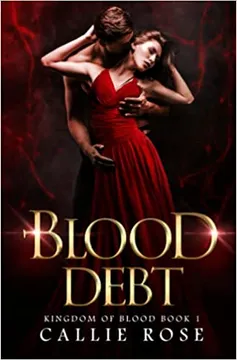


Plot Summary
Blades Before Blood Debt
Mikka Dawson makes her living hunting vampires in Baltimore's rain-soaked streets. After cutting down a careless predator, she hears from her brother Nathan, who admits that mounting debts have driven him to sell himself as a blood tribute. Mikka races to his derelict apartment, but finds it empty.
A bookie's bill and a note marked with the minimum auction bid show how deep Nathan's trouble runs. Their childhood photograph recalls the siblings' separation in foster care: Mikka built herself into a fighter, while Nathan's grief and addiction pulled him toward gambling and drugs. Convinced that the vampires have taken him, Mikka decides to enter their hidden stronghold and bring him home.
The opening makes rescue personal before it makes it heroic. Mikka's violence is practiced and purposeful, but it cannot undo her earlier failure to keep Nathan safe. The sibling history complicates her determination: she is not simply protecting a helpless brother, she is trying to repair a relationship shaped by separation, addiction, and mutual disappointment. Nathan's sale also exposes the city as a machine that converts desperation into supply. His choice is real, but the choices available to him have been narrowed by predatory creditors and the vampires' economy.
The Empty Abandoned Room
At home, Mikka studies the note and realizes Nathan has pledged himself to a vampire auction, not simply sold himself to one buyer. The auction house is hidden beneath a bar, a strip club, and a brothel, with the palace beyond it sealed against anyone who was not brought inside. To reach Nathan, she must become a tribute too.
She researches vampire devotees online, buys a vivid red gown, and sews two knives into its layers. The outfit must advertise helplessness while hiding the skills that could get her killed if discovered. Before leaving Nathan's room, Mikka takes their old family photograph and promises herself that she will bring him back, this time without leaving him behind.
Mikka's plan turns performance into a survival tool. Her gown is not a surrender of identity so much as a disguise designed around the predators' expectations: they will see a willing, ornamental human rather than a trained hunter. Yet the family photograph reveals the weakness beneath her tactical confidence. She is not only trying to extract Nathan; she is trying to reverse an old abandonment, even though the circumstances that separated them were larger than either sibling could control. The disguise can fool a gatekeeper, but it cannot insulate her from the emotional cost of entering a system built to make people complicit in their own captivity.
A Tribute Named Darcy
Mikka arrives at the auction in a deliberately revealing dress, using the false name Darcy and pretending that she has long wanted to serve vampires. Inside the marble hall, she recognizes the danger but keeps her attention on winning a place in the palace. The auctioneer's questions let her sell the image of an eager, athletic admirer; serious bidders select her for the clan's tribute pool.
A stone-faced vampire with a nose ring watches from the crowd, while Prince Bastian, striking and unreadable, also catches her eye. Once the bidding ends, guards search the tributes, miss the knives sewn into Mikka's skirt, and escort the chosen humans underground. She signs the contract and enters the palace.
The auction makes coercion difficult to distinguish from consent. Mikka's performance resembles the enthusiasm of some genuine vampire admirers, while other women onstage are visibly frightened and have no meaningful power to refuse. The same public ritual therefore masks radically different motives beneath a single category of tribute. Mikka can exploit the spectacle because she knows it is staged, but her deception depends on imitating the language and gestures that normalize human ownership. The hidden knives preserve a private counterstory: she has entered as prey in appearance, while retaining the means and intention to resist.
The Palace's Velvet Trap
The vampire matron Anastasyia shows the new women their rooms and explains that bonding can make a tribute crave the vampire who feeds on her. Mikka hears the warning from Elise, a returning tribute who knows that the bond can outlast a contract and make escape feel unbearable. Jessica, another new arrival, explains that she accepted an open-ended deal to secure nurses, medicine, and housing for her ill mother.
At the first grand dinner, Mikka sees Prince Bastian feed from a woman whose pleasure unsettles her. She also meets Connor, a newly turned vampire whose warmth and awkward humor seem out of place in the court. As the feast begins, Mikka learns that the palace's cruelty can wear the face of luxury.
The palace's central instrument is not simply force but managed attachment. The blood bond threatens to convert dependency into desire, making the victim's own emotional life appear to endorse the arrangement that exploits her. Jessica's contract shows the economic counterpart: she has traded her freedom for care her community failed to provide. Mikka recognizes the injustice, yet the pleasure she witnesses during feeding already complicates her certainty about what bodies and minds can be made to want. Connor further unsettles her categories. His kindness does not erase his nature, but it makes the simple division between human victim and vampire monster harder to maintain.
Nathan Behind the Table
When the male tributes enter the hall, Mikka spots Nathan among them and hides her recognition, though he stares back in shock. That night she slips into his room using the siblings' childhood knock. Nathan recounts how a drug debt, a losing horse bet, and a botched intimidation job at the docks multiplied into a supposed half-million-dollar liability.
Mikka recognizes the funnel: the track owner and at least two creditors are vampires who steered him toward the auction. Nathan insists the contract gives him shelter and keeps him from hurting others, but Mikka rejects the idea that he deserves a thirty-year sentence. She tells him to avoid her in public while she searches for a way out.
Nathan's account reframes his apparent recklessness as both personal responsibility and engineered vulnerability. He made destructive choices, but vampires and human intermediaries transformed each mistake into a narrower corridor leading to the auction. His willingness to call captivity a fair consequence reflects a familiar logic of self-punishment: if he believes he deserves the harm, he does not have to risk hoping someone will rescue him. Mikka counters that logic, but her secrecy creates a new strain. To protect their escape plan, she must ask the brother she came to save to behave as though they are strangers.
The Prince's Unbitten Test
On her way back from Nathan's room, Mikka is caught alone in a corridor by Bastian. He has noticed that her heartbeat was faster in the crowded dining hall than it is now, and her excuse about searching for a bathroom does not convince him. He offers intimacy, then tests her response by tracing his fangs and tongue over her neck without biting.
Mikka's body reacts with an involuntary desire that frightens her more than the prince's power. Bastian stops, leaves her unharmed, and orders her back to her room. His restraint offers no reassurance: Mikka cannot tell whether he suspects her, is curious about her, or simply enjoys seeing her lose control.
Bastian's test makes bodily response an unreliable guide to consent or safety. Mikka's trained mind insists that attraction must be a trick, yet her involuntary desire cannot be dismissed as a conscious choice. The scene exposes the gap between physical sensation and ethical judgment, a gap the vampire system can exploit. Bastian's decision not to bite preserves uncertainty rather than resolving it. His restraint may signal discipline, but it also demonstrates power: he can provoke a reaction and withdraw before Mikka understands what it means. Her usual confidence in reading threats begins to falter.
Rome Stops the Feeding
The next morning, James, a hulking vampire, takes Mikka from the dining hall and bites her savagely, ignoring her pain and leaving the wounds open. Rome, the dark-eyed vampire recently returned from banishment, interrupts him. To close the wounds, Rome licks them clean, then feeds with deliberate care.
The difference is immediate: Mikka's pain gives way to an intense, bewildering pleasure, and her body responds to Rome even as her hunter's instincts warn her away. Rome escorts her back, and Mikka uses the rest of the day to explore the palace while posing as a dazed tribute. She finds guarded passages and a hidden elevator, but no easy route to freedom.
The contrast between James and Rome shows that feeding is not a single, uniform act. James uses the human body as disposable property; Rome's attention introduces tenderness, control, and pleasure without removing the underlying imbalance of power. Mikka's response troubles her because it is not simply fear or disgust, and the novel refuses to treat desire as proof that the system is harmless. Her reconnaissance offers a counterweight: mapping doors and guards lets her recover some agency through observation. Yet she is now gathering information inside a place that has begun to affect her not only as a hunter but as a participant.
Connor's Gentle Bite
Connor repeatedly asks Mikka to dance, keeping other vampires from reaching her and giving her a rare sense of ease. He tells her that Bastian saved him after a car crushed his chest, turning him when he was dying; Connor chose palace life because he would otherwise have risked exposing himself. Eventually he admits that his dances are also a way to protect her.
Mikka agrees to let him feed, and his careful bite leads to a kiss neither expected. Bastian interrupts before they can go further and takes Mikka to the rooftop above the palace. There, he describes his five centuries in Baltimore and the memory that still defines him: vampire hunters killed his parents.
Connor and Bastian offer two distinct accounts of life within the vampire hierarchy. Connor's gratitude for being saved coexists with his dependence on the prince, while Bastian's age and authority coexist with grief that has never become distant. Mikka responds to both men through embodied intimacy, but the rooftop confession changes the stakes: she now knows that her identity as a hunter touches Bastian's oldest wound. That knowledge does not dissolve her mission. It does, however, make her future violence harder to imagine as morally uncomplicated, especially as the vampires she meets acquire histories and recognizable forms of vulnerability.
Mikka Calls on Rome
Jessica confides that James keeps feeding on her brutally and leaves her bleeding afterward; she fears that a bond to him would make the abuse permanent. Mikka also sees Nathan weakening as Althea and Maureen compete to feed from him. Rather than attack the court and expose herself, Mikka asks Rome to intervene on their behalf.
He questions why she cares so much about the other humans, then accepts her answer and promises to handle the abuse. He kisses her before returning to the hall. In the days that follow, James backs away from Jessica, while Nathan's condition improves enough for Mikka to keep planning an escape. For the first time, she has asked a vampire to use his power against the system's cruelty.
Mikka's intervention marks a shift from private rescue toward solidarity. Her original plan treats the palace as an obstacle to cross, but Jessica and Nathan make it impossible to pretend that only her brother's survival matters. Rome's question tests whether her compassion is tactical or principled; her answer commits her to recognizing the other tributes as people even when doing so increases her risk. His power can reduce immediate harm, but it cannot dismantle the arrangement that permits it. Mikka's reliance on him is therefore both practical and dangerous: protection from a predator comes through another predator whose motives she cannot fully know.
The Slayer's Blades Appear
After Winona and several tributes ransack Mikka's room as a prank, Mikka storms into Winona's room and punches her, warning the clique to stop targeting other women. Back in her room, she retrieves her hidden curved blades just as Rome enters. He recognizes them as blessed slayer weapons and realizes she is a vampire hunter. Mikka attacks before he can act, but Rome disarms and pins her.
Neither can bring himself to deliver the killing blow. Their fight turns into a fierce sexual encounter, after which Mikka tells him she entered the palace to rescue Nathan. Rome agrees not to expose her and urges her to escape soon. Mikka asks Jessica to come too, but Jessica refuses because leaving could cost her mother essential care.
The discovery strips away the false identity that has organized Mikka's survival. Rome's hurt matters because his kindness has created a relationship that is no longer reducible to a hunter confronting a target. Their intimacy does not settle the conflict; it makes the conflict more legible, binding attraction to betrayal and the possibility of violence. Mikka's conversation with Jessica supplies a different limit. Jessica's refusal is not passivity but a judgment made under obligations Mikka cannot simply wish away. The scene challenges Mikka's rescuer identity: courage cannot guarantee that everyone can be taken to safety, and other people's choices may be ethically binding even when they break her heart.
The Elevator Ambush
With Rome's warning in mind, Mikka takes Nathan toward the glass elevator whose access code she has pieced together. They enter the code and begin the ascent, but five vampires intercept them before they reach street level. Mikka fights through the cramped car, using her blades to wound one attacker, while Nathan struggles beside her.
The vampires seize him and force Mikka to surrender. At the council hearing, the Elders choose Althea to receive Nathan through a blood-binding ritual, using a jeweled chalice filled with magical liquid. Maureen is dismissed, and Nathan is compelled to serve Althea. The court identifies Mikka as a hunter and rejects ordinary execution in favor of turning her into a vampire.
The failed escape converts the palace's architecture into a visible form of political power. Mikka can learn the code and fight effectively, but the elevator's controlled stops expose the limits of individual skill against an institution that can summon more force. Nathan's binding is especially cruel because it transforms the fear of losing him into a public spectacle of ownership. The Elders' decision to turn Mikka rather than kill her is also strategic: they want to deny her the status of a martyr while forcing her into the identity she has fought against. Their punishment targets both her body and the meaning she has given her life.
The Hunter Becomes Prey
Connor rushes into the council chamber to protest the punishment, but guards drag him away. Tyresius, an Elder, bites Mikka and drains her nearly to death before forcing his own vampire blood into her. The court locks her in a dungeon, where the change brings delirium and relentless pain. Bastian visits while she is still able to understand him.
Mikka reveals that vampires killed her parents while she hid nearby, linking her childhood loss to the memory Bastian shared on the rooftop. She begs him to prevent her from becoming a vampire. Bastian gives her a flask, and Mikka drinks, believing he is granting her death. She loses consciousness in his arms.
The conversion forces Mikka to inhabit the history she has spent her life opposing. Her revelation to Bastian makes their shared grief concrete, but it does not erase the harm between them or make the court's decision compassionate. Connor's failed protest shows that personal decency has little leverage against institutional authority. Bastian's role remains deliberately unstable: he has power, has witnessed Mikka's plea, and gives her a draught she believes will end her life. His tenderness may be mercy, deception, or both. The scene leaves Mikka's agency at its most fragile, because even her final choice depends on trusting someone who has not explained what he is doing.
Fangs in the Dark
Mikka wakes on a cot in the same dungeon cell, breathing when she expected to be dead. A cut lip reveals sharp new fangs, and the taste of her own blood awakens an appetite she never wanted. The pain of transformation has passed, but its consequence is unmistakable: Tyresius's blood has made her a vampire.
Mikka concludes that Bastian's flask did not kill her as she believed; it carried her through the final stage of the change instead. Her first response is grief and anger, not relief. She had asked him to spare her from becoming what she hunted, and now she must face an immortal life inside the very world she meant to destroy.
The ending refuses the clean closure of either rescue or death. Mikka survives the immediate crisis, but survival arrives as the loss of the identity that has organized her purpose since childhood. Her new hunger echoes the opening image of predators feeding in the city, collapsing the boundary she trusted between herself and them. The betrayal she perceives in Bastian intensifies the reversal: care has not protected her from transformation and may have helped bring it about. The book closes on an unresolved ethical problem rather than a solved mission. Mikka must now decide whether becoming a vampire makes her enemy, victim, weapon, or something none of those categories can contain.
Analysis
Blood Debt builds its conflict around a question more unsettling than whether vampires are monsters: what happens when the people marked as prey have motives, histories, and tenderness of their own? Mikka enters the palace with a clear moral map. Vampires killed her parents, and hunting them gives her a way to convert helplessness into action. That map becomes harder to use as she encounters Connor's awkward kindness, Rome's protective restraint, and Bastian's grief. The story does not make those connections a simple rebuttal to her hatred. Each vampire remains part of a hierarchy that feeds on humans, and private gentleness cannot erase public power.
The tribute system joins supernatural coercion to ordinary economic precarity. Nathan's addiction and Jessica's caregiving crisis are personal, but the vampires benefit from the failures surrounding them, then present captivity as a contract freely chosen. This makes the auction's language of consent morally unstable. The blood bond deepens that instability by turning attachment into an instrument of control. Pleasure may be real, but its presence cannot settle whether the relationship is free.
Mikka's deepest conflict is with her identity as a rescuer. She wants to save Nathan, protect Jessica, and keep other tributes from harm, but these aims require choices she cannot make for everyone. Jessica's refusal to leave demonstrates that care can bind as firmly as fear. The final transformation literalizes Mikka's worst fear: she must confront the possibility that a person can be changed by power without surrendering every moral judgment. Her awakening does not resolve that contradiction. It leaves her alive at the instant when her old vocabulary for enemy, victim, and self has become inadequate.
Review Summary
Blood Debt receives mixed reviews, averaging 4.08/5. Readers praise protagonist Mikka as a fierce, compelling heroine and appreciate the interesting world-building, vampire hierarchy, and slow-burn reverse harem romance with Connor, Rome, and Bastian. Many highlight the nail-biting cliffhanger ending. Common criticisms include underdeveloped relationships between Mikka and her love interests, rushed pacing, insufficient plot buildup, and thin characterization for Rome and Bastian. Despite flaws, most readers express interest in continuing the series.
People Also Read




Characters
Mikka Dawson
Streetwise vampire hunterMikka is a trained hunter who relies on knives, discipline, and sharp observation to survive Baltimore's vampire threat. Foster care separated her from Nathan, and she carries a lasting sense that she should have done more to protect him. Her instinct is to solve danger through action, often before she has fully reckoned with the emotional consequences. Beneath her hard-edged humor is a fiercely protective person whose concern gradually extends beyond her brother. Mikka distrusts vampires as a class, but encounters that involve Connor, Rome, and Bastian unsettle the certainty on which her work depends. Her central struggle is not simply whether she can fight, but whether she can revise her judgments without abandoning the people those judgments were meant to defend.
Nathan Dawson
Addicted, guilt-worn brotherNathan is Mikka's older brother, a survivor of the same childhood losses who has responded to grief through addiction, gambling, and self-destructive choices. He often describes himself as a burden, a belief that makes him more willing to accept punishment than help. His humor and affection for Mikka remain visible beneath his shame, but he has learned to treat bad outcomes as inevitable. Nathan's vulnerability is not only physical. He is susceptible to people who offer immediate relief while concealing the larger trap. His relationship with Mikka carries genuine love alongside frustration and resentment, making her effort to rescue him inseparable from the harder question of whether he can believe he deserves another chance.
Bastian
Grieving vampire princeBastian is the five-hundred-year-old prince who presides over Baltimore's vampire court. His commanding presence and careful self-control make him difficult for Mikka to read, while his memories reveal a person marked by loss and by the long passage of time. He remembers a city that has changed beyond recognition and lives within a hierarchy whose elders resist modernity. Bastian is attracted to Mikka's curiosity and independence, but he also knows she is hiding something. Their connection grows in the shadow of her mission and his history with vampire hunters. He embodies the tension between individual feeling and inherited power: even when he appears capable of tenderness, his choices carry the force of the institution he leads.
Rome
Banishment-marked protectorRome is a blue-eyed vampire recently returned from banishment, watched warily by the court and feared by tributes who know his reputation only through rumor. He is physically imposing and often stern, yet he intervenes when James feeds cruelly and responds to Mikka's concern for other humans. Rome's protective instincts coexist with a dangerous capacity for violence, and his relationship with Mikka grows from the charged intimacy of feeding into a more difficult trust. He is not outside the vampire system, but he does not behave as though its rules excuse every abuse. His history remains guarded, lending his acts of mercy weight without making his motives entirely transparent.
Connor
Newly turned optimistConnor is a recently turned vampire whose warm humor, poor sense of direction, and awkward dancing make him seem strikingly human beside the court. Bastian saved him from a fatal accident, and Connor chose palace life because he doubted he could manage the dangers of vampirism alone. He uses his dinners and dances with Mikka to keep other vampires from feeding on her, though his feelings become more personal. Connor's optimism is sincere, not a claim that the palace is harmless. He retains a moral instinct to protest when someone is treated unjustly, even when he lacks the status to make that protest effective.
Jessica
Daughter turned tributeJessica enters the palace to secure lifelong care for her mother, whose Parkinson's disease has worsened as medicine, rent, and caregiving costs overwhelm them. She is gentle and often frightened, but her choices are not weak; she accepts a dangerous bargain because she refuses to let her mother suffer alone. Jessica becomes Mikka's closest friend among the tributes and offers a different model of courage, one shaped by care and obligation rather than combat. Her loyalty to her mother also places a limit on Mikka's rescue plan.
Anastasyia
Tribute wing matronAnastasyia oversees the female tribute wing, explaining its rules and guiding new arrivals through the palace. Her manner can seem brisk and rehearsed, but she treats the women with more consideration than the court's language of food and property would suggest. She represents the small forms of care that persist inside an exploitative system, without being able to undo that system.
Elise
Seasoned tribute realistElise has survived multiple tribute contracts and understands the mechanics of blood bonding through experience rather than fantasy. Her detached manner can make her seem indifferent, but her blunt warning helps Mikka and the other women recognize the dangers behind romanticized talk of being chosen. Elise has learned to manage the system without mistaking survival for freedom.
Winona
Status-hungry tributeWinona is polished, competitive, and convinced that proximity to powerful vampires can become a route to influence. She treats the other tributes as rivals and tries to control their social standing. Her confidence masks a dependence on the very hierarchy she hopes to manipulate, making her both a source of conflict and an example of how the palace encourages humans to compete for favor.
James
Brutal vampire feederJames is a volatile vampire who feeds without care for the pain or safety of his tributes. His treatment of Jessica exposes the consequences of a system in which powerful vampires can exploit humans with little accountability. He represents the crude, openly violent face of the palace's entitlement, against which Rome's more controlled behavior initially appears humane.
Althea
Possessive vampire courtierAlthea is a vampire who competes with Maureen for access to Nathan and treats the contest as a matter of possession. Her polished, seductive manner does not soften her predatory intent. She illustrates how the court's rituals can turn a human being into a prize while disguising coercion as preference.
Maureen
Rival vampire feederMaureen is Althea's rival in the struggle to claim Nathan's attention and blood. Her territorial anger reveals the possessiveness beneath the palace's polished customs. Like Althea, she has power over the human tributes, but her rivalry also shows how that power is organized as competition rather than care.
Lizbeth
Ritual-minded elderLizbeth is an influential female Elder who presides over the court's binding ritual. She treats ancient custom as a tool for maintaining order and takes pleasure in the theatrical humiliation of tributes. Her composure makes her cruelty especially chilling: she can frame coercion as tradition while directing it with precise authority.
Tyresius
Ancient court traditionalistTyresius is an elderly-looking Elder who favors punishment that protects the vampire court's authority and its reputation. He is impatient with modern language and more concerned with preventing rebellion than with justice. His decisions reflect a tradition that treats humans as resources and sees dissent as a threat to be managed.
Chelsea
Hopeful new tributeChelsea is a new tribute who tries to manage fear by focusing on the palace's food, handsome vampires, and moments of pleasure. Her cheerful surface makes her vulnerable to minimizing the danger around her, while also showing how people use small comforts to endure frightening circumstances.
The Vampire Elders
Keepers of court powerThe Elders govern the vampire court alongside Bastian and preserve its rituals, punishments, and social hierarchy. Their collective authority makes individual acts of resistance difficult to sustain. They represent an institution in which tradition can be invoked to justify coercion, even when its members disagree about methods.
Plot Devices
Blood tribute auction
Turns debt into captivityThe auction house lets humans pledge themselves to Baltimore's vampire clan in exchange for money, debt relief, or support for loved ones. Its public spectacle makes coerced desperation look like voluntary devotion, as Mikka sees when frightened tributes stand beside eager admirers. Mikka uses the auction as her route into the palace, while Nathan's contract becomes the apparent solution to debts that vampires have helped inflate. The device links private financial crises to a larger economy of human bodies, showing that the vampires' power extends beyond their underground walls and into the pressures that drive people to them.
Blood bond and Cruor Chalice
Makes ownership feel intimateThe blood bond ties a human tribute to one vampire, producing an attachment so powerful that leaving can feel worse than staying. The court describes the bond as a ritual, but its effect is psychological as well as physical: it reshapes desire, loyalty, and a person's sense of choice. A jeweled chalice containing magical liquid is used to bind Nathan to Althea without waiting for the scheduled ceremony. The device is introduced through Elise's warning about bonded tributes and pays off during the court's punishment of Nathan, making the palace's capacity for control explicit.
Pleasurable vampire feeding
Confuses pain with desireVampire feeding can range from James's brutal, damaging attack to a careful bite that creates intense pleasure and emotional closeness. The difference complicates Mikka's belief that every encounter will feel like a simple assault, without making the underlying power imbalance disappear. Bastian, Rome, and Connor each feed in ways that affect her differently, and the resulting sensations draw her into attachments she distrusts. The device gives the vampires a way to create dependence through the body, while forcing Mikka to question whether desire can be separated from magic, fear, or the circumstances in which it arises.
Blessed slayer blades
Keeps the hunter concealedMikka sews her curved weapons into the layers of her auction gown, allowing her to enter the palace armed while appearing to be a defenseless admirer. The knives represent the skills and identity she cannot openly display among the tributes. They also turn her room into the point where her disguise finally fails: when Rome sees the blades, he recognizes them as blessed slayer weapons and understands what she is. The weapons are more than practical tools; they make visible the conflict between Mikka's constructed role and the hunter who remains beneath it.
The glass elevator
A narrow route to freedomThe elevator connects the underground palace to the modern high-rise above it, offering Mikka a possible route out that bypasses the palace's more obvious defenses. She discovers the keypad while exploring, studies vampires entering codes, and pieces together most of the combination. Its sleek modern design contrasts with the court's ancient rituals, but it does not make escape simple: the route remains controlled, and guards can intercept anyone using it. Mikka's attempt to take Nathan through the elevator becomes the test of whether careful observation can overcome the vampires' institutional advantage.

Download PDF
Download EPUB
.epub digital book format is ideal for reading ebooks on phones, tablets, and e-readers.








