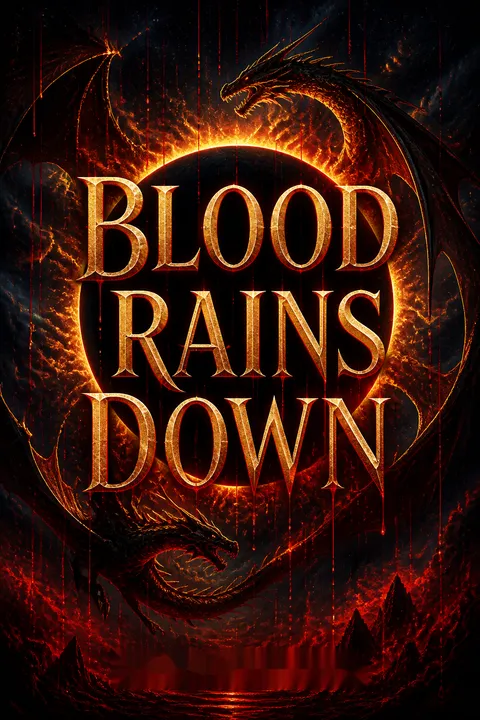


Plot Summary
Prologue
A Nethkar scribe records the aftermath of Redelvtum’s fall, where Hyacinth escaped the Silliands with imprisoned dragons and became the center of an old prophecy. Across the five realms, rulers prepare for war: Ammord and the Silliands stand against Locdragoon and Ithia, while refugees and fragile allies gather around Hyacinth.
The account remembers a company diminished by violence and betrayal, and leaves Nimbria waiting for the conflict its people fear may decide the fate of every realm.
The chronicle gives the story a public memory before the reader enters its private one. It presents Hyacinth as both a person and a political symbol, showing how prophecy becomes a force that others use to organize hope, fear, and military allegiance. Its retrospective confidence contrasts with the uncertainty of the characters’ actual choices: the scribe can name the war’s sides, but cannot know what those alliances will cost. By invoking refugees, fallen companions, and disputed histories, the frame makes the conflict larger than a contest for a throne. It is also a struggle over who gets to record what happened.
Nine Months of Ash
Nine months after Ardan’s death, Hyacinth rides Nithra through the night above Locdragoon, training herself to stay mounted and to see through a dragon’s eyes. She checks the candles in Pri’s cottage before returning to King Landers, whose wards protect the realm but cannot quiet her fear.
Taft, once a trusted companion, remains imprisoned because Landers believes his betrayal concealed a larger secret. Hyacinth also watches Ataliia pull away from her, using new faces and nightly violence to contain her grief. When Ataliia’s dreams change, showing Hyacinth burning on Landers’s throne, the private sorrow of the survivors becomes a warning they can no longer postpone.
The opening makes grief a practical force: it shapes Hyacinth’s training, Landers’s security decisions, and Ataliia’s willingness to be near the people who love her. The candle check is especially revealing. Hyacinth cannot restore the dead, so she builds a nightly ritual around confirming who remains safe. Ataliia’s shifting works similarly, turning the self into something she can leave when feeling becomes unbearable. Their diverging coping strategies create tension inside the very family that will need to act together. The altered dream disrupts that fragile routine, converting emotional fear into an external problem requiring collective attention.
The Bars Between Them
Ataliia fights men in Nethkar taverns, punishing predators while hiding her own identity behind borrowed faces. She also sleeps with Elric, the captain of Landers’s guard, but rejects his wish for a closer relationship because intimacy in her own body feels impossible. When Landers proposes that Dukovich examine her recurring dreams, she lashes out, remembering the torture he allowed in the Silliands.
Andrues forces her to acknowledge that fear of Dukovich is shaping her refusal. At their meeting, Dukovich reaches toward her without permission, and Ataliia stabs him in the side. She helps carry him for treatment, then retreats, shaken by how quickly her fear turned into violence.
Ataliia’s violence has a double function: it gives her agency against men who abuse women, and lets her avoid the more vulnerable work of naming what happened to her. Her casual arrangement with Elric similarly offers bodily contact without requiring emotional exposure. The knife incident punctures her belief that she can control every encounter through force. Dukovich’s guilt does not erase his responsibility, and Ataliia’s fear does not make her irrational; both truths occupy the same room. This section frames trauma as a conflict over consent and control, not simply as a memory that can be overcome by courage.
The Prison Visit
Hyacinth finally enters the dungeons and confronts Taft, the former friend whose betrayal helped cost Ardan his life. She offers him a choice between giving information and enduring years of punishment, but Taft refuses and tries to use their old bond to unsettle her. Hyacinth binds him with shadows and makes clear that he no longer controls her through guilt.
She leaves without learning where he came from, only more certain that he is withholding something important. Outside the prison, her friends help furnish the house she has chosen for Ataliia, the one place her sister once asked to have for herself. Hyacinth hopes a home might offer Ataliia safety without demanding that she return to the castle.
The prison scene reverses the relationship Taft once controlled: Hyacinth now sets the terms, and her threat is meant to replace the submissiveness he expects. Yet his refusal preserves the mystery rather than resolving it. The house gift reveals a different side of Hyacinth’s leadership. She cannot decide what Ataliia feels, but she can remember a specific wish and make it materially possible. This distinction matters. Care becomes most credible when it changes someone’s options without claiming ownership of their recovery. The chapter places coercion and generosity beside each other, showing how power can either narrow a person’s choices or widen them.
The Fallen Ones
In the war room, Hyacinth learns that the enemy’s silence is not peace: the Silliands and Ammord may be consolidating their forces while Locdragoon lacks enough soldiers to defend every realm. Asrai reveals that five exiled Gods and their dragons remain petrified in the Blackridge Mountains, inside Silliands territory.
Their awakening requires Hyacinth’s blood and dragon fire, but Landers fears the vengeance they may bring. Hyacinth accepts a month to seek another option, then travels to Ithia with Landers and Andrues. There she challenges the Yaldrin leaders’ reluctance to fight. The Elders ultimately agree to evacuate their people, train volunteers, and permit Hyacinth to wake the exiles if necessary.
The Fallen Ones transform an abstract question of military weakness into a moral wager. Hyacinth is not choosing between safety and danger; she is choosing which danger to unleash and who may pay for it. Ithia’s traditions give that choice political weight, since the Yaldrin must decide whether survival requires changing their inherited refusal to fight. Hyacinth’s sharpness at council marks a shift from reluctant figurehead toward a leader willing to challenge elders directly. Still, the story refuses to equate decisiveness with certainty. Her provisional delay shows that responsible leadership includes testing alternatives, even when every available path is frightening.
The Seer in Ammord
Ataliia and Pri travel to Ammord to gather intelligence, with Dukovich accompanying them despite their distrust of him. Ataliia’s familiar first appears as a rat, then reveals its ability to take other animal forms. When Pri’s informant Nox is captured by guards, Ataliia frees him and brings him to the safe house, where Dukovich removes the Svech poisoning from his wound.
Nox reports that Drow leaders are being taken to the Silliands. Ataliia later allows Dukovich to examine her dreams, expecting traces of torture magic. Instead, both see scenes of battle, a falling dragon, and a woman grieving over a body. Dukovich identifies the images as visions, revealing that Ataliia is a seer.
The assignment makes Ataliia’s private gifts politically consequential. Her familiar can scout and intervene, while her visions may expose events that intelligence networks cannot reach. Yet neither power arrives as uncomplicated mastery: the familiar is initially unwelcome, and the visions unsettle rather than instruct. Nox’s rescue also complicates the group’s dependence on information. He can be useful while remaining dangerous, because his livelihood rests on selling secrets to competing powers. Ataliia’s discovery as a seer intensifies her responsibility at precisely the moment she is least prepared for it. The section links knowledge to vulnerability, showing that seeing more can mean carrying more fear.
Sisters at the Breaking Point
After learning that Pri told Nox Dukovich was alive, Landers kills the captured informant and rebukes Pri for exposing the secret. Ataliia defends Pri, then turns on Hyacinth, accusing her of failing to protect Ardan. Hyacinth refuses to strike back, but Ataliia punches her and continues until she finally collapses under her own grief.
Landers sends Ataliia to the house Hyacinth prepared for her. Away from the confrontation, Hyacinth’s magic erupts and destroys a stretch of forest; Wren finds her and helps her admit how deeply she blames herself for Ardan’s death. Landers then tells Hyacinth that his dragon blood makes him a cursed, dangerous creature, and she insists his past does not make him unworthy of love.
The sisters’ rupture is not a simple conflict between a kind person and a cruel one. Ataliia externalizes unbearable guilt by making Hyacinth its target, while Hyacinth’s refusal to retaliate exposes how much she has already internalized blame. Wren’s intervention matters because he does not promise that grief can be removed; he distinguishes responsibility for mourning from responsibility for Ardan’s death. In parallel, Landers risks telling Hyacinth what he fears will make him monstrous in her eyes. These scenes show intimacy as a practice of truth-telling, but also reveal how silence and guilt can make people injure the very relationships that could help them survive.
A Brother in Stone
Hyacinth, Landers, Wren, and Dukovich cross into the Blackridge Mountains under Dukovich’s glamour. A messenger named Saniel warns Hyacinth that the Gods will punish anyone who wakes the exiles, but she hides this warning from the others. At the mountain tomb, Hyacinth spills her blood across the stone and Landers supplies dragon fire.
Five Fallen Ones emerge with their dragons, along with Cain, Landers’s half-brother. Cain’s arrival triggers a mating bond with Hyacinth, but she accepts the bond to stop its pain while making clear she chooses Landers. Royion offers the exiles’ help in exchange for aid against Hyacinth’s grandparents. Hyacinth accepts, unknowingly sealing the bargain into a branded deal that binds all six of them.
The awakening changes the scale of the conflict while binding its consequences to intimate choices. Hyacinth keeps Saniel’s warning secret because she fears it will stop the mission, a small breach of trust that anticipates the damage secrets can do later. Cain’s mating bond threatens to turn desire into compulsion, while Hyacinth’s insistence on choosing Landers asserts a distinction between magical attachment and chosen love. The branded bargain gives the Fallen Ones a formal claim on Hyacinth’s future, turning a military alliance into a personal obligation. The scene’s central irony is that a rescue of ancient Gods immediately creates new forms of captivity.
A Home and a Wound
Ataliia moves into the furnished home Hyacinth arranged, complete with a library that Andrues chose for her, and briefly lets herself feel that it might become a home rather than a punishment.
Her recovery remains fragile: after trying a stronger sleeping tonic, she overdoses, and Andrues saves her, then shares how Ammord killed his mother and the people who raised him. Later, Clayson Rifford, the owner of Nethkar’s exploitative taverns, has Ataliia abducted and assaulted after identifying her as the woman disrupting his business.
Cyloe finds her, and Hyacinth, Dukovich, and the familiar break into the shack. Hyacinth kills the attackers and carries Ataliia to safety, where the sisters finally hold one another without turning grief into blame.
The home’s comfort and Ataliia’s assault are deliberately close together: safety is real, but it cannot erase the structures that made her vulnerable. Her overdose arises from desperation for sleep, not from a settled wish to die, and Andrues’s response combines urgent care with honest warning. His disclosure creates an intimacy grounded in shared survival rather than rescue alone. The assault forces the family to confront the limits of its protection, while Cyloe’s intervention gives the familiar a concrete role beyond symbolism. Hyacinth’s violence against the attackers is not presented as a cure. The crucial change is Ataliia’s willingness to receive comfort from her sister afterward.
The Daemon’s Heart
Ataliia returns to Clayson’s estate with Andrues and kills the men who helped assault her, turning her retaliation into a deliberate act rather than another tavern fight. She begins training with Yenne to control her visions, while Hyacinth prepares for war and learns more about the Fallen Ones.
When the group discovers that Taft is a daemon from Ammord, Hyacinth kills him in his cell and pulls his blackened heart from his body. Taft’s final warning suggests that his death serves someone else’s design, and Ataliia recognizes that everything said near him may have been overheard through his master. The threat therefore reaches beyond the prison: the enemy may know years of Locdragoon’s plans.
Ataliia’s retaliation gives her a measure of agency, but the story does not confuse vengeance with healing. Her continued training with Yenne points toward a harder task: learning to recognize and use the power that has previously surfaced only under emotional pressure. Taft’s daemon nature retroactively changes his imprisonment from a contained danger into a surveillance breach. His death closes one relationship but opens a much larger strategic vulnerability. Hyacinth’s decision is both decisive and insufficient; killing the informant cannot undo what he transmitted. The episode shows how secrecy can protect a person temporarily while also allowing an unseen power to accumulate knowledge.
Oaths Before Battle
Landers tells Hyacinth that his dragon blood carries a curse, that iron weakens him, and that he once destroyed cities when he lost control. She accepts the truth without asking him to change, and he proposes marriage. At the Yaldrin ceremony, Wren and Pri stand as their witnesses while Hyacinth and Landers exchange oaths and become soul-tied, overriding Cain’s claim on her.
Their wedding celebration lasts only hours. The allies then launch a plan to infiltrate Camp Bane, where Ammord is raising an army of the dead. Ataliia and Dukovich are sent to create a distraction in Sethros, while Hyacinth, Landers, Andrues, Wren, Pri, and the others prepare to attack the camp.
The marriage is an act of chosen attachment made under pressure, not an escape from danger. Landers gives Hyacinth the history he withheld, and she accepts him without treating his curse as either a moral stain or a problem she must solve. Their soul-tie also has tactical significance because it overrides Cain’s coercive bond. Yet the wedding’s closeness to the raid prevents the ceremony from becoming a fantasy of permanent safety. The couple’s private promise is immediately tested by public obligations. Love in this section is neither protection from violence nor a substitute for strategy; it is the relationship that gives both characters a reason to keep choosing action.
The Camp Was Waiting
The allies reach Camp Bane expecting darkness and surprise, but the island is prepared for them. A copper dragon attacks, and necromancers release the living dead across the camp. Nithra fights the dragon while Hyacinth, Landers, and Ataliia battle through the streets. Landers shifts fully to defeat the creature, but an iron collar and chains are thrown around him, turning his own dragon nature against him.
Ataliia and Dukovich are dragged from Nithra’s back and captured as she carries Hyacinth and the others away. Hyacinth escapes with the surviving group, but the retreat separates her from Landers and Ataliia. The operation meant to free Camp Bane’s children instead leaves her loved ones in enemy hands.
The ambush converts the rescuers’ moral purpose into a tactical vulnerability. They enter Camp Bane expecting to be the agents of liberation, but the enemy has anticipated their route and turned the camp into a trap. Landers’s dragon form, previously a source of strength and fear, becomes exploitable through iron, a weakness introduced earlier. The separation of Hyacinth from both Landers and Ataliia fractures the family at the exact moment they need one another most. The failed raid is more than a reversal of military fortune: it tests whether a group organized around loyalty can continue to act when its bonds are used as leverage.
The Prisoners Answer Back
In Ammord’s prisons, Ataliia and Dukovich are kept apart and hear Landers being tortured. Dukovich, badly injured, tells Ataliia about his childhood, the murder of his wife and son, and the long plan he made with Malik to change the Silliands. His history does not erase his past choices, but it gives Ataliia a reason to trust the man beside her.
Outside, Asrai reveals that Yenne once created daemons to overthrow Ammord’s rulers, and Hyacinth decides to use that forbidden method to locate the captives. Ataliia then begins controlling her own emotional state and reaches into the guards’ minds. The prisoners exploit the lapse in their restraints, setting up the assault that will bring Hyacinth to the House of High.
Ataliia’s captivity returns her to the conditions that shaped her trauma, but this time she has a witness who refuses to let her face it alone. Dukovich’s account complicates her judgment without demanding forgiveness; his explanation offers context, not absolution. Meanwhile, Hyacinth’s decision to use Yenne’s daemon-making ability confronts the group with a dangerous ethical compromise. They oppose Ammord’s control while considering its own tools. Ataliia’s power becomes effective only when she can steady her mind rather than letting fear dictate its use. The two plotlines thus converge around a difficult distinction: survival may require using power, but that does not make every use of power innocent.
The House of High Falls
At the House of High, Ataliia turns the guards against their leaders and frees herself, Dukovich, and Landers. Oryn and the High Priestesses, Varah and Sovana, reveal that they serve a hidden queen and can suppress magic by entering their victims’ minds. Hyacinth crashes into the hall with her allies, identifies herself as Landers’s wife, and helps drive back the living dead and other creatures pouring into the fortress.
The battle spreads through the city as dragons attack from the sky and the House of High collapses. Hyacinth saves Dukovich from a fatal wound, but Wren takes a blast of lethal magic meant for Landers. He dies in Hyacinth’s arms before he can explain who the real enemy is.
The assault delivers the promised rescue while exposing the larger machinery behind the war. The visible rulers are not sovereign in their own right; they act for a hidden queen whose identity remains withheld. Ataliia’s mental control and Hyacinth’s arrival make the prisoners active participants in their rescue, rather than passive objects of a later intervention. Yet victory costs Wren, whose death repeats the story’s central wound of losing someone while trying to protect another. The battle’s political success cannot be separated from that intimate devastation. The collapsed House of High marks the fall of a regime, but not the end of the power directing it.
Blood Over Sethros
The survivors escape to Ithia carrying Wren’s body, while Ataliia clings to Dukovich and Hyacinth returns with Landers. Grief turns quickly into new danger: the group learns that Yenne’s earlier daemon operation did not uncover who is creating the creatures now, and that Oryn, Varah, and Sovana were daemons themselves.
Ataliia and Andrues each struggle to respond to Wren’s death, while Hyacinth tells Landers what Wren managed to say before dying. As the enemy’s forces threaten to close in, Hyacinth rises into the sky and unleashes her power on Sethros. Her magic tears through the city, and rain stained red falls over the ruins, fulfilling the prophecy’s image without settling the war.
The destruction of Sethros is grief made political and physical. Hyacinth does not simply strike a military target; she obliterates the capital associated with the powers that have taken her family, and the scale of her response exceeds any clean distinction between justice and revenge. The red rain fulfills a prophetic image, but fulfillment provides no reassurance that the prophecy has been understood correctly. Meanwhile, the revelation that the rulers were daemons deepens the problem: removing visible authorities has not removed the hidden creator. The section places immense power beside unresolved mourning, asking whether a person can wield force without letting loss decide its target.
The Queen Behind Them
Ataliia returns to Ithia with the others, but Wren’s death and the destruction of Sethros leave the group stunned. Hyacinth tells Landers that Cain had warned her of a coming threat, while Ataliia’s visions begin to sharpen under Yenne’s instruction. One vision shows Pri bound in chains and Hyacinth burning on the throne.
Another voice warns Ataliia not to seek the woman behind the attacks. At the same time, Landers and Hyacinth discover that Cain has escaped his cell and that the guards there were massacred with poison from Redelvtum. The group reaches Pri’s house, where she appears alive and frightened, but Ataliia’s visions and the unexplained disappearances make her account difficult to trust.
The aftermath refuses the survivors a stable pause. Every attempt to interpret the battle produces another uncertainty: Cain’s escape, the poisoned guards, Pri’s absence, and the voice inside Ataliia’s vision all point beyond the enemies they can see. Ataliia’s seer ability now functions as both warning and emotional burden. The visions do not simply reveal facts; they invite interpretation, and that ambiguity can make distrust spread through an already grieving group. Hyacinth and Landers must act with incomplete knowledge, while Ataliia is forced to distinguish what she senses from what she can prove. The section prepares betrayal without making suspicion itself a reliable guide.
Pri’s Knives
At Pri’s house, Hyacinth expects comfort and instead finds Wren’s wife acting strangely. When Pri returns from the Elders’ home, Hyacinth challenges her about the visions and missing people. Pri admits nothing, then suddenly stabs Landers with iron blades and uses him to stop Hyacinth from attacking.
Rilius and Sashi arrive, revealing that they allied with the hidden queen in exchange for Ithia’s power. Pri confesses that Wren discovered her role and that she killed him to protect the plan. The traitors force Hyacinth and Asrai to drink a sleeping potion, then take Landers and the women away. Ataliia remains behind, furious and powerless as the people she loves vanish again.
Pri’s betrayal is especially devastating because her authority in the family was built through care, competence, and long-standing trust. Her explanation that she acted for Ithia’s people repeats the language of collective protection, but her murder of Wren exposes the human cost concealed by that argument. The scene also reverses Hyacinth’s growing confidence: her power cannot help when Landers’s life is held directly against it. Ataliia’s helplessness echoes her earlier imprisonment, yet this time it is sharpened by knowing what is happening and being unable to intervene. Betrayal here is not merely a revelation of secret allegiance; it is a claim that love and sacrifice can be commandeered for political ends.
The Mother Returns
Ataliia wakes alone in a cell and believes her family has been taken beyond her reach. Her magic breaks against the prison’s wards, but she finds Pri in the neighboring cell, wounded and chained. Outside, Hyacinth awakens in darkness after being separated from Landers and Asrai. The woman who enters her cell dismisses Rilius’s rough treatment, calls Hyacinth her princess, and touches her face.
The contact returns memories Hyacinth lost before Asrai brought her to the academy: her childhood in Idradora, her mother, and the life she had before prophecy shaped her. Hyacinth recognizes the woman as her mother. The book ends before she learns why her mother has returned or what has happened to Landers, Asrai, and the others.
The final revelation makes the conflict intimate in a new way: the hidden power shaping the war is tied to Hyacinth’s own erased past. Memory arrives through touch, turning the body into an archive that the plot has kept sealed until this moment. The mother’s tenderness is not yet proof of safety; she appears inside a prison and has participated in the capture, so recognition complicates rather than resolves the danger. The ending replaces a military cliffhanger with a familial one. Hyacinth has recovered the beginning of her own story, but the people she chose as family remain missing, leaving identity and loyalty suspended together.
Analysis
Blood Rains Down connects private trauma to political systems without treating either as a metaphor for the other. Ataliia’s experience of coercion shapes her reactions, but it does not make her a symbol whose pain can be solved by a battle won on her behalf. Her recovery remains uneven: she hurts Hyacinth, accepts comfort, lashes out again, and gradually learns to seek help. Hyacinth’s arc similarly resists a simple rise from uncertainty to mastery. Her growing power is accompanied by decisions that endanger allies, secret-keeping, and grief that can erupt as destruction. The narrative’s most persistent question is not whether violence can be justified in war, but who bears its consequences and who gets to call it necessary. Rulers repeatedly describe sacrifice as protection of the many, while individual bodies carry the cost: Ardan, Wren, the prisoners of Camp Bane, and the people caught in Sethros. The repeated failure of official histories, from altered texts to concealed victories, makes control of memory another form of political power. Hyacinth’s vow to understand and preserve the truth is therefore part of leadership, not a scholarly aside. Love offers resistance to coercion, especially in the contrast between Cain’s involuntary bond and Hyacinth and Landers’s chosen vows. Yet attachment also gives enemies leverage, and the survivors’ loyalty makes them vulnerable to betrayal. The ending refuses closure: Hyacinth regains her lost memories and recognizes her mother, but her husband, friends, and political future remain uncertain. Knowledge arrives not as safety, but as the next demand placed on a woman already carrying too much.
Review Summary
Blood Rains Down earns widespread acclaim as an emotionally devastating sequel to The Book of Cin. Readers praise H.M. Wolfe's poetic writing and masterful character development, particularly highlighting dual POVs from Cin and Ata. Reviewers emphasize powerful mental health representation, feminine rage, and raw portrayals of grief and healing. Ata's journey draws comparisons to Nesta from ACOTAR, resonating deeply with readers. The found family dynamic, exceptional spice, political intrigue, and unpredictable plot twists keep readers engaged. Many report crying throughout while praising the realistic trauma representation and character growth. The cliffhanger ending leaves fans desperate for book three.
People Also Read



Characters
Hyacinth
Prophecy’s reluctant centerHyacinth is the young God at the heart of the prophecy and the daughter Asrai has raised among the students of Redelvtum. Her shadow magic, dragon bond, and emerging command of other forms of power make her valuable to allies and enemies alike. She is driven less by a desire to rule than by a refusal to let others decide who may be sacrificed. Her love for Landers and loyalty to her chosen family are sources of courage, but also vulnerabilities that adversaries exploit. Hyacinth’s central struggle is to become a leader without letting prophecy or grief erase her ability to choose for herself.
Ataliia
The many-faced survivorAtaliia is Hyacinth’s adopted sister and a skilled shapeshifter whose capacity to inhabit other faces gives her a powerful role in intelligence work. Beneath her sharp humor and appetite for confrontation, she carries trauma, grief, and a fierce need to protect women from the violence she has witnessed. She often treats emotional distance as self-defense, pushing away the people who might help her. Her complicated ties to Elric, Andrues, and Dukovich expose different kinds of intimacy: detached, trusting, and mistrustful. Ataliia’s growing visions place her private struggle inside the larger conflict, forcing her to learn how to use power without surrendering to pain.
Landers
The cursed kingLanders rules Locdragoon and loves Hyacinth with a devotion that is both tender and politically consequential. His dragon blood carries a curse that makes emotional control essential, while his history as a warrior has left him with a fearsome reputation and a deep suspicion of his own capacity for destruction. He is protective of his people, but can confuse protection with deciding what risks others should take. Hyacinth’s insistence on equality challenges that habit. Landers’s bond with Andrues and his care for the wider family show a man trying to build a gentler life without pretending his violent past never happened.
Andrues
The healer of deathAndrues is a necromancer, healer, and Landers’s closest friend. Raised among Yaldrin healers before Ammord seized him, he learned to understand death magic as a force that can preserve life as well as end it. His calm manner and blunt honesty make him a steady presence for both Hyacinth and Ataliia, though his own history is marked by violence and loss. He is protective without being sentimental, and his care often takes the form of staying present when others withdraw. His relationships with Pri and Ataliia reveal his capacity for fierce loyalty, while his guardedness makes emotional honesty difficult.
Dukovich
The Silliands’ rebel priestDukovich is the former High Priest of the Silliands, a master of glamour and political survival. His charm can be disarming, but it often conceals calculation, and his history includes decisions that caused real suffering to the people around him. He believes the Silliands can be changed only by someone willing to operate inside its corrupt power structure. His uneasy partnership with Ataliia is shaped by guilt, attraction, and her justified distrust of him. Dukovich is not asking to be seen as innocent; he wants the chance to prove that his present loyalties are more than another strategy.
Wren
The grieving intelligence chiefWren is the brother of Ardan and a central member of Hyacinth’s chosen family. After the group’s losses, he turns to intelligence work and planning, partly because practical tasks give him somewhere to put grief that he cannot yet speak aloud. His affection for Pri grounds him, while his protectiveness toward Hyacinth and Ataliia reflects the family role he has chosen. He can be blunt and impatient, especially when others avoid their responsibilities, but he is also capable of admitting when he has been unfair. Wren’s connection to the others is built from shared danger and the stubborn effort to keep them functioning as a family.
Pri
The family’s intelligence keeperPri is a skilled intelligence officer whose sources and political knowledge make her indispensable to Locdragoon. She is also a warm, practical presence in the group, finding ways to create food, celebration, and ordinary companionship amid preparation for war. Her relationship with Wren is affectionate and deeply rooted, while her bond with Hyacinth and Ataliia gives her a sisterly role. Years of gathering secrets have made her effective, but the work carries a cost: she fears what the job may take from the people she loves. Pri’s mixture of competence and emotional generosity helps hold the group together.
Asrai
The feared war mentorAsrai is Hyacinth’s mentor and the former leader of Redelvtum’s military, known for the severity of her training and the scale of her experience. She raised students capable of protecting themselves while concealing their education from the ruling powers. Her bluntness comes from a belief that survival demands preparation, not reassurance. Beneath that hard discipline is a maternal attachment to Hyacinth and the young people she has taught. Asrai understands the moral compromises war imposes, but she also guards knowledge and loyalties carefully, sometimes deciding that silence is the safest way to protect someone.
Elric
The king’s guard captainElric commands Landers’s guard and serves as one of Locdragoon’s most dependable military officers. His sense of order often puts him in conflict with Ataliia’s improvisation, though their relationship also contains an intimate, complicated history. He worries openly about threats to the kingdom and tends to take responsibility for preventing disorder, even when he cannot control the people around him. His discipline makes him a reliable presence in planning and defense, while his feelings for Ataliia leave him vulnerable to her habit of turning closeness into distance.
Nithra
Hyacinth’s dragon allyNithra is an ancient dragon who bonds with Hyacinth and guides her through flight, training, and the unusual communication known as the fastening. She is formidable, perceptive, and protective, but not merely a weapon at her rider’s command. Their relationship depends on trust and mutual respect, with Nithra pushing Hyacinth to learn rather than simply rescuing her from every mistake. Her presence connects the human conflicts to the older history of the Gods and dragons. Nithra’s loyalty offers Hyacinth a source of steadiness beyond the politics of the five realms.
Yenne
Nethkar’s witch teacherYenne runs an apothecary in Nethkar and speaks in cryptic, idiosyncratic turns that frustrate Ataliia even as they draw her back. Blind but unusually perceptive, she recognizes magical potential before Ataliia understands it herself. Yenne is direct about the discipline required to control power, refusing to indulge a student who is not ready to learn. Her remedies, knowledge of witchcraft, and willingness to teach make her a bridge between Ataliia’s dangerous abilities and deliberate practice.
Cain
Landers’s dangerous half-brotherCain is Landers’s half-brother, a powerful and unsettling figure whose survival is tied to black magic and old family violence. He carries a deep resentment toward Landers and approaches Hyacinth through the force of a mating bond rather than earned trust. His confidence and appetite for leverage make him difficult to read, even when he appears to offer useful information. Cain’s presence connects the present conflict to Landers’s history and to the older magical bargains shaping the realms.
Taft
The imprisoned former friendTaft was once close to Hyacinth and the others, but his betrayal and refusal to explain his past have left the group unable to trust him. He uses their memories of friendship to provoke guilt and unsettle Hyacinth, even while withholding information that may matter to the coming war. His carefully guarded history makes him more than a disgraced companion: he is a reminder that familiarity is not the same as knowledge.
Brakan, called Nox
The dangerous information brokerBrakan is an information broker who works under the name Nox and sells secrets to whoever will pay. Pri relies on his intelligence, while Ataliia recognizes the danger of depending on someone whose loyalty is transactional. He can provide accurate warnings and still create risks through the information he trades. His place in the story illustrates how espionage blurs the difference between useful knowledge and trustworthy allegiance.
Mara
Ithia’s reform-minded priestessMara is a Yaldrin leader who believes Ithia must learn to defend itself rather than rely on its traditions to keep danger away. She carries grief from the Great War and sees the coming conflict as a chance to prevent her people from repeating an old retreat. Her willingness to work with Hyacinth comes from conviction, not simple deference. Mara represents a generation ready to change the rules that once seemed sacred.
Calista
The freed dragon caretakerCalista is a former captive of the Silliands who finds a measure of freedom among the Yaldrin and cares for the dragons Hyacinth helped free. Her scars mark a history of captivity, but she refuses to let them define her worth. Her quiet bond with the dragons and growing confidence show how kindness can restore agency without erasing what happened.
Malik
Dukovich’s hidden allyMalik is the High Priest of the Silliands and Dukovich’s childhood friend. Their relationship began under the protection of Malik’s father, who raised Dukovich alongside his own son. Malik shares Dukovich’s knowledge of the court and its political machinery, making him a potentially valuable contact. His position demands secrecy, and his allegiance is difficult for outsiders to assess.
Oryn
Ammord’s public rulerOryn presents himself as Ammord’s High Priest, wielding authority through public ceremony, intimidation, and the promise of punishment. He enjoys testing captives and tries to turn their fear into compliance. His apparent command of the House of High makes him a visible face of Ammord’s power, though the political structure around him is more complicated than it first appears.
Sovana
Ammord’s volatile priestessSovana is one of Ammord’s High Priestesses, whose playful manner masks a cruel capacity for magical control. She treats emotional suffering as a tool and reacts unpredictably when challenged. Her childlike affect unsettles those around her because it sits beside real power and real danger.
Rilius and Sashi
Ithia’s high-priest pairRilius and Sashi lead Ithia’s traditional religious hierarchy. Rilius is protective of established authority, while Sashi speaks more readily for the realm’s political interests. Their caution reflects a culture that has survived by avoiding open conflict, but that same caution makes them wary of Hyacinth’s plans. Together, they embody the difficulty of changing a society whose old safeguards have become a source of vulnerability.
Plot Devices
Ataliia’s visions and tarot
Warnings from the unseenAtaliia’s dreams first appear to be possible traces of Silliands magic left by torture. Dukovich’s examination reveals that they are visions, not ordinary dreams, and Yenne teaches Ataliia to use tarot cards and her familiar to focus them. The images point toward battles, deaths, and danger but often arrive without enough context to make their meaning certain. As the visions become more vivid, they give the group a possible source of intelligence while increasing Ataliia’s fear of what she might fail to prevent. The device makes foreknowledge a burden rather than a convenient solution.
Cyloe, the familiar
A living magical extensionAtaliia’s familiar first appears as a rat in her rooms, then demonstrates an ability to shift among animal forms, including a cat, raven, and wolf. Andrues explains that a familiar shares its witch’s life force and extends her power. Cyloe scouts, retrieves keys, tracks Ataliia when she is in danger, and helps Ataliia reach the calm needed to enter her visions. Her interventions repeatedly turn an otherwise private magical bond into a concrete advantage. The familiar also reflects Ataliia’s growing capacity to accept care without interpreting it as weakness.
Fallen Ones’ bargain
Power tied to a debtHyacinth awakens five exiled Gods by spilling her blood on their stone tomb while Landers supplies dragon fire. Their leader, Royion, makes a branded deal: the Fallen Ones will fight for Hyacinth, and she will later help them challenge her grandparents. The mark binds the parties to the agreement and gives the exiles leverage over Hyacinth’s future. This arrangement solves an immediate military problem while creating a new political obligation. The device turns alliance into contract, asking whether a desperate bargain can remain contained once its first purpose has been served.
Mating and soul bonds
Choice against magical compulsionCain’s arrival from the tomb triggers a mating bond that causes Hyacinth physical pain when she resists it. She accepts the connection long enough to stop the pain but continues to choose Landers. The Yaldrin soul-tying ceremony later joins Hyacinth and Landers by mutual vows, overriding Cain’s claim. The contrast separates involuntary magical attachment from chosen commitment. The bond is both an intimate complication and a political vulnerability, allowing Cain to sense or reach Hyacinth through reflective surfaces until she and Landers find a way to counter it.
Daemons and forbidden magic
The enemy inside the courtA daemon is a being created through forbidden magic whose loyalty belongs to a hidden master. Taft’s presence in Locdragoon allows information to leak from the group, while Yenne’s past use of daemon-making offers Hyacinth a way to investigate the enemy. The later discovery that Ammord’s visible leaders are also daemons reveals that the court may be controlled from elsewhere. The device changes the conflict from a war between identifiable realms into a struggle against an unseen creator who can replace leaders and manipulate both sides.
About the Author

Download PDF
Download EPUB
.epub digital book format is ideal for reading ebooks on phones, tablets, and e-readers.








